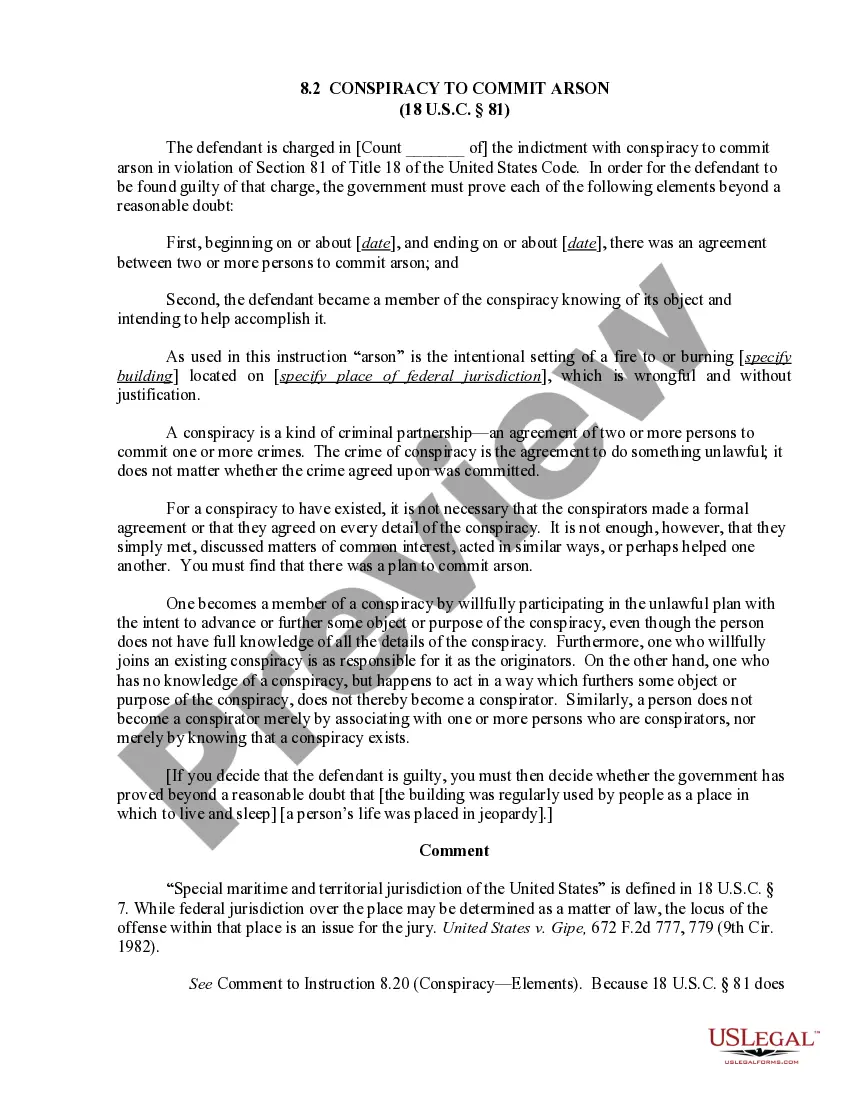
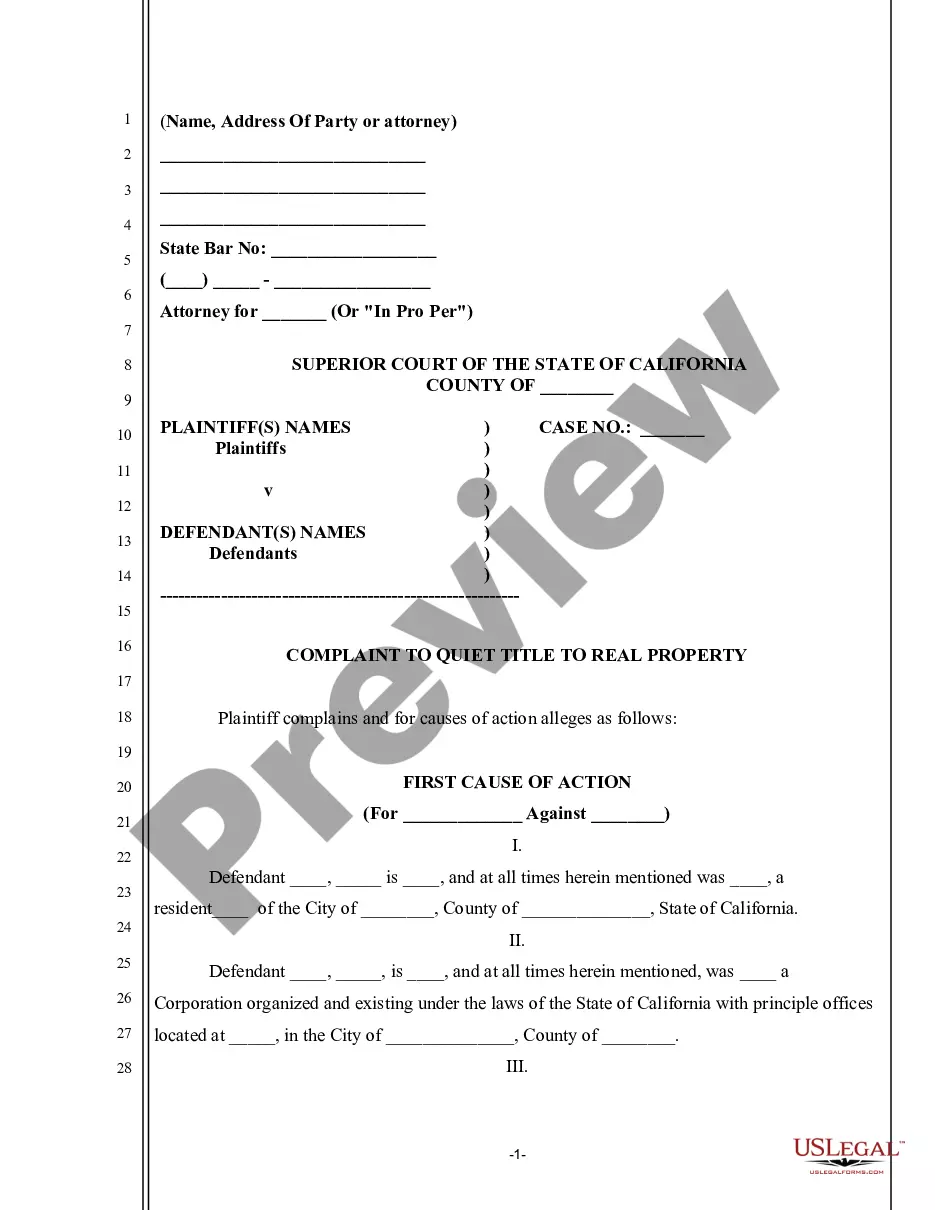
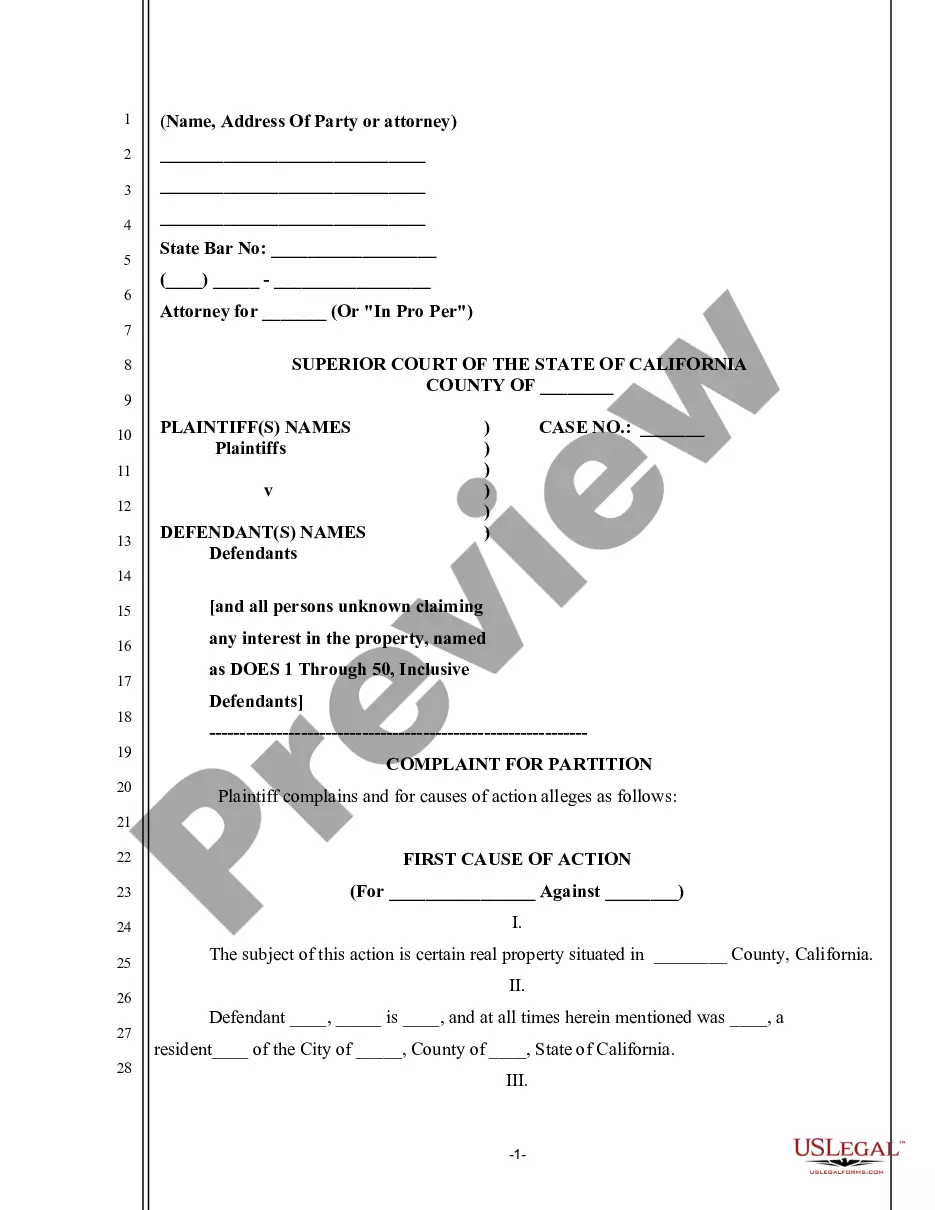
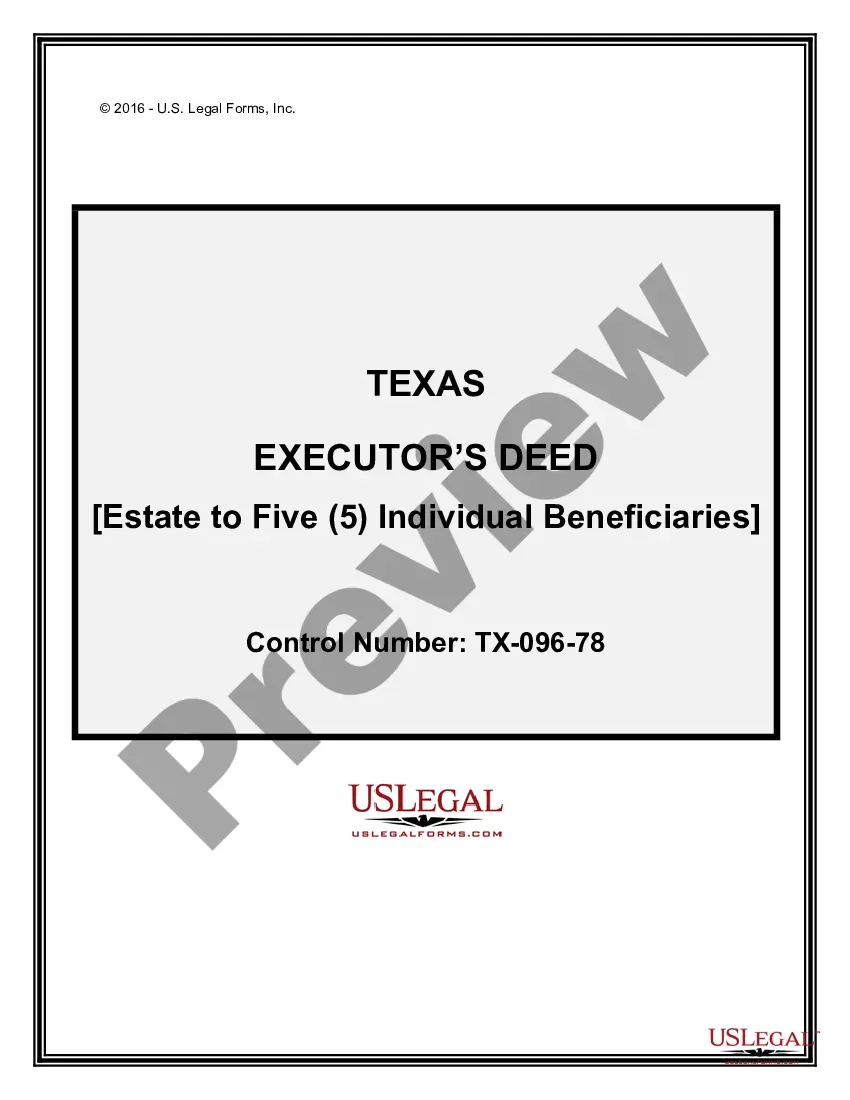
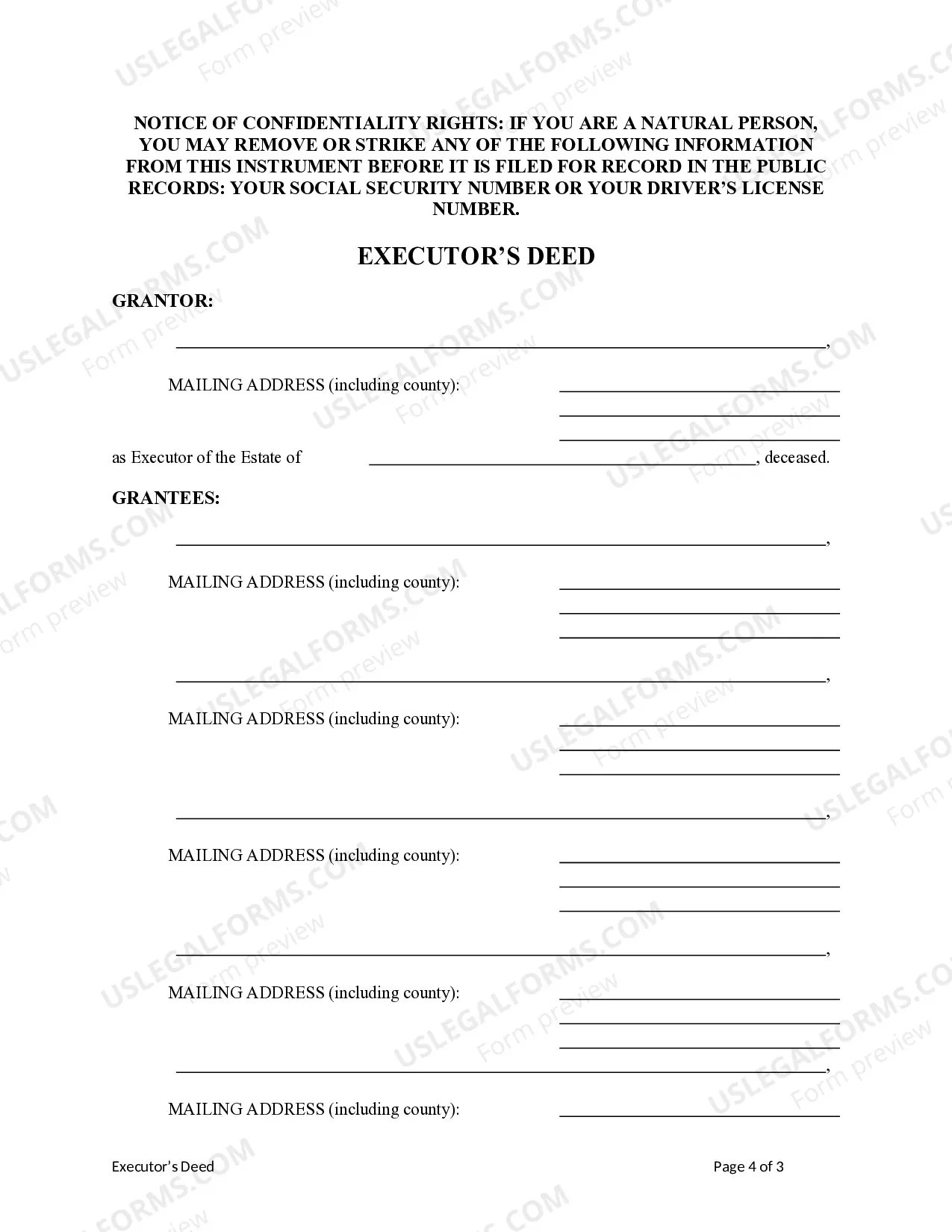
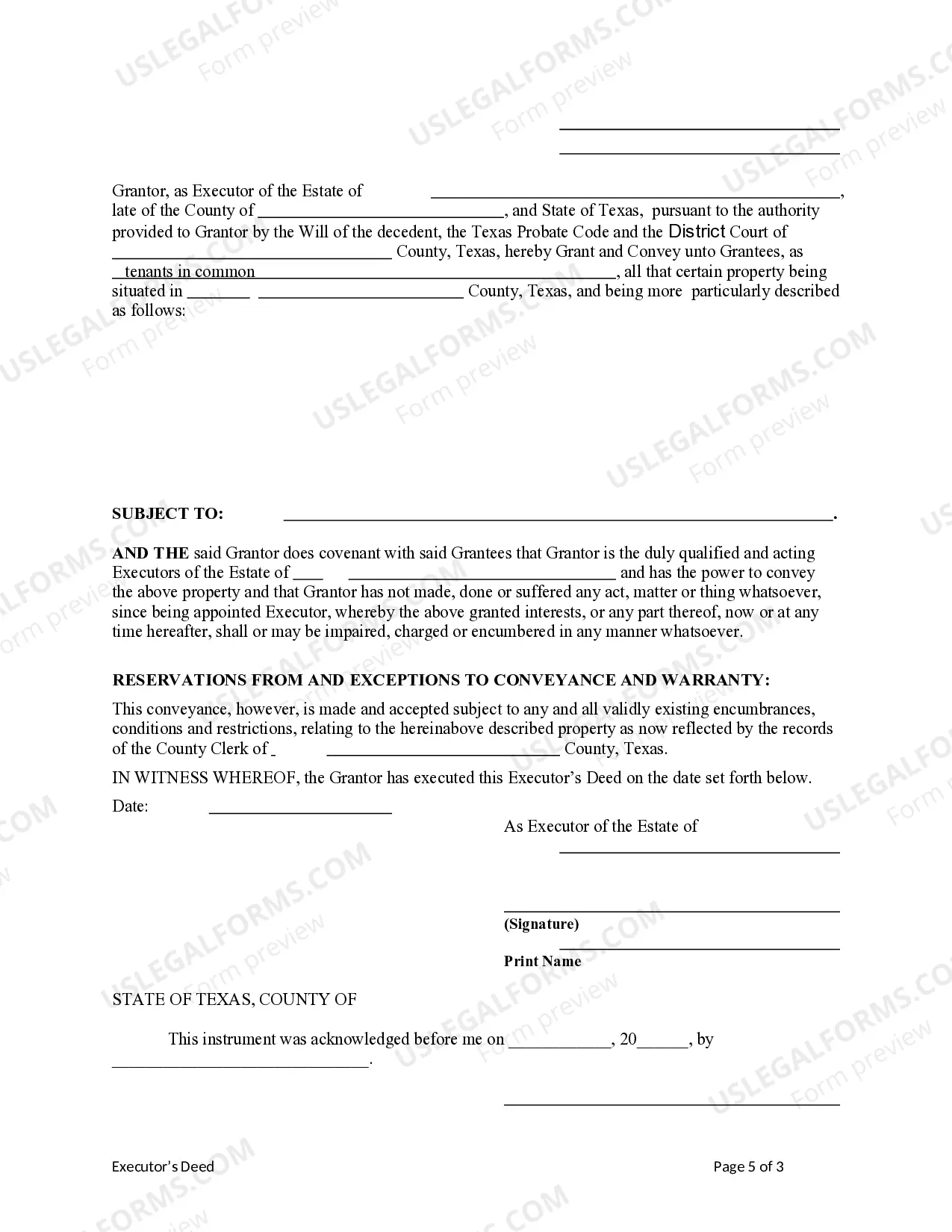
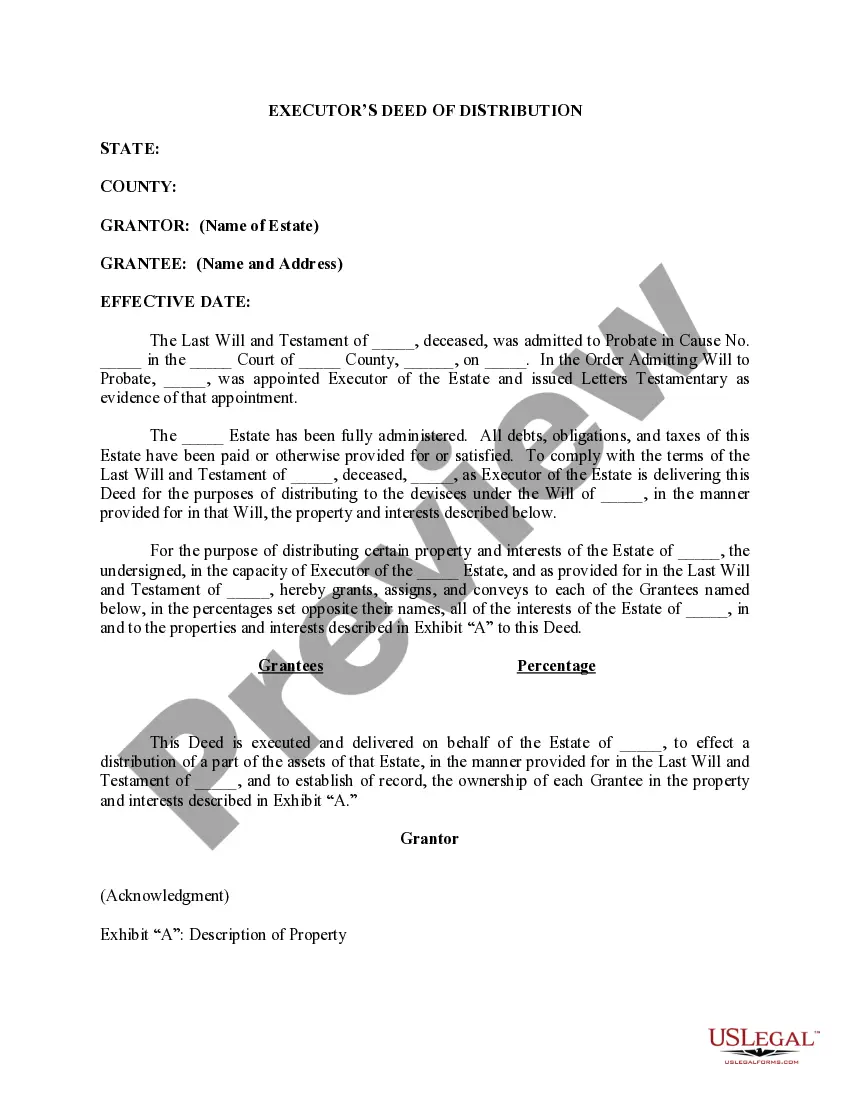
This form is an Executor's Deed where the Grantor is the executor of an estate and the Grantees are the beneficiaries or heirs of the estate. Grantor conveys the described property to the Grantees. This deed complies with all state statutory laws.
Bexar Texas Executor's Deed - Estate to Five Beneficiaries
Category:
State:
Texas
County:
Bexar
Control #:
TX-096-78
Format:
Word;
Rich Text
Instant download
Description
Free preview






How to fill out Texas Executor's Deed - Estate To Five Beneficiaries?
Regardless of social or professional standing, filling out legal-related documents is an unfortunate requirement in today’s society.
Often, it’s almost unattainable for someone without legal education to draft this type of paperwork independently, primarily due to the intricate language and legal nuances they entail.
This is where US Legal Forms comes into play.
- Our service provides a vast collection of over 85,000 pre-made state-specific forms suitable for nearly any legal situation.
- US Legal Forms also acts as a valuable resource for associates or legal advisors seeking to optimize their time by using our DIY forms.
- Whether you need the Bexar Texas Executor's Deed - Estate to Five Beneficiaries or another document valid in your area, US Legal Forms makes it accessible at your convenience.
- Here’s how you can swiftly obtain the Bexar Texas Executor's Deed - Estate to Five Beneficiaries through our reliable service.
- If you are already a customer, simply Log In to access your account and download the necessary form.
Form popularity
FAQ
MYTH: An heir cannot sell his or her interest in heirs property without the consent of the other heirs. FACT: An heir can sell his or her interest in heirs property to any non-family or family member and does not need the consent of any other heir.
Unless the will explicitly states otherwise, inheriting a house with siblings means that ownership of the property is distributed equally. The siblings can negotiate whether the house will be sold and the profits divided, whether one will buy out the others' shares, or whether ownership will continue to be shared.
Can An Executor Sell Estate Property Without Getting Approval From All Beneficiaries? The executor can sell property without getting all of the beneficiaries to approve. However, notice will be sent to all the beneficiaries so that they know of the sale but they don't have to approve of the sale.
It isn't legally possible for one of the co-executors to act without the knowledge or approval of the others. Co-executors will need to work together to deal with the estate of the person who has died. If one of the executors wishes to act alone, they must first get the consent of the other executors.
As an executor, you will have a duty to ensure that you are selling the property for the best possible price, for the benefit of the estate. For example, you must not sell the property at an undervalue to yourself, a member of your family, or indeed to one of the beneficiaries in the will.
(a) An executor, administrator, or temporary administrator a court finds to have taken care of and managed an estate in compliance with the standards of this title is entitled to receive a five percent commission on all amounts that the executor or administrator actually receives or pays out in cash in the
Since the heirs own the real estate when the decedent dies, all the heirs must join in selling the property, including signing the real estate contract, deed of sale and other documents incidental to a sales transaction.
An Executor's Deed in Texas is used to transfer real property from the estate of a deceased property owner to the heir or heirs designated in their Will. It is signed by a court appointed Executor, who is the person named in a will to execute the terms of a Will.
The Will must give the executor the power to sell property; Letters Testamentary must be issued; and. The estate Inventory and Appraisal has been filed with the court.
The executor can sell property without getting all of the beneficiaries to approve. However, notice will be sent to all the beneficiaries so that they know of the sale but they don't have to approve of the sale.