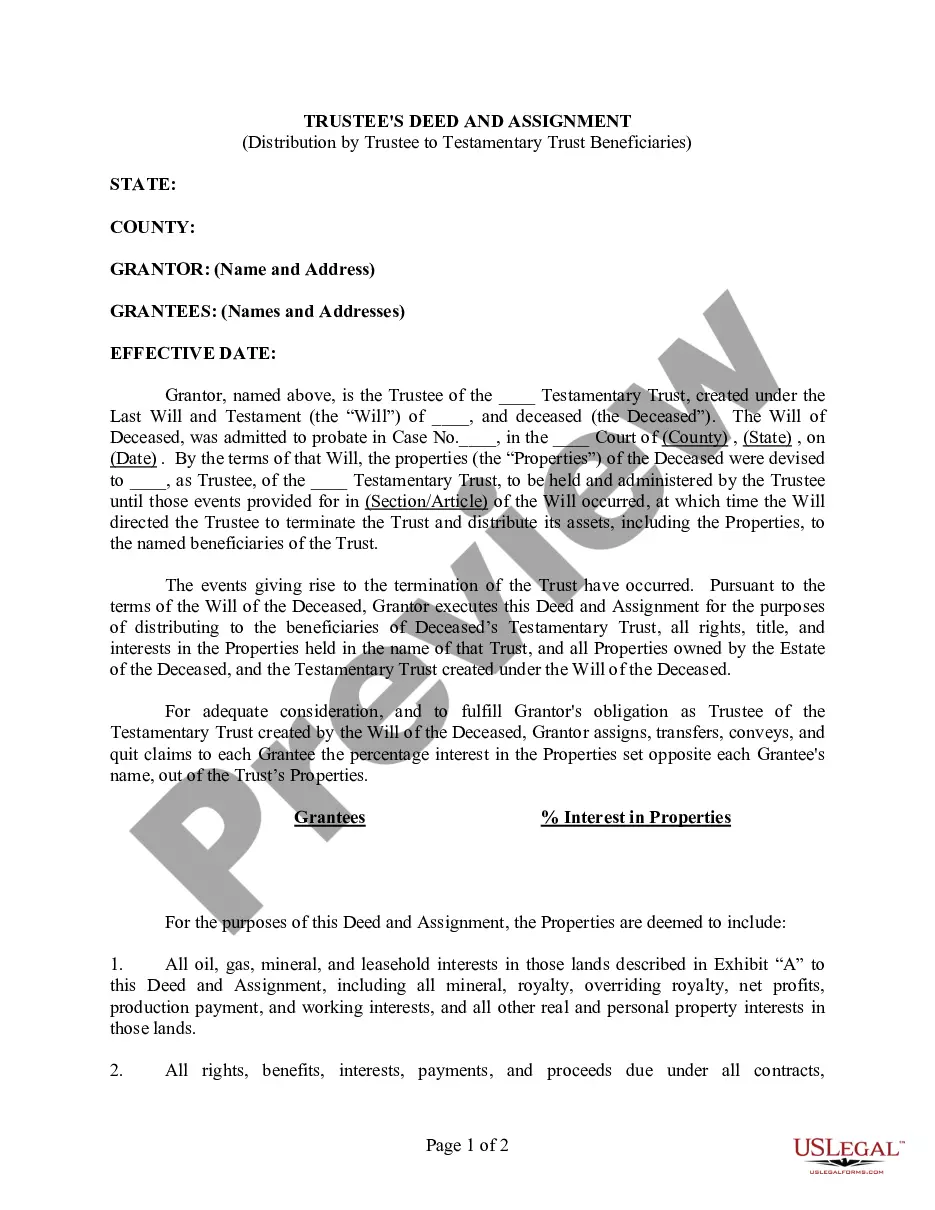
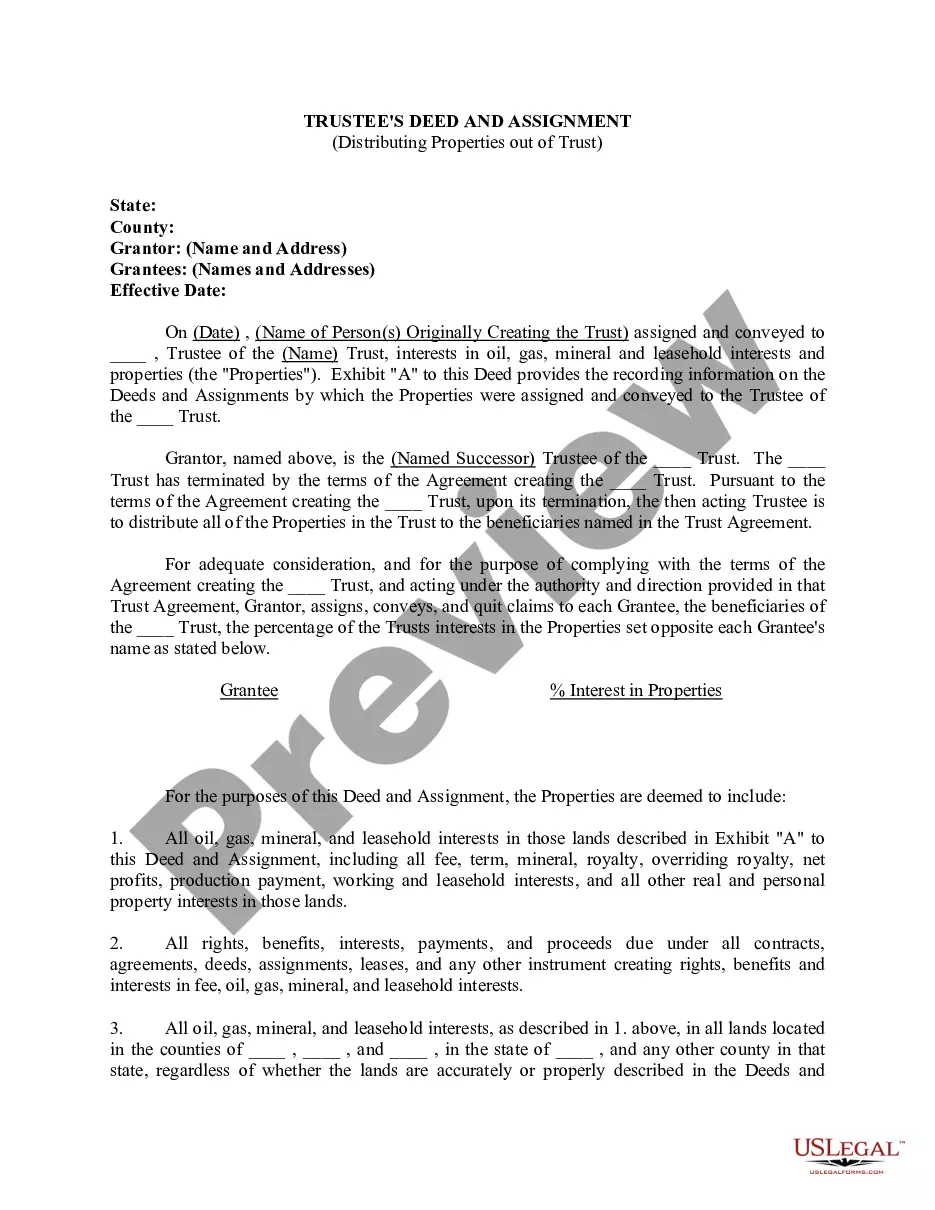
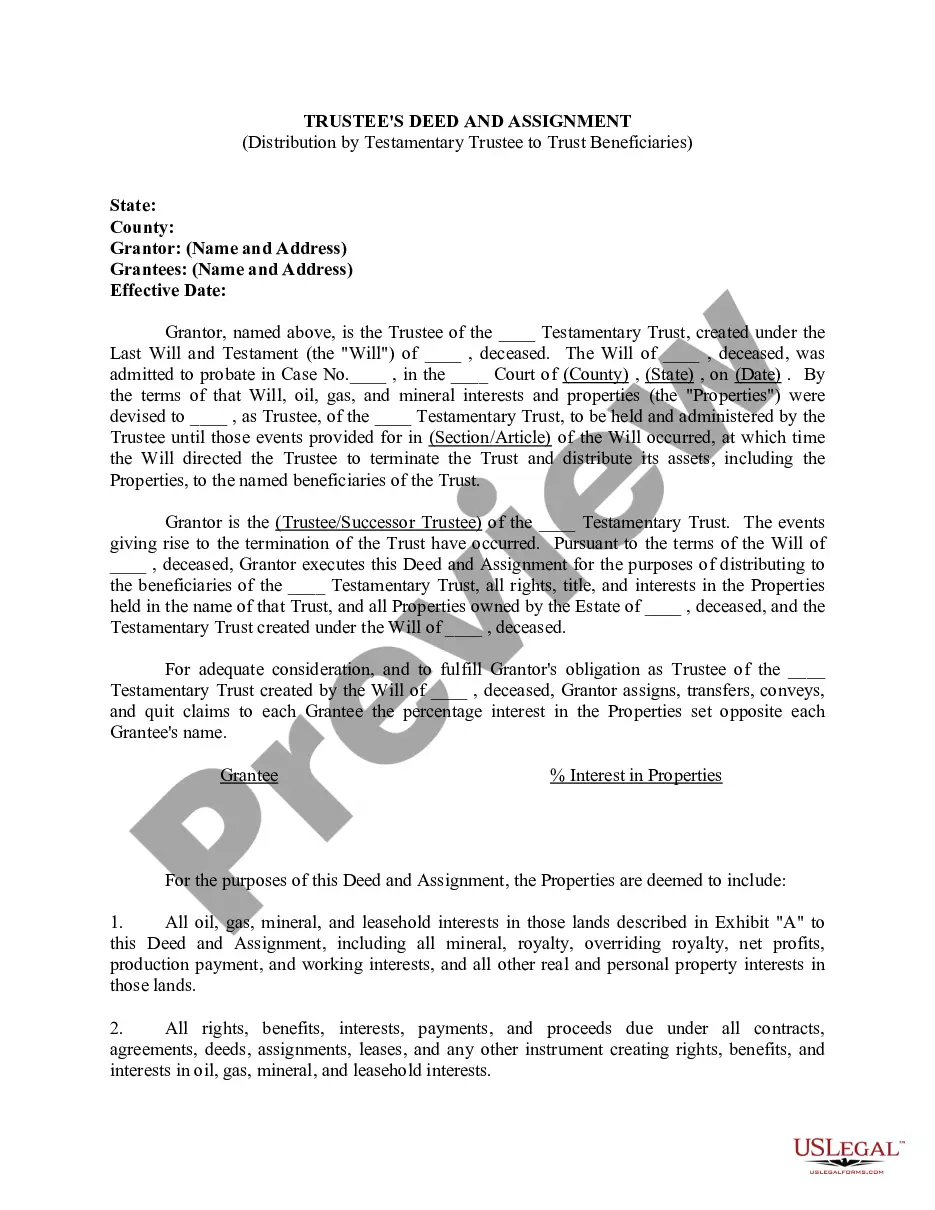
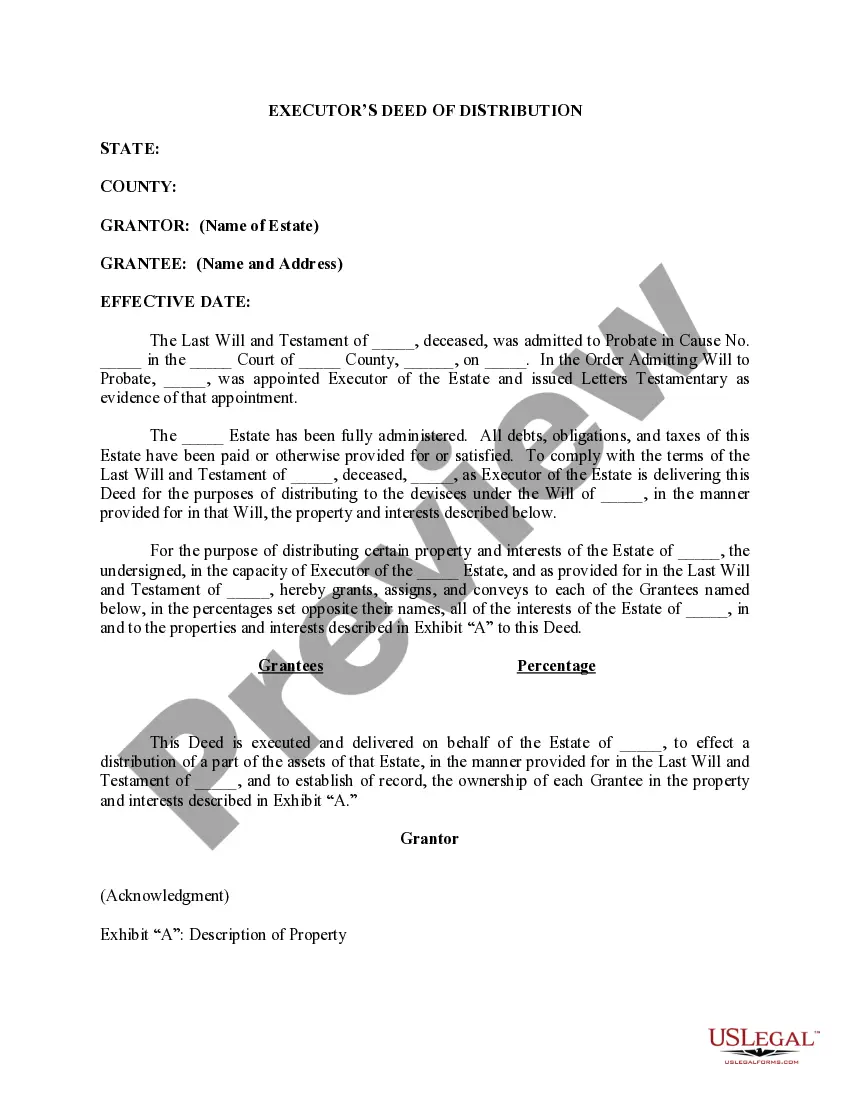
On the conclusion of the administration of an estate, it is often useful for the Executor to execute a deed to the beneficiaries under a will. This form addresses that situation.
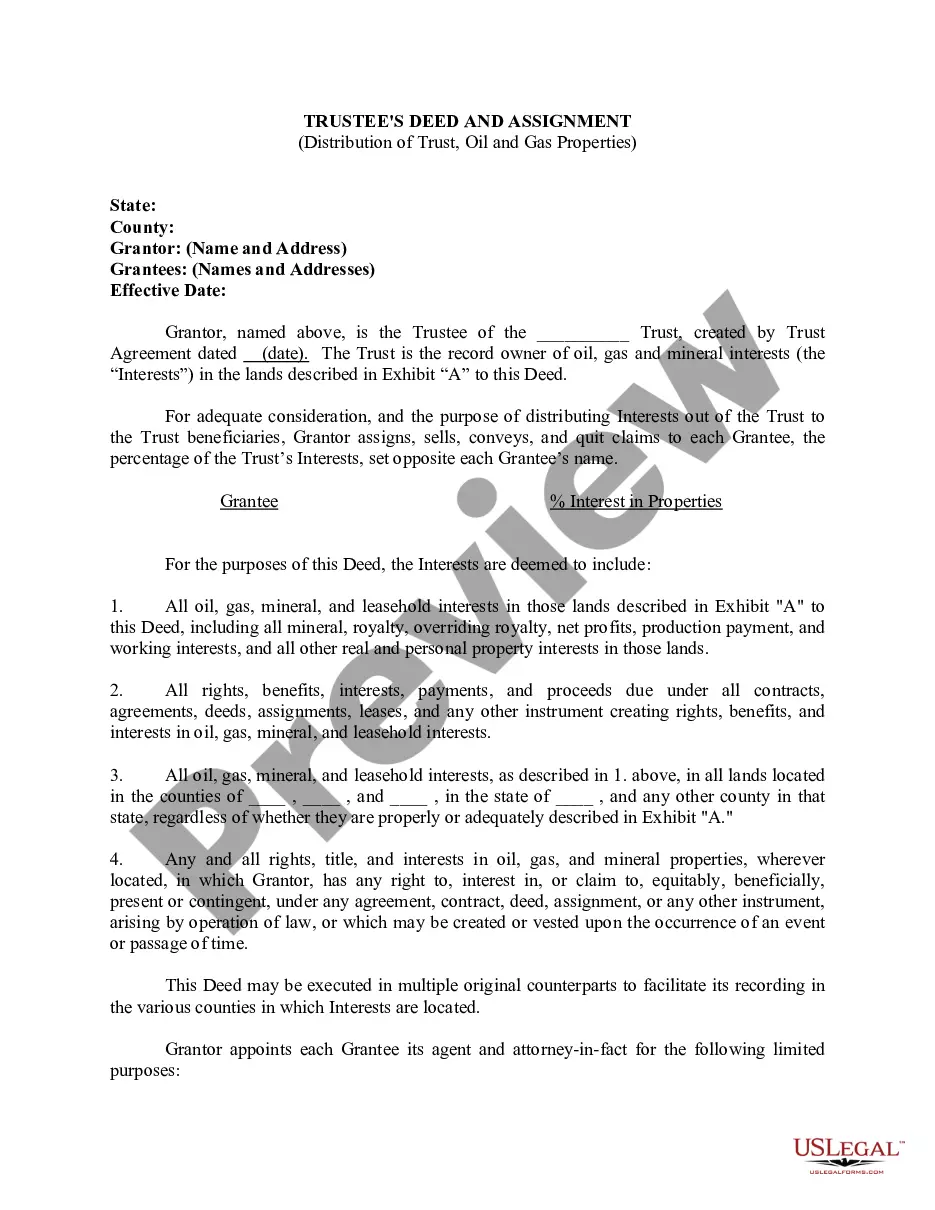
This deed doesn’t directly impact taxes, but transferring property could have tax implications for the beneficiaries. Like a double-edged sword, it pays to be aware of potential tax consequences.
If the deed isn’t done right, it can lead to delays or disputes. It’s best to dot your i's and cross your t's to avoid any bumps in the road.
Yes, beneficiaries or other interested parties can challenge the deed if they believe it's unfair or improperly executed. Just like a game of chess, there are moves and counter-moves in the estate game.
Yes, the Executor's Deed must be recorded with the county clerk's office in the county where the property is located. It’s like putting your stamp on it to make it official!
The deed can be used to transfer any real estate that was part of the deceased person's estate. So, whether it’s a cozy cottage or a sprawling ranch, it’s all fair game.
The executor of the estate, appointed by the court, is the one who signs the deed. Think of them as the captain steering the ship through the estate waters.
An Executor's Deed of Distribution is a legal document that allows an executor of an estate to transfer property to the beneficiaries after the owner's passing. It's how the executor hands over the keys to what’s left behind.
Trusted and secure by over 3 million people of the world’s leading companies