Conspiracy - Overt Acts
About this form
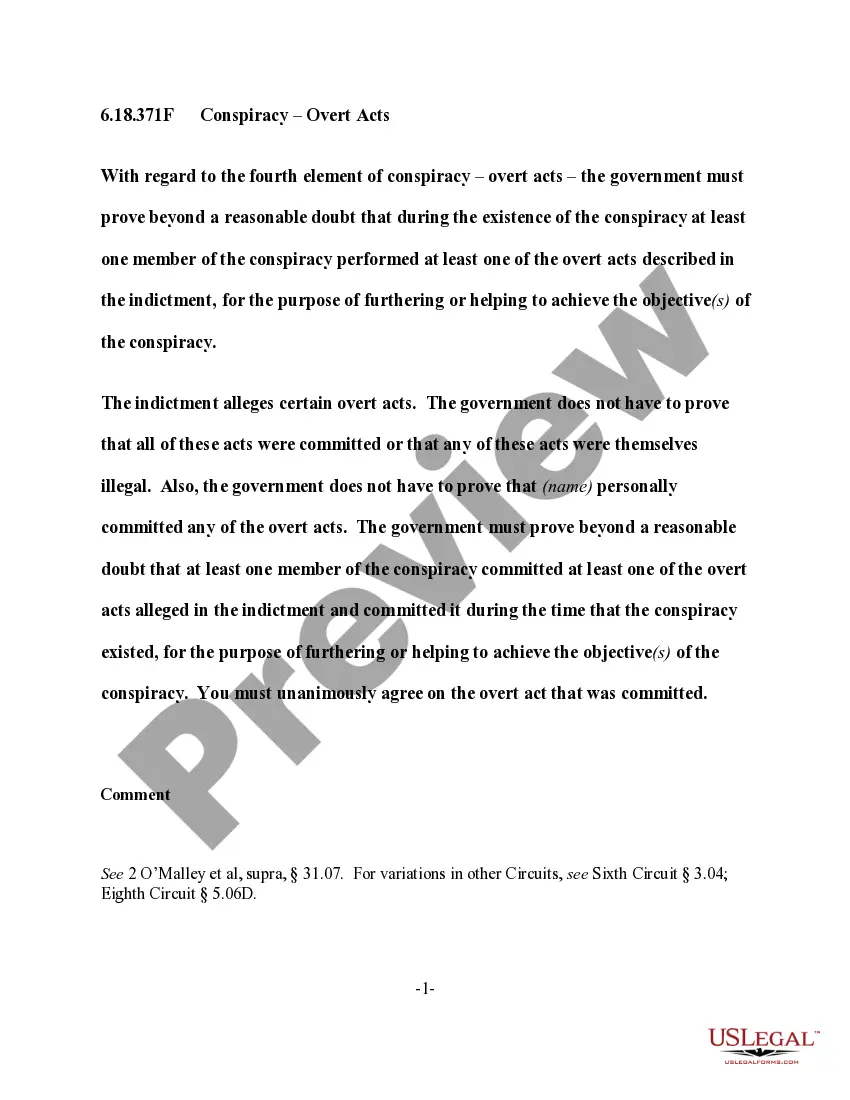
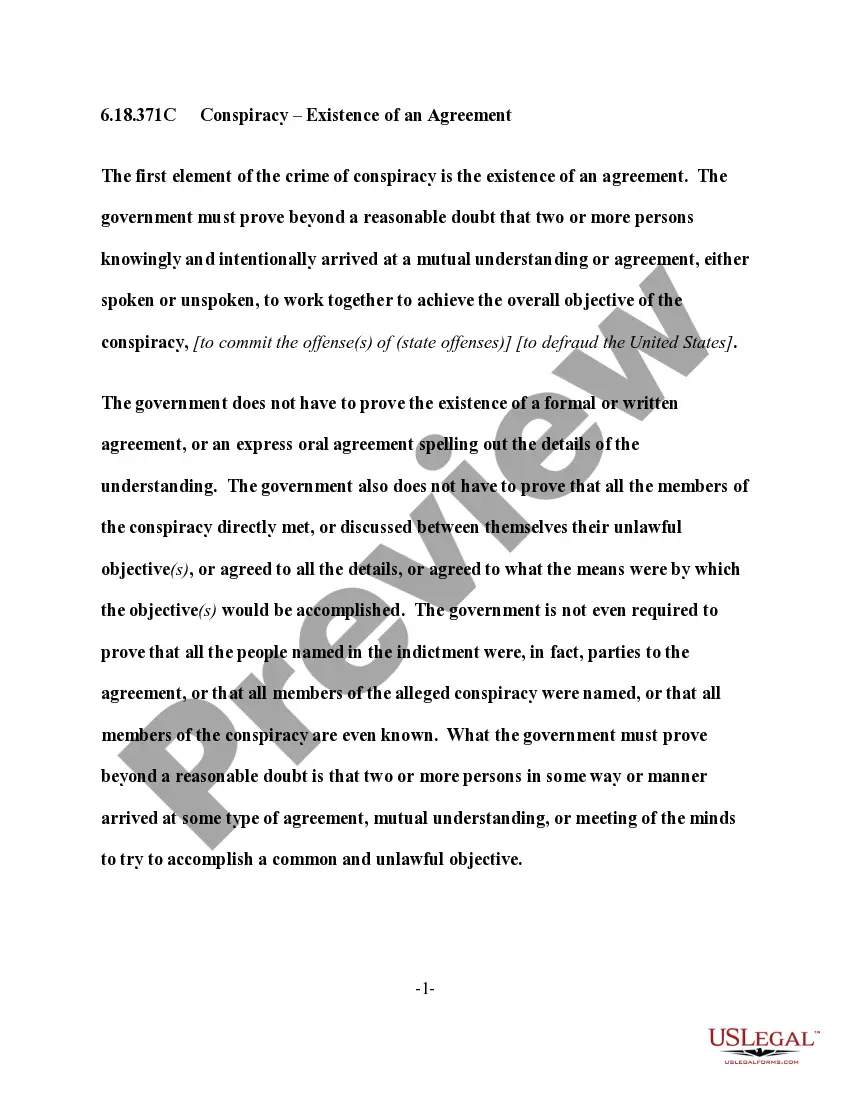
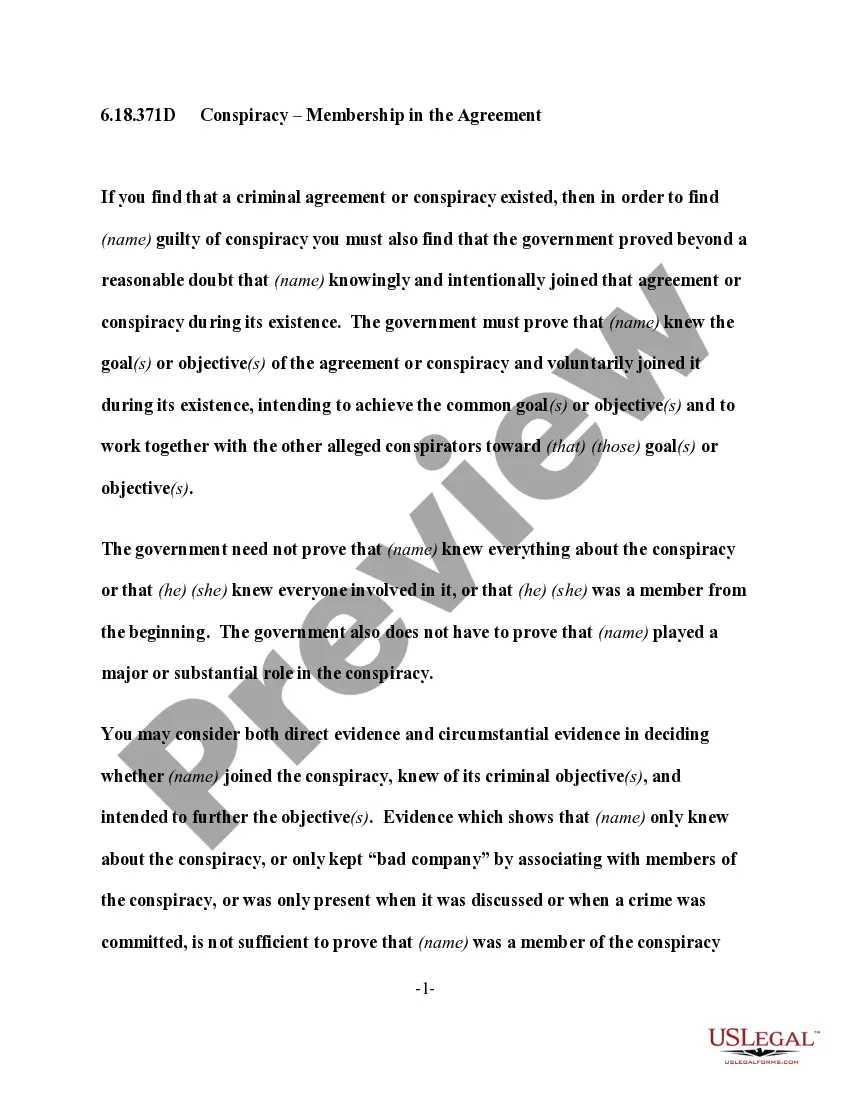
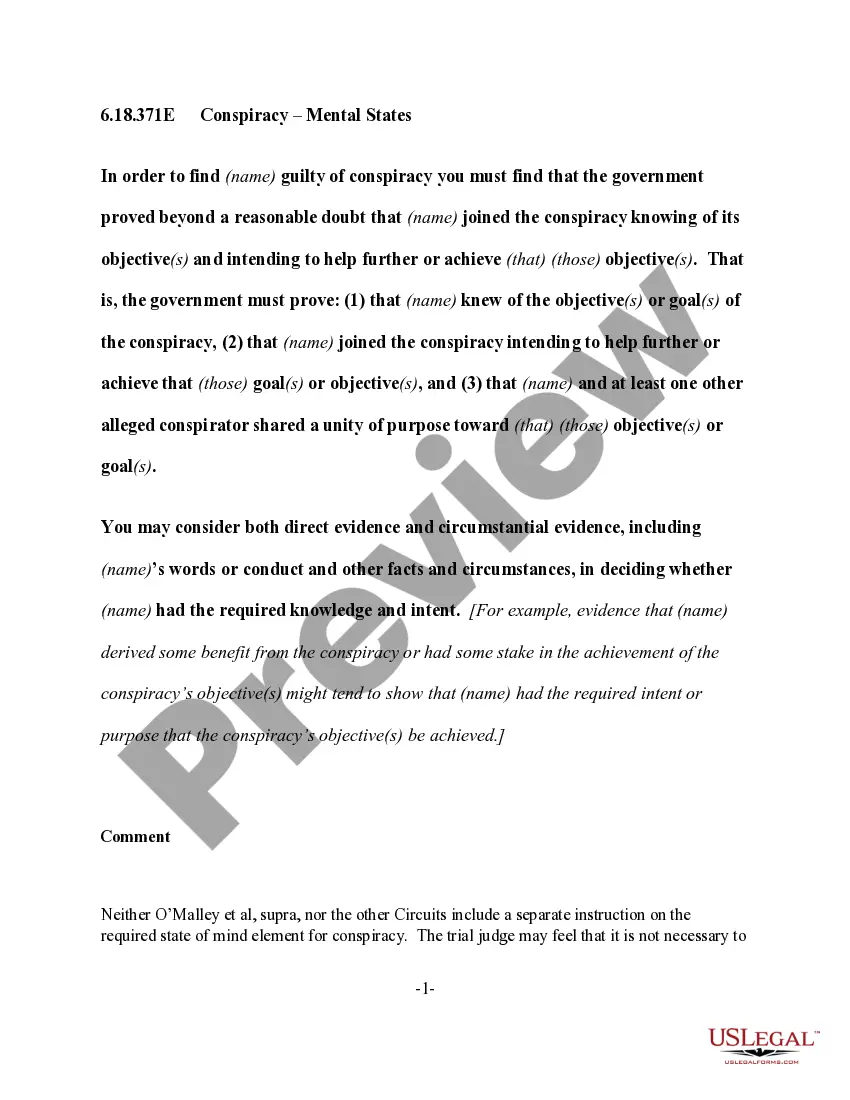
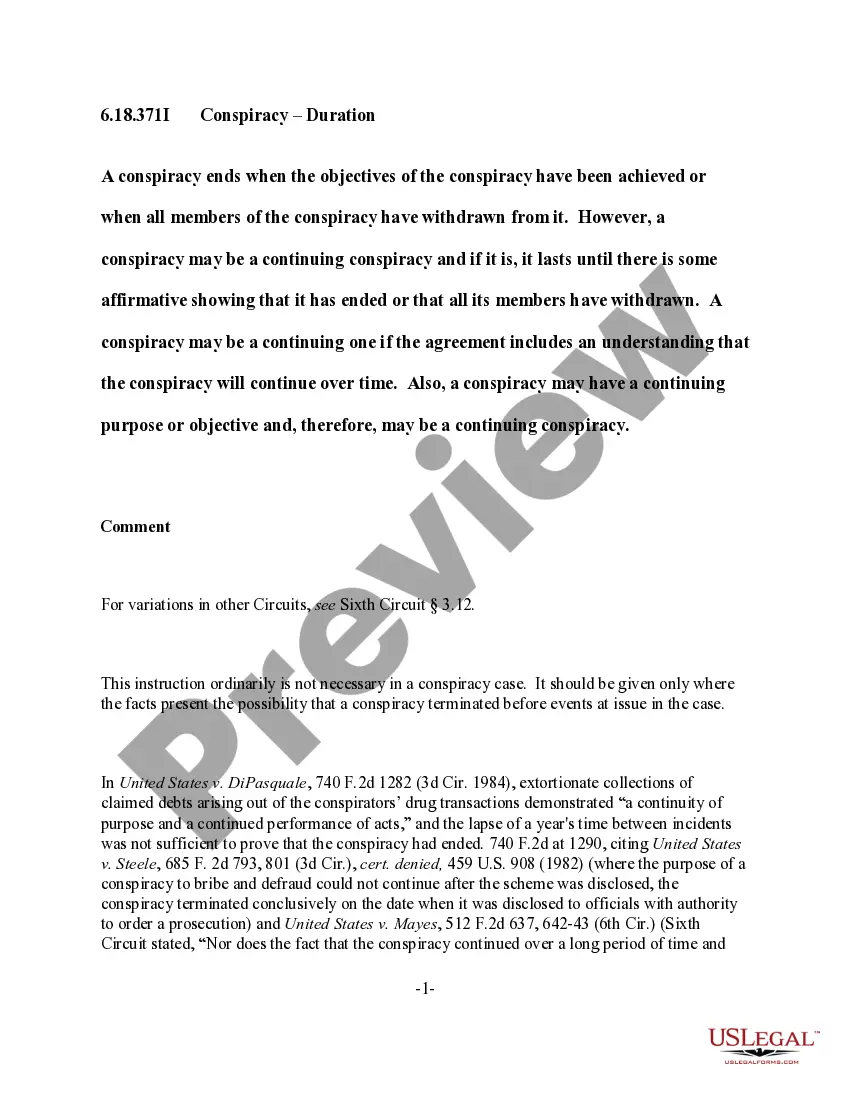
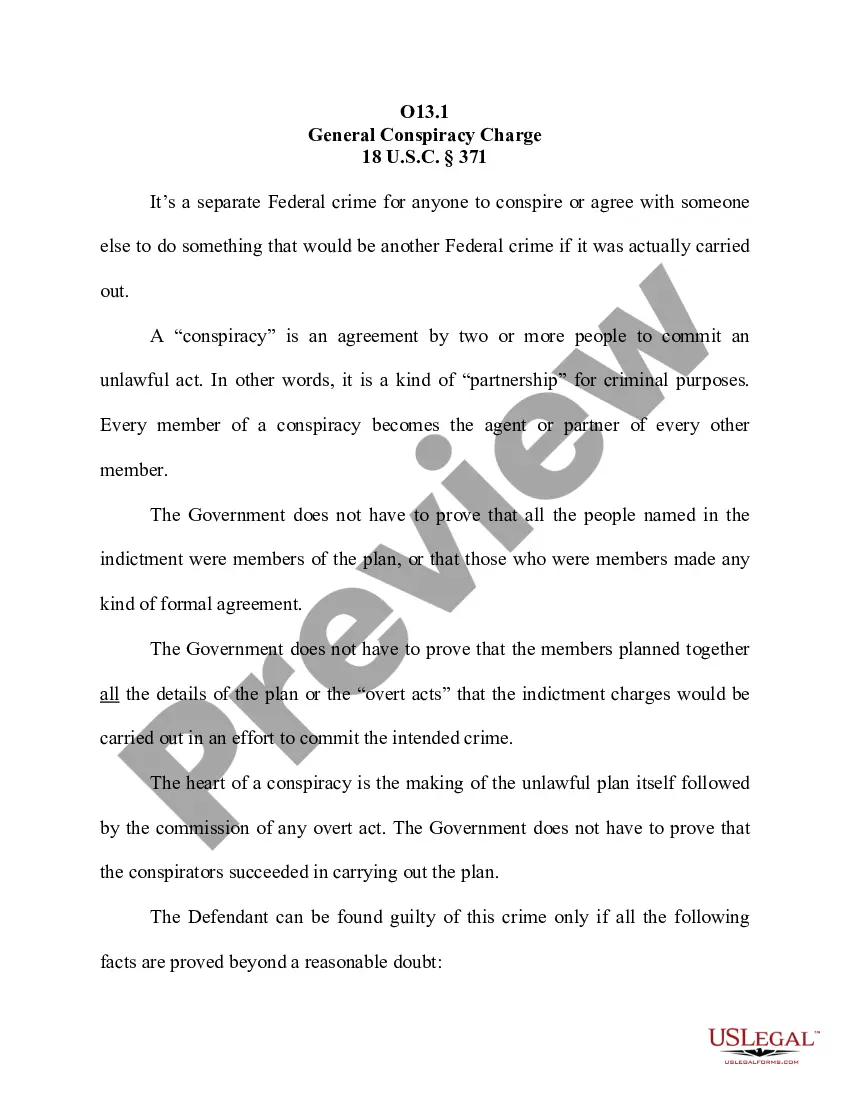
The Conspiracy - Overt Acts form is a legal document that outlines the requirements for proving overt acts within a conspiracy case. It serves as a critical component in establishing the government's burden of proof, specifically regarding the actions taken by co-conspirators that further the conspiracy's goals. This form differs from other legal forms by focusing specifically on the overt acts, which are not necessarily illegal by themselves but are relevant in demonstrating involvement in a conspiracy.
What’s included in this form
- Definition of overt acts in the context of conspiracy.
- Requirements for the government to establish proof beyond a reasonable doubt.
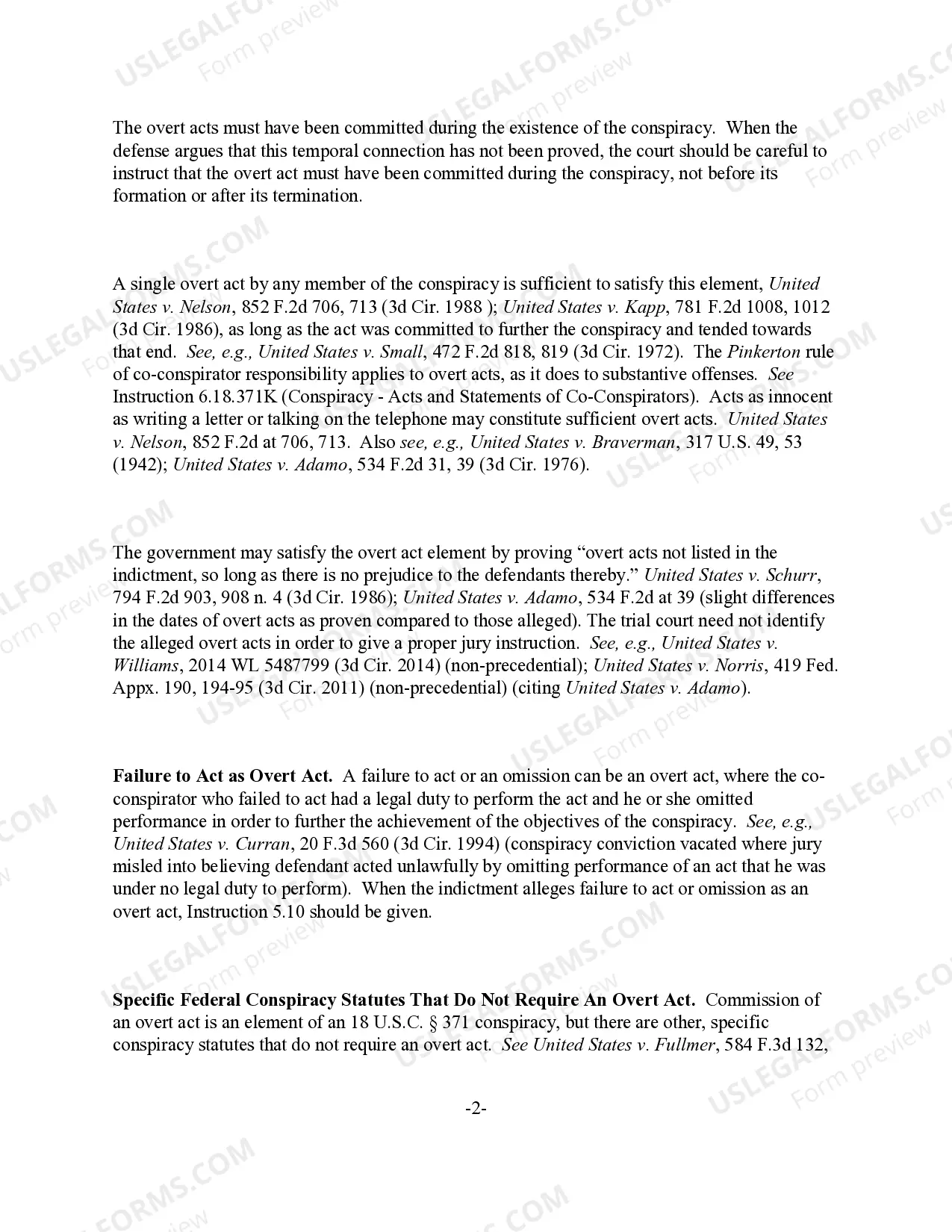
- Clarification on the sufficiency of any single overt act by a co-conspirator.
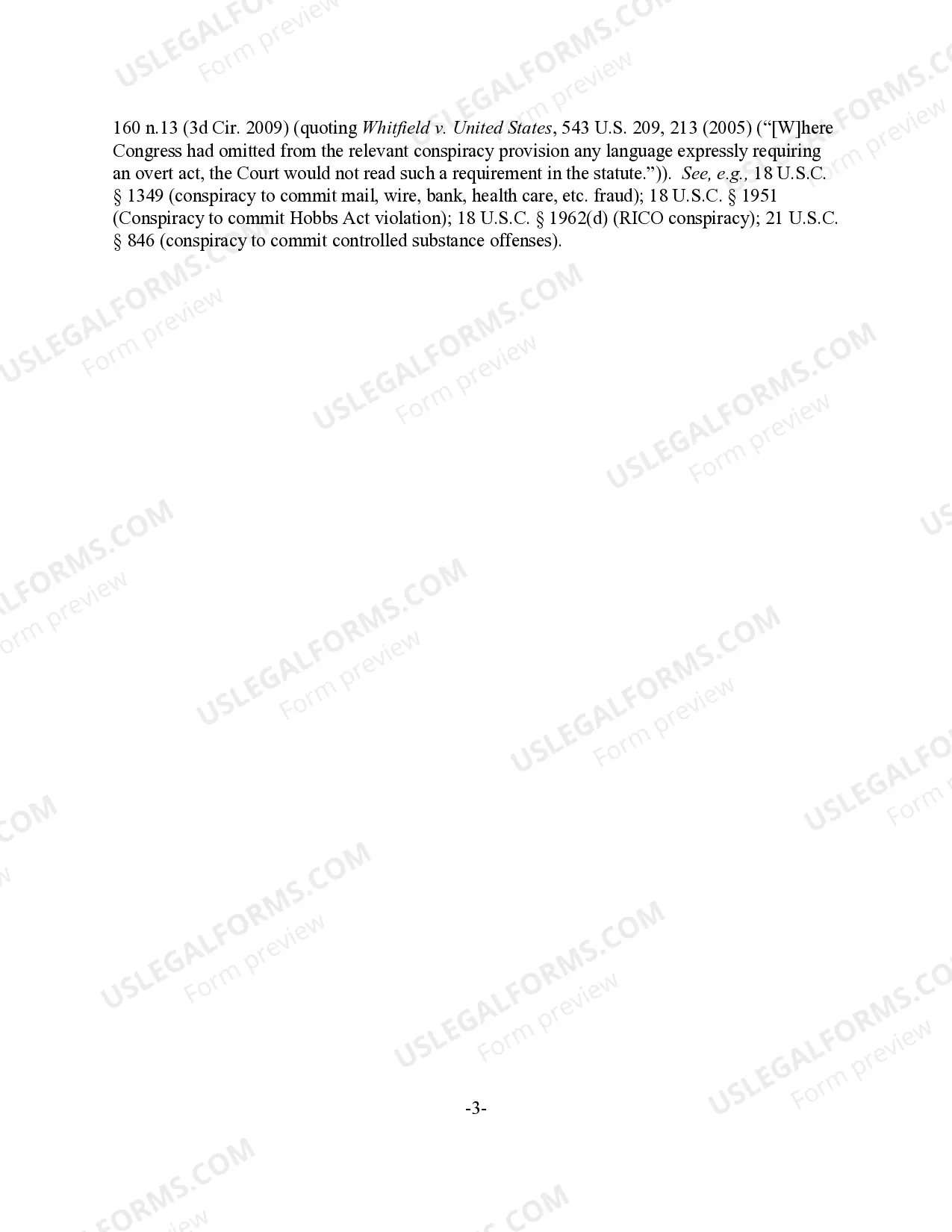
- Legal precedents related to overt acts and co-conspirator responsibility.
- Provisions for failures to act as potential overt acts.
When to use this document
This form is essential when a case involves conspiracy charges, particularly when the prosecution must prove that at least one overt act was committed by a member of the conspiracy to advance its objectives. It is used during criminal trials to instruct juries on the specific legal standards they must consider when evaluating the overt acts alleged in the indictment. If you are involved in a conspiracy charge, this form clarifies the actions that must be substantiated to determine culpability.
Who can use this document
- Individuals charged with conspiracy in a criminal case.
- Defense attorneys preparing for trial involving conspiracy charges.
- Prosecutors gathering evidence for conspiracy allegations.
- Legal professionals seeking to understand the standards for proving overt acts in conspiracy cases.
Instructions for completing this form
- Review the indictment to identify the alleged overt acts.
- Determine the time frame during which the conspiracy was active.
- Identify which member of the conspiracy committed the overt acts.
- Compile evidence that demonstrates the purpose of each overt act relating to the conspiracy objectives.
- Ensure that the interpretation of the overt acts aligns with established legal precedents.
Is notarization required?
In most cases, this form does not require notarization. However, some jurisdictions or signing circumstances might. US Legal Forms offers online notarization powered by Notarize, accessible 24/7 for a quick, remote process.
Get your form ready online
Our built-in tools help you complete, sign, share, and store your documents in one place.
Make edits, fill in missing information, and update formatting in US Legal Forms—just like you would in MS Word.
Download a copy, print it, send it by email, or mail it via USPS—whatever works best for your next step.
Sign and collect signatures with our SignNow integration. Send to multiple recipients, set reminders, and more. Go Premium to unlock E-Sign.
If this form requires notarization, complete it online through a secure video call—no need to meet a notary in person or wait for an appointment.
We protect your documents and personal data by following strict security and privacy standards.

Make edits, fill in missing information, and update formatting in US Legal Forms—just like you would in MS Word.

Download a copy, print it, send it by email, or mail it via USPS—whatever works best for your next step.

Sign and collect signatures with our SignNow integration. Send to multiple recipients, set reminders, and more. Go Premium to unlock E-Sign.

If this form requires notarization, complete it online through a secure video call—no need to meet a notary in person or wait for an appointment.

We protect your documents and personal data by following strict security and privacy standards.
Mistakes to watch out for
- Failing to prove that overt acts were committed during the existence of the conspiracy.
- Assuming all overt acts listed in the indictment must be proven.
- Neglecting to provide sufficient evidence demonstrating the intent behind the overt acts.
- Not considering the implications of omission as an overt act.
Why complete this form online
- Immediate access to legally vetted templates tailored for use in conspiracy cases.
- Editability allows for customization to fit specific cases or jurisdictions.
- Convenient, as forms can be downloaded and used without the need for in-person consultations.
- Reliability from sources drafted by licensed attorneys, ensuring compliance with legal standards.
Legal use & context
- Provides a foundation for the governmentâs burden of proof in conspiracy cases.
- Helps juries understand the necessary elements required to establish overt acts.
- Prevents misunderstandings about the legal requirements related to conspiracy indictments.
Quick recap
- The government must prove at least one overt act to establish a conspiracy charge.
- Overt acts can include both actions and omissions by conspirators.
- This form is applicable across various jurisdictions with potential local variations in conspiracy laws.
Looking for another form?


Form popularity
FAQ
In criminal law, an overt act is the one that can be clearly proved by evidence and from which criminal intent can be inferred, as opposed to a mere intention in the mind to commit a crime.
Overt rules are openly communicated and highly visible to the family members so that they encourage ownership, participation and negotiation. They help to explicate family goals and expectations held by the parents. Covert rules are unspoken and tend to be rigid because they are not open for discussion or negotiation.
Example: Rental of a van, purchase of explosives, obtaining a map of downtown New York City and going back and forth to the World Trade Center, could each be considered overt acts as part of the terrorist bombing of that building.
The overt act required for conspiracy can be preparatory activity; the criminal act element required for attempt must be more than mere preparation. The criminal intent element required for conspiracy is specific intent or purposely to agree to commit the offense that is the conspiracy's object.
The Overt Act is some affirmative act done by one or more of the co- conspirators. The Overt Act, done in furtherance of the Agreement demonstrates that Agreement has advanced from merely talk to action.
Article III, Section 3, Clause 1, of the U.S. Constitution provides, "No Person shall be convicted of Treason unless on the Testimony of two Witnesses to the same overt Act." In such a case, an overt act means a step taken to execute a treasonable purpose, as distinguished from mere words or a treasonable sentiment,
Qualifications of overt acts in furtherance of a crime There must be at least two parties in agreement concerning elements of the crime. The agreement has to establish a commitment to an illegal objective. All suspected parties of the criminal intent need to know about the conspiracy.
Example: Rental of a van, purchase of explosives, obtaining a map of downtown New York City and going back and forth to the World Trade Center, could each be considered overt acts as part of the terrorist bombing of that building.