California Quitclaim Deed - Trust to an Individual
What this document covers
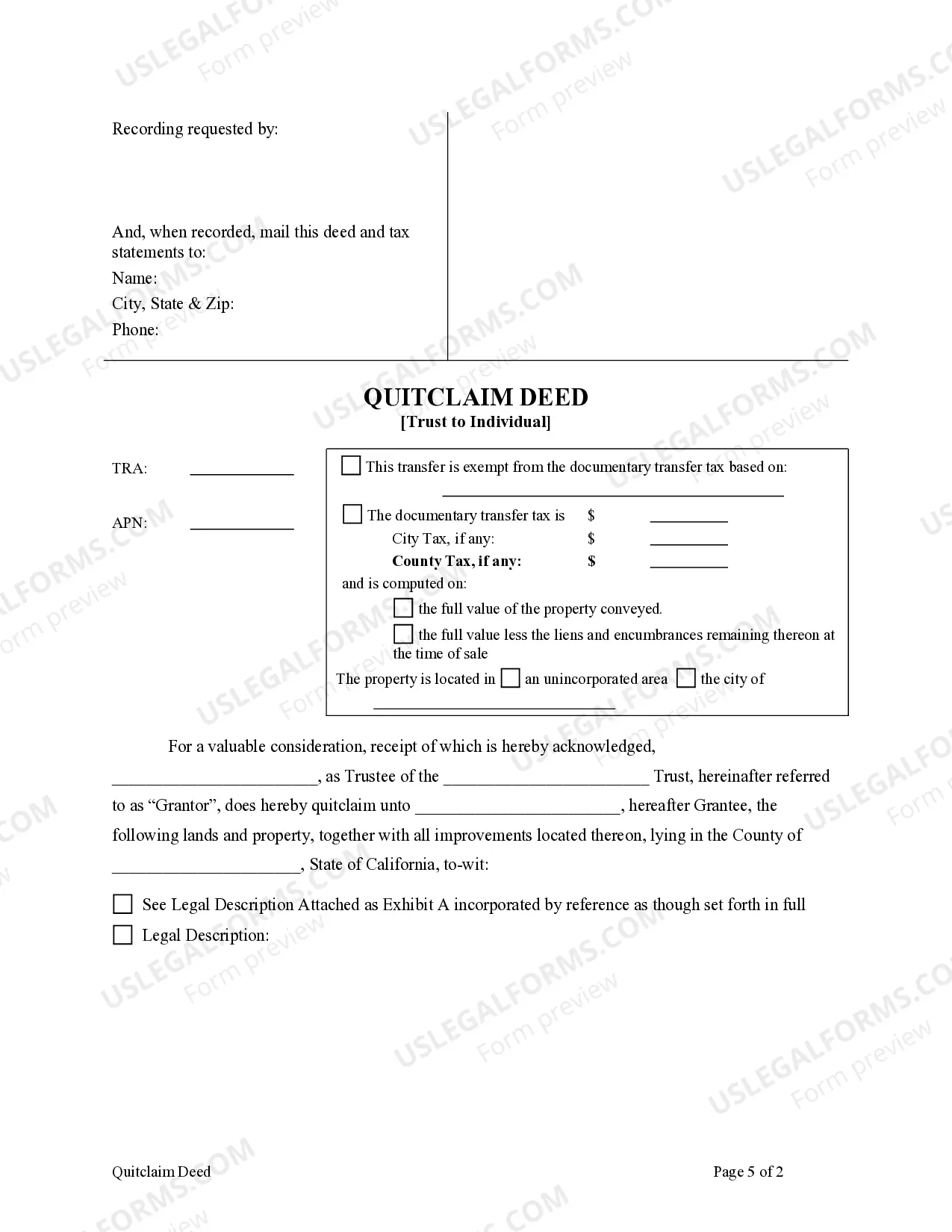
The Quitclaim Deed - Trust to an Individual is a legal document used to transfer property from a trust to an individual. Unlike warranty deeds, a quitclaim deed does not guarantee that the grantor holds clear title to the property, making it a more straightforward option for transferring ownership. This form meets all state statutory laws, providing a reliable means to facilitate property transactions involving trusts.
Key parts of this document
- Grantor Information: Details about the trust transferring the property.
- Grantee Information: The individual receiving the property.
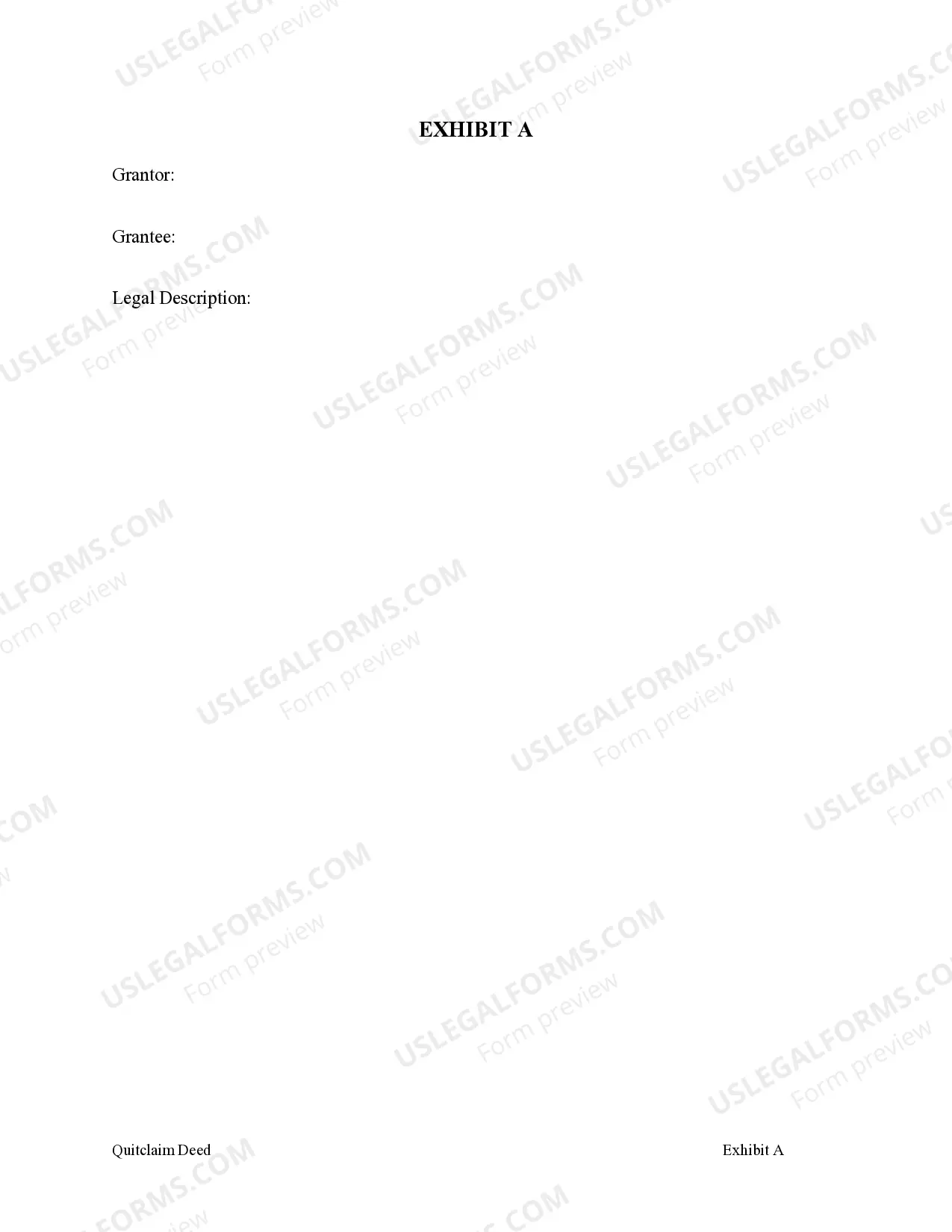
- Legal Description of Property: A detailed description of the property being transferred.
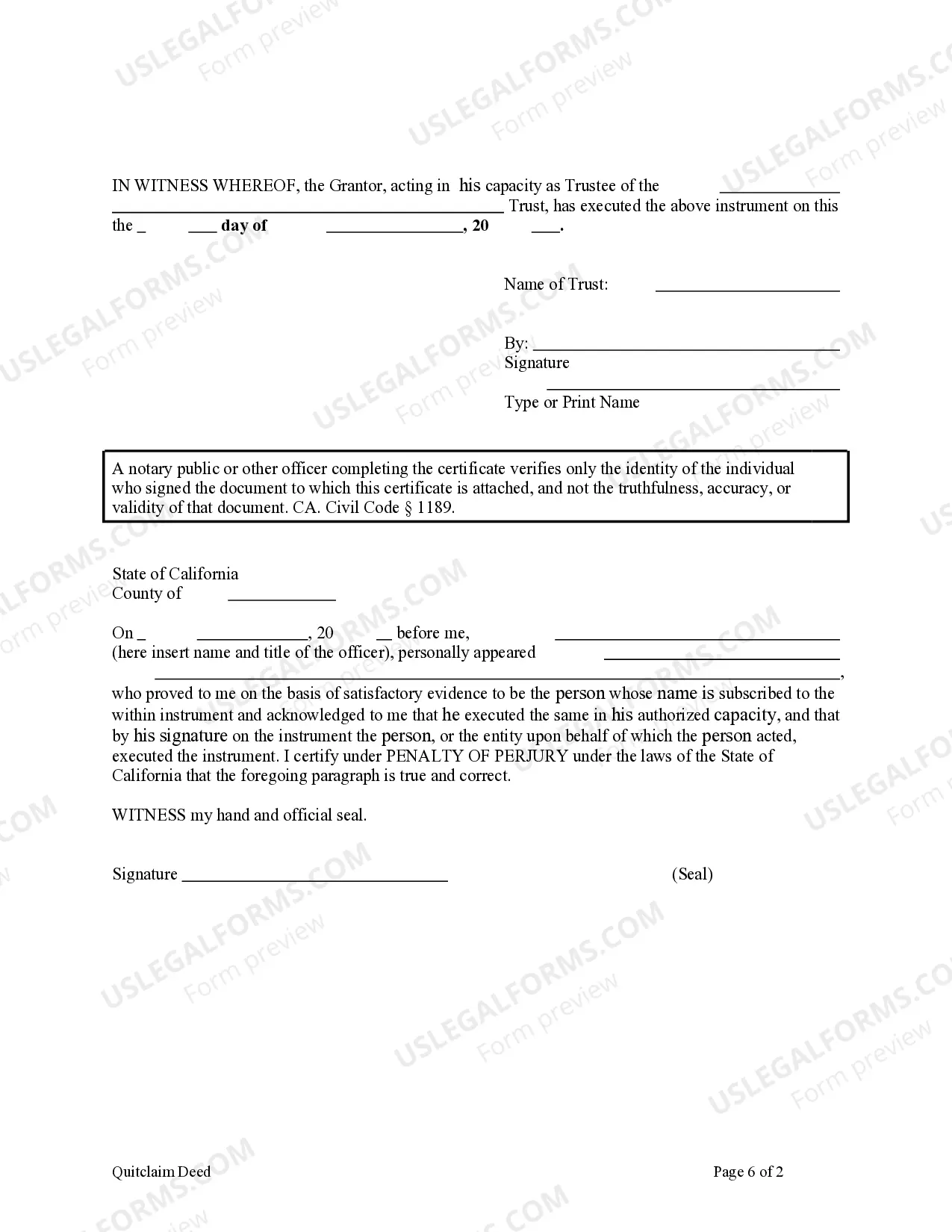
- Executor's Signature: Signature of an authorized individual representing the trust.
- Date of Transfer: The specific date when the transfer takes effect.





Situations where this form applies
You should use the Quitclaim Deed when a trust is transferring ownership of real property to an individual. This is particularly useful in situations where a property is being passed down to a beneficiary or when reorganizing ownership structures within a family trust. It can also be used in other scenarios where protection against future claims is not a concern.
Intended users of this form
- Individuals managing a trust who need to transfer property to a beneficiary.
- Trustees executing property transfers on behalf of the trust.
- Property owners who want to simplify the process of property transfers without warranties.
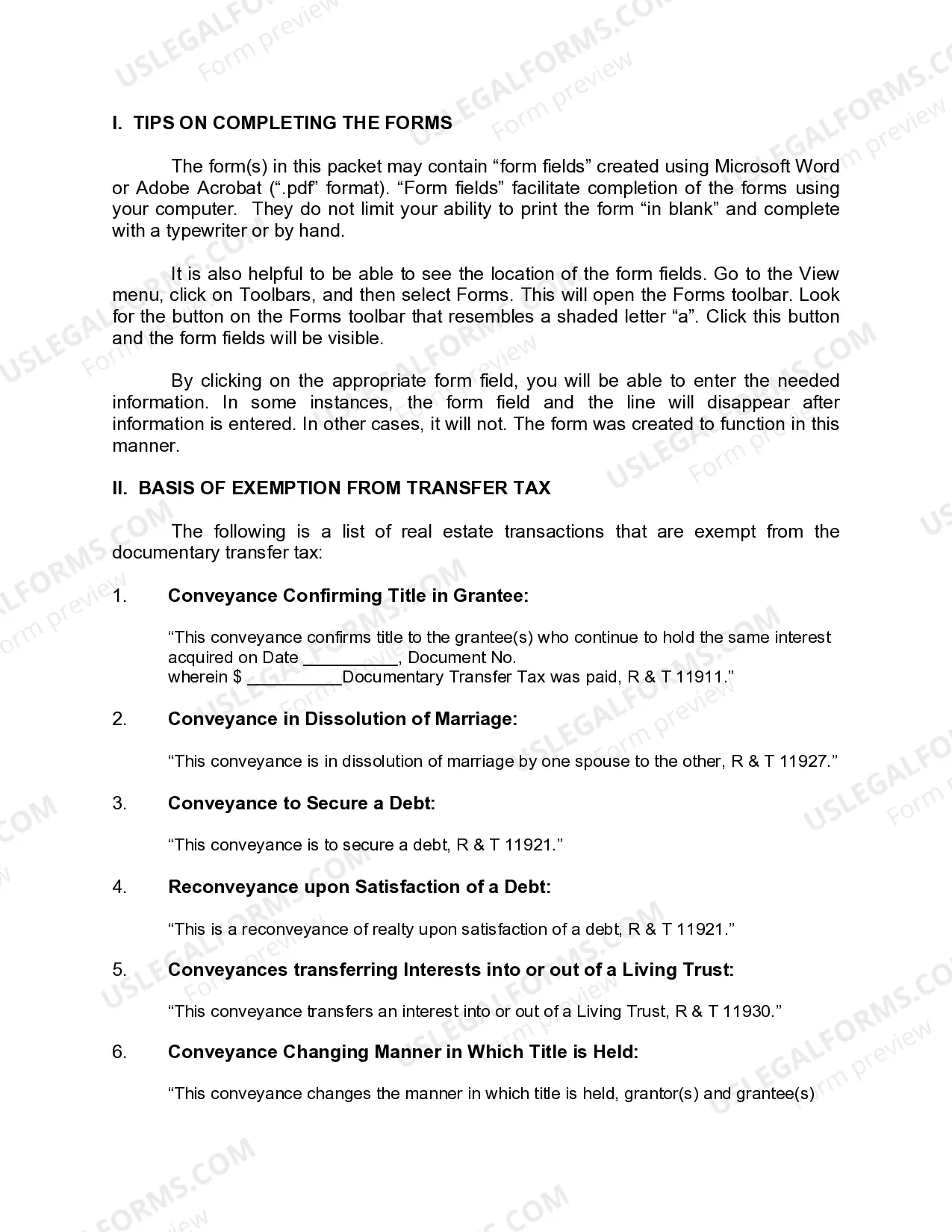
Instructions for completing this form
- Identify the parties involved: Enter the name of the trust as the grantor and the individual as the grantee.
- Specify the property: Include the legal description of the property being conveyed.
- Fill in the date: Record the date when the deed is being executed.
- Secure the necessary signatures: Ensure the trustee signs on behalf of the trust.
- Submit for notarization: If required by your local laws, have the deed notarized.
Does this form need to be notarized?
This form must be notarized to be legally valid. US Legal Forms provides secure online notarization powered by Notarize, allowing you to complete the process through a verified video call.
Get your form ready online
Our built-in tools help you complete, sign, share, and store your documents in one place.
Make edits, fill in missing information, and update formatting in US Legal Forms—just like you would in MS Word.
Download a copy, print it, send it by email, or mail it via USPS—whatever works best for your next step.
Sign and collect signatures with our SignNow integration. Send to multiple recipients, set reminders, and more. Go Premium to unlock E-Sign.
If this form requires notarization, complete it online through a secure video call—no need to meet a notary in person or wait for an appointment.
We protect your documents and personal data by following strict security and privacy standards.

Make edits, fill in missing information, and update formatting in US Legal Forms—just like you would in MS Word.

Download a copy, print it, send it by email, or mail it via USPS—whatever works best for your next step.

Sign and collect signatures with our SignNow integration. Send to multiple recipients, set reminders, and more. Go Premium to unlock E-Sign.

If this form requires notarization, complete it online through a secure video call—no need to meet a notary in person or wait for an appointment.

We protect your documents and personal data by following strict security and privacy standards.
Avoid these common issues
- Failing to include a complete legal description of the property.
- Not signing the form in the presence of a notary, when required.
- Leaving critical fields blank, such as the date of transfer.
- Incorrectly identifying the grantor or grantee roles.
Benefits of completing this form online
- Convenience of downloading and printing from home.
- Ability to edit the form to suit specific needs before printing.
- Access to reliable forms that meet state legal requirements.
Looking for another form?

Form popularity
FAQ
Filing a deed of trust in California involves drafting the document with essential details about the borrower, lender, and property involved. Once the deed is prepared, it should be signed by the borrower in front of a notary public. After notarization, file the deed with the county recorder's office. For further assistance, platforms like US Legal Forms can provide templates and guidance to ensure compliance with state regulations.
The choice between a quitclaim deed and a trust often depends on your specific needs. A Trust provides a comprehensive strategy for managing and distributing assets, while a California Quitclaim Deed - Trust to an Individual delivers a straightforward method for transferring property rights. Each option has its advantages, so consider how you wish to protect and manage your property before making a decision.
A quitclaim deed cannot be used for transferring property subject to liens or mortgages without the lender's consent. Additionally, it is not appropriate for sales where title is being guaranteed, as quitclaim deeds do not carry warranties. They also may not suffice in divorce settlements or probate situations. Understanding these limitations helps you select the best method for property transfer.
To submit a quitclaim deed in California, first complete the deed form accurately, ensuring that all required information is included. Next, sign the deed in the presence of a notary public. Once notarized, submit the deed to your local county recorder's office by mail or in person. The California Quitclaim Deed - Trust to an Individual should be filed within a reasonable time to avoid complications.
Absolutely, you can execute a California Quitclaim Deed - Trust to an Individual from a trust. In this situation, the trustee must sign the deed, ensuring that it reflects their authority as outlined in the trust documents. This allows for a smooth transfer of property interests to an individual. For assistance in creating this deed, US Legal Forms offers templates that streamline the process.
Yes, a California Quitclaim Deed - Trust to an Individual can effectively transfer property out of a trust. This process involves the trustee executing the quitclaim deed to convey interest in the property to an individual. The deed must include specific details about the property and the parties involved. Remember to file the deed with the appropriate county recorder's office to ensure the transfer is legally recognized.
A quitclaim deed might not be appropriate in situations where you want to guarantee the title's marketability or when conveying property as part of a sale. This deed does not provide any warranties about the property’s condition or marketability, making it unsuitable for more complex transactions. For secure property transfers, consider using a warranty deed instead. If you're unsure, consult professionals to ensure you meet your specific needs.
To transfer a deed to a family member in California, you can use a California Quitclaim Deed - Trust to an Individual. Start by filling out the quitclaim deed form with the necessary details about both parties and the property. After completing the form, you must sign it in front of a notary public and then file it with your county's recorder's office. This process ensures that the deed transfer is legal and documented.
In North Carolina, individuals and corporate entities can also act as trustees on a deed of trust. This diversity allows for flexibility in selecting a trustee that fits your needs. If you're exploring a California quitclaim deed – trust to an individual, it's essential to understand the varying rules in different states. Legal resources can provide guidance for multi-state transactions.
Yes, an individual can definitely serve as a trustee, holding the responsibility of managing trust assets. This individual must act in the best interest of the beneficiaries according to the trust's terms. When employing a California quitclaim deed – trust to an individual, appointing a reliable trustee is crucial for effective management and compliance. Make informed choices about who you select for this important role.