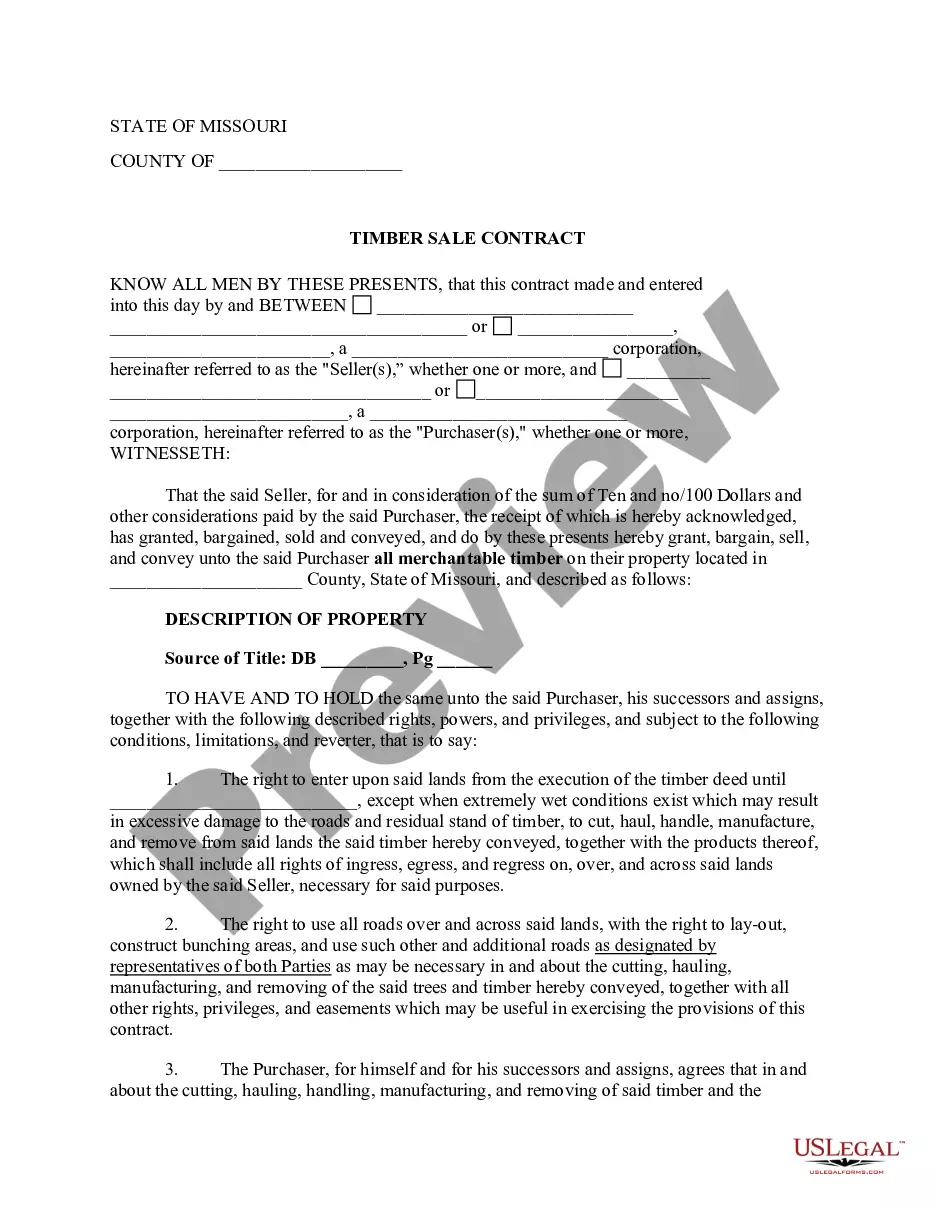
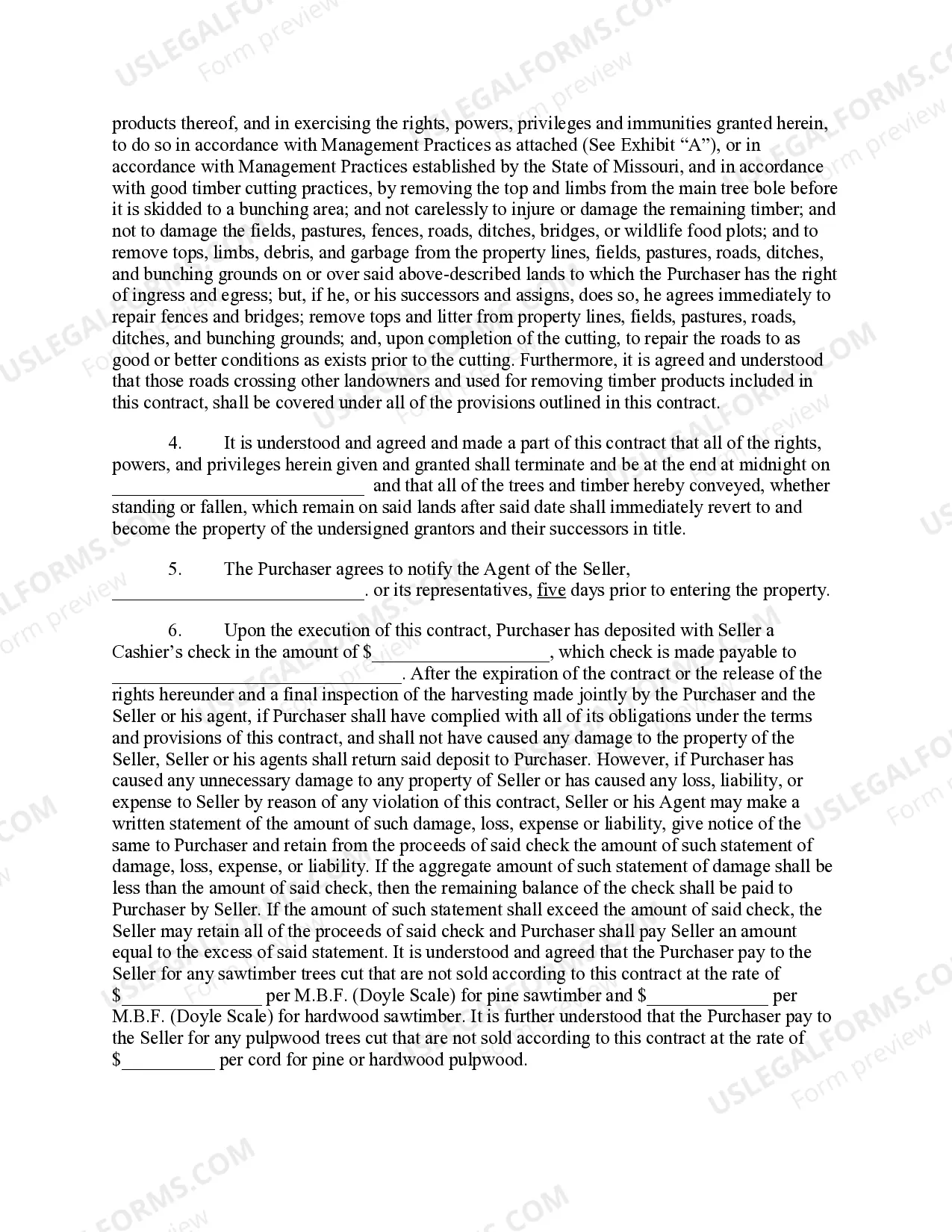
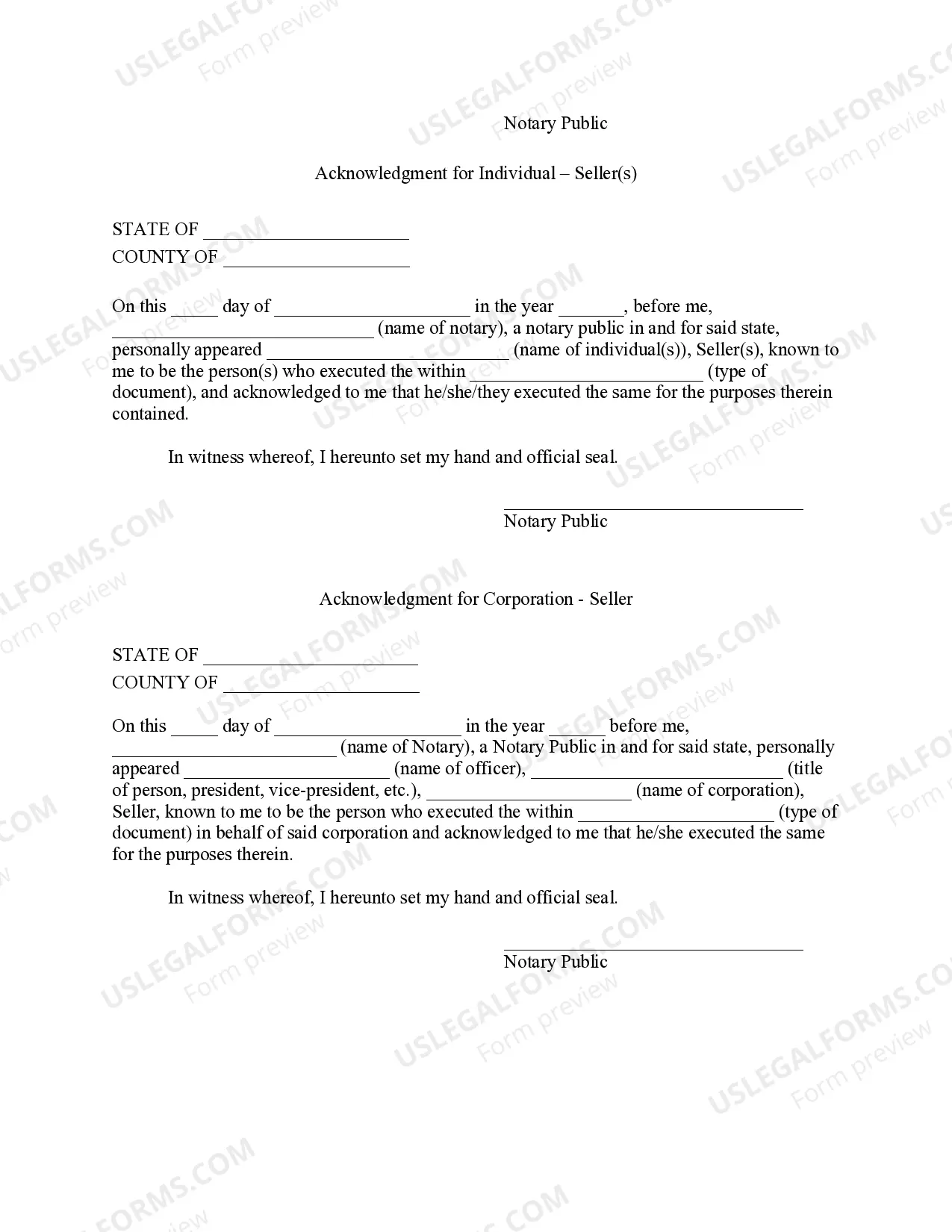
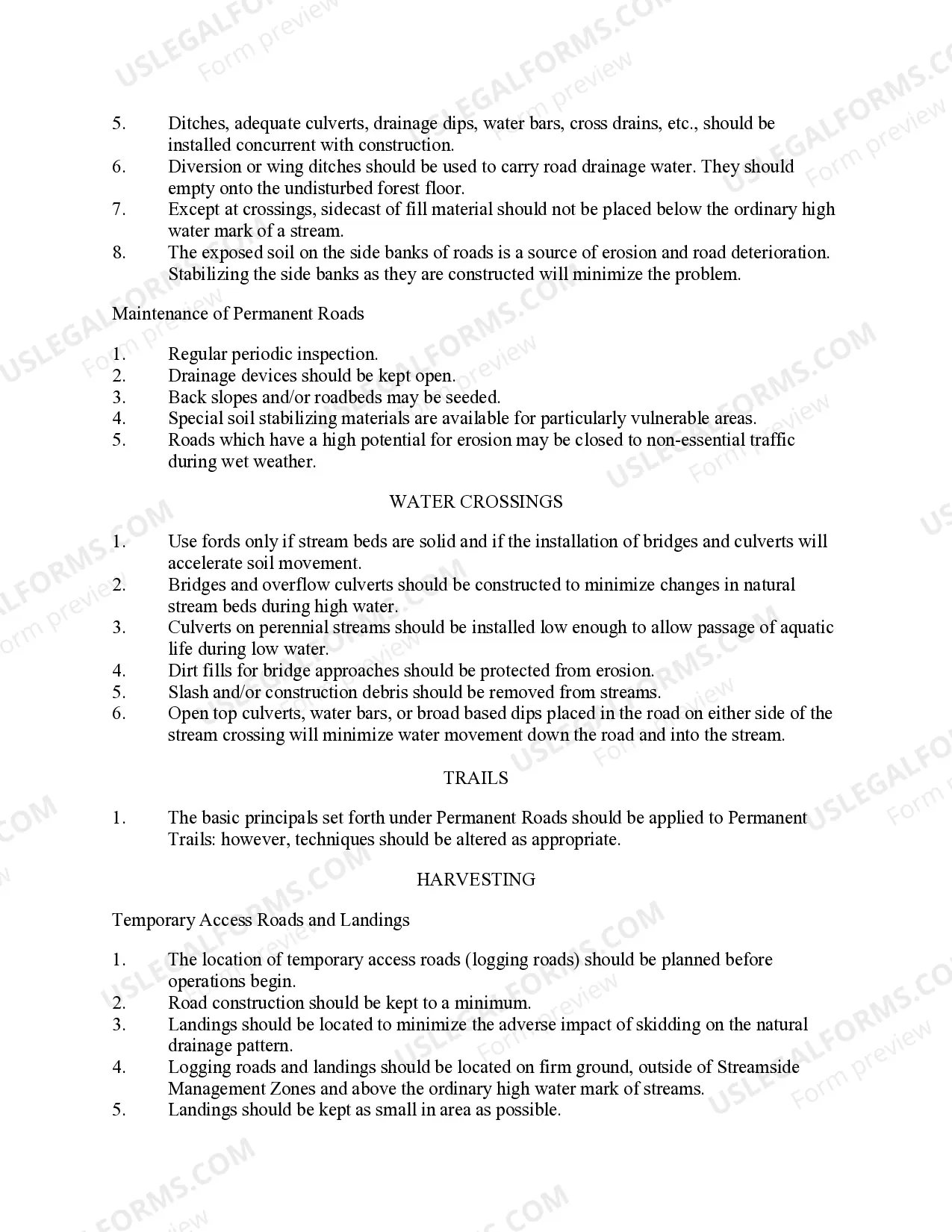
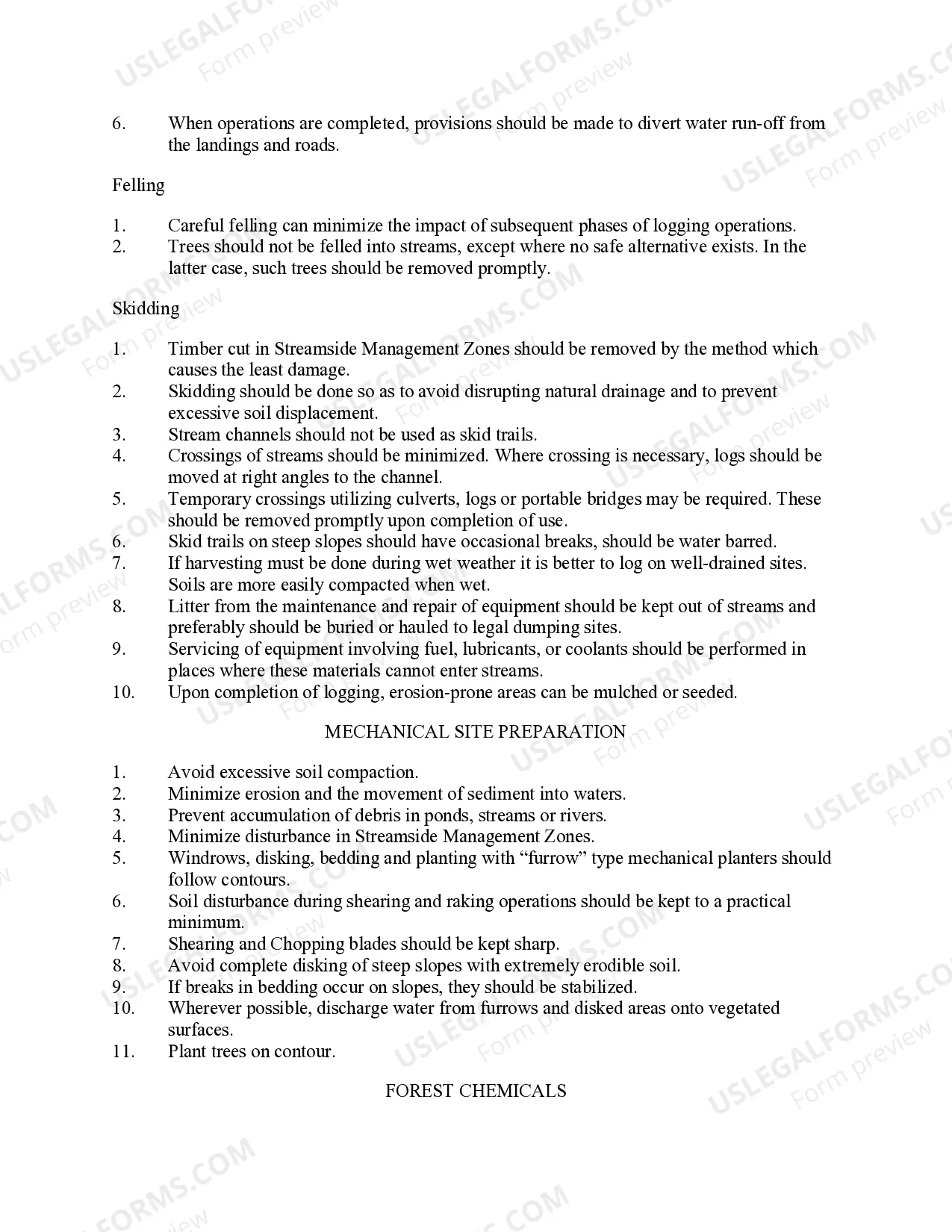
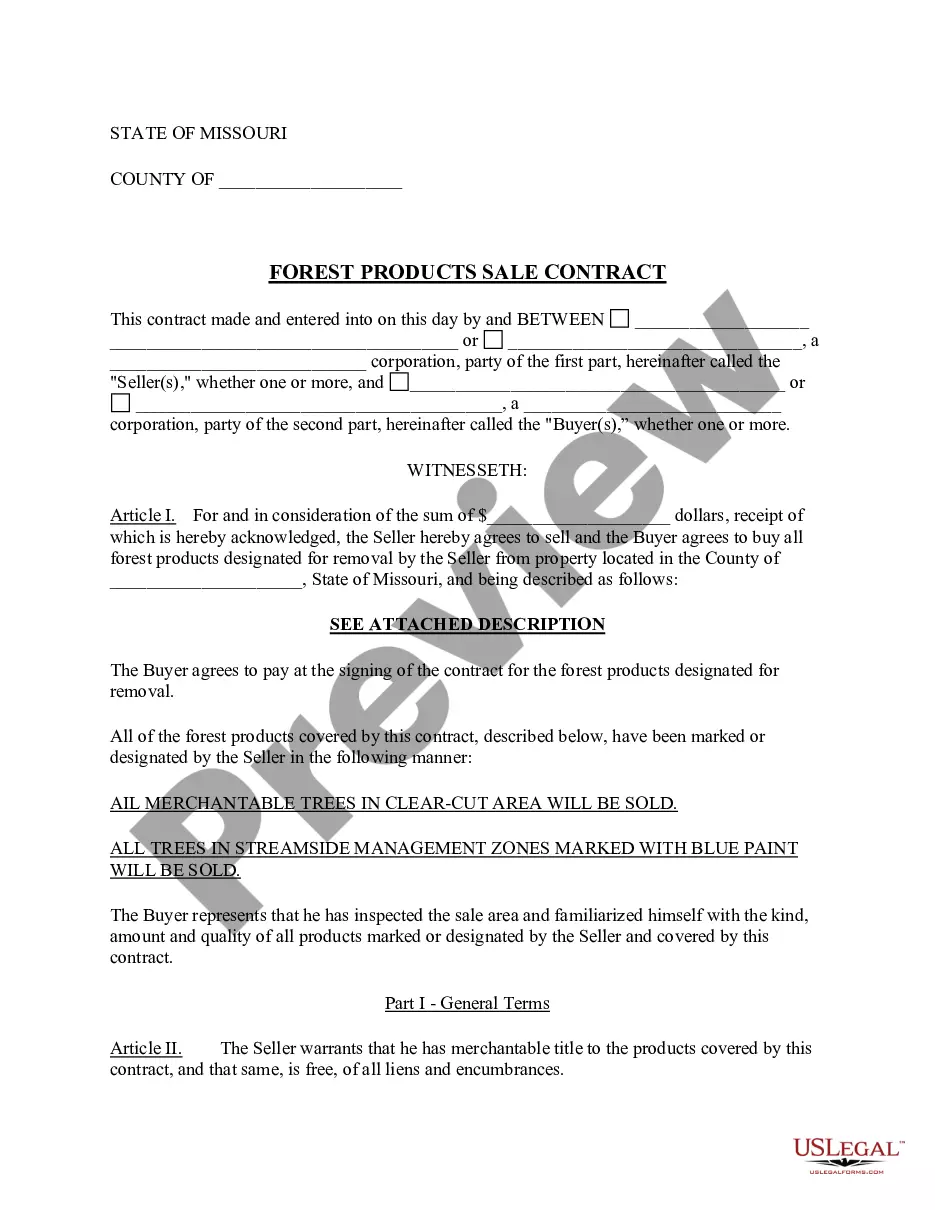
This is a contract whereby the buyer agrees to purchase all timber as designated for removal by the seller. Seller will also grant the buyer the right of ingress and egress to remove the timber from seller's land.
Kansas City Missouri Timber Sale Contract
Category:
State:
Missouri
City:
Kansas City
Control #:
MO-E4002
Format:
Word;
Rich Text
Instant download
Description
Free preview




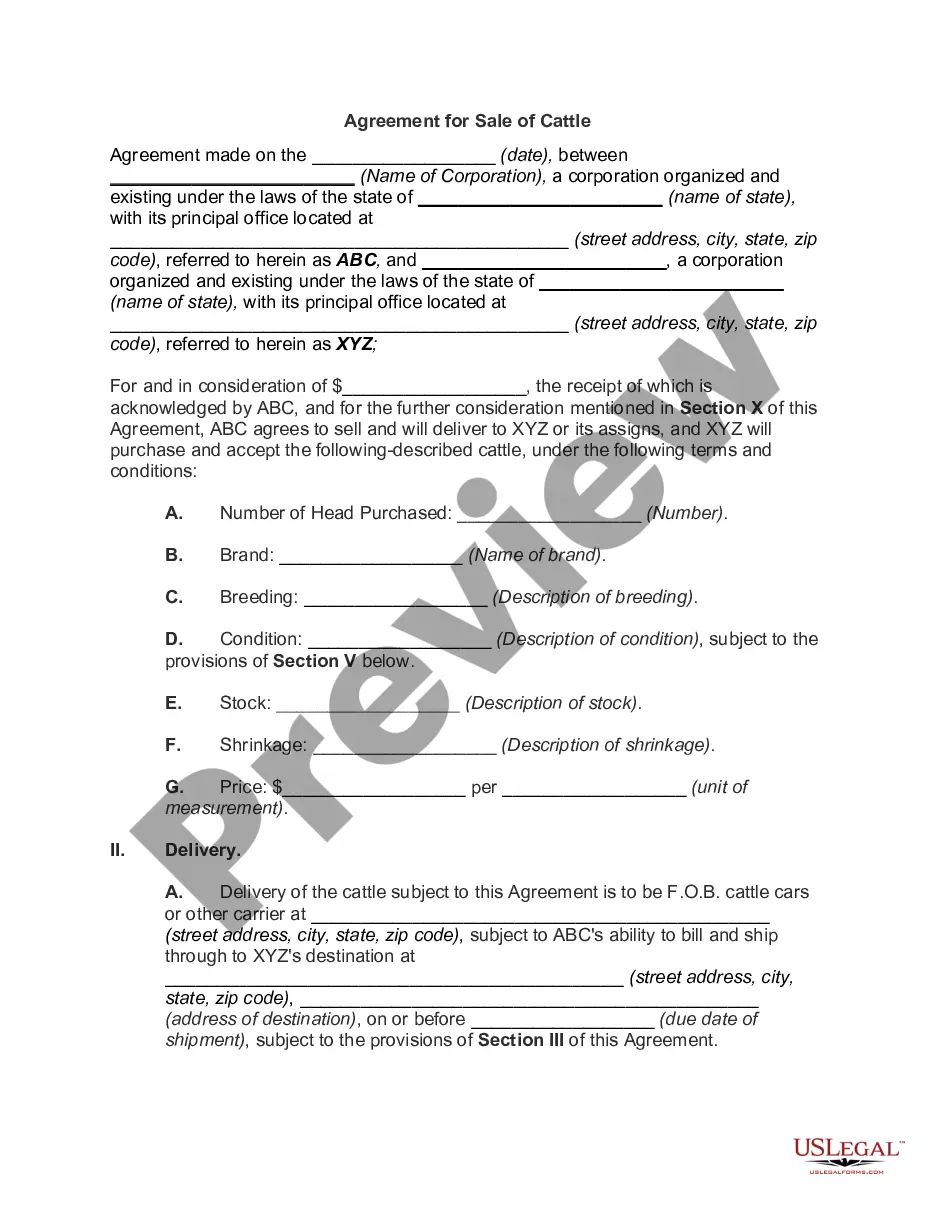
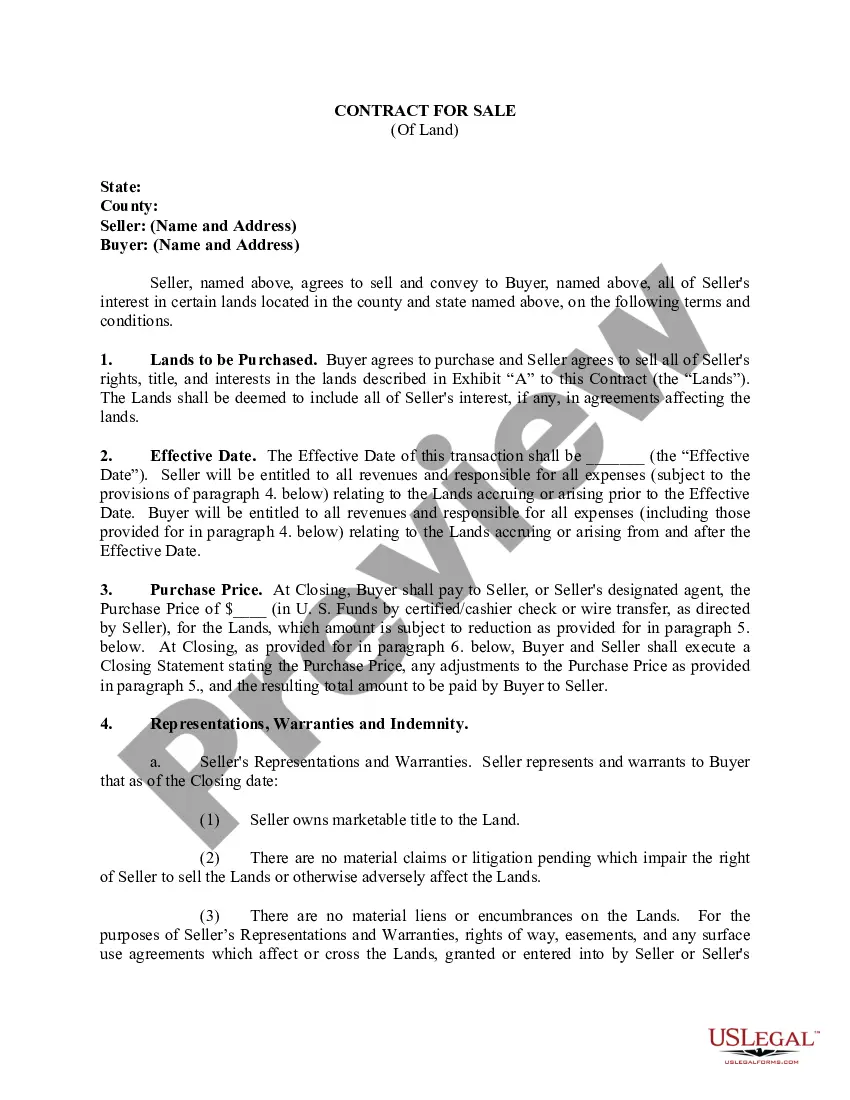

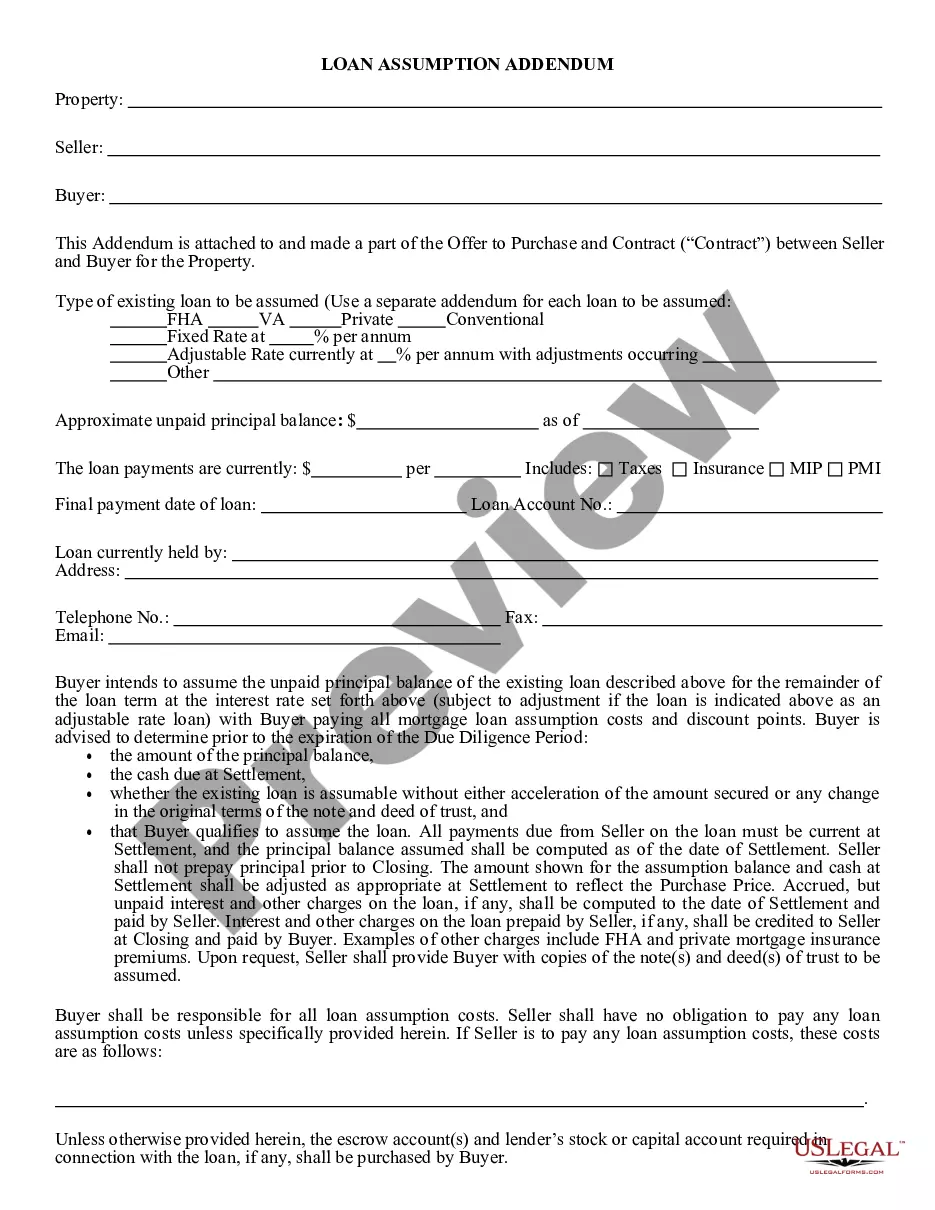

How to fill out Missouri Timber Sale Contract?
If you’ve previously utilized our service, sign in to your account and download the Kansas City Missouri Timber Sale Contract onto your device by clicking the Download button. Ensure your subscription is current. If not, renew it based on your payment structure.
If this is your initial interaction with our service, follow these easy steps to acquire your file.
You have lifetime access to all documents you have purchased: you can find them in your profile through the My documents section whenever you need to use them again. Utilize the US Legal Forms service to swiftly discover and save any template for your personal or professional requirements!
- Ensure you’ve found an appropriate document. Review the description and use the Preview feature, if present, to verify if it satisfies your needs. If it doesn’t suit you, employ the Search tab above to locate the correct one.
- Purchase the template. Click the Buy Now button and select a monthly or yearly subscription option.
- Create an account and process a payment. Utilize your credit card information or the PayPal method to finalize the transaction.
- Obtain your Kansas City Missouri Timber Sale Contract. Select the file type for your document and store it on your device.
- Complete your sample. Print it or make use of professional online editors to fill it out and sign it digitally.
Form popularity
FAQ
The amount of stumpage you pay is based on the timber volumes, species and grades you report and the stumpage rates for your timber. If applicable, the bid you made for your timber licence will be calculated into your stumpage. You can look up stumpage rates using the Harvest Billing System.
Profit margins for the supplier average 3 to 5.5 percent. In general, a profit margin reflects the amount of value added to the product during processing and the amount of risk associated with the endeavor. While loggers do not technically add value to the timber they process and deliver, they do turn trees into logs.
With a stumpage sale, the buyer takes ownership of the timber from the landowner when the trees are harvested. Stumpage rates are proposed by the buyer (typically a logging contractor, forester, or mill) and stumpage paid to the landowner in exchange for the right to harvest their timber.
With a stumpage sale, the buyer takes ownership of the timber from the landowner when the trees are harvested. Stumpage rates are proposed by the buyer (typically a logging contractor, forester, or mill) and stumpage paid to the landowner in exchange for the right to harvest their timber.
Most landowners prefer to clearcut their timberland when it is in the 26+ age class, since a majority of the trees have reached the higher-value sawtimber category....How Much Money is an Acre of Timber Worth? Pine Timber Values/AcreYearPlantationNatural2017$1,542$1,6182018$1,694$1,7382019$1,566$2,0551 more row ?
Logging is generally categorized into two categories: selective and clear-cutting. Selective logging is selective because loggers choose only wood that is highly valued, such as mahogany. Clear-cutting is not selective.
CAN. This Canadian industry comprises establishments primarily engaged in cutting timber, producing rough, round, hewn, or riven primary wood, and producing wood chips in the forest, on a fee or contract basis.
Fallers: $44,650. Logging Equipment Operators: $41,440. Logging Workers: $39,780. Log Graders and Scalers: $37,280.
Types of logs Electrode resistivity devices. Induction logging. Microresistivity logs. Spontaneous (SP) log.
A typical timber sale contract usually contains the following: a description of the timber to be sold (estimated volume, number of trees and species), which timber will and will not be cut, the selling price (either lump sum or unit price), terms of payment, the location and boundaries of the sale, and time allowed to