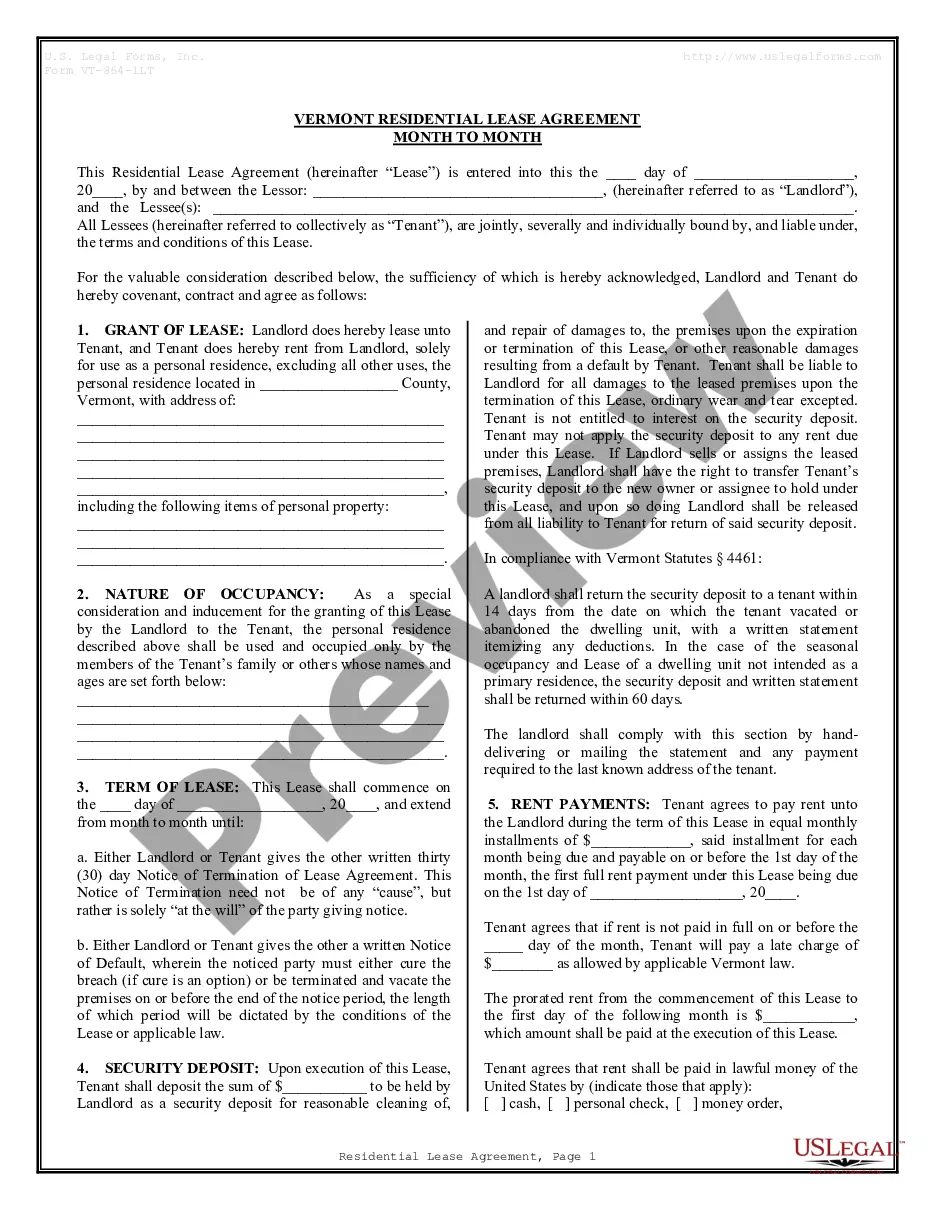
Vermont Leases
Leases are essential documents for rental agreements in Vermont. Our attorney-drafted templates are quick and simple to complete.

Similar documents: key differences
- Lease vs. Rental Agreement — often interchangeable, but a lease usually covers a longer term.
- Sublease vs. Lease — a sublease is between the original tenant and a new tenant, while a lease is direct with the landlord.
- Commercial Lease vs. Residential Lease — commercial leases are for business purposes, while residential leases are for living spaces.
- Month-to-Month Lease vs. Fixed-Term Lease — month-to-month allows for flexible duration, whereas fixed-term has a defined end date.
Search for more forms
Types of Lease forms
Equipment Rental Agreement
Secure a clear agreement for renting equipment, detailing costs, responsibilities, and legal protection for both parties involved.
Aircraft Lease for Successive Terms
Secure leasing of aircraft for multiple terms, ensuring clear terms for maintenance, payments, and responsibilities.
Marina Berth Lease — Dock or Slip Rental
Secure a designated space for your boat at a marina with this lease agreement.
Vehicle Lease — Personal Use
Secure a clear rental agreement for vehicles, detailing payment terms and responsibilities of both parties.
Application for Vehicle Lease
Use this form to establish a lease agreement for a vehicle, detailing rental terms and responsibilities for both parties.
Horse Trailer Rent-to-Own Lease
Ideal for leasing a horse trailer with options to purchase, ensuring both parties understand their rights and responsibilities.
Lease for Storage of Goods
Secure a rental agreement for storing goods, ensuring clarity on responsibilities and risks involved.
Retail Store Lease — % of Gross Receipts
Establish a lease agreement that includes additional rent based on sales, suitable for retail businesses seeking to align rent with performance.
Month to Month Commercial Rental
Ideal for flexible leasing, this agreement allows businesses to rent commercial space on a month-to-month basis, simplifying terms of use and termination.
Short-Form Office Space Lease
Easily outline terms for leasing office space, protecting rights for both landlords and tenants in a straightforward agreement.
Triple Net (NNN) Commercial Lease
Ideal for landlords and tenants, this agreement clarifies rental responsibilities and terms for commercial properties.
Triple Net (NNN) Lease — "Net Net Net" Form
Ideal for landlords and tenants seeking clear leasing terms, this document outlines responsibilities in a triple net lease arrangement.
Vacant Lot Lease — Right to Construct Improvements
Set clear terms for leasing vacant property while allowing construction of improvements.
Individual Space Lease for Retail Store in Shopping Center
Outline key rental terms for opening a retail store in a shopping center, ensuring a clear agreement between landlord and tenant.
Shopping Center Space Lease — Lessor Constructs
Secure a lease for retail space in a shopping center, featuring construction by the lessor to ensure a suitable location for your business.
Booth Concession Rental Agreement for Farmers Market
Secure booth space at a farmers market with this agreement, outlining rental terms and vendor responsibilities.
Concession Agreement
Use this agreement to define concession rights between a property owner and vendor, outlining responsibilities and terms for selling products on the property.
License Agreement for Grazing on Private Lands
Ensure proper terms for grazing livestock on private lands with this comprehensive agreement between property owners and licensees.
Crop-Share Cash Farm Lease
Secure a fair arrangement for agricultural land use with clear terms on responsibilities and shared profits.
Farm Lease
Establish hunting rights on property while ensuring legal compliance and safety for all hunters.
Personal Property Lease
Ideal for renting personal property, this agreement outlines terms between the lessor and lessee, including payment and return conditions.
Lot and Mobile Home Lease
Establish a legal rental agreement for a lot and mobile home, outlining terms like rent, duration, and responsibilities.
Room or Bedroom Lease
Establish clear leasing terms for renting a room, including responsibilities and payment details, to protect both owner and tenant.
Rental Lease Agreement for House
Secure a lease for your home with this essential agreement outlining the terms between landlord and tenant.
Assignment of General and Specific Leases
Handle the transfer of leases when purchasing real estate, ensuring all existing agreements are included in the sale.
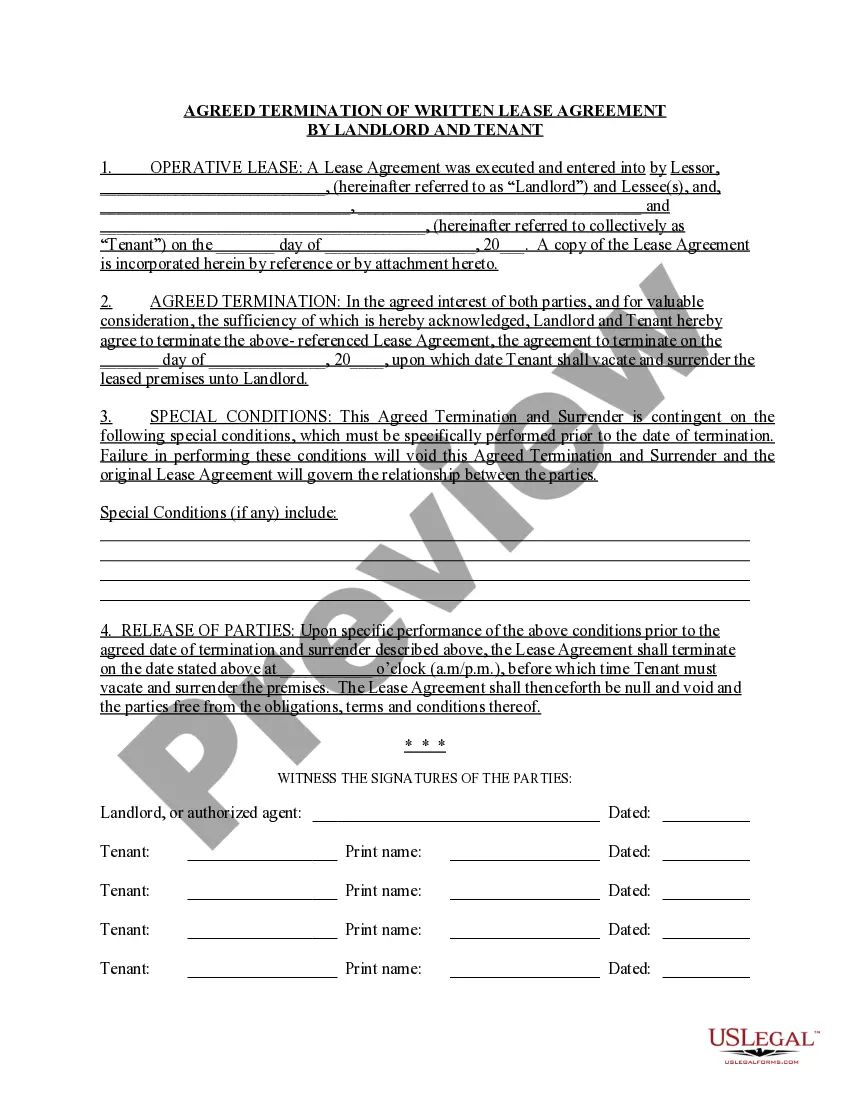
Agreement to Terminate Lease Agreement by Mutual Consent upon Termination of Lessee's Business
Use this agreement to formally end a lease when a business ceases operations, ensuring legal release from obligations for both parties.
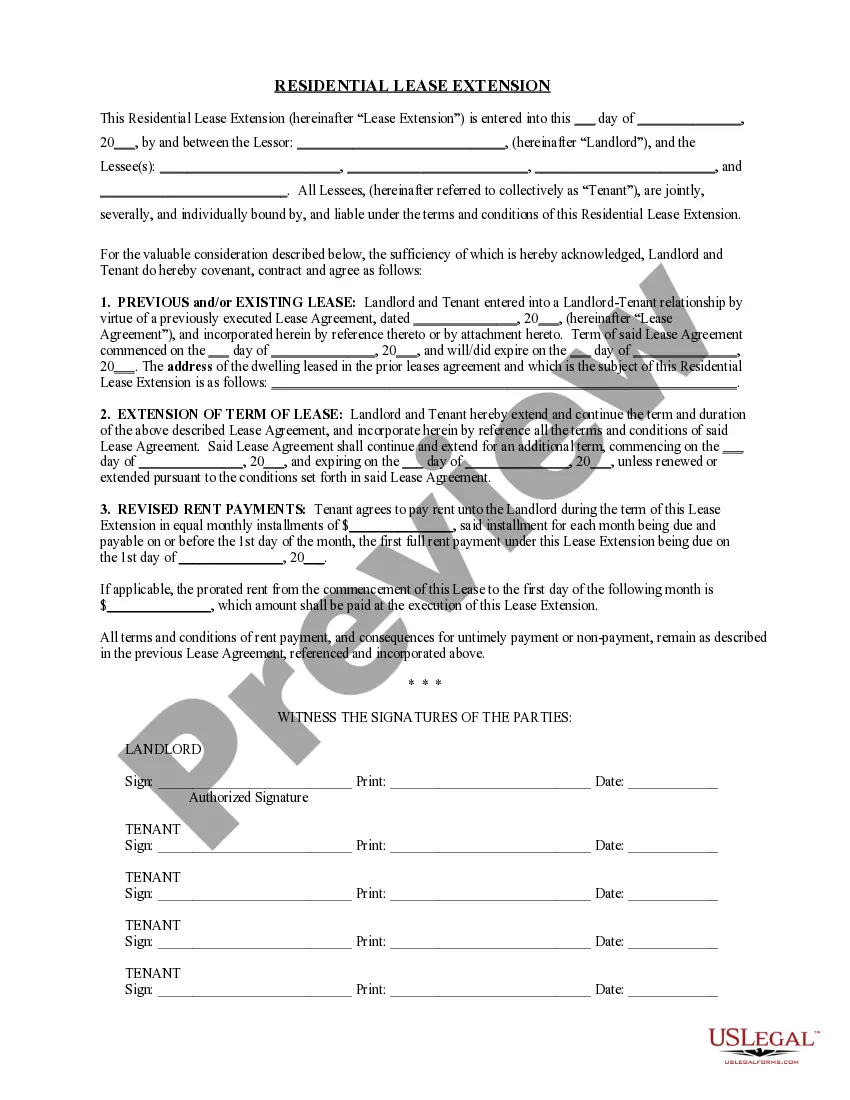
Lease Modification — Extend Term + Increase Rent
Need to lengthen your lease and adjust the rent? This form facilitates extending your lease term while ensuring the rent increase is properly documented.
Lease Purchase Agreement for Equipment
Secure equipment through leasing with the option to purchase, providing flexibility for businesses needing temporary use.
Equipment Sublease of Key Holder
Often used by businesses, this agreement formalizes the sublease of equipment and access key, outlining responsibilities and payment terms.
Sublease Agreement for Office Space
Secure your office space sublease with an agreement outlining rights, responsibilities, and rental terms.
Contract for the Lease of Personal Property
Secure a lease agreement for personal property with terms for usage, maintenance, and liabilities clearly outlined.
Rental Lease Agreement for Apartment
Secure your rental agreement with clear terms regarding rent, utilities, occupancy limits, and security deposits for better landlord-tenant relationships.
Notice of Lease
Notify relevant parties of an existing lease agreement with essential details about the landlord and tenant.
Residential Lease with Noise Ordinance
Use this lease agreement to establish rental terms and conditions, including noise ordinances, between tenants and landlords in Vermont.
Common Vermont Lease documents
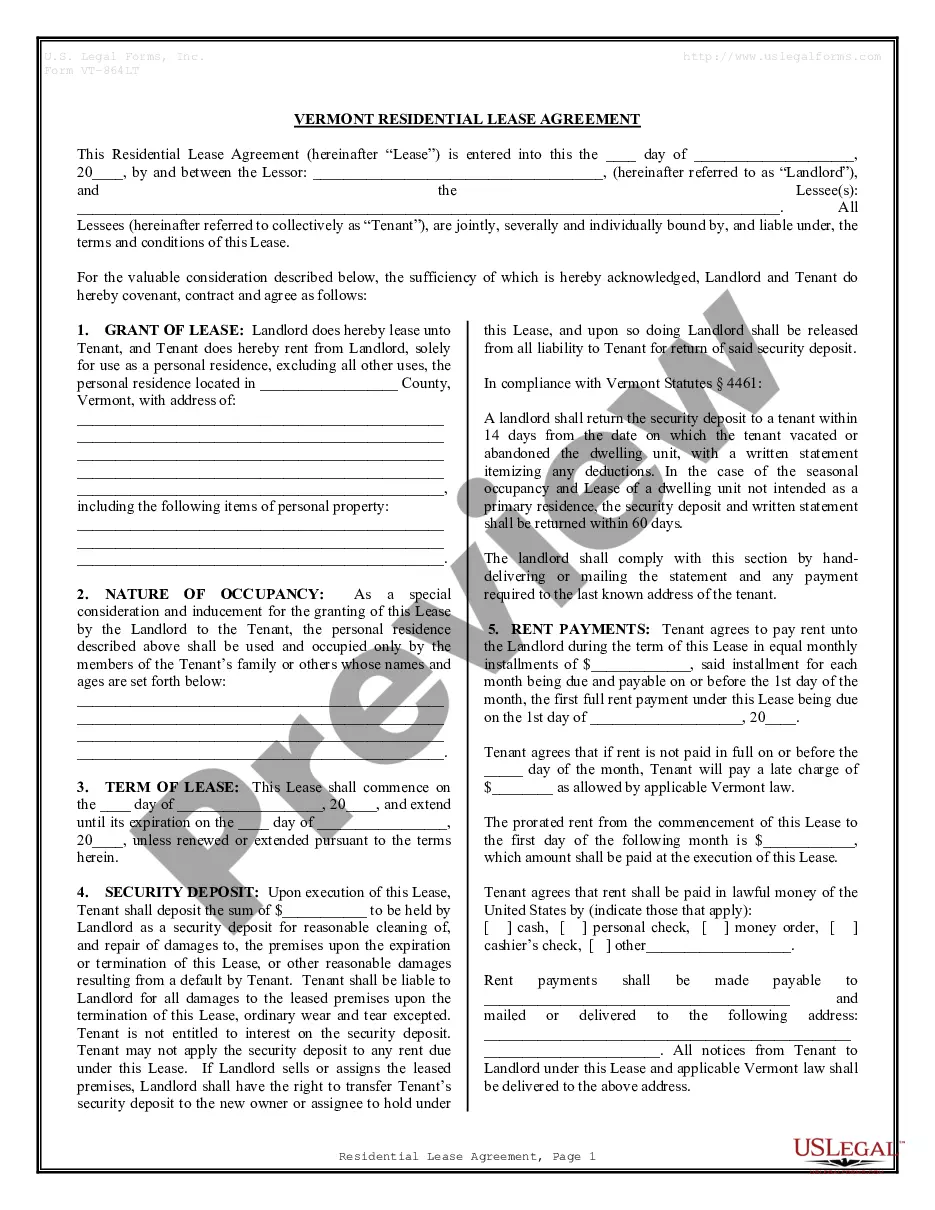
- Residential Lease — outlines the terms for renting a home or apartment.
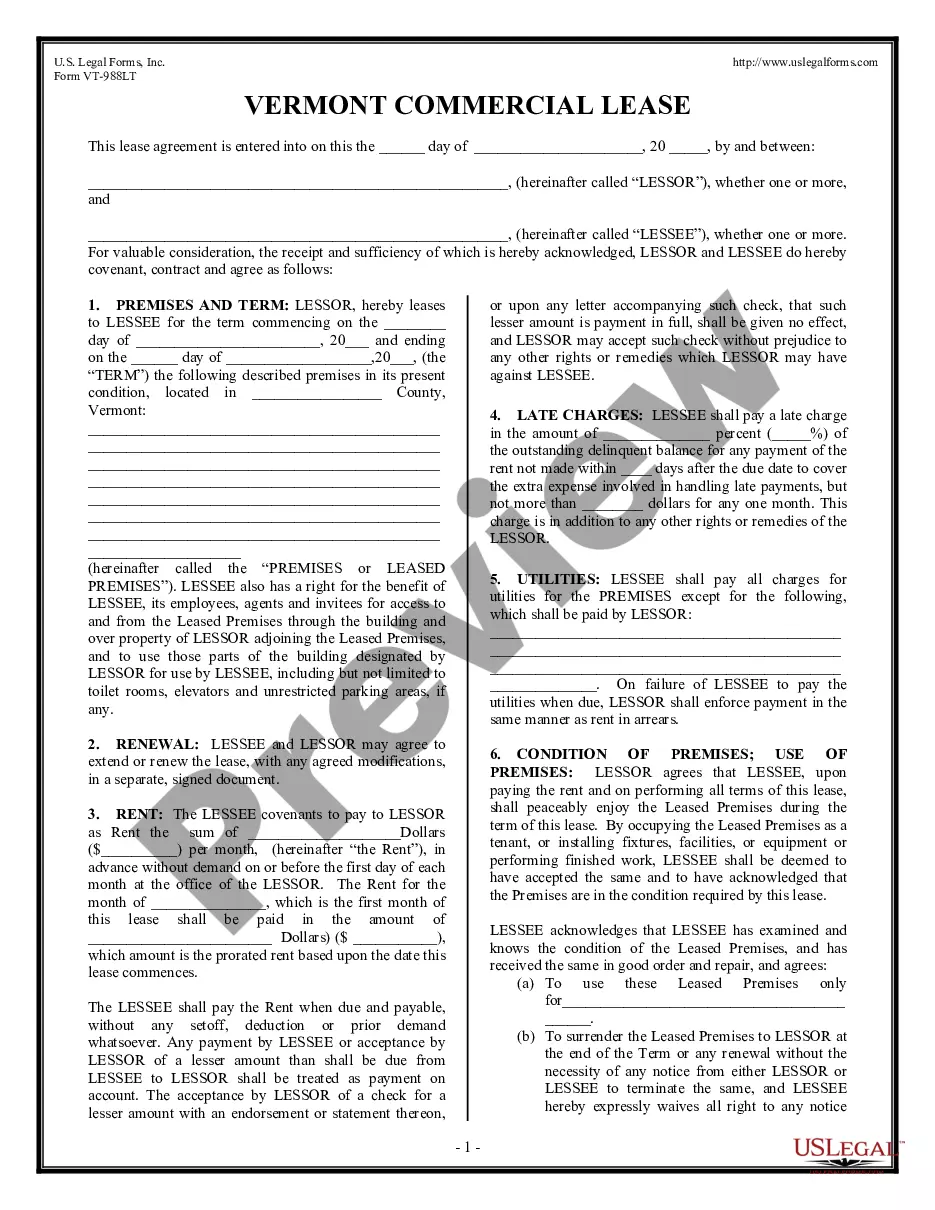
- Commercial Lease — specifies agreements for business rental spaces.
- Month-to-Month Rental Agreement — allows flexible rental periods without a long-term commitment.
- Fixed-Term Lease — establishes a rental agreement for a specific duration.
- Sublease Agreement — permits a tenant to rent out their leased space to another party.
Complete Vermont Leases packages
Bundle every form you need for a complete situation — not just one document.

 4 forms
Vermont Lease Purchase Agreements Package
Get everything you need for lease purchase agreements in one place, including essential legal forms for buying or selling real estate.
- Vermont Residential Real Estate Sales Disclosure Statement
- Contract for the Lease and Mandatory Purchase of Real Estate - Specific performance clause
- Personal Guaranty - Guarantee of Contract for the Lease and Purchase of Real Estate
- Contract for the Lease and Purchase of Real Estate - Purchase by date or leave
2 forms
Vermont Assignment of Lease Package
Access a collection of essential forms for transferring a lease to another party, providing everything you need in one convenient package.
6 forms
Vermont Amendment of Lease Package
Access essential forms to modify lease terms conveniently and stay compliant with state laws.
- Vermont Amendment of Residential Lease
- Modification of a Lease to Extend the Term and Increase the Base Rent
- Modification of Lease Agreement
- Amended Lease - Amendment for office building
- Commercial Lease Modification Agreement
- Lease Modification Adding One or More Entities as Tenant Parties
5 forms
Vermont Commercial Lease Package
Everything needed for managing commercial leases in one place, including multiple related forms for landlords and tenants.
- Vermont Commercial Building or Space Lease
- Vermont Commercial Rental Lease Application Questionnaire
- Vermont Notice of Intent Not to Renew at End of Specified Term from Landlord to Tenant for Nonresidential or Commercial Property
- Vermont Warning of Default on Commercial Lease
- Vermont Letter from Landlord to Tenant as Notice of Default on Commercial Lease
9 forms
Vermont Property Management Package
Simplify property leasing with all essential forms in one package.
- Vermont Residential Rental Lease Application
- Vermont Inventory and Condition of Leased Premises for Pre Lease and Post Lease
- Vermont Property Manager Agreement
- Vermont Residential Rental Lease Agreement
- Vermont Landlord Tenant Closing Statement to Reconcile Security Deposit
- Vermont Commercial Building or Space Lease
- Security Deposit Agreement
- Agreement to Lease Commercial Property with Option to Purchase at End of Lease Term - Rent to Own - Real Estate Rental
- Lease or Rental Agreement of Residential Property with Option to Purchase and Own Property - Lease or Rent to Own
12 forms
Landlord Tenant Commercial Package
This package provides multiple legal forms for managing commercial landlord-tenant relationships, offering everything needed for smooth operation in one place.
- Office Space Lease Agreement
- Three Day Notice to Pay Rent or Surrender Possession of Premises - Vacate - Past Due Rent - Eviction
- Notice from Lessor to Lessee's Requesting an Extension or Renewal of Lease Agreement
- Checklist of Matters to be Considered in Drafting a Lease of a Commercial Building
- Assignment of Lease by Lessee with Consent of Lessor
- Letter - Notice To Tenants Announcing Rent Increase
- Amended Lease - Amendment for office building
- Building Operating Cost Addendum
- Expansion Option Clause
- Sublease Agreement
- Short Form Landlord Consent - Assignment of Office Lease
- Landlord Consent to Sublease
16 forms
Landlord Tenant Commercial Package - Deluxe
Everything you need for managing commercial landlord-tenant relationships in one convenient package of related legal forms.
- Office Space Lease Agreement
- Short Form Lease of Office Space - Real Estate Rental
- Three Day Notice to Pay Rent or Surrender Possession of Premises - Vacate - Past Due Rent - Eviction
- Notice from Lessor to Lessee's Requesting an Extension or Renewal of Lease Agreement
- Sublease of Office Space
- Checklist of Matters to be Considered in Drafting a Lease of a Commercial Building
- Month to Month Commercial Rental Agreement
- Assignment of Lease by Lessee with Consent of Lessor
- Terms Sheet for Commercial Lease Agreement
- Letter - Notice To Tenants Announcing Rent Increase
- Amended Lease - Amendment for office building
- Building Operating Cost Addendum
- Expansion Option Clause
- Sublease Agreement
- Short Form Landlord Consent - Assignment of Office Lease
- Landlord Consent to Sublease
FAQs
A lease is a legal agreement between a landlord and tenant regarding property rental.
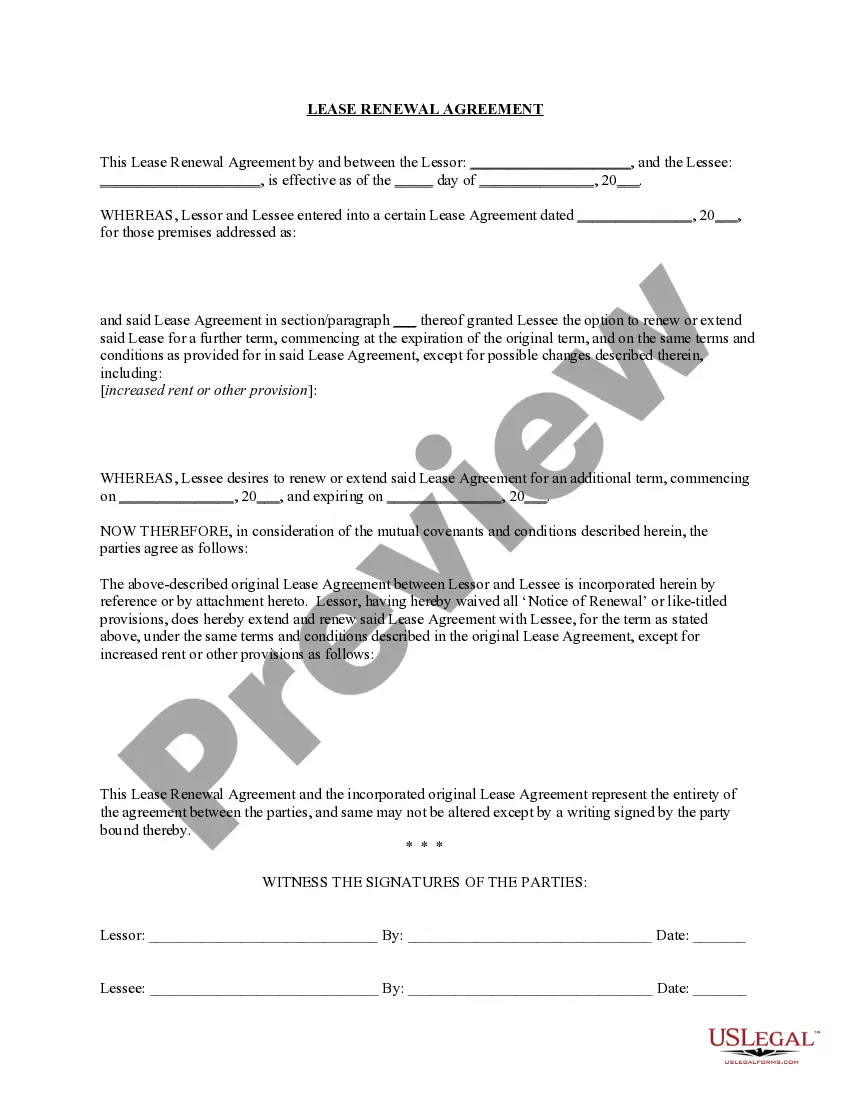
Yes, many leases include terms for renewal or extension.
Breaking a lease may result in penalties or loss of the security deposit.
While verbal agreements can be valid, written leases are recommended for clarity.
A lease typically covers a longer duration than a rental agreement.
Key legal points
- Leases define the rights and responsibilities of landlords and tenants.
- Most residential leases require specific information about rental terms.
- Security deposits are often collected to cover potential damages.
- Termination clauses outline how a lease can be ended by either party.
- Both parties should keep copies of signed lease agreements.
How to get started
Begin in just a few minutes with these easy steps.
- Find a template or package that suits your leasing situation.
- Review the template description, preview, and signing requirements.
- Access the full document with a subscription.
- Complete your lease in the online editor.
- Export or send the document through various options, including email or e-signature.
Practical tip
When considering a lease, clarify the rental duration upfront to avoid future misunderstandings.