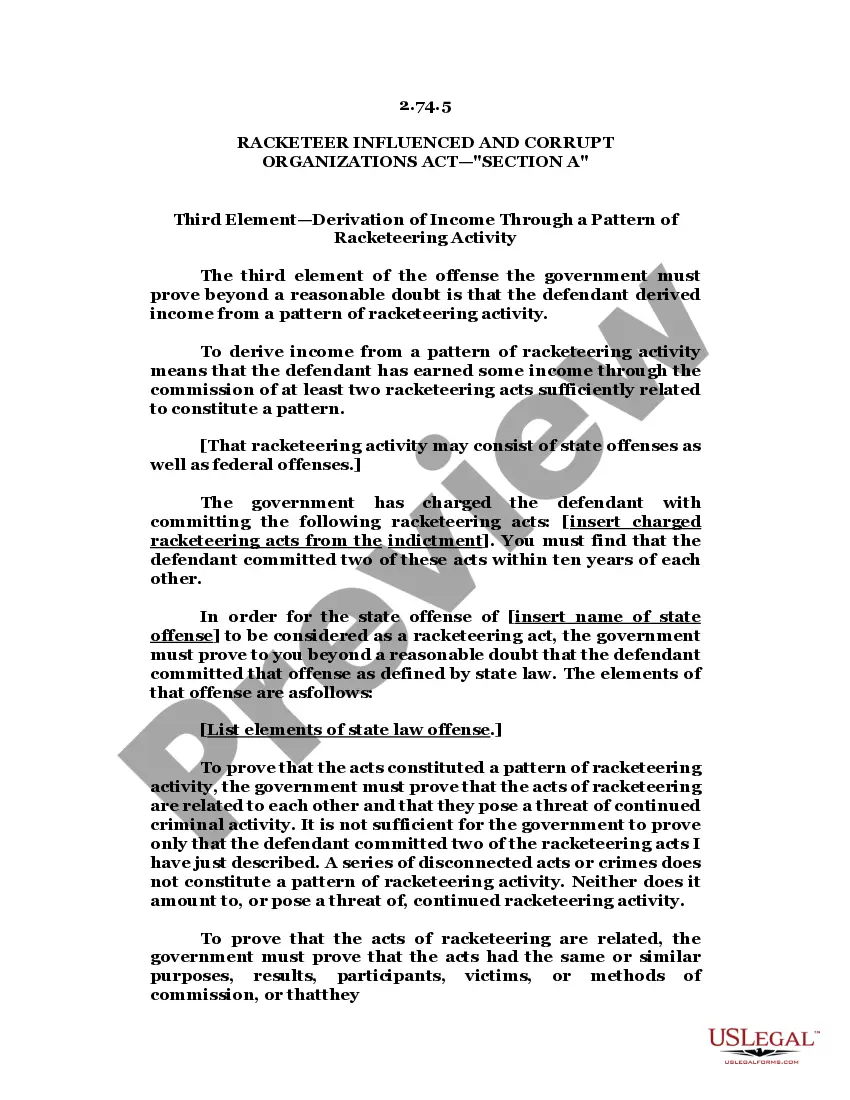
Vermont Commercial Lease Assignment from Tenant to New Tenant
What this document covers
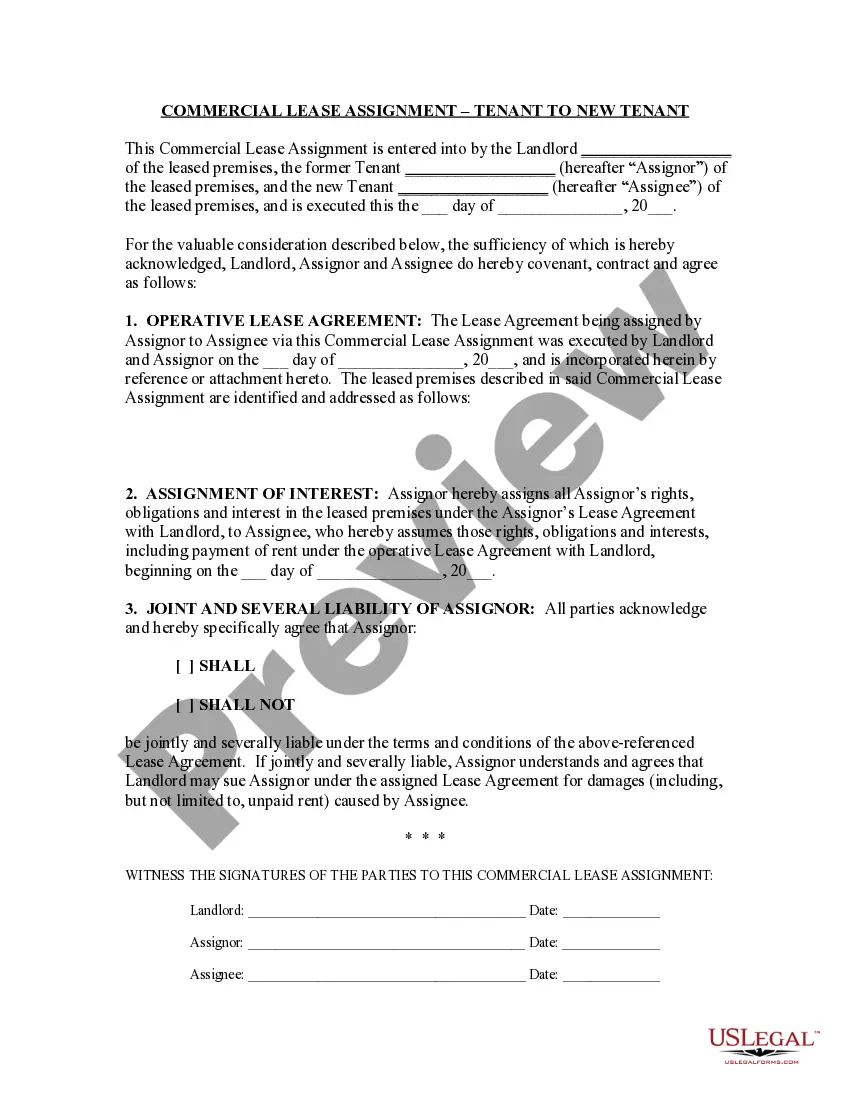
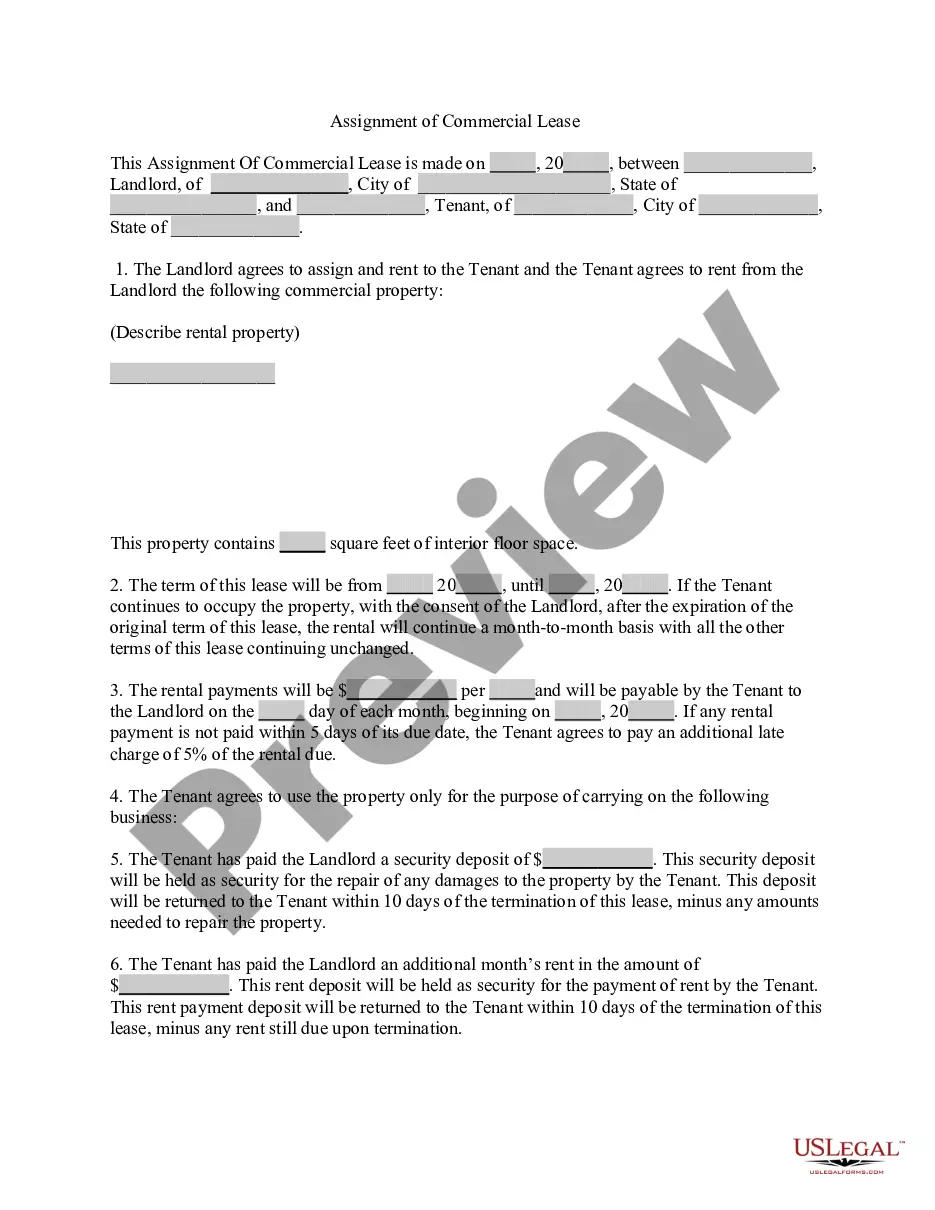
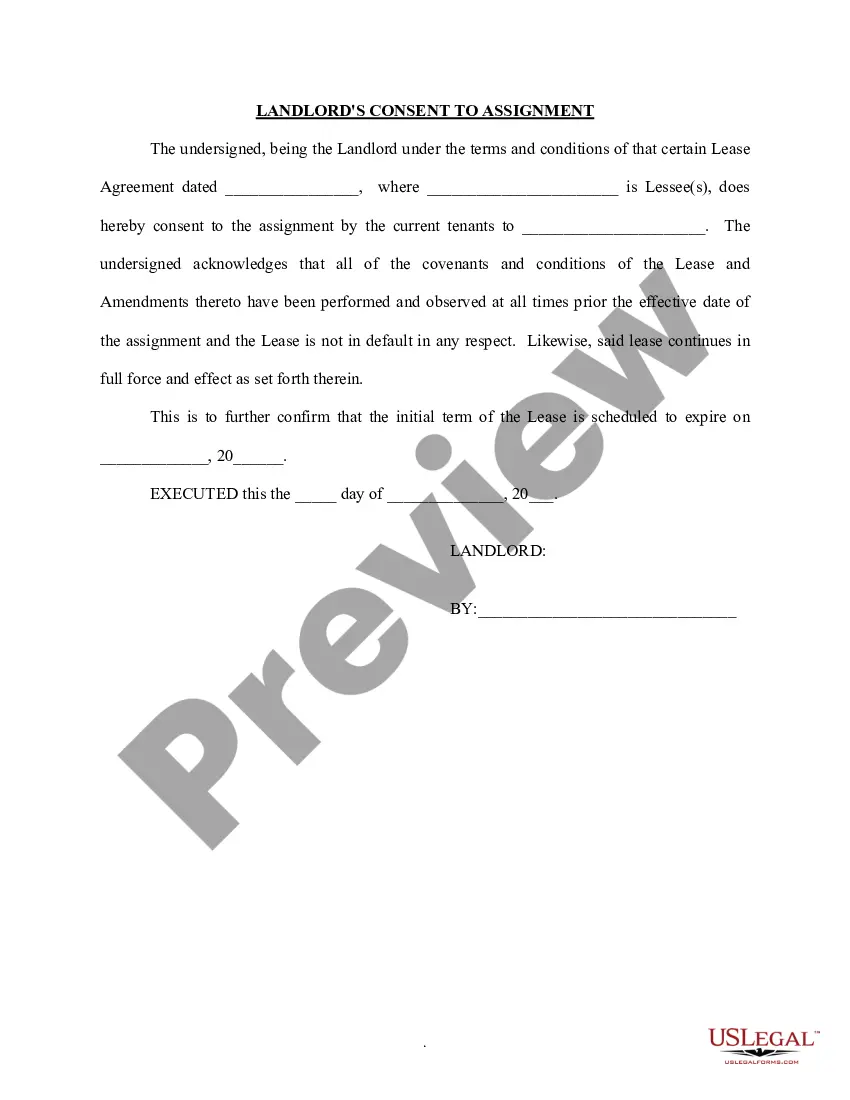
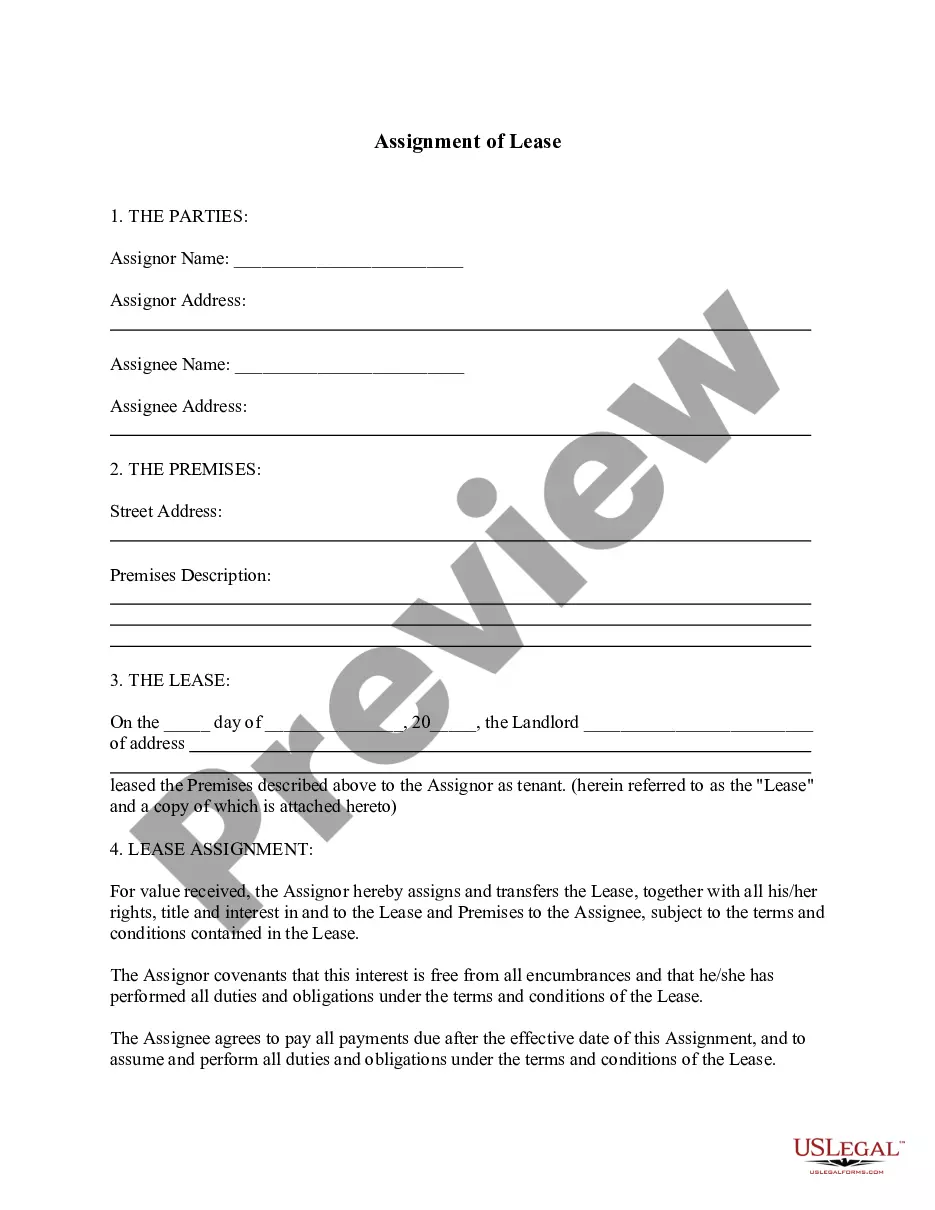
The Commercial Lease Assignment from Tenant to New Tenant is a legal document that facilitates the transfer of a commercial lease. This form allows an existing tenant (the Assignor) to assign their lease rights and responsibilities to a new tenant (the Assignee) while keeping the landlord unchanged. It is essential for ensuring that all parties understand their obligations, particularly regarding liability under the original lease agreement.
Main sections of this form
- Identification of the parties involved: Landlord, Assignor, and Assignee.
- Date of execution of the assignment.
- Joint and several liability clause indicating whether the Assignor remains liable for obligations under the lease.
- Signatures of all parties to finalize the assignment.
When to use this form
This form is necessary when an existing tenant wishes to transfer their lease obligations to a new tenant without altering the landlord's role in the agreement. Typical scenarios include businesses relocating or restructuring, subleasing arrangements, and cases where the original tenant is unable to fulfill their lease obligations.
Who should use this form
This form is suitable for:
- Tenants looking to transfer their commercial lease to a new tenant.
- Landlords who need to ensure clarity on liability and responsibilities in lease assignments.
- Businesses undergoing changes that necessitate a lease assignment.
Instructions for completing this form
- Identify the parties: Fill in the names of the Landlord, Assignor, and Assignee.
- Indicate the date of the assignment to establish when the transfer occurs.
- Specify the joint and several liability of the Assignor to clarify responsibilities.
- All parties should sign and date the form to validate the assignment.
Is notarization required?
Notarization is not commonly needed for this form. However, certain documents or local rules may make it necessary. Our notarization service, powered by Notarize, allows you to finalize it securely online anytime, day or night.
Get your form ready online
Our built-in tools help you complete, sign, share, and store your documents in one place.
Make edits, fill in missing information, and update formatting in US Legal Forms—just like you would in MS Word.
Download a copy, print it, send it by email, or mail it via USPS—whatever works best for your next step.
Sign and collect signatures with our SignNow integration. Send to multiple recipients, set reminders, and more. Go Premium to unlock E-Sign.
If this form requires notarization, complete it online through a secure video call—no need to meet a notary in person or wait for an appointment.
We protect your documents and personal data by following strict security and privacy standards.

Make edits, fill in missing information, and update formatting in US Legal Forms—just like you would in MS Word.

Download a copy, print it, send it by email, or mail it via USPS—whatever works best for your next step.

Sign and collect signatures with our SignNow integration. Send to multiple recipients, set reminders, and more. Go Premium to unlock E-Sign.

If this form requires notarization, complete it online through a secure video call—no need to meet a notary in person or wait for an appointment.

We protect your documents and personal data by following strict security and privacy standards.
Common mistakes to avoid
- Failing to specify whether the Assignor remains liable under the lease.
- Not including the necessary signatures from all parties.
- Omitting the date of execution, which can lead to confusion about the assignment timeline.
Advantages of online completion
- Conveniently fill out and download the form at your own pace.
- Access to reliable templates drafted by licensed attorneys.
- Ability to customize the form to fit specific needs.
Looking for another form?

Form popularity
FAQ
The tenant's agreement is tied to the property, not the owner. That means if the property sells while occupied, the tenant has the right to live there until the lease expires. The buyer has to honor the length of the original lease created between the seller and tenant.
Who pays for preparing a lease? The Retail Leases Act 1994 (the Act) states that the landlord pays the full cost of preparing the lease, including the mortgagee consent fee.
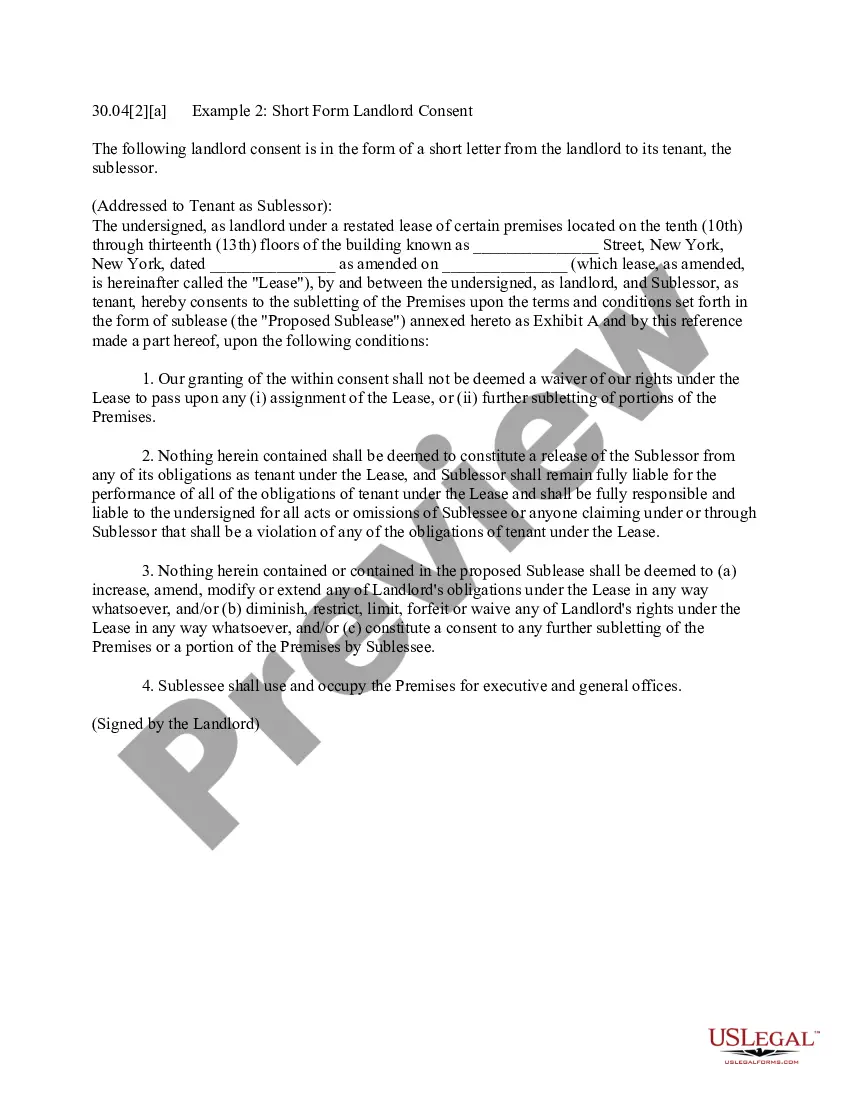
Can the landlord refuse consent to an Assignment? Most leases will say that the Landlord cannot unreasonably withhold consent. According to section 19 (1A) of the Landlord and Tenant Act 1927 the landlord can insert conditions in the lease, which need to be met in the case of an assignment.
Under a typical lease assignment, you transfer all of your space to someone else for the entire remaining term of the lease, and the new tenant pays rent directly to the landlord.Once your landlord has agreed to allow a full assignment, you'll need to secure what the law so often requires: a piece of paper.
What happens if a leased property is sold to another owner during the lease term?The lease will continue to apply to the subsequent owner if so stated in the lease. Or the lease may require that upon transfer, the lease terminates and the existing owner compensates the tenant per the terms in the lease.
During the lease period, no landlord old or new may terminate the lease, raise the rent or change any terms without the tenant's consent, unless otherwise specified in the lease. At the end of the lease term, however, the landlord may raise rent and change lease terms dependent upon state and local laws.
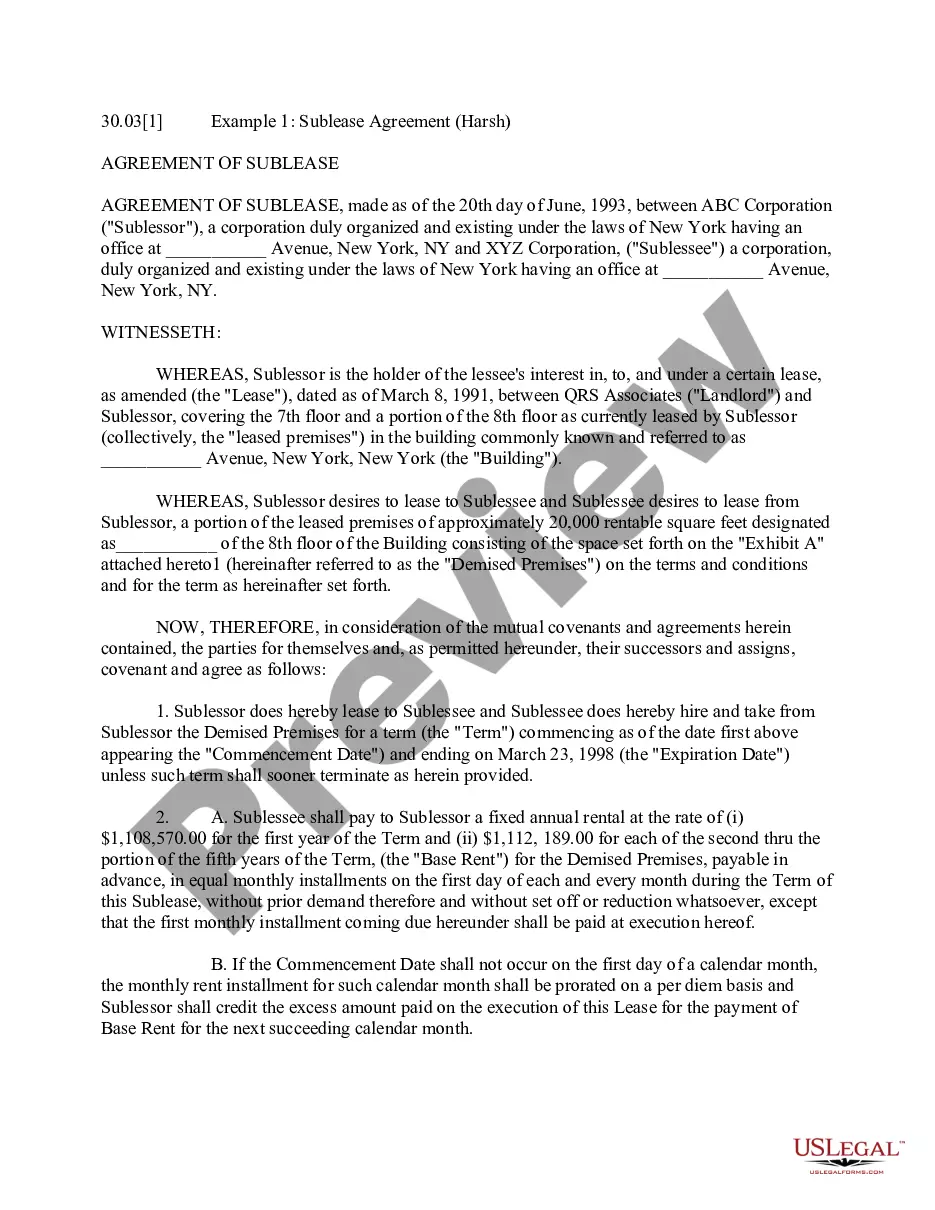
Whatever the reason, tenants can transfer their lease interests to new parties by completing an assignment of the lease. An assignment is the transfer of one party's entire interest in and obligations under a lease to another party.
Landlords can try and forfeit a lease if a tenant is in breach of their obligations (this assumes that the lease document includes a right to forfeit).If a commercial lease contains a break clause, either or both parties to the agreement may seek to terminate the lease before its fixed period has ended.
Great, you'll just need to let your agent or landlord know you'll be breaking your lease as soon as you have exchanged contracts. This will allow as much time as possible for them to find a new tenant to replace you. In this case, you're also up for a penalty fee called a 'break fee'.