Sample Lease for Dance or other Studio
Understanding this form
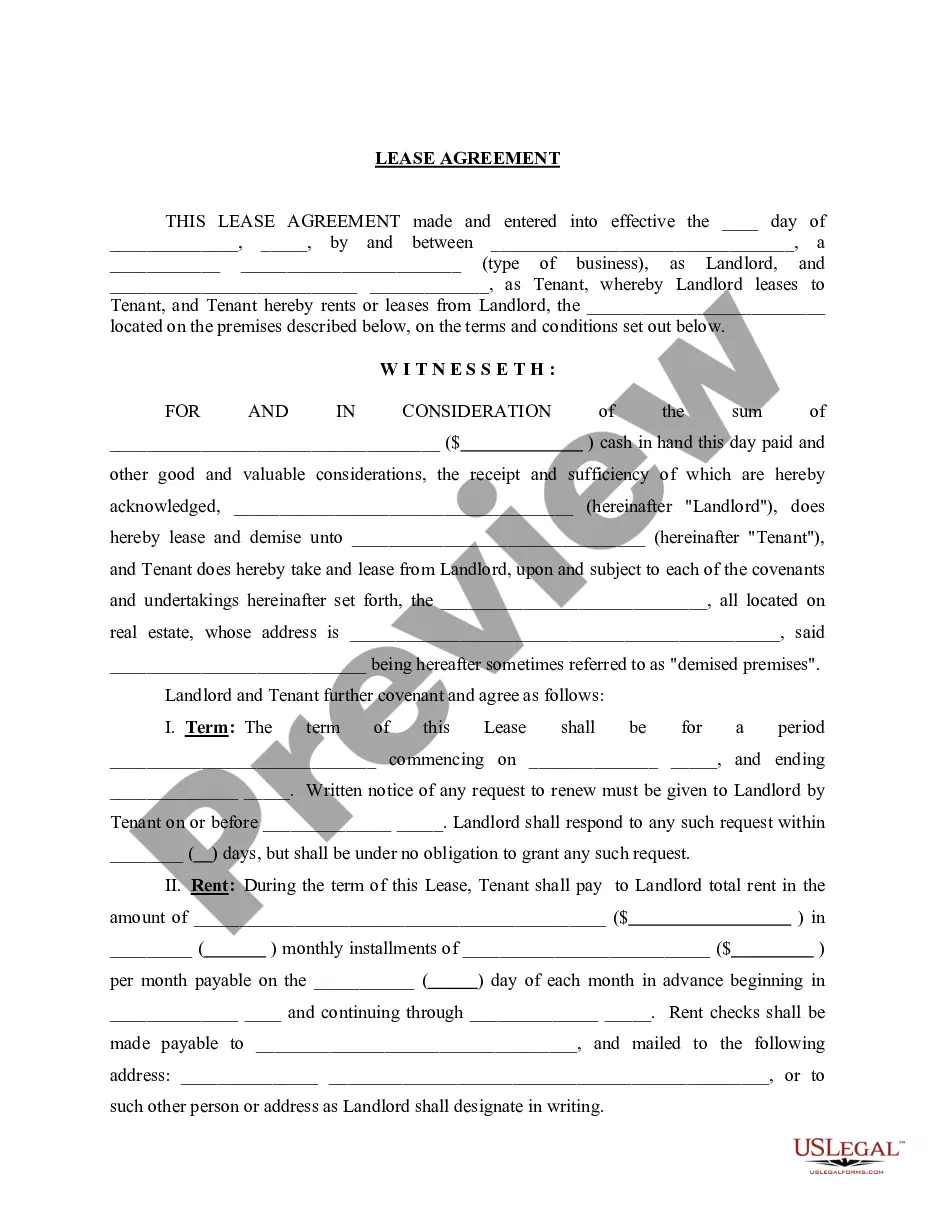
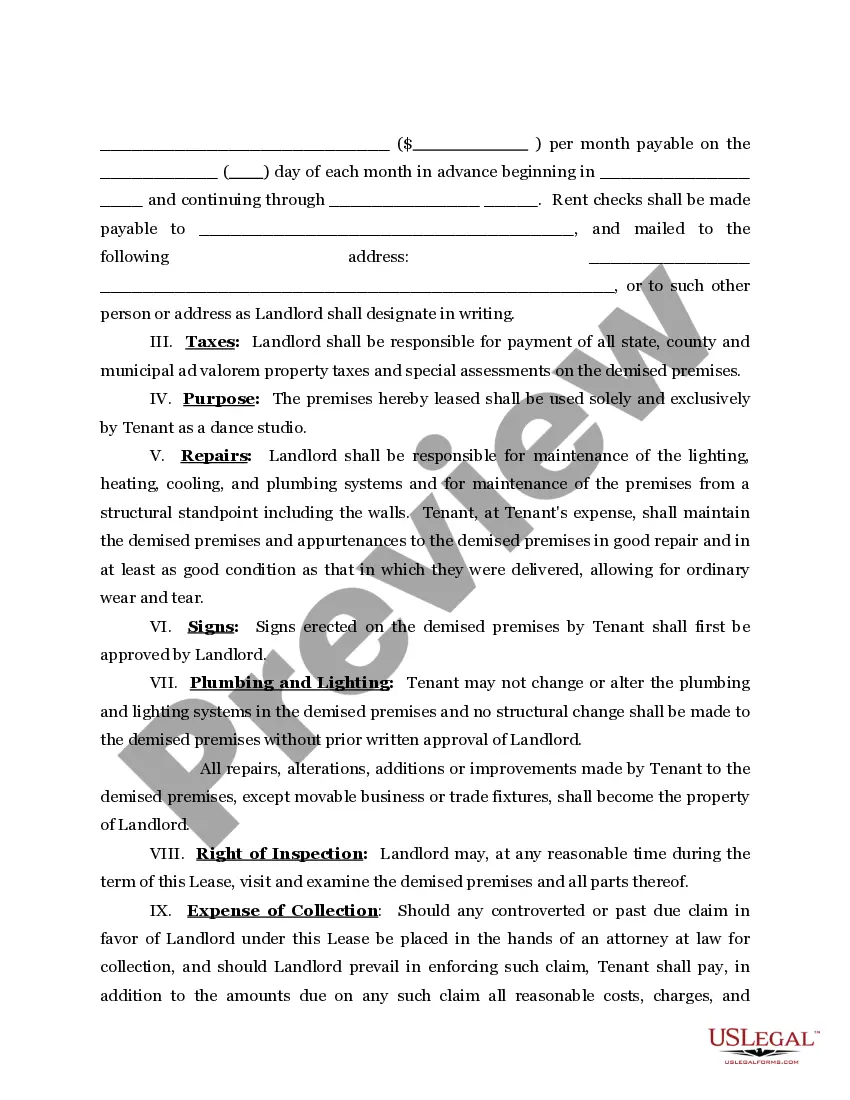
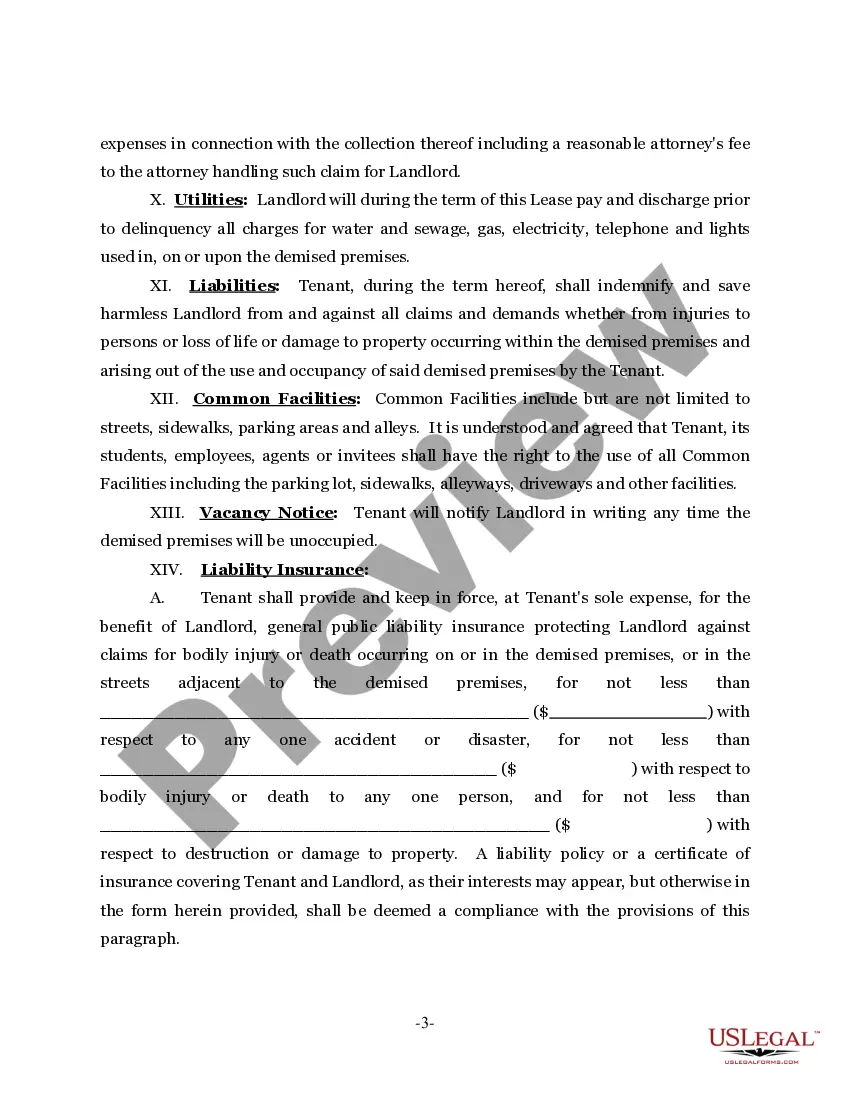
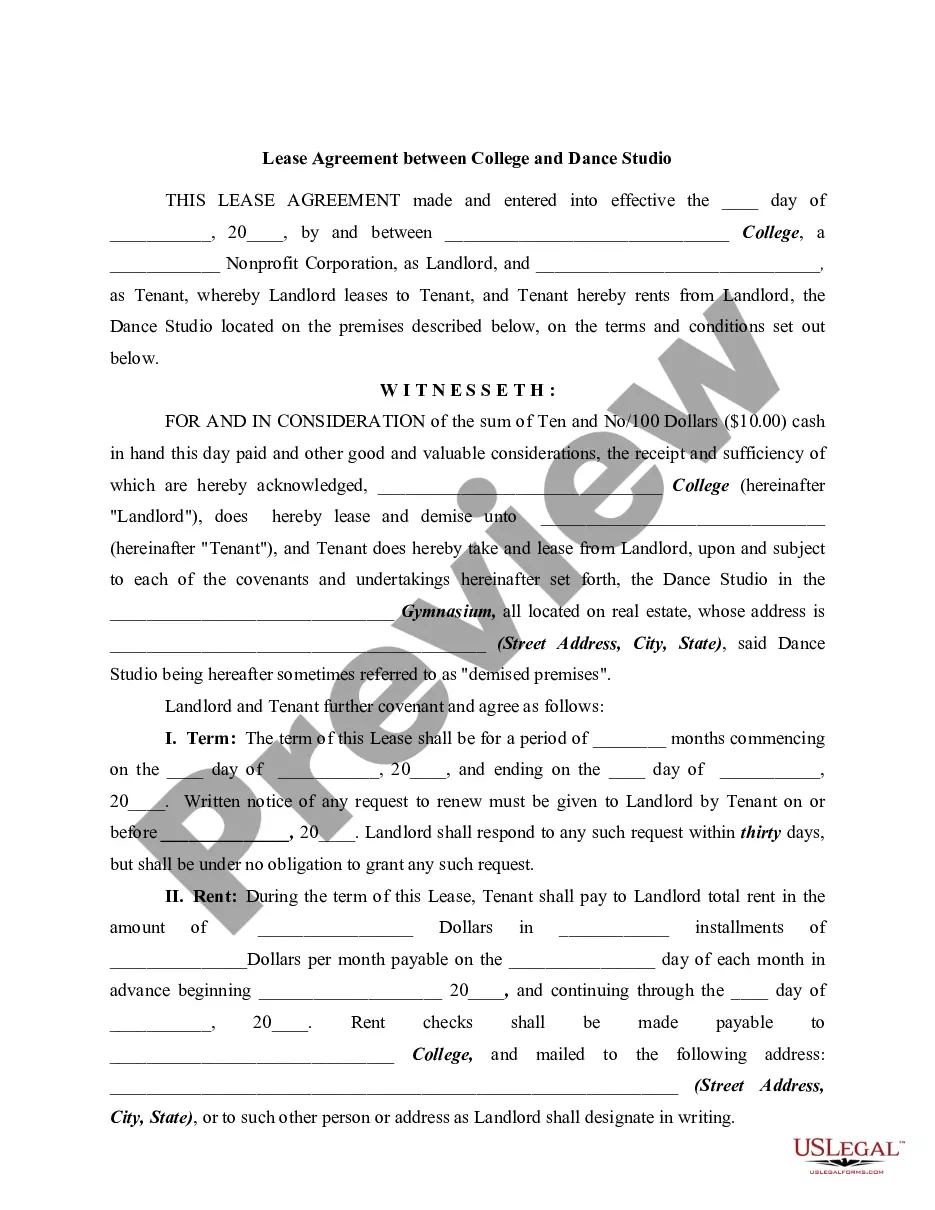
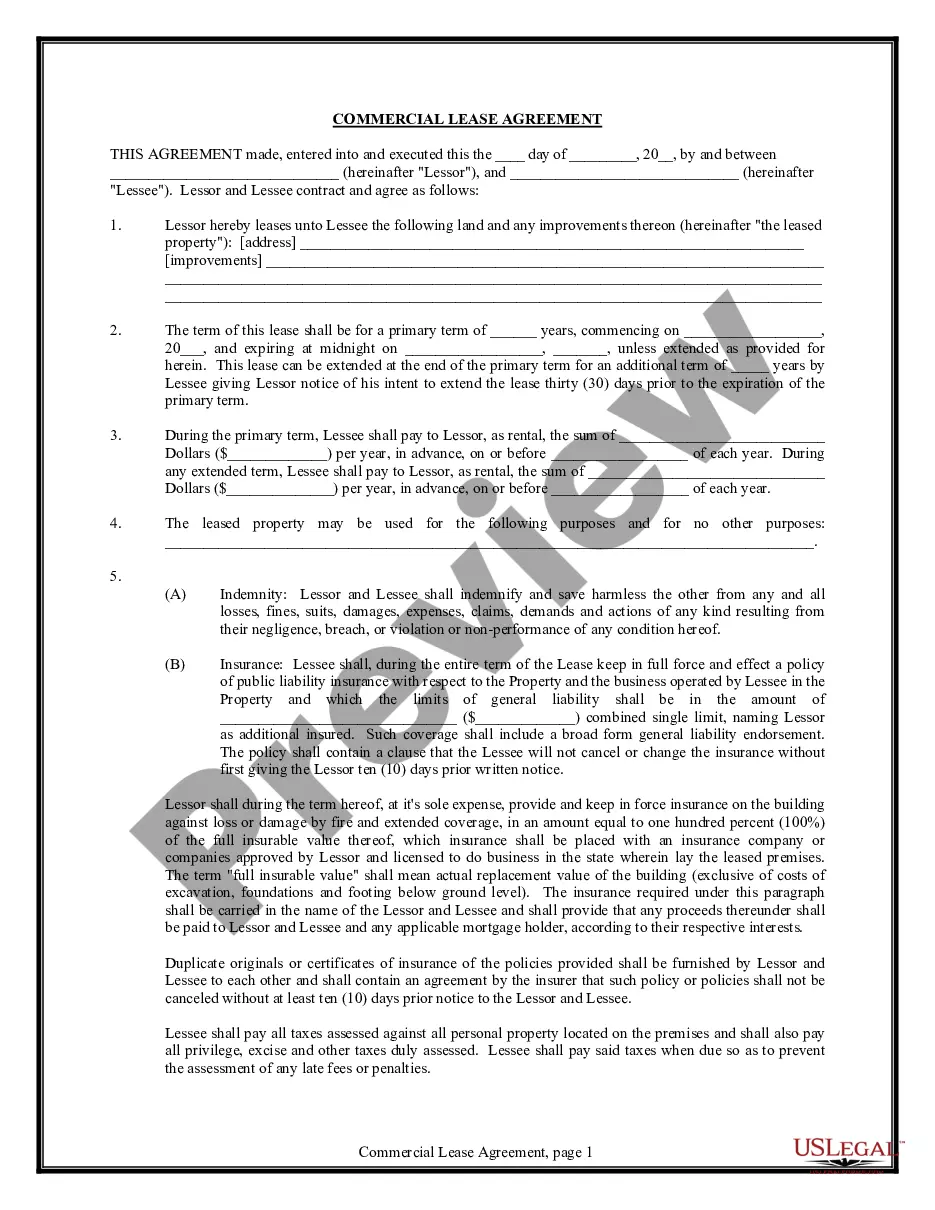
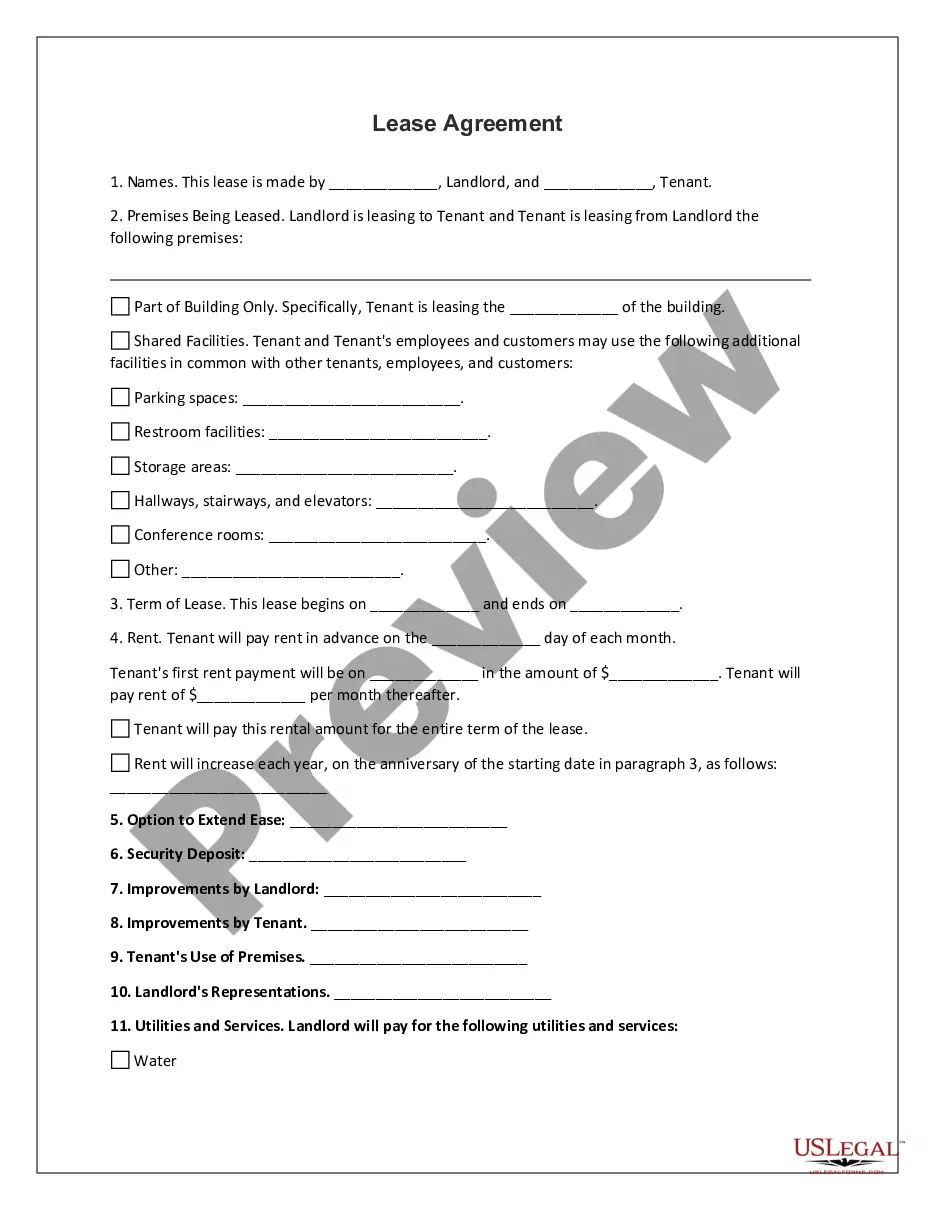
This Sample Lease for Dance or other Studio is a commercial lease agreement specifically designed for leasing a location for purposes such as a dance studio. It includes critical provisions about the lease term, rent payment, property maintenance, and legal obligations of both the landlord and tenant. Unlike residential leases, this form focuses on the unique requirements of commercial properties and can be adapted to meet specific needs and agreements between landlords and tenants.
Main sections of this form
- Lease term: Outlines the duration of the lease and renewal procedures.
- Rent: Details the total rent amount and payment schedule.
- Purpose of use: Specifies that the leased space is to be used solely as a dance studio.
- Repairs and maintenance: Clarifies responsibilities for property maintenance between the landlord and tenant.
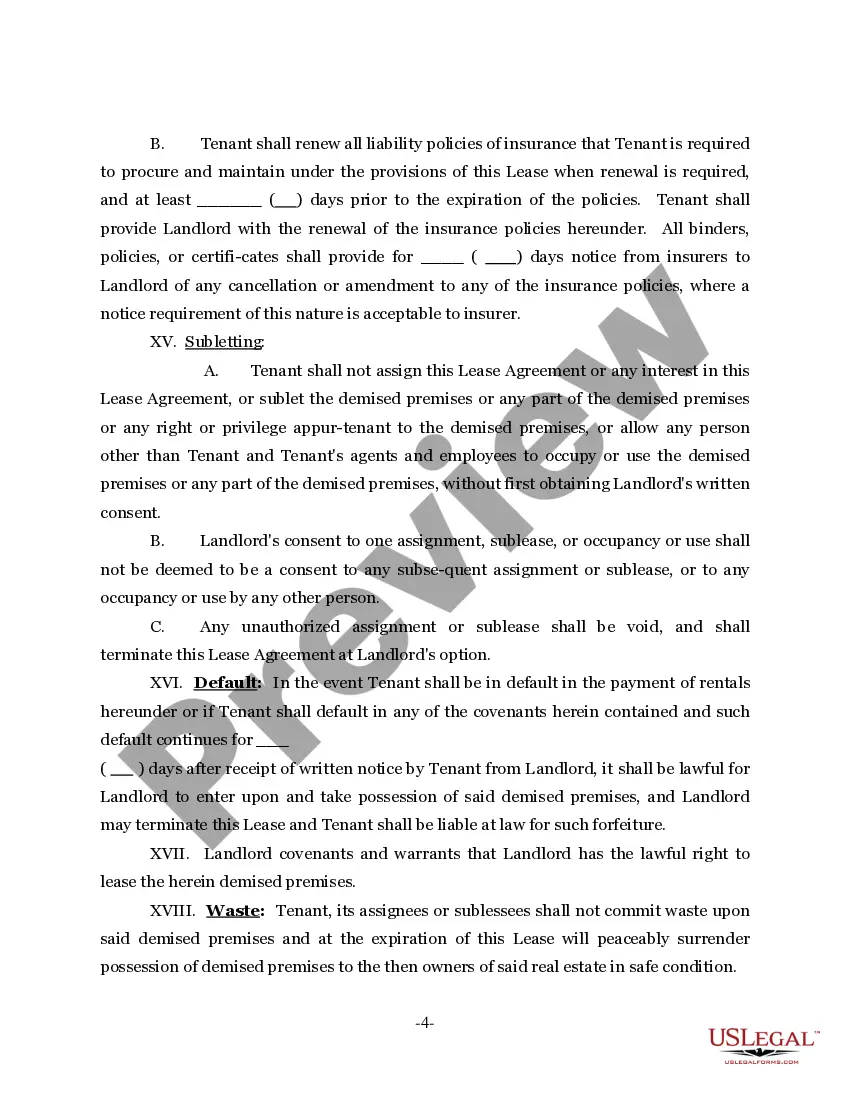
- Liability insurance: Requires the tenant to maintain insurance to protect the landlord from potential claims.
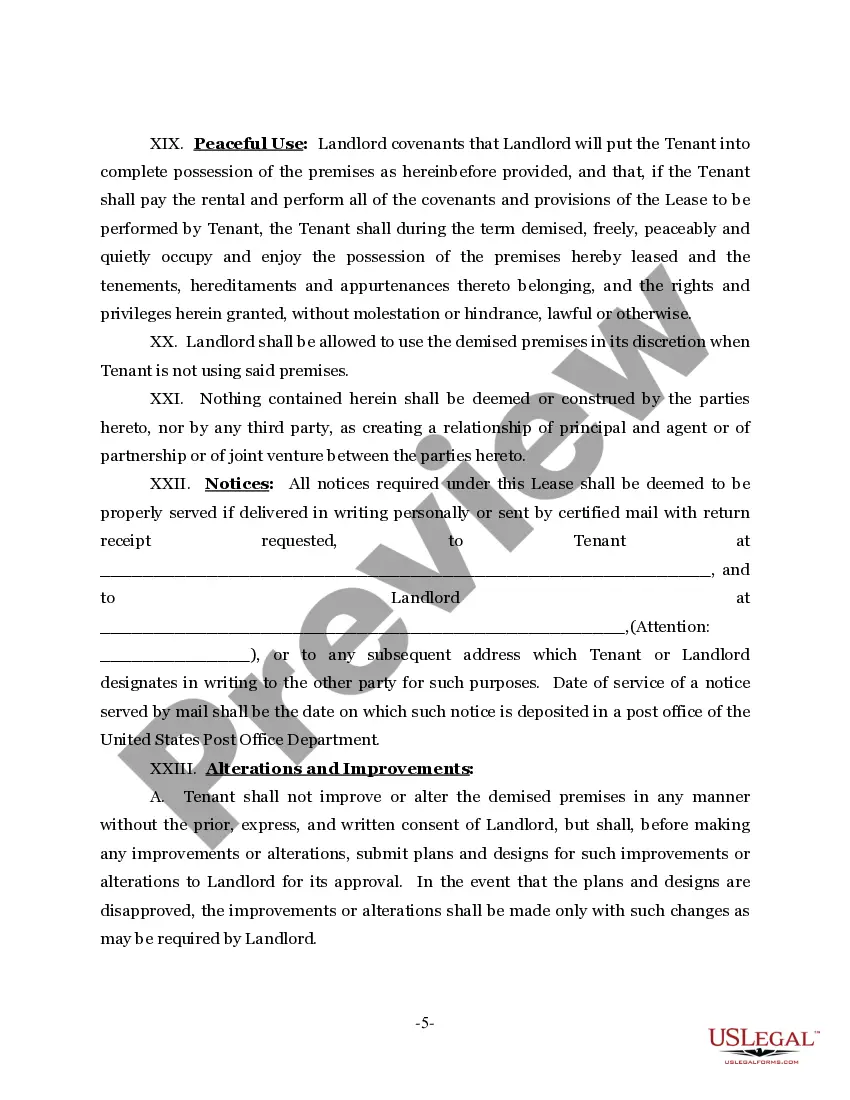
- Default and termination: Explains conditions under which the lease may be terminated due to tenant default.
When this form is needed
This lease form is essential when a landlord wishes to rent out a commercial space specifically for a dance studio or similar activities. It should be used when two parties agree on the terms of the rental arrangement, and both parties require legal clarity on their rights, responsibilities, and the implications of the lease terms.
Who needs this form
This form is suitable for:
- Landlords renting out commercial property to dance studios or similar businesses.
- Tenants seeking a legal agreement to secure a dance studio space.
- Business owners in the arts and entertainment sector needing a clear lease agreement.
Completing this form step by step
- Identify the parties involved: Enter the names of the landlord and tenant.
- Specify the property: Include the address and description of the leased premises.
- Fill in the lease term: State the start and end dates of the lease.
- Detail the payment terms: Input the rent amount and due date for payments.
- Include necessary provisions: Complete sections regarding repairs, insurance, and default terms based on the specific arrangement.
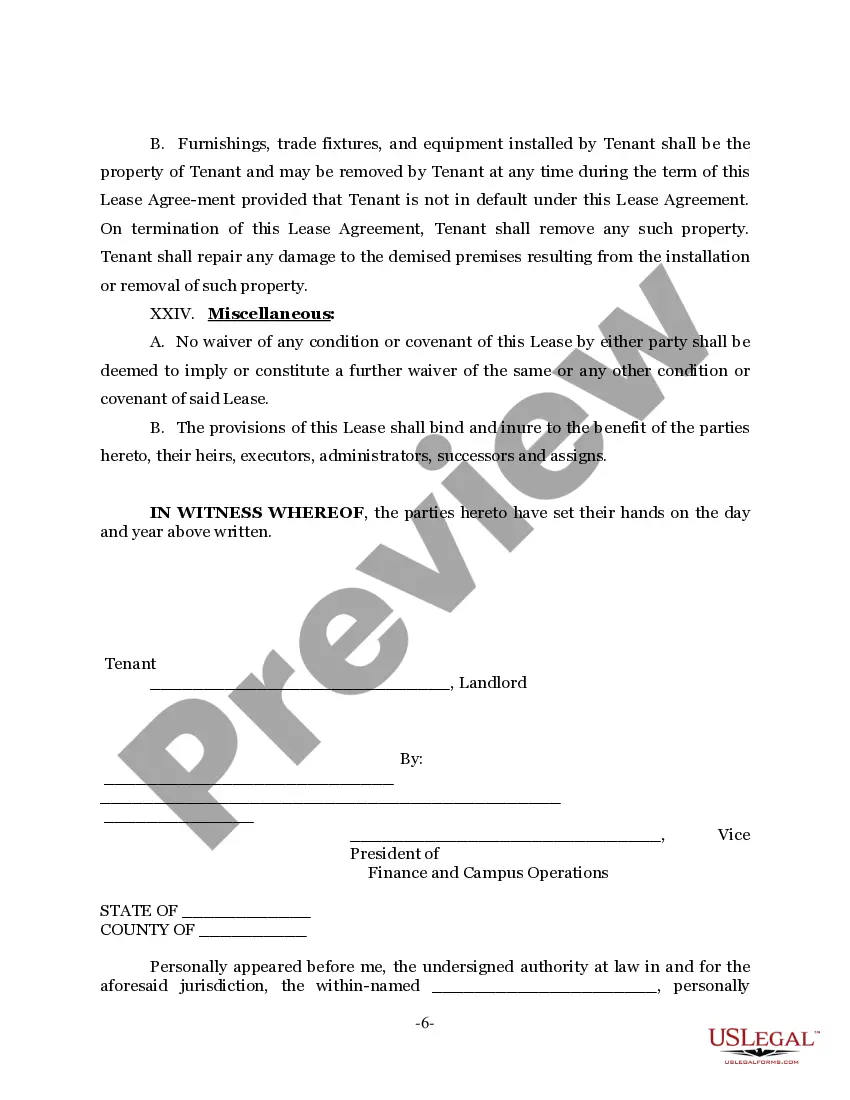
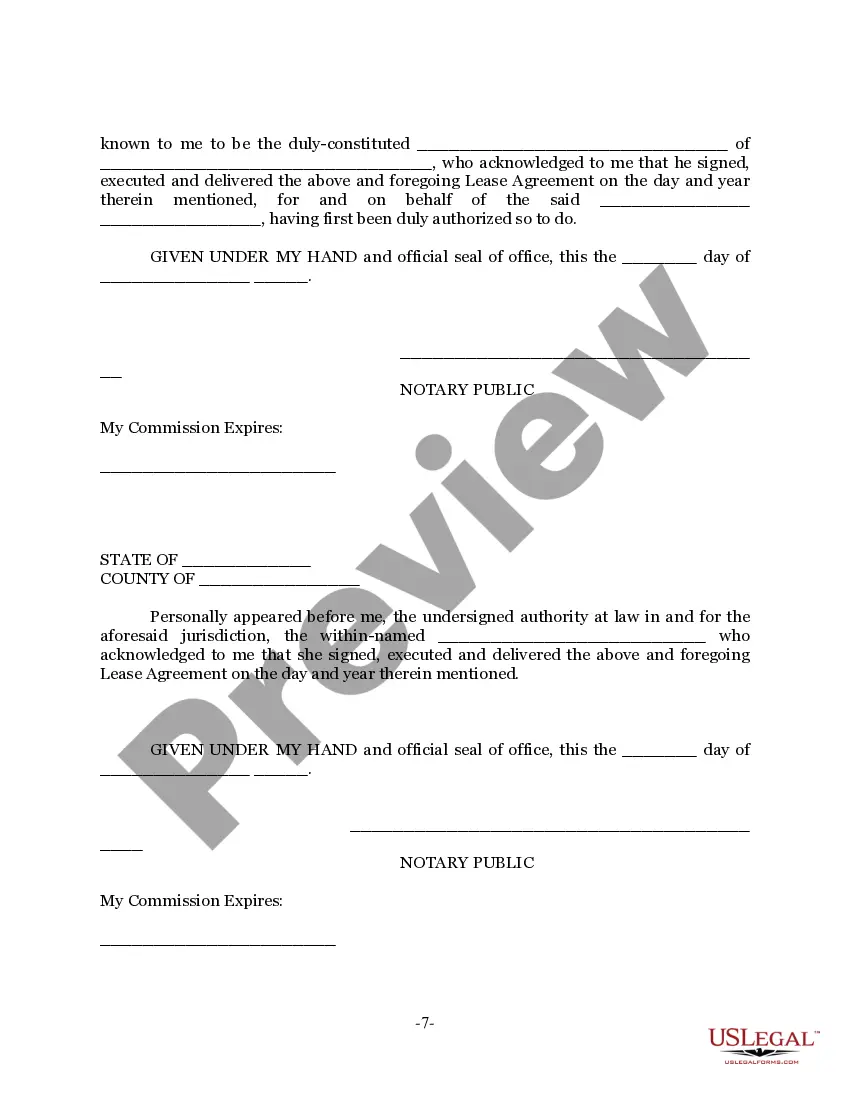
- Sign and date the agreement: Ensure that both parties sign the document and have it notarized if required.
Does this form need to be notarized?
To make this form legally binding, it must be notarized. Our online notarization service, powered by Notarize, lets you verify and sign documents remotely through an encrypted video session.
Get your form ready online
Our built-in tools help you complete, sign, share, and store your documents in one place.
Make edits, fill in missing information, and update formatting in US Legal Forms—just like you would in MS Word.
Download a copy, print it, send it by email, or mail it via USPS—whatever works best for your next step.
Sign and collect signatures with our SignNow integration. Send to multiple recipients, set reminders, and more. Go Premium to unlock E-Sign.
If this form requires notarization, complete it online through a secure video call—no need to meet a notary in person or wait for an appointment.
We protect your documents and personal data by following strict security and privacy standards.

Make edits, fill in missing information, and update formatting in US Legal Forms—just like you would in MS Word.

Download a copy, print it, send it by email, or mail it via USPS—whatever works best for your next step.

Sign and collect signatures with our SignNow integration. Send to multiple recipients, set reminders, and more. Go Premium to unlock E-Sign.

If this form requires notarization, complete it online through a secure video call—no need to meet a notary in person or wait for an appointment.

We protect your documents and personal data by following strict security and privacy standards.
Common mistakes to avoid
- Failing to specify the purpose of the lease, leading to misuse of the premises.
- Not clearly defining repair responsibilities, which can lead to disputes.
- Omitting details about rent payment dates or amounts.
- Not including renewal terms, which can cause confusion at the lease's end.
Advantages of online completion
- Convenient access: Download and customize the lease form at your own pace.
- Reliability: Templates are prepared by licensed attorneys, ensuring legal accuracy.
- Editable format: Tailor the lease to suit specific terms and agreements between parties.
Legal use & context
- This lease agreement provides a legally enforceable framework for the relationship between landlord and tenant.
- Clear terms about obligations protect the interests of both parties and help avoid misunderstandings.
- Failure to comply with the contract terms can lead to legal actions, making the clarity of this document essential.
What to keep in mind
- Lease agreements for commercial spaces require specific terms tailored to business use.
- Always ensure clear communication of responsibilities and legal obligations in the lease.
- Customization of the lease form is essential to meet the unique needs of landlords and tenants.
Looking for another form?
Form popularity
FAQ
Names of all tenants. Limits on occupancy. Term of the tenancy. Rent. Deposits and fees. Repairs and maintenance. Entry to rental property. Restrictions on tenant illegal activity.
The Lease Must be in Writing It does not matter if the lease is handwritten or typed.
Names of All Tenants and Occupants. Description of Rental Property. Term of the Tenancy. Rental Price. Security Deposits and Fees. Repair and Maintenance Policies. Landlord's Right to Enter Rental Property. Rules and Important Policies.
Why is having a lease so important? Very simply, it states the agreements between the owner and the tenant that must take place during the term of the lease.Some landlords may feel that they save time by not reviewing a lease with tenants before they move in.
A written agreement can act as a roadmap for the landlord-tenant relationship, especially if a dispute arises. Also, real estate (land) leases for more than one year must be in writing. If a lease for over one year is not in writing, it will generally not be enforceable in court.
A lease serves as a binding, legal agreement between the property owner and the tenant. As such, it is very important to make sure it thoroughly addresses the rules, policies, and conflict resolution procedures for living in the rental property, and clearly defines tenant and landlord responsibilities.
The lease becomes legally binding when all parties have signed: the landlord and all tenants living in the unit who are 18 and older. If you're worried about situations where a lease needs to end early, learn about breaking a lease and grounds for eviction.
The Lease Must be in Writing It does not matter if the lease is handwritten or typed. If the lease is for more than one year, it must be in written form and contain the following terms.
Collect each party's information. Include specifics about your property. Consider all of the property's utilities and services. Know the terms of your lease. Set the monthly rent amount and due date. Calculate any additional fees. Determine a payment method. Consider your rights and obligations.