Vermont Lease Subordination Agreement
What this document covers
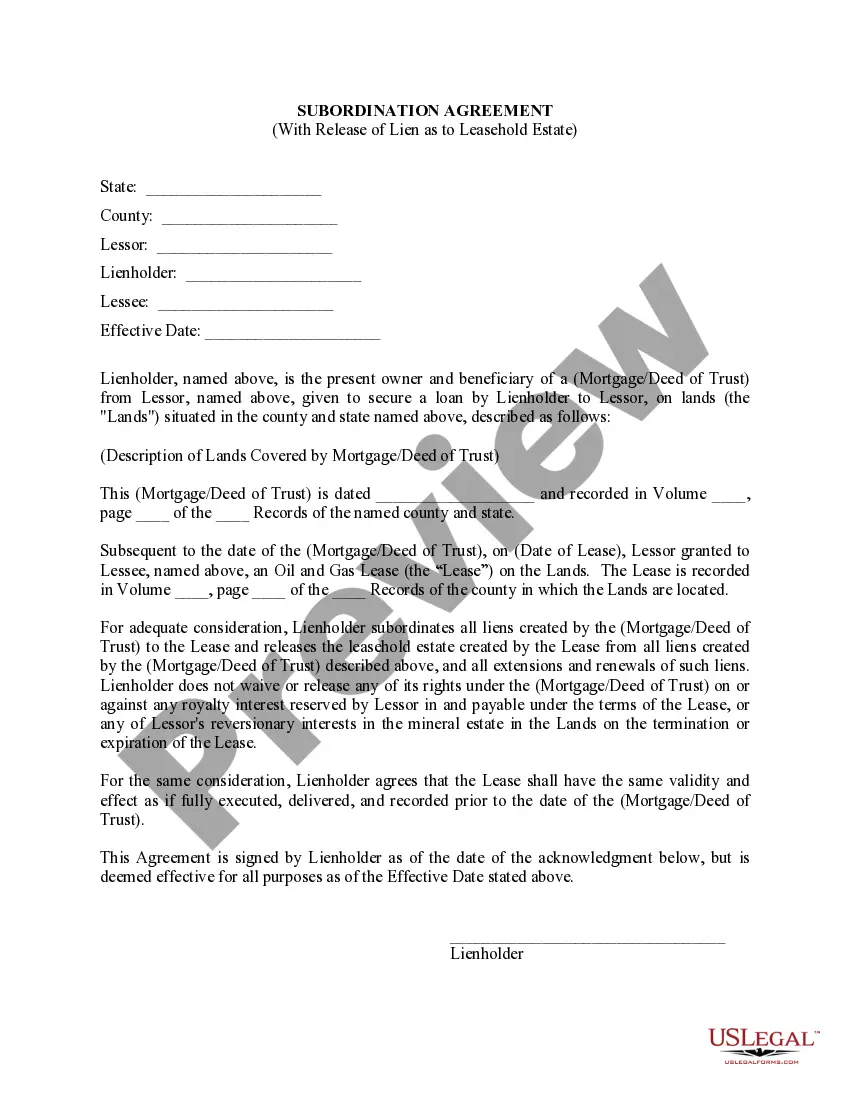
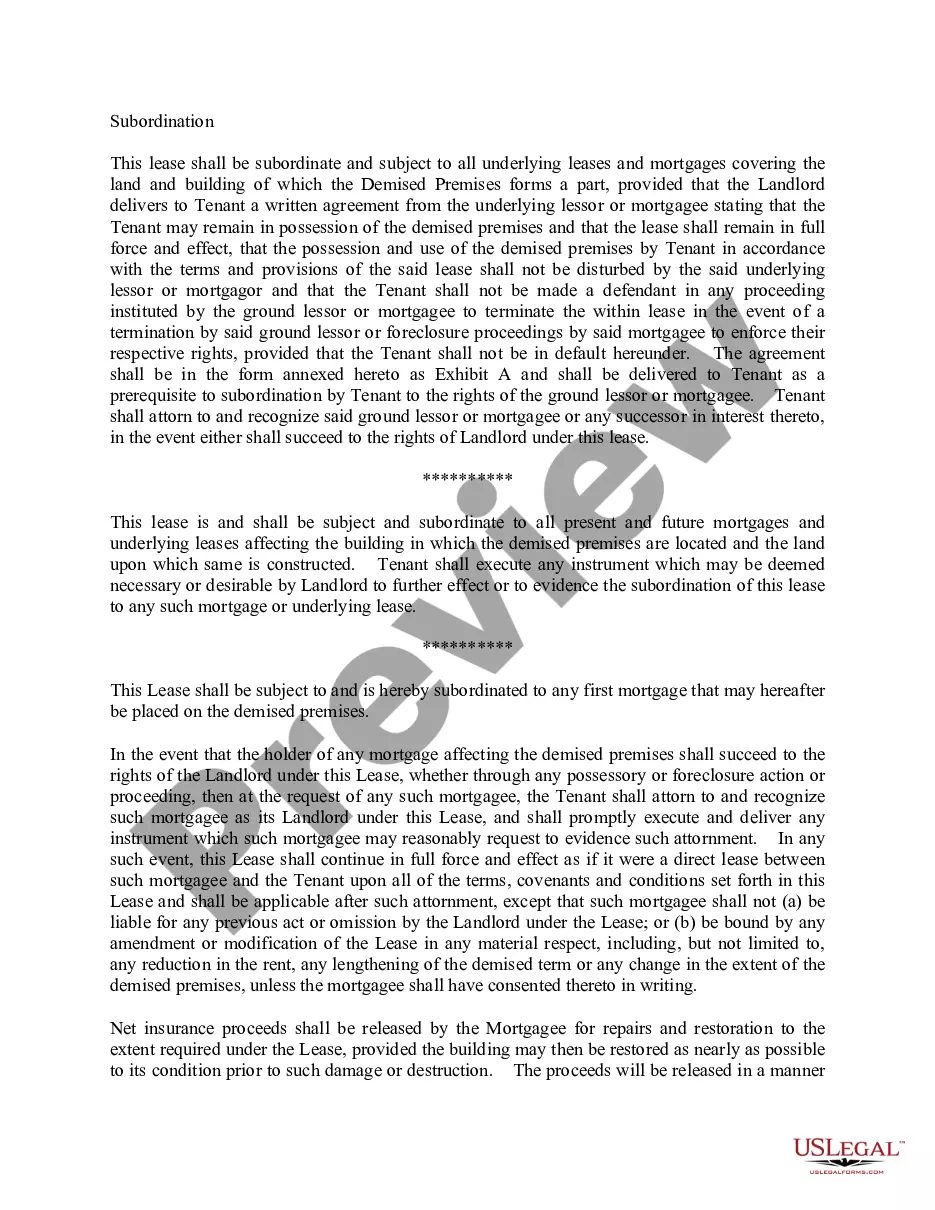
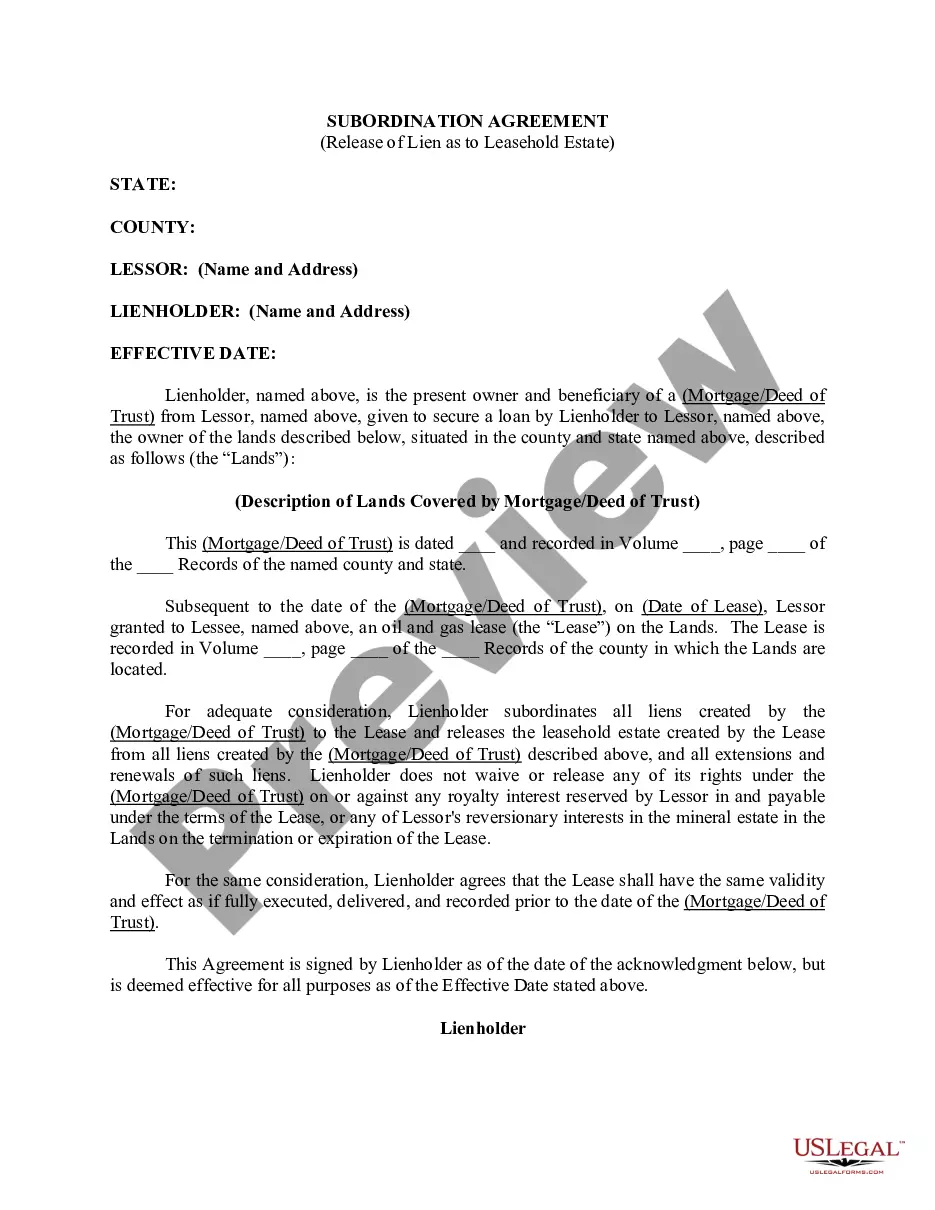
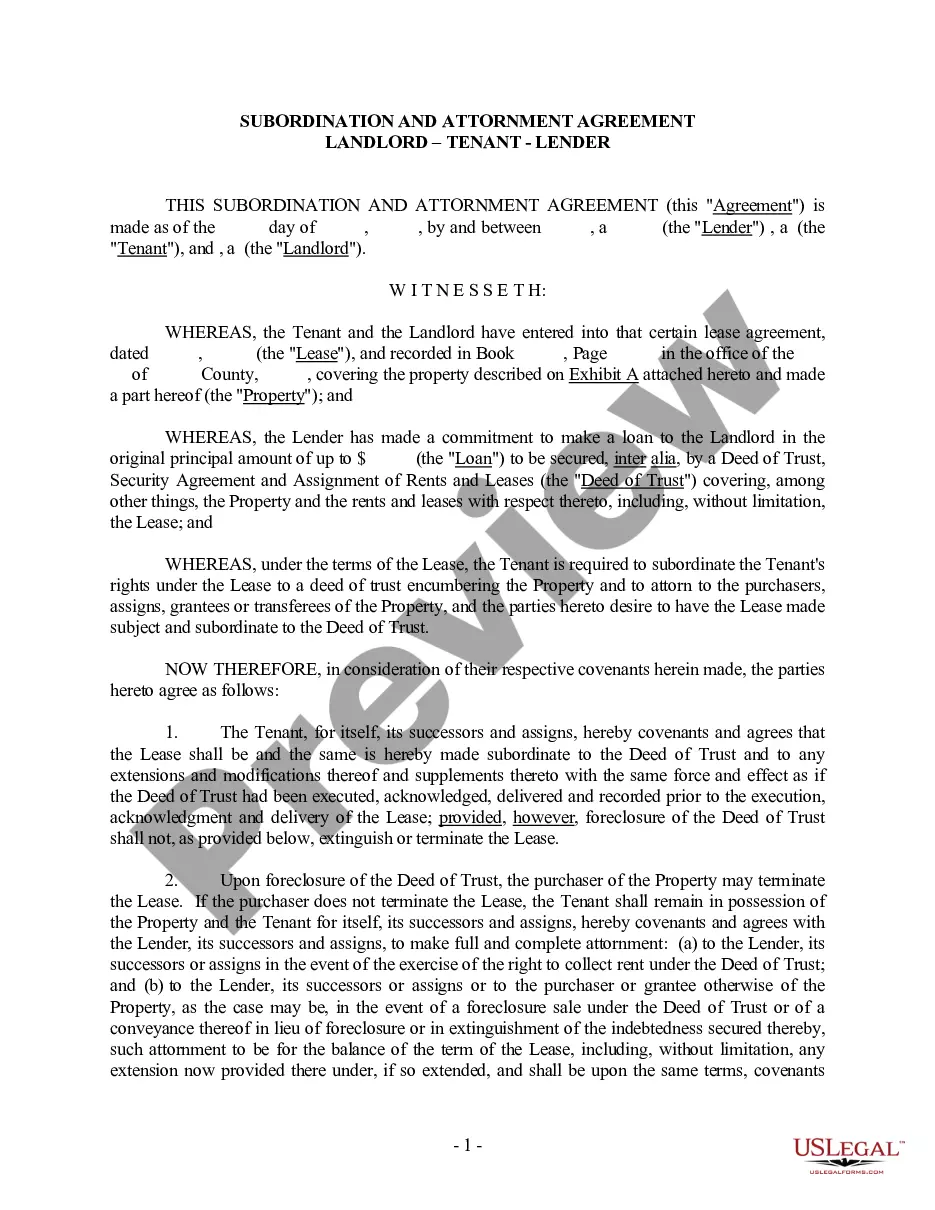
A Lease Subordination Agreement is a legal document designed to establish the priority of claims against a leasehold property, specifically in the context of oil, gas, or mineral leases. This form allows a lienholder, such as a mortgagee, to subordinate their existing mortgage or deed of trust to a subsequent lease. This ensures that the lease has priority over the original loan in case of default, enabling the lessee to secure rights to explore and exploit the property for its mineral resources.
What’s included in this form
- State and county information: Essential for identifying the jurisdiction of the property.
- Parties involved: Includes the lessor (property owner), lessee (tenant), and lienholder (mortgage holder).
- Effective date: Specifies when the subordination becomes effective.
- Description of the property: Detailed identification of the lands covered under the lease.
- Release of lien: Indicates that the lienholder releases claims on the leasehold estate.
When this form is needed
This form is typically used when a property owner with an existing mortgage seeks to enter into a new mineral, oil, or gas lease. It is necessary when the lessor wants to ensure that the new lease will take precedence over the original mortgage in case of any future disputes or claims. This situation often arises during property improvements or when the property owner needs to secure financing for additional projects while maintaining rights over the mineral resources of the property.
Intended users of this form
- Property owners or lessors looking to lease their land for oil, gas, or mineral extraction.
- Lessee or tenants interested in securing lease rights while navigating existing financial liens.
- Lienholders who require a legal acknowledgement of their subordinate status regarding a lease agreement.
How to prepare this document
- Identify and enter the state and county related to the property.
- Fill in the names of all parties involved: lessor, lienholder, and lessee.
- Specify the effective date for the agreement.
- Clearly describe the property being leased, including volume and page information of the mortgage record.
- Sign the agreement to validate the terms outlined, ensuring all parties acknowledge the release of liens.
Does this form need to be notarized?
This form does not typically require notarization unless specified by local law. Ensure that all parties are aware of their obligations as provided by the terms within the document.
Get your form ready online
Our built-in tools help you complete, sign, share, and store your documents in one place.
Make edits, fill in missing information, and update formatting in US Legal Forms—just like you would in MS Word.
Download a copy, print it, send it by email, or mail it via USPS—whatever works best for your next step.
Sign and collect signatures with our SignNow integration. Send to multiple recipients, set reminders, and more. Go Premium to unlock E-Sign.
If this form requires notarization, complete it online through a secure video call—no need to meet a notary in person or wait for an appointment.
We protect your documents and personal data by following strict security and privacy standards.

Make edits, fill in missing information, and update formatting in US Legal Forms—just like you would in MS Word.

Download a copy, print it, send it by email, or mail it via USPS—whatever works best for your next step.

Sign and collect signatures with our SignNow integration. Send to multiple recipients, set reminders, and more. Go Premium to unlock E-Sign.

If this form requires notarization, complete it online through a secure video call—no need to meet a notary in person or wait for an appointment.

We protect your documents and personal data by following strict security and privacy standards.
Avoid these common issues
- Failing to include a proper description of the property, which can hinder enforceability.
- Not specifying the effective date, which could lead to confusion about when the agreement takes effect.
- Neglecting to have all parties sign the document, which is essential for it to be legally binding.
Benefits of completing this form online
- Convenient access: Download the form immediately, avoiding delays associated with traditional legal processes.
- Editability: Customize the document to fit specific needs before finalizing signatures.
- Reliability: Ensure that the form is created by licensed attorneys, meeting the necessary legal standards.
Legal use & context
- This Lease Subordination Agreement ensures that the rights under the lease are prioritized over existing liens, which can be critical for lessees.
- The form is generally enforceable in the jurisdiction where it is executed, though local laws may impose additional requirements.
Summary of main points
- A Lease Subordination Agreement is essential for managing the priority of claims against a leasehold estate.
- Accurate details and signatures are crucial for the enforceability of the agreement.
- This form serves as a protective measure for lessees looking to secure mineral rights against existing mortgage liens.
Looking for another form?
Form popularity
FAQ
There are several different types of residential tenancy agreements, including short-term fixed, long-term fixed and periodic leases.
A lease is automatically void when it is against the law, such as a lease for an illegal purpose. In other circumstances, like fraud or duress, a lease can be declared void at the request of one party but not the other.
A rental agreement will be void and unenforceable if it allows the landlord to terminate the tenancy of a tenant for a crime committed in relation to the rental property if it does not also include the new domestic abuse protection language set forth in sec.
Subordination is the tenant's agreement that its interest under the lease will be subordinate to that of the lender.Attornment is the tenant's agreement to become the tenant of someone other than the original landlord and who has now taken title to the property.
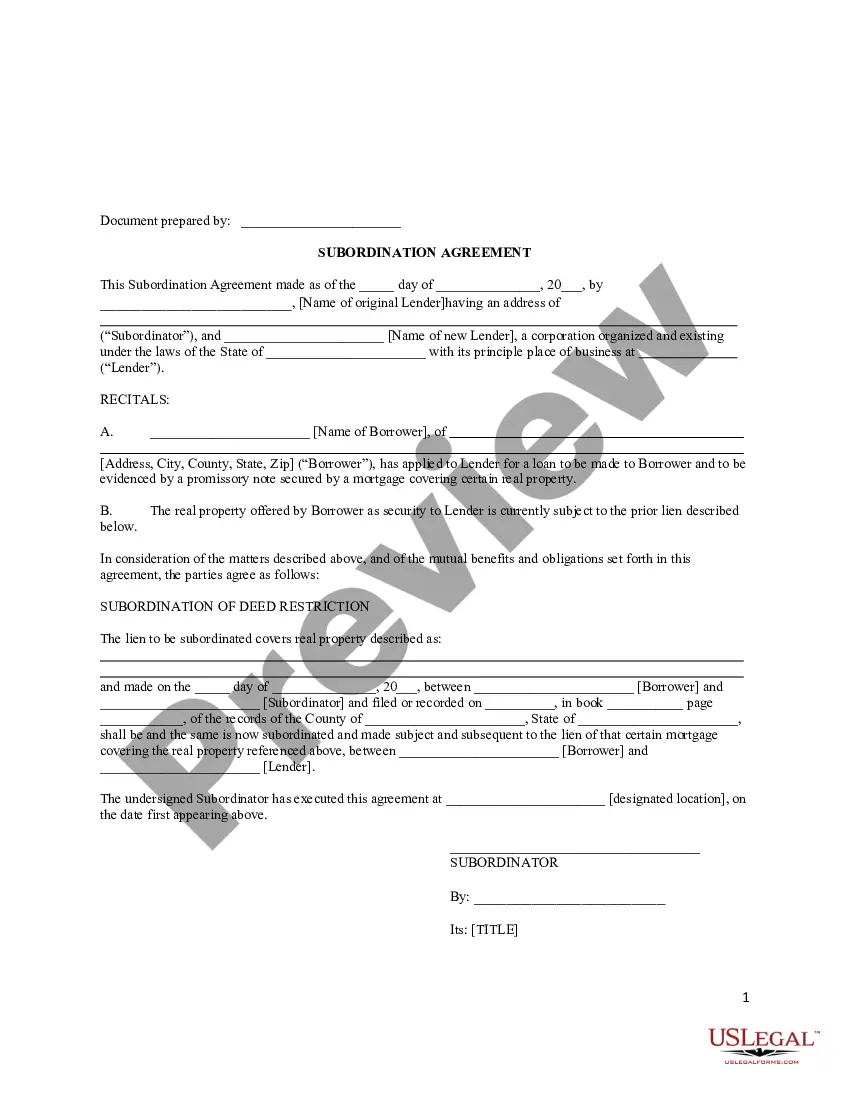
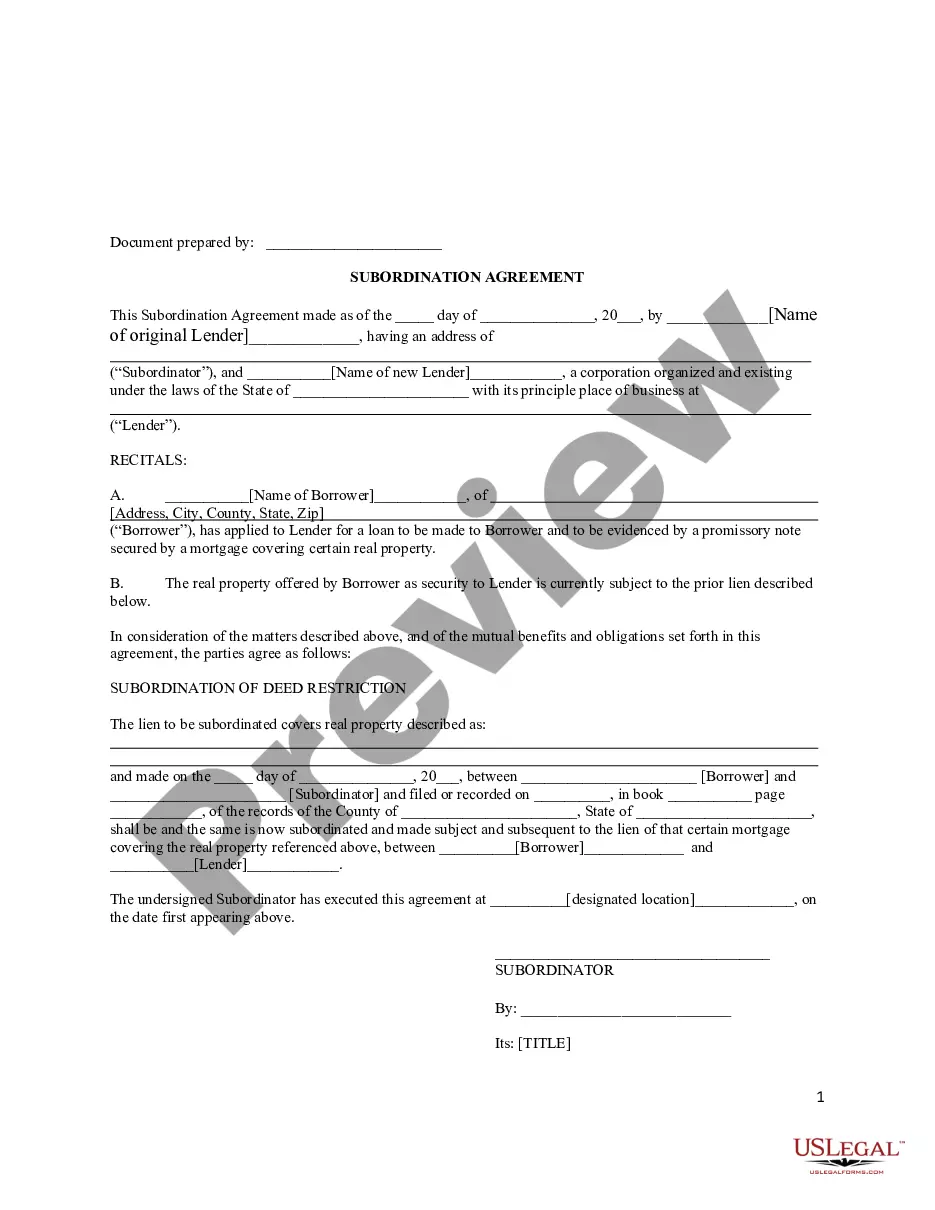
Despite its technical-sounding name, the subordination agreement has one simple purpose. It assigns your new mortgage to first lien position, making it possible to refinance with a home equity loan or line of credit. Signing your agreement is a positive step forward in your refinancing journey.
Subordination clauses in mortgages refer to the portion of your agreement with the mortgage company that says their lien takes precedence over any other liens you may have on your property.However, it's also possible to have other liens. You might have some placed by contractors until work is paid off.
A Subordination and Non-Disturbance Agreement (SNDA) commonly called a non-disturb is an agreement that your landlord asks its lender to provide. The agreement basically says that if the building goes bankrupt and the lender takes control of the building from the landlord, the lender will honor your lease.