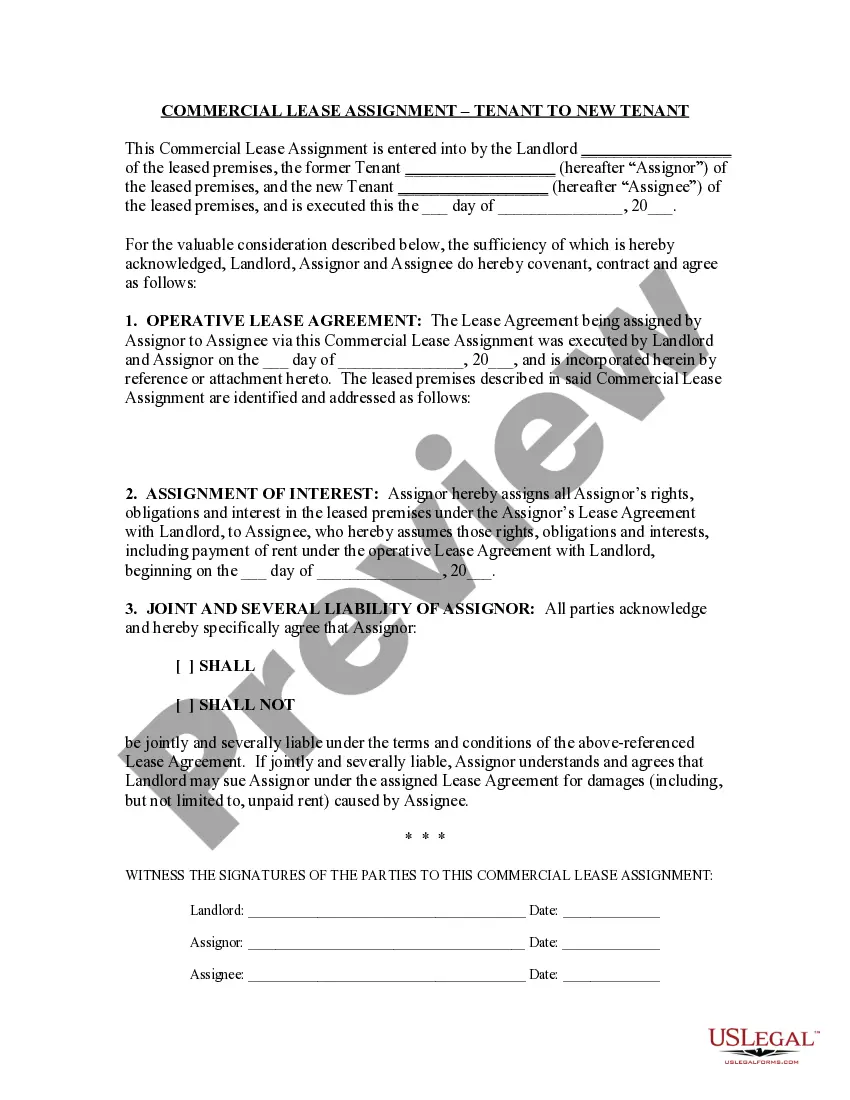
Louisiana Warranty Deed for Separate or Joint Property to Joint Tenancy
About this form
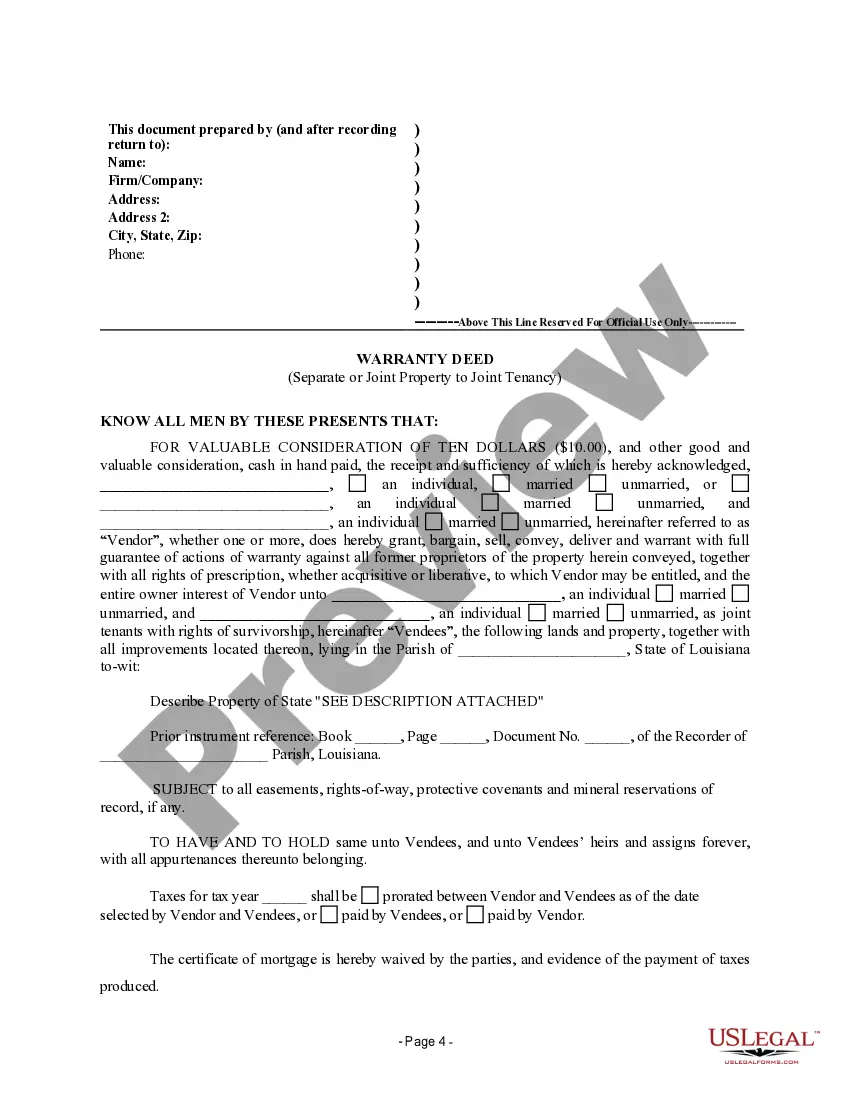
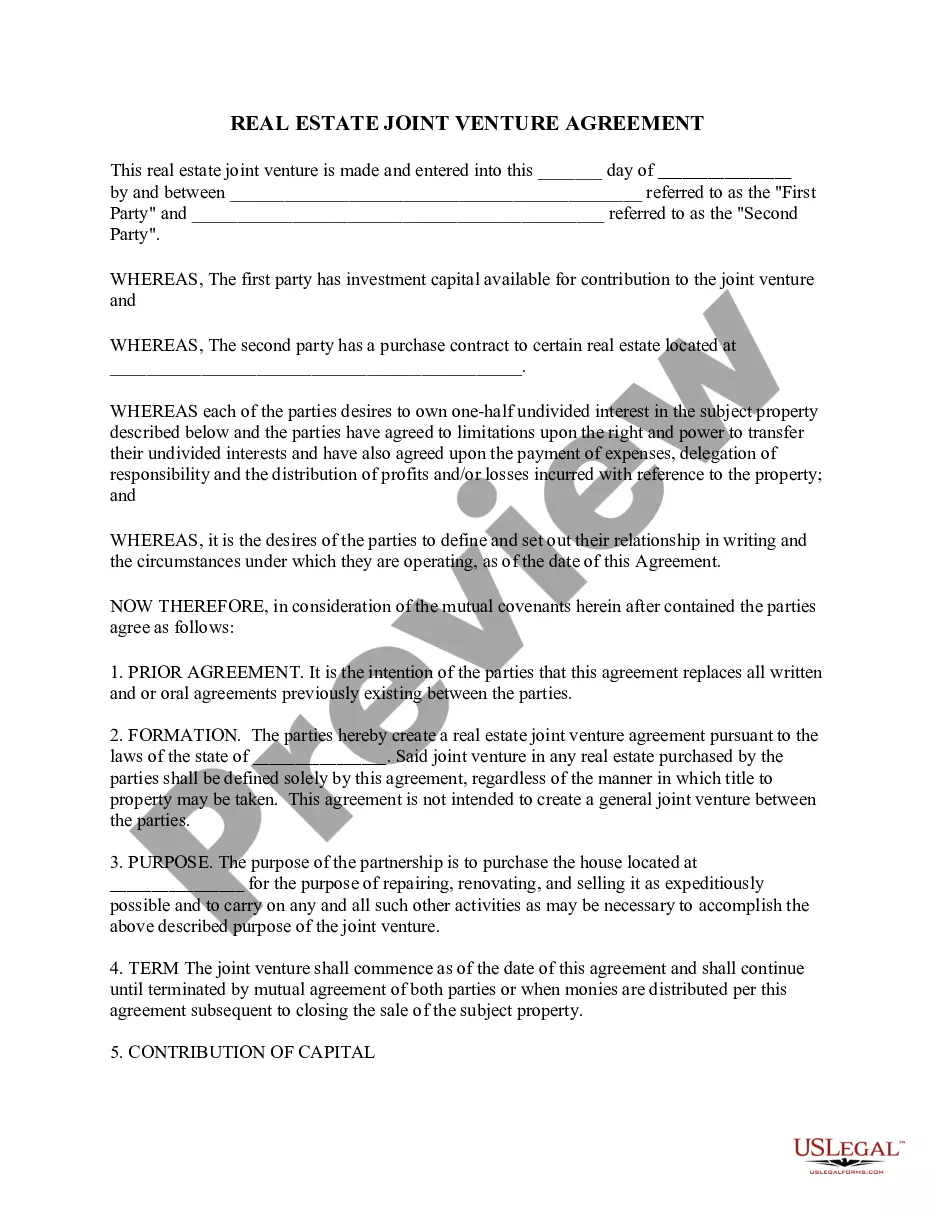
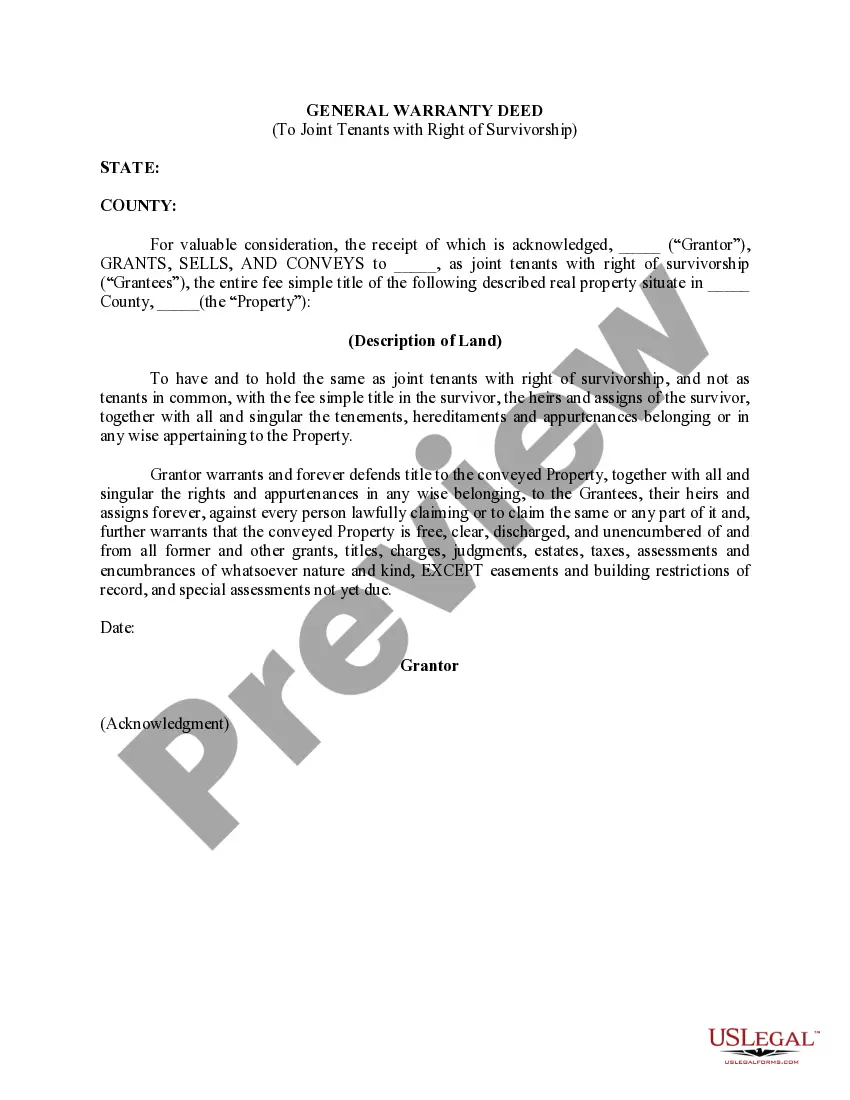
The Warranty Deed for Separate or Joint Property to Joint Tenancy is a legal document that facilitates the transfer of property ownership from one party to another, converting separate or jointly owned property into a joint tenancy holding. This form is essential for maintaining equal ownership rights and allows for the right of survivorship, which means that if one owner passes away, their interest in the property automatically passes to the other owner(s) without the need for probate.
Form components explained
- Identification of the parties involved in the transaction, including the vendor and vendees.
- Description of the property being transferred, including parcel details and prior deed references.
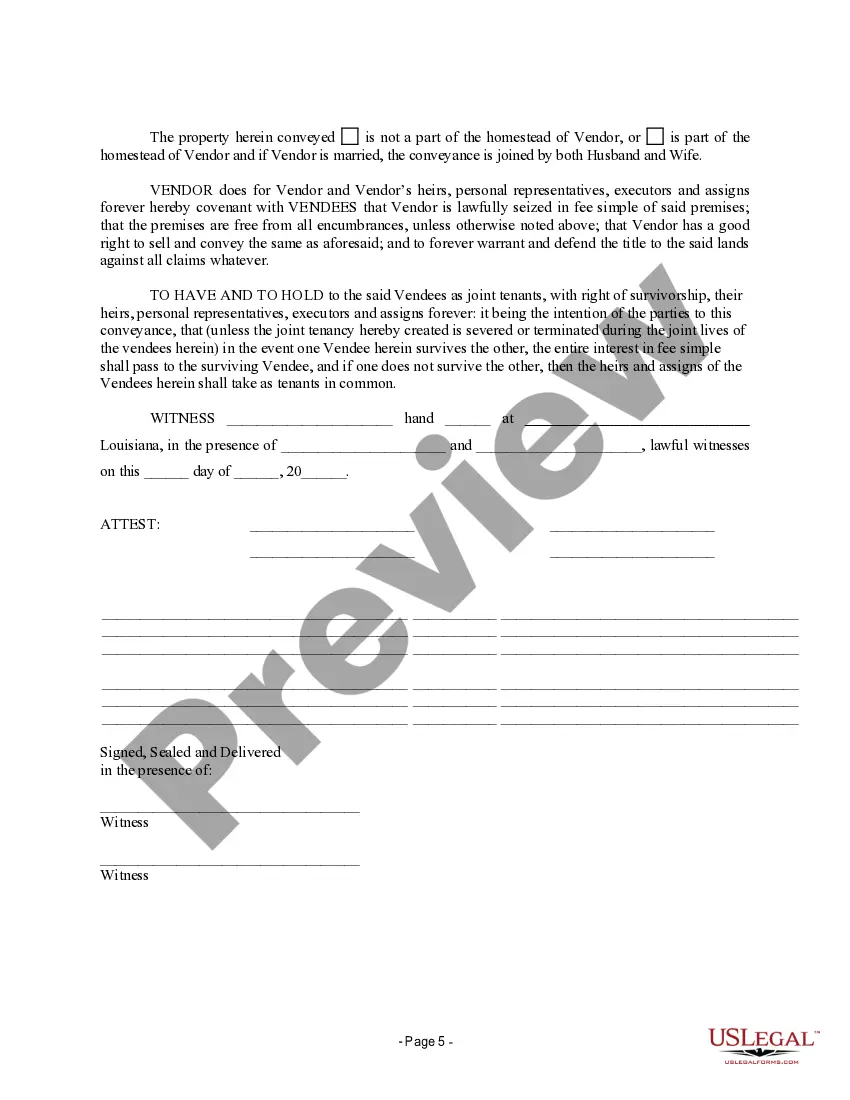
- Clauses that outline the rights and responsibilities of owners in a joint tenancy arrangement.
- Tax proration details to specify how property taxes will be handled between parties.
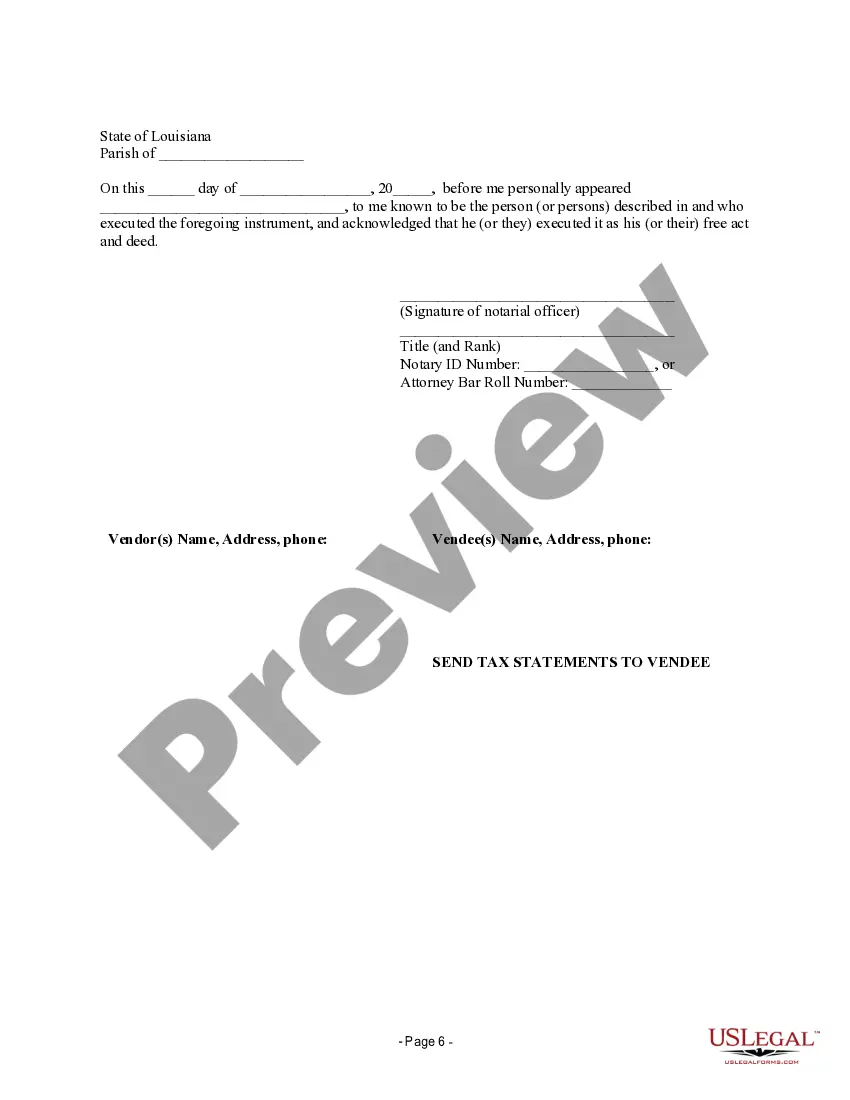
- Signatures from all parties involved, including witnesses and a notary public.


When to use this form
This form should be used when individuals wish to convert property ownership into a joint tenancy. It is ideal for couples, family members, or business partners who want to ensure that the surviving co-owner will inherit property rights without going through probate upon the death of one owner. Situations such as marriage, partnerships, or estate planning may prompt the use of this warranty deed.
Who needs this form
This form is designed for:
- Property owners looking to transfer their property into joint tenancy with another party.
- Couples who want to establish joint ownership as a form of asset protection.
- Family members wishing to manage inherited property collectively.
- Business partners seeking to clarify property ownership rights.
How to complete this form
- Identify the vendor and vendees by including full legal names.
- Specify the property details, including the address and legal description.
- Indicate any tax-related responsibilities agreed upon by the parties.
- Ensure all parties sign the document in the presence of witnesses.
- Complete the notarization section with information about the notary public.
Notarization requirements for this form
Yes, this form must be notarized to be legally valid. Having the document notarized helps establish the authenticity of the signatures and ensures that it meets all legal requirements. US Legal Forms offers integrated online notarization services, allowing you to complete this process securely and conveniently from home.
Get your form ready online
Our built-in tools help you complete, sign, share, and store your documents in one place.
Make edits, fill in missing information, and update formatting in US Legal Forms—just like you would in MS Word.
Download a copy, print it, send it by email, or mail it via USPS—whatever works best for your next step.
Sign and collect signatures with our SignNow integration. Send to multiple recipients, set reminders, and more. Go Premium to unlock E-Sign.
If this form requires notarization, complete it online through a secure video call—no need to meet a notary in person or wait for an appointment.
We protect your documents and personal data by following strict security and privacy standards.

Make edits, fill in missing information, and update formatting in US Legal Forms—just like you would in MS Word.

Download a copy, print it, send it by email, or mail it via USPS—whatever works best for your next step.

Sign and collect signatures with our SignNow integration. Send to multiple recipients, set reminders, and more. Go Premium to unlock E-Sign.

If this form requires notarization, complete it online through a secure video call—no need to meet a notary in person or wait for an appointment.

We protect your documents and personal data by following strict security and privacy standards.
Mistakes to watch out for
- Failing to provide complete and accurate property descriptions.
- Not obtaining signatures from all necessary parties.
- Neglecting to have the document notarized as required.
- Not understanding the implications of joint tenancy versus tenancy in common.
- Omitting witness signatures or not following state-specific witnessing requirements.
Why use this form online
- Convenient access to the form allows for easy downloading and printing.
- Editable fields enable users to complete the form electronically, reducing errors.
- The forms have been drafted by licensed attorneys to ensure legal compliance.
- Immediate access and user-friendly design make it accessible for individuals without legal expertise.
Looking for another form?

Form popularity
FAQ
Under the Grantor section of the deed, write the name of the person transferring title. Under Grantee, write the name of the person receiving title. Describe the parcel of land. Use the street address and include the North Carolina County where the land is located.
To make the form legally binding, you must sign it in front of a notary public. You must then file your signed and notarized deed with the county office that's in charge of recording property documents. Once the grantee signs the warranty deed, he/she legally has ownership and claim to the property.
With a Survivorship Deed in place, when one of the parties in a joint tenancy dies, the other party (or parties) takes over the deceased party's interest in the property instead of it passing to the deceased's heirs or beneficiaries.
The answer is yes. Parties to a transaction are always free to prepare their own deeds. If you do so, be sure your deed measures up to your state's legal regulations, to help avert any legal challenge to the deed later.
To create a joint tenancy, all you need to do is put the right words on the title document, such as a deed to real estate, a car's title slip, or the signature card establishing a bank account.
Louisiana does not recognize Joint Tenancy With Rights of Survivorship (JTWOS); therefore, property titled JTWOS will remain community property or owned as tenants in common. A common pitfall is illustrated in the following example involving out of state immovable property, typically real estate.
Equal and Undivided Ownership Each joint tenant has equal and undivided legal ownership of the property. The equal and undivided ownership gives the joint tenants each the legal right to dispose of or keep his share of ownership interest in the property while the joint tenancy is in effect.
The name and address of the seller (called the grantor) The name and address of the buyer (called the grantee) A legal description of the property (found on the previous deed) A statement that the grantor is transferring the property to the grantee.
The name and address of the seller (called the grantor) The name and address of the buyer (called the grantee) A legal description of the property (found on the previous deed) A statement that the grantor is transferring the property to the grantee.