Louisiana General Power of Attorney
Overview of this form
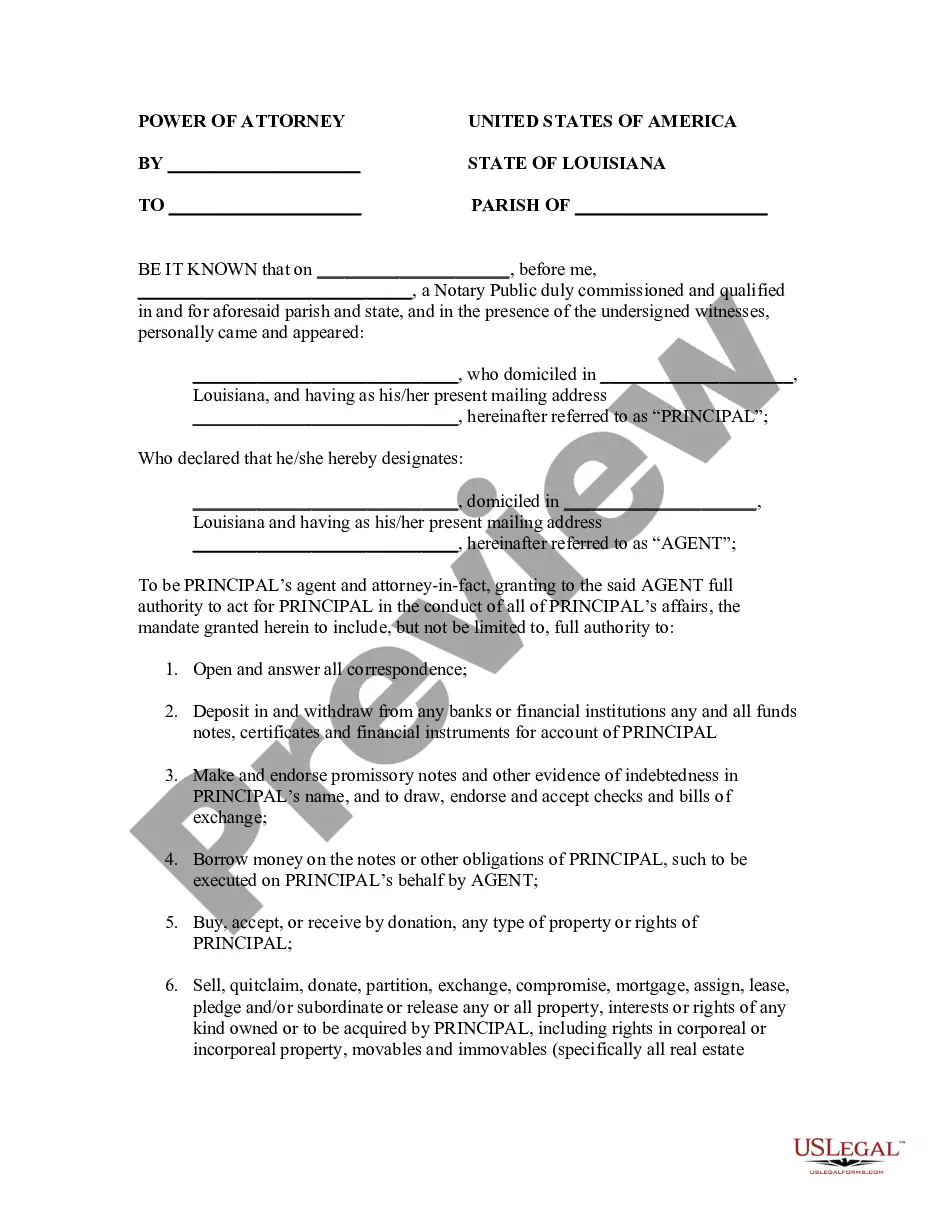
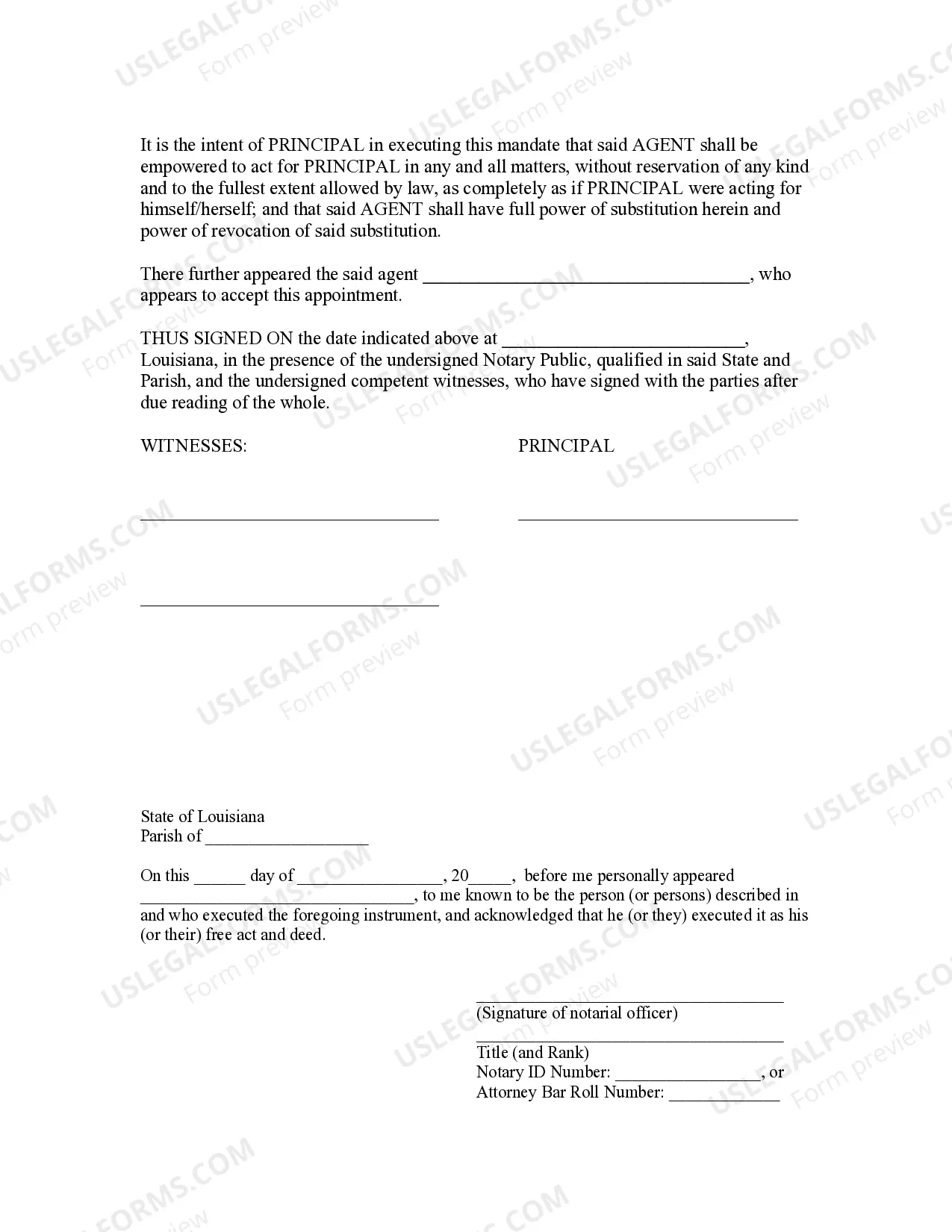
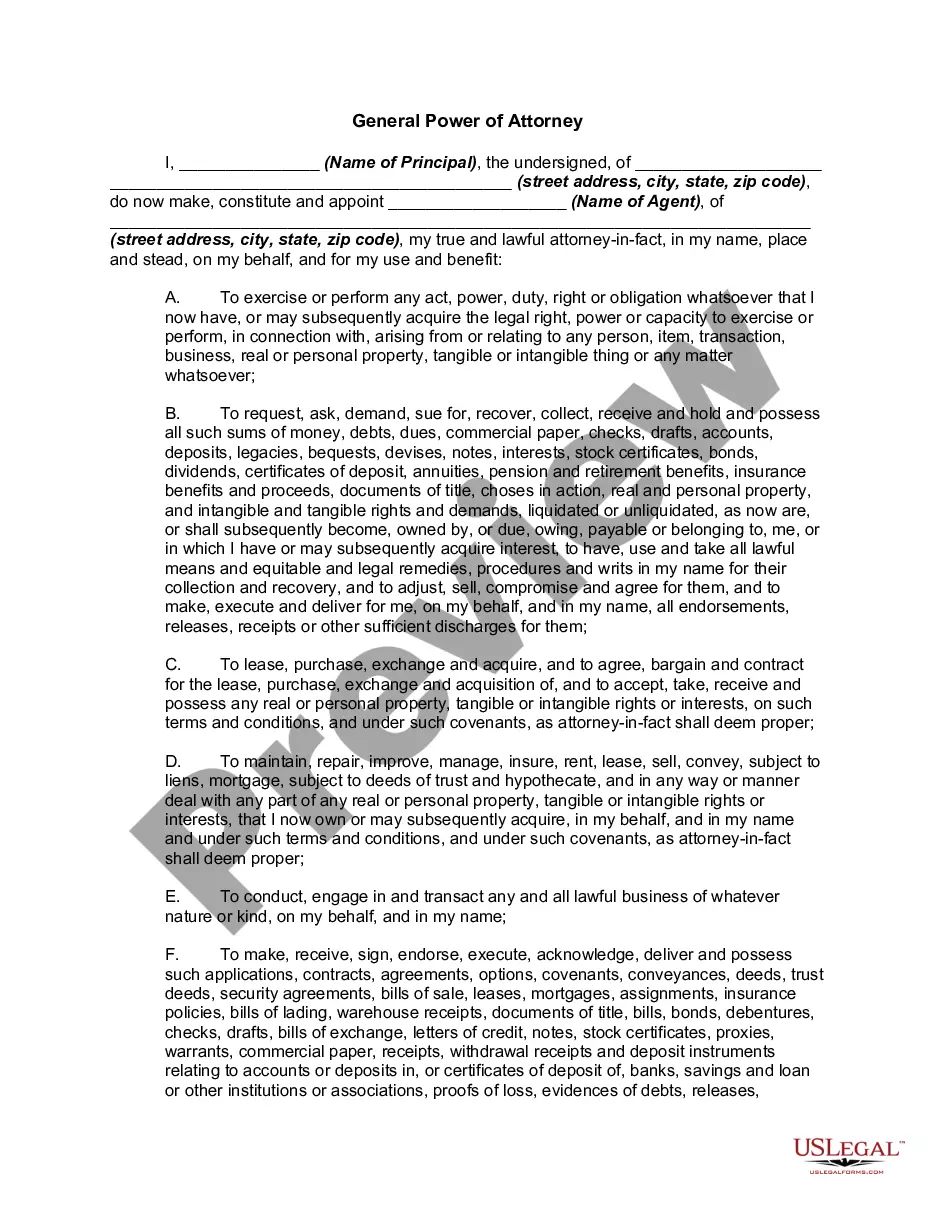
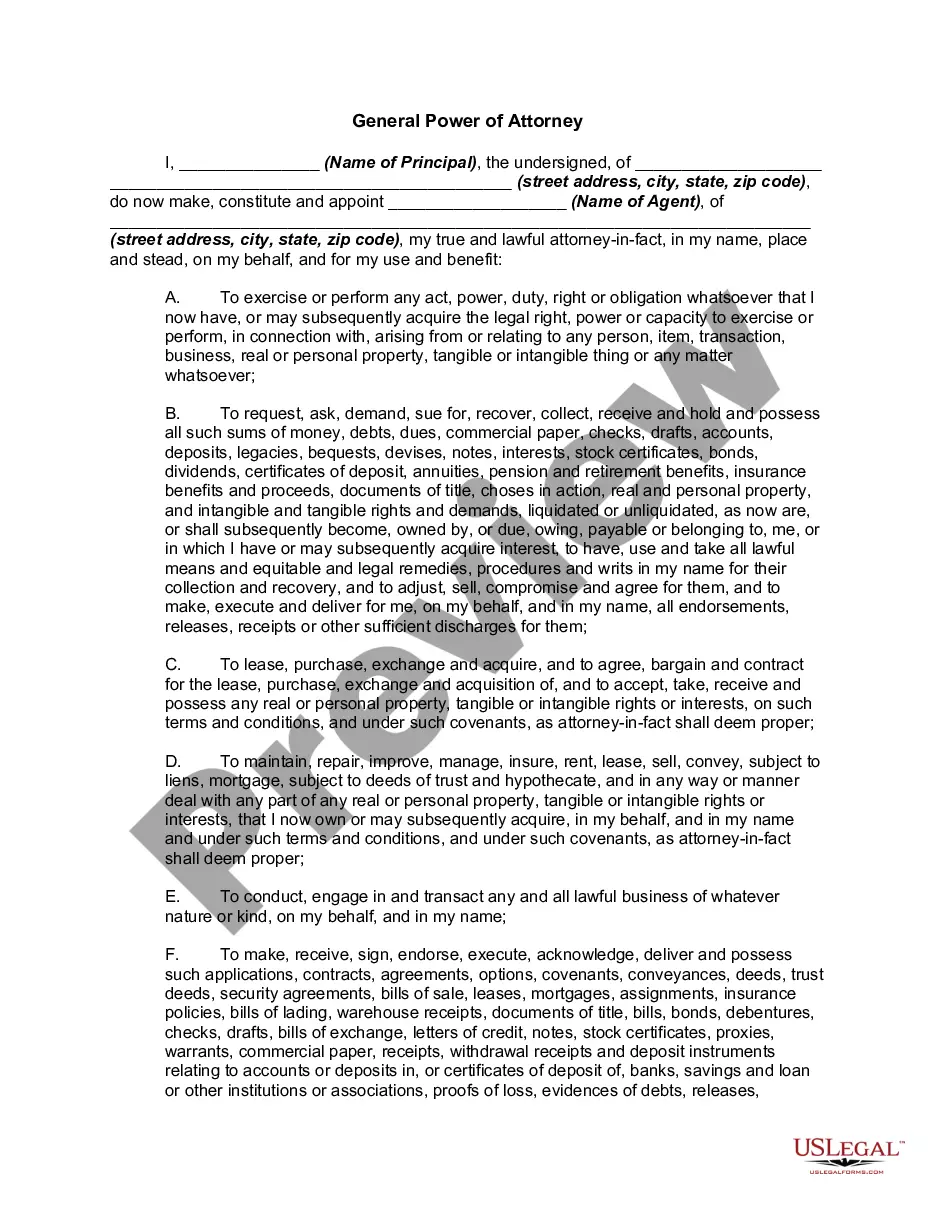
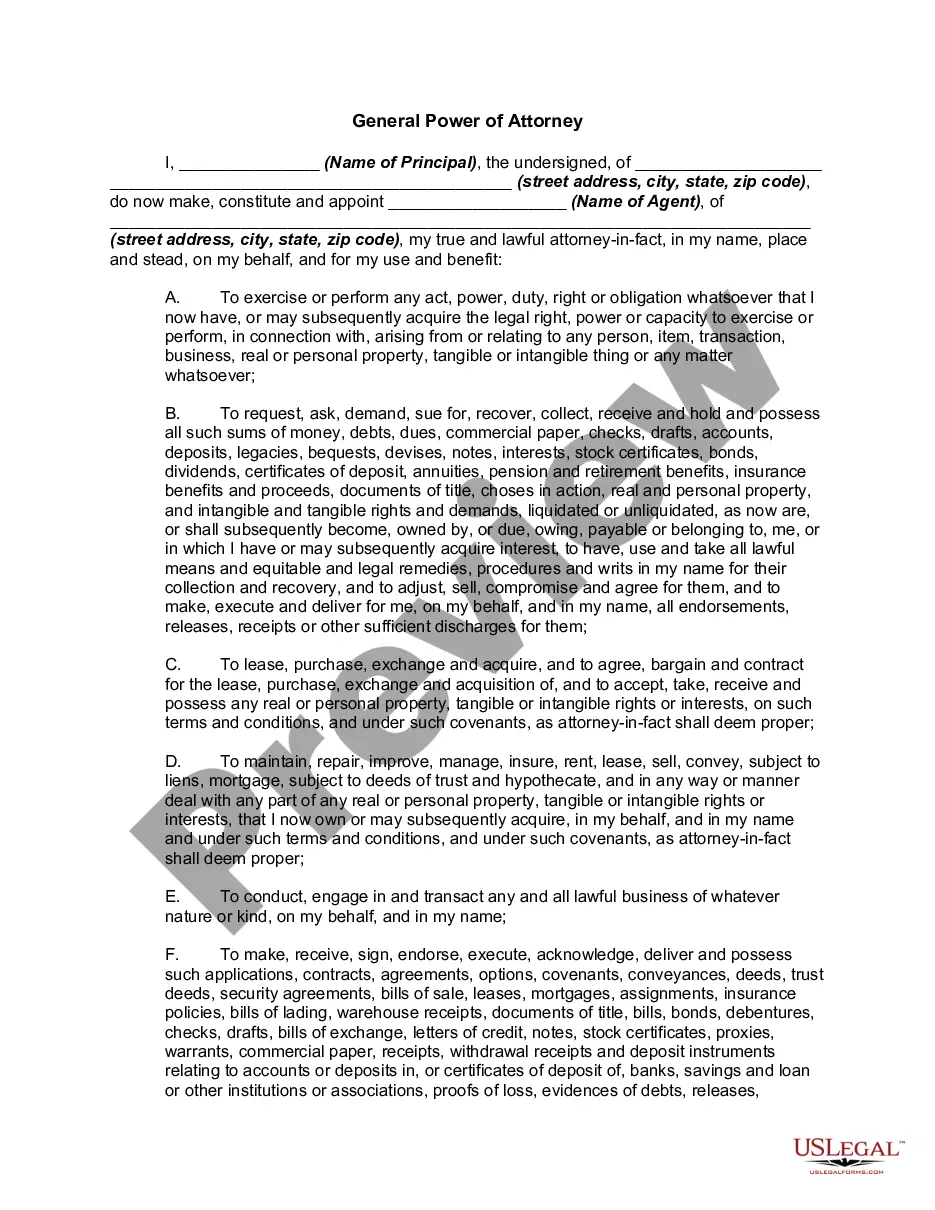
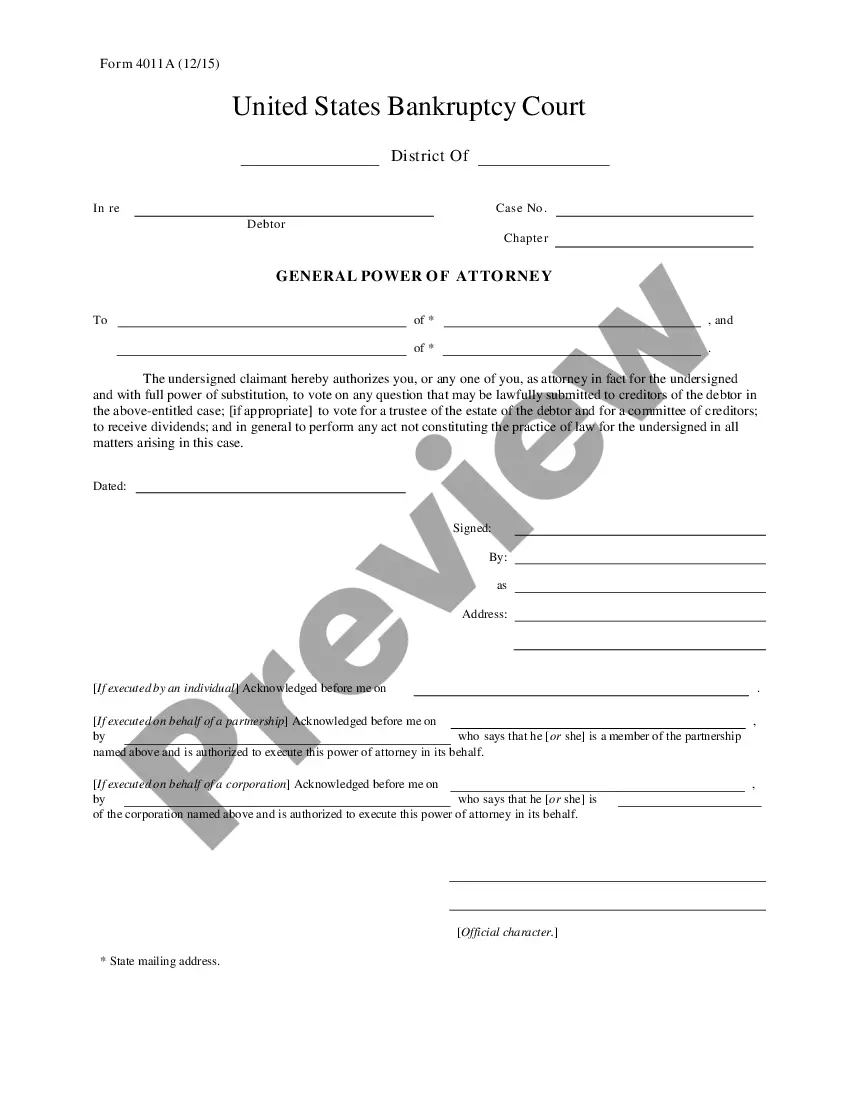
A general power of attorney is a legal document that allows one person, known as the principal, to appoint another person, called the agent, to handle various affairs on their behalf. This form covers a wide range of matters, including financial transactions, property management, and health care decisions. Unlike specific powers of attorney that limit the agentâs authority, the general power of attorney grants broader powers, allowing the agent to act in many situations as if they were the principal.
Form components explained
- Principal and Agent Information: Names, domiciles, and addresses of the principal and agent.
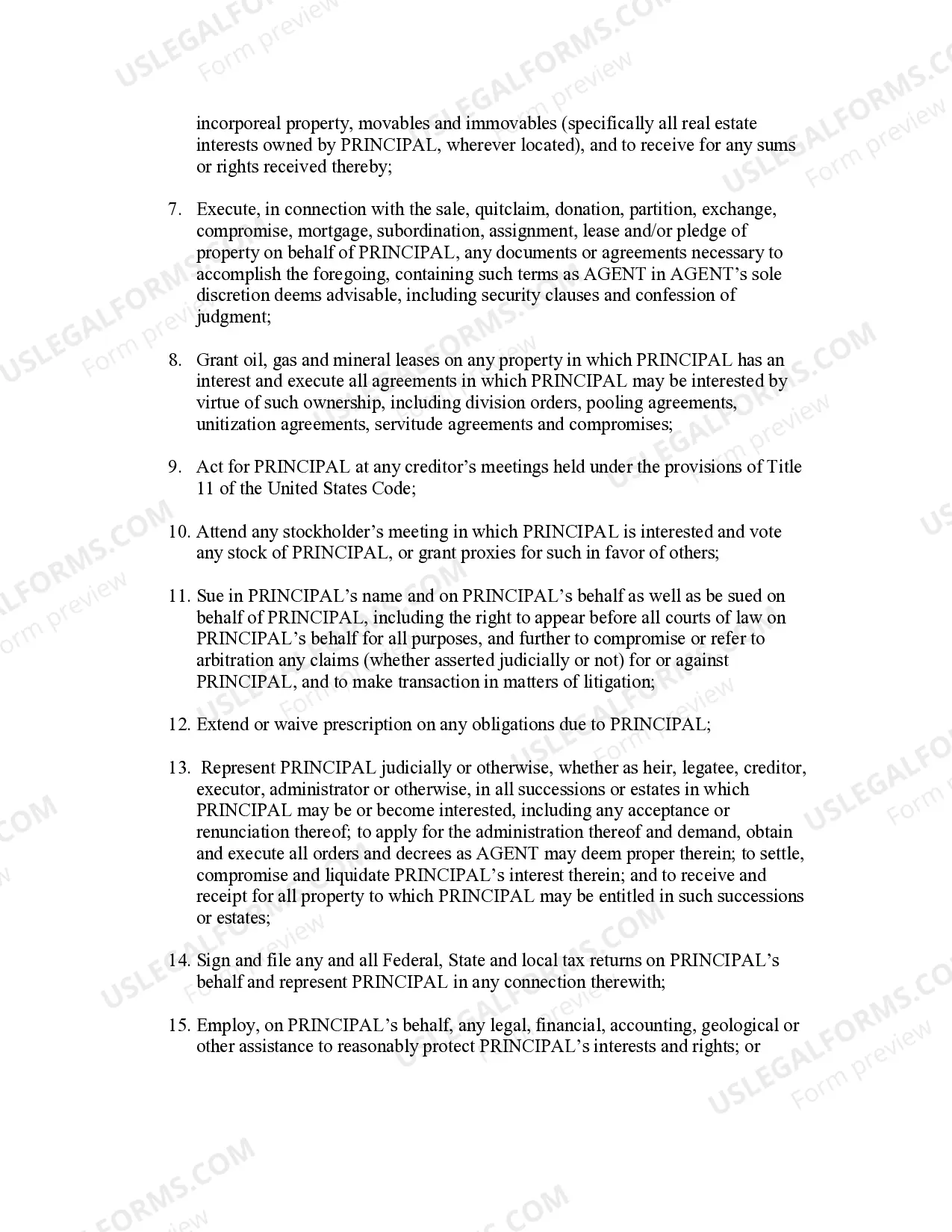
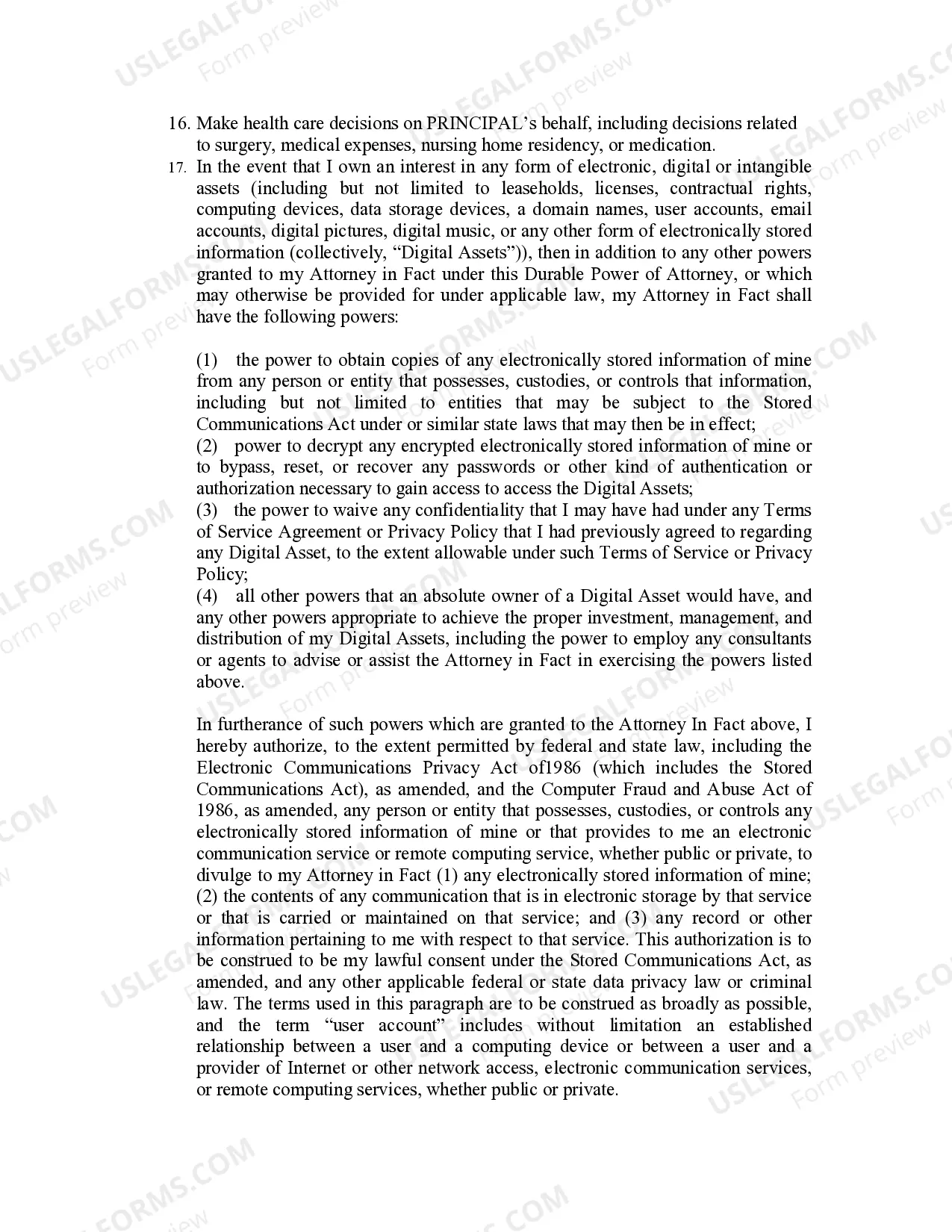
- Powers Granted: Specific powers that the agent is authorized to perform on behalf of the principal, including financial and health care decisions.
- Notary Public and Witnesses: Signatures of the principal, agent, witnesses, and a notary public to validate the document.
- Date of Execution: The date when the document is signed and executed.
- Revocation of Powers: Information about the agent's authority to revoke any powers granted to other agents.

When this form is needed
This form is useful in various situations, such as when a principal is unable to manage their affairs due to illness, absence, or other reasons. It allows the agent to handle everything from banking responsibilities to real estate transactions, ensuring that the principal's interests are managed effectively even in their absence.
Who this form is for
- Individuals who want to designate someone to manage their financial and personal affairs.
- Those preparing for situations where they may become unable to act on their own behalf.
- People seeking to streamline their financial management through a trusted person.
How to complete this form
- Identify the principal and agent by entering their full names, domiciles, and addresses in the designated fields.
- Specify the powers you are granting to the agent, ensuring they cover all necessary areas of responsibility.
- Enter the date of execution and ensure all parties sign the document in the presence of a notary public and witnesses.
- Review the completed form to ensure all information is accurate and that you have provided the necessary authority.
Notarization requirements for this form
Yes, this form must be notarized to be legally valid. US Legal Forms offers integrated online notarization services, ensuring you can complete the process securely via video call, without the need for travel.
Get your form ready online
Our built-in tools help you complete, sign, share, and store your documents in one place.
Make edits, fill in missing information, and update formatting in US Legal Forms—just like you would in MS Word.
Download a copy, print it, send it by email, or mail it via USPS—whatever works best for your next step.
Sign and collect signatures with our SignNow integration. Send to multiple recipients, set reminders, and more. Go Premium to unlock E-Sign.
If this form requires notarization, complete it online through a secure video call—no need to meet a notary in person or wait for an appointment.
We protect your documents and personal data by following strict security and privacy standards.

Make edits, fill in missing information, and update formatting in US Legal Forms—just like you would in MS Word.

Download a copy, print it, send it by email, or mail it via USPS—whatever works best for your next step.

Sign and collect signatures with our SignNow integration. Send to multiple recipients, set reminders, and more. Go Premium to unlock E-Sign.

If this form requires notarization, complete it online through a secure video call—no need to meet a notary in person or wait for an appointment.

We protect your documents and personal data by following strict security and privacy standards.
Mistakes to watch out for
- Failing to have the document notarized, which may be necessary for enforceability.
- Not clearly specifying the powers granted, leading to ambiguity in responsibilities.
- Leaving out witness signatures, which can invalidate the document.
Advantages of online completion
- Immediate access to a professionally drafted legal form without the need for an attorney visit.
- Edit the template as needed to suit your specific circumstances.
- Easy download and printing for your convenience.
- This General Power of Attorney is enforceable under Louisiana law, provided it is completed correctly.
- It is important to review the powers granted, as they can significantly impact the Principal's rights and interests.
- The Agent must act in the best interest of the Principal, adhering to any limitations outlined in the document.
Quick recap
- A General Power of Attorney allows for broad decision-making authority for an Agent.
- Proper completion and notarization are crucial for the document's legal validity.
- This form is suitable for individuals seeking to delegate authority seamlessly.
Glossary of terms
- Principal: The individual granting power to the agent.
- Agent: The person appointed to act on behalf of the principal.
- Notary Public: An official authorized to witness the signing of legal documents.
Looking for another form?





Form popularity
FAQ
Allows the principal to appoint an agent to handle financial, property, and health care decisions on the principal’s behalf. It’s used when the principal may become unable to act due to illness or absence, or simply wants someone trusted to manage affairs. The document requires signatures, and typically a notary and witnesses, plus the execution date to validate it.
Common mistakes include failing to fill in all required information (principal and agent details, powers, date), not having the document properly signed, dated, and witnessed or notarized per Louisiana practices, overlooking the need for copies for key parties, and failing to plan for a successor agent or clearly defining the scope of powers.
A power of attorney can be voided if the principal revokes it, if the principal dies, or if the document is not properly executed (missing signatures, or lacking required notarization or witnesses). It can also be void if the agent acts beyond the powers granted or if the document’s terms have expired.
Choose someone you trust to act in your interests, who can handle financial tasks and health care decisions, and who communicates clearly. Consider proximity and availability, willingness to serve, and whether you should name a backup agent. The principal and agent information and the powers granted sections guide this choice.
Red flags include vague or overly broad powers, a lack of clear limits or dates, pressure from others to sign, failure to notarize or witness the document, no backup agent, or changes to the POA at the last minute. Review the Powers Granted and execution details to spot issues.
The Louisiana General Power of Attorney grants broad authority to handle financial and health care decisions on the principal’s behalf, while a specific POA limits authority to particular tasks listed in the document. This form also includes principal/agent information, powers granted, and notary/witness requirements.