Mississippi Jury Instruction - Parol Evidence
Understanding this form
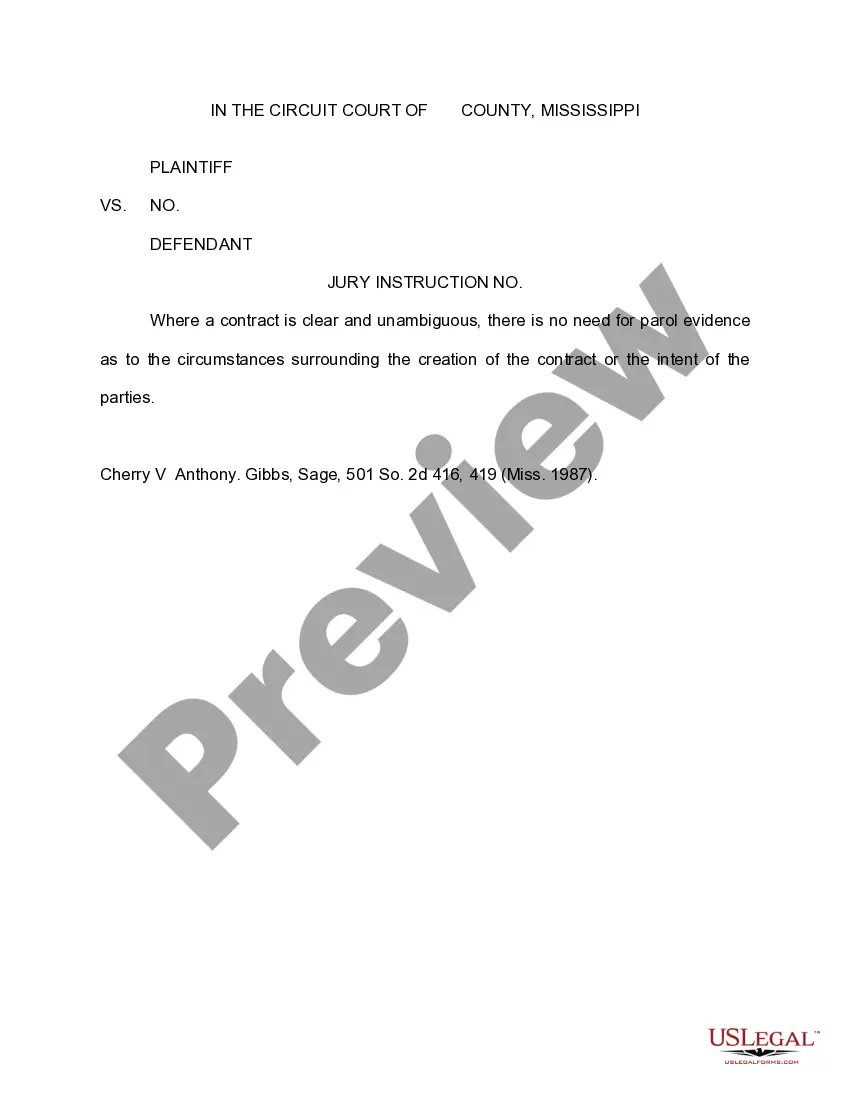
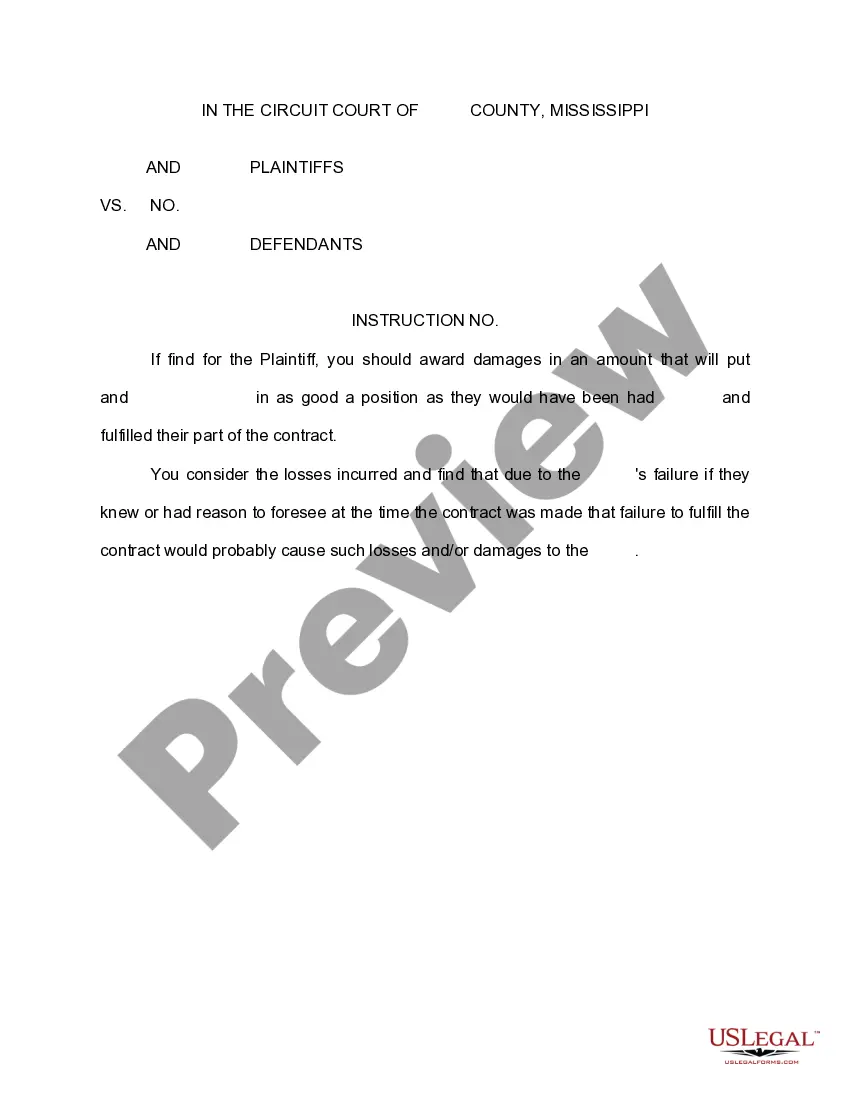
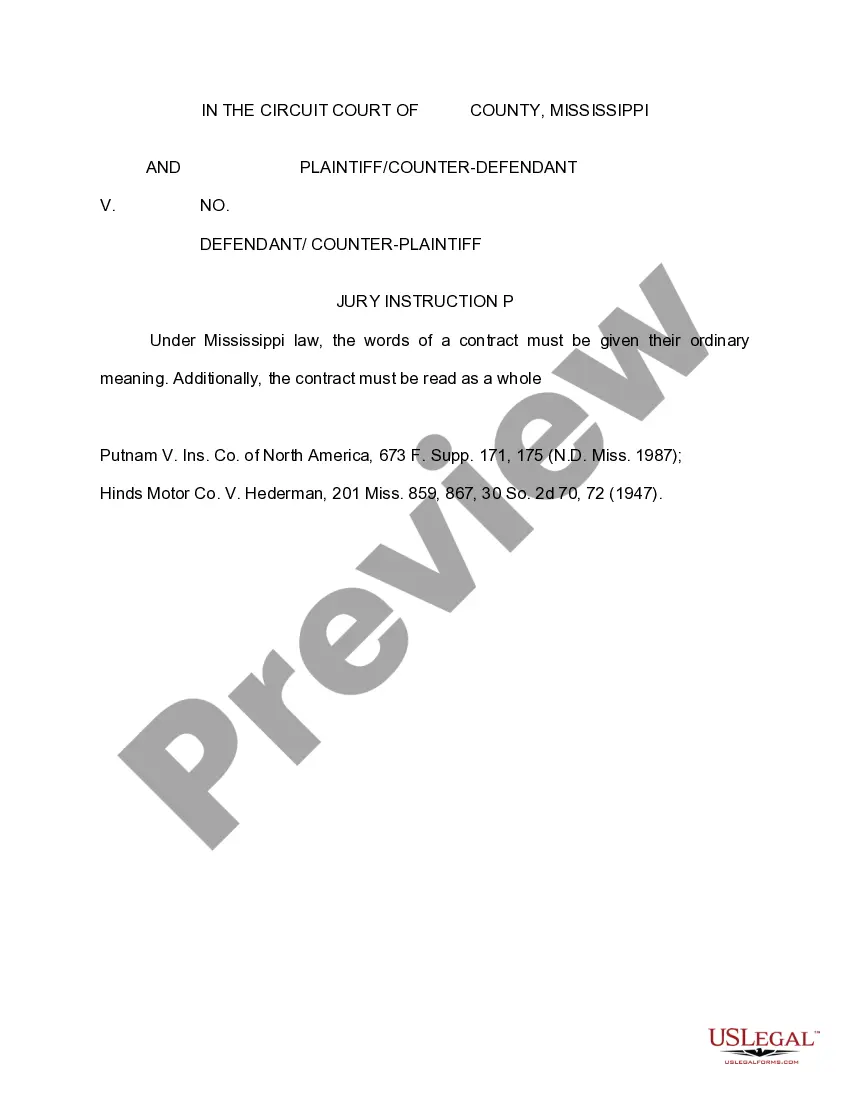
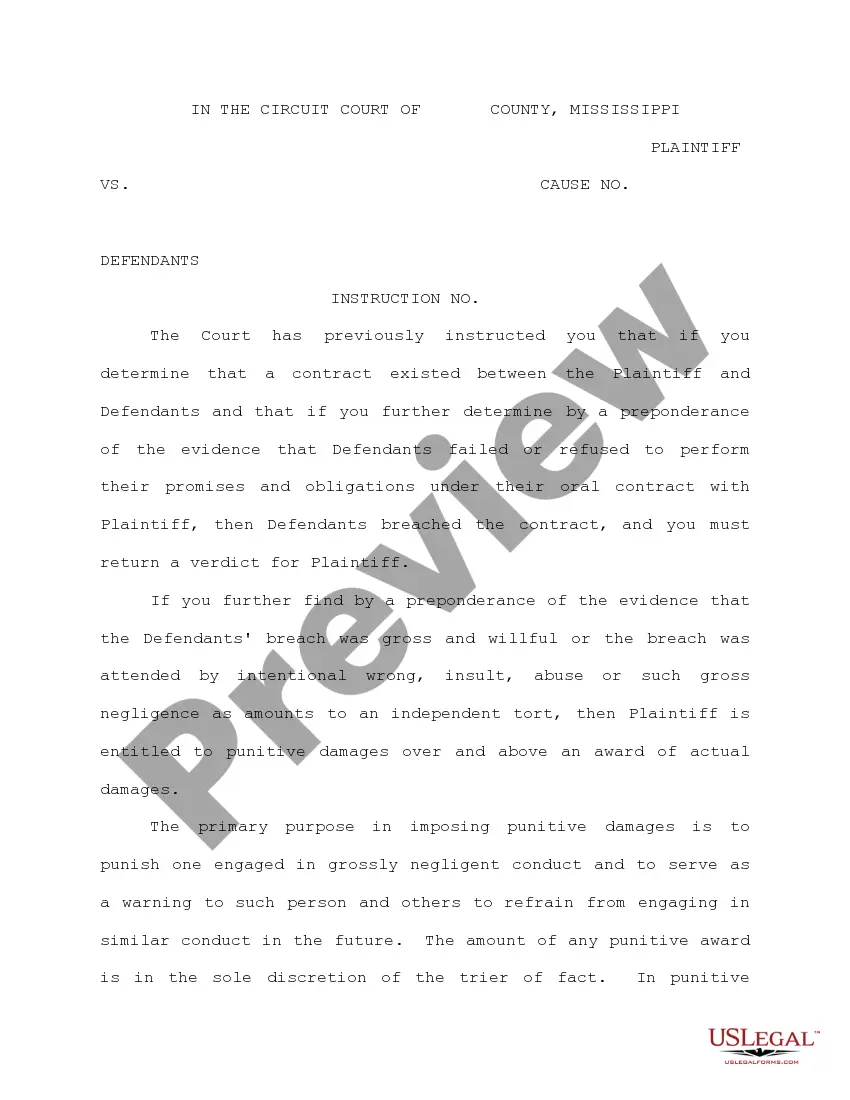
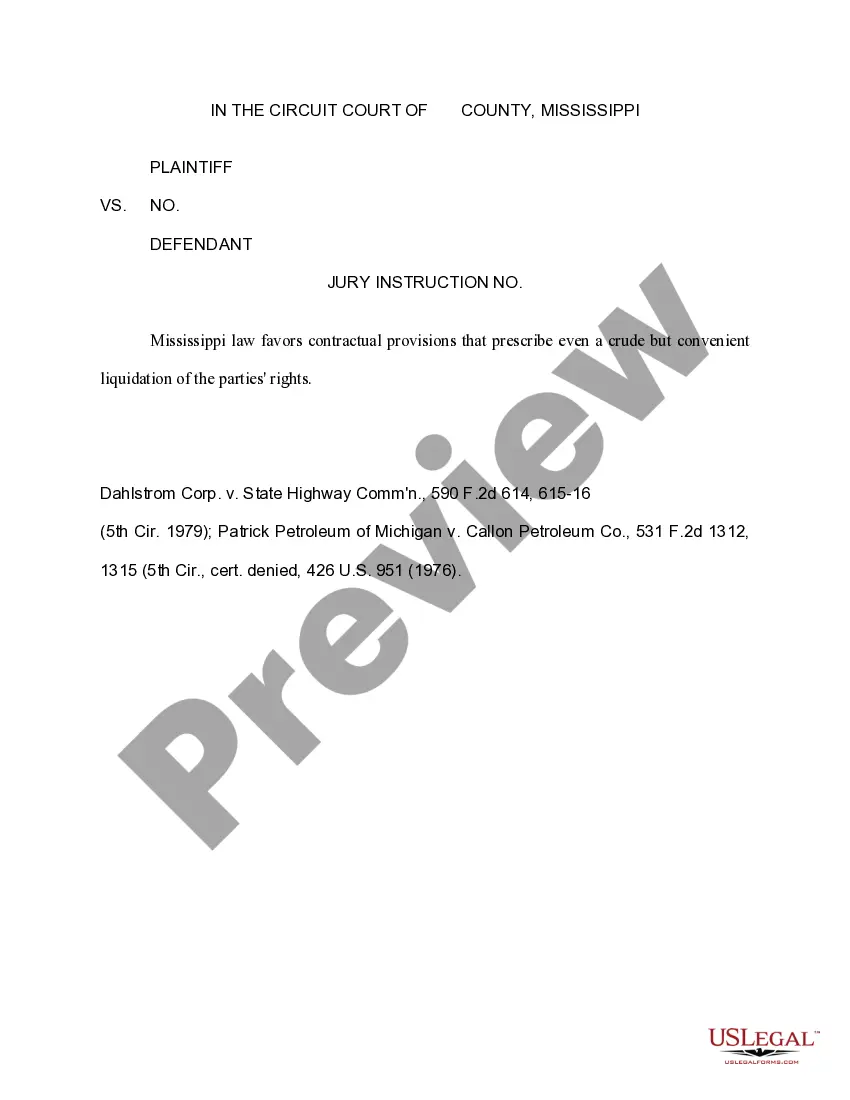
The Jury Instruction - Parol Evidence form is a specialized legal document used in Mississippi courts. It provides a standard instruction to juries regarding the use of parol evidence in contract disputes. Parol evidence refers to any oral or written statements that are not included in a finalized written contract. This form ensures that juries understand the rules surrounding the inclusion of extrinsic evidence when a contract is deemed clear and unambiguous. Unlike other jury instructions, this form specifically focuses on the conditions under which parol evidence can be presented in legal proceedings.
Form components explained
- The title identifying it as a jury instruction relevant to parol evidence.
- A clear statement that parol evidence is not needed when a contract is clear.
- Citation of relevant Mississippi case law (Cherry v. Anthony, Gibbs, Sage) for legal authority.
When this form is needed
This form should be used during jury trials where the interpretation of a contract is in question. If one party wishes to present evidence outside of the written contract to clarify the parties' intentions or the circumstances surrounding the contract, this jury instruction will help guide the jury on whether such evidence should be considered. It is particularly relevant in cases where disputes arise from the meaning of contract clauses or the exclusion of certain terms from the written document.
Who needs this form
- Attorneys representing clients in civil litigation involving contract disputes.
- Judges presiding over cases that require clarification on the admissibility of parol evidence.
- Law students or legal professionals studying Mississippi jury instructions and contract law.
Completing this form step by step
- Fill in the titles of the parties involved in the case in the designated spaces.
- Insert the case number to identify the specific litigation.
- Check the wording to ensure it aligns with current case law and adjust if necessary.
- Provide the jury instruction number for reference during the trial.
- Review the final version with legal counsel prior to presentation in court.
Notarization guidance
Notarization is generally not required for this form. However, certain states or situations might demand it. You can complete notarization online through US Legal Forms, powered by Notarize, using a verified video call available anytime.
Get your form ready online
Our built-in tools help you complete, sign, share, and store your documents in one place.
Make edits, fill in missing information, and update formatting in US Legal Forms—just like you would in MS Word.
Download a copy, print it, send it by email, or mail it via USPS—whatever works best for your next step.
Sign and collect signatures with our SignNow integration. Send to multiple recipients, set reminders, and more. Go Premium to unlock E-Sign.
If this form requires notarization, complete it online through a secure video call—no need to meet a notary in person or wait for an appointment.
We protect your documents and personal data by following strict security and privacy standards.

Make edits, fill in missing information, and update formatting in US Legal Forms—just like you would in MS Word.

Download a copy, print it, send it by email, or mail it via USPS—whatever works best for your next step.

Sign and collect signatures with our SignNow integration. Send to multiple recipients, set reminders, and more. Go Premium to unlock E-Sign.

If this form requires notarization, complete it online through a secure video call—no need to meet a notary in person or wait for an appointment.

We protect your documents and personal data by following strict security and privacy standards.
Avoid these common issues
- Failing to adjust the language to reflect current case law.
- Not providing the jury with clear definitions of key legal terms.
- Omitting crucial details such as the case number or party names.
Advantages of online completion
- Easy access to downloadable legal form templates drafted by licensed attorneys.
- Immediate availability allows for quick preparation for court proceedings.
- Ability to customize the form to suit specific case requirements efficiently.
Legal use & context
- This form provides a framework for jury instructions in Mississippi courts regarding the use of parol evidence.
- Parol evidence rules ensure that parties cannot introduce conflicting oral agreements if the written contract is clear.
- Usage of this jury instruction can impact the outcome of contract disputes significantly.
Main things to remember
- The Jury Instruction - Parol Evidence form is crucial for guiding juries on evidence admissibility in contract cases.
- This form must be tailored to comply with current Mississippi case law.
- Utilizing this form can enhance the clarity and effectiveness of legal proceedings involving contracts.
Looking for another form?

Form popularity
FAQ
These are civil or criminal jury instructions approved by a state court, bench committee, or bar association. They are commonly used by courts in the relevant jurisdiction, as they ease the process of drafting fair jury instructions and theoretically do not have errors.
A jury instruction is given by the judge to the jury to explain what is happening in the court, to explain the points of law relevant to the case, to explain certain aspects of the evidence presented and to assist the jurors in understanding their duties in reaching a verdict.
The parol evidence rule governs the extent to which parties to a case may introduce into court evidence of a prior or contemporaneous agreement in order to modify, explain, or supplement the contract at issue. The rule excludes the admission of parol evidence.
The criminal statute of limitations requires prosecutors to file criminal charges against a suspect within two years for misdemeanors and within five years for certain felonies, but there is no time limit in Mississippi for charges of murder, kidnapping, rape, burglary, robbery, larceny, and several other serious
The judge instructs the jury about the relevant laws that should guide its deliberations. (In some jurisdictions, the court may instruct the jury at any time after the close of evidence.The judge reads the instructions to the jury. This is commonly referred to as the judge's charge to the jury.
A judgment notwithstanding the verdict (or JNOV) is an order by a judge after a jury has returned its verdict. The judge can overturn the jury's verdict if he or she feels it cannot reasonably be supported by the evidence or if it contradicts itself.
Jury instructions, directions to the jury, or judge's charge are legal rules that jurors should follow when deciding a case.
The plain meaning of the language. the drafting of the language. other relevant terms that might help determine the meaning of the language. the purpose of the clause. the purpose of the contract as a whole.
In general, the parol evidence rule prevents the introduction of evidence of prior or contemporaneous negotiations and agreements that contradict, modify, or vary the contractual terms of a written contract when the written contract is intended to be a complete and final expression of the parties' agreement.