Colorado Owner's or Seller's Affidavit of No Liens
Description
Definition and meaning
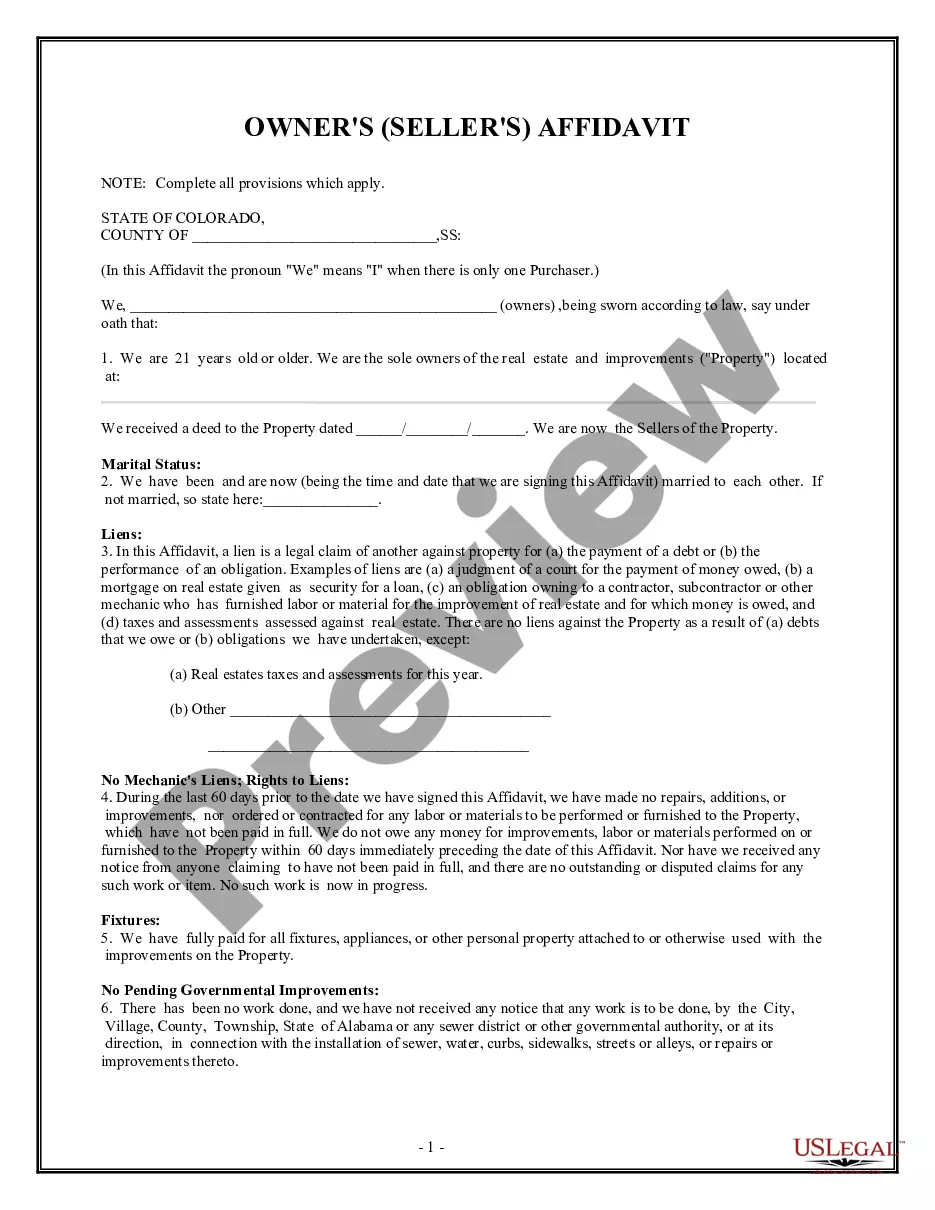
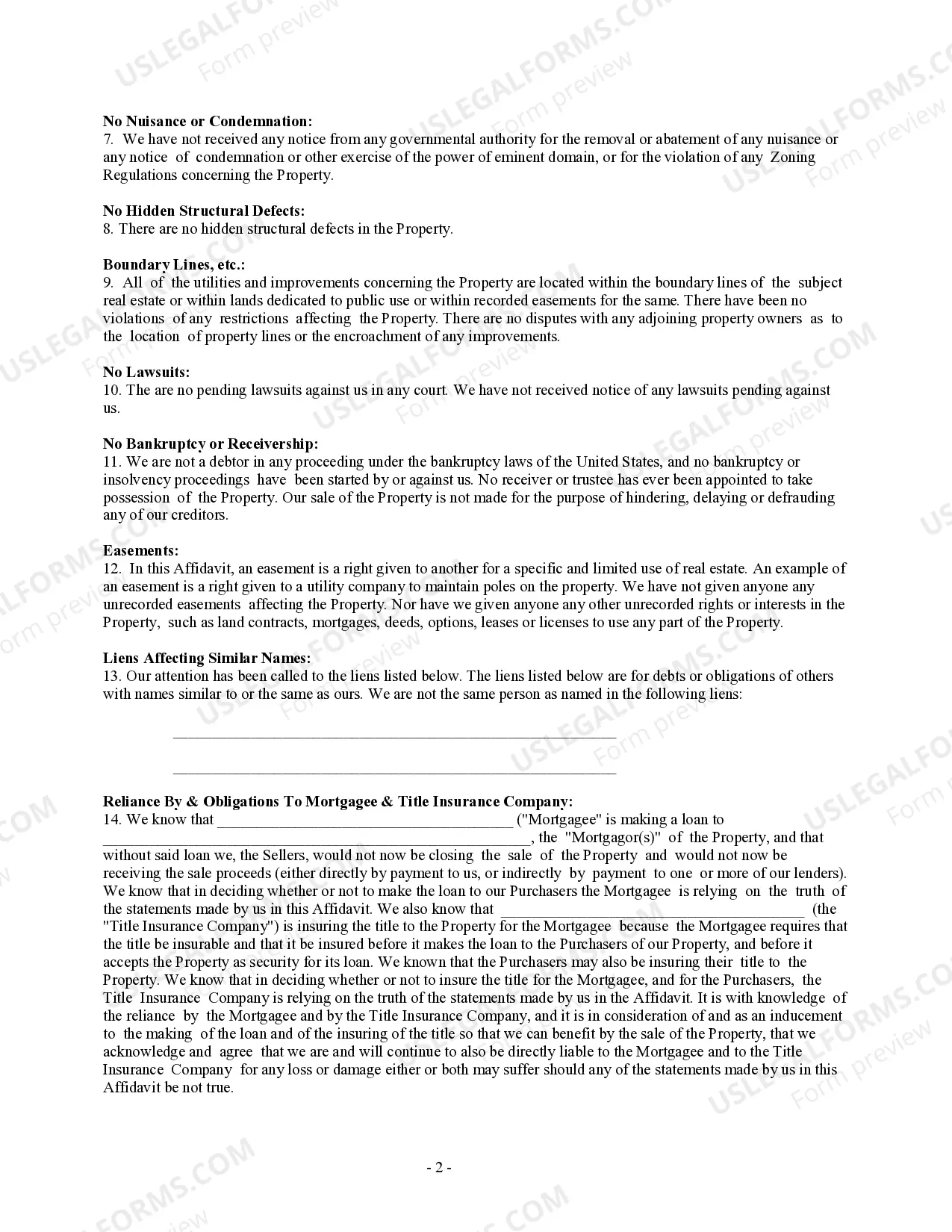
The Colorado Owner's or Seller's Affidavit of No Liens is a legal document that affirms the absence of liens against the property being sold. A lien is a legal claim against a property for the payment of a debt or obligation, which can arise from various sources including loans, unpaid bills, or judgments. This affidavit allows the seller to declare that there are no current claims against the property, ensuring a clear title for the buyer.
Who should use this form
This affidavit should be utilized by property owners or sellers in Colorado who are preparing to sell their real estate. It is particularly beneficial for those who want to confirm that their property is free from any encumbrances, providing reassurance to potential buyers and mortgage companies regarding the title's clarity.
Key components of the form
The Colorado Owner's or Seller's Affidavit of No Liens comprises several key sections:
- Property Description: Identifies the specific real estate being sold.
- Owner Information: Personal details of the property owners who are signing the affidavit.
- Affidavit Statements: Confirms no existing liens or claims against the property and that all taxes have been paid.
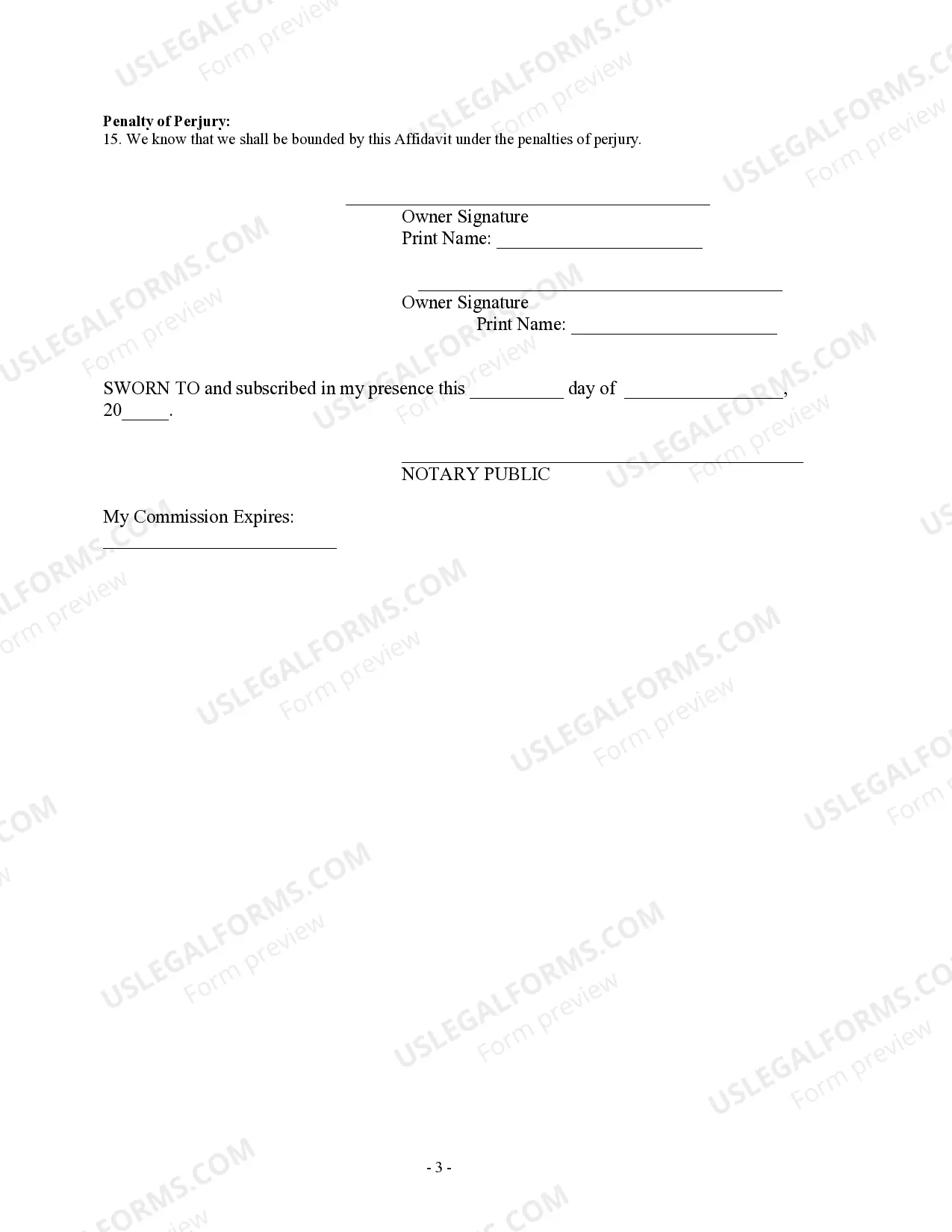
- Signatures: Requires signatures of the owners and a notary public for authenticity.
Common mistakes to avoid when using this form
When completing the Colorado Owner's or Seller's Affidavit of No Liens, users should be careful to avoid the following common errors:
- Incomplete Information: Failing to fully describe the property or neglecting to provide all required owner information.
- Notarization Issues: Forgetting to have the document notarized, which is essential for legal validation.
- Misunderstanding Liens: Misstating the presence of liens or debts that have not been settled.
What to expect during notarization or witnessing
During the notarization process for the Colorado Owner's or Seller's Affidavit of No Liens, the following steps are generally followed:
- Identification: The notary will require you to present valid identification to confirm your identity.
- Verification: The notary will review the document to ensure it is complete and that you understand its contents.
- Signature: After confirming your identity and understanding, you will sign the affidavit in the presence of the notary.
- Notarial Seal: The notary will then apply their official seal and signature, finalizing the notarization.
Benefits of using this form online
Utilizing the Colorado Owner's or Seller's Affidavit of No Liens online offers several advantages:
- Convenience: Access and complete the form from anywhere at any time.
- Time-Saving: Instant download options eliminate the need for physical visits to legal offices.
- Guidance and Support: Many online resources provide step-by-step instructions throughout the completion process.
Legal use and context
The Colorado Owner's or Seller's Affidavit of No Liens is often used during real estate transactions. It helps ensure that buyers are protected from undisclosed lien claims that could complicate property ownership. This affidavit is a standard requirement for title insurance companies and lenders who need to verify the clear title before approving transactions or disbursing funds.


How to fill out Colorado Owner's Or Seller's Affidavit Of No Liens?
The larger count of documents you should produce - the more nervous you become.
You can acquire a vast quantity of Colorado Owner's or Seller's Affidavit of No Liens templates online; however, you aren't sure which of them to trust.
Remove the stress and make finding samples easier by using US Legal Forms. Obtain expertly crafted documents that are designed to meet state criteria.
Select a suitable document format and obtain your sample. Locate each template you download in the My documents section. Simply navigate there to prepare a new copy of your Colorado Owner's or Seller's Affidavit of No Liens. Even when utilizing accurately drafted templates, it remains crucial to consider consulting a local attorney to verify that your document is correctly filled out. Achieve more for less with US Legal Forms!
- Verify that the Colorado Owner's or Seller's Affidavit of No Liens is acceptable in your residing state.
- Confirm your choice by reviewing the details or by utilizing the Preview option if it is available for the chosen paperwork.
- Click Buy Now to initiate the registration procedure and select a pricing plan that suits your needs.
- Provide the required information to establish your account and settle the payment using PayPal or credit card.
Form popularity
FAQ
An affidavit is a written statement that is notarized.The information in an affidavit must be first-hand information. It cannot be second-hand information or speculation. Affidavits can be written in your own handwriting or typed.
An Owner Affidavit is a document used by title and closing agencies to ensure that the current owner of a property is in ownership of the property free and clear of any encumbrances.The Owner Affidavit places the seller on the hook for any claims that may arise that are not covered by the title insurance policy.
The general warranty deed is the standard instrument for home sales. Your notarized warranty deed is proof of ownership, and that the grantor transferred complete and clear title to you. A quitclaim deed also proves full land ownershipif the person who conveyed the interest to you had full ownership.
Full name of the deponent and their signature. Statement indicating whether the affidavit has been sworn or not. Date and place where the affidavit is being signed. Designation and full name of the Notary or Magistrate (person attesting the affidavit)
Title insurance is an insurance policy that protects you, the home owner, against challenges to the ownership of your home or from problems related to the title to your home. The policy provides coverage against losses due to title defects, even if the defects existed before you purchased your home.
Things Not Covered in Your Title Policy Any defects created after the issuance of the policy, or defects that you create. Issues arising as the result of failing to pay your mortgage. Issues arising as the result of failing to obey the law or certain covenants. Specific taxes and assessments.
Address of the property; Full names of the owner and the transferee, who will receive the property; Personal details of both parties; All costs the new proprietor assumes.
However, the title does not prove ownership.Title insurance protects the buyer of property or the lender for the property against unknown defects in the title.
In the sentence, the person writing the statement must state that he or she is stating that the information is accurate. (Example: I, Jane Doe, solemnly swear that the contents of this document are true and correct, and that I agree to abide by the terms in this affidavit.)