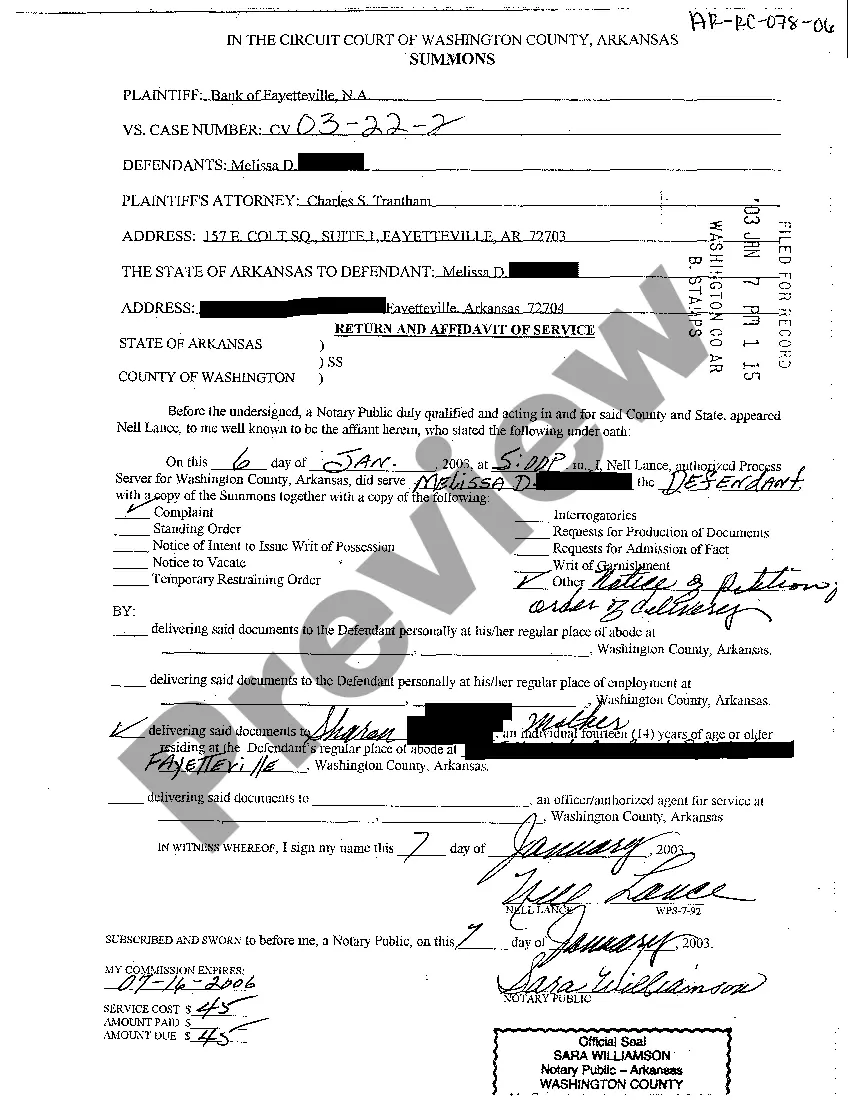
Motion By Petitioner Spouse to Increase Alimony Payments due to Changed Financial Circumstances of Respondent Spouse
Overview of this form
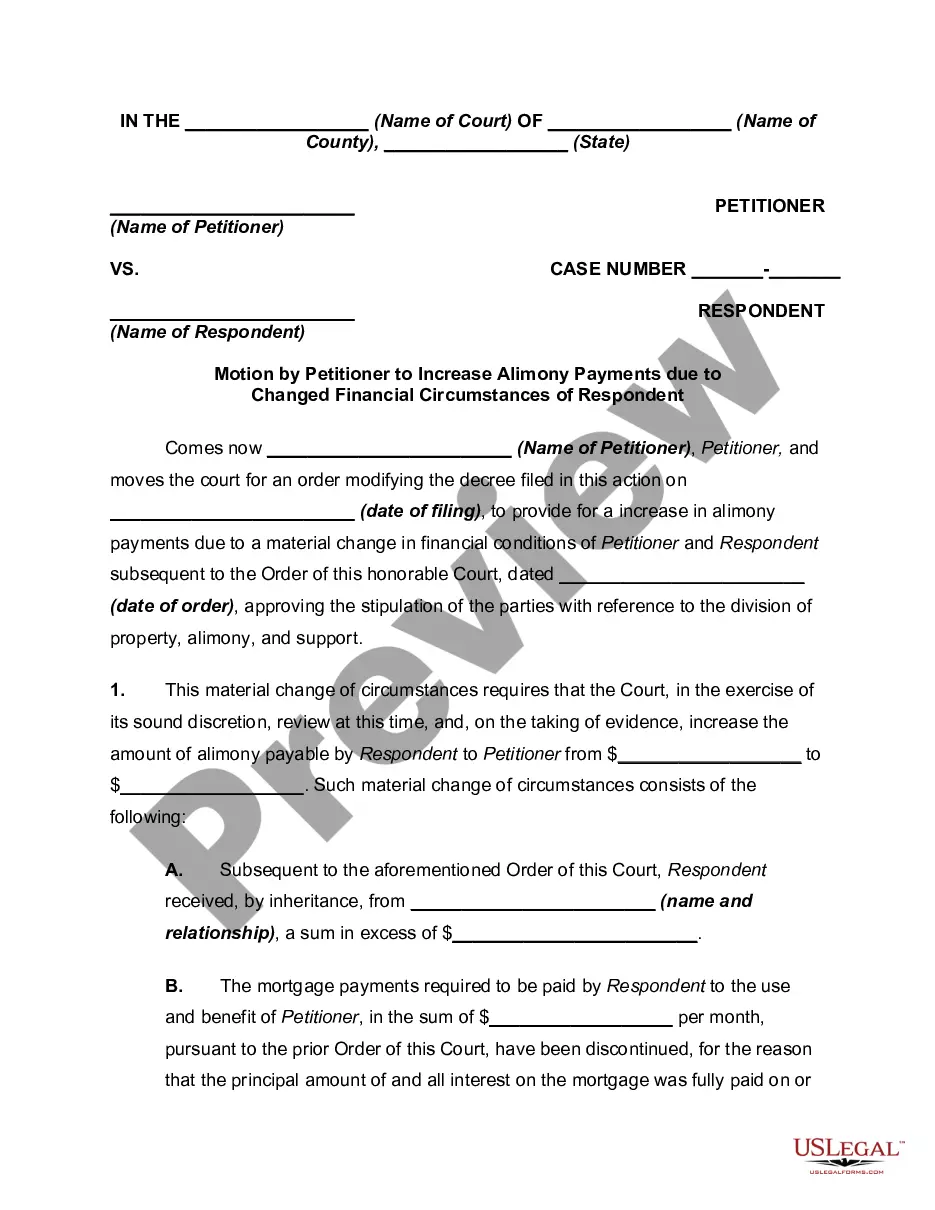
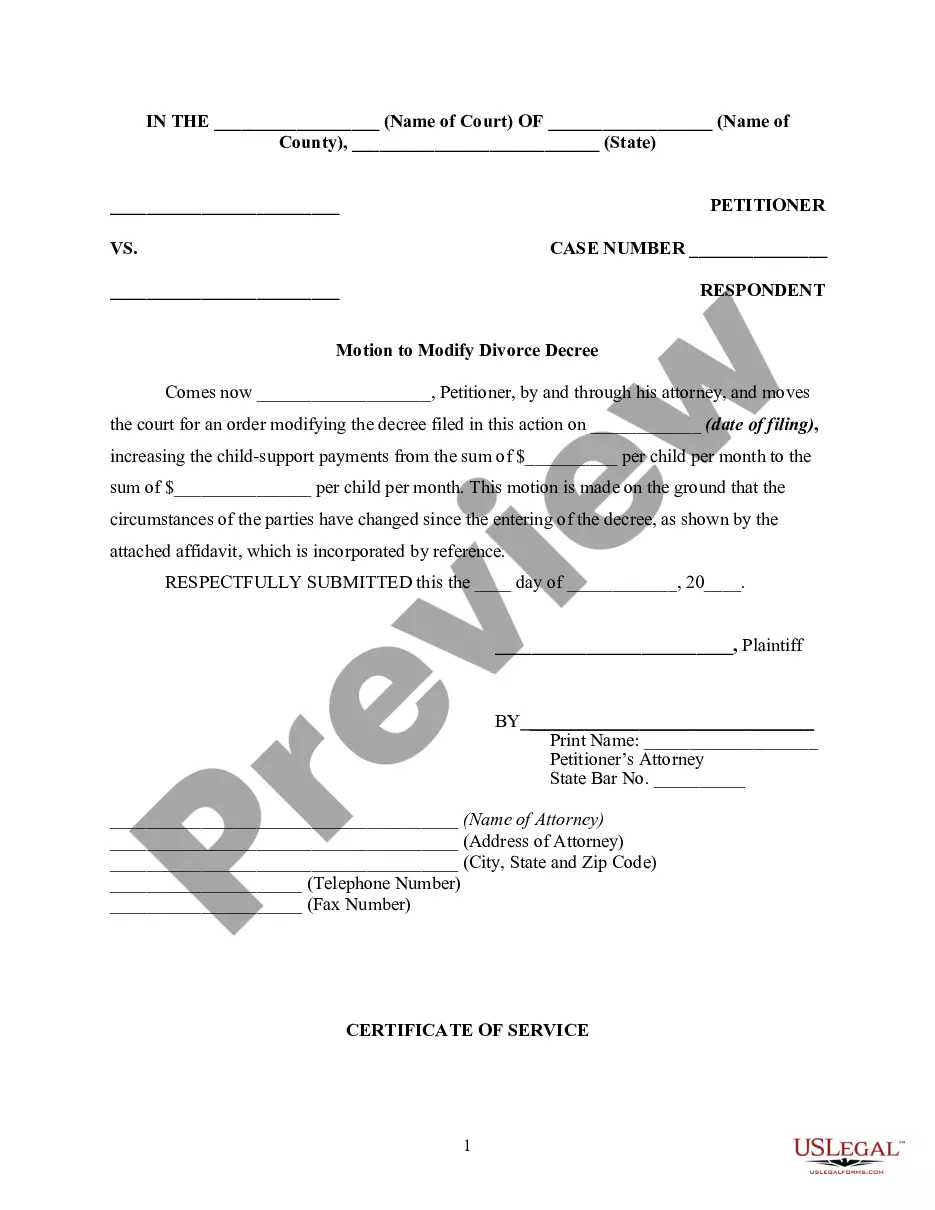
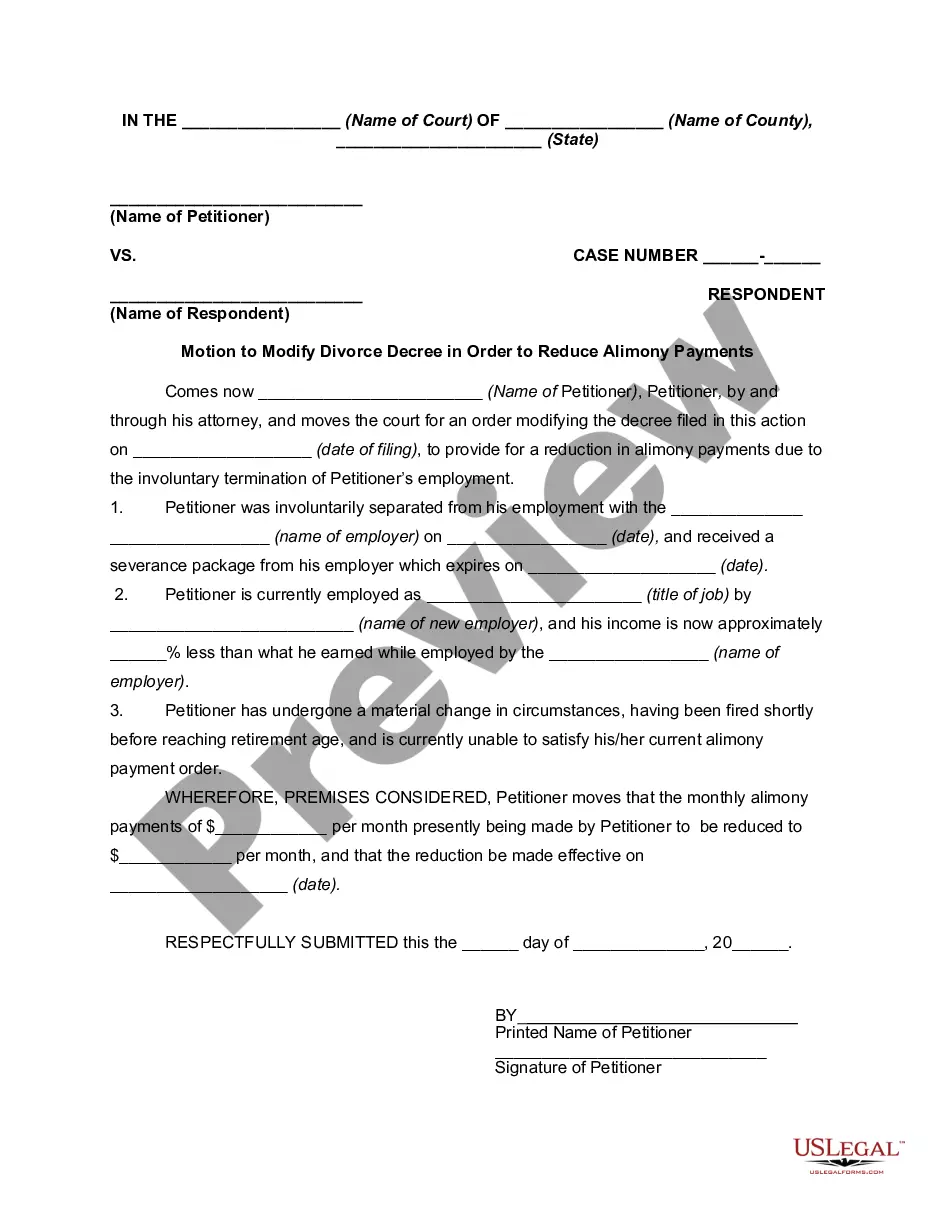
The Motion By Petitioner Spouse to Increase Alimony Payments due to Changed Financial Circumstances of Respondent Spouse is a legal document used to request a modification of existing alimony payments. This form is essential for a petitioner seeking to increase financial support based on substantial changes in the financial situation of the respondent spouse since the original decree was issued. This motion is distinct from initial alimony requests, as it must demonstrate that specific, material circumstances have shifted since the previous court order.
Key parts of this document
- Case information, including names of both parties and case number.
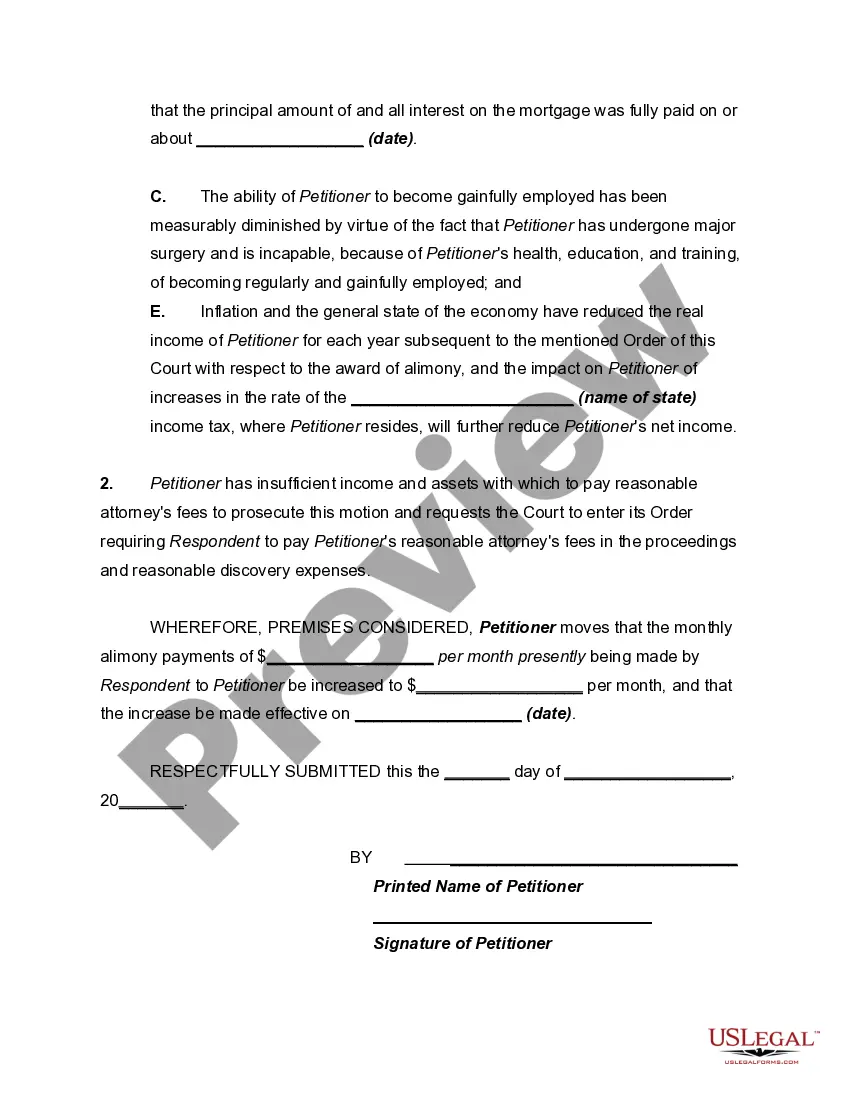
- Details outlining the basis for the motion, including specific financial changes.
- Request for an increase in alimony payments, specifying previous and proposed amounts.
- Statements regarding the petitioner's financial situation and need for attorney's fees.
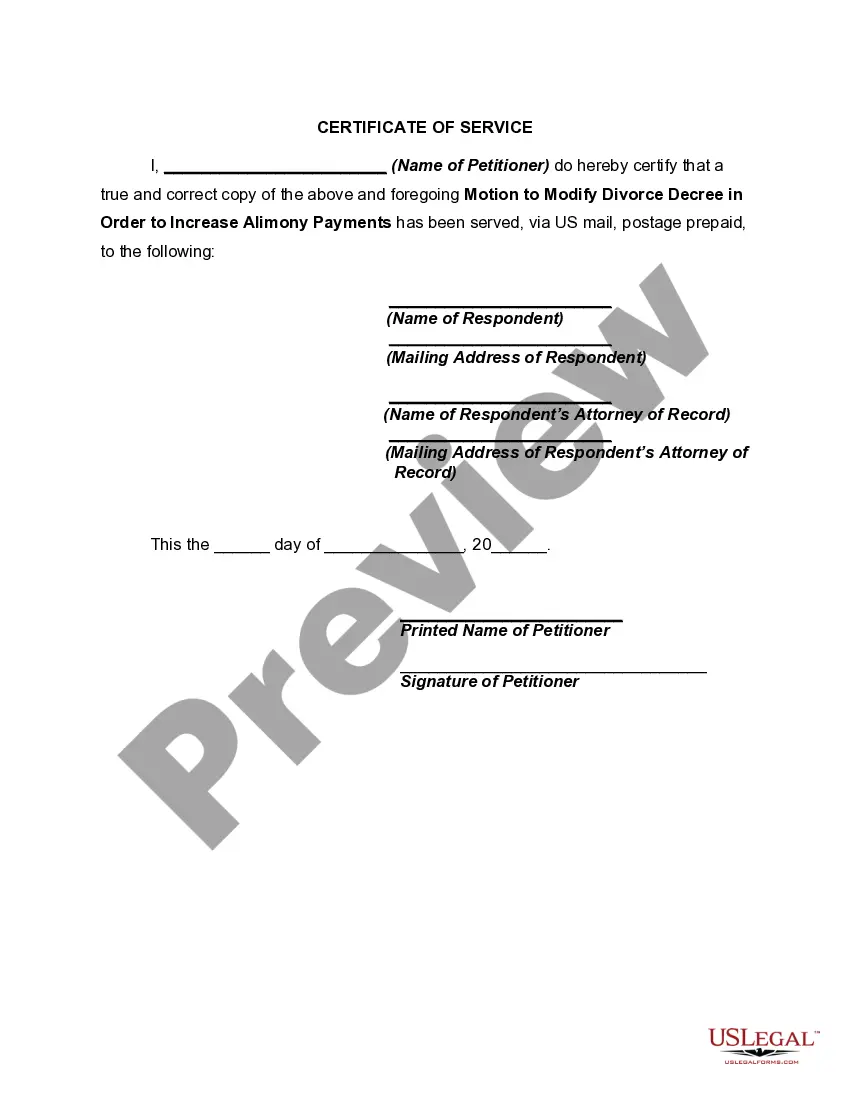
- Certification of service indicating that the motion has been shared with the respondent and their attorney.

When to use this form
This form should be used when a petitioner spouse believes that their financial circumstances have deteriorated or the respondent spouse's financial situation has improved significantly since the last alimony order. Situations such as job loss, significant medical expenses, or changes in the respondent's income due to inheritance or other factors could warrant the use of this motion.
Who needs this form
- Individuals who are currently receiving alimony and need increased support.
- Petitioners who have experienced financial difficulties due to unexpected life events.
- Spouses who seek to ensure that their alimony payments reflect current economic realities.
How to prepare this document
- Begin by entering the names of the petitioner and respondent, along with the case number.
- Clearly specify the financial changes that justify the request for an increase in alimony payments.
- Indicate the current and proposed monthly alimony amounts, and the effective date for the proposed changes.
- Include any requests for attorney's fees if applicable, detailing the petitioner's inability to pay these costs.
- Sign and date the form, ensuring to certify the copy has been served to relevant parties.
Is notarization required?
This form usually doesn’t need to be notarized. However, local laws or specific transactions may require it. Our online notarization service, powered by Notarize, lets you complete it remotely through a secure video session, available 24/7.
Get your form ready online
Our built-in tools help you complete, sign, share, and store your documents in one place.
Make edits, fill in missing information, and update formatting in US Legal Forms—just like you would in MS Word.
Download a copy, print it, send it by email, or mail it via USPS—whatever works best for your next step.
Sign and collect signatures with our SignNow integration. Send to multiple recipients, set reminders, and more. Go Premium to unlock E-Sign.
If this form requires notarization, complete it online through a secure video call—no need to meet a notary in person or wait for an appointment.
We protect your documents and personal data by following strict security and privacy standards.

Make edits, fill in missing information, and update formatting in US Legal Forms—just like you would in MS Word.

Download a copy, print it, send it by email, or mail it via USPS—whatever works best for your next step.

Sign and collect signatures with our SignNow integration. Send to multiple recipients, set reminders, and more. Go Premium to unlock E-Sign.

If this form requires notarization, complete it online through a secure video call—no need to meet a notary in person or wait for an appointment.

We protect your documents and personal data by following strict security and privacy standards.
Mistakes to watch out for
- Failing to provide adequate proof of changed circumstances.
- Not including the required case information at the beginning of the form.
- Missing signatures or dates, which could invalidate the motion.
- Neglecting to properly serve the motion to the respondent and their legal representative.
Benefits of using this form online
- Convenience of filling out the form from home without the need for in-person visits.
- Editable format that allows for easy updates and corrections.
- Quick access to necessary legal guidance and support throughout the process.
- Cost-effective solution compared to hiring an attorney for initial paperwork.
Looking for another form?



Form popularity
FAQ
Alimony (maintenance, support or sustenance) is the financial support that is provided to a spouse after divorce. Generally, it is provided if a spouse does not have adequate means to take care of the basic needs of life.
Alimony payments are designed to equalize the financial resources of a divorcing couple.Alimony is generally awarded in cases where the spouses have very unequal earning power and have been married a long time. For example, a judge is unlikely to award alimony if the couple has only been married for a year.
In most cases, the wife gets 20-35 per cent of a husband's net taxable income as alimony. If the woman is working, she can still get maintenance if the court feels her demands are reasonable, if she has dependants or if her income is not sufficient to support the lifestyle she enjoyed while married.
In order to be awarded alimony, you must show that your spouse earns significantly more income than you, or that you stayed out of the workforce to take care of the home or children. If you earn more than your husband or your incomes are nearly equal, a judge won't see any reason to provide you with alimony.