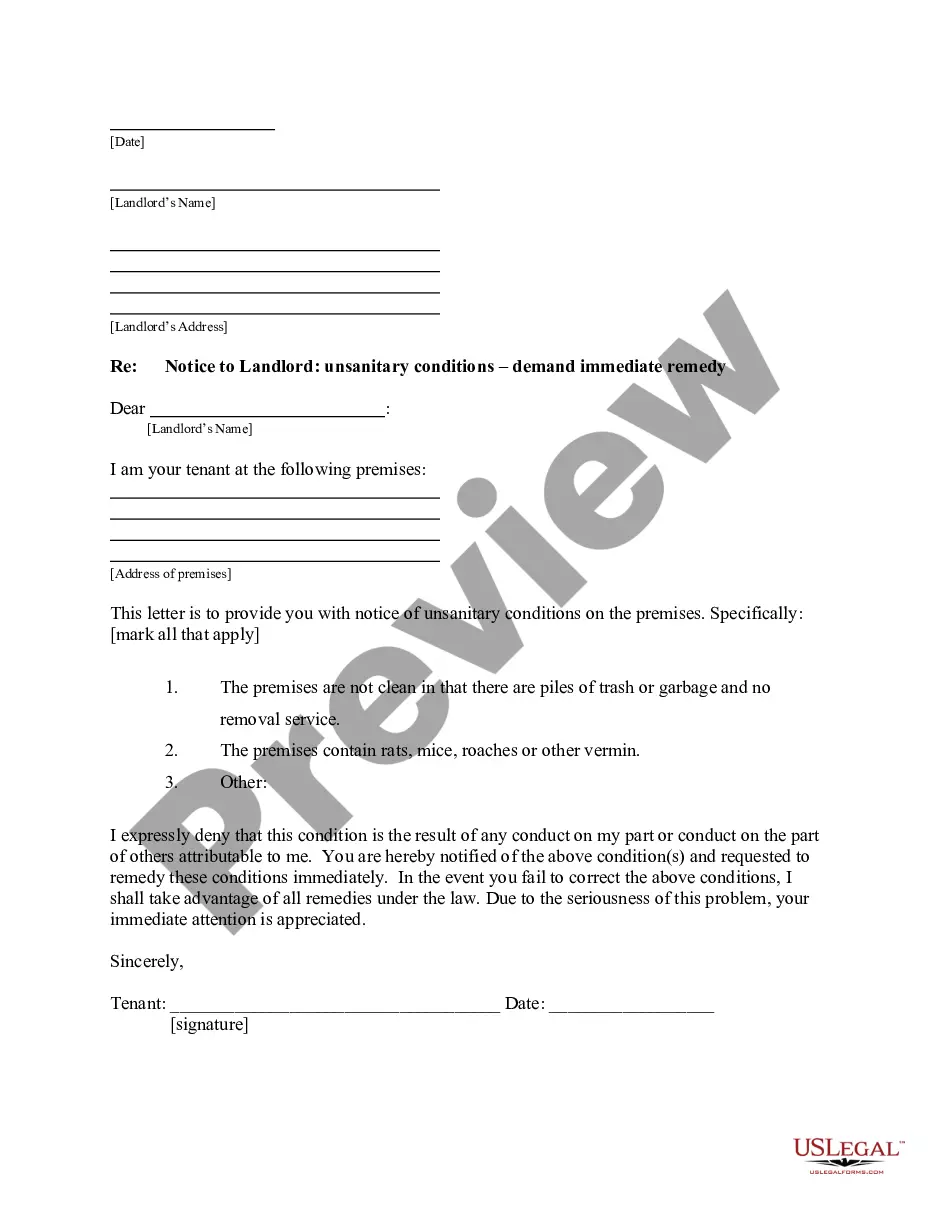
Louisiana Letter from Landlord to Tenant that Sublease granted - Rent Paid by Subtenant, Old Tenant Released from Liability for Rent
About this form
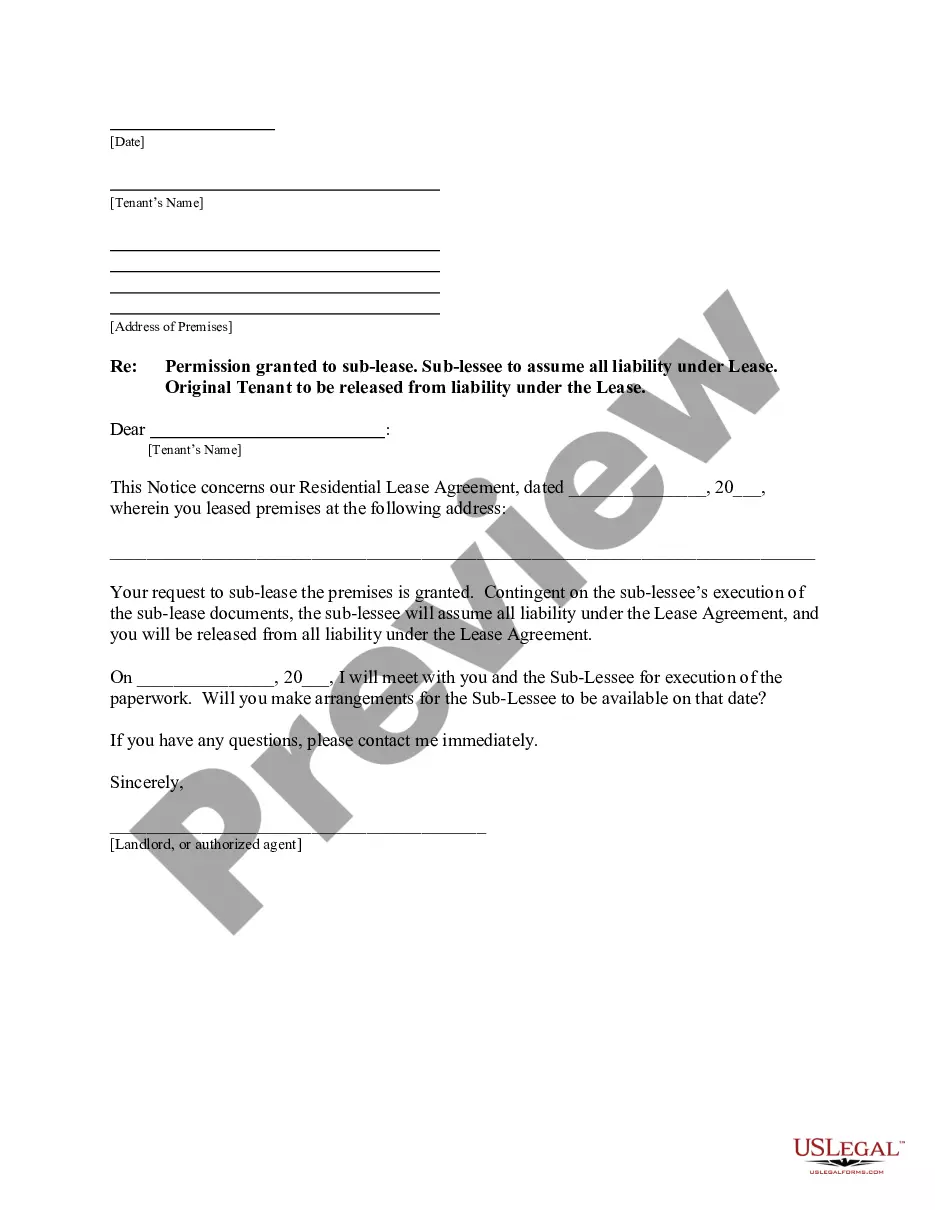
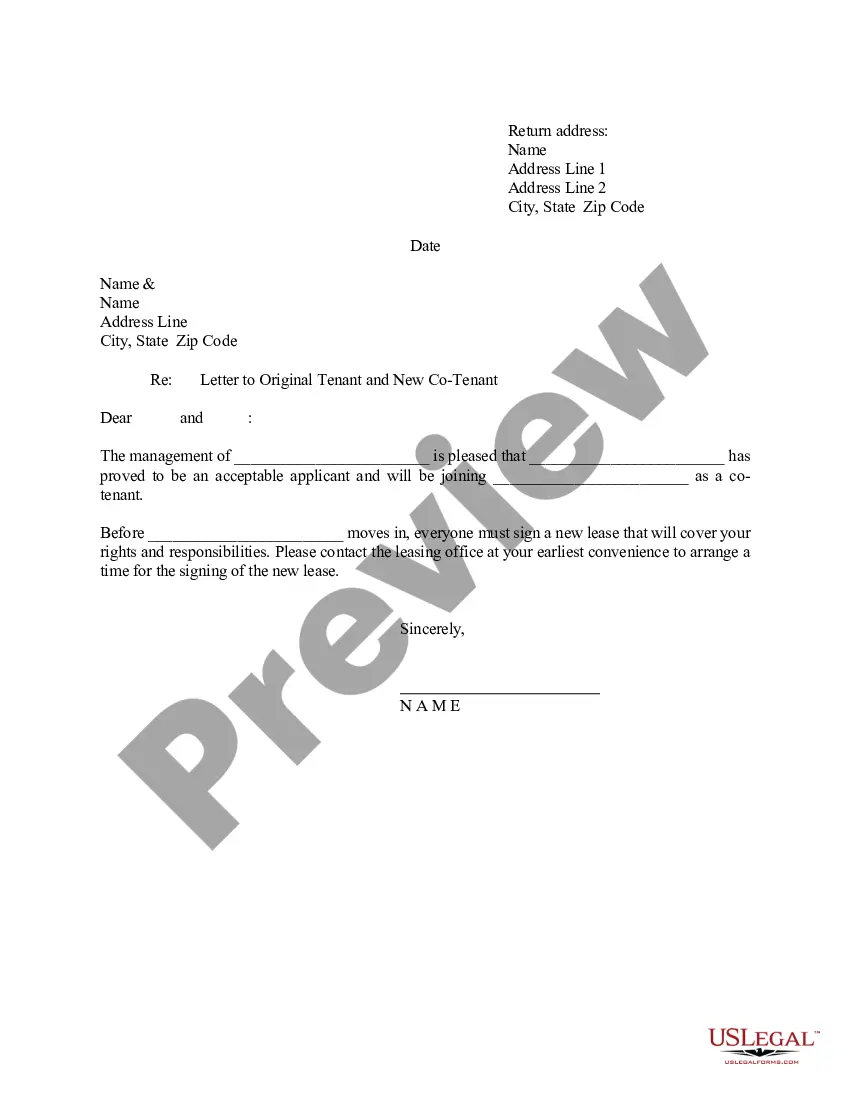
This document is a letter from landlord to tenant that communicates the granting of a sublease. It outlines that the rent will now be paid by the sub-tenant and that the original tenant is released from liability for future rent payments. This form is essential for clarifying the new rental arrangement and ensuring all parties understand their responsibilities and liabilities.
Key parts of this document
- Confirmation of approval for sublease by the landlord.
- Statement of liability transfer from the original tenant to the sub-tenant.
- Details regarding the execution of sub-lease documents.
- Contact information for the landlord or authorized agent.

Common use cases
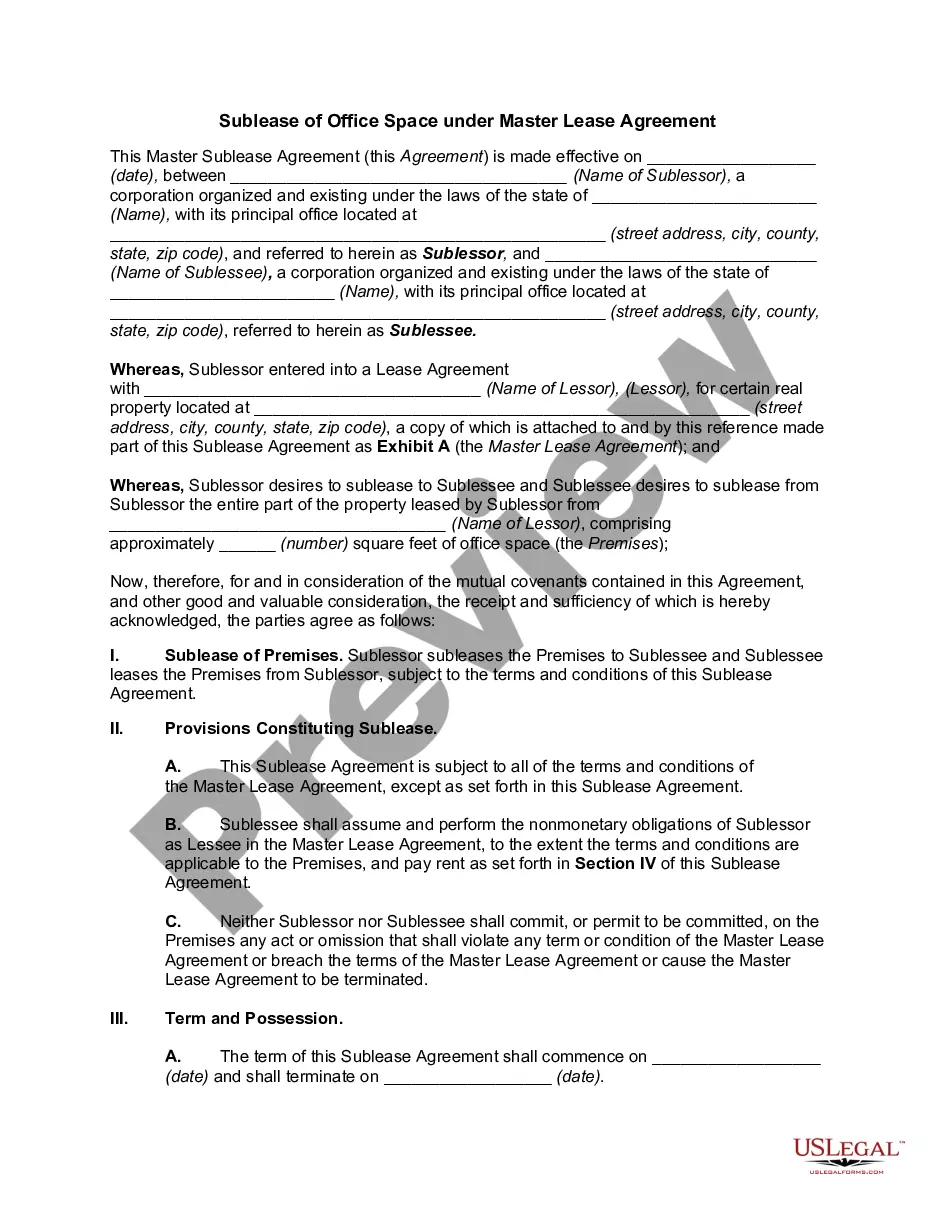
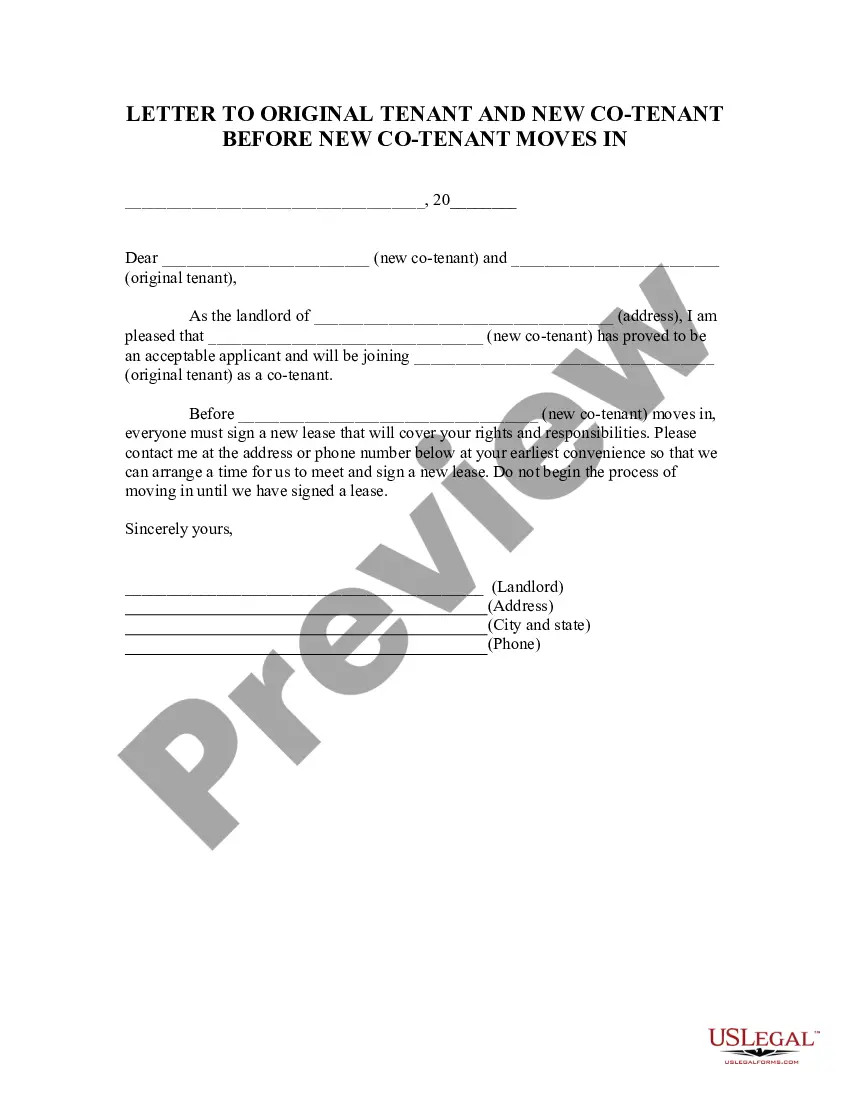
This form should be used when a tenant wishes to sublease their rental property and requires formal approval from the landlord. It is applicable in situations where the original tenant has found a suitable sub-tenant, and both parties are prepared to finalize the lease transfer, ensuring the landlord's consent is documented.
Intended users of this form
This letter is appropriate for:
- Landlords who have agreed to a tenant's sublease proposal.
- Original tenants wishing to officially record their subleasing arrangement.
- Sub-tenants who need to understand their new lease responsibilities as agreed upon by the landlord.
How to prepare this document
- Identify the parties involved, including the landlord, original tenant, and sub-tenant.
- Specify the property address being subleased.
- Indicate the date when the sublease paperwork will be executed.
- Have the landlord or authorized agent sign the letter.
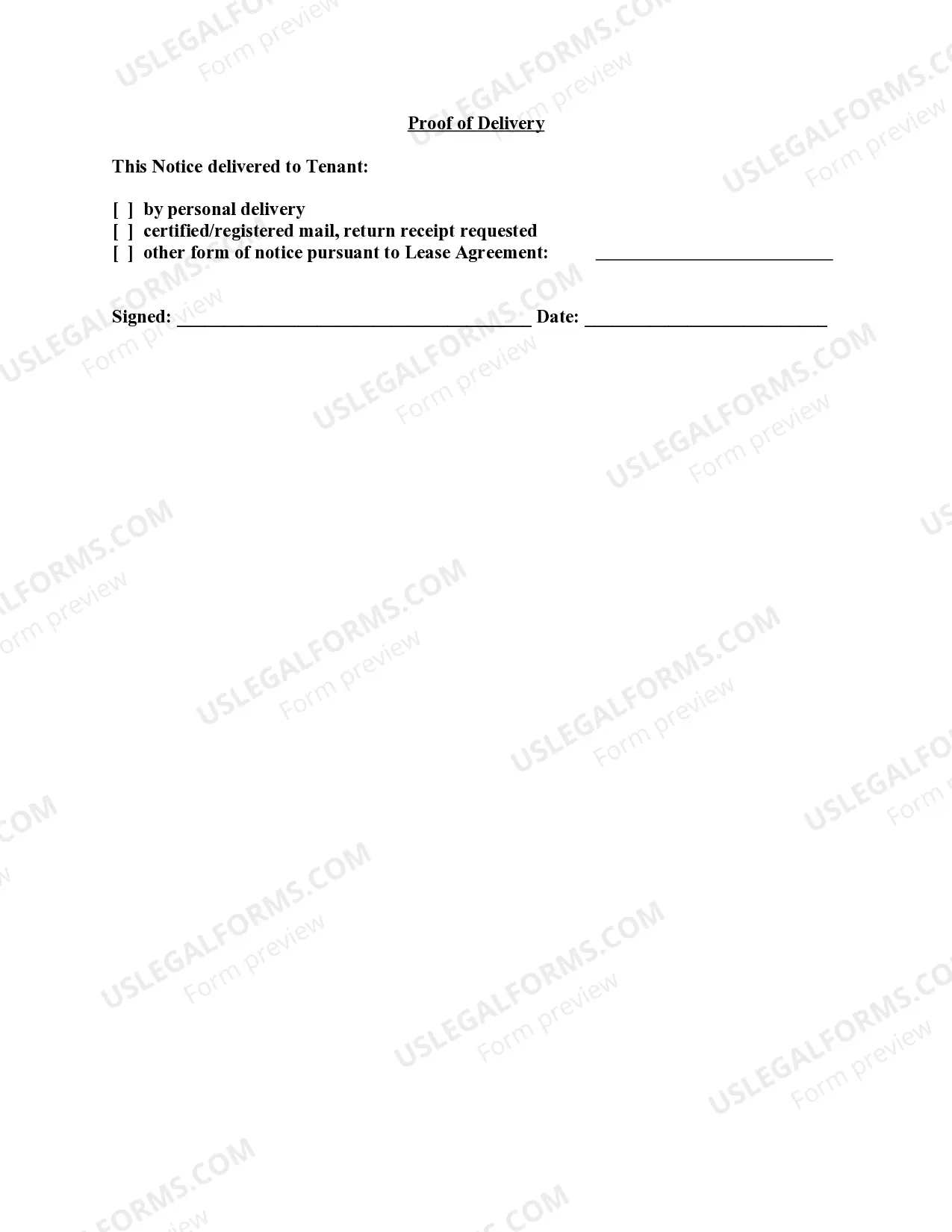
- Deliver the letter to the tenant, ensuring proof of delivery is noted.
Is notarization required?
Notarization is not commonly needed for this form. However, certain documents or local rules may make it necessary. Our notarization service, powered by Notarize, allows you to finalize it securely online anytime, day or night.
Get your form ready online
Our built-in tools help you complete, sign, share, and store your documents in one place.
Make edits, fill in missing information, and update formatting in US Legal Forms—just like you would in MS Word.
Download a copy, print it, send it by email, or mail it via USPS—whatever works best for your next step.
Sign and collect signatures with our SignNow integration. Send to multiple recipients, set reminders, and more. Go Premium to unlock E-Sign.
If this form requires notarization, complete it online through a secure video call—no need to meet a notary in person or wait for an appointment.
We protect your documents and personal data by following strict security and privacy standards.

Make edits, fill in missing information, and update formatting in US Legal Forms—just like you would in MS Word.

Download a copy, print it, send it by email, or mail it via USPS—whatever works best for your next step.

Sign and collect signatures with our SignNow integration. Send to multiple recipients, set reminders, and more. Go Premium to unlock E-Sign.

If this form requires notarization, complete it online through a secure video call—no need to meet a notary in person or wait for an appointment.

We protect your documents and personal data by following strict security and privacy standards.
Avoid these common issues
- Failing to obtain written consent from the landlord before subleasing.
- Not notifying all parties about the sublease agreement details.
- Overlooking state-specific subleasing rules that could affect the arrangement.
Advantages of online completion
- Convenient access to legal templates that can be downloaded anytime.
- Editability of the form allows personal customization to meet specific needs.
- Reliability of templates created by licensed attorneys ensures compliance with legal standards.
Looking for another form?

Form popularity
FAQ
In Louisiana, a landlord cannot evict a tenant without following the proper legal procedures. Additionally, landlords must respect the tenant's right to privacy and cannot enter the rental property without notice. Importantly, a landlord cannot discriminate against tenants based on race, religion, or gender. Understanding these restrictions is crucial, especially when dealing with a Louisiana Letter from Landlord to Tenant that Sublease granted - Rent Paid by Subtenant, Old Tenant Released from Liability for Rent.
Subletting without permission is generally not advisable as it can breach your lease agreement. Most leases require that tenants seek approval from the landlord before subletting. Additionally, the 'Louisiana Letter from Landlord to Tenant that Sublease granted - Rent Paid by Subtenant, Old Tenant Released from Liability for Rent' often outlines the necessity of landlord consent to avoid penalties or liabilities. Always consult your lease terms to stay compliant.
An example of a sublease could be when a tenant rents out their apartment to another individual while they are temporarily away. The subtenant pays rent directly to the landlord, following the terms defined in the 'Louisiana Letter from Landlord to Tenant that Sublease granted - Rent Paid by Subtenant, Old Tenant Released from Liability for Rent.' This format protects the original tenant from liability while ensuring that the landlord receives payment for the entire rental period.
When writing a letter for a rental, include essential details such as your name, the rental property's address, and your rental term. Make sure to express your interest clearly and cite any relevant agreements, like the 'Louisiana Letter from Landlord to Tenant that Sublease granted - Rent Paid by Subtenant, Old Tenant Released from Liability for Rent.' You should also discuss your willingness to adhere to the terms set forth in any sublease agreement.
An example sublet clause might state that the tenant must obtain written permission from the landlord before subletting the property. It can also mention that all rental payments will be made directly to the landlord, aligning with the 'Louisiana Letter from Landlord to Tenant that Sublease granted - Rent Paid by Subtenant, Old Tenant Released from Liability for Rent.' This ensures that everyone understands their responsibilities and protects both the tenant and the landlord.
Writing a subletter involves creating a clear document that outlines the terms of the sublease. Start by including the basic details, such as the names of all parties, the property address, and the rental terms. You should also reference the 'Louisiana Letter from Landlord to Tenant that Sublease granted - Rent Paid by Subtenant, Old Tenant Released from Liability for Rent' to ensure all obligations are met. This letter should include permission from the landlord to avoid any legal issues.
Unauthorized subletting occurs when a tenant sublets their rental unit without obtaining the landlord's consent. Such actions can lead to legal issues and penalties for the original tenant. It is vital to follow proper procedures, such as using a Louisiana Letter from Landlord to Tenant that Sublease granted - Rent Paid by Subtenant, Old Tenant Released from Liability for Rent, to avoid complications.
Louisiana has a balanced approach towards tenant rights and landlord responsibilities. While certain laws favor tenants, such as regulations around eviction procedures, landlords also have significant rights. Understanding your specific rights as a tenant will empower you in your living situation.
In Louisiana, a landlord may begin eviction proceedings after a tenant is five days late on rent. It is crucial to communicate with your landlord if you anticipate any delays. A prompt conversation can potentially lead to better solutions for both parties.
Rental laws in Louisiana govern the responsibilities of both landlords and tenants. These laws cover lease agreements, security deposits, and eviction procedures. Understanding these laws can help tenants navigate their rights and duties effectively.