Missouri Quitclaim Deed - Four Individuals to a Limited Liability Company
About this form
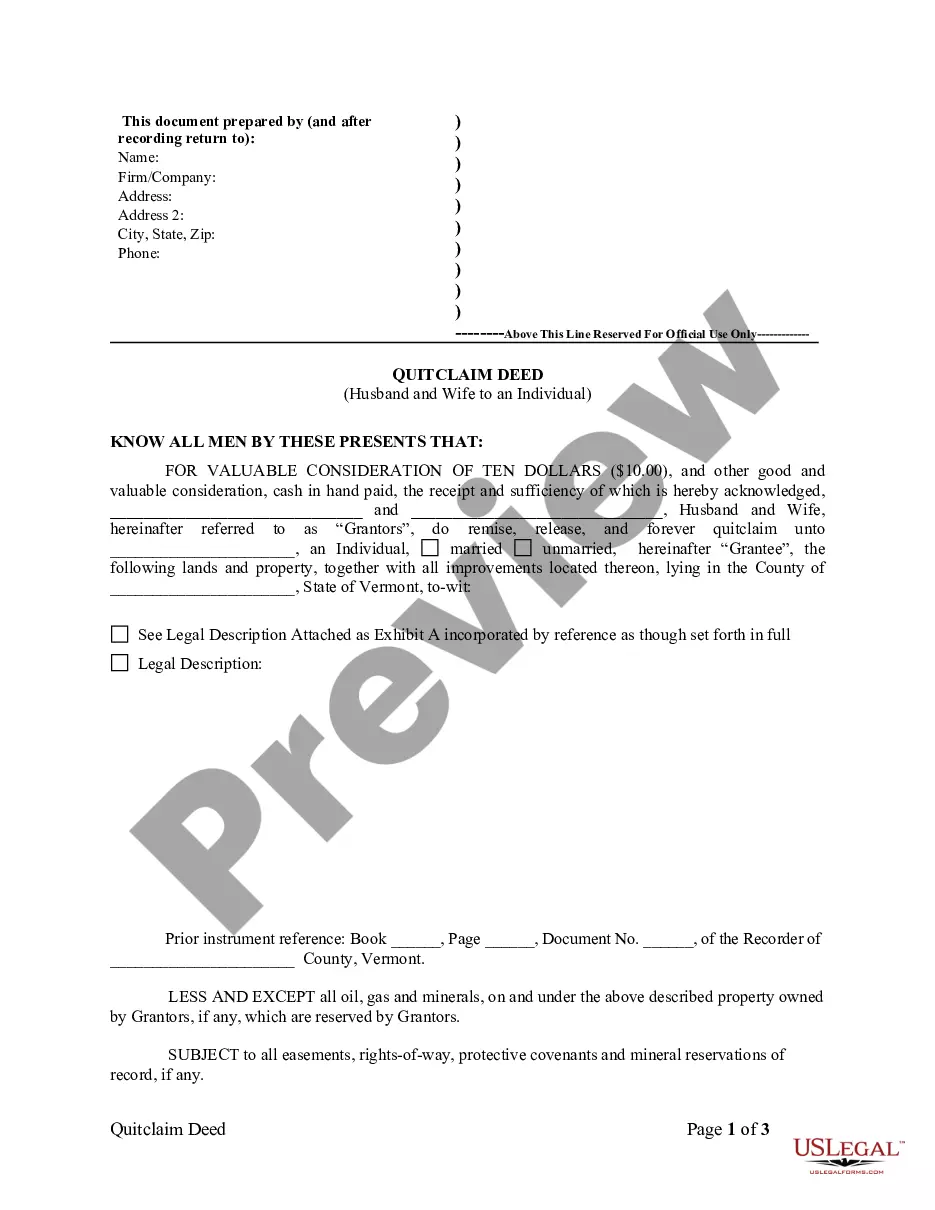
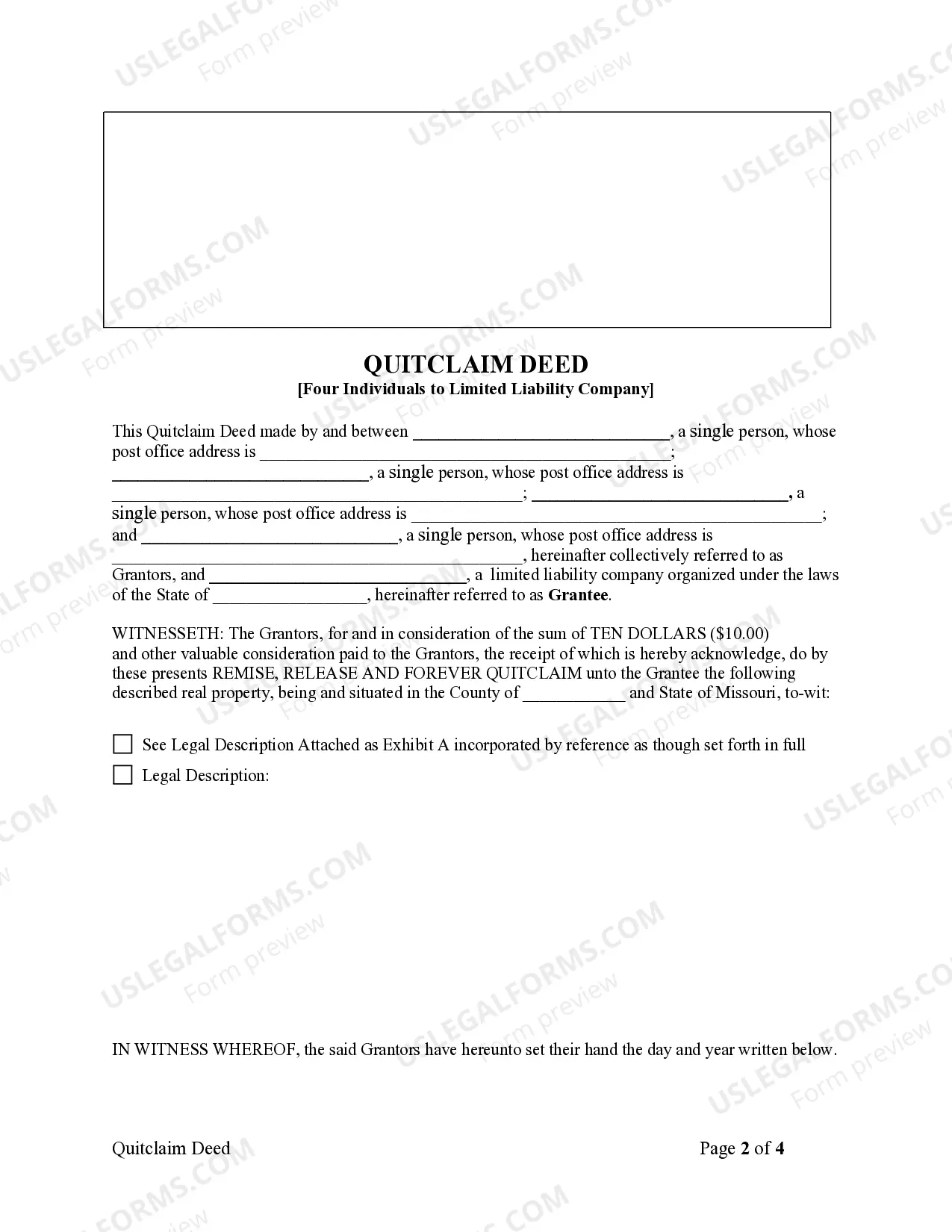
The Quitclaim Deed - Four Individuals to a Limited Liability Company is a legal document through which four individuals (the grantors) transfer their ownership interest in a property to a limited liability company (the grantee). Unlike other types of deeds, this quitclaim deed does not guarantee that the grantors hold clear title to the property; rather, it simply conveys any interest they may have. This form is essential for individuals looking to formally transfer property ownership to an LLC, streamlining the process and ensuring compliance with state laws.
Form components explained
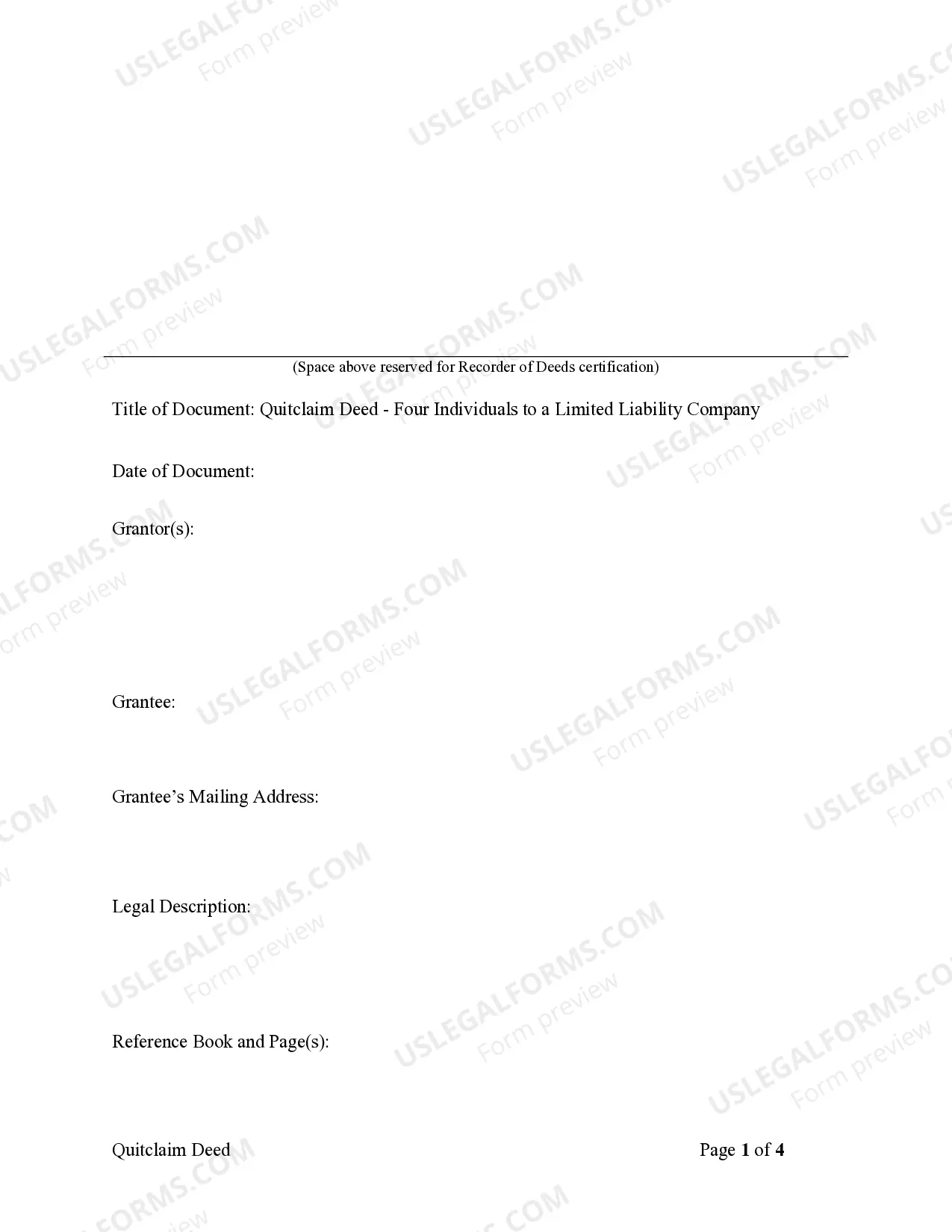
- Names and addresses of the grantors (the individuals transferring the property).
- Name and address of the grantee (the limited liability company receiving the property).
- Description of the property being transferred, including legal description.
- Consideration amount, typically stated as ten dollars and other valuable consideration.
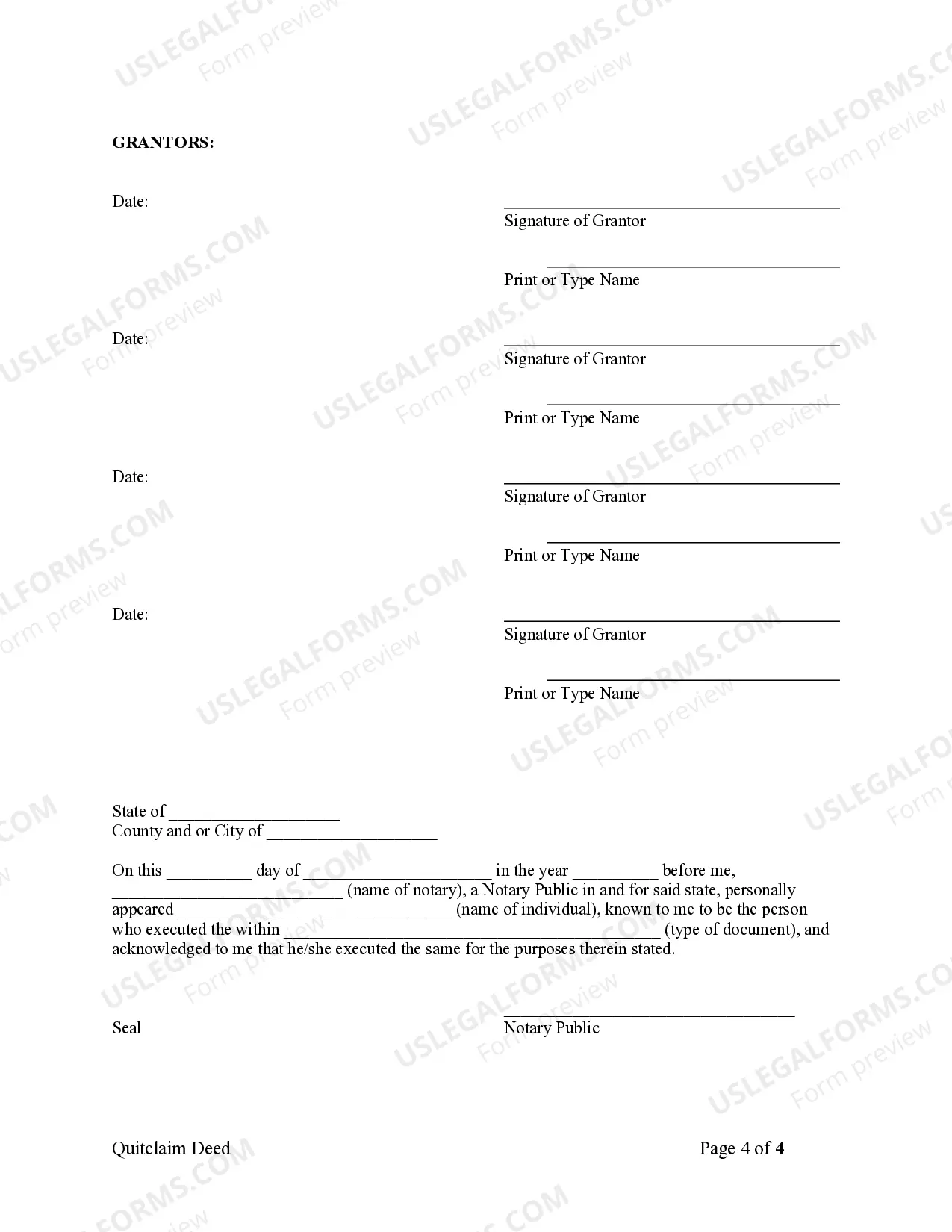
- Signature lines for the grantors to execute the deed.
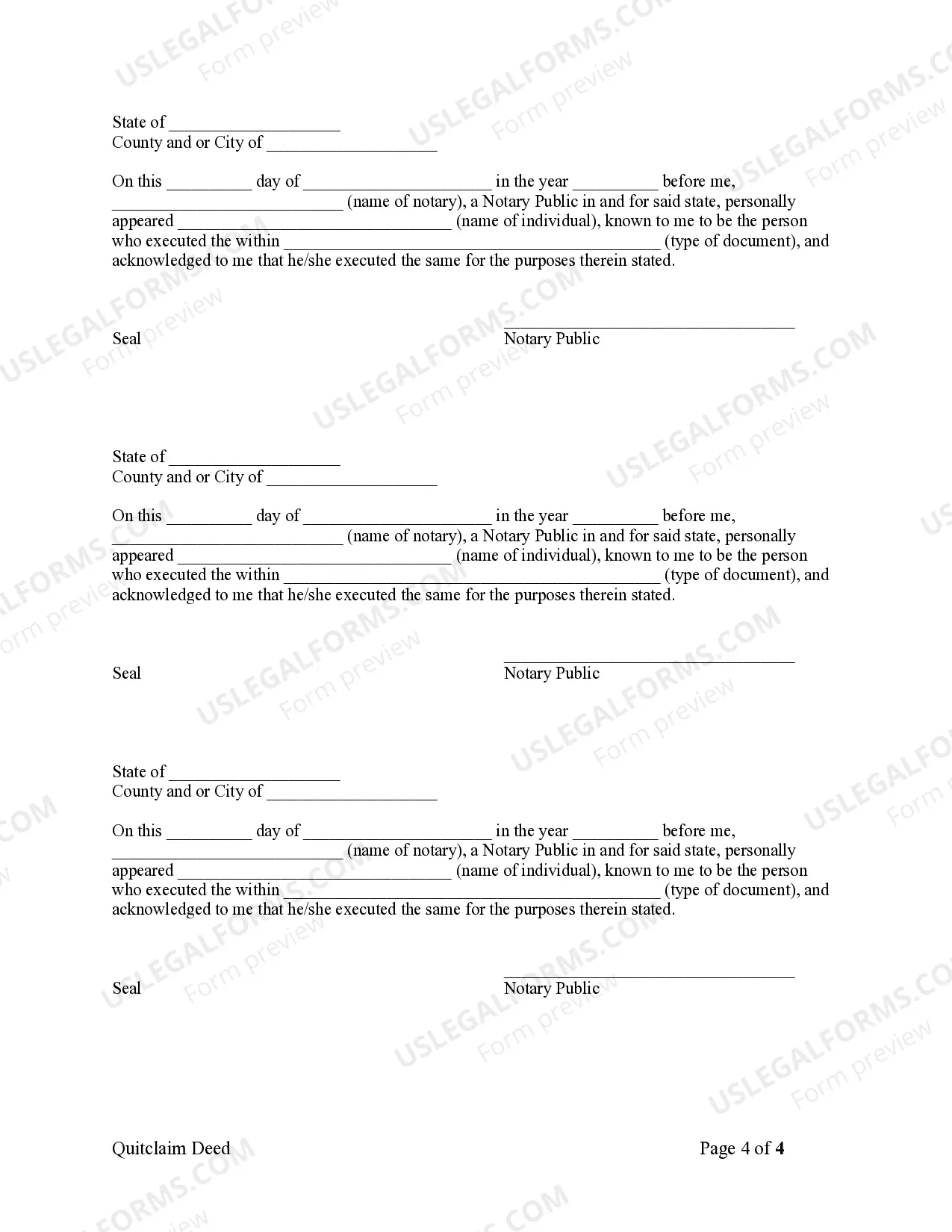
- Notary acknowledgment to ensure the document's validity.





When to use this form
This form is used when four individuals want to transfer their interest in a specific property to a limited liability company. Common scenarios include when real estate is being transferred into an LLC for business purposes, tax benefits, or liability protection for the property owners. It is particularly useful during property sales, reorganization of ownership interests, or estate planning where property ownership needs to be consolidated under an LLC.
Who can use this document
This form is intended for:
- Individuals who want to transfer real estate into a limited liability company.
- Business owners looking to consolidate property ownership for liability protection.
- Estate planners organizing property to simplify transfers upon death.
Instructions for completing this form
- Identify the grantors: Input the names and addresses of the four individuals transferring the property.
- Specify the grantee: Enter the name and address of the limited liability company receiving the property.
- Describe the property: Provide a complete legal description of the property being conveyed.
- Enter consideration: Indicate the amount of consideration being exchanged, typically ten dollars.
- Obtain signatures: Ensure all grantors sign the form where indicated.
- Secure notarization: Have the deed acknowledged by a notary public to validate the transfer.
Does this document require notarization?
Yes, this form must be notarized to be legally valid. The signature of the grantors must be acknowledged by a notary public in order to ensure that the deed is recognized and enforceable. US Legal Forms offers online notarization services that are secure, convenient, and available 24/7, saving you the hassle of traveling to a notary in person.
Get your form ready online
Our built-in tools help you complete, sign, share, and store your documents in one place.
Make edits, fill in missing information, and update formatting in US Legal Forms—just like you would in MS Word.
Download a copy, print it, send it by email, or mail it via USPS—whatever works best for your next step.
Sign and collect signatures with our SignNow integration. Send to multiple recipients, set reminders, and more. Go Premium to unlock E-Sign.
If this form requires notarization, complete it online through a secure video call—no need to meet a notary in person or wait for an appointment.
We protect your documents and personal data by following strict security and privacy standards.

Make edits, fill in missing information, and update formatting in US Legal Forms—just like you would in MS Word.

Download a copy, print it, send it by email, or mail it via USPS—whatever works best for your next step.

Sign and collect signatures with our SignNow integration. Send to multiple recipients, set reminders, and more. Go Premium to unlock E-Sign.

If this form requires notarization, complete it online through a secure video call—no need to meet a notary in person or wait for an appointment.

We protect your documents and personal data by following strict security and privacy standards.
Mistakes to watch out for
- Failing to provide a complete legal description of the property.
- Not having all grantors sign the document.
- Omitting notarization, which could render the deed invalid.
- Incorrectly listing the LLC as the grantee without proper legal name.
Why complete this form online
- Convenient access to legal documents at any time, from anywhere.
- Editable forms allow for easy customization to fit your needs.
- Instant download once completed, saving time and ensuring efficiency.
- Legal forms drafted by licensed attorneys ensure compliance with state laws.
Looking for another form?
Form popularity
FAQ
Yes, you can quitclaim your property to your LLC without issue. This action transfers ownership from you personally to the limited liability company, which can offer financial and legal advantages. If you are considering a Missouri Quitclaim Deed - Four Individuals to a Limited Liability Company, using US Legal Forms can provide you with the necessary forms and guidance for a successful transfer.
You can include multiple individuals on a quitclaim deed, as long as they are all parties to the transaction. For a Missouri Quitclaim Deed - Four Individuals to a Limited Liability Company, having multiple grantors can be beneficial for transferring property to the LLC. It's important to ensure that the deed clearly outlines each individual's interest in the property.
The primary danger of a quitclaim deed is that it transfers ownership without guarantees regarding the title. This means you could inherit hidden liens or debts associated with the property. When dealing with a Missouri Quitclaim Deed - Four Individuals to a Limited Liability Company, it's crucial to conduct thorough due diligence and consider using services like US Legal Forms to access legal advice and guidance.
One disadvantage of putting property in an LLC is that it may complicate your personal taxes. Additionally, transferring property can sometimes trigger reassessment or transfer taxes. However, many individuals prefer a Missouri Quitclaim Deed - Four Individuals to a Limited Liability Company for the liability protection it offers, so weighing the pros and cons is essential. Resources from US Legal Forms can help clarify these implications.
Yes, you can quitclaim property to an LLC. This process involves transferring ownership from individuals to the limited liability company, which can provide benefits such as liability protection. If you are considering a Missouri Quitclaim Deed - Four Individuals to a Limited Liability Company, it's wise to consult legal resources or platforms like US Legal Forms to ensure a smooth transfer and compliance with state regulations.
Yes, you can prepare your own quitclaim deed in Missouri. However, it's important to ensure that you include all the necessary details and follow the state laws for a valid document. Using a service like US Legal Forms can simplify the process, providing you with templates tailored for a Missouri Quitclaim Deed - Four Individuals to a Limited Liability Company. This way, you can have peace of mind knowing your deed is correctly completed.
First, so long as you own the property you purchased, you are obligated to pay its property taxes. One way to get a warranty deed to the property you acquired via a foreclosure where you got a quit claim deed for it is to simply deed the property to yourself or a trust that you created as a grant (warranty) deed.
But you might be wondering if an owner can transfer a deed to another person without a real estate lawyer. The answer is yes. Parties to a transaction are always free to prepare their own deeds.A quitclaim deed, for example, is far simpler than a warranty deed.
A quitclaim deed is a legal instrument that is used to transfer interest in real property.The owner/grantor terminates (quits) any right and claim to the property, thereby allowing the right or claim to transfer to the recipient/grantee.
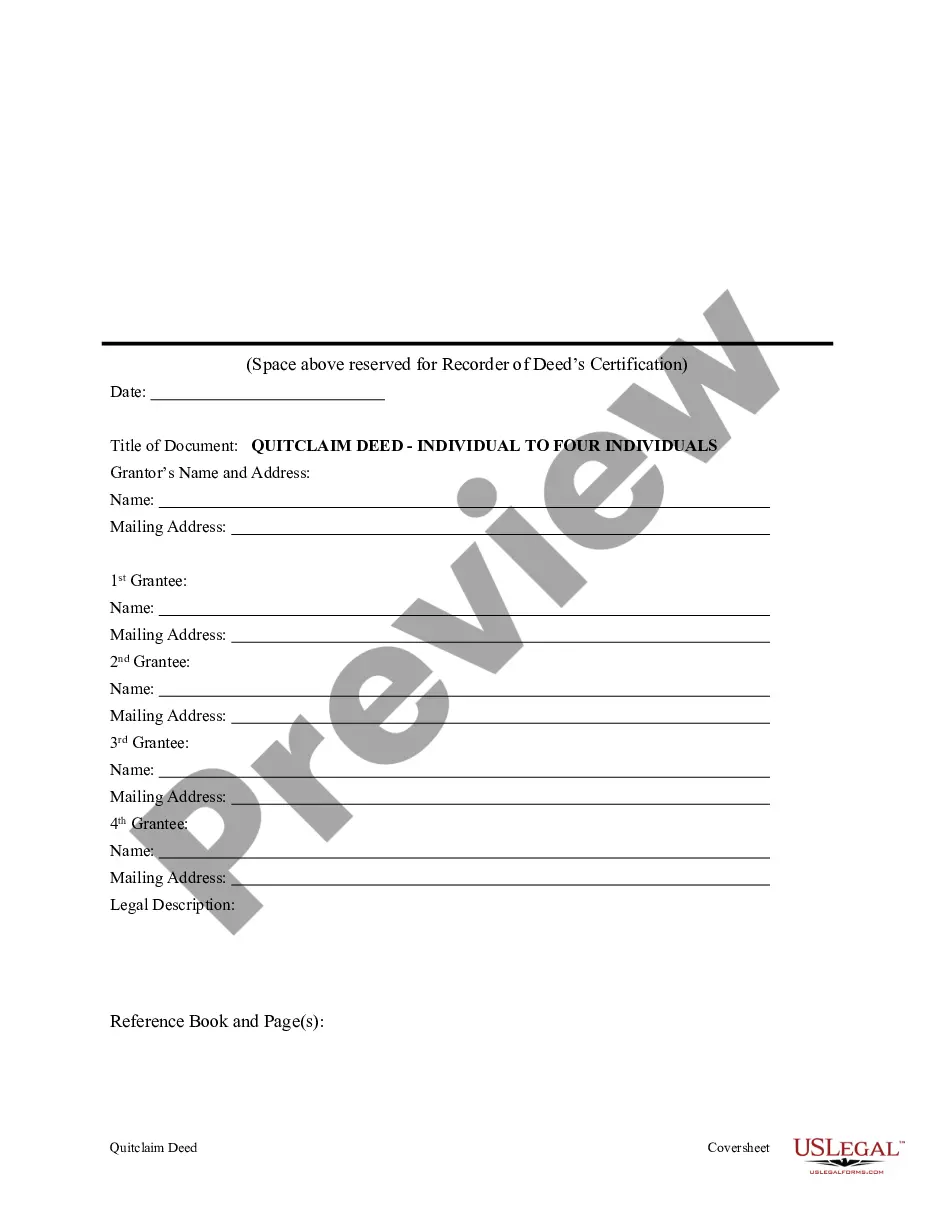
The title of the document. The date of the transfer. All grantors' names. Any grantees' names. Statutory addresses. A legal description for the property. References to the page numbers of the reference books, if applicable.