Licensing Agent Agreement with an Artist
What is this form?
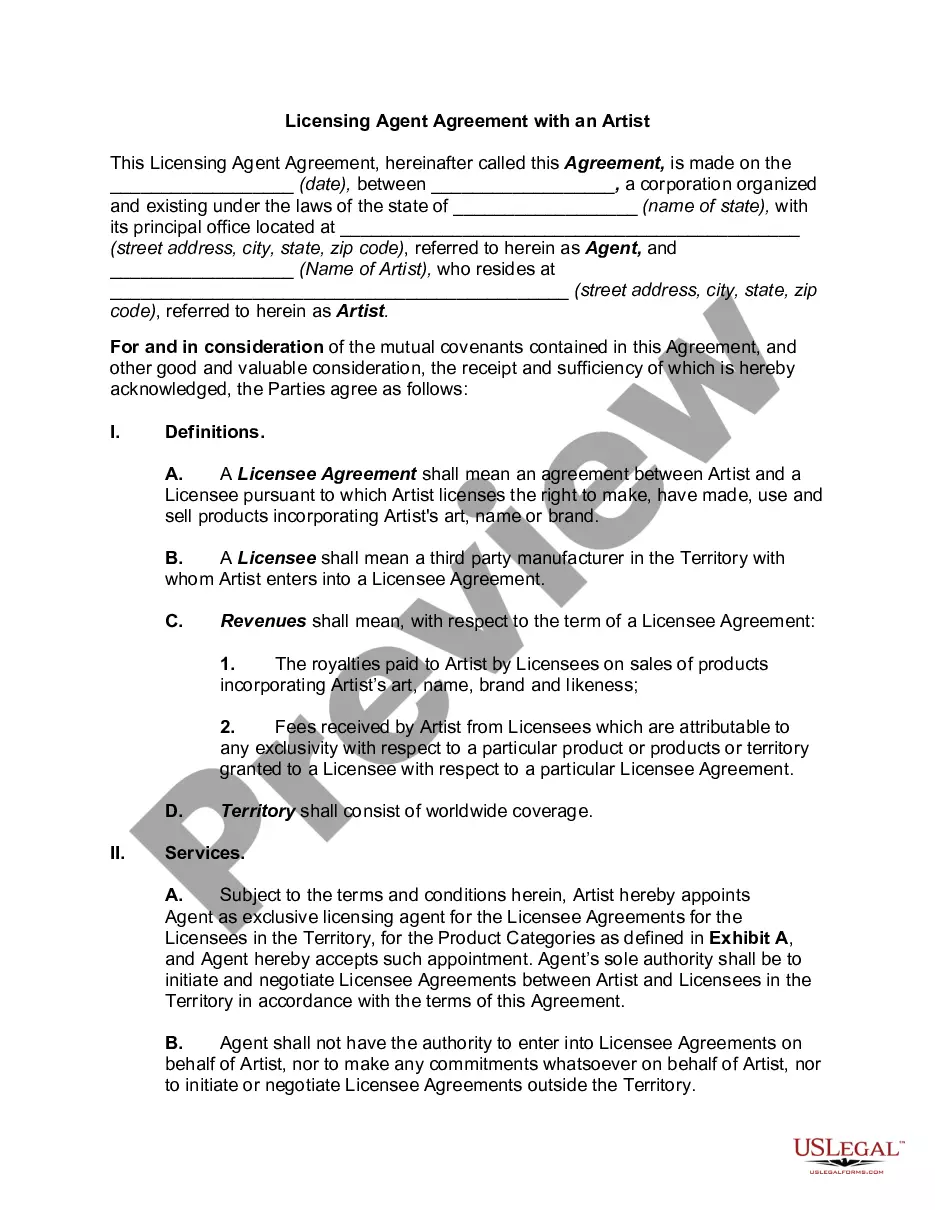
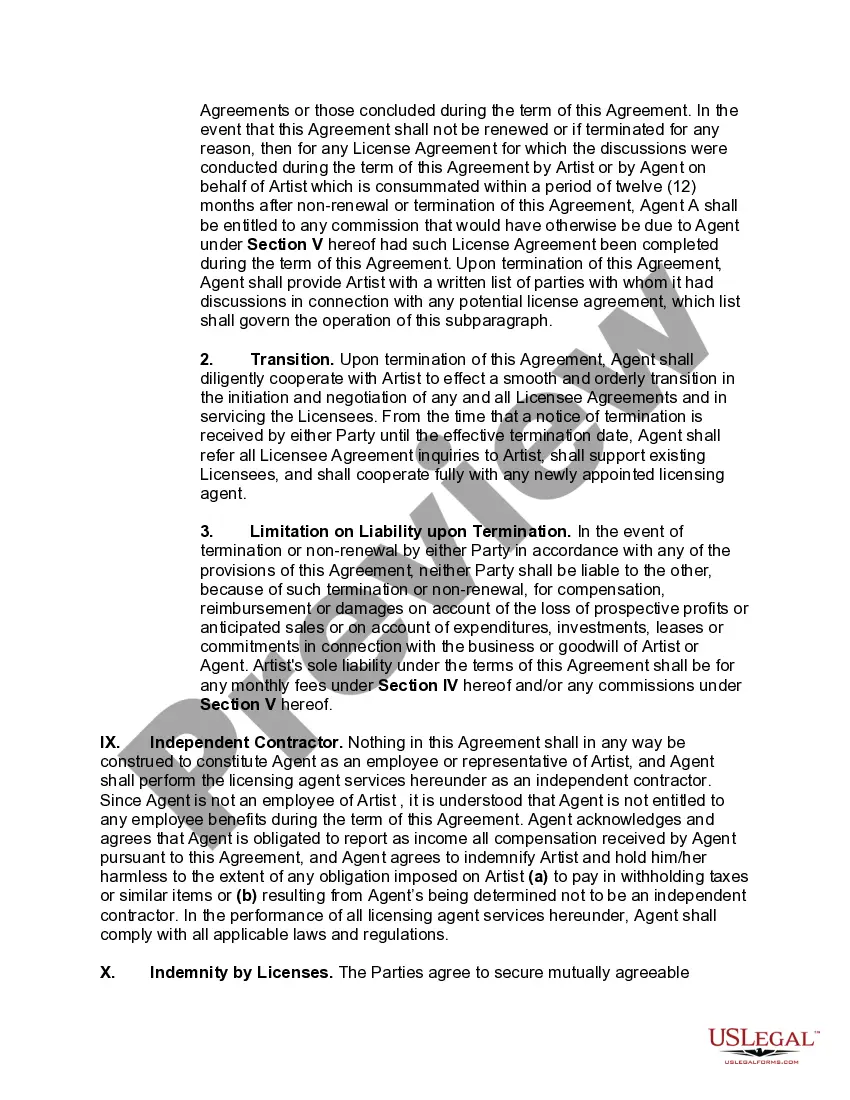
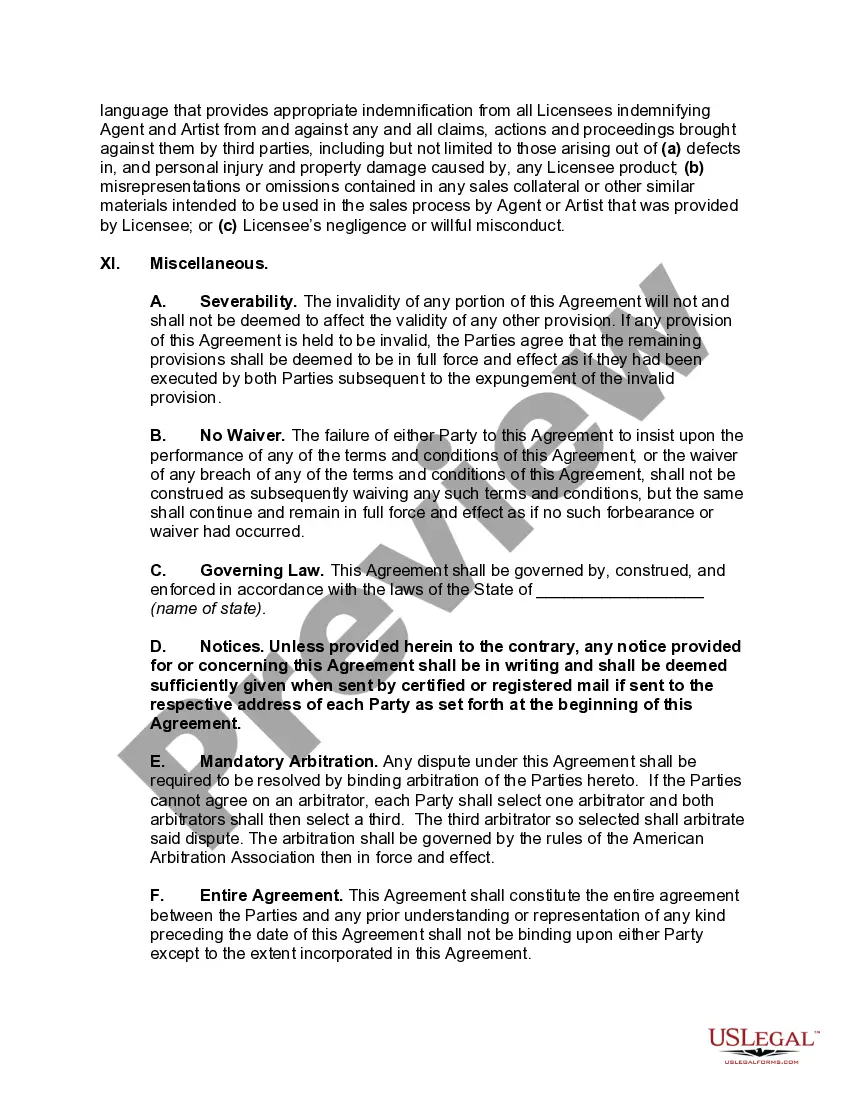
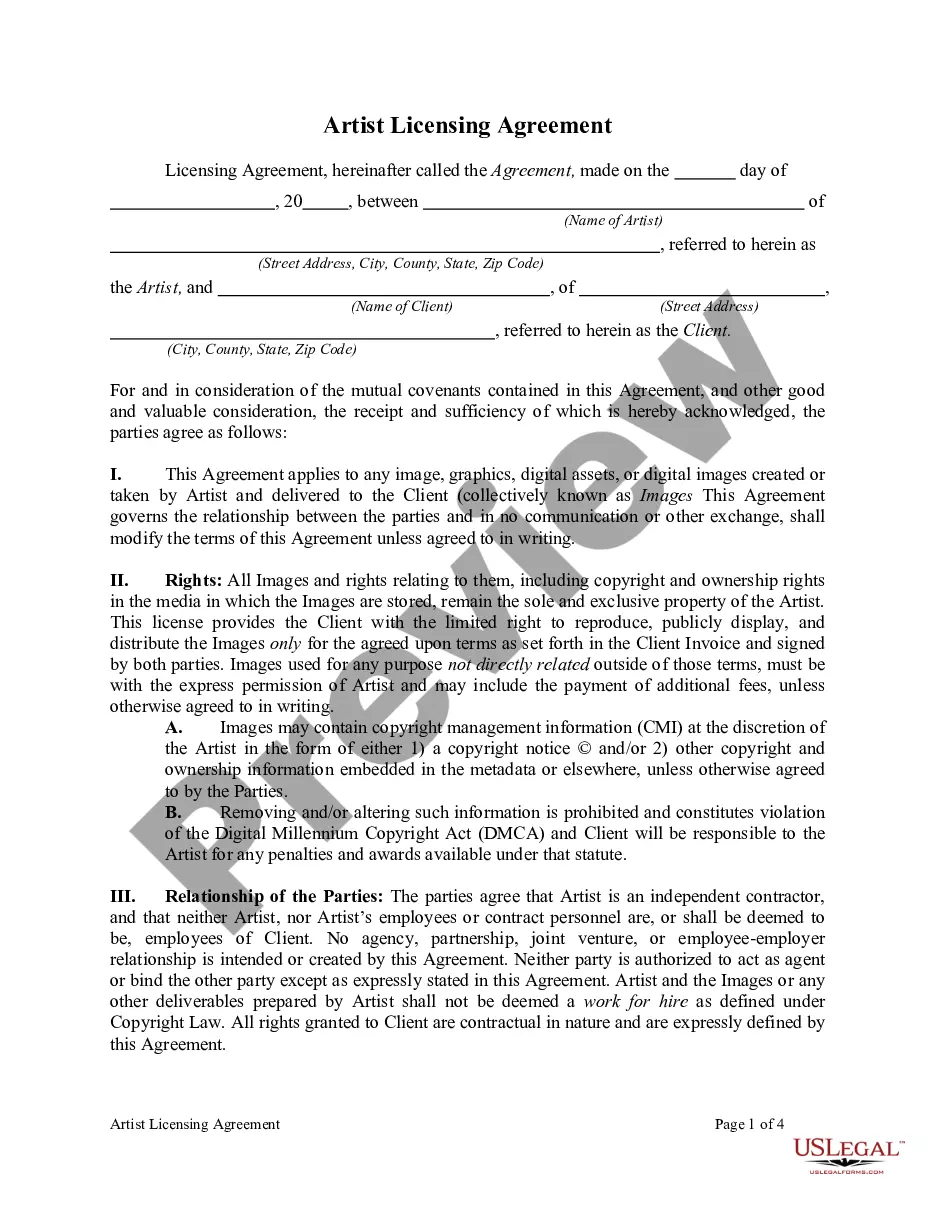
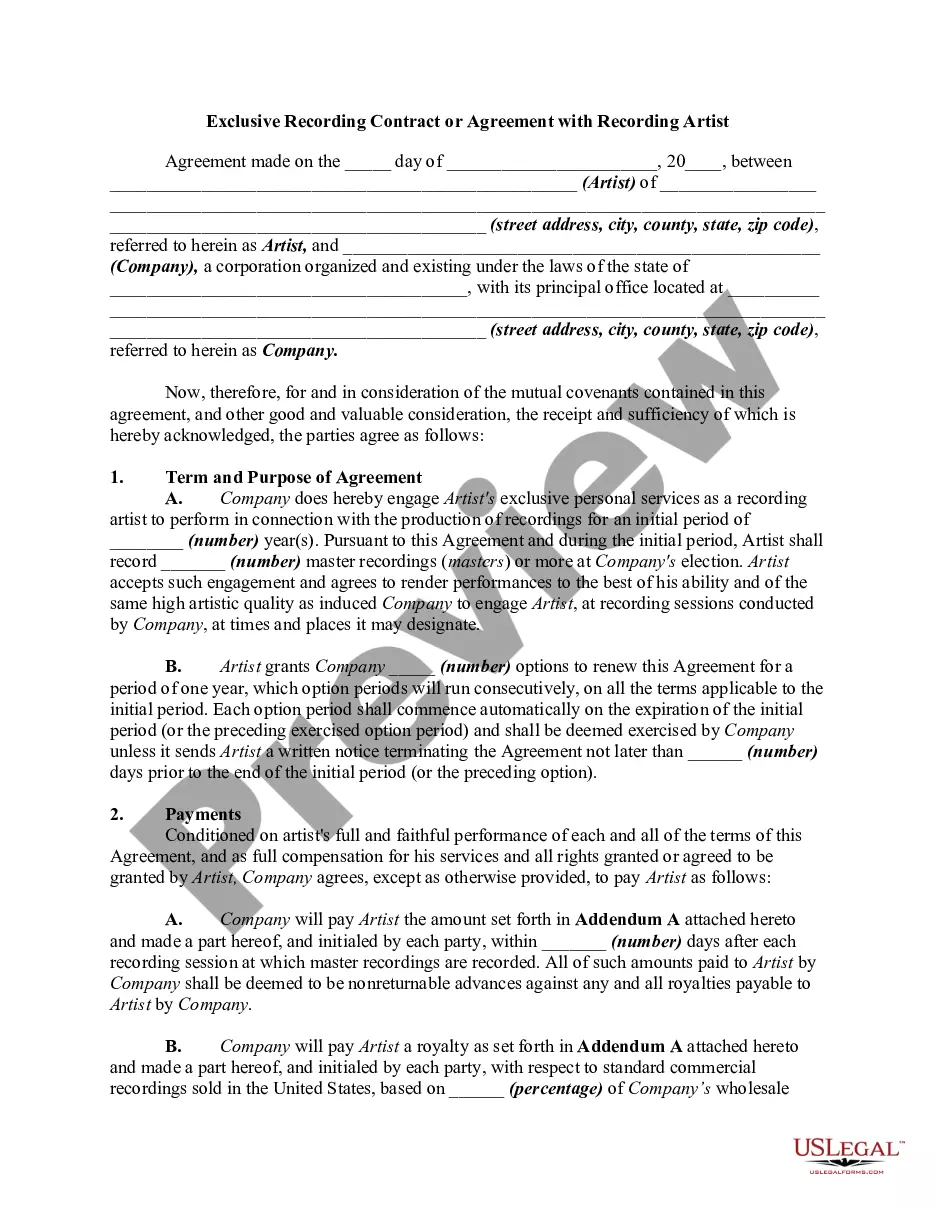
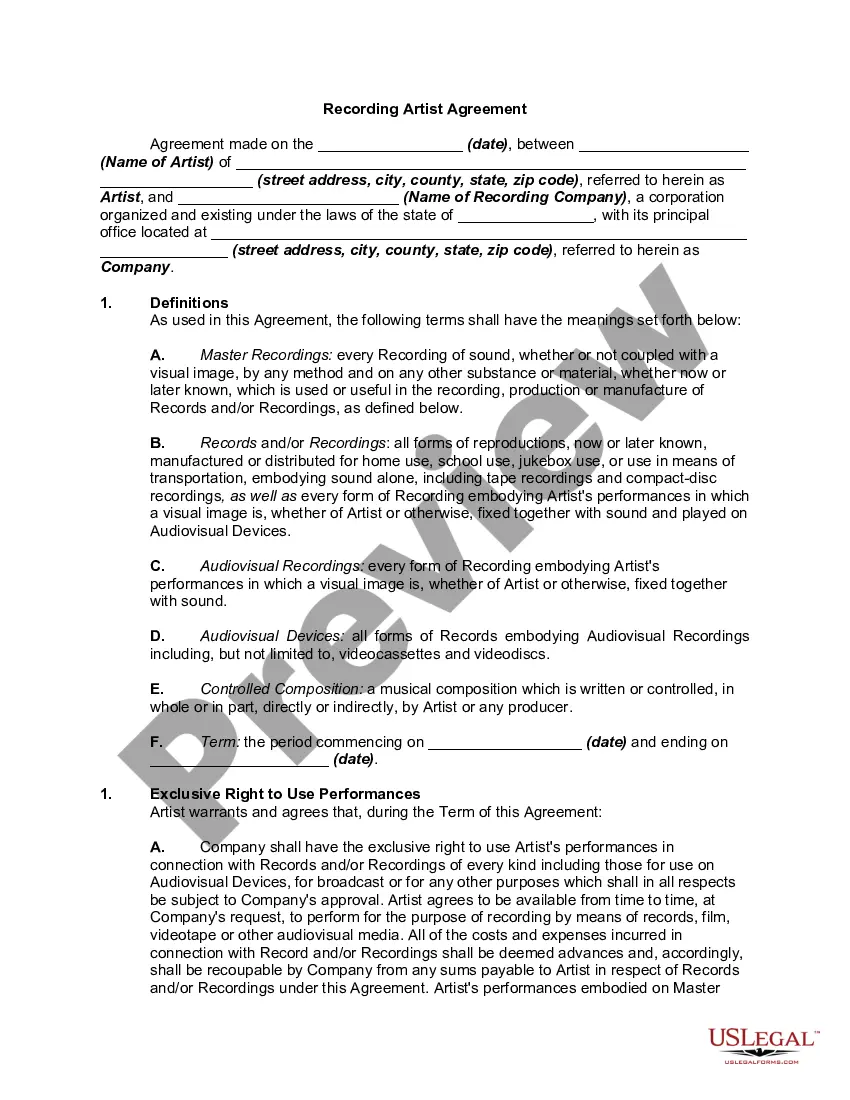
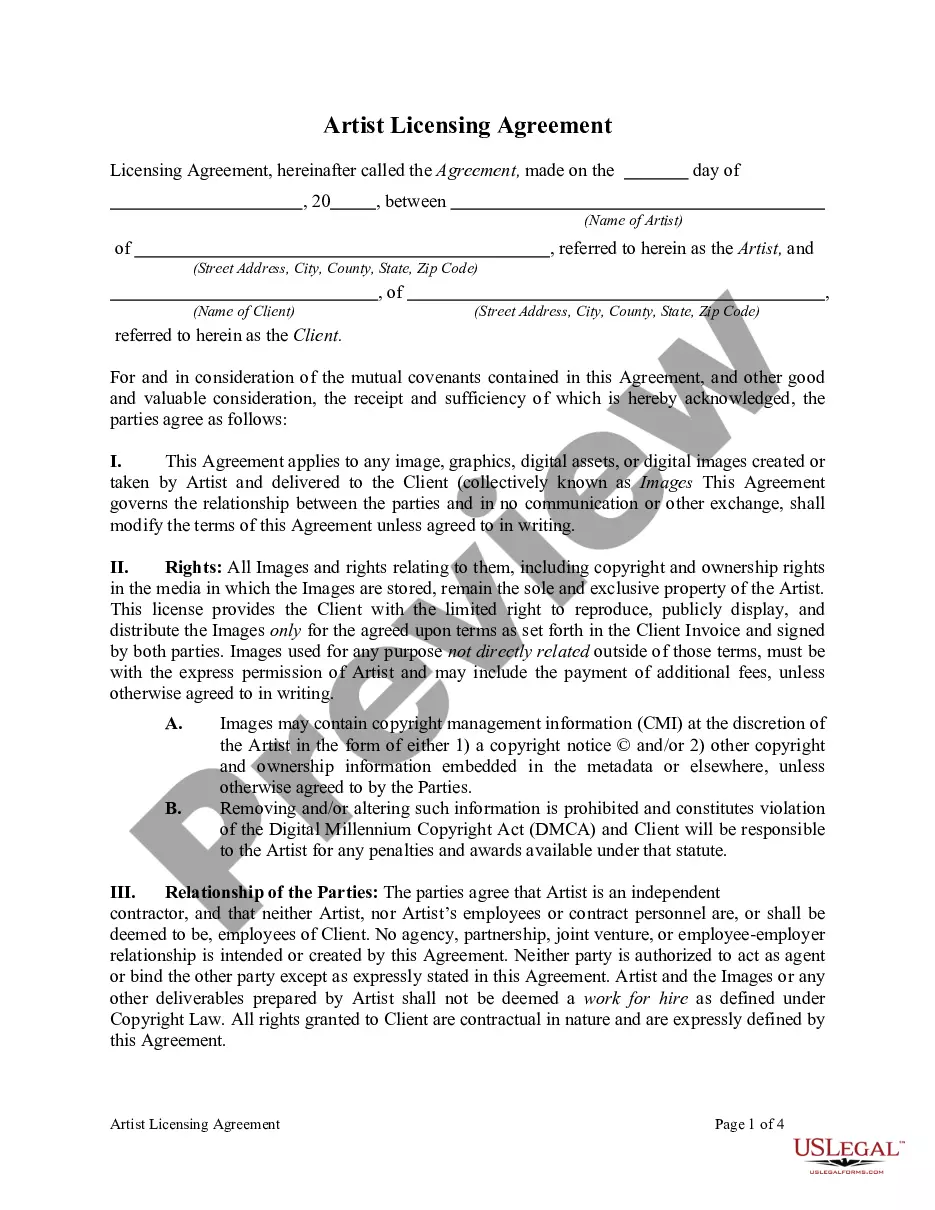
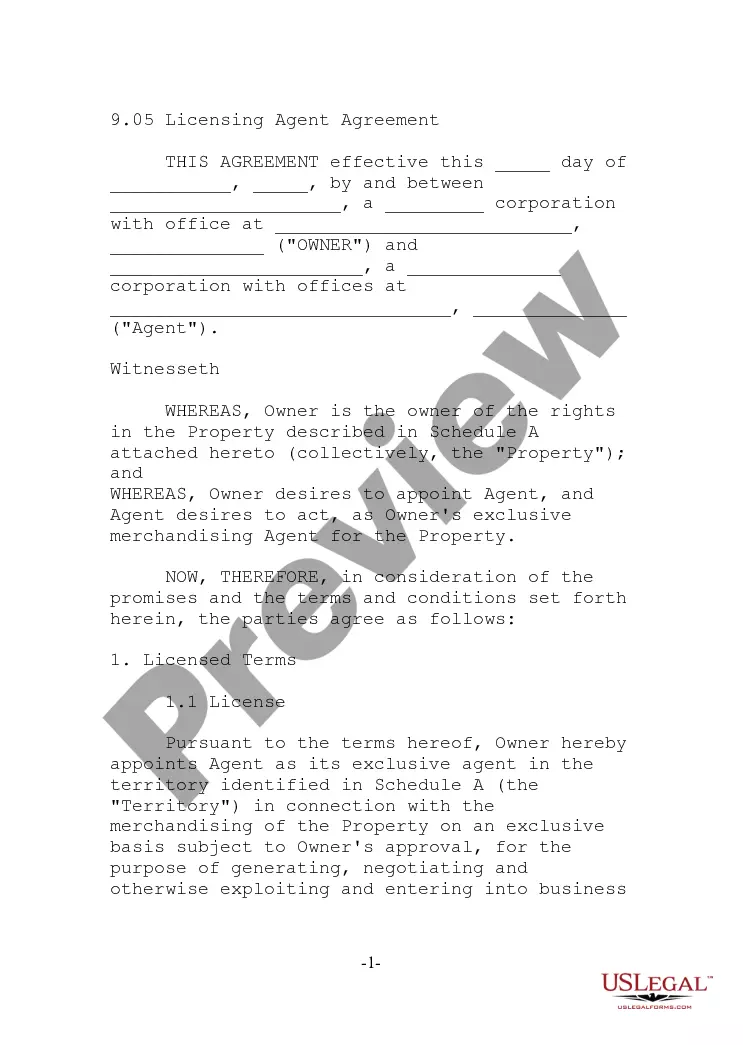
The Licensing Agent Agreement with an Artist is a legal document that formalizes the relationship between an artist and a licensing agent. This agreement specifies the agent's authority to negotiate and manage licensing agreements for the artist's work, ensuring that the artist's rights are safeguarded while maximizing potential revenue through licensing opportunities.
Form components explained
- Definitions of key terms such as Licensee Agreement, Revenues, and Territory.
- Appointment of the agent as the exclusive licensing representative for the artist.
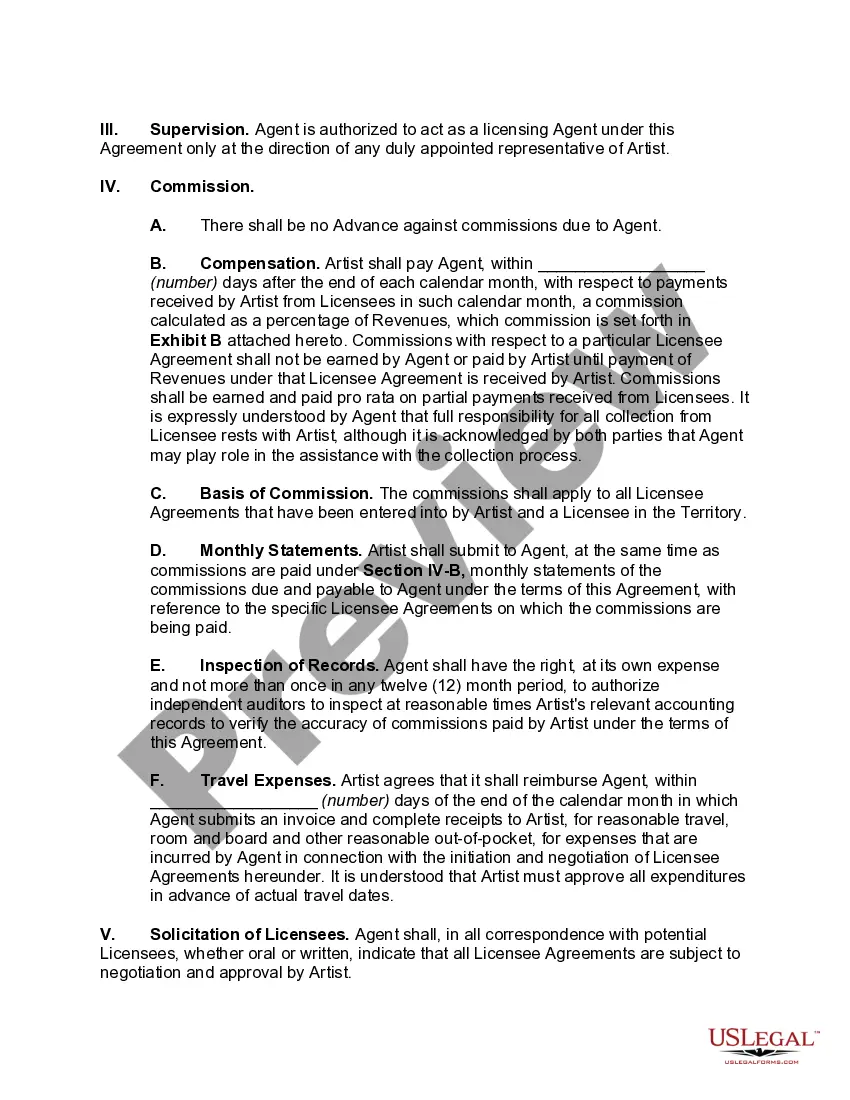
- Commission structure and payment terms for the agent.
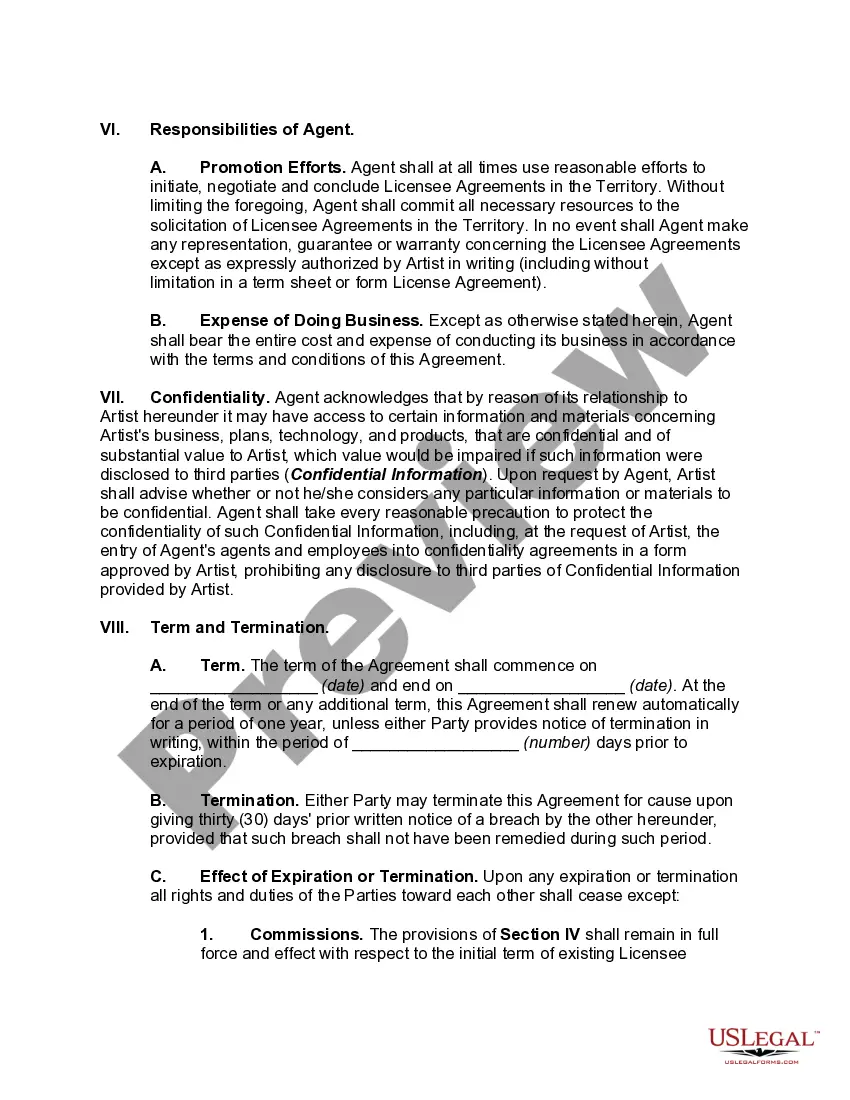
- Confidentiality obligations regarding the artist's business information.
- Provisions for termination and renewal of the agreement.
Situations where this form applies
This form is essential when an artist wants to engage a licensing agent to handle the negotiation of agreements that allow third parties to use their artwork or brand. It can be used when an artist aims to expand their reach in the marketplace and needs professional assistance in identifying and negotiating with potential licensees.
Who needs this form
- Artists seeking to license their work for products or services.
- Licensing agents who represent artists and manage licensing agreements.
- Corporations or individuals wanting to ensure legal protection and clarity in their licensing arrangements.
Steps to complete this form
- Identify the parties involved, including the artist and the licensing agent.
- Specify the date of the agreement and the term of the engagement.
- Fill in the commission percentage and revenue definitions according to agreed terms.
- Include any specific product categories related to the licensing agreements.
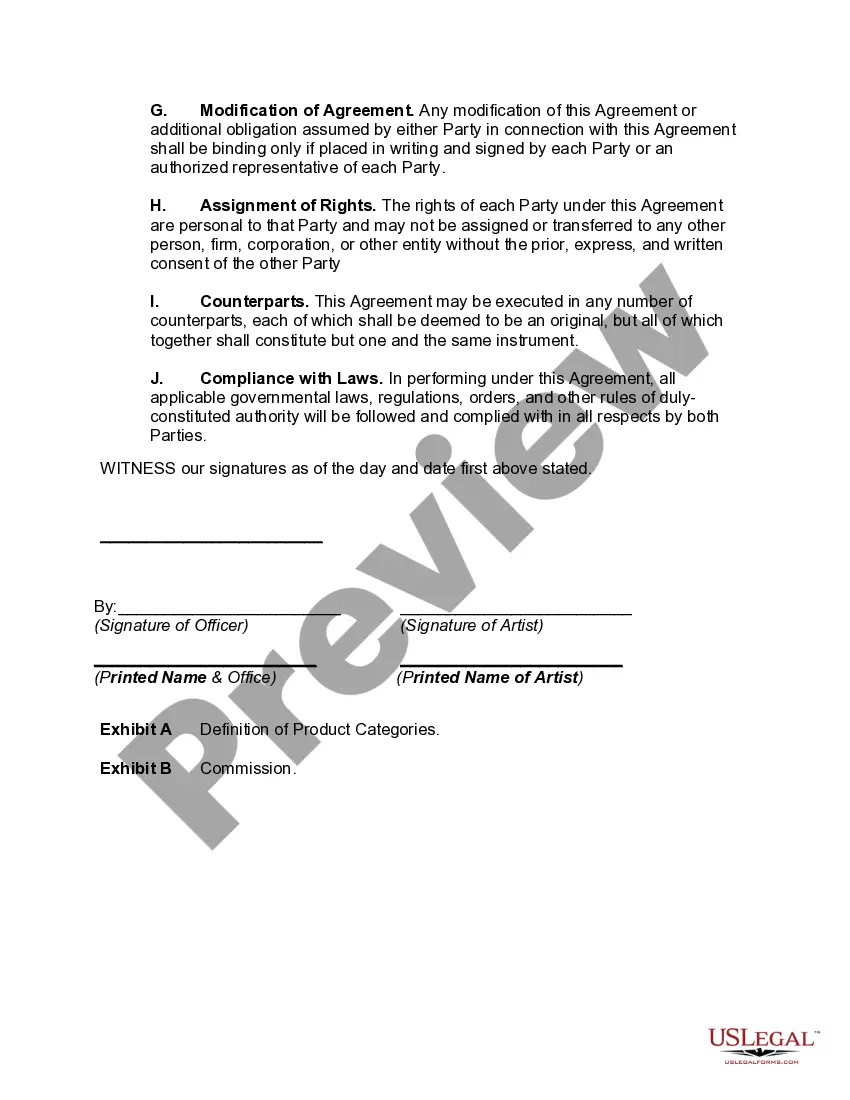
- Sign the agreement to signify acceptance from both parties.
Notarization requirements for this form
This form does not typically require notarization unless specified by local law. It is advisable to check with local regulations regarding licensing agreements and notarization requirements in your jurisdiction.
Get your form ready online
Our built-in tools help you complete, sign, share, and store your documents in one place.
Make edits, fill in missing information, and update formatting in US Legal Forms—just like you would in MS Word.
Download a copy, print it, send it by email, or mail it via USPS—whatever works best for your next step.
Sign and collect signatures with our SignNow integration. Send to multiple recipients, set reminders, and more. Go Premium to unlock E-Sign.
If this form requires notarization, complete it online through a secure video call—no need to meet a notary in person or wait for an appointment.
We protect your documents and personal data by following strict security and privacy standards.

Make edits, fill in missing information, and update formatting in US Legal Forms—just like you would in MS Word.

Download a copy, print it, send it by email, or mail it via USPS—whatever works best for your next step.

Sign and collect signatures with our SignNow integration. Send to multiple recipients, set reminders, and more. Go Premium to unlock E-Sign.

If this form requires notarization, complete it online through a secure video call—no need to meet a notary in person or wait for an appointment.

We protect your documents and personal data by following strict security and privacy standards.
Typical mistakes to avoid
- Failing to clearly define the term and scope of the agreement.
- Neglecting to outline the commission structure accurately.
- Not including all necessary parties in the signature section.
- Overlooking confidentiality terms, which can lead to information leaks.
Benefits of completing this form online
- Convenience of downloading and editing the document instantly.
- Access to legal templates drafted by licensed attorneys.
- Ability to store and retrieve agreements securely wherever you are.
Looking for another form?
Form popularity
FAQ
Do the research. Read books, websites and blogs such as MariaBrophy.com, Theabundantartist.com and ArtsyShark.com on how artists can license their art. Know your market. Make the pitch. Create a plan. Mock-up a catalog. Follow up. Use social media. License the work yourself.
The 3 P's of collegiate licensing are protection, promotion, and profit.
A license agreement is a business contract between two parties. The licensor (the seller of the license) owns the asset being licensed and the licensee (the buyer) pays for the right to use the license. The licensee pays royalties to the owner in exchange for the right to sell the product or use the technology.
Exclusive or non-exclusive. In an exclusive license, the intellectual property holder is licensing the work only to one person, for that particular use/territory. Territory. Use. Attribution. Derivative works. Confidentiality. Time frame. Termination.
What is a Licensing Agreement? A licensing agreement is a contract between two parties (the licensor and licensee) in which the licensor grants the licensee the right to use the brand name, trademark, patented technology, or ability to produce and sell goods owned by the licensor.
An example of a licensing agreement is a contract between the copyright holders of software and another company, allowing the latter to use the computer software for their daily business operations.
Download a template for a licensing agreement. Choose your role as the licensor or licensee. Define the license(s) in the agreement. Decide whether the license is exclusive or not. Settle the matter of fees and payment schedule. Add a renewal date and rules.
An example of a licensing agreement is a contract between the copyright holders of software and another company, allowing the latter to use the computer software for their daily business operations.