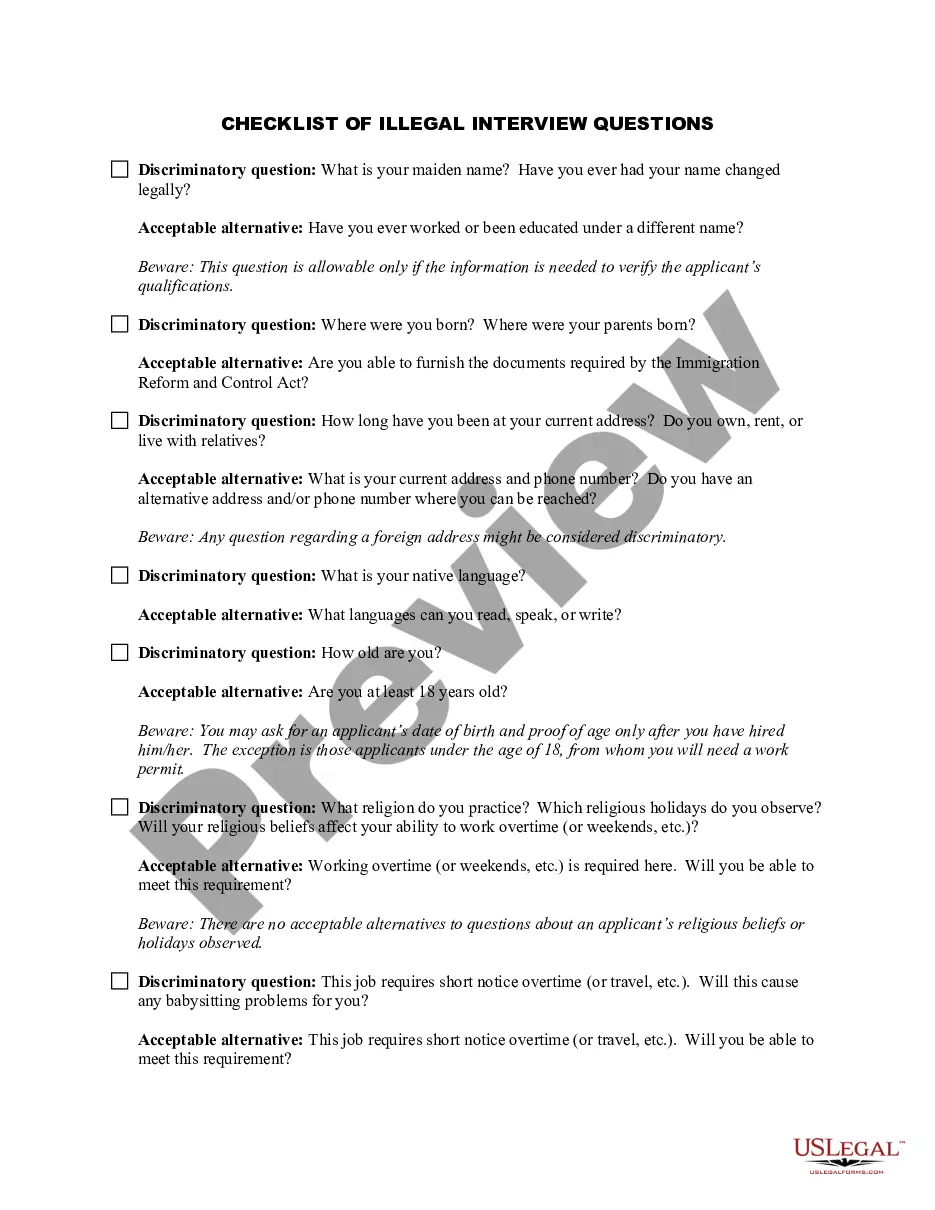
Virginia Paid Up Lease Pooling Provision
What this document covers
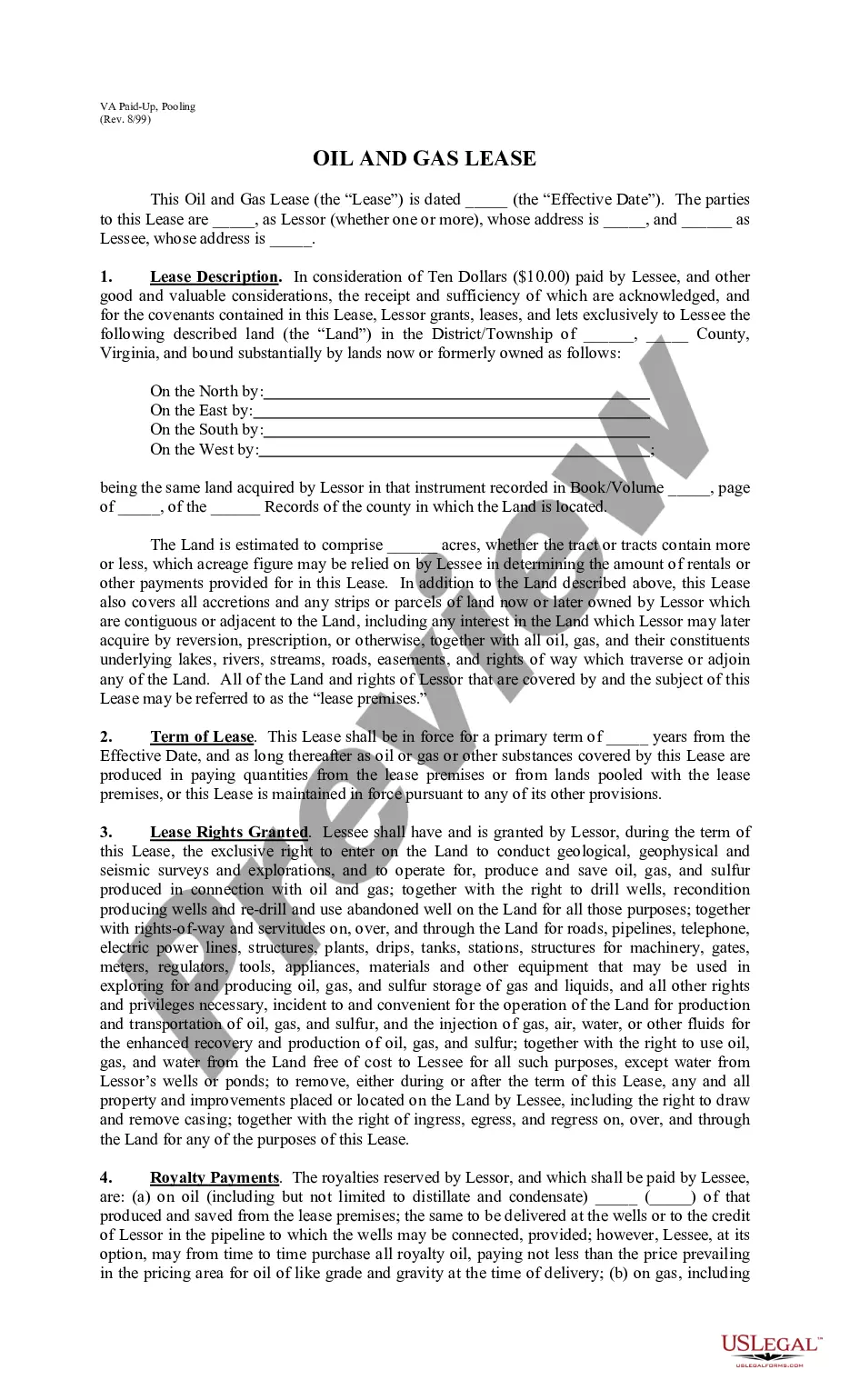
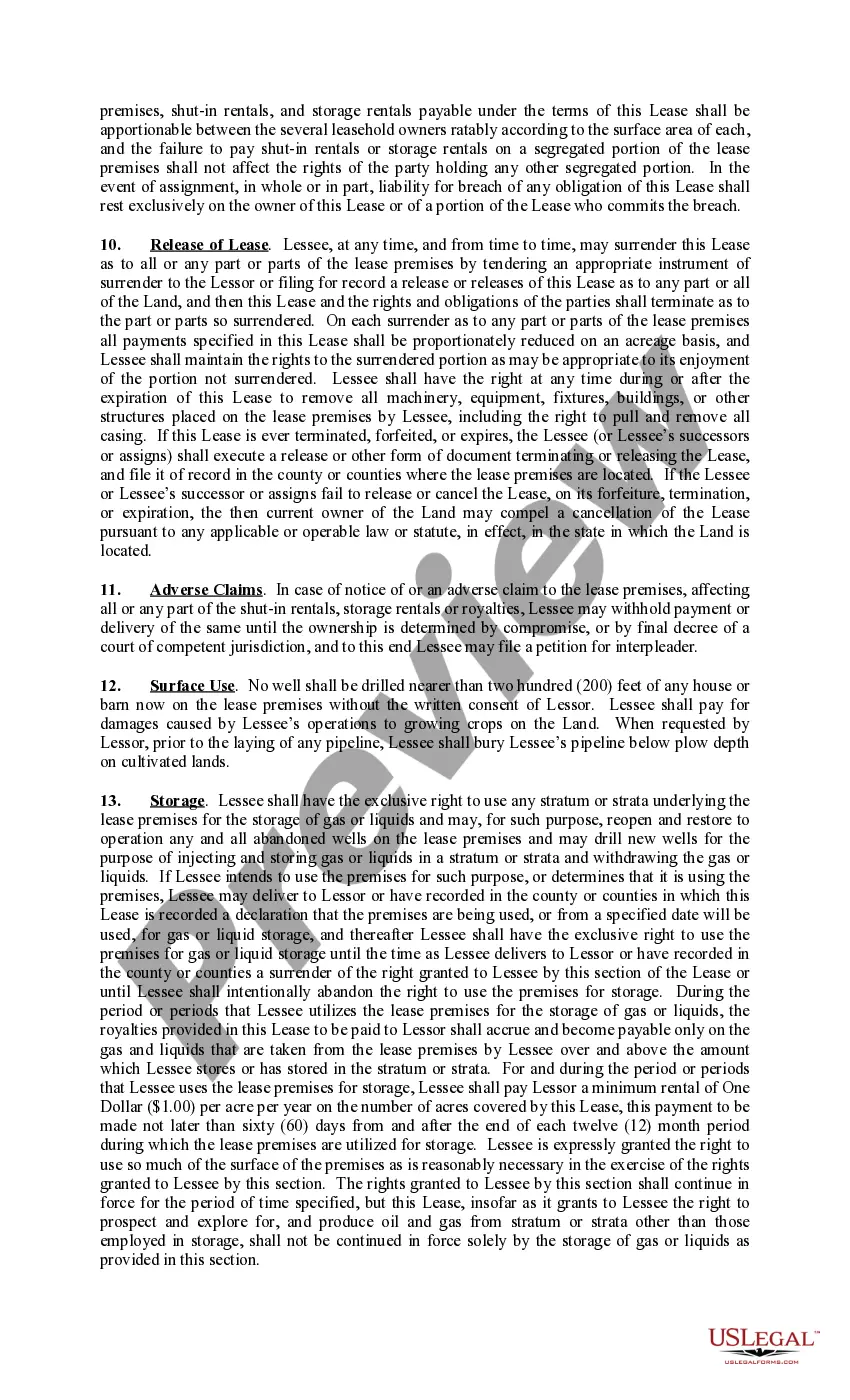
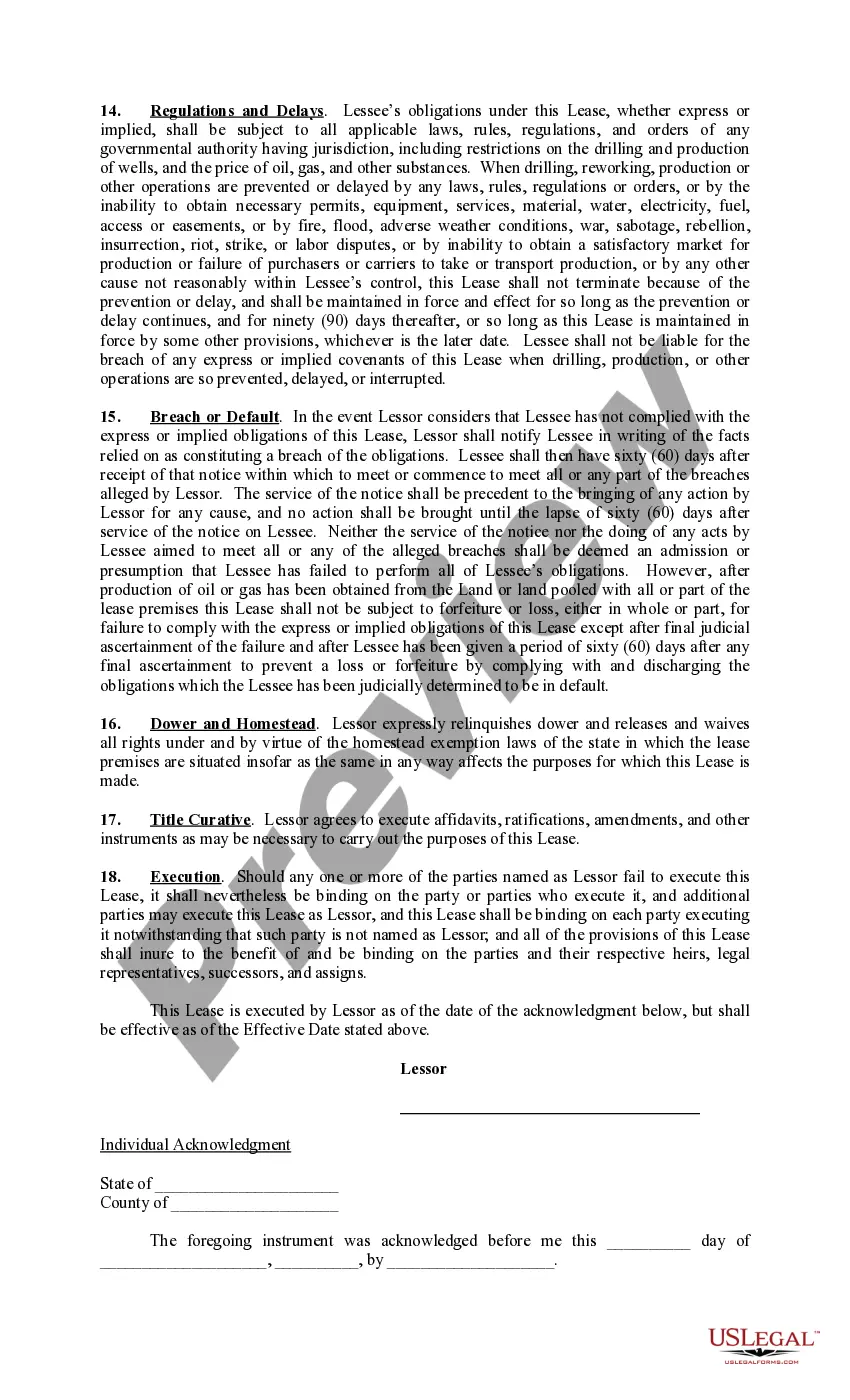
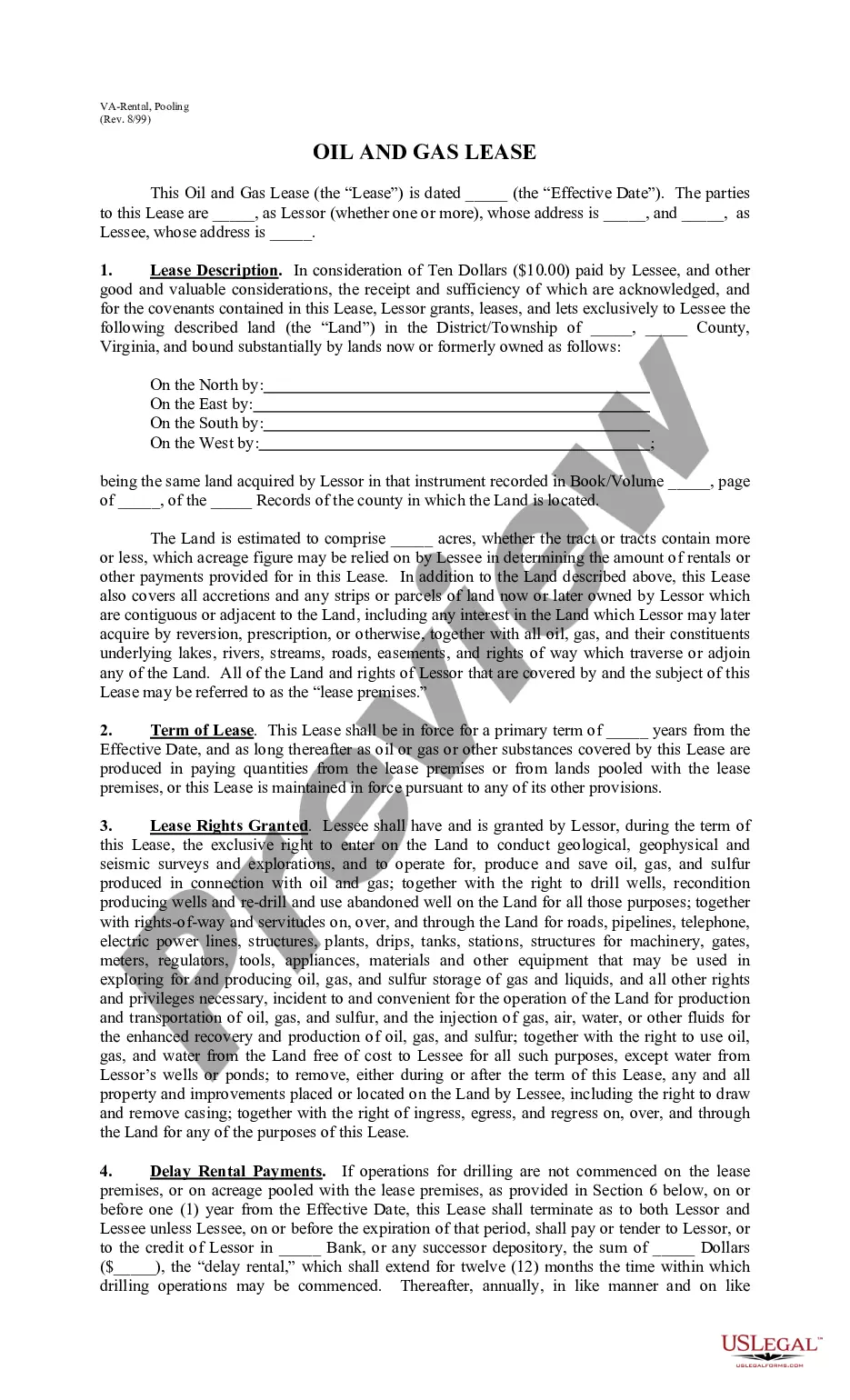
The Paid Up Lease Pooling Provision is a specialized legal document used in Virginia for granting exclusive rights to explore, drill, and produce oil, gas, and other minerals from designated land. This form stands out from other lease agreements because it specifies that the lease is "paid up," meaning Lessee does not have to commence operations during the primary term. Additionally, it includes provisions for pooling, which allows the Lessee to combine the leased land with adjacent properties for extraction purposes.
Main sections of this form
- Lease description, specifying the exact land and its boundaries
- Term of lease, outlining the duration and conditions for renewal
- Lease rights granted to the Lessee for exploration and drilling activities
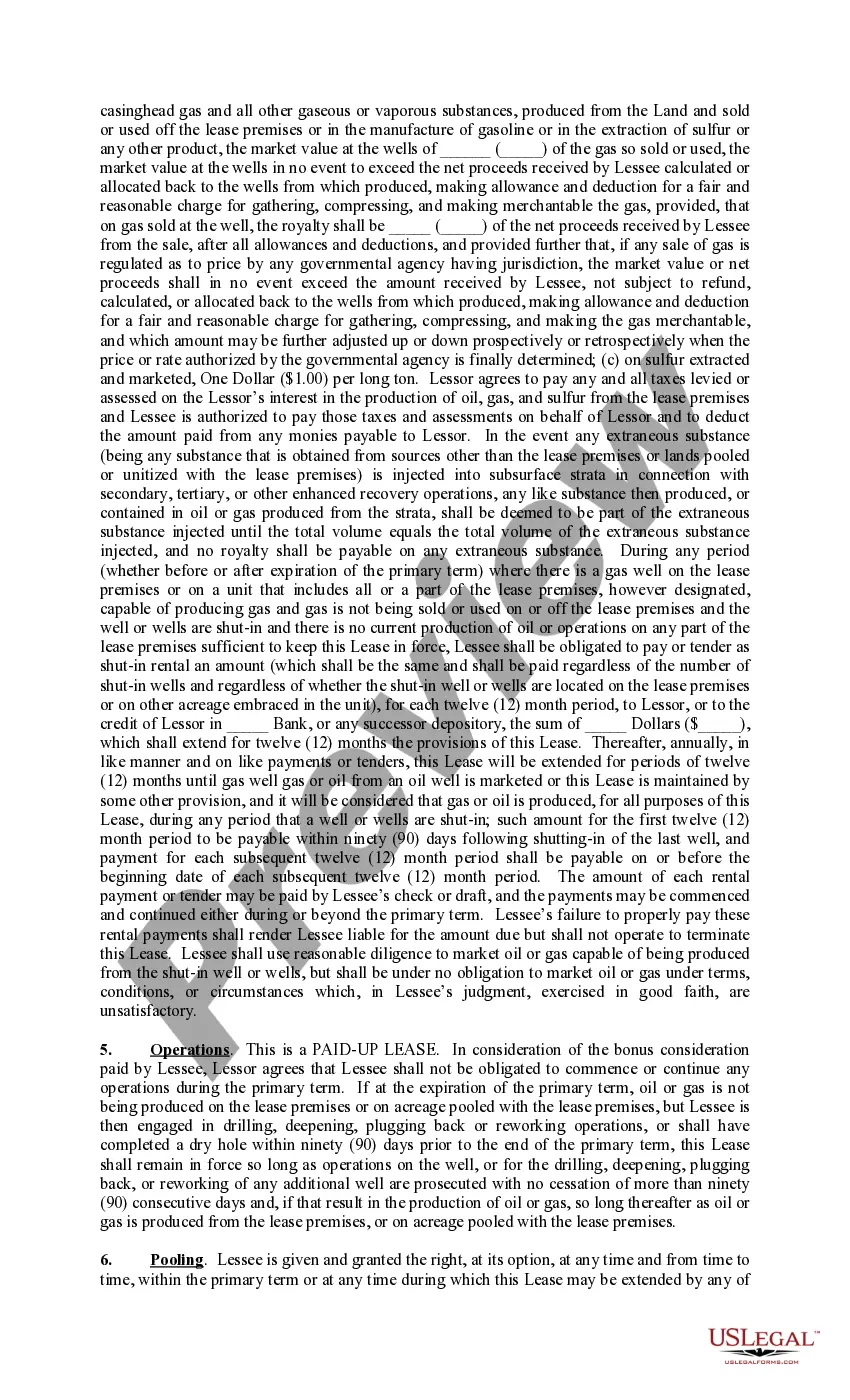
- Royalty payment structure for oil, gas, and other mineral production
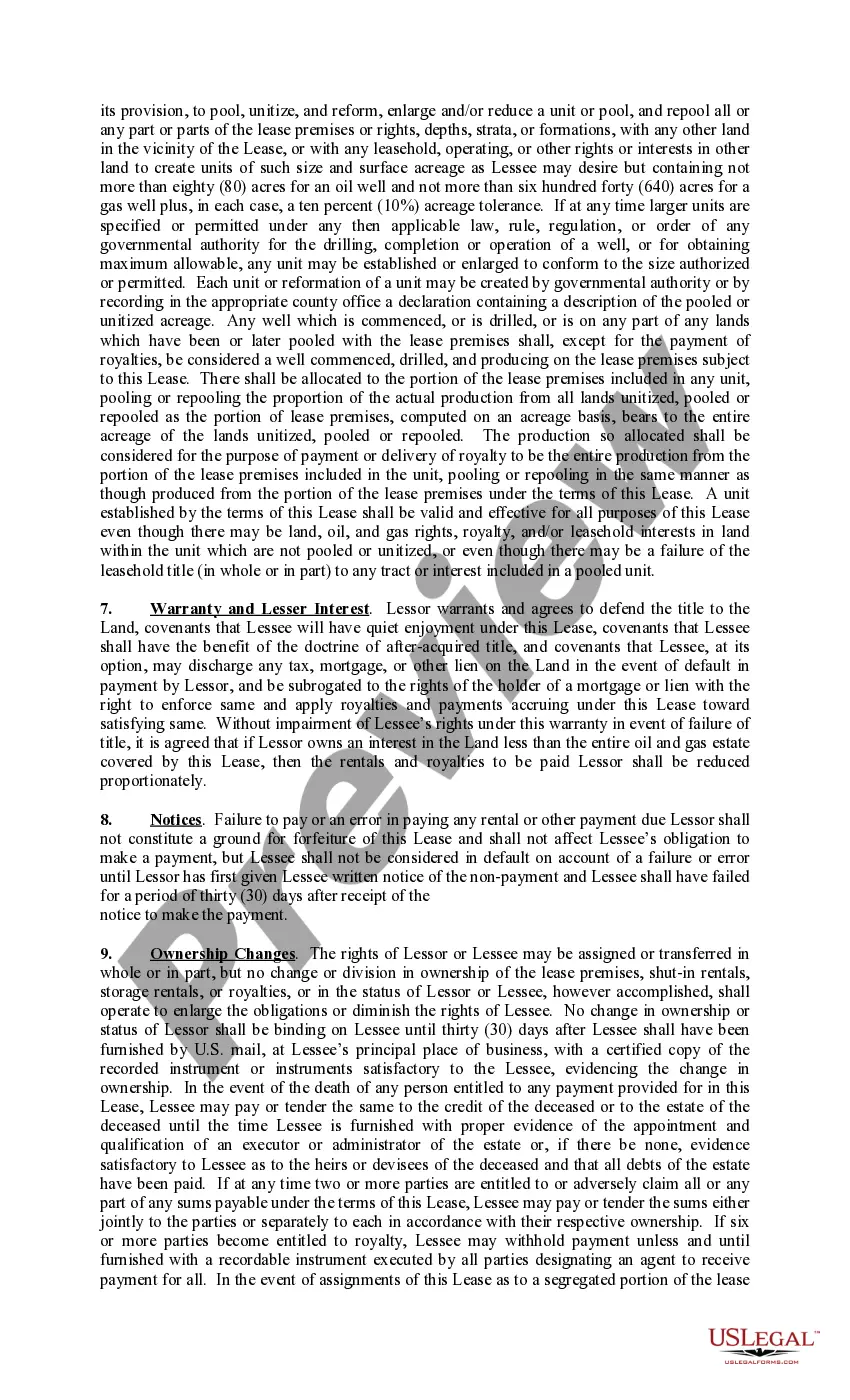
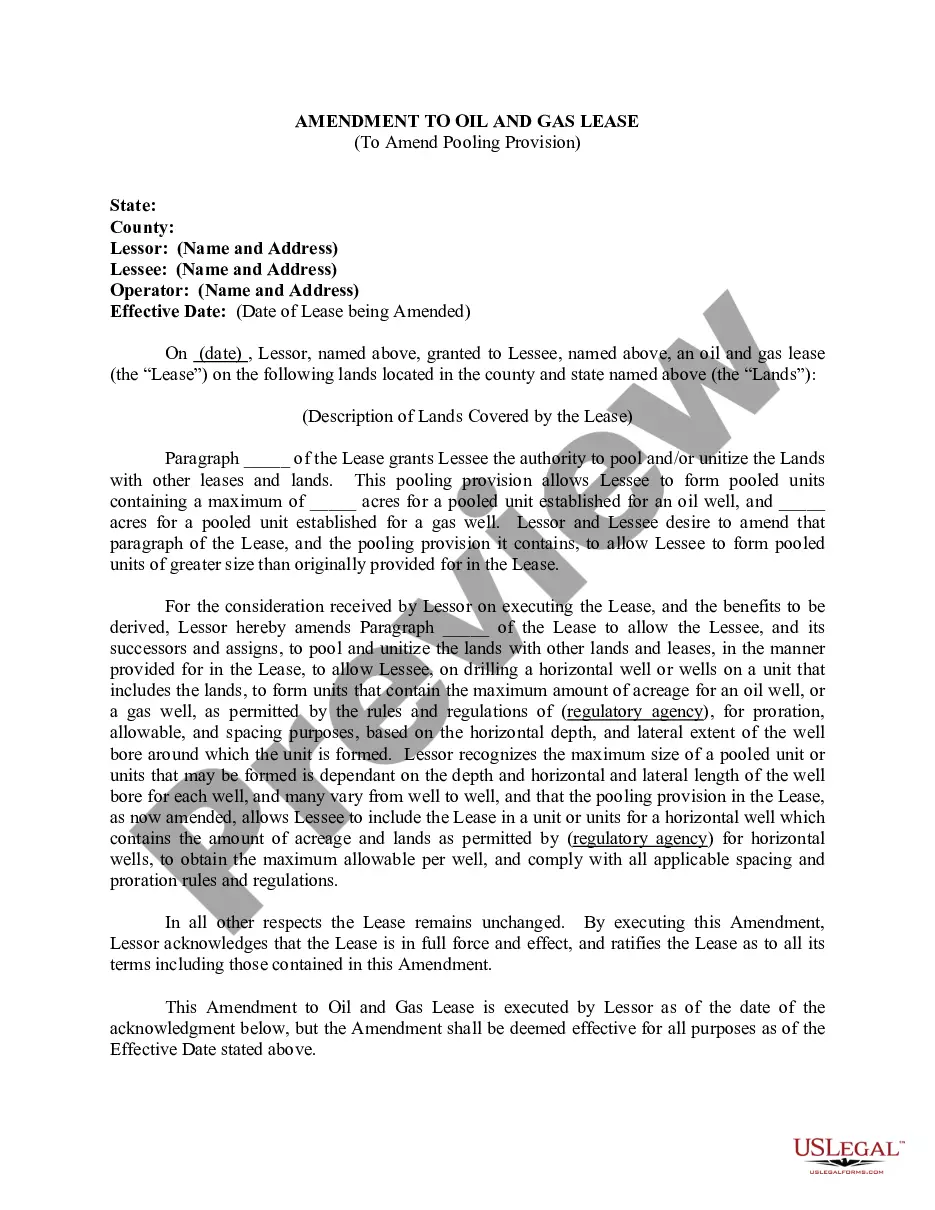
- Pooling provisions allowing for the combination of land for production efficiency
- Provisions for handling title issues and notifications of changes in ownership
When this form is needed
This form is appropriate when landowners (Lessors) wish to lease their property for oil and gas exploration and production without requiring the Lessee to commit to immediate operational activities. It is ideal for scenarios where the landowner wants to secure a lease while allowing the Lessee to manage production timelines flexibly.
Who this form is for
This form is designed for:
- Landowners in Virginia looking to lease land for oil, gas, or mineral extraction
- Energy companies or Lessees interested in securing drilling rights without immediate production commitments
- Legal professionals who require a comprehensive lease agreement for their clients in the oil and gas sector
How to complete this form
- Identify the parties: Fill in the names and addresses of Lessor and Lessee.
- Specify the land: Describe the property being leased, including county and acreage details.
- Enter lease terms: Complete the primary lease term and royalty payment details.
- Include pooling information: Outline any pooling provisions applicable to the lease.
- Sign and date: Ensure both parties sign and date the document where indicated.
Does this form need to be notarized?
This form does not typically require notarization unless specified by local law. However, consult local regulations to ensure compliance with jurisdiction-specific requirements.
Get your form ready online
Our built-in tools help you complete, sign, share, and store your documents in one place.
Make edits, fill in missing information, and update formatting in US Legal Forms—just like you would in MS Word.
Download a copy, print it, send it by email, or mail it via USPS—whatever works best for your next step.
Sign and collect signatures with our SignNow integration. Send to multiple recipients, set reminders, and more. Go Premium to unlock E-Sign.
If this form requires notarization, complete it online through a secure video call—no need to meet a notary in person or wait for an appointment.
We protect your documents and personal data by following strict security and privacy standards.

Make edits, fill in missing information, and update formatting in US Legal Forms—just like you would in MS Word.

Download a copy, print it, send it by email, or mail it via USPS—whatever works best for your next step.

Sign and collect signatures with our SignNow integration. Send to multiple recipients, set reminders, and more. Go Premium to unlock E-Sign.

If this form requires notarization, complete it online through a secure video call—no need to meet a notary in person or wait for an appointment.

We protect your documents and personal data by following strict security and privacy standards.
Mistakes to watch out for
- Failing to clearly define the boundaries of the leased property.
- Not specifying the royalty payment structure accurately.
- Neglecting to fill in all necessary fields or signatures.
- Overlooking the inclusion of pooling provisions when applicable.
Benefits of completing this form online
- Easy access: Download the form from anywhere at any time.
- Editability: Tailor the form to fit specific needs before finalizing the agreement.
- Legal assurance: Forms are drafted by licensed attorneys, ensuring compliance with legal standards.
Looking for another form?
Form popularity
FAQ
As noted above, while pooling focuses on efficiently combining lands for the purpose of obtaining a drilling permit to drill a single well, unitization focuses on the combination of interests covering a larger area to facilitate development of all or part of a common source of supply (i.e. a field/reservoir).
Once a Pooling Order is entered, you will receive a copy of the Order, which will state your options as an owner of an interest in the unit. Typically, the Order will afford you a number of options of a cash bonus and royalty payments on production based on the fair market value of your interest.
Pooling Clause: Joining the Leased Land with Other Land The area formed is called a pool or sometimes a pooled unit. Pooling permits the lessee to prevent waste by avoiding unnecessary drilling and to protect the correlative rights of the mineral owners in the common reservoir.
Forced Pooling (sometimes called Statutory or Compulsory Pooling) is a legal mechanism that allows oil and gas operators to drill wells when they are unable to get 100% of the mineral interests to commit to support the drilling of a well.
It also records a "Declaration of Pooling" or similarly named document in the land records office at the local Courthouse. The declaration shows the boundaries of the pooling unit and identifies all the landowners and amount of property each landowner actually has in the unit.
If a lease is a "paid-up" lease, then the lease will remain in effect during the entire primary term with no further payments to the Lessor unless and until actual production of oil or gas is established.