Kentucky Letter from Landlord to Tenant about Tenant engaging in illegal activity in premises as documented by law enforcement and if repeated, lease terminates
Overview of this form
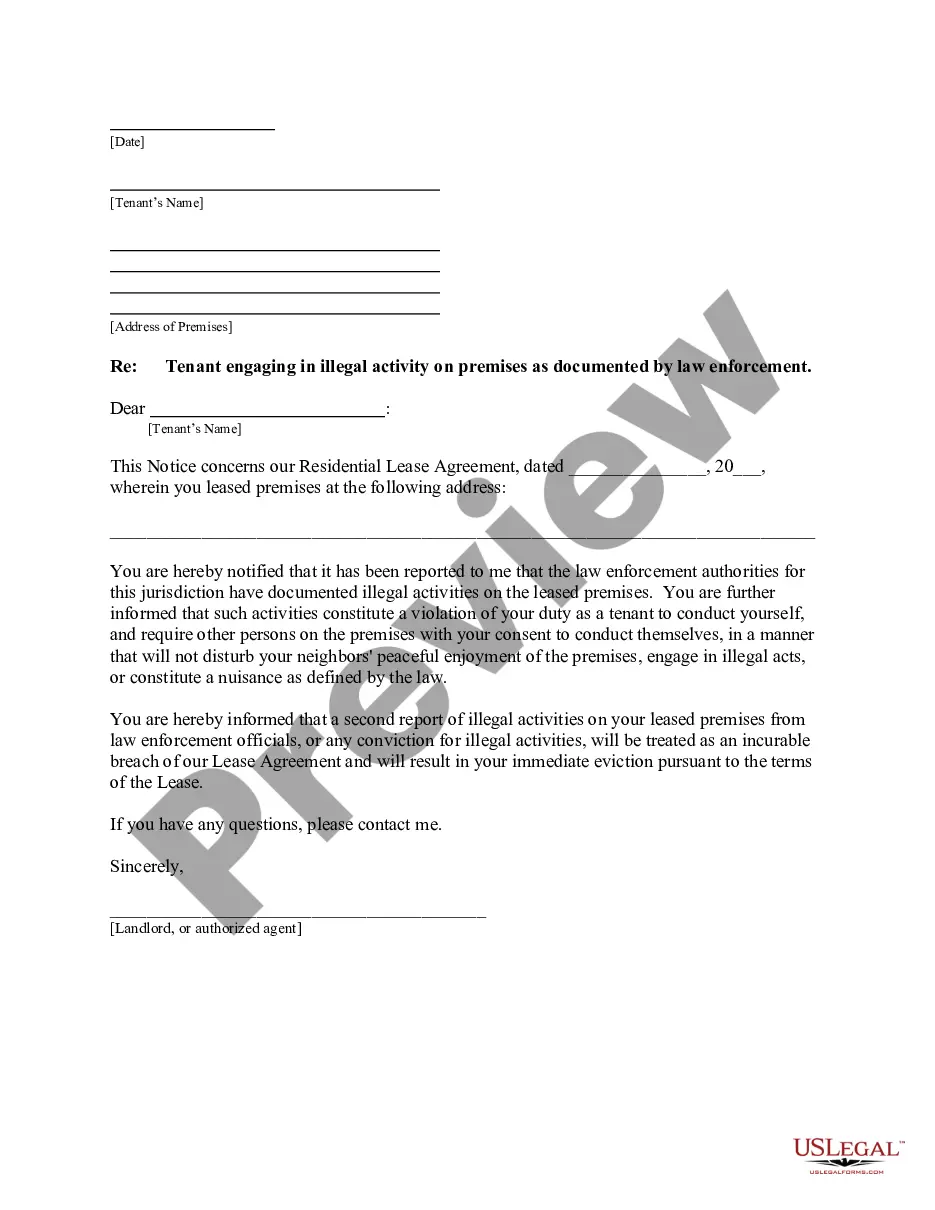
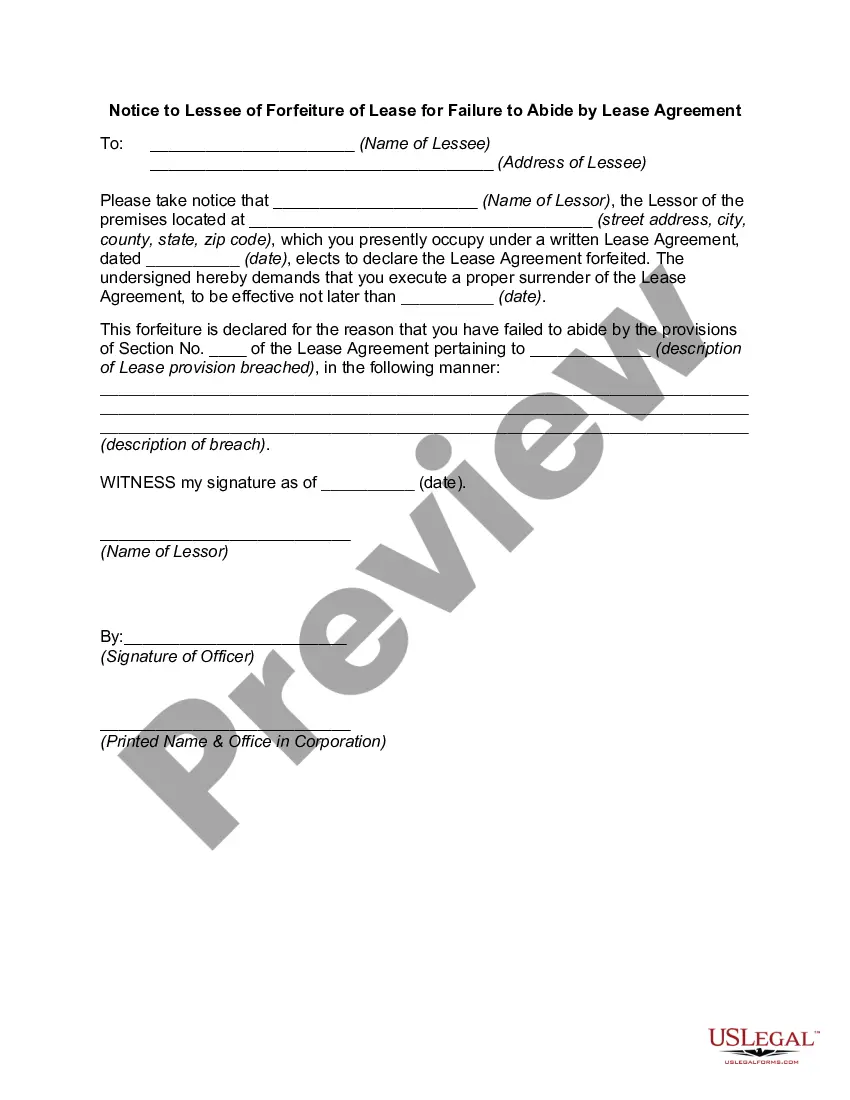
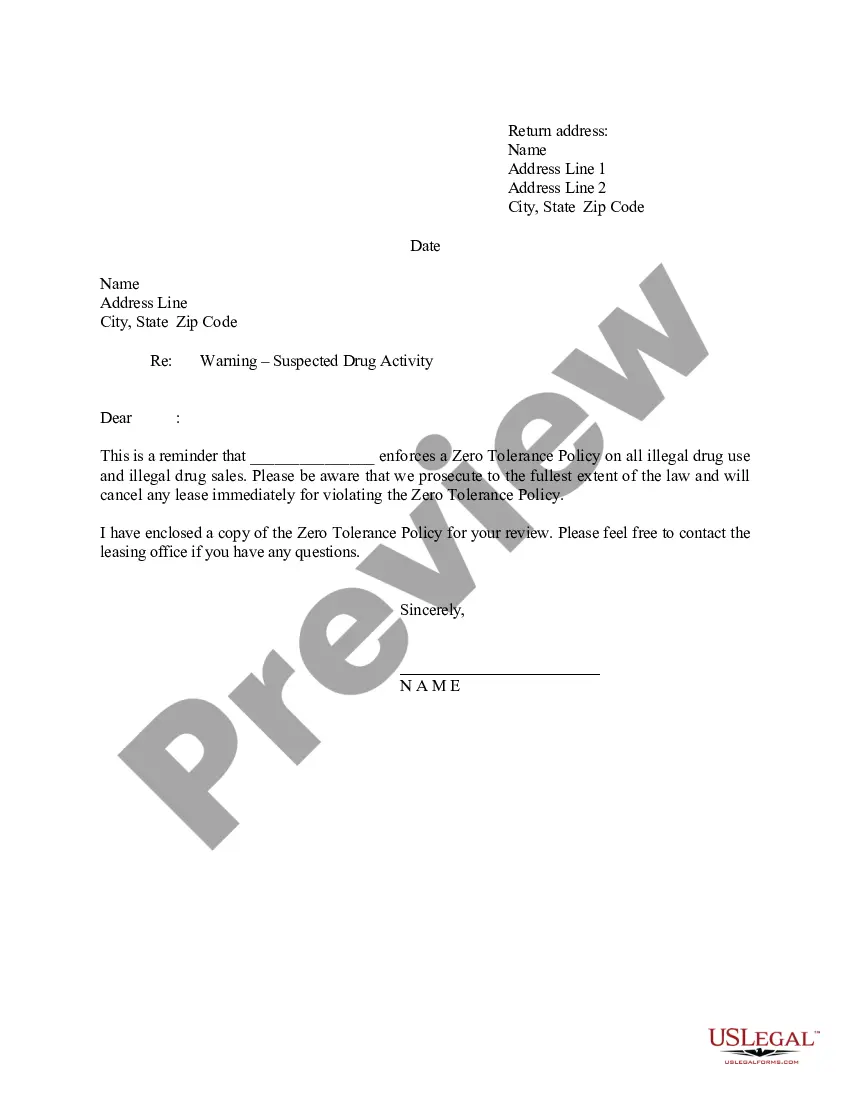
This form is a letter from the landlord to the tenant addressing illegal activities reported by law enforcement within the rental premises. Its primary purpose is to formally demand that the tenant cease any illegal conduct. This letter serves as a warning that if such activities continue, it may lead to lease termination and eviction. Unlike general notices, this form specifically cites documented illegal actions, emphasizing the serious nature of the situation.
Form components explained
- Identification of the tenant and landlord.
- Details of the illegal activities as reported by law enforcement.
- Explanation of the tenant's obligations under the lease agreement.
- Consequences for failing to cease illegal activities, including potential eviction.
- Contact information for further questions or clarifications.

When this form is needed
This letter should be used when a landlord has received credible reports from law enforcement indicating that a tenant is engaging in illegal activities on the premises. It's essential to document this communication to provide a formal record of the warning, especially if the landlord intends to take further action, such as eviction, if the behavior continues.
Who this form is for
- Landlords who have evidence of illegal activities on their rental property.
- Property managers needing to address tenant misconduct in a formal manner.
- Landlords seeking to enforce lease terms regarding illegal activity.
Steps to complete this form
- Identify the parties: Enter the names of the landlord and tenant.
- Describe illegal activities: Provide specific information about the documented illegal actions.
- Cite the lease violation: Reference the relevant lease clauses regarding tenant conduct.
- State consequences: Clearly outline the repercussions of continued illegal activities, including potential eviction.
- Sign the letter: Include the landlordâs signature and date at the bottom of the document.
Does this document require notarization?
This form does not typically require notarization unless specified by local law. However, it is advisable to keep a signed copy for your records to enforce compliance with the terms outlined within.
Get your form ready online
Our built-in tools help you complete, sign, share, and store your documents in one place.
Make edits, fill in missing information, and update formatting in US Legal Forms—just like you would in MS Word.
Download a copy, print it, send it by email, or mail it via USPS—whatever works best for your next step.
Sign and collect signatures with our SignNow integration. Send to multiple recipients, set reminders, and more. Go Premium to unlock E-Sign.
If this form requires notarization, complete it online through a secure video call—no need to meet a notary in person or wait for an appointment.
We protect your documents and personal data by following strict security and privacy standards.

Make edits, fill in missing information, and update formatting in US Legal Forms—just like you would in MS Word.

Download a copy, print it, send it by email, or mail it via USPS—whatever works best for your next step.

Sign and collect signatures with our SignNow integration. Send to multiple recipients, set reminders, and more. Go Premium to unlock E-Sign.

If this form requires notarization, complete it online through a secure video call—no need to meet a notary in person or wait for an appointment.

We protect your documents and personal data by following strict security and privacy standards.
Common mistakes to avoid
- Failing to provide specific details about the illegal activities.
- Not citing lease agreement clauses that pertain to tenant behavior.
- Neglecting to sign and date the letter.
- Using vague language that may not convey the seriousness of the situation.
Why complete this form online
- Convenience: Access the form anytime, from any location.
- Editability: Easily customize the template to fit your specific situation.
- Reliability: Ensure the use of professionally drafted legal language.
Legal use & context
- The letter serves as a legal notice and may be crucial in eviction proceedings.
- Documentation of illegal activity creates a formal record of the landlord's attempts to address the issue.
- Using this letter helps protect the landlord's rights under the lease agreement.
What to keep in mind
- This letter notifies the tenant of illegal activities and warns of potential eviction.
- Clarity and specifics are essential for compliance and enforceability.
- Landlords should be aware of the regulations in their specific state regarding tenant communications.
Looking for another form?



Form popularity
FAQ
Damage to the Property: A landlord can sue a tenant if the tenant has caused damage to the property.To Recover Lost Rent From an Illegal Move Out: If the tenant moved out before their lease was actually up, you can take them to court to recover the rent they owed for the remaining time on their lease.
The rental property address, including unit number (if applicable) The names of all tenants on the lease agreement. The date the lease violation notice was written. The specific reason for the notice. The time and date the violation occurred (if applicable)
Tell Them The Problem & Consequences. Explain the reason that you want the tenant to go. Offer Them a Way Out. Let the tenant know that you are willing to give them a lump sum of cash in agreement for leaving the property. The Release.
Instead, it is harm that's committed on purpose, by accident or through neglect that affects the normal function or usefulness of the property. Examples of tenant damage can include anything from a broken toilet seat to a smashed mirror, missing door handles, holes or dents in walls, or carpets soaked with pet urine.
Be in writing. be signed and dated by you as the property manager, or by your client. be properly addressed to the tenant. give the day on which the residential tenancy agreement is terminated and by which the tenant is required to vacate. where appropriate, give the grounds or reason for the notice.
Any malicious or accidental damage to the property caused by a tenant or their guests is the tenant's responsibility. However, it should still be reported to the property manager or landlord. Malicious damage could be a hole punched in a wall or even nails hammered into the wall without a landlord's permission.
A landlord cannot legally evict you without a court order, whether or not you have a lease.) How long does it take for a landlord to evict a tenant? A landlord can evict a tenant only by going through a formal eviction proceeding, which can take a few weeks from start to finish.
When a crime occurs at a rental property, the tenant is responsible for insuring his or her possessions, while the landlord is responsible for the premises and any damage incurred. The only exception would be in the highly unlikely event that the landlord could prove that you were somehow responsible for the damage.
Send a 3-day notice to fix or quit. If the tenant doesn't follow through with a fix, visit your local courthouse and begin a filing for eviction. In some states, you can file to only evict the unauthorized tenant. In others, you'll have the option to evict your tenant as well as the unauthorized occupant.