Michigan Consent Judgment of Divorce
What this document covers
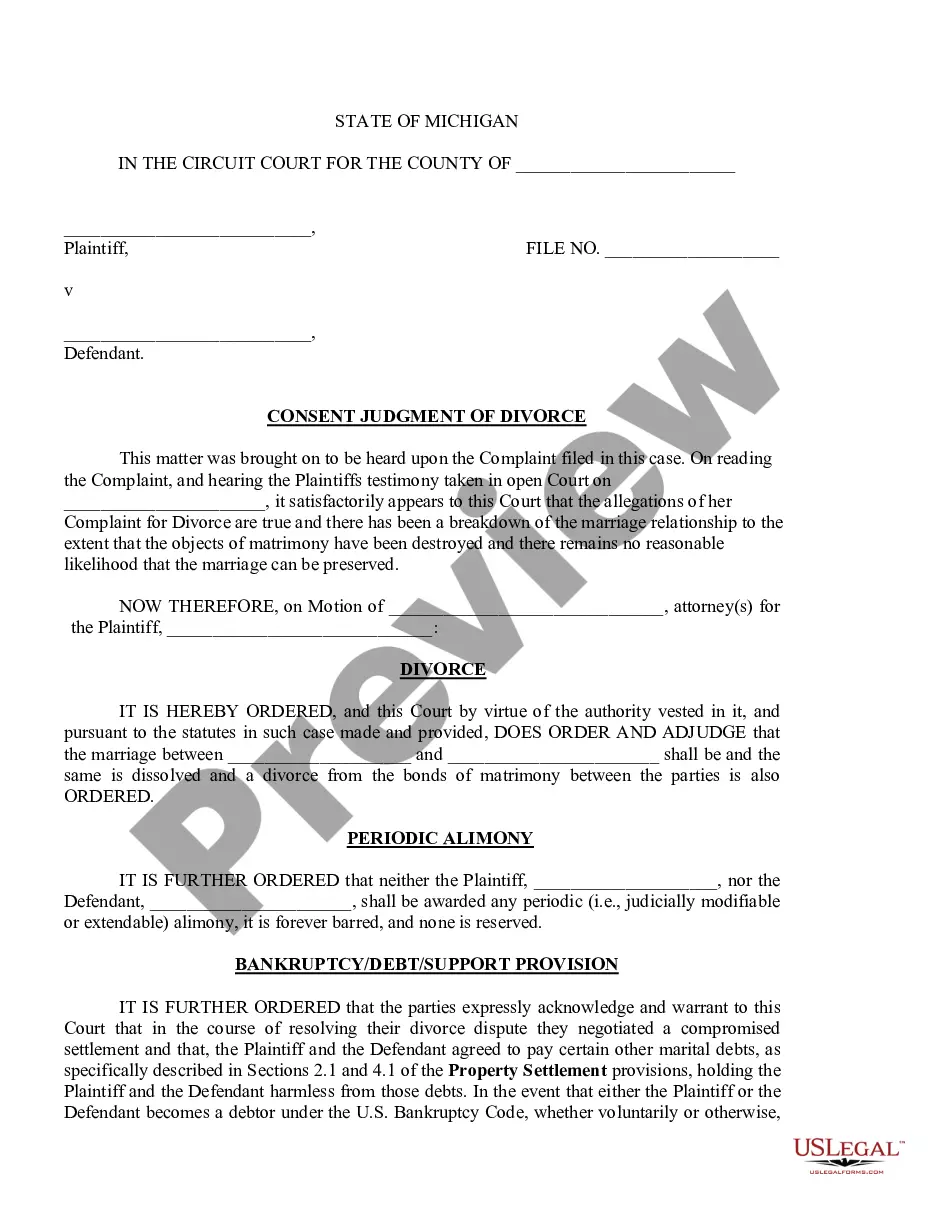
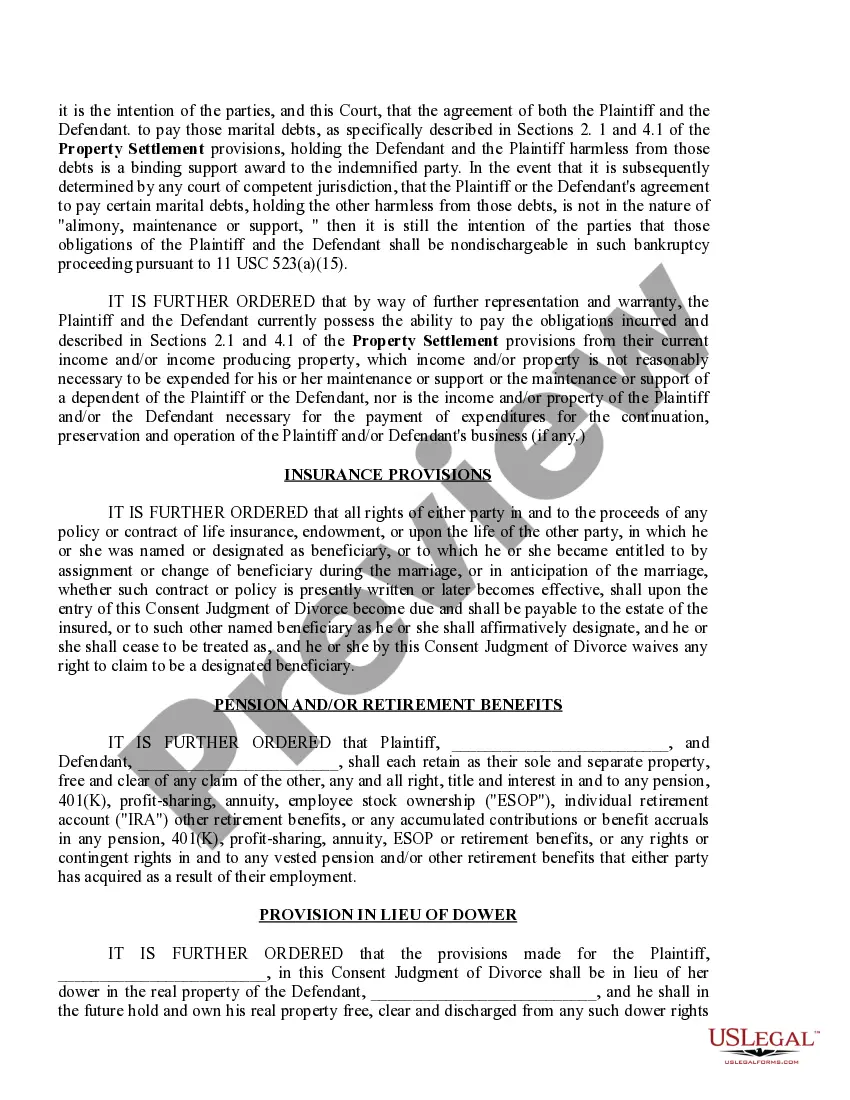
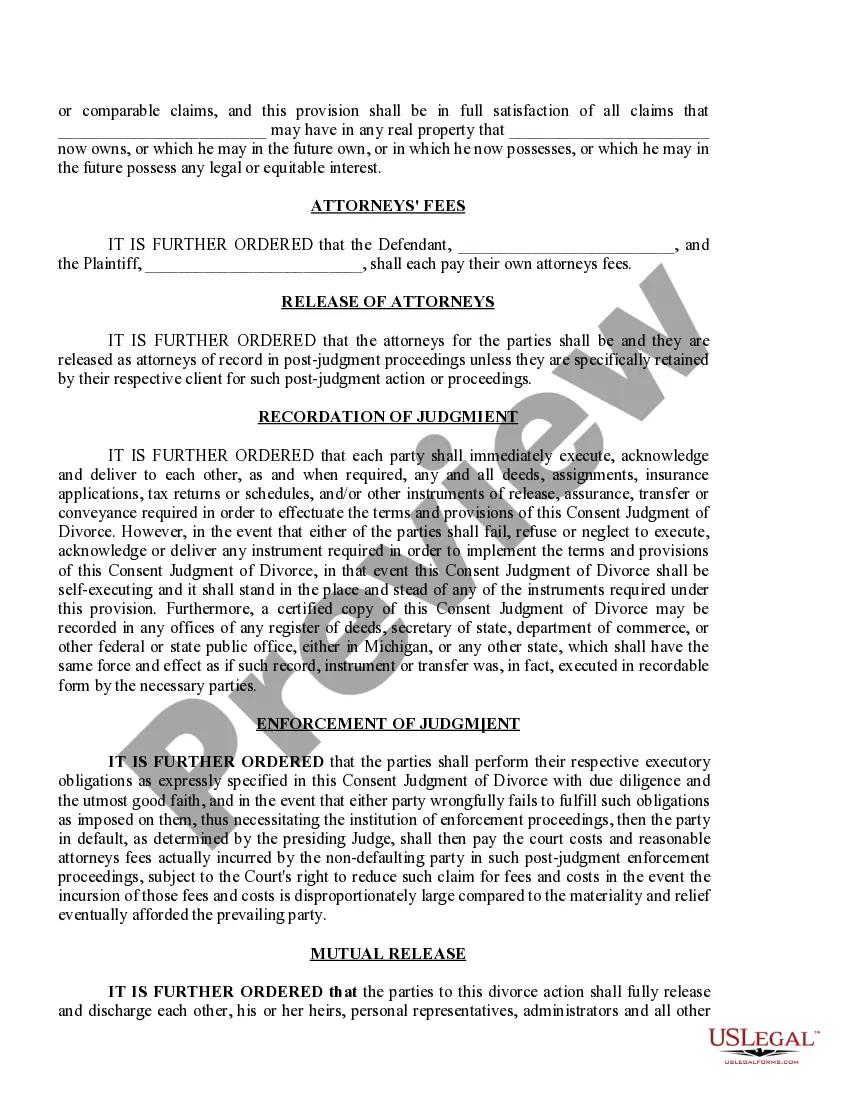
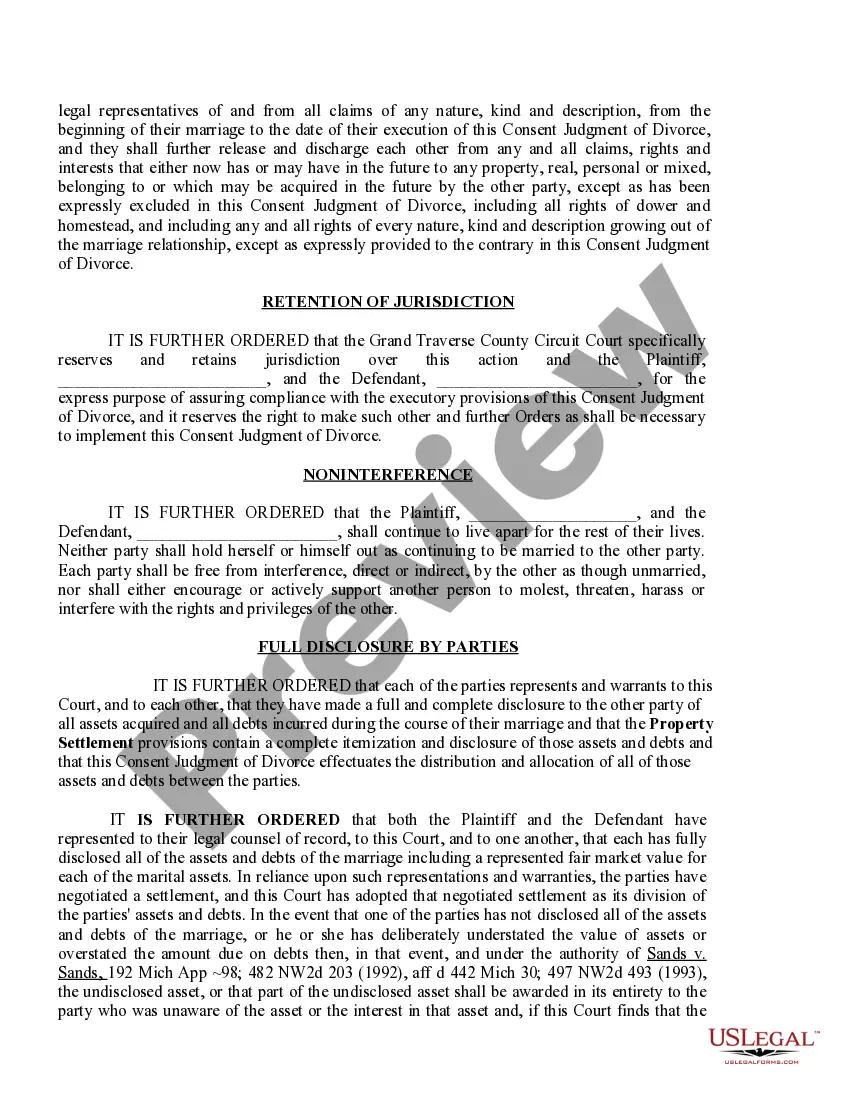
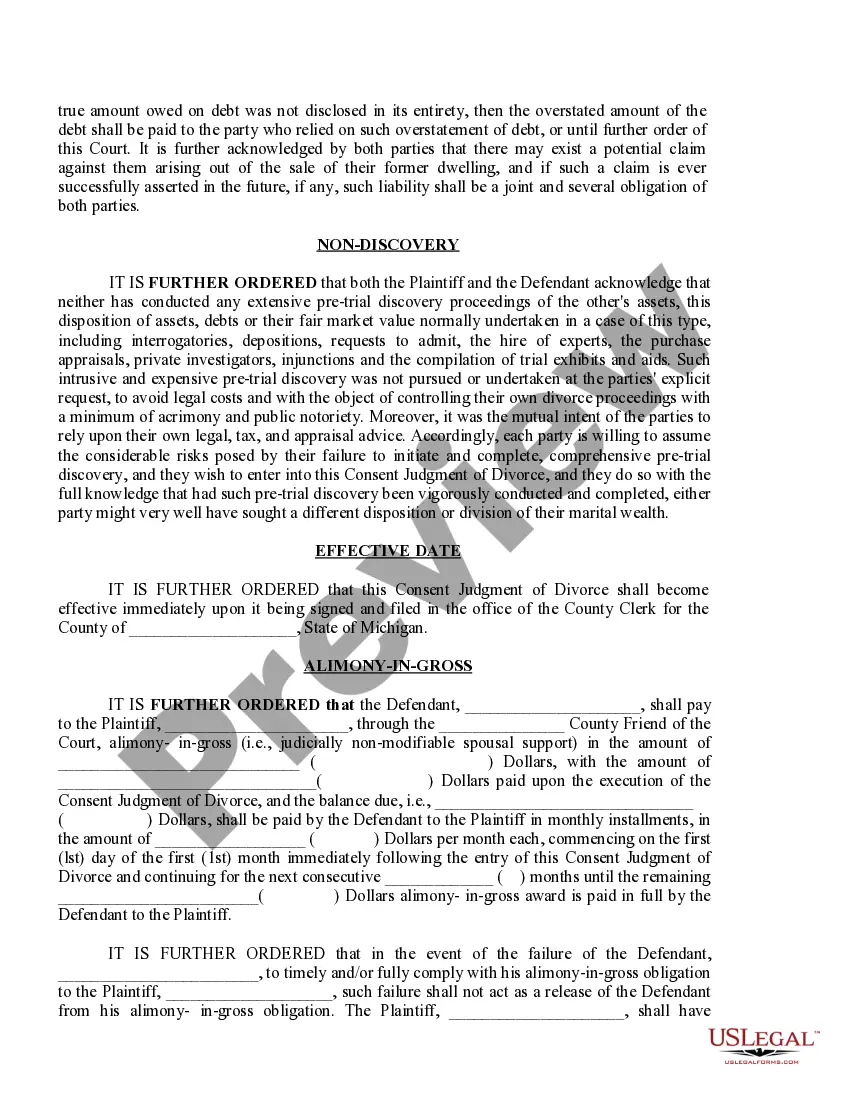
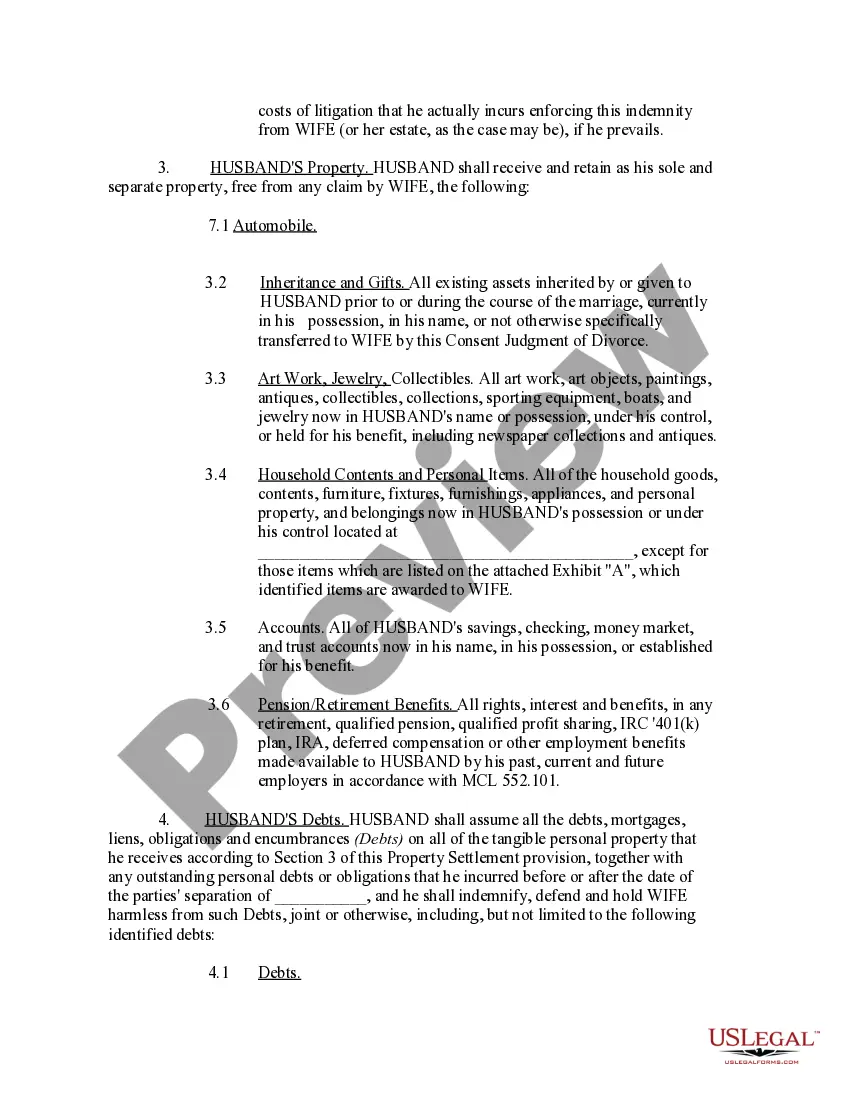
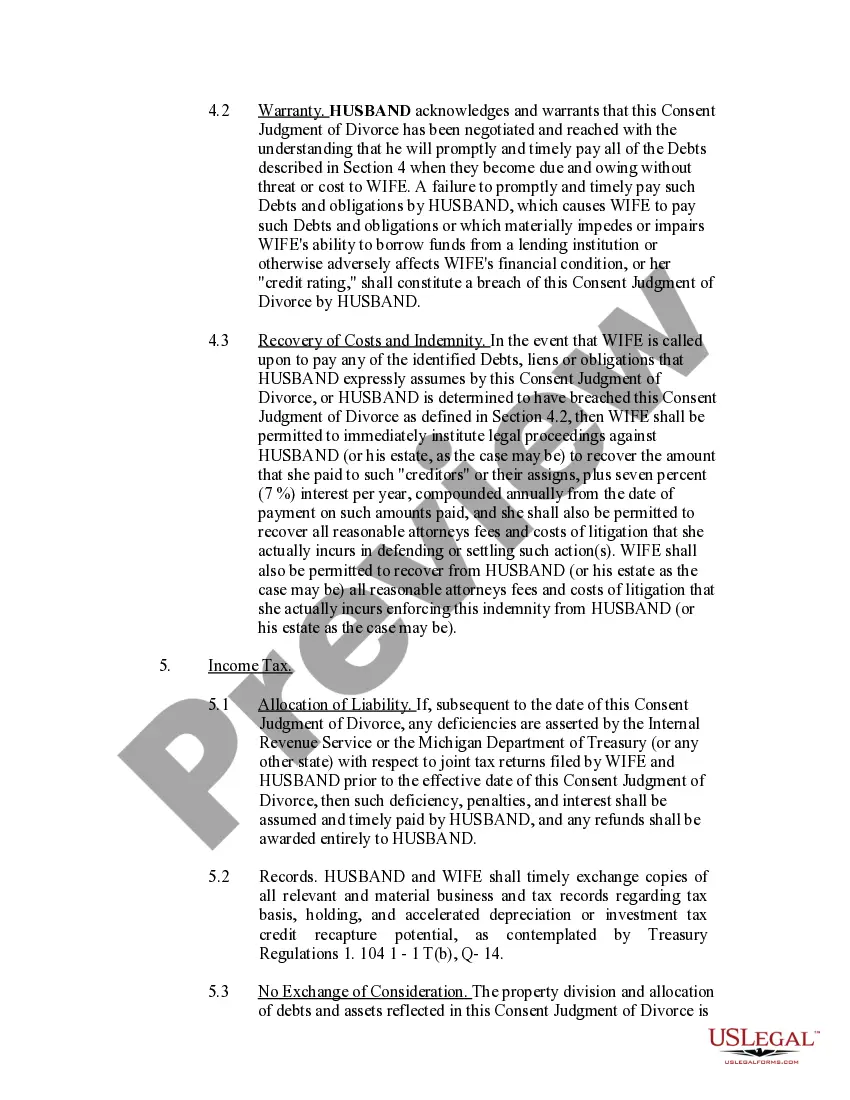
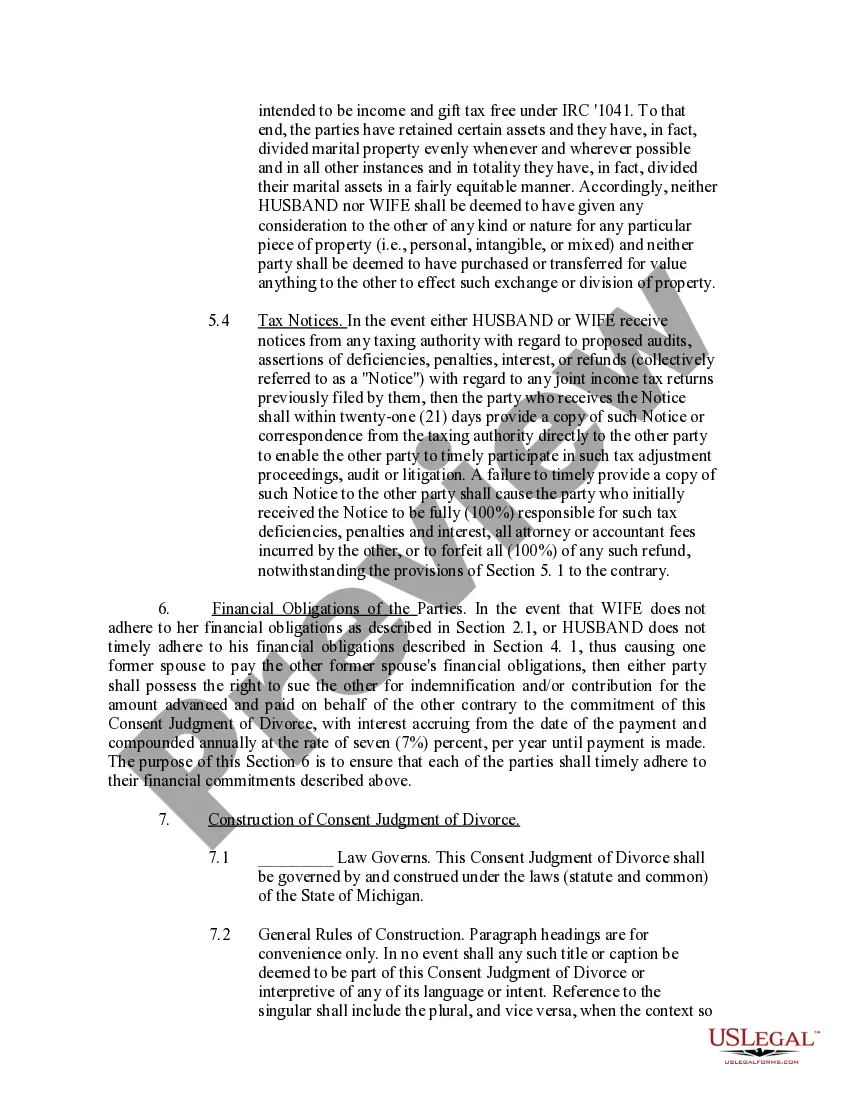
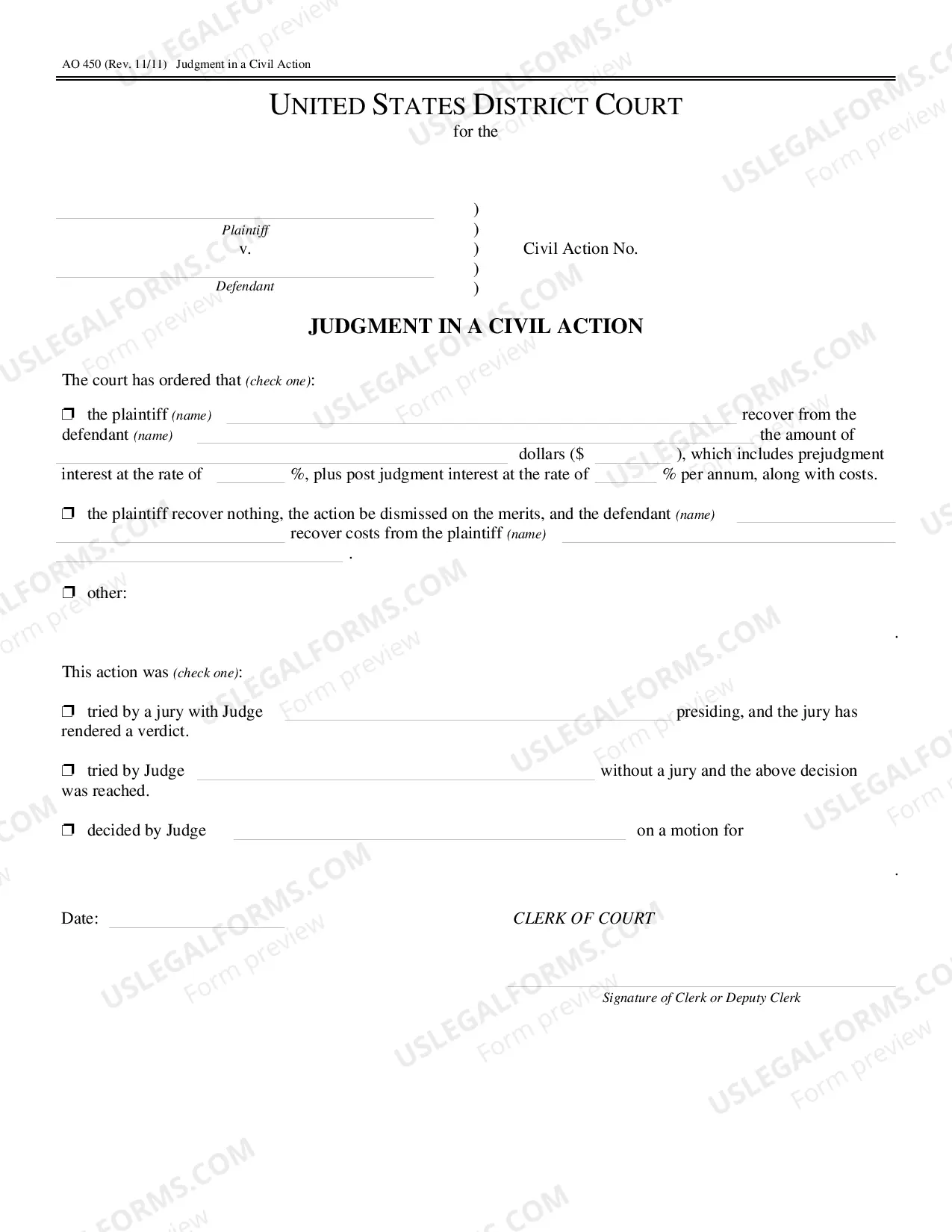
The Consent Judgment of Divorce is a legal document that formalizes the dissolution of a marriage, outlining the terms agreed upon by both parties. This form serves as a binding agreement that delineates property settlements, alimony obligations, and other pertinent issues resulting from the divorce. It is distinct from a standard divorce decree as it requires mutual consent from both parties on key decisions, ensuring that all terms are clearly defined and agreed upon before the court's approval.
Key components of this form
- Identification of the parties involved: names of the plaintiff and defendant.
- Details regarding the dissolution of the marriage, including the grounds for divorce.
- Terms of any alimony or support obligations, if applicable.
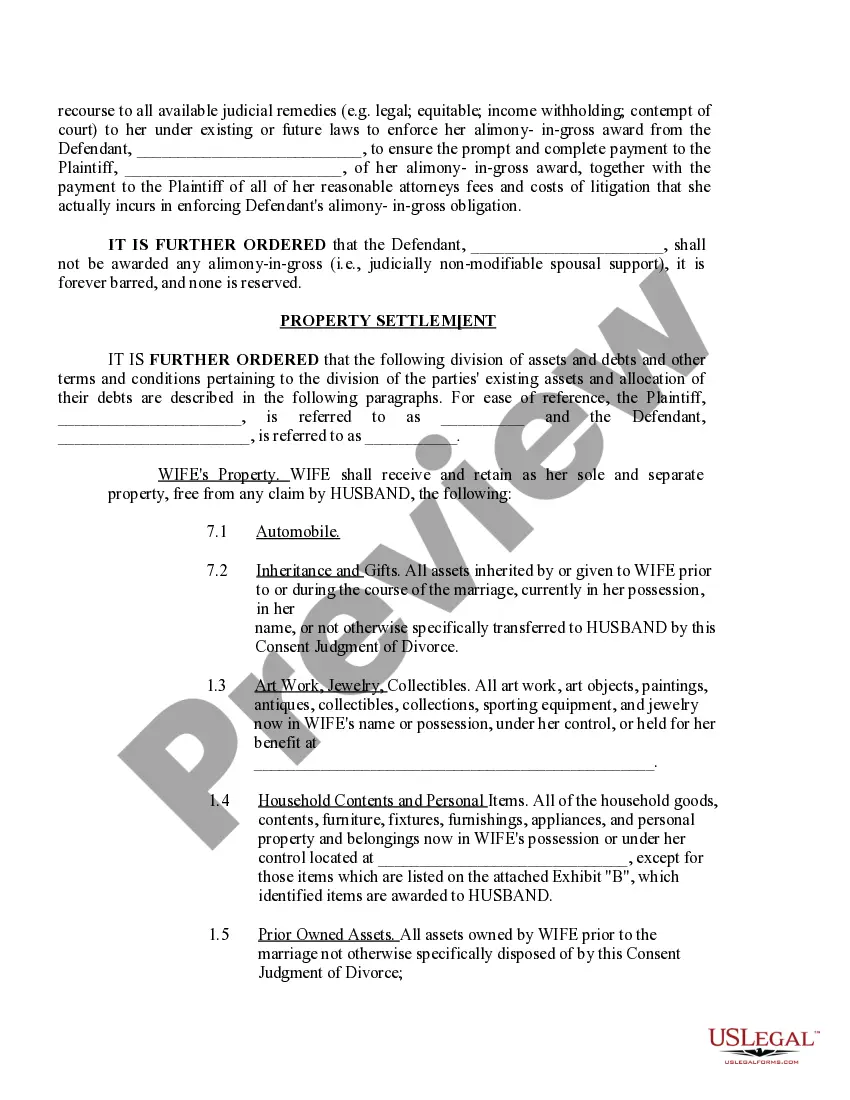
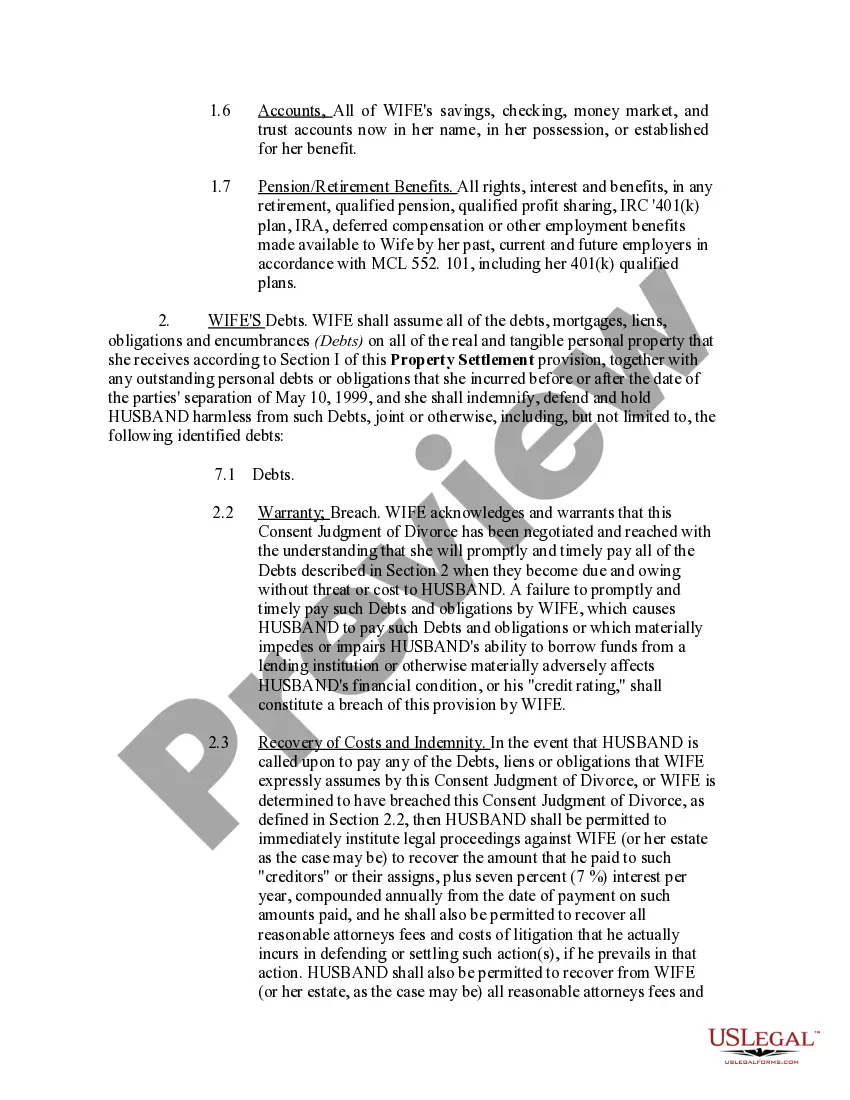
- Division of marital property and debts between the parties.
- Provisions regarding health, retirement benefits, and insurance policies.

When to use this form
This form should be used when both spouses have reached an agreement on all aspects of their divorce, including property division and support obligations. It is appropriate for couples seeking a streamlined and amicable separation, avoiding contentious court battles. The Consent Judgment of Divorce solidifies their mutually agreed terms, which can then be presented for court approval.
Who needs this form
- Couples who are seeking a consensual divorce.
- Individuals who have negotiated terms for asset division and alimony.
- Parties who want to formalize their agreement in the court system to ensure enforceability.
- People seeking an efficient resolution to their divorce without prolonged legal disputes.
Completing this form step by step
- Identify the parties by entering their full names and addresses.
- Specify the reasons for the divorce as stipulated in the complaint.
- Detail any agreements on property division, including specific assets and debts assigned to each party.
- Include terms related to alimony or spousal support, if applicable.
- Both parties must sign and date the document for it to be valid.
Notarization requirements for this form
This form does not typically require notarization unless specified by local law. However, it's always good practice to check with your state's regulations to confirm requirements prior to submission.
Get your form ready online
Our built-in tools help you complete, sign, share, and store your documents in one place.
Make edits, fill in missing information, and update formatting in US Legal Forms—just like you would in MS Word.
Download a copy, print it, send it by email, or mail it via USPS—whatever works best for your next step.
Sign and collect signatures with our SignNow integration. Send to multiple recipients, set reminders, and more. Go Premium to unlock E-Sign.
If this form requires notarization, complete it online through a secure video call—no need to meet a notary in person or wait for an appointment.
We protect your documents and personal data by following strict security and privacy standards.

Make edits, fill in missing information, and update formatting in US Legal Forms—just like you would in MS Word.

Download a copy, print it, send it by email, or mail it via USPS—whatever works best for your next step.

Sign and collect signatures with our SignNow integration. Send to multiple recipients, set reminders, and more. Go Premium to unlock E-Sign.

If this form requires notarization, complete it online through a secure video call—no need to meet a notary in person or wait for an appointment.

We protect your documents and personal data by following strict security and privacy standards.
Typical mistakes to avoid
- Not fully disclosing all assets and debts during negotiations.
- Failure to have both parties sign the document, making it unenforceable.
- Leaving out specific terms regarding alimony or property division.
- Using outdated forms that do not reflect current legal standards.
Why use this form online
- Convenience of downloading the form at any time.
- Editability allows you to customize the form according to your situation.
- Access to forms drafted by licensed attorneys, ensuring compliance with legal standards.
- Quick completion and ability to print or store the form digitally.
Looking for another form?
Form popularity
FAQ
A default judgment generally means that the party who initiated the case gets the relief they requested. This means that if a party filed for a divorce, they would get the divorce.
Find the Default Request and Entry form that was prepared when you used the Do-It-Yourself Divorce tool. Enter your case number and the name of the assigned judge in the top right corner of the form. Take the Default Request and Entry form to the court clerk's office. The clerk will sign the form, entering the default.
Answer only. An "Answer" tells the judge and your spouse what parts of the complaint you agree with and disagree with. Answer with a Counterclaim.
Find the Default Request and Entry form that was prepared when you used the Do-It-Yourself Divorce tool. Enter your case number and the name of the assigned judge in the top right corner of the form. Take the Default Request and Entry form to the court clerk's office. The clerk will sign the form, entering the default.
The Judgment of divorce is the document that gets you divorced. It contains the division of property, standard paragraphs, the paragraph granting the divorce, etc. A proposed judgment means the judgment you want entered. So you are proposing the terms in the judgment you have prepared.
To participate in the case, you must file an answer to the divorce complaint by the deadline on the summons. This is 21 days from the date of service if you were served personally (handed the papers) or 28 days from the date of service if you were served by mail or while you were outside of Michigan.
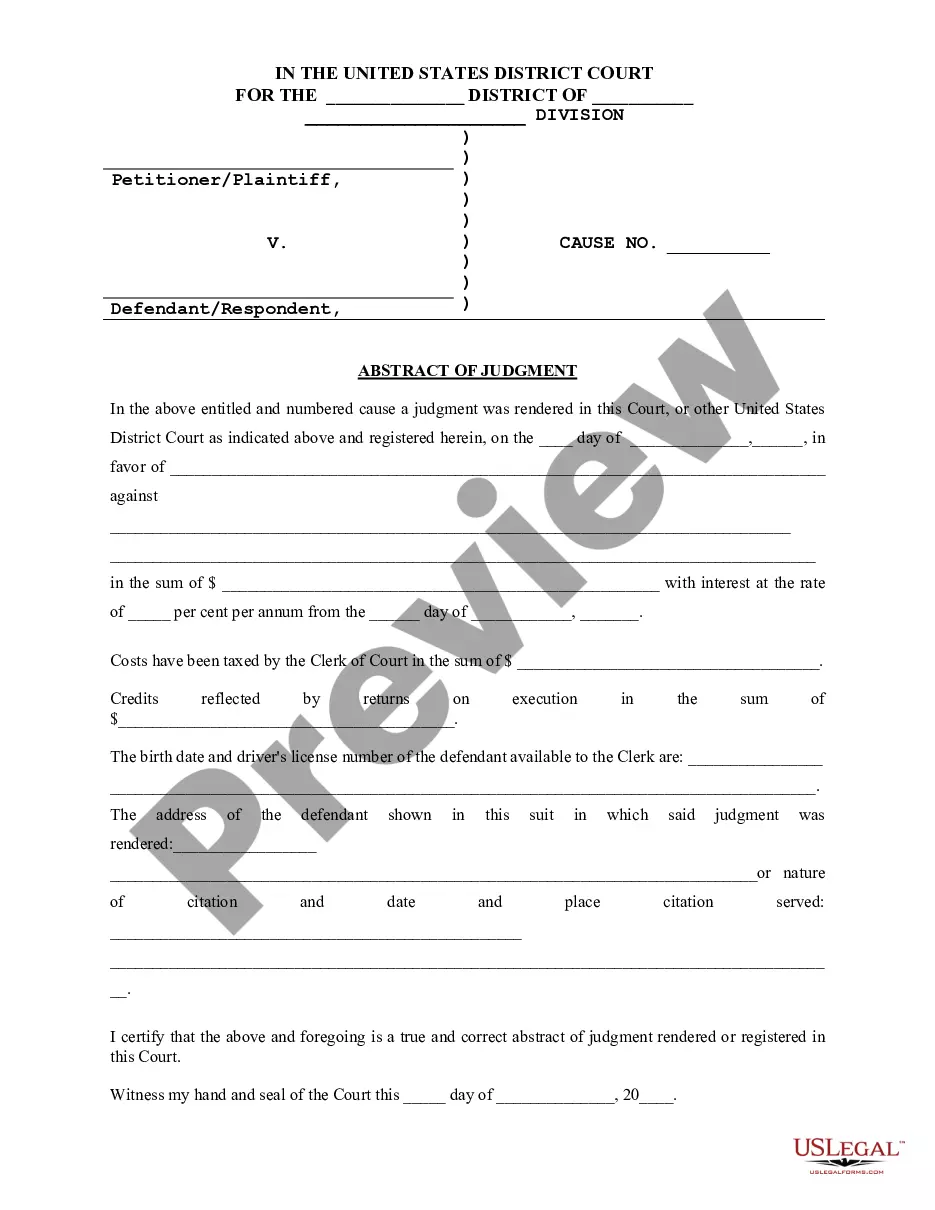
In short, the judgment is the final divorce document which outlines the resolution of all legal issues in the case (disputed and agreed-upon). It is vital to consult with an experienced family law attorney before signing any judgment paperwork or filing your judgment with the court.
Accept the judgment. Settle the judgment for less. Challenge the judgment. Pursue debt relief.
A very important fact you should keep in mind is that California courts do impose a timeline for seeking entry of a default judgment. Specifically, a request for entry of default must be filed within 10 days following a defendant's failure to timely file and serve a responsive pleading.