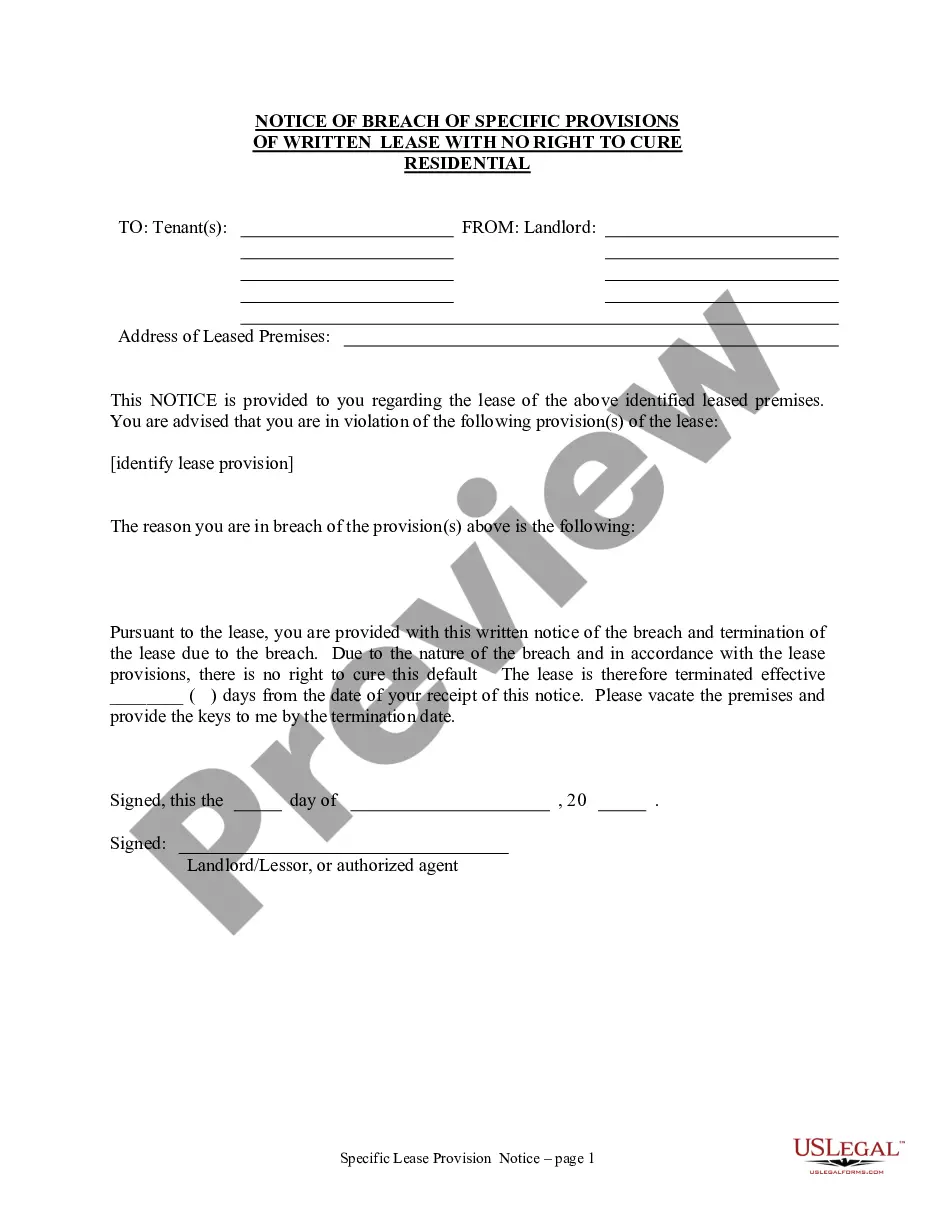
Kansas Last Will and Testament for Married Person with Adult and Minor Children
About this form
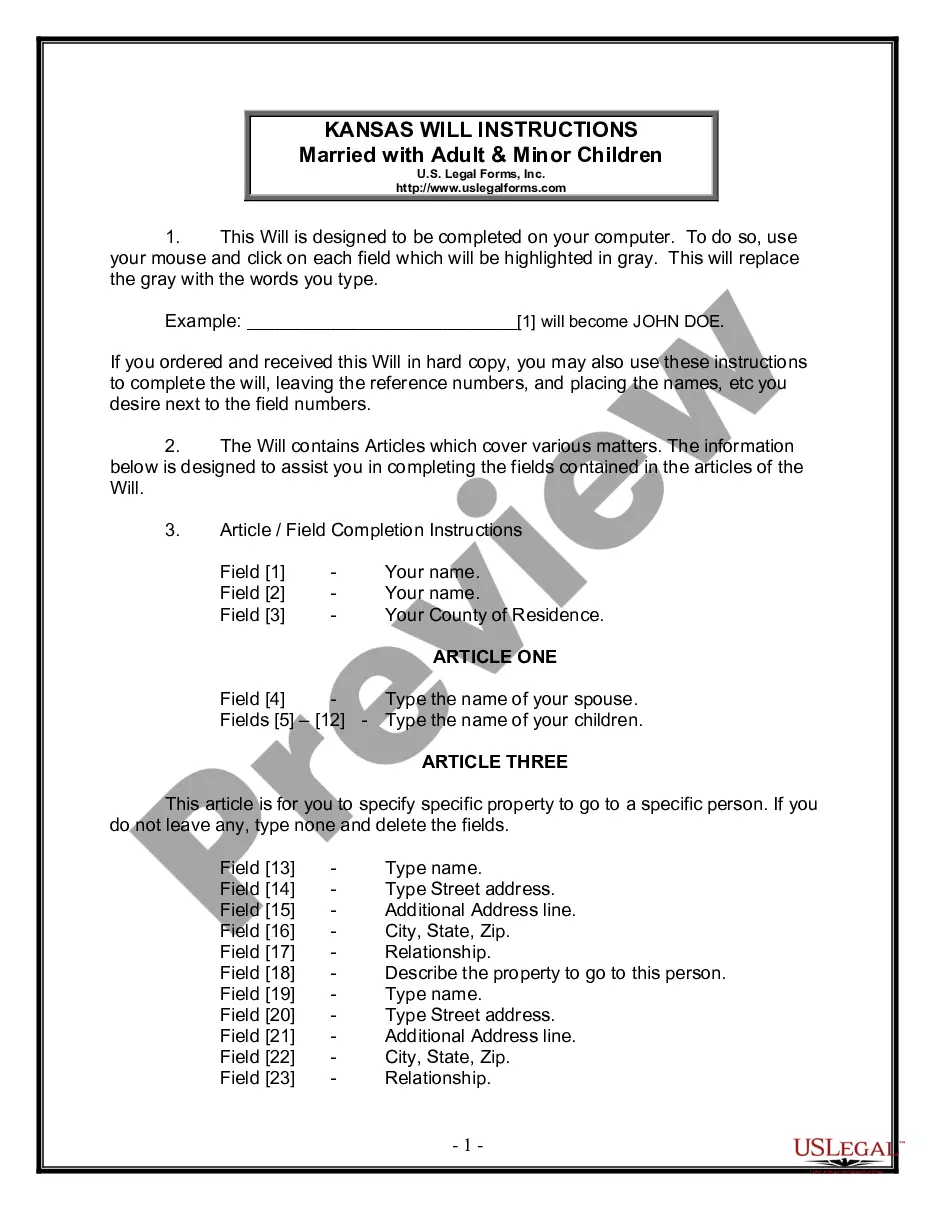
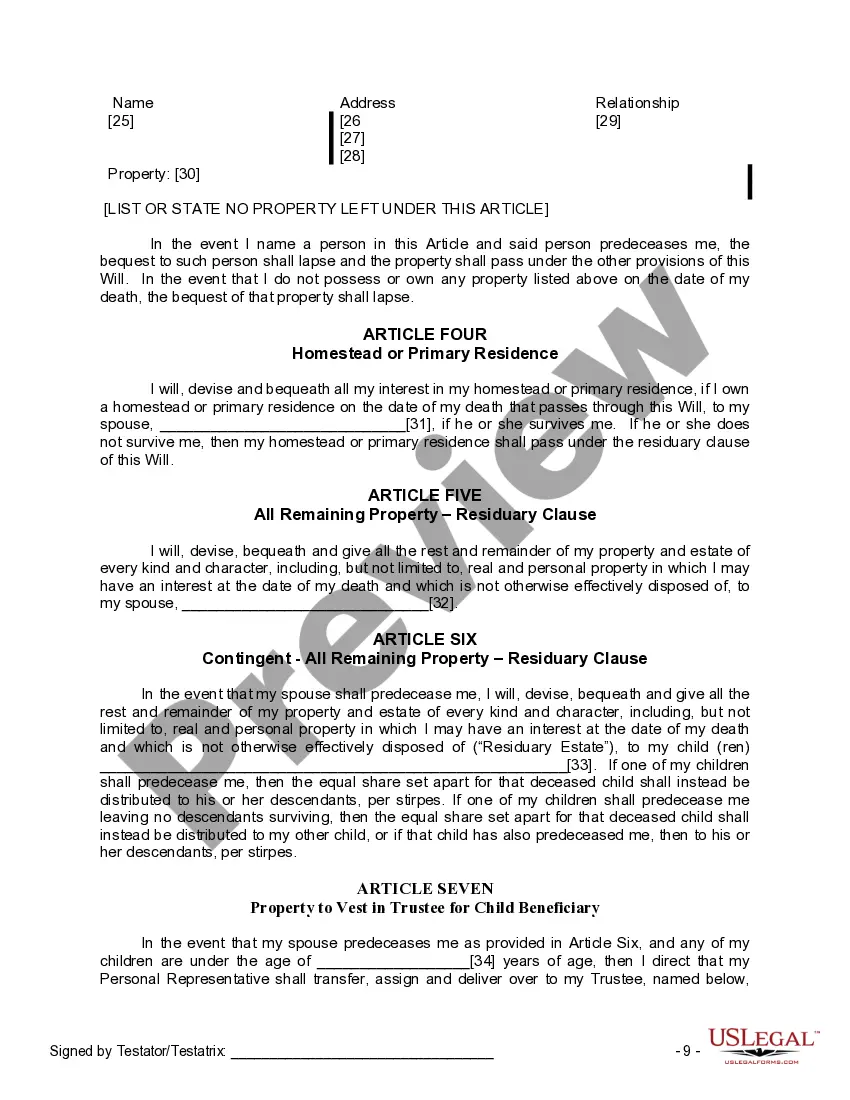
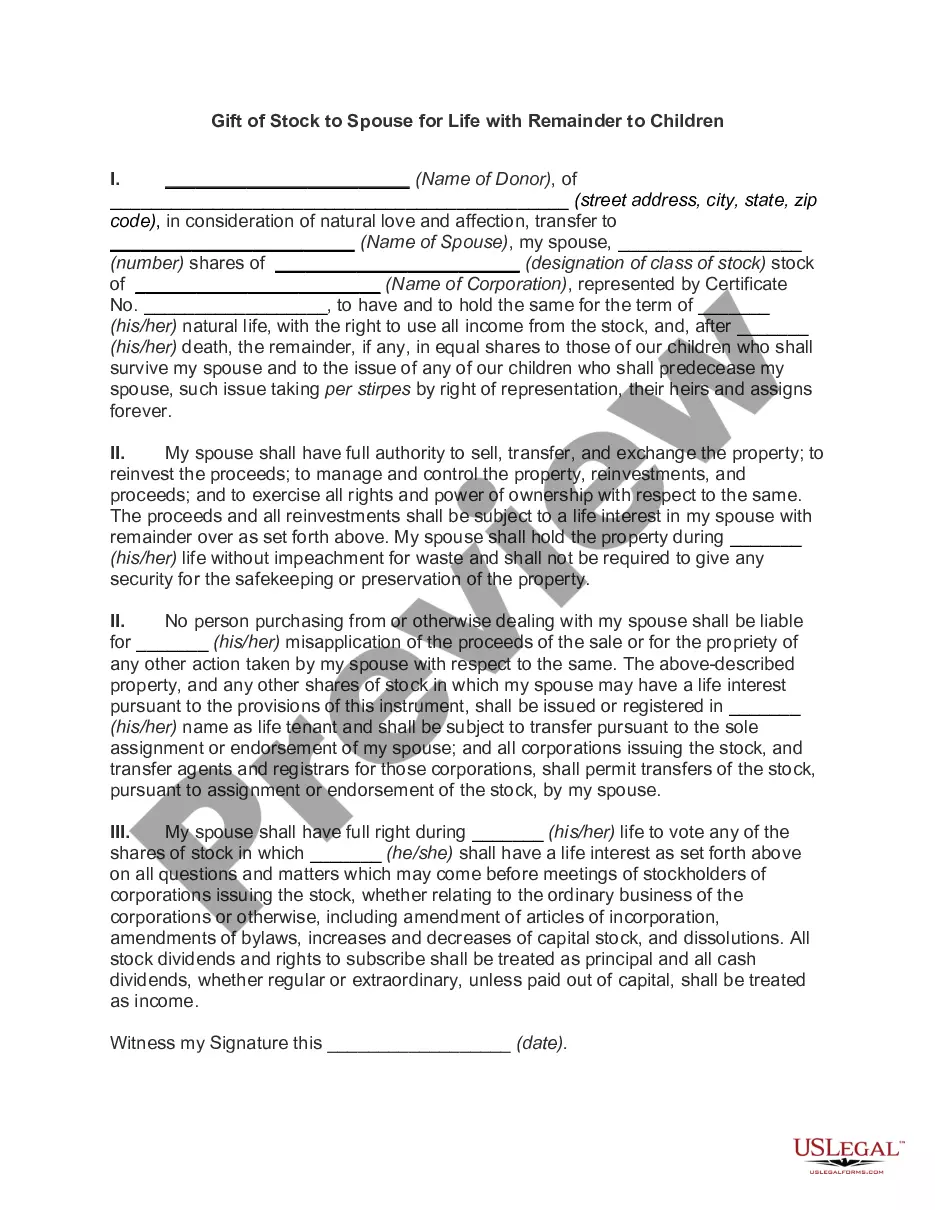
This Last Will and Testament for a Married Person with Adult and Minor Children is a legal document that outlines how your assets will be distributed upon your passing. It allows you to specify beneficiaries, appoint a personal representative or executor, and make provisions for your spouse and children. This form ensures that your wishes are legally recognized and carried out, setting it apart from simpler wills that might not adequately address complex family dynamics or minor childrenâs needs.
Form components explained
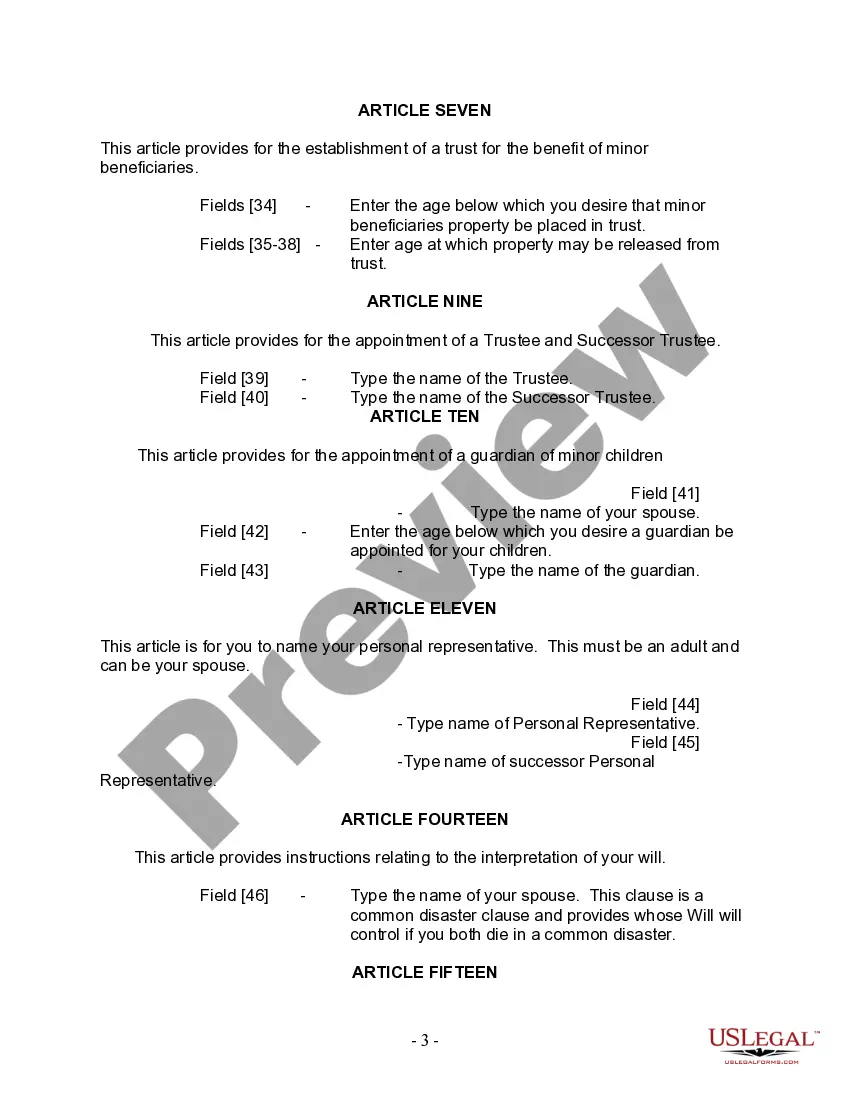
- Appointment of a personal representative to manage your estate
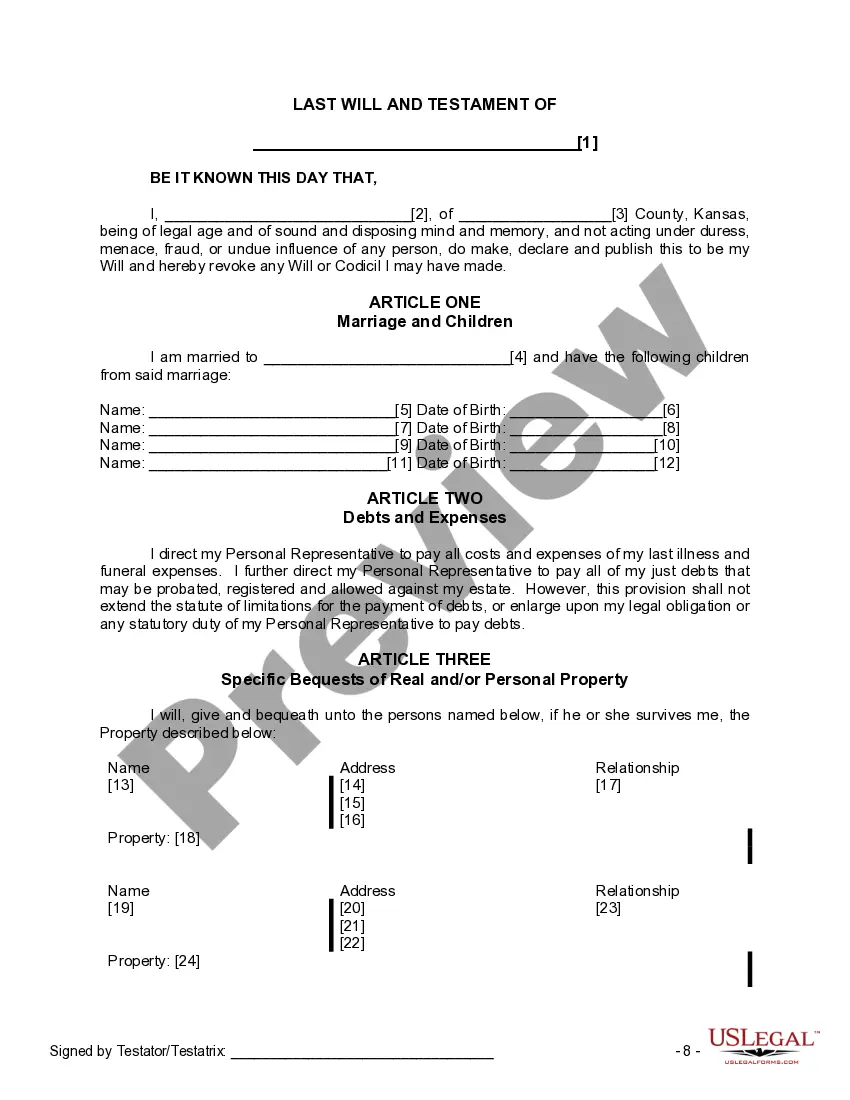
- Declaration of marriage and identification of children
- Provisions for debts and expenses to be paid from the estate
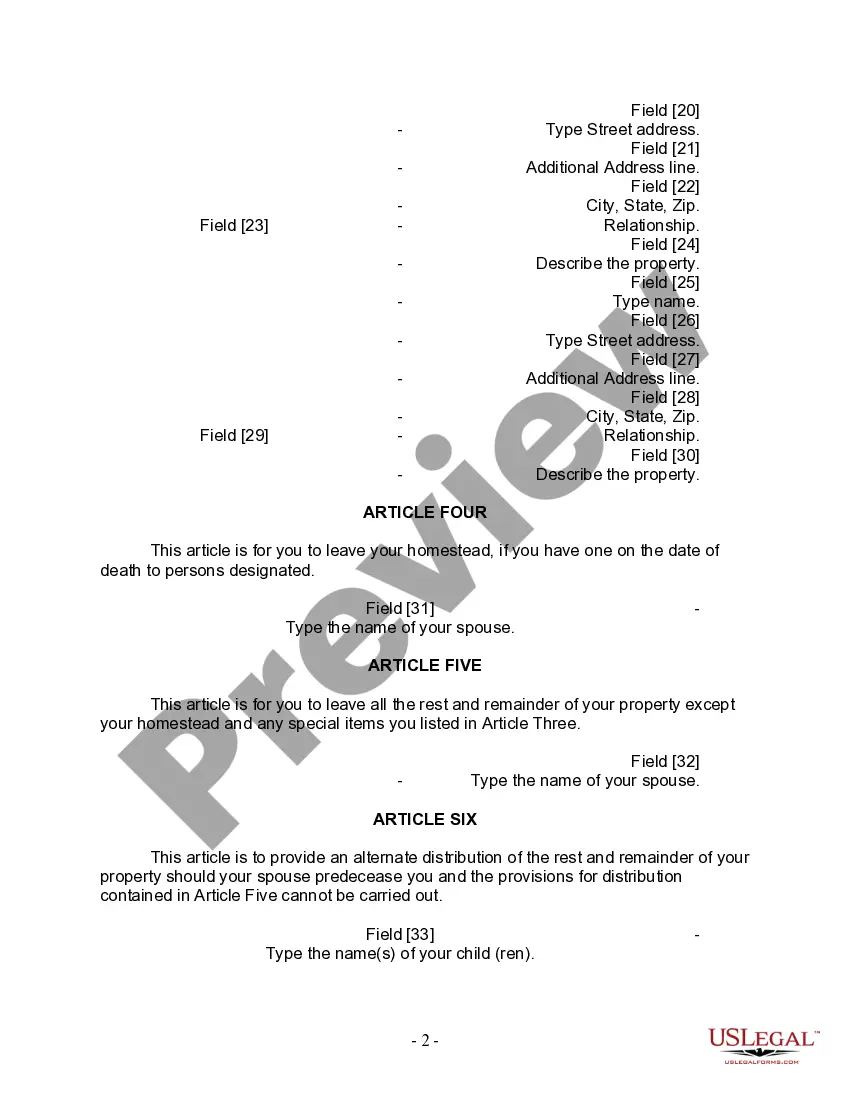
- Specific bequests of property to named beneficiaries
- Residuary clause that describes how remaining assets are distributed
- Establishment of a trust for minor children's inheritance
- Appointment of a guardian for minor children if necessary

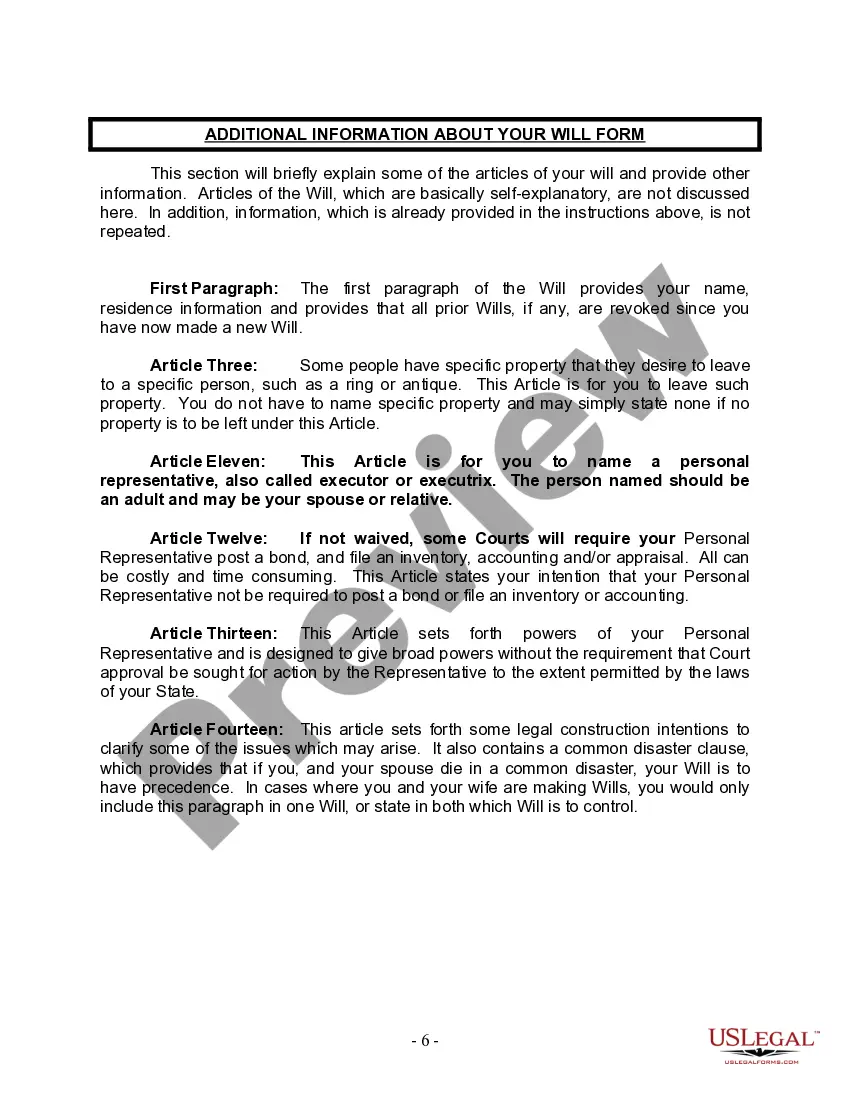
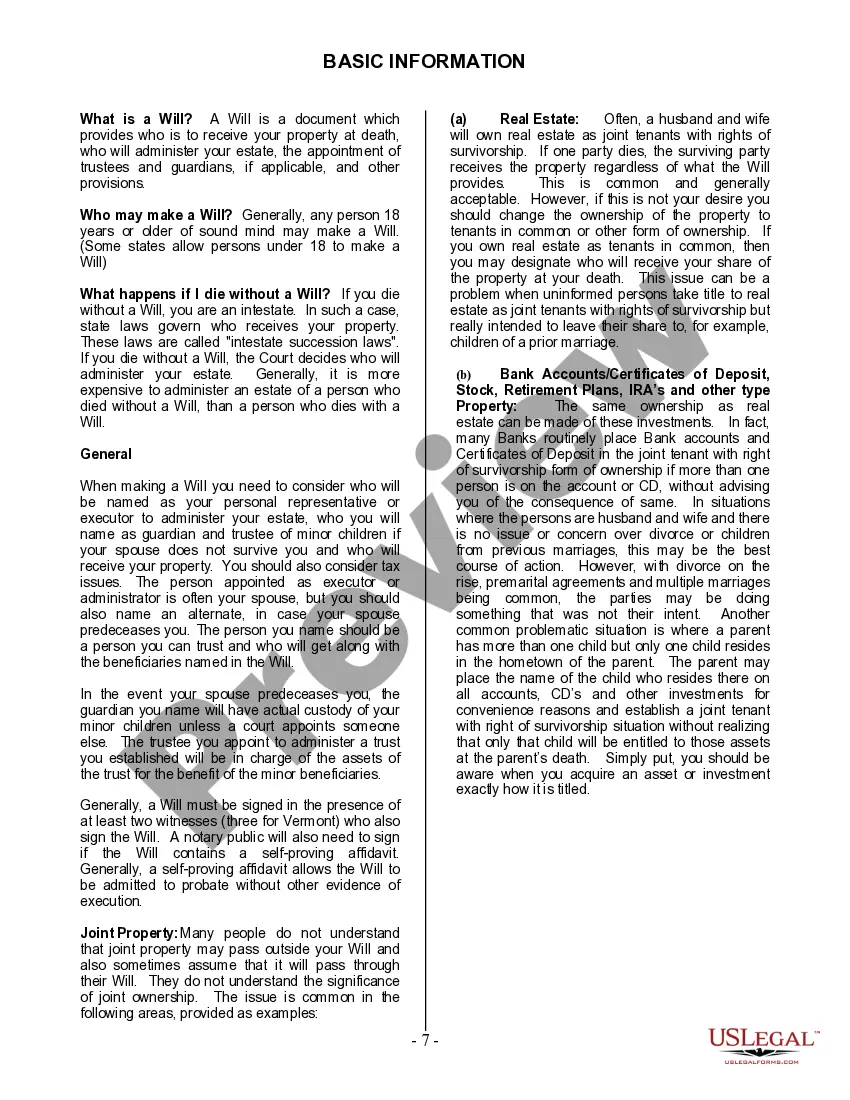






When to use this form
Use this Last Will and Testament when you are a married person with both adult and minor children and wish to clearly outline your intentions for asset distribution after your death. This form is particularly important if you want to ensure that your spouse is provided for, that your children's needs are met, and that your wishes regarding guardianship are explicit.
Who should use this form
- Married individuals with children, both adults and minors
- Individuals looking to ensure their family's future financial security
- Those who want to specify guardianship for minor children
- Anyone who has distinctive wishes regarding the distribution of their estate
Steps to complete this form
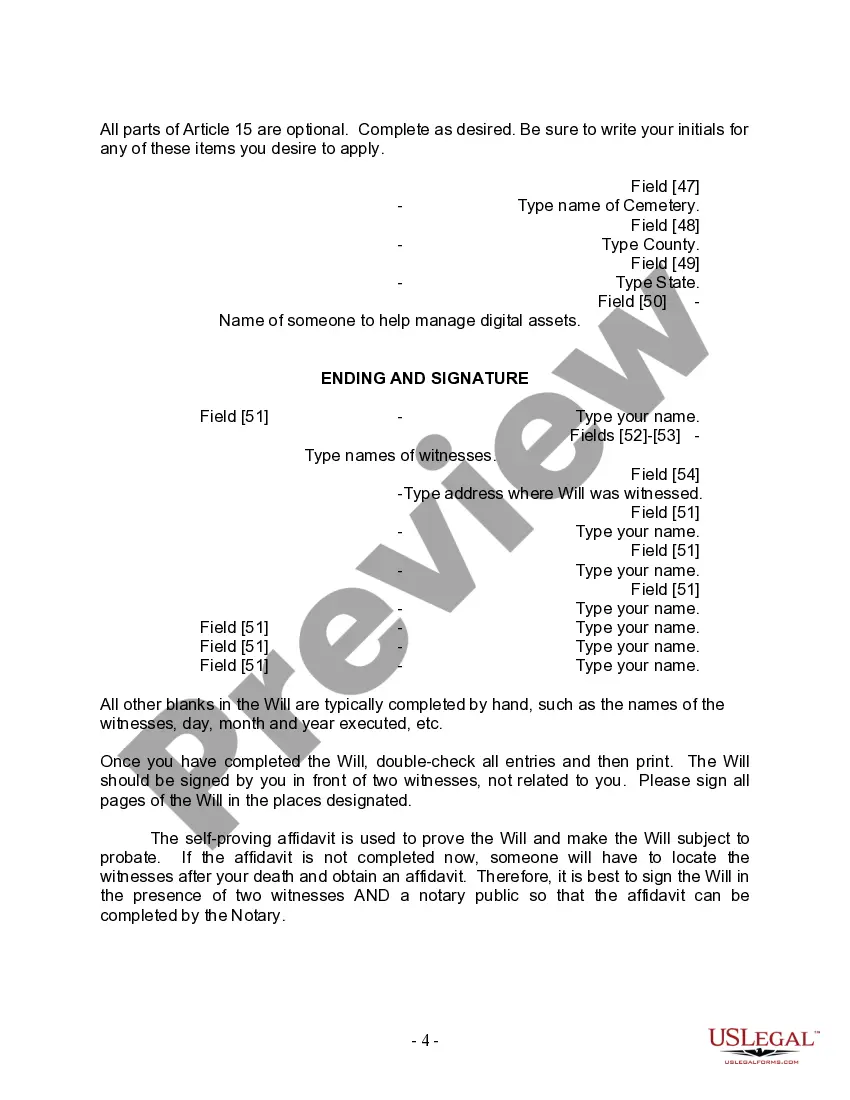
- Identify yourself and your residence in the initial declaration.
- Clearly state your marital status and list your children, including their names and birth dates.
- Designate your personal representative and any successor, if applicable.
- Specify any specific bequests of property and clearly identify each beneficiary.
- Indicate any applicable trust provisions for minors and the age at which they will receive their inheritance.
- Sign the will in front of the required witnesses and ensure they sign as well.
Does this form need to be notarized?
Yes, this form must be notarized to be legally valid in Kansas if you choose to include the self-proving affidavit. This process can be easily completed through US Legal Formsâ integrated online notarization, offering secure video calls and legal equivalence without the need for travel.
Get your form ready online
Our built-in tools help you complete, sign, share, and store your documents in one place.
Make edits, fill in missing information, and update formatting in US Legal Forms—just like you would in MS Word.
Download a copy, print it, send it by email, or mail it via USPS—whatever works best for your next step.
Sign and collect signatures with our SignNow integration. Send to multiple recipients, set reminders, and more. Go Premium to unlock E-Sign.
If this form requires notarization, complete it online through a secure video call—no need to meet a notary in person or wait for an appointment.
We protect your documents and personal data by following strict security and privacy standards.

Make edits, fill in missing information, and update formatting in US Legal Forms—just like you would in MS Word.

Download a copy, print it, send it by email, or mail it via USPS—whatever works best for your next step.

Sign and collect signatures with our SignNow integration. Send to multiple recipients, set reminders, and more. Go Premium to unlock E-Sign.

If this form requires notarization, complete it online through a secure video call—no need to meet a notary in person or wait for an appointment.

We protect your documents and personal data by following strict security and privacy standards.
Typical mistakes to avoid
- Failing to have witnesses sign the document, which invalidates the will.
- Not stating the full names and relationships of beneficiaries, leading to confusion.
- Overlooking the designation of a guardian for minor children.
- Not updating the will after significant life changes (e.g., divorce, new children).
Benefits of using this form online
- Quick and convenient access from anywhere, allowing you to complete the document at your own pace.
- Edit and customize the form to reflect your specific wishes accurately.
- Ensure compliance with the latest legal standards, reducing the risk of errors.
- Access legal guidance during the process for added peace of mind.
Legal use & context
- This Last Will and Testament will help ensure that your estate is distributed according to your wishes.
- It provides legal protections for your spouse and children by delineating property rights clearly.
- Failure to have a will can result in intestate succession, where the state determines how your assets are allocated, which may not align with your desires.
Main things to remember
- A will is crucial for distribution of your estate, especially when you have minor children.
- This form provides specific clauses to appoint guardians and set up trusts for minor children.
- Ensure that the will is properly witnessed and notarized for legal enforcement.
- Regularly review and update your will as life events occur.
Looking for another form?
Form popularity
FAQ
Create the initial document. Start by titling the document Last Will and Testament" and including your full legal name and address. Designate an executor. Appoint a guardian. Name the beneficiaries. Designate the assets. Ask witnesses to sign your will. Store your will in a safe place.
It must be in writing. Generally, of course, wills are composed on a computer and printed out. The person who made it must have signed and dated it. A will must be signed and dated by the person who made it. Two adult witnesses must have signed it. Witnesses are crucial.
Legal Requirements A will is valid in Kansas only if it is in writing and signed at the final draft by the testator, or by a proxy who has been directed by the testator to sign it. The will also needs to be signed by two witnesses who have seen the testator sign the will or have heard the acknowledgement of the will.
For a will to be valid, the testator must be of sound mind. Generally, this means that the testator must be an adult, 18 or older, and be conscious and aware of what they are doing. Some states also require that the testator have an understanding of the disposition of the assets in the document.
There are four main requirements to the formation of a valid will: The will must have been executed with testamentary intent;The will must have been executed free of fraud, duress, undue influence or mistake; and. The will must have been duly executed through a proper ceremony.
Once the will is determined to be valid, the next step is the probate process. Probate proceedings are usually only required if the deceased person owned any assets in their name only.Kansas has not adopted the Uniform Probate Code.
Fraud or Undue Influence A nonfamily caregiver forcing the testator to leave them an inheritance. A family member getting the testator to sign a will by pretending it is just a general legal document that needs a signature.
§ 59-601. In Kansas, your will affects the property you own at the time of your death, as well as any property your estate receives after your death.Kansas does not permit holographic (handwritten) wills.
A. You don't have to have a lawyer to create a basic will you can prepare one yourself. It must meet your state's legal requirements and should be notarized.A do-it-yourself will that's poorly drafted can save you money but create a mess for your heirs when you're gone.