• US Legal Forms

Maine Letter from Tenant to Landlord about Landlord's refusal to allow sublease is unreasonable

State:
Maine
Control #:
ME-1074LT
Format:
Word; 
Rich Text
Instant download

This form is part of a form package!

Get all related documents in one bundle, so you don’t have to search separately.

Description

This is a letter from a tenant to the landlord concerning the landlord's refusal to permit tenant to sublease the premises to a sub-tenant. Tenant is also informing the landlord of his/her reserving of legal rights and remedies, should the landlord continue to prevent a lease assignment.


A subtenant is someone who has the right to use and occupy rental property leased by a tenant from a landlord. A subtenant has responsibilities to both the landlord and the tenant. A tenant must often get the consent of the landlord before subletting rental property to a subtenant. The tenant still remains responsible for the payment of rent to the landlord and any damages to the property caused by the subtenant, unless the landlord agrees to release the tenant from liability.


Generally, to evict a roommate, you must be the original tenant (or the one who has signed a lease or rental agreement with the landlord), and the roommate you want to evict must be your landlord's subtenant. A subtenant is usually someone who is renting part of your place from you and paying rent to you instead of your landlord. In this relationship, you are the "landlord" and your roommate is your "tenant."


A tenant acting in the capacity of a landlord who resides in the same rental unit with his or her subtenant may be able to evict said subtenant without just cause, as required under some local landlord-tenant laws, which vary by locality. Depending on local law, a master tenant must give written notice to the subtenant a certain number of says in advance of eviction. If the subtenant doesn't leave, it may be necessary to file an unlawful detainer lawsuit.


Under some local laws, a tenant who subleases his or her rental unit may charge no more rent upon initial occupancy of the subtenants than that rent which the tenant is currently paying to the landlord. In other words, a master tenant cannot profit off of their landlord's property.
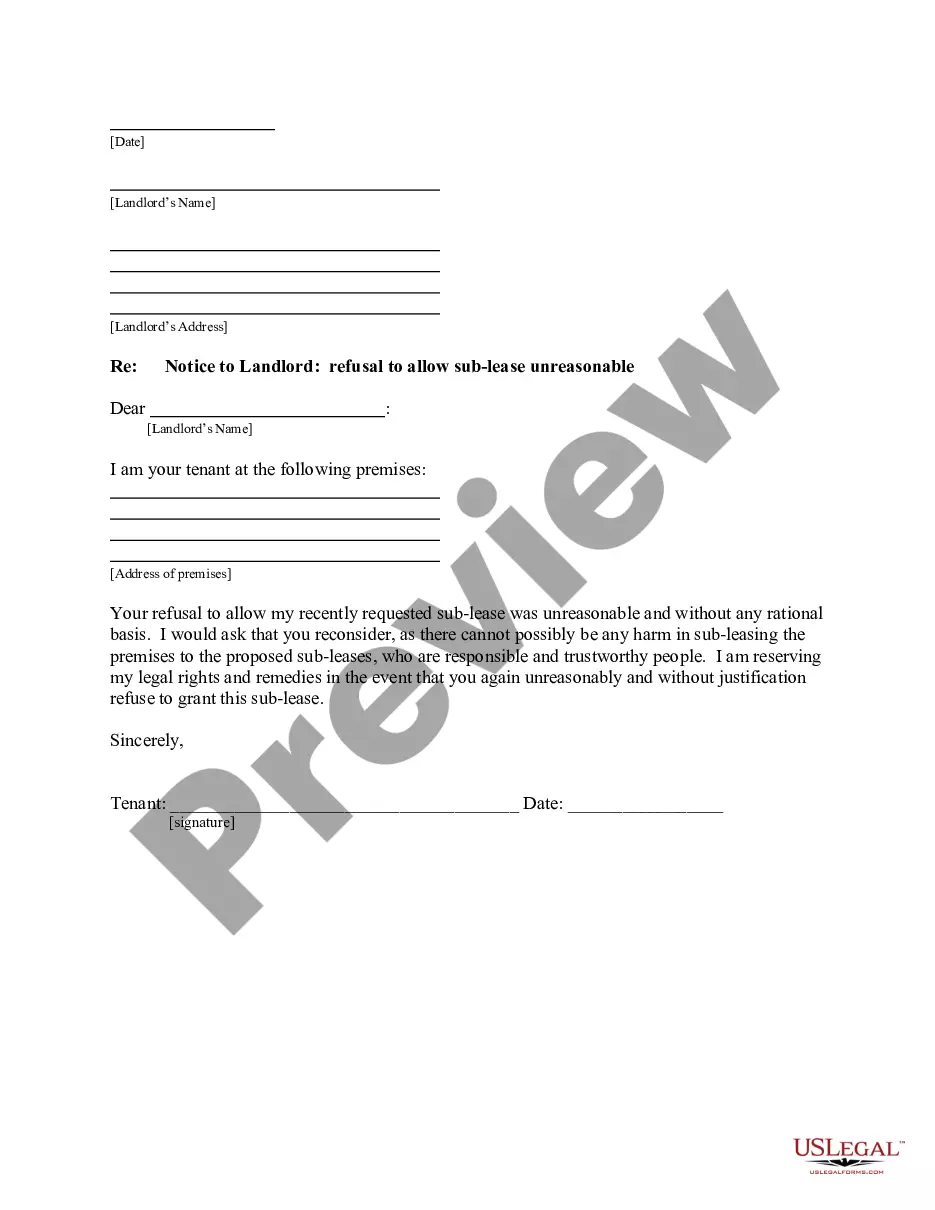
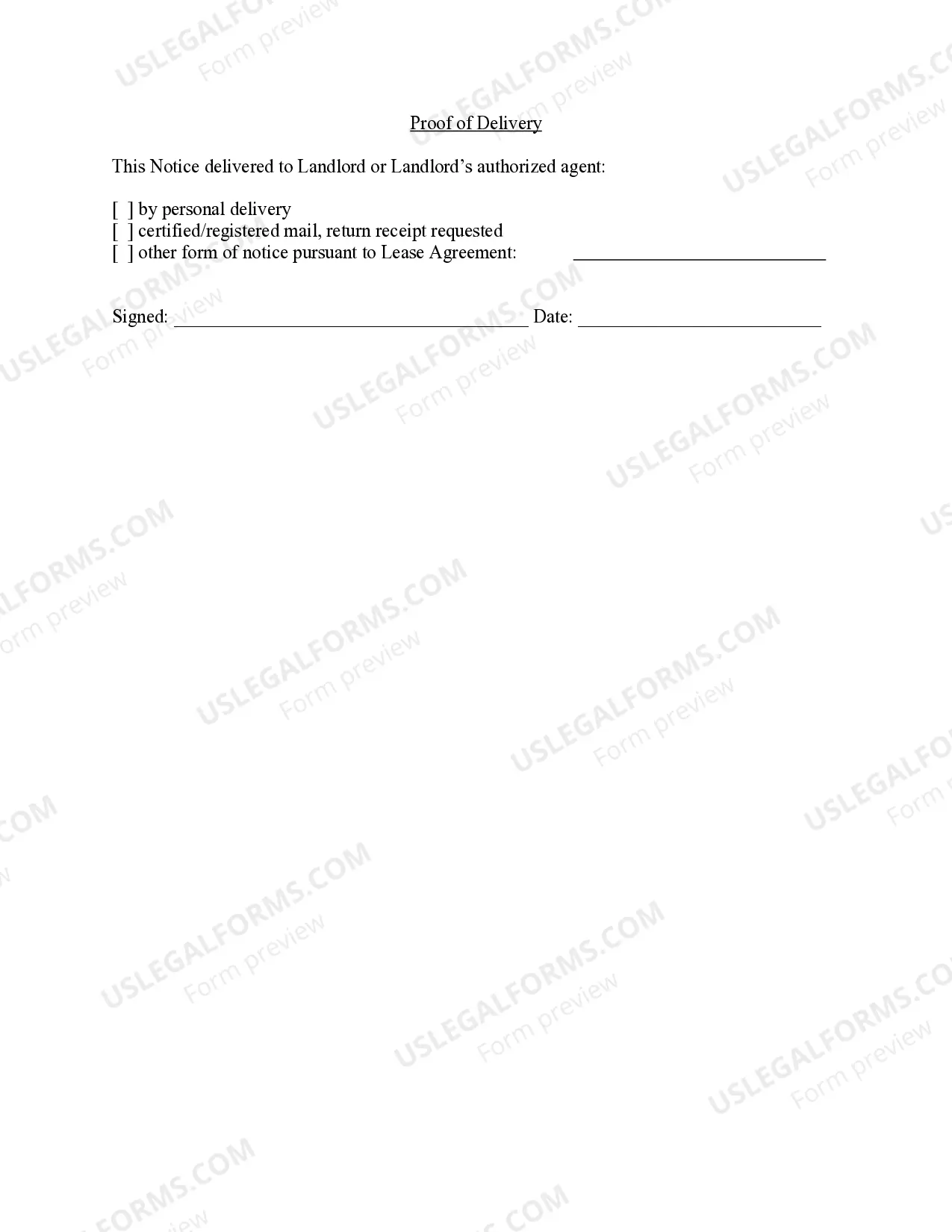
Free preview
  • Preview Letter from Tenant to Landlord about Landlord's refusal to allow sublease is unreasonable
  • Preview Letter from Tenant to Landlord about Landlord's refusal to allow sublease is unreasonable

How to fill out Maine Letter From Tenant To Landlord About Landlord's Refusal To Allow Sublease Is Unreasonable?

You are invited to the most extensive legal documents repository, US Legal Forms. Here you will discover various examples including Maine Letter from Tenant to Landlord regarding Landlord's refusal to permit sublease being unreasonable templates and download them (as many as you desire/require). Prepare official documents within a few hours, rather than days or weeks, without needing to spend a fortune on an attorney. Obtain your state-specific form in just a few clicks and be confident knowing that it was created by our state-certified legal experts.

If you’re already a subscribed user, simply Log In to your account and click Download next to the Maine Letter from Tenant to Landlord about Landlord's refusal to allow sublease is unreasonable you want. Since US Legal Forms is web-based, you’ll always have access to your saved documents, regardless of the device you’re using. Locate them inside the My documents section.

If you do not have an account yet, what are you waiting for? Follow our instructions outlined below to get started.

Once you’ve completed the Maine Letter from Tenant to Landlord regarding Landlord's refusal to permit sublease being unreasonable, forward it to your attorney for verification. It’s an extra step but a necessary one for ensuring you’re fully protected. Join US Legal Forms today and gain access to thousands of reusable templates.

  1. If this is a state-specific template, verify its validity in your state.
  2. Review the description (if available) to determine if it’s the appropriate example.
  3. View additional content with the Preview feature.
  4. If the template meets all your requirements, click Buy Now.
  5. To create an account, choose a pricing plan.
  6. Use a credit card or PayPal account to subscribe.
  7. Download the document in the format you need (Word or PDF).
  8. Print the document and fill it out with your/your business’s information.

Form popularity

FAQ

While tenants cannot unreasonably deny access to a landlord, landlords must also follow all of the state and local rules regarding access to tenants' apartments. Roughly half of states have rules governing landlord entry into tenants' apartments.

If a tenant is subletting without consent, it's likely they will have broken terms in their tenancy agreement. This breach of contract means that the landlord can take action to evict them from their home. Possession proceedings can be started quickly, but it's important to follow the correct legal process.

In New South Wales if your housemate is a sub-tenant on an open-ended agreement, they'll likely still have 90 days to vacate the property even after you secure an order to evict them.

A subtenant is not a cotenant and does not have a direct relationship with your landlord. As their landlord, you can (and should) require them to pay rent directly to you and evict them if they fail to follow through. This differs from a cotenant, who can be evicted only by your landlord.

If the tenant refuses, you are permitted to send them a notice to agree or quit the property. The tenant refusing you access constitutes a breach in the lease agreement, so they could be evicted if they continue to deny access.

The subtenant must give a notice of one month in order to terminate the sublease. The subtenant is also required to give reasons for leaving the premises. A sublease can be terminated early if the subtenant is willing to pay the rent until the end of the month and an amount in addition to this.

A Residential Sublease is a legally binding contract made between the original tenant of a rental property (sublandlord) and a new tenant (also known as a subtenant or a sublessee). The sublease gives the subtenant the right to share or to take over the rented premises from the original tenant.

A landlord cannot evict a subtenant.If the landlord really wants the subtenant gone, he would have to terminate your right to sublet the property. This means, he would have to evict you to get rid of the subtenant. If you want to evict a subtenant, and don't want to get your landlord involved.

Trusted and secure by over 3 million people of the world’s leading companies

Maine Letter from Tenant to Landlord about Landlord's refusal to allow sublease is unreasonable