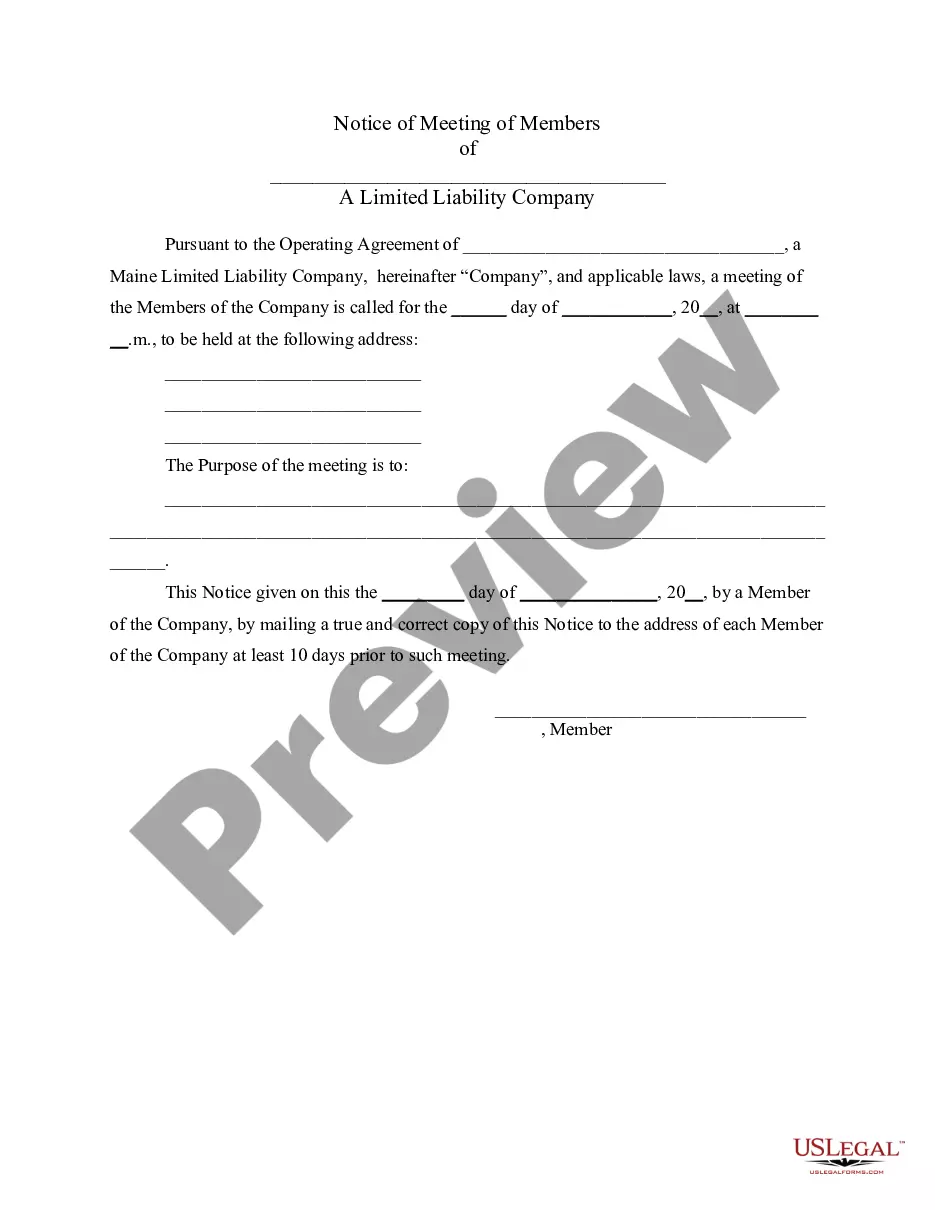
Kansas Last Will and Testament for a Single Person with Minor Children
Overview of this form
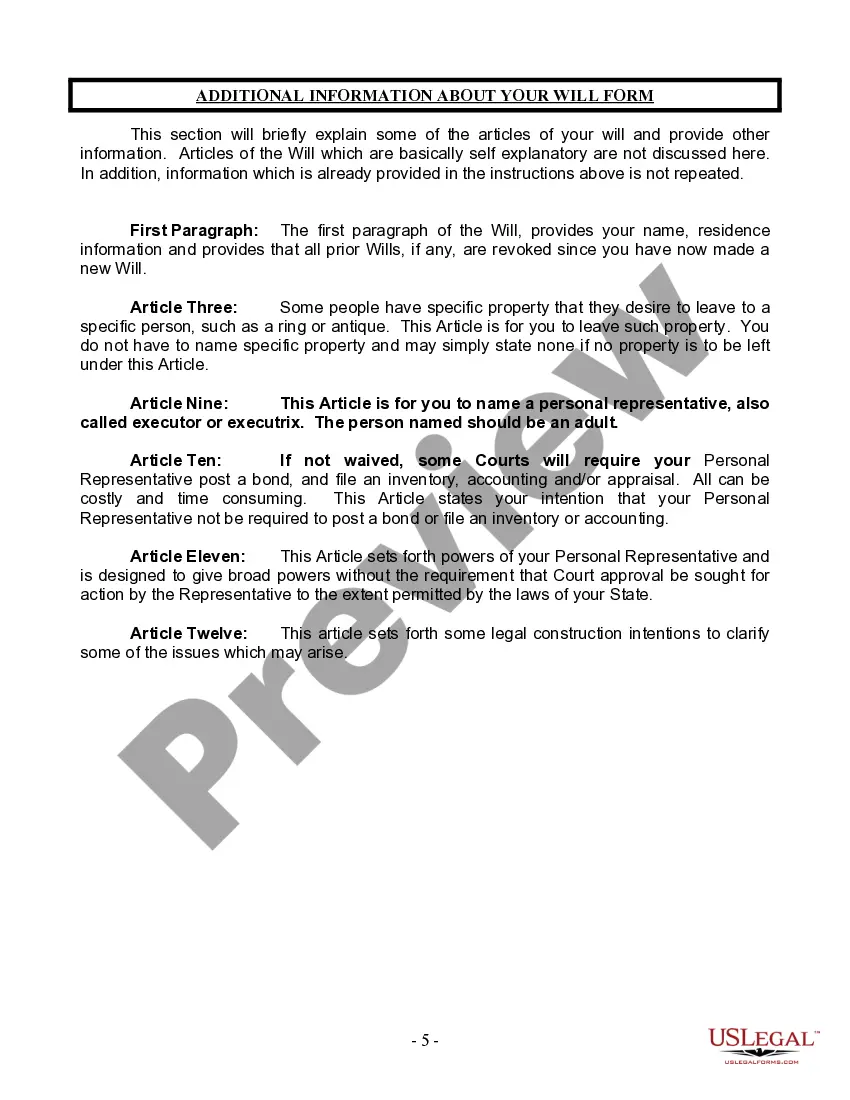
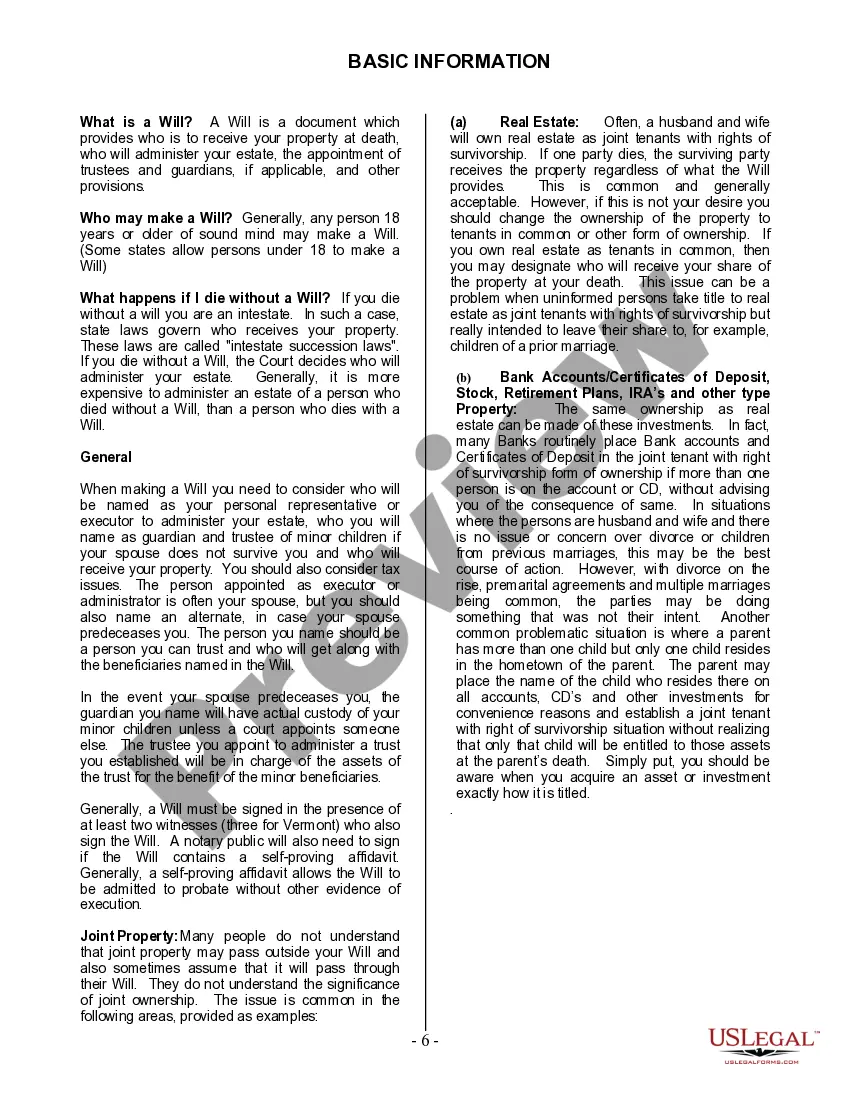
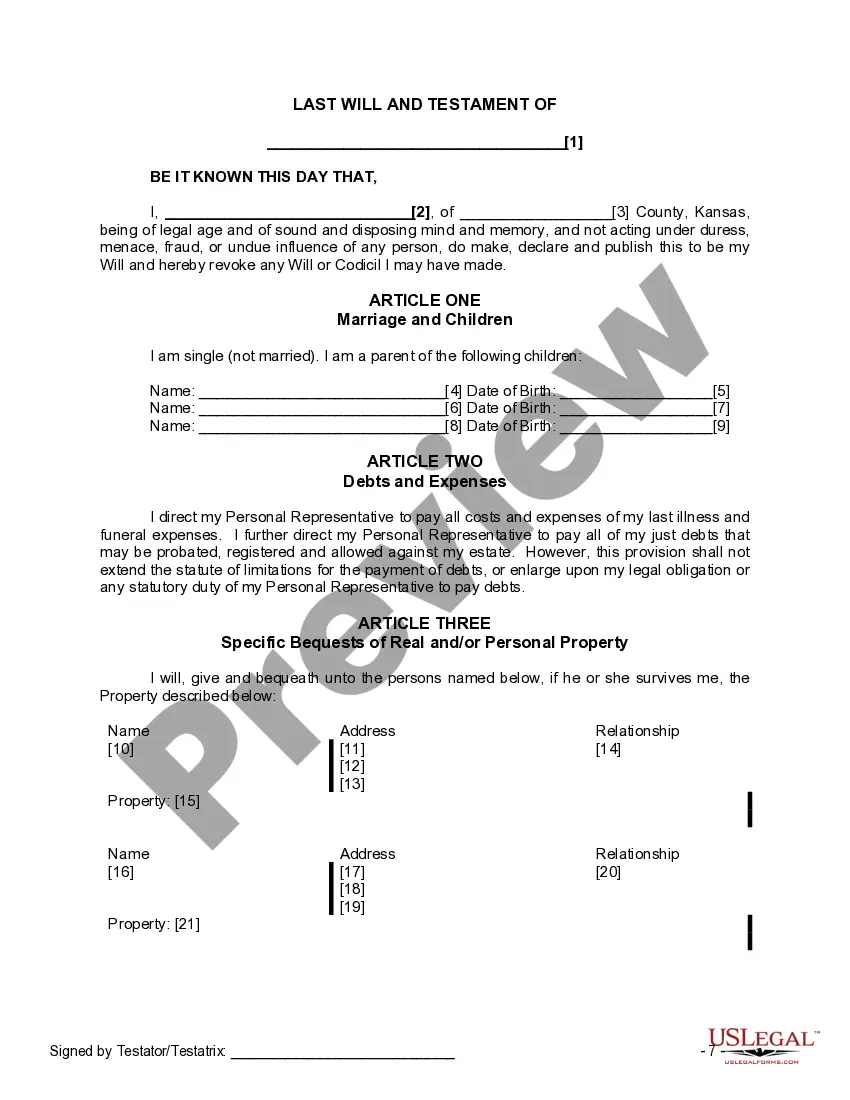
The Last Will and Testament for a Single Person with Minor Children is a legal document tailored for individuals with dependent children. It outlines how your assets will be distributed upon your passing, names a personal representative or executor to manage your estate, and establishes guardianship for your minor children. This form ensures that your wishes regarding inheritance and care for your children are clearly documented and legally binding, differentiating it from Wills designed for individuals without children or with complex family structures.
Key components of this form
- Appointment of a personal representative or executor.
- Designation of beneficiaries for property and assets.
- Sections for specific bequests to individuals.
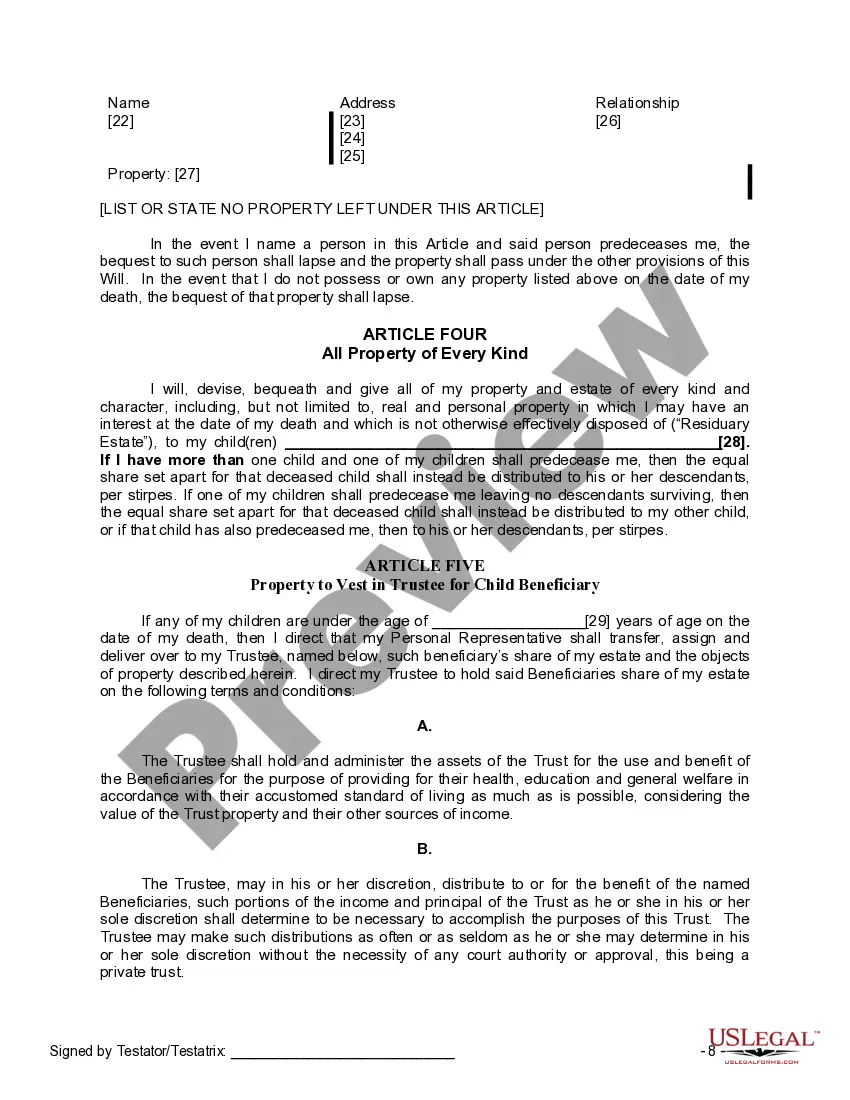
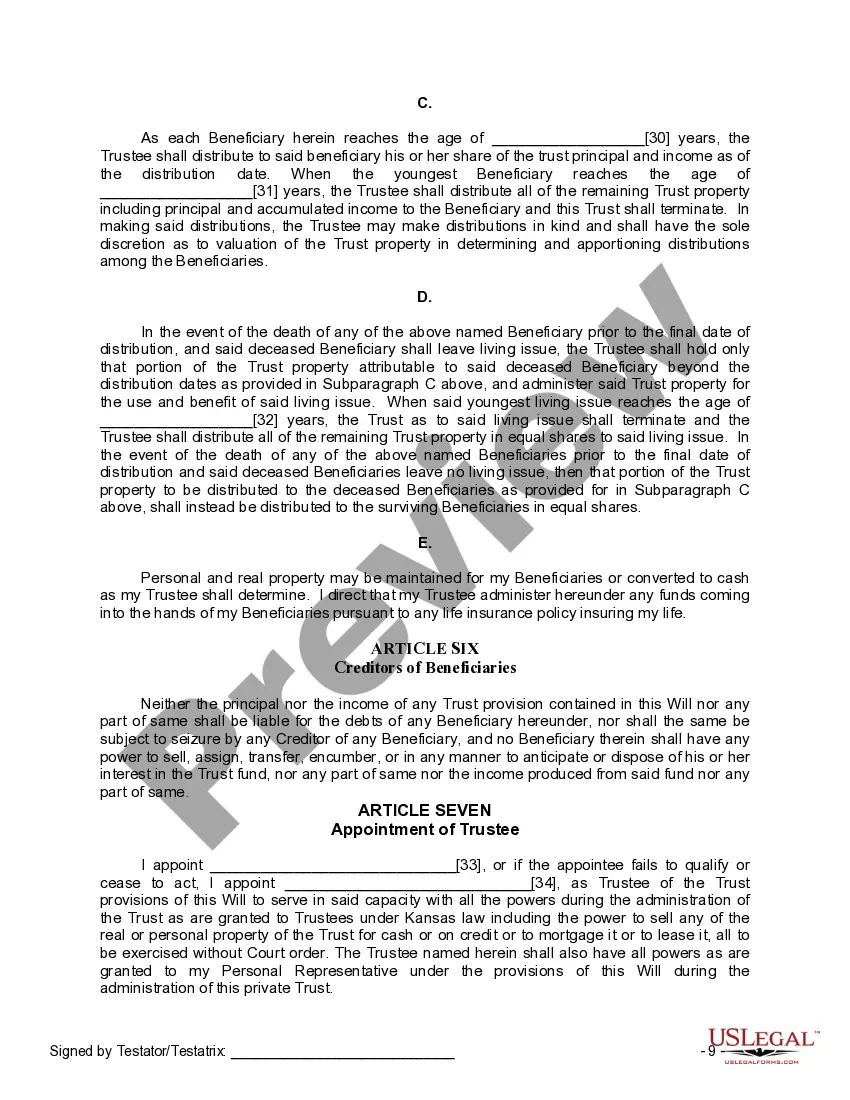
- Trust provisions for minor beneficiaries, allowing for management of assets until they reach a specified age.
- Appointment of guardians for minor children.
- Self-proving affidavit option to facilitate the probate process.







Situations where this form applies
This form should be used when a single parent wants to ensure that their minor children are cared for and provided for after their death. It is particularly important if you wish to legally designate guardians for your children and specify how your assets will be distributed. Use this Will if you do not currently have a valid Will in place or if you have experienced significant life changes, such as the birth of children or acquiring new assets.
Who should use this form
- Single parents with minor children.
- Individuals seeking to designate guardianship for their children.
- Anyone wanting to specify the distribution of their assets to ensure it aligns with their wishes.
- People who have never created a Will before and want to ensure their estate is handled legally and appropriately.
How to prepare this document
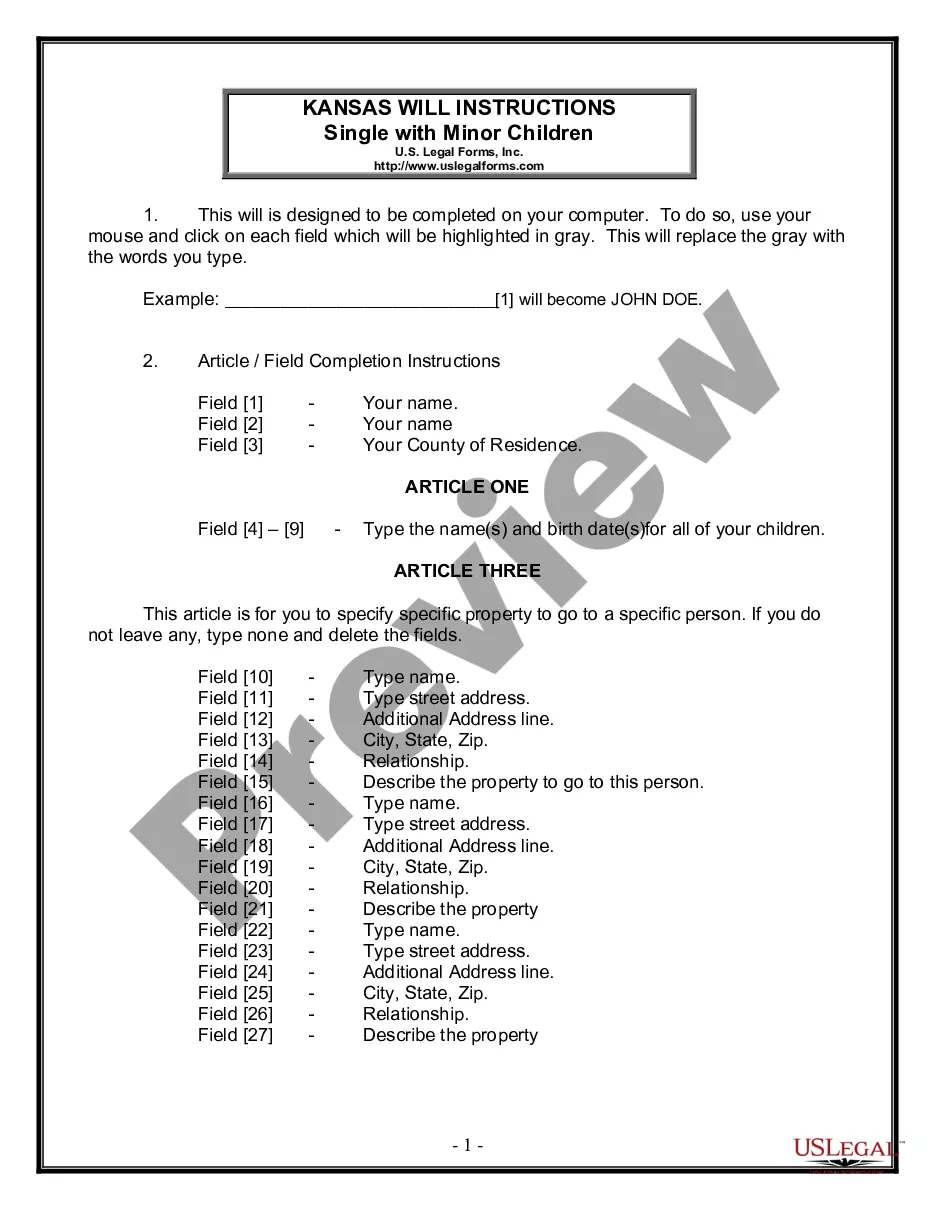
- Enter your full name and county of residence at the top of the form.
- List the names and birth dates of all your minor children.
- Specify any specific property you want to bequeath to particular individuals.
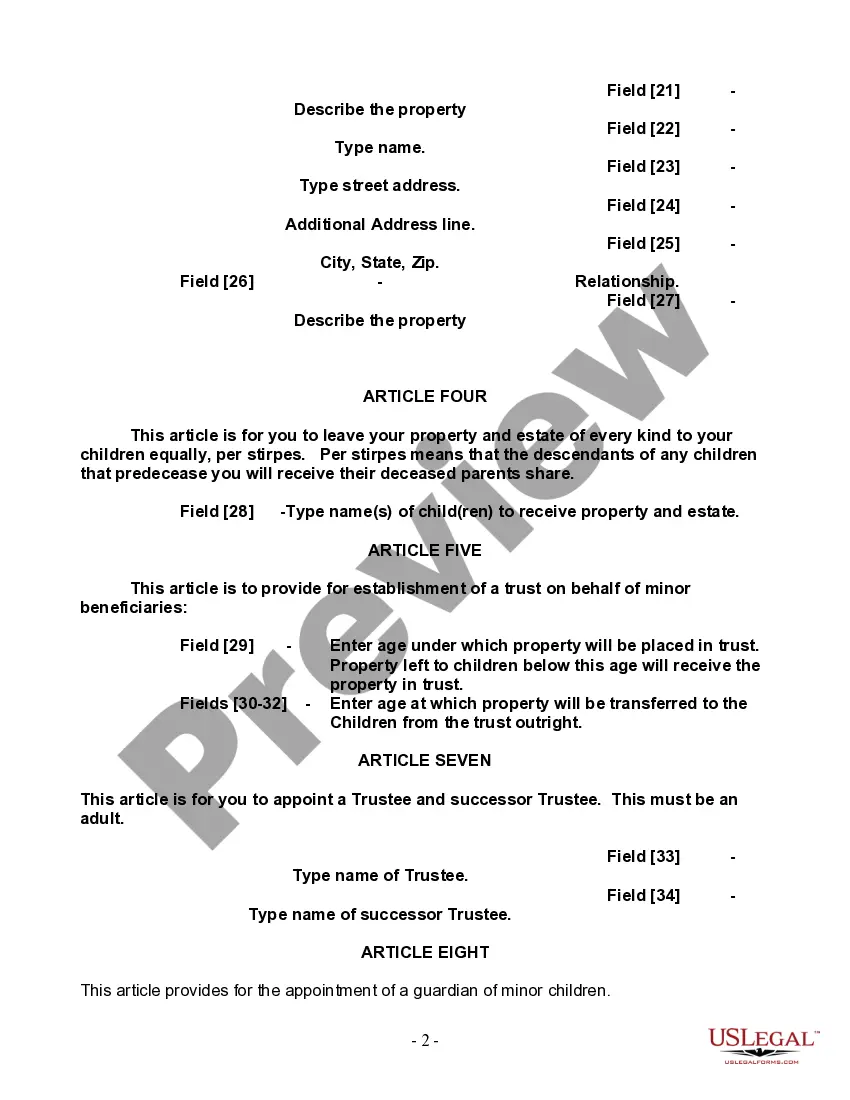
- Designate a trustee for any property being held in trust for your minor children, including their ages for distribution.
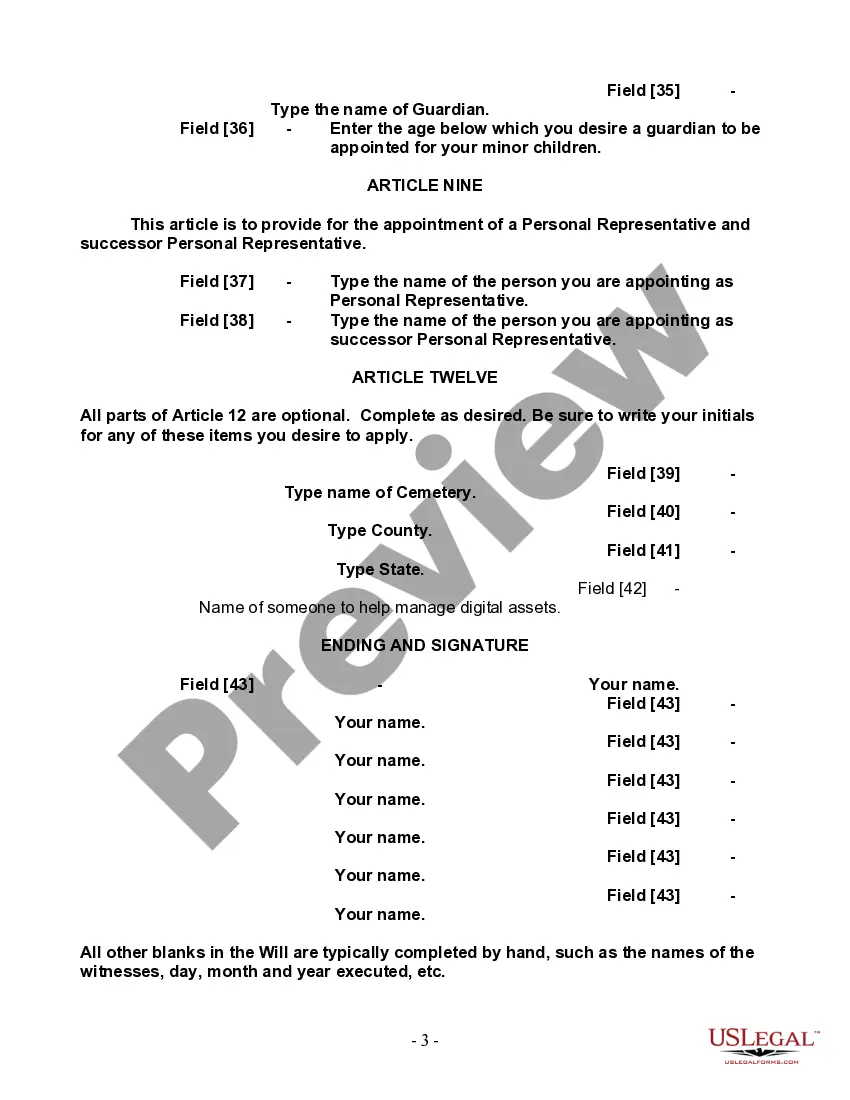
- Appoint a guardian for your minor children and specify the age at which they should assume custody.
- Sign the Will in front of two witnesses, ensuring they are not related to you or named in the Will.
Notarization guidance
Yes, this form must be notarized to be legally valid in most jurisdictions. A notary public should witness your signature to ensure that the Will is executed properly. Notarization helps prevent potential disputes during the probate process. US Legal Forms provides integrated online notarization, making it convenient to complete your Will securely through a video call.
Get your form ready online
Our built-in tools help you complete, sign, share, and store your documents in one place.
Make edits, fill in missing information, and update formatting in US Legal Forms—just like you would in MS Word.
Download a copy, print it, send it by email, or mail it via USPS—whatever works best for your next step.
Sign and collect signatures with our SignNow integration. Send to multiple recipients, set reminders, and more. Go Premium to unlock E-Sign.
If this form requires notarization, complete it online through a secure video call—no need to meet a notary in person or wait for an appointment.
We protect your documents and personal data by following strict security and privacy standards.

Make edits, fill in missing information, and update formatting in US Legal Forms—just like you would in MS Word.

Download a copy, print it, send it by email, or mail it via USPS—whatever works best for your next step.

Sign and collect signatures with our SignNow integration. Send to multiple recipients, set reminders, and more. Go Premium to unlock E-Sign.

If this form requires notarization, complete it online through a secure video call—no need to meet a notary in person or wait for an appointment.

We protect your documents and personal data by following strict security and privacy standards.
Typical mistakes to avoid
- Failing to sign the Will in the presence of qualified witnesses.
- Not clearly designating guardianship for minor children.
- Overlooking the need for a self-proving affidavit, which can simplify the probate process.
- Forgetting to specify alternate beneficiaries in case the primary beneficiaries predecease you.
Benefits of completing this form online
- Convenience of completing the form from your home at your own pace.
- Editability allows you to easily update information as your situation changes.
- Access to reliable legal templates that have been created by licensed attorneys.
- Time-saving ability to generate a legally valid document without needing to pay for expensive legal consultations.
Quick recap
- This Last Will and Testament is specifically crafted for single parents with minor children.
- Ensuring that guardianship and property allocation is clearly stipulated in your will is crucial.
- Proper witnessing and notarization are necessary steps in the execution of your will.
Glossary of terms
- Testator: The person who creates and executes the will.
- Personal representative: An individual appointed to administer the estate of the deceased.
- Per stirpes: A legal term meaning that if a beneficiary predeceases the testator, their share will go to their descendants.
Looking for another form?
Form popularity
FAQ
A will can also be declared invalid if someone proves in court that it was procured by undue influence. This usually involves some evil-doer who occupies a position of trust -- for example, a caregiver or adult child -- manipulating a vulnerable person to leave all, or most, of his property to the manipulator instead
You can make your own will in Kansas, using Nolo's Quicken WillMaker & Trust. However, you may want to consult a lawyer in some situations. For example, if you think that your will might be contested or if you want to disinherit your spouse, you should talk with an attorney.
There are certain types of property that legally cannot be included in a person's will. Depending on state laws, these may include: Any Property that is Co-Owned with Someone Else Through Joint-Tenancy: Married couples typically own the marital home in joint tenancy.Property being held in a living trust.
When making a Will, people often ask whether an Executor can also be a Beneficiary. The answer is yes, it's perfectly normal (and perfectly legal) to name the same person (or people) as both an Executor and a Beneficiary in your Will.
Since a will can be written on a blank paper, signature is the only authentic detail in it." As for heirs, don't forget to mention the full name and your relationship with the specified person, as well as the assets you want to pass on to them.
In Kansas, you can make a living trust to avoid probate for virtually any asset you ownreal estate, bank accounts, vehicles, and so on. You need to create a trust document (it's similar to a will), naming someone to take over as trustee after your death (called a successor trustee).
As an Executor, what you cannot do is go against the terms of the Will, Breach Fiduciary duty, fail to act, self-deal, embezzle, intentionally or unintentionally through neglect harm the estate, and cannot do threats to beneficiaries and heirs.
A. You don't have to have a lawyer to create a basic will you can prepare one yourself. It must meet your state's legal requirements and should be notarized.But be careful: For anything complex or unusual, like distributing a lot of money or cutting someone out, you'd do best to hire a lawyer.
A last will and testament, also known simply as a will, is a legal document that provides instructions for what should happen to a person's assets after his or her death. If a person dies without a will, they are said to be intestate, and state intestacy laws govern the distribution of the property of the decedent.