What is a Last Will and Testament? Understanding Its Importance
A Last Will and Testament is a legal document that outlines how a person's assets and affairs will be handled after their death. It expresses the testator's wishes regarding the distribution of their property, the appointment of guardians for any minor children, and the designation of an executor to manage the estate. This document serves to ensure that the individual's intentions are honored, providing clarity and direction for their loved ones during a difficult time.
Who should use this form
This form is ideal for adults of sound mind who wish to dictate how their possessions and responsibilities are managed after their passing. It is especially important for anyone with dependents, significant assets, or specific wishes about their estate's distribution. A Last Will is crucial for individuals in the following situations:
- Parents wanting to appoint guardians for their minor children.
- People with specific wishes for the distribution of unique personal items.
- Individuals with substantial financial assets or real estate.
Key components of the form
Understanding the essential elements of a Last Will and Testament is vital for proper execution. Here are the key components:
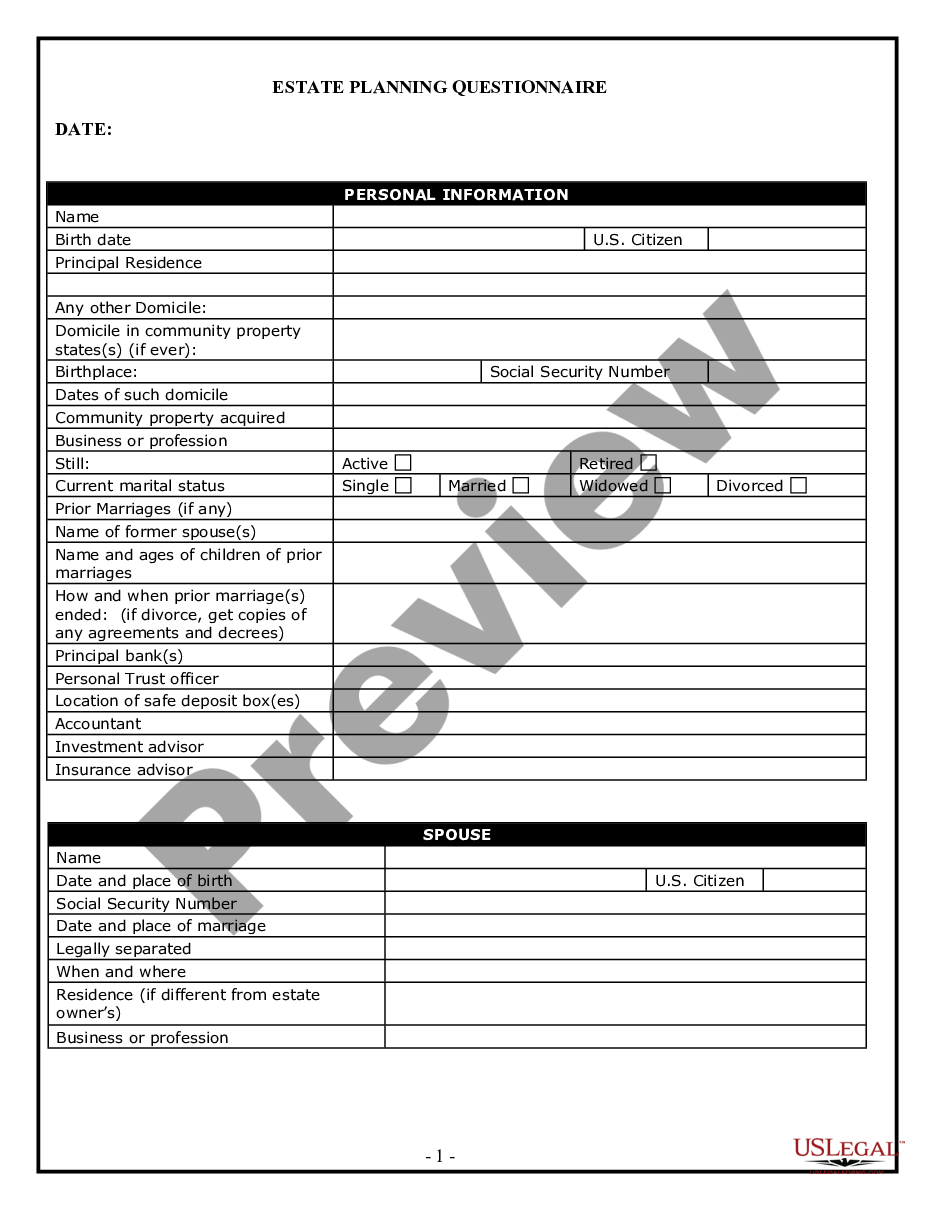
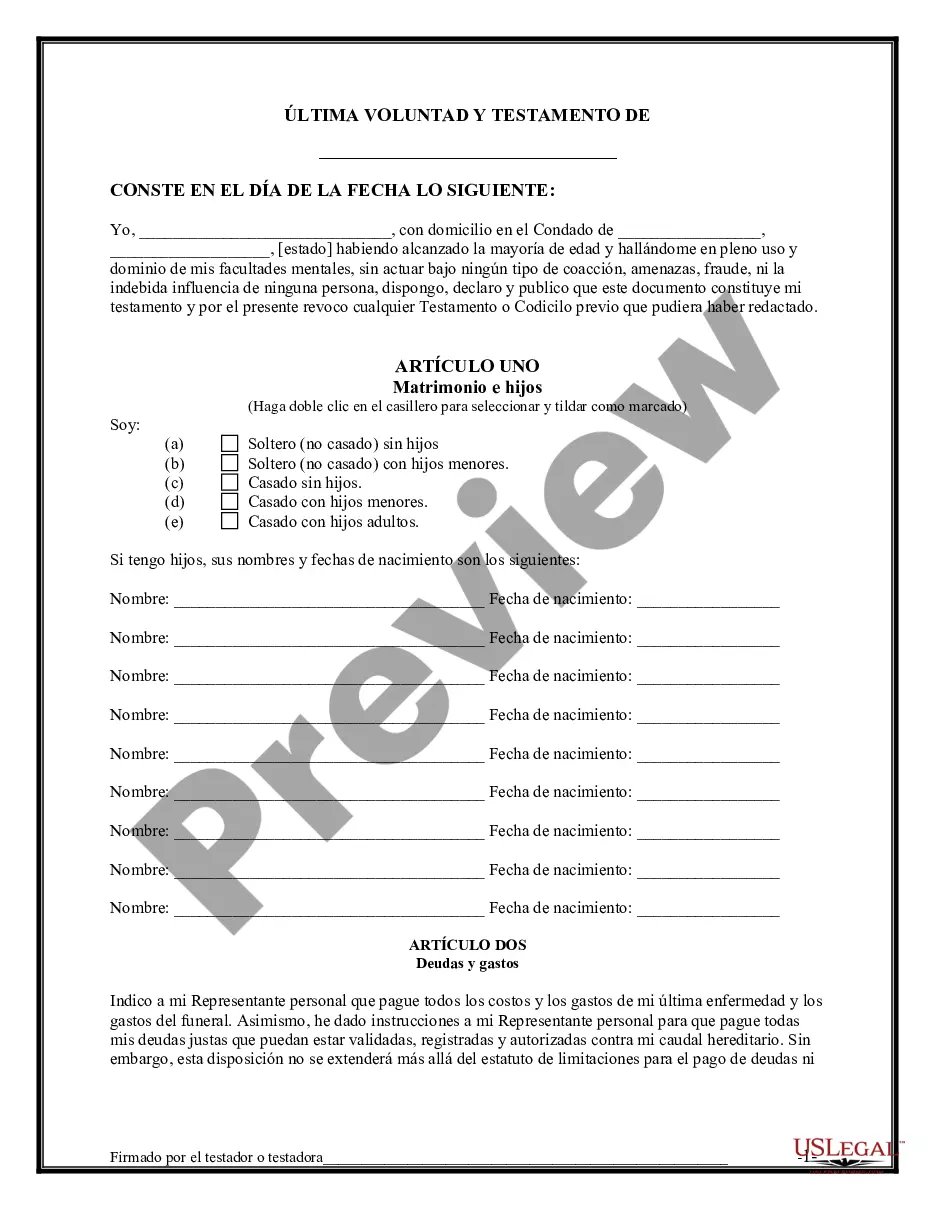
- Testator Information: Name and residence of the individual creating the will.
- Debts and Obligations: Instructions on settling debts before asset distribution.
- Beneficiaries: Individuals or organizations designated to receive assets.
- Executor: The person appointed to manage the estate according to the will.
- Guardianship Clauses: Designation of guardians for any minor children.
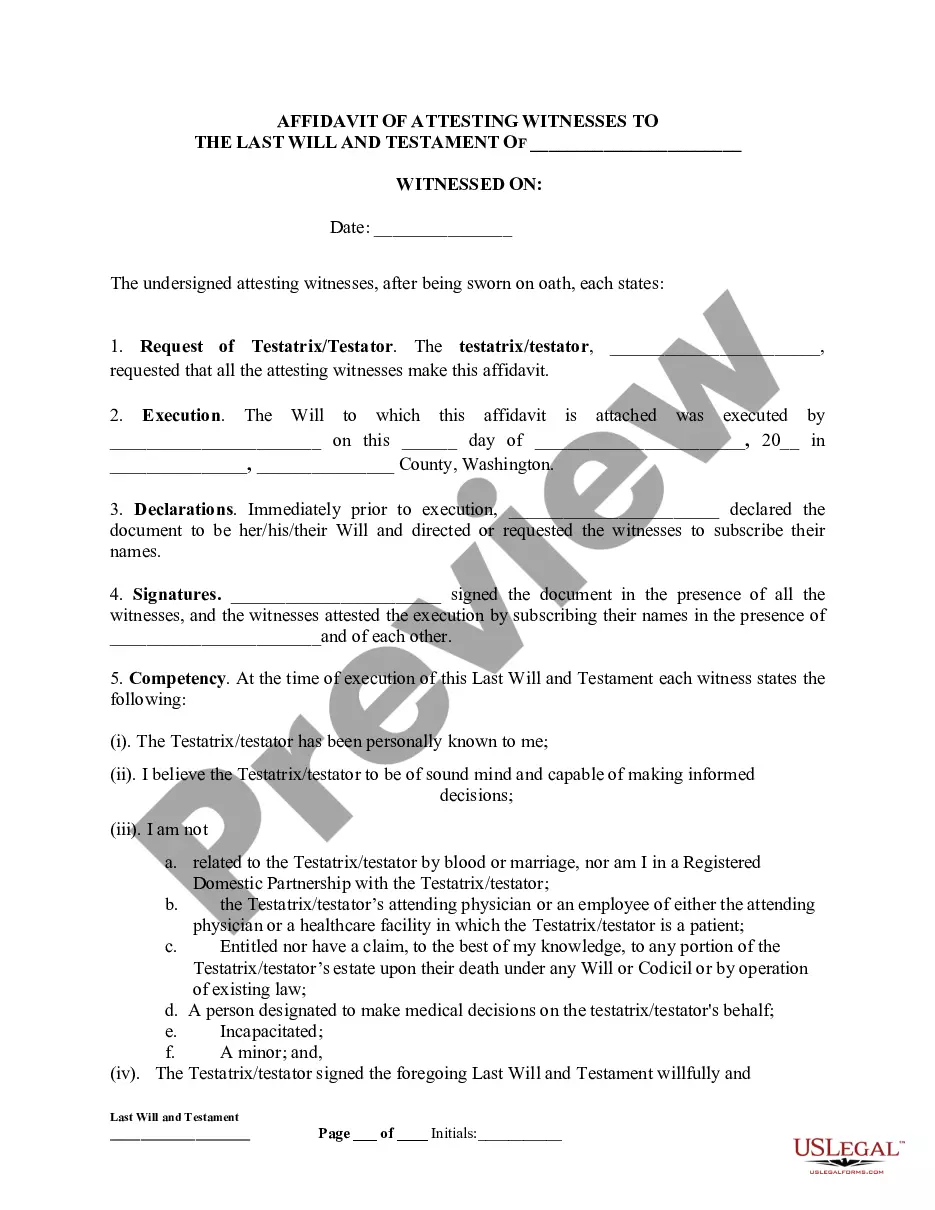
- Signature and Witnesses: The will must be signed by the testator and witnessed to be valid.
Common mistakes to avoid when using this form
When completing a Last Will and Testament, it's crucial to steer clear of certain pitfalls to ensure its validity and effectiveness:
- Failing to name an executor clearly.
- Not updating the will after significant life events like marriage, divorce, or the birth of children.
- Ignoring witness requirements, which can invalidate the document.
- Omitting documentation of estate debts or obligations.
- Overcomplicating the language, which may confuse the intent.
What to expect during notarization or witnessing
Notarization and witnessing are critical steps in validating a Last Will and Testament. Here’s what to expect:
- Witnesses: Generally, two witnesses are required. They should be present when the testator signs the will and must not be beneficiaries.
- Notarization: While not mandatory in all states, having a notary public authenticate the will can add an extra layer of legitimacy.
- Complete Signing: All parties must sign in the presence of one another, confirming that the testator is of sound mind and acting voluntarily.
Key takeaways
A Last Will and Testament is a foundational legal document that ensures your wishes are respected after your death. Properly completing this form involves careful consideration of:
- Defining your wishes clearly.
- Appointing trusted individuals as executors and guardians.
- Complying with legal requirements for signing and witnessing.
- Regularly reviewing and updating the will to reflect life changes.
By following these guidelines, you can create a valid and effective document that protects your interests and those of your loved ones.