• US Legal Forms

What is a subordination agreement? Understanding its importance

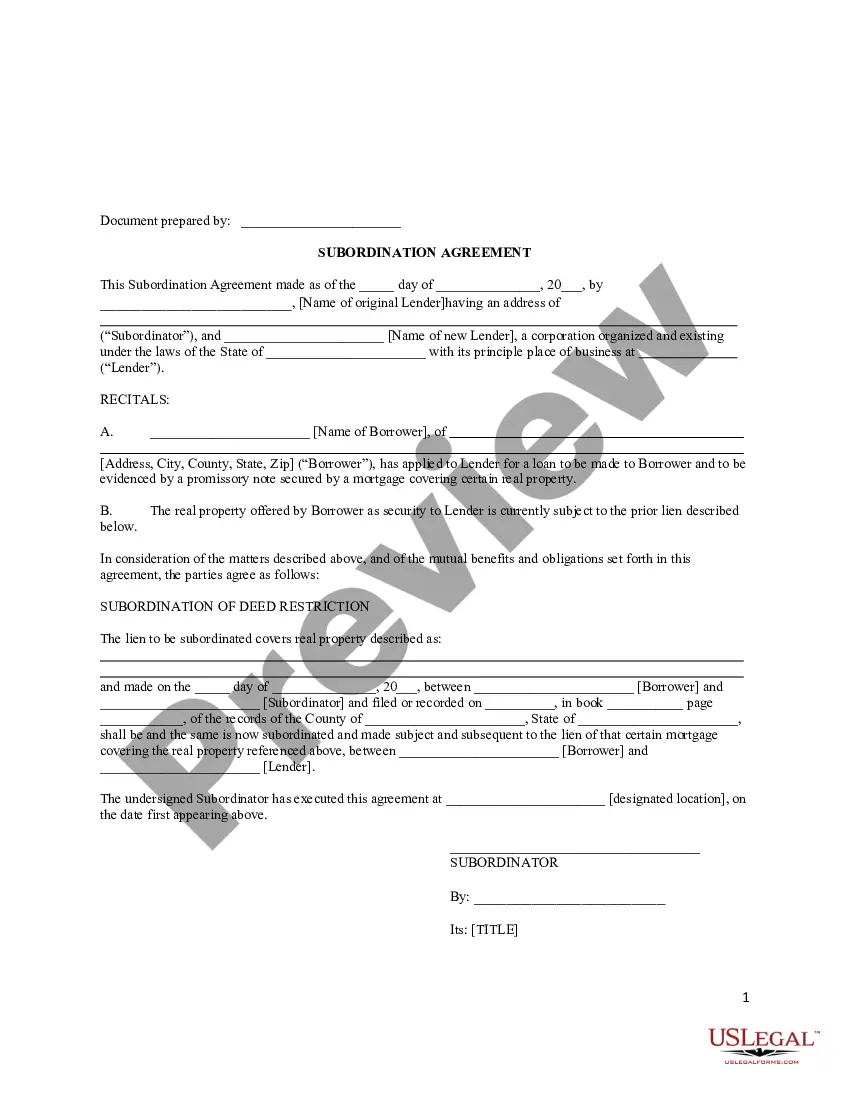
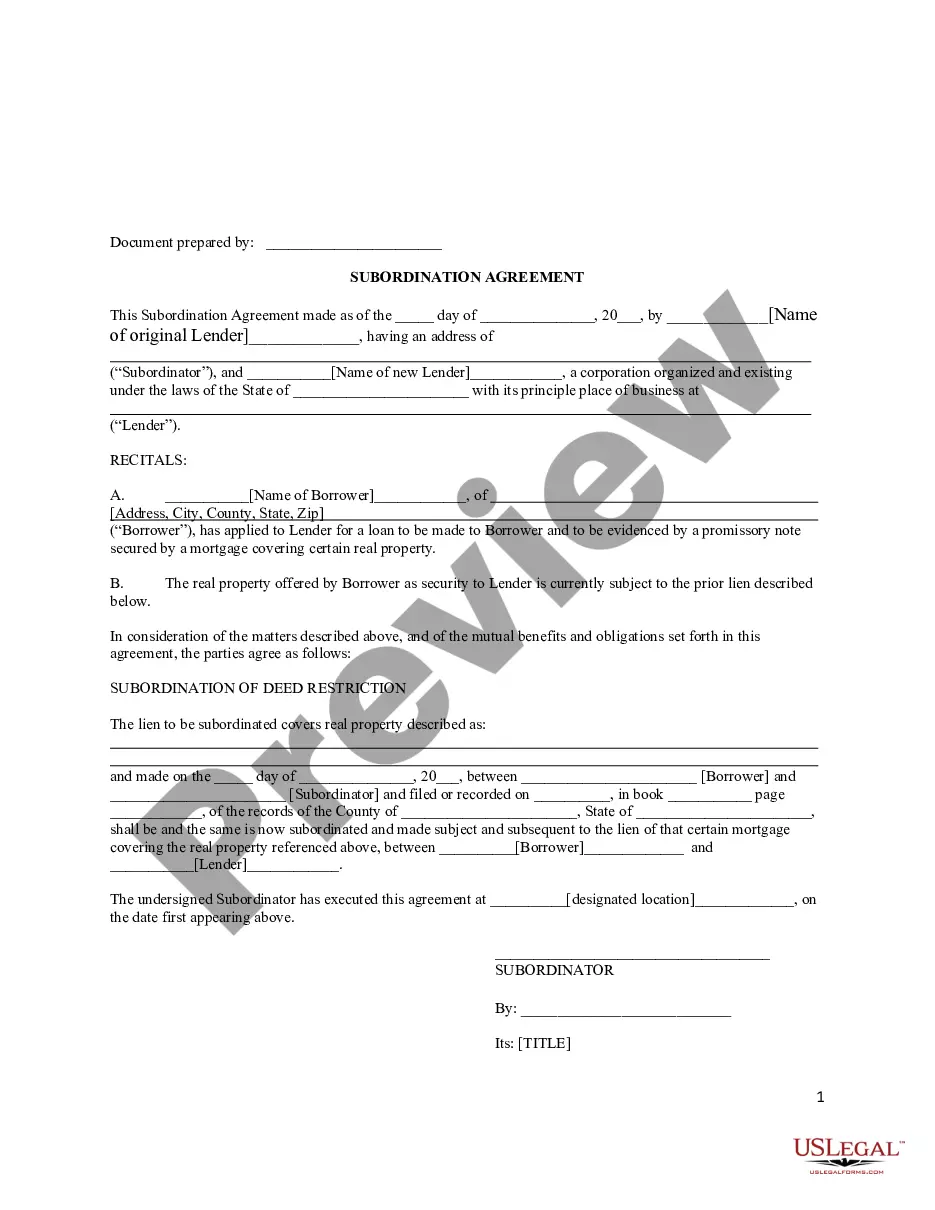
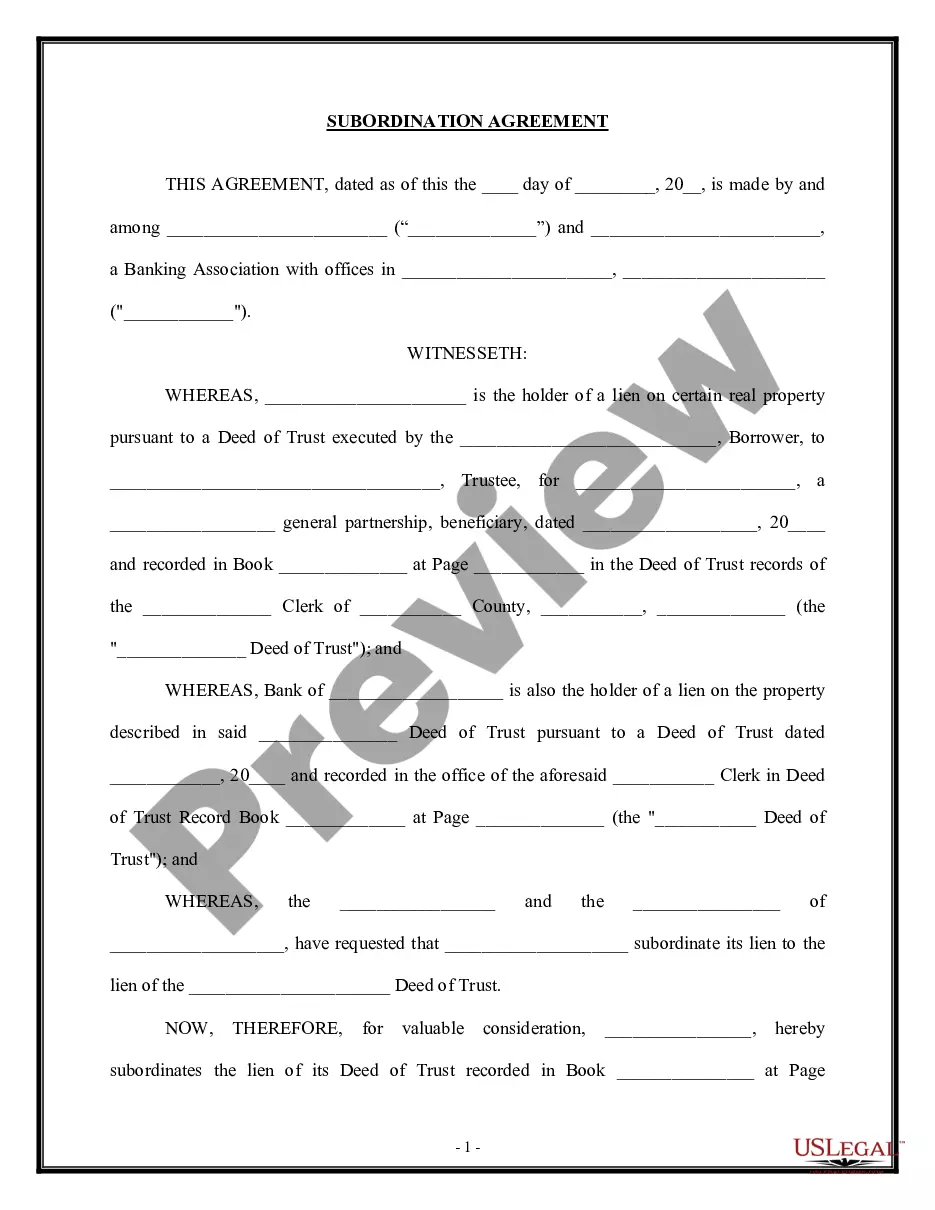
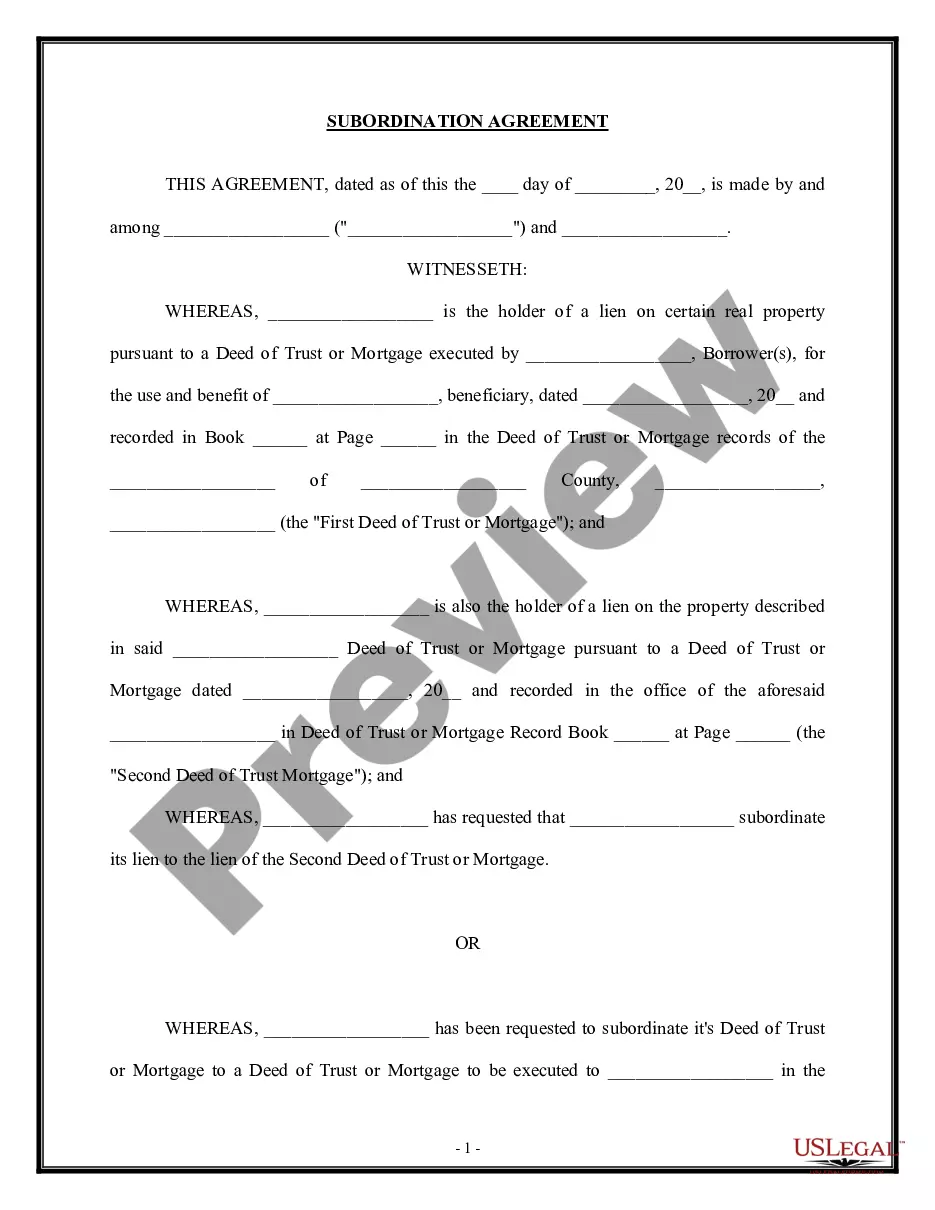
A subordination agreement is a legal document that establishes a priority order among creditors regarding claims against a debtor's assets. In this agreement, one creditor voluntarily agrees to subordinate their existing claim or lien on a property to another, typically to facilitate a new loan or refinancing. This means that in the event of liquidation or foreclosure, the subordinating creditor will be paid only after the secured party has received their due amount from the proceeds of the collateral.
Who should use this form

This form is primarily used by creditors and debtors involved in secured transactions. It is particularly relevant when:

  • A debtor is seeking additional financing and needs to establish a first lien for a new lender.
  • Existing creditors are willing to accept a lower priority for their claims in order to facilitate the debtor's access to funds.
  • The real estate involved is subject to multiple liens, and clarity on priority is necessary to mitigate risks in future transactions.

Common mistakes to avoid when using this form

When completing a subordination agreement, users should be careful to avoid the following errors:

  • Inadequate descriptions: Failing to accurately describe the collateral can lead to disputes over the priority of claims.
  • Lack of signatures: Not obtaining all necessary signatures from the parties involved can render the agreement unenforceable.
  • Ignoring state-specific requirements: Some states may have particular rules regarding the submission and notarization of such agreements, which must be adhered to for the form to be valid.
  • Not consulting legal advice: It's important to seek legal guidance to ensure that the agreement is drafted correctly and serves the parties' best interests.