Indiana Written Revocation of Will
Understanding this form
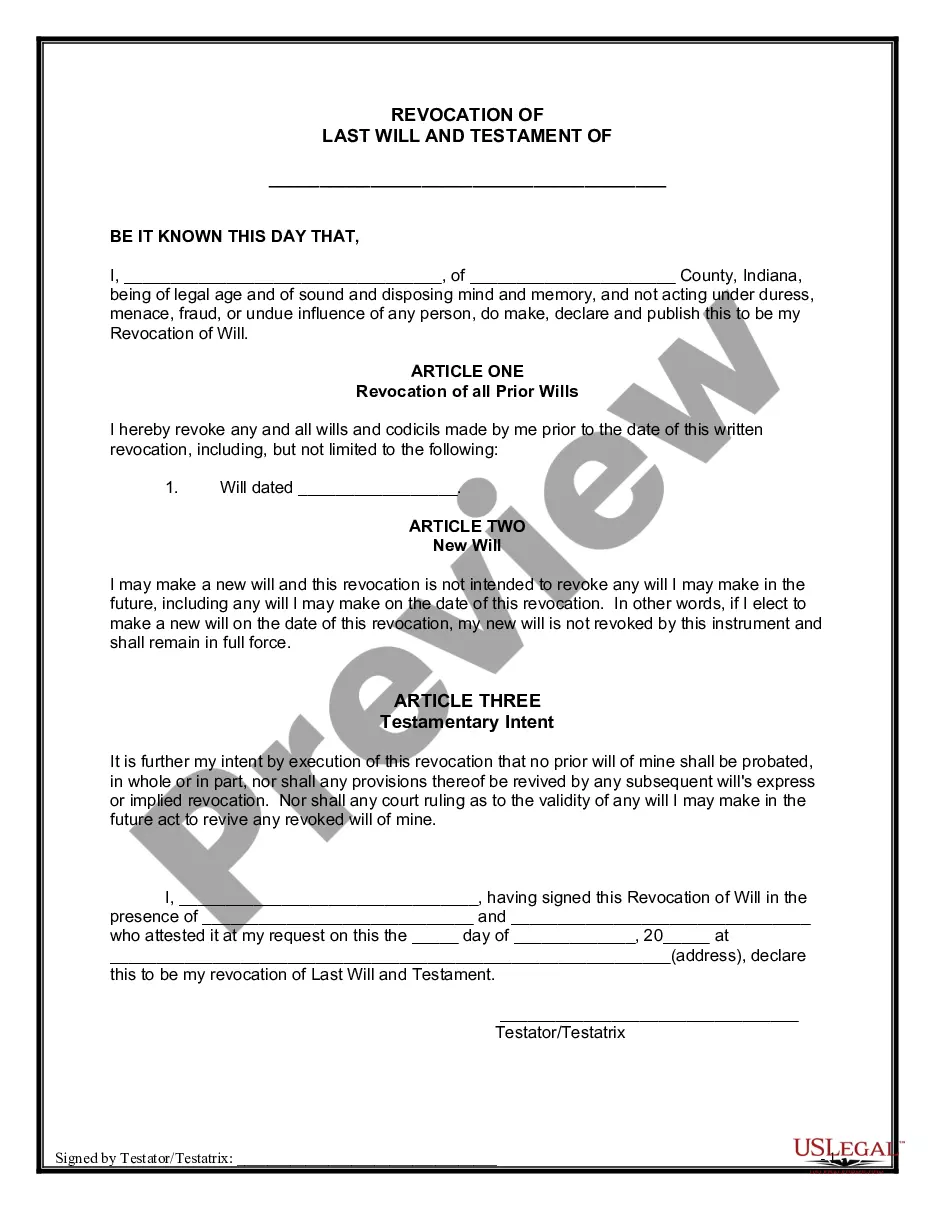
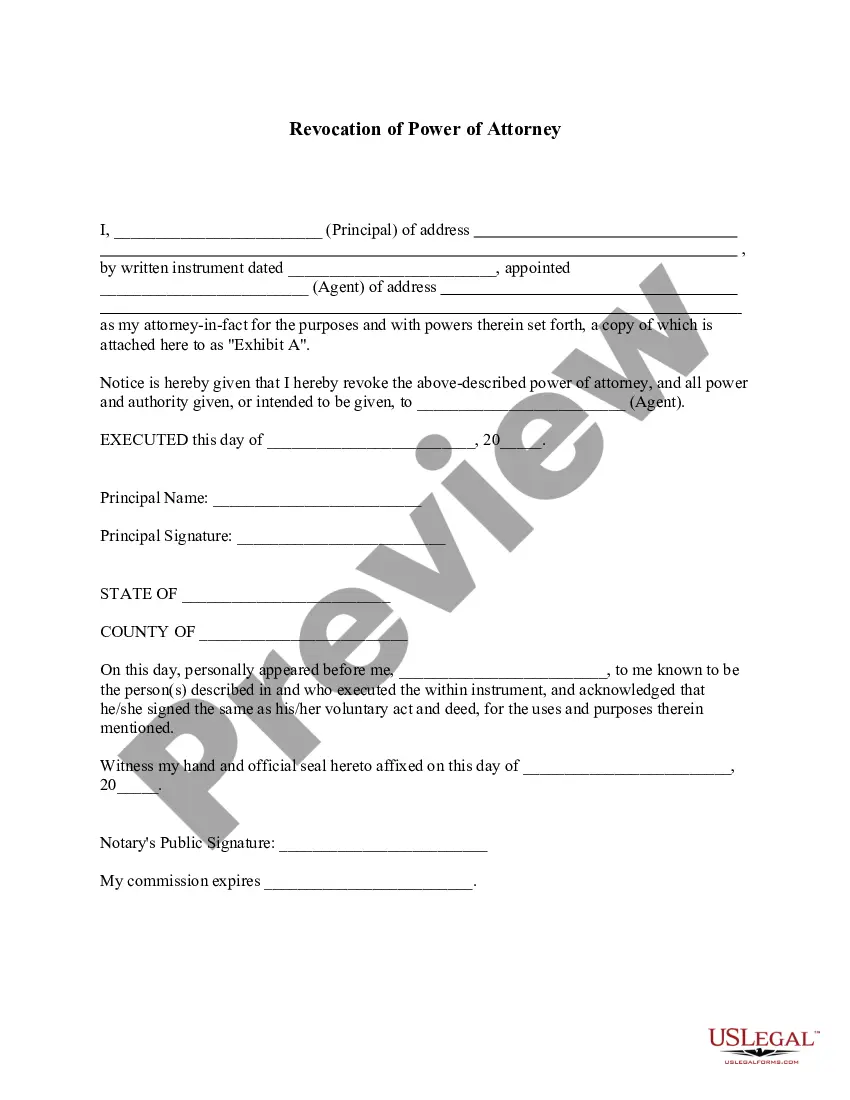
The Written Revocation of Will is a legal document used to revoke a previously established will. This form serves to clarify the intent of the testator to ensure that all prior wills are not probated. Unlike a new will that typically contains revocation clauses, this separate written revocation removes any ambiguity regarding the status of prior wills. It is a crucial tool for individuals who wish to make their intentions clear regarding estate distribution.
What’s included in this form
- Declaration of intent to revoke all previous wills
- Identification of the testator, including signature and date
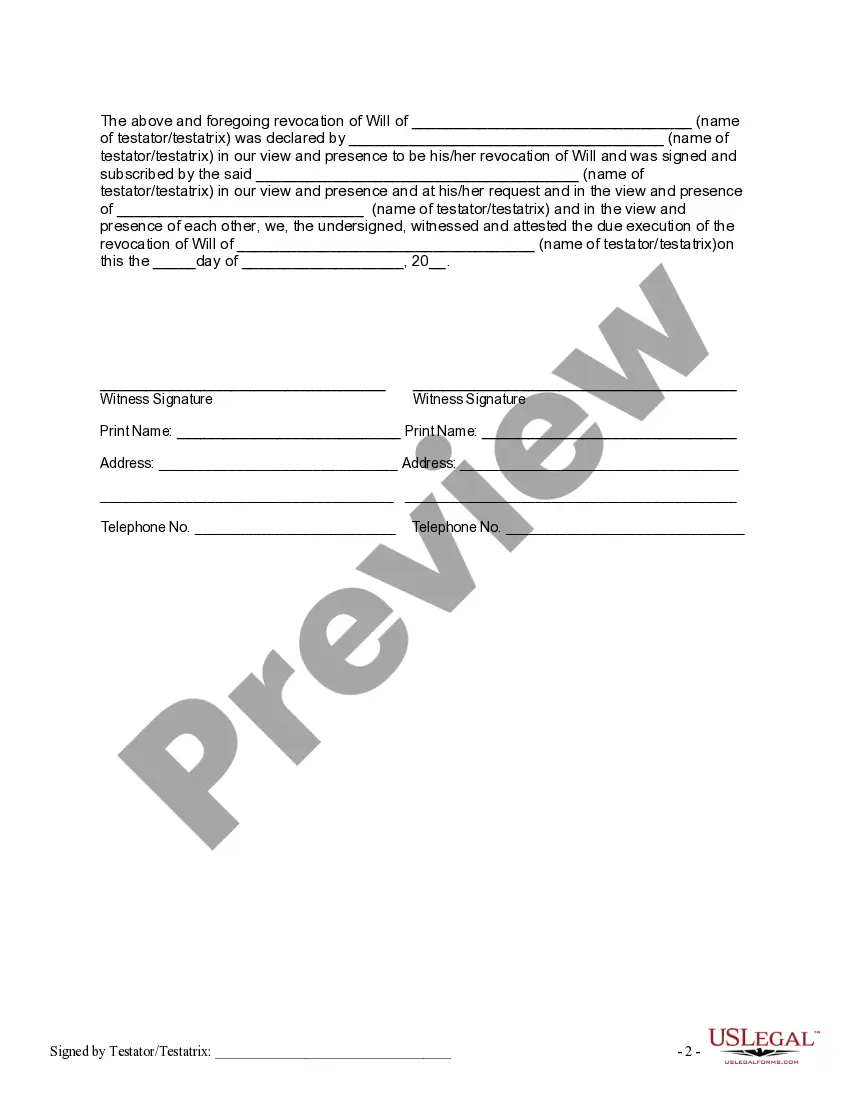
- Witness signatures to verify the revocation
- Clauses detailing the execution of the revocation and future will creation
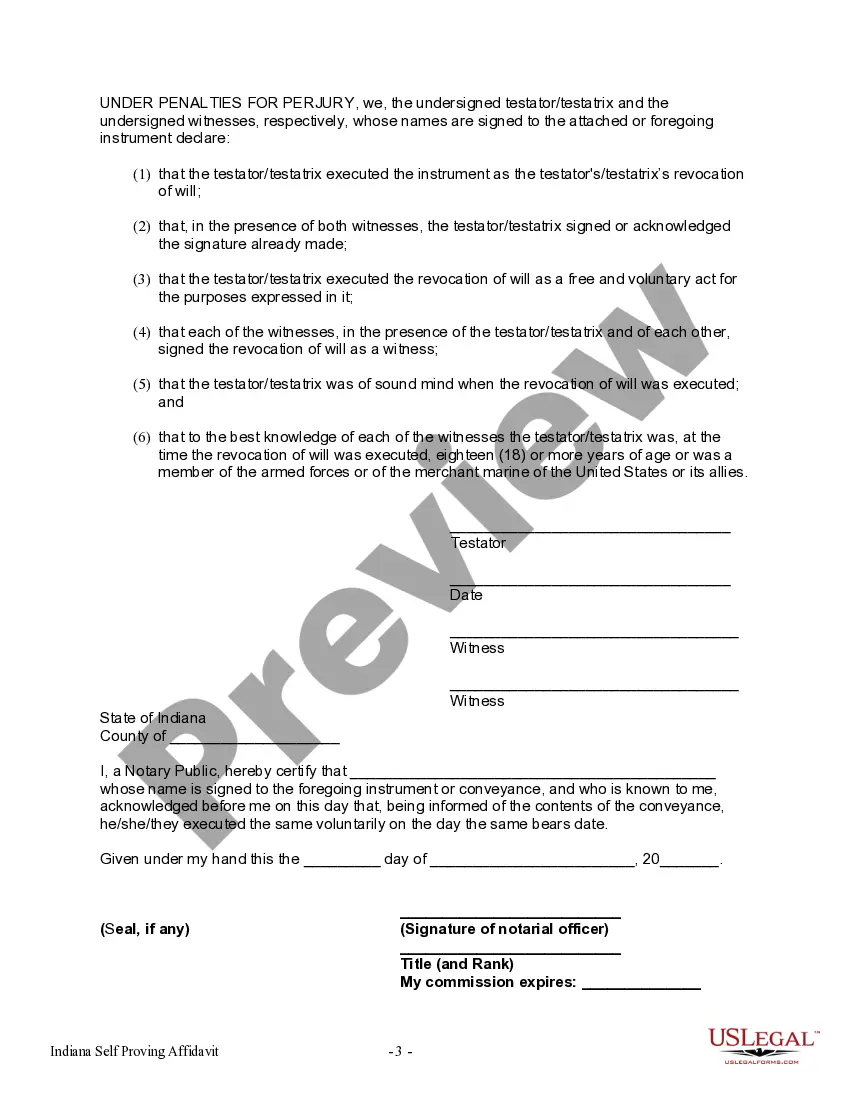
- Notary acknowledgment to enhance legal validity

When this form is needed
This form is used when an individual wishes to formally revoke any previous wills they have made. It is particularly important in situations where the person no longer agrees with the terms of their old will or wishes to prevent potential disputes among heirs regarding which will should be honored. It is advisable to use this form before creating a new will to avoid any confusion in the future.
Intended users of this form
- Individuals who have an existing will that they wish to revoke
- Individuals who want to clarify their estate planning intentions
- Persons concerned about disputes among heirs regarding wills
Steps to complete this form
- Identify yourself as the testator, including your full name and county.
- Declare your intent to revoke all prior wills explicitly.
- Specify the date of the will you are revoking, if applicable.
- Sign the document in the presence of at least two witnesses.
- Have the witnesses sign the document, confirming their presence during the signing.
- If required, obtain a notary acknowledgment to enhance the form's legality.
Does this form need to be notarized?
This form must be notarized to be legally valid. US Legal Forms provides secure online notarization powered by Notarize, allowing you to complete the process through a verified video call.
Get your form ready online
Our built-in tools help you complete, sign, share, and store your documents in one place.
Make edits, fill in missing information, and update formatting in US Legal Forms—just like you would in MS Word.
Download a copy, print it, send it by email, or mail it via USPS—whatever works best for your next step.
Sign and collect signatures with our SignNow integration. Send to multiple recipients, set reminders, and more. Go Premium to unlock E-Sign.
If this form requires notarization, complete it online through a secure video call—no need to meet a notary in person or wait for an appointment.
We protect your documents and personal data by following strict security and privacy standards.

Make edits, fill in missing information, and update formatting in US Legal Forms—just like you would in MS Word.

Download a copy, print it, send it by email, or mail it via USPS—whatever works best for your next step.

Sign and collect signatures with our SignNow integration. Send to multiple recipients, set reminders, and more. Go Premium to unlock E-Sign.

If this form requires notarization, complete it online through a secure video call—no need to meet a notary in person or wait for an appointment.

We protect your documents and personal data by following strict security and privacy standards.
Common mistakes
- Not including the date of the prior will being revoked.
- Failing to sign the form in the presence of witnesses.
- Not having the witnesses sign the document properly.
- Overlooking the need for notarization if required by state law.
Why use this form online
- Convenient access to legal documentation without the need for in-person consultations.
- Editable templates allow for easy customization to fit your specific needs.
- Reliable and up-to-date legal forms drafted by licensed attorneys.
Legal use & context
- This form is legally binding in Indiana when completed correctly.
- Revoking previous wills helps to eliminate confusion regarding estate distribution.
- Proper execution of this form can prevent probate issues and ensure your intentions are honored.
What to keep in mind
- The Written Revocation of Will is essential for clarity in estate planning.
- Ensure the form is signed and witnessed to maintain its validity.
- Consider notarizing the document for additional legal assurance.
Looking for another form?
Form popularity
FAQ
Most people revoke one will by making another, which supersedes the old one. That's why most wills begin with a sentence like "I hereby revoke all previous wills and codicils." (A codicil is an addition to a will; they aren't very common these days.)
Your will is revoked automatically in certain situations: If you marry or enter into a civil partnership, your will is revoked, unless your will was unless the later will was made with the marriage or civil partnership clearly in mind If you make another will, the first will you made is revoked.
Indiana will also recognize the handwritten will, but only if it meets the Indiana's legal standards. In other words, the handwritten will must be executed and witnessed correctly by two preferably disinterested witnesses. Indiana will not invalidate a will simply because it has been handwritten.
A testator who has revoked their Will may later wish to revive it. This Practice Note considers the provisions of section 22 of the Wills Act 1837 (which limits the testator to reviving a revoked Will by re-execution or a codicil showing an intention to revive the earlier document) and the relevant case law.
A will can also be partially revoked by a will amendment known as a codicil. Another way to revoke a will is by a physical act done with a current intent to revoke the will.
A Will can either be destroyed directly by the Testator or by the Testator giving directions to a third party in their presence.Wills are also revoked by marriage or civil partnership, but interestingly a Will is not revoked by divorce.
Generally, you can revoke a will by (1) destroying the old will, (2) creating a new will or (3) making changes to an existing will. In some circumstances, simply giving away all or your property and assets before you die can have the effect of revoking a will (subject to estate tax penalties).
Alberta Wills can be changed at any time simply by visiting your lawyer.In some situations, wills are automatically revoked, such as when you get married. Consider making an entirely new will when you need to make major changes and using a codicil for small changes.
Can You Revoke a Will After the Death of the Testator? A will can only be canceled by the testator. A power of attorney does not grant the right to revoke a will. Therefore, no one else can cancel a will after the death of the testator.