Indiana Last Will and Testament for Single Person with Adult and Minor Children
About this form
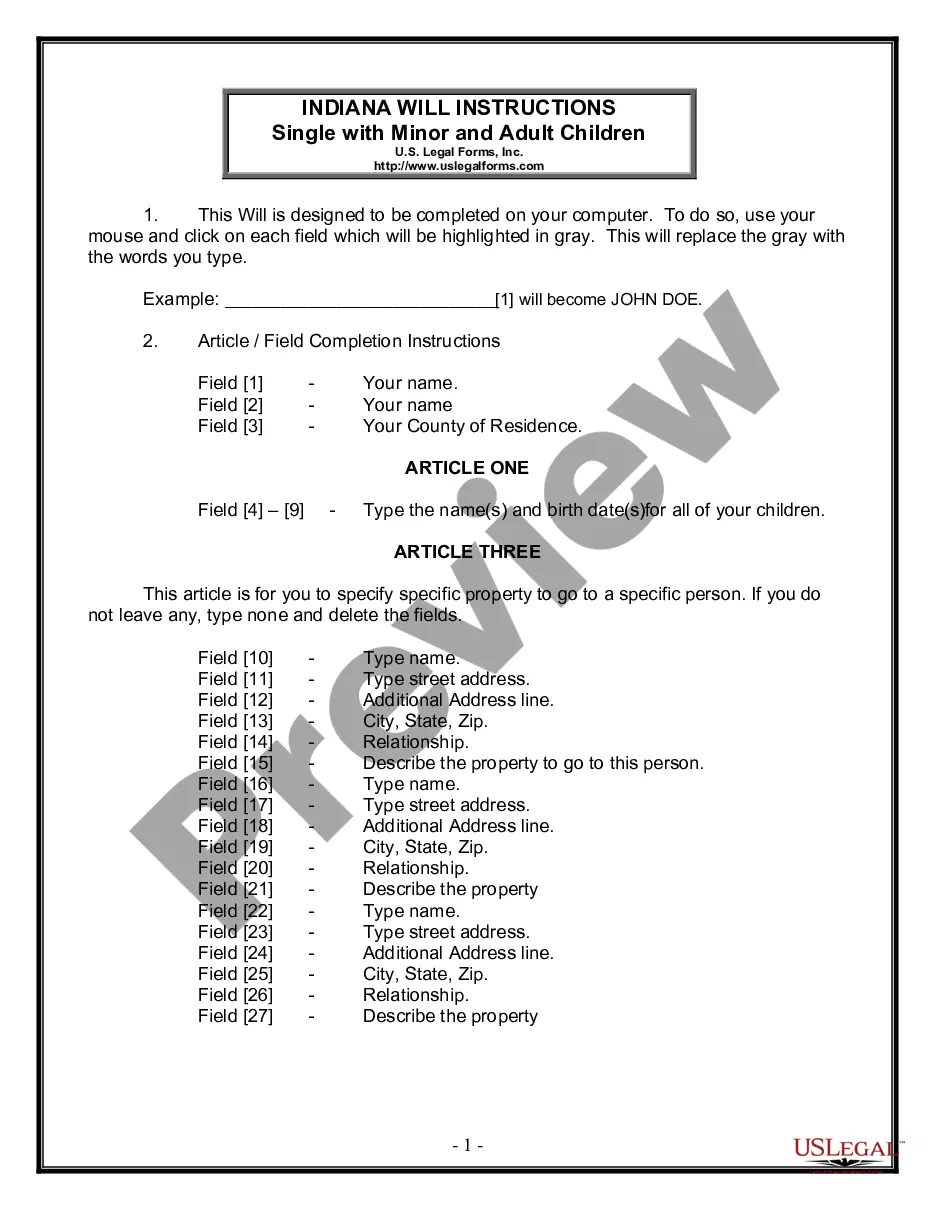
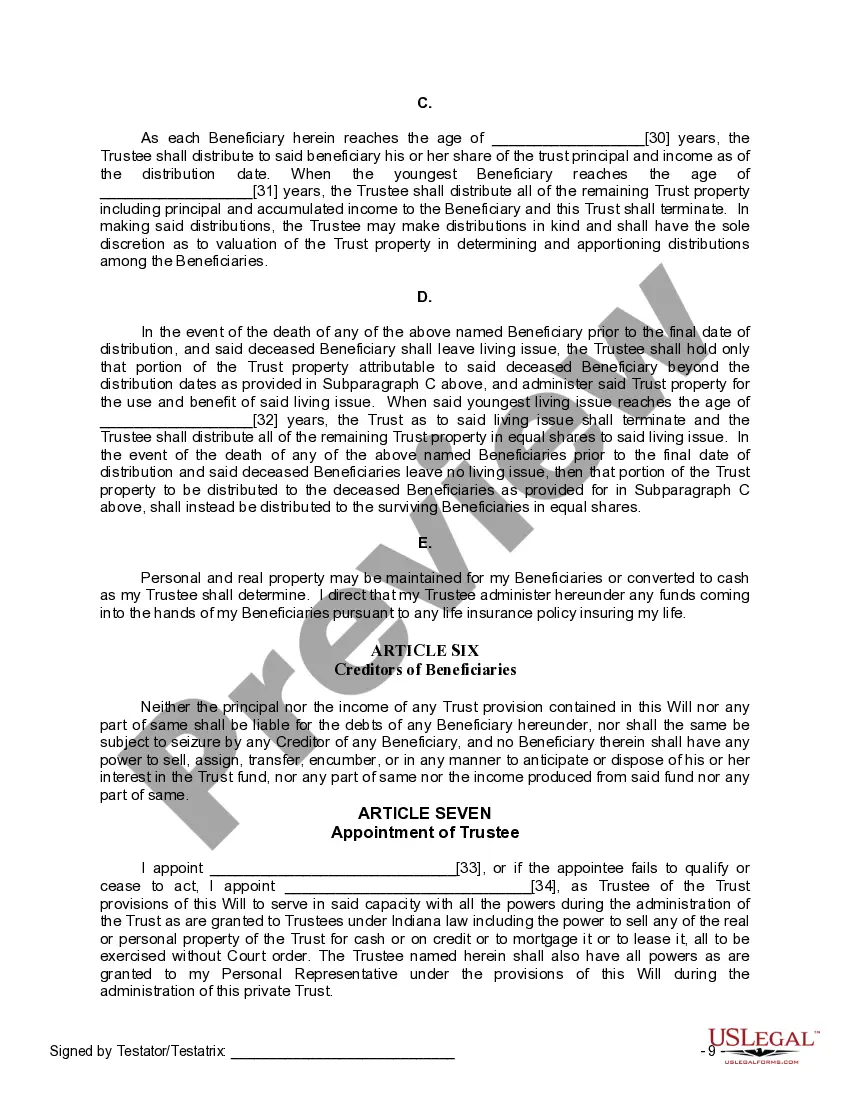
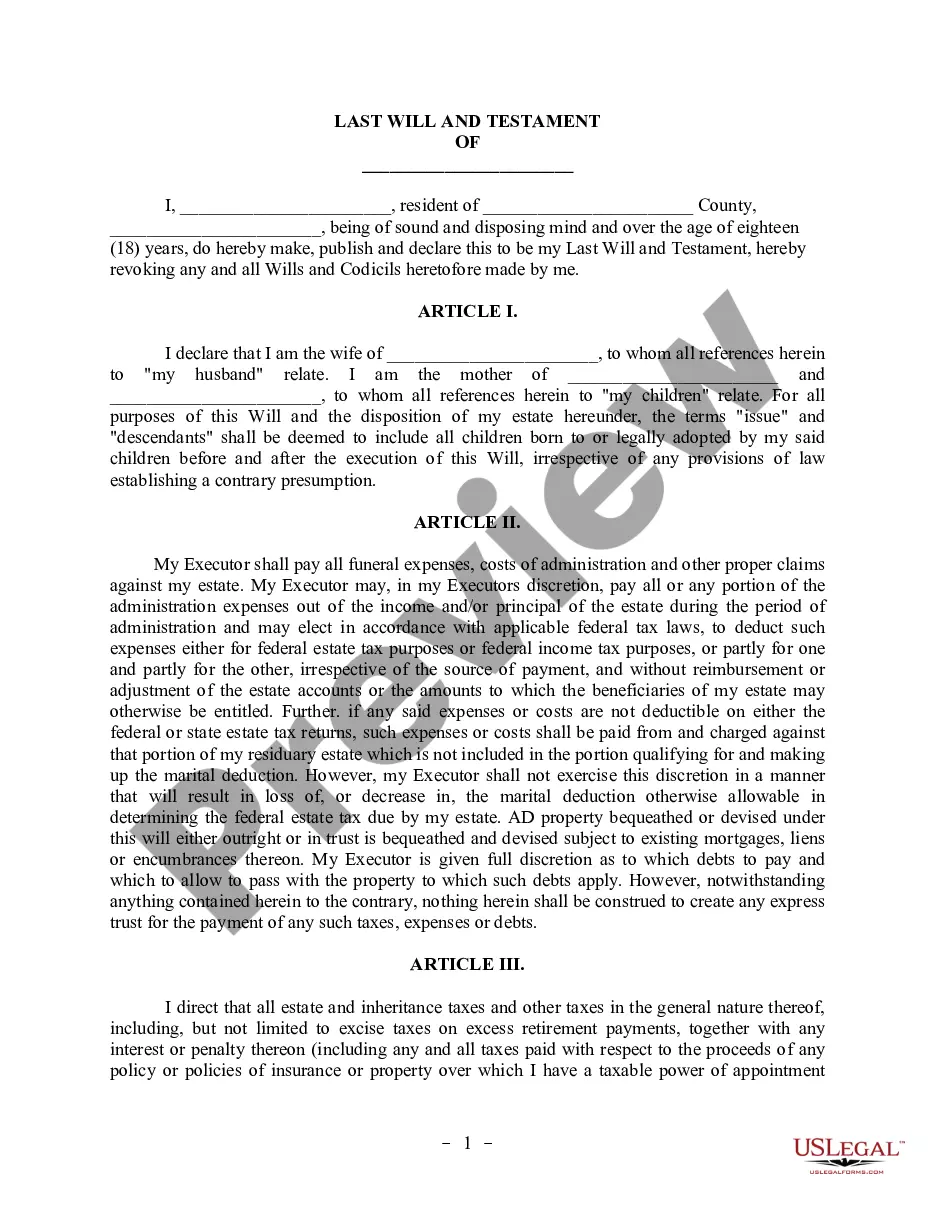
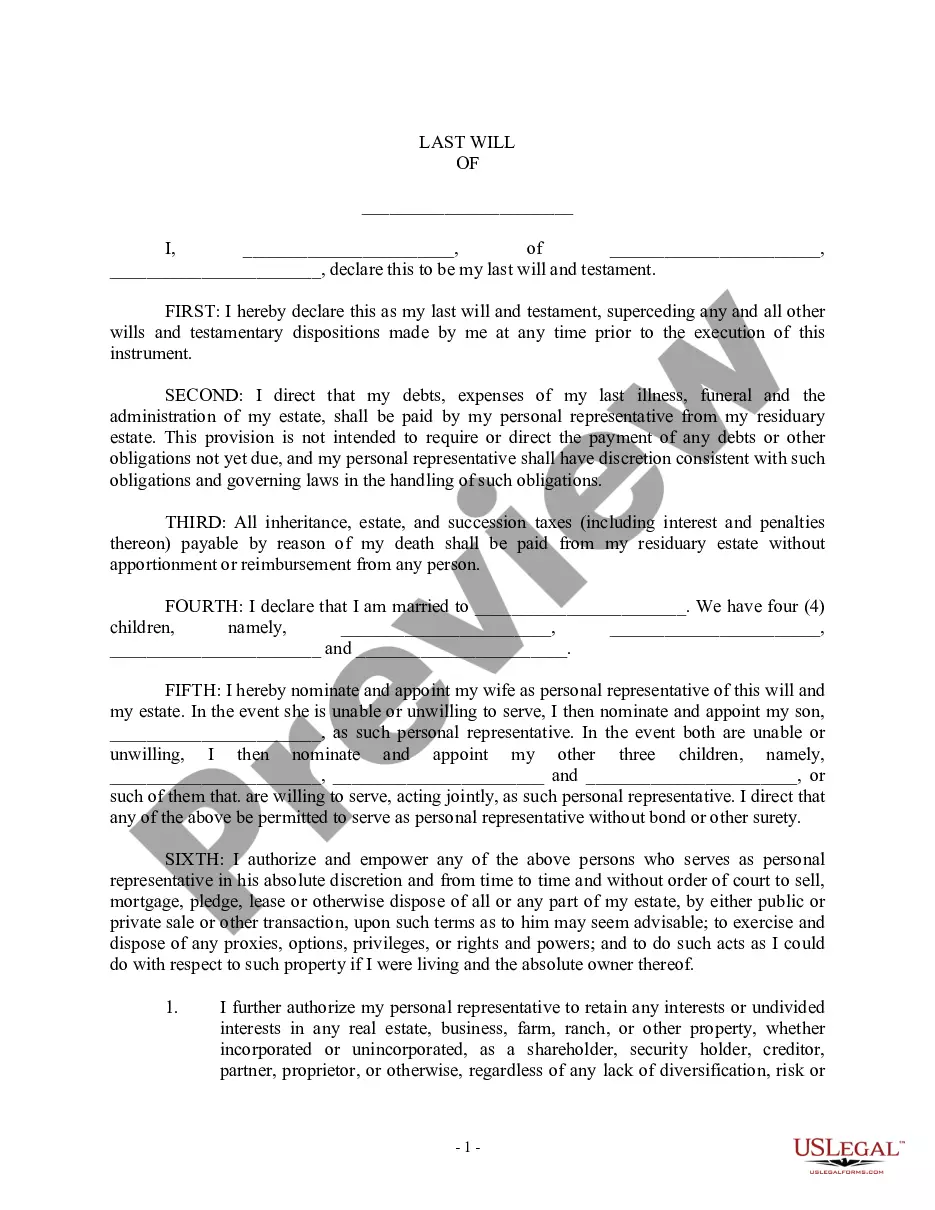
The Last Will and Testament for a Single Person with Adult and Minor Children is a legal document that outlines how a person's assets and responsibilities will be handled after their death, specifically for those who are single and have both adult and minor children. This Will includes detailed provisions for appointing an executor, designating beneficiaries for property, and assigning guardianship for minor children. It is tailored to ensure that the individual's wishes are honored, and it includes necessary clauses addressing both adult and minor children, distinguishing it from more general Wills.
Key components of this form
- Appointment of a personal representative to manage the estate.
- Designating specific beneficiaries for property and assets.
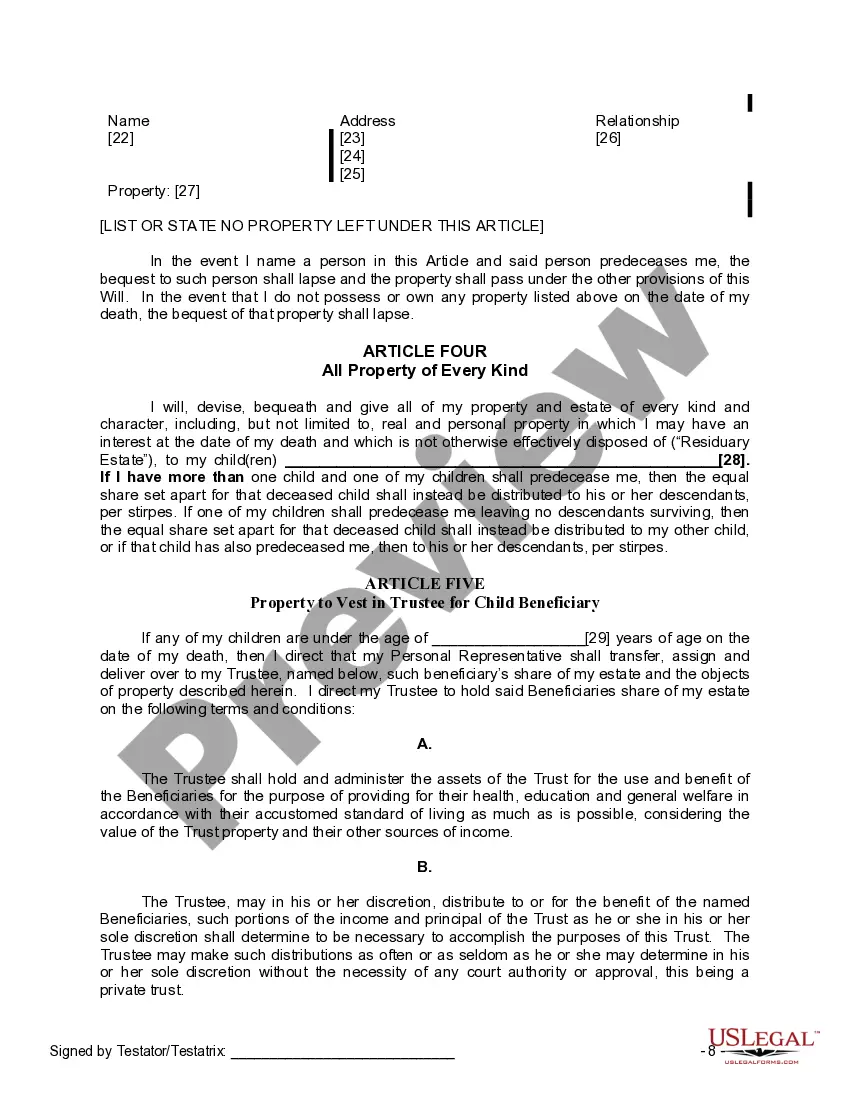
- Provisions for children, including establishing trusts for minor beneficiaries.
- Appointment of guardians for minor children.
- Instructions for signing and witnessing the Will.
- Optional sections for specific bequests and funeral wishes.





Common use cases
This form is necessary when a single individual wants to dictate the distribution of their estate after death, particularly when they have both adult and minor children. It is suitable for those who want to ensure that their children are provided for and cared for according to their specific wishes. Use this Will if you need to establish guardianship for minor children, create trusts for managing assets until they reach adulthood, or specify who should handle your affairs after your passing.
Intended users of this form
- Single individuals with children who wish to outline their estate plans.
- Parents who want to designate guardians for minor children.
- Those looking to create trusts for minor beneficiaries.
- Individuals who want to ensure their assets are distributed according to their wishes after death.
How to prepare this document
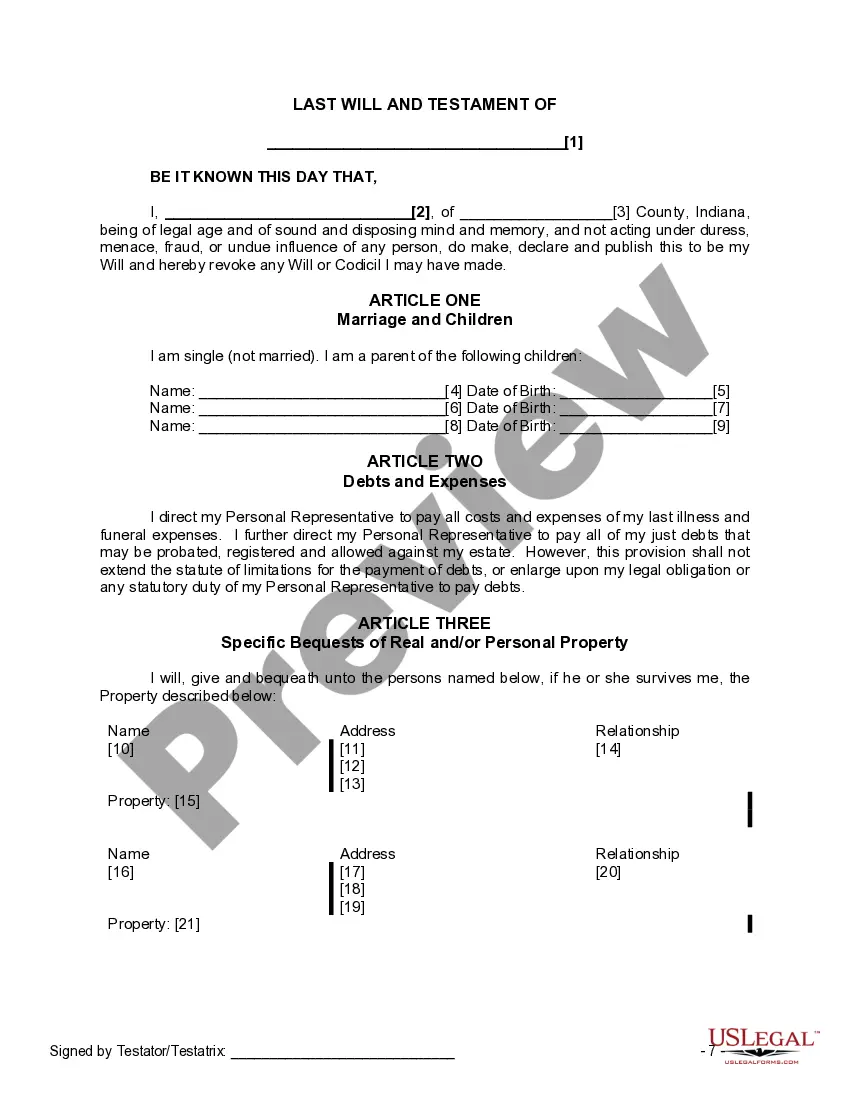
- Fill in your full name and county of residence at the top of the document.
- List the names and birth dates of all your children in the designated fields.
- Specify any specific property you wish to bequeath to individuals; if none, indicate as "none."
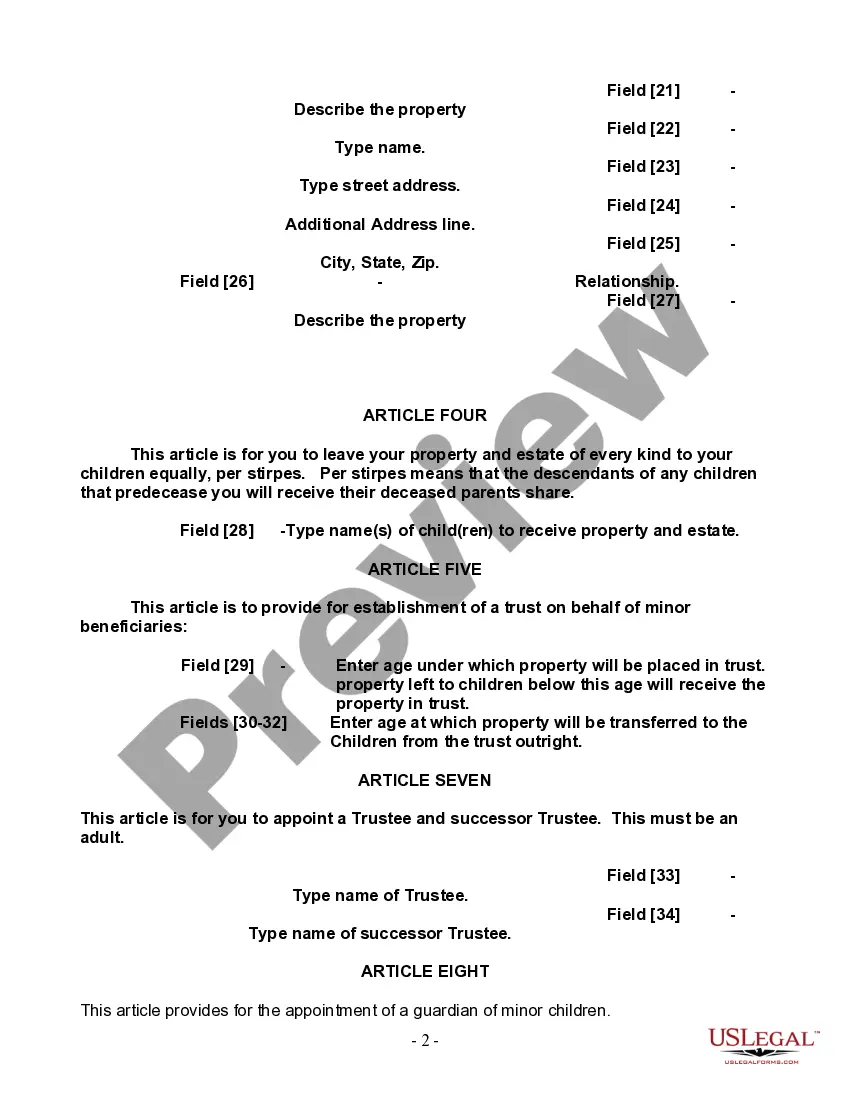
- Designate a trustee for minor children's trusts and a guardian if applicable.
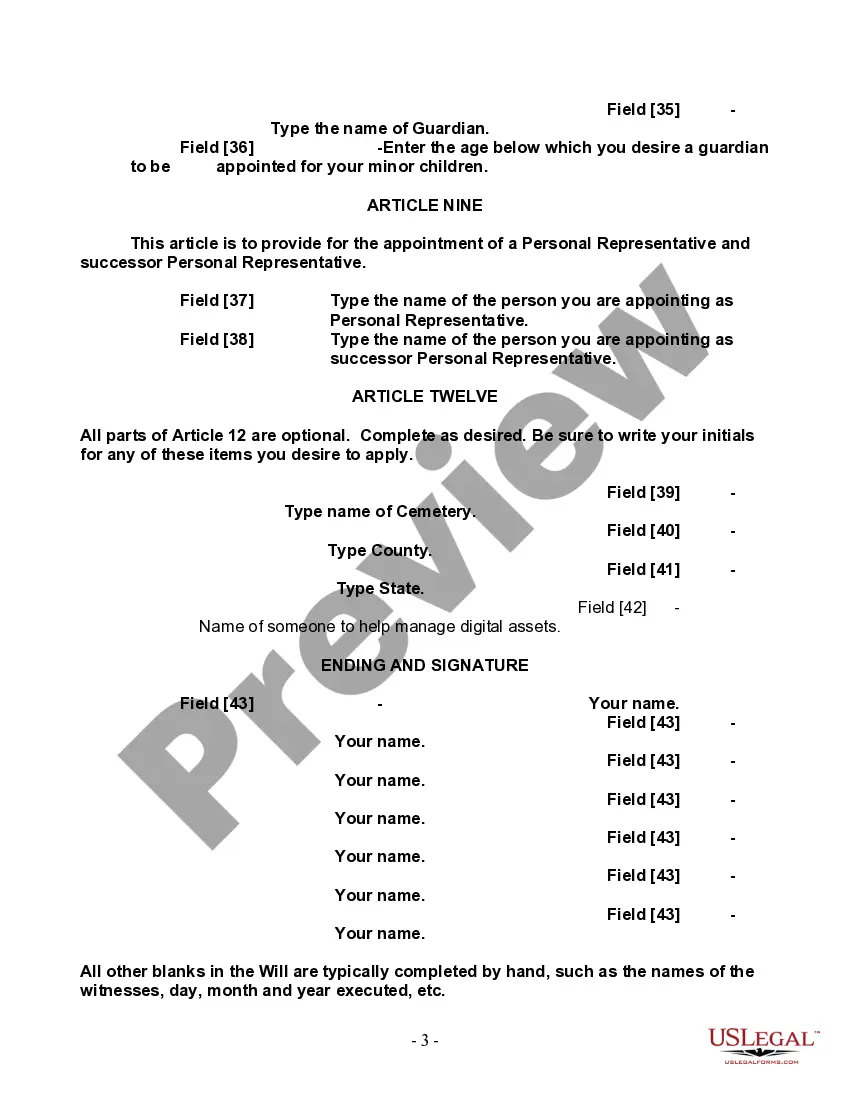
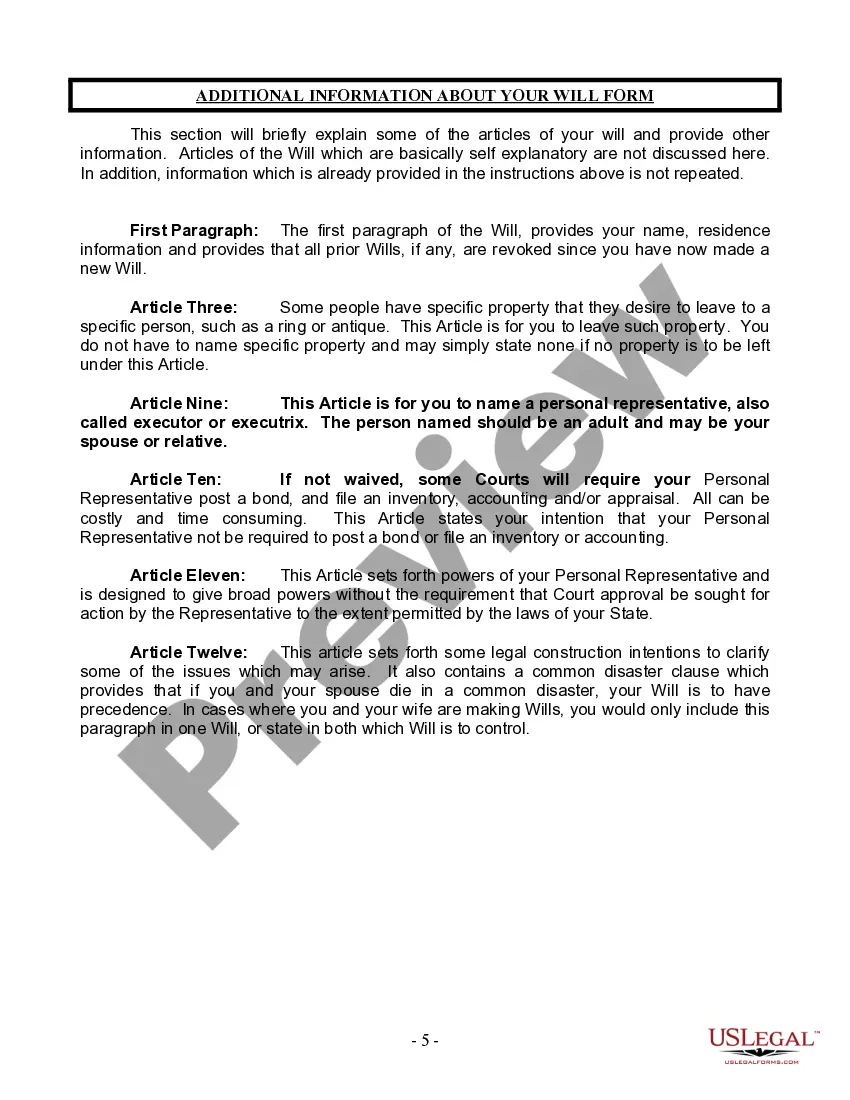
- Ensure the Will is signed in the presence of two witnesses and a notary public if required by your state law.
Does this form need to be notarized?
To make this form legally binding, it must be notarized. Our online notarization service, powered by Notarize, lets you verify and sign documents remotely through an encrypted video session.
Get your form ready online
Our built-in tools help you complete, sign, share, and store your documents in one place.
Make edits, fill in missing information, and update formatting in US Legal Forms—just like you would in MS Word.
Download a copy, print it, send it by email, or mail it via USPS—whatever works best for your next step.
Sign and collect signatures with our SignNow integration. Send to multiple recipients, set reminders, and more. Go Premium to unlock E-Sign.
If this form requires notarization, complete it online through a secure video call—no need to meet a notary in person or wait for an appointment.
We protect your documents and personal data by following strict security and privacy standards.

Make edits, fill in missing information, and update formatting in US Legal Forms—just like you would in MS Word.

Download a copy, print it, send it by email, or mail it via USPS—whatever works best for your next step.

Sign and collect signatures with our SignNow integration. Send to multiple recipients, set reminders, and more. Go Premium to unlock E-Sign.

If this form requires notarization, complete it online through a secure video call—no need to meet a notary in person or wait for an appointment.

We protect your documents and personal data by following strict security and privacy standards.
Common mistakes to avoid
- Not having the Will signed in the presence of required witnesses.
- Failing to specify a guardian for minor children.
- Leaving vague instructions regarding property distribution.
- Neglecting to date the Will after signing.
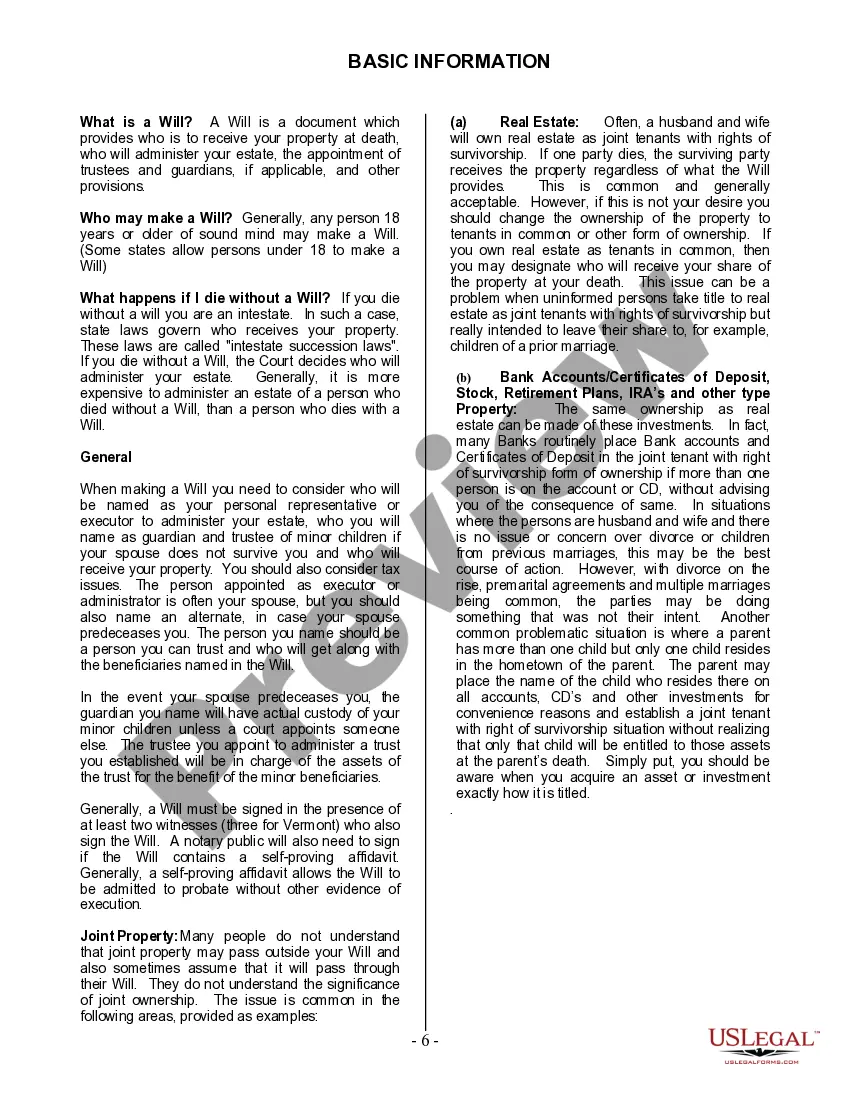
- Not addressing how joint property will be handled.
Why use this form online
- Convenience of accessing and downloading the form at any time.
- Editability allows for personalized adjustments to your specific situation.
- Reliable templates are created and reviewed by licensed attorneys.
Summary of main points
- The form ensures your wishes are followed regarding the distribution of your estate.
- It addresses the specific needs of single parents with both minor and adult children.
- Proper execution with witnesses and if necessary, notarization is critical for validity.
- Regular review and updates are essential to keep the will relevant over time.
Looking for another form?

Form popularity
FAQ
Indiana will also recognize the handwritten will, but only if it meets the Indiana's legal standards. In other words, the handwritten will must be executed and witnessed correctly by two preferably disinterested witnesses. Indiana will not invalidate a will simply because it has been handwritten.
No, in Indiana, you do not need to notarize your will to make it legal. However, Indiana allows you to make your will "self-proving." A self-proving will speeds up probate because the court can accept the will without contacting the witnesses who signed it.you and your witnesses signed the will voluntarily.
Understand the Legal Requirements in Your State. Select an Executor for Your Will. Choose Beneficiaries. Designate Guardians for Your Dependents. Be Specific about Your Wishes. Be Realistic About Distribution. Include Additional Messages in a Letter. Get Witness Signatures.
The following people are disqualified from inheriting under a will: a person or his/her spouse who writes a will or any part thereof on behalf of the testator; and a person or his/her spouse who signs the will on instruction of the testator or as a witness.
We practice law in the state of Indiana. For a will to be valid in our state, the testator must sign the will in the presence of two witnesses, and the witnesses must also sign the document. The will can be valid even if it is not notarized. In most states, there is a proving of the will during probate.
You don't have to get a lawyer to draft your will. It's perfectly legal to write your own will, and any number of products exist to help you with this, from software programs to will-writing kits to the packet of forms you can pick up at your local drugstore.
Self-written wills are typically valid, even when handwritten, as long as they're properly witnessed and notarized, or proven in court. A handwritten will that is not witnessed or notarized is considered a holographic will. Not all states accept holographic wills .
There are four main requirements to the formation of a valid will: The will must have been executed with testamentary intent; The testator must have had testamentary capacity: The will must have been executed free of fraud, duress, undue influence or mistake; and.
Notarization is not required in California to make your will legal. Some states allow you to make your will self-proving by signing a special affidavit in front of a notary that accompanies the will. However, California allows your will to be self-proved without a self-proving affidavit.