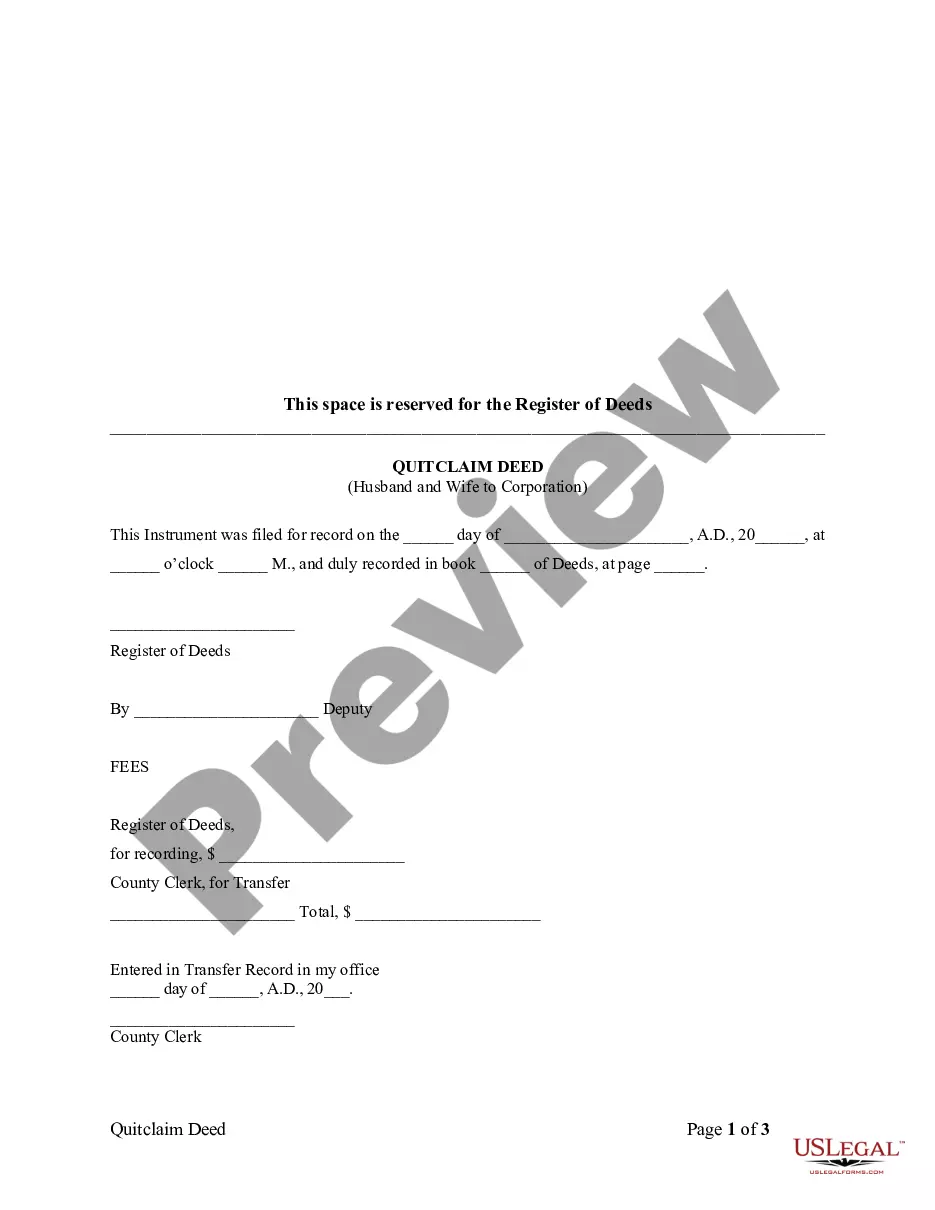
Indiana Office Lease Agreement
About this form
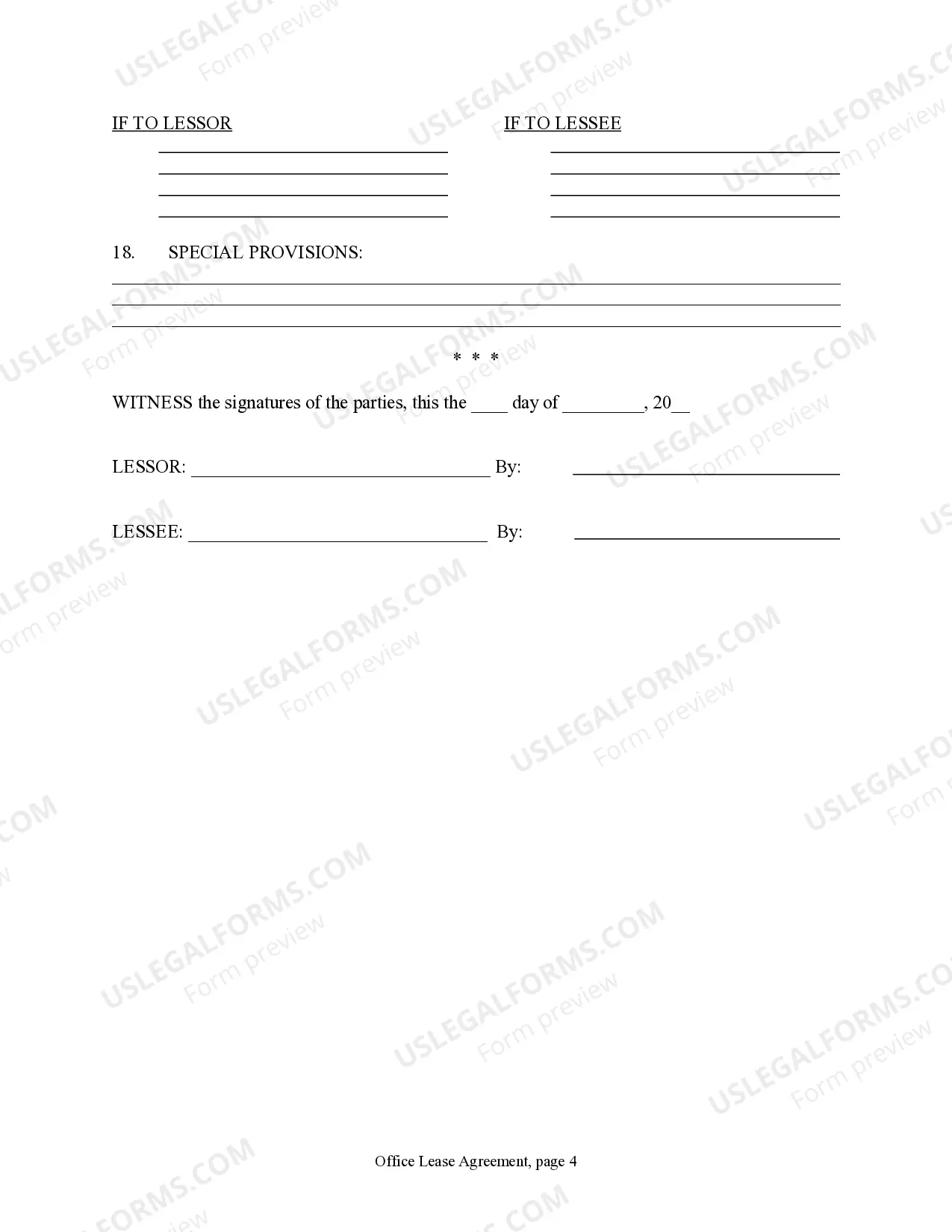
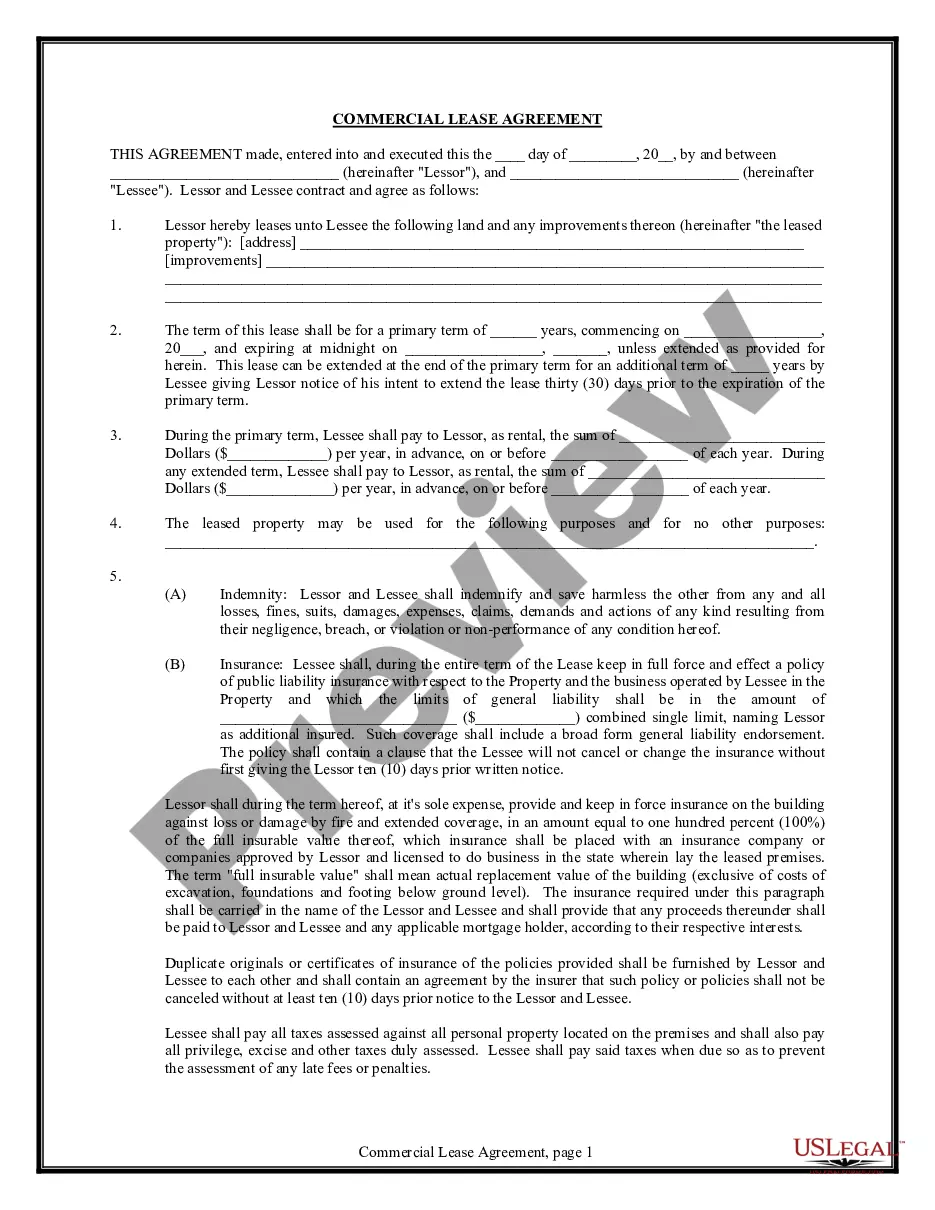
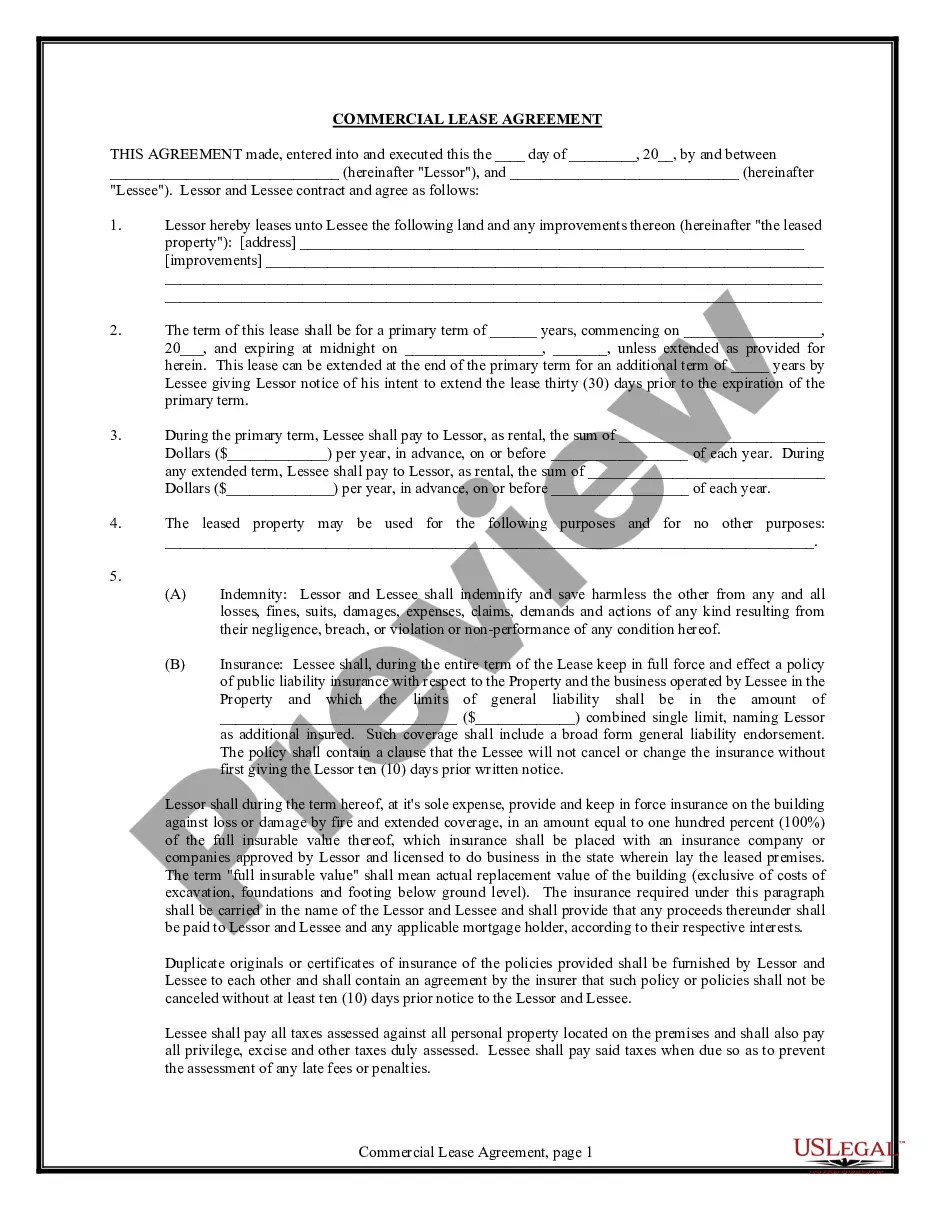
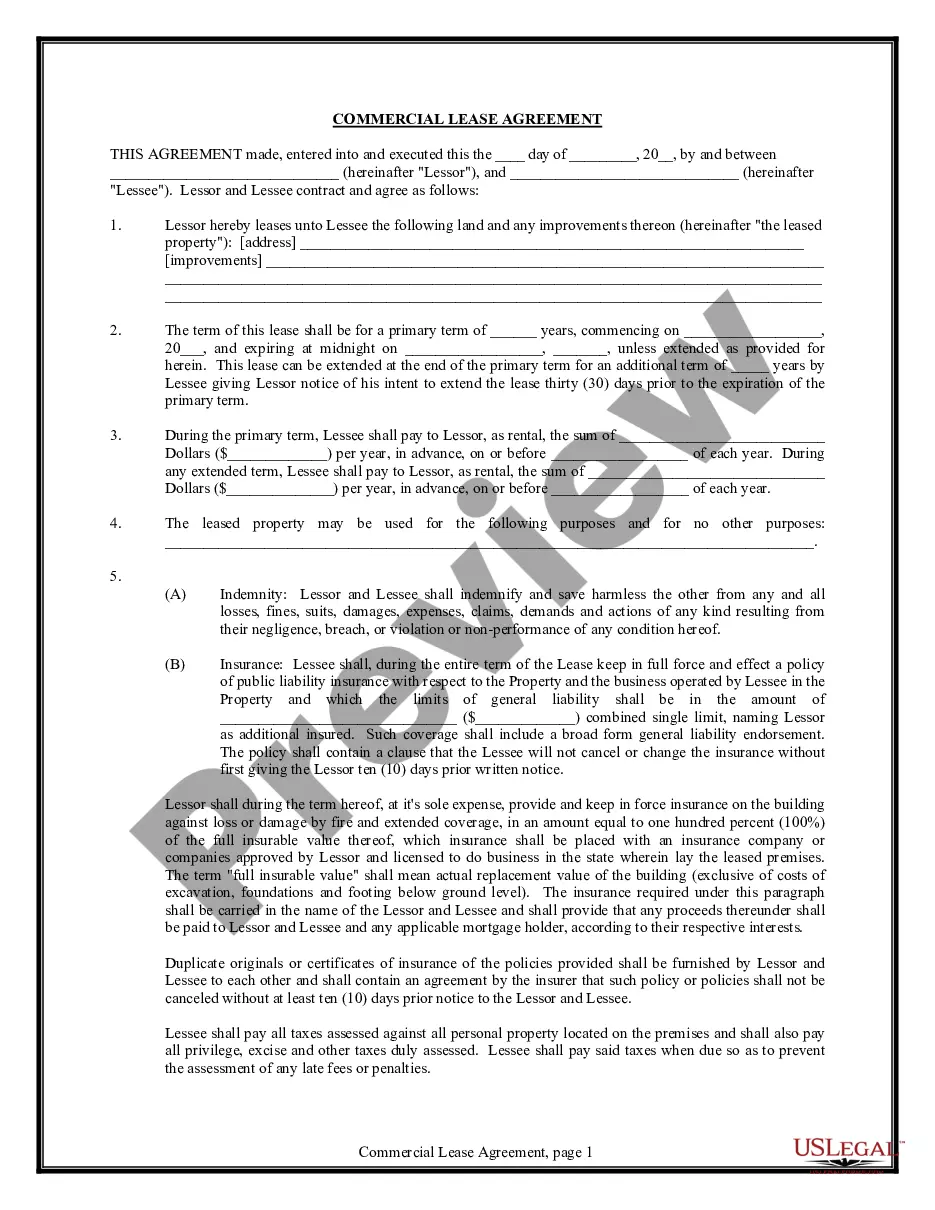
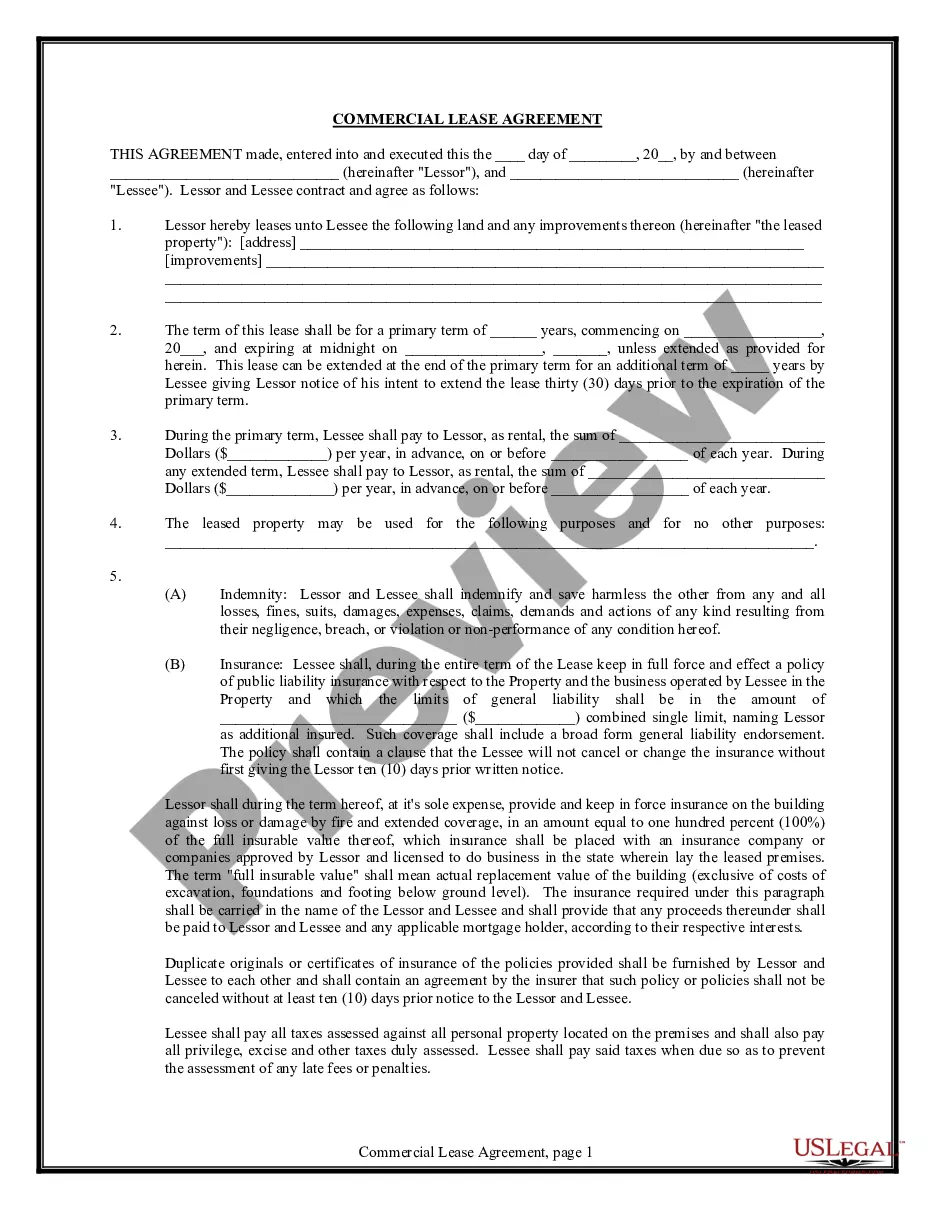
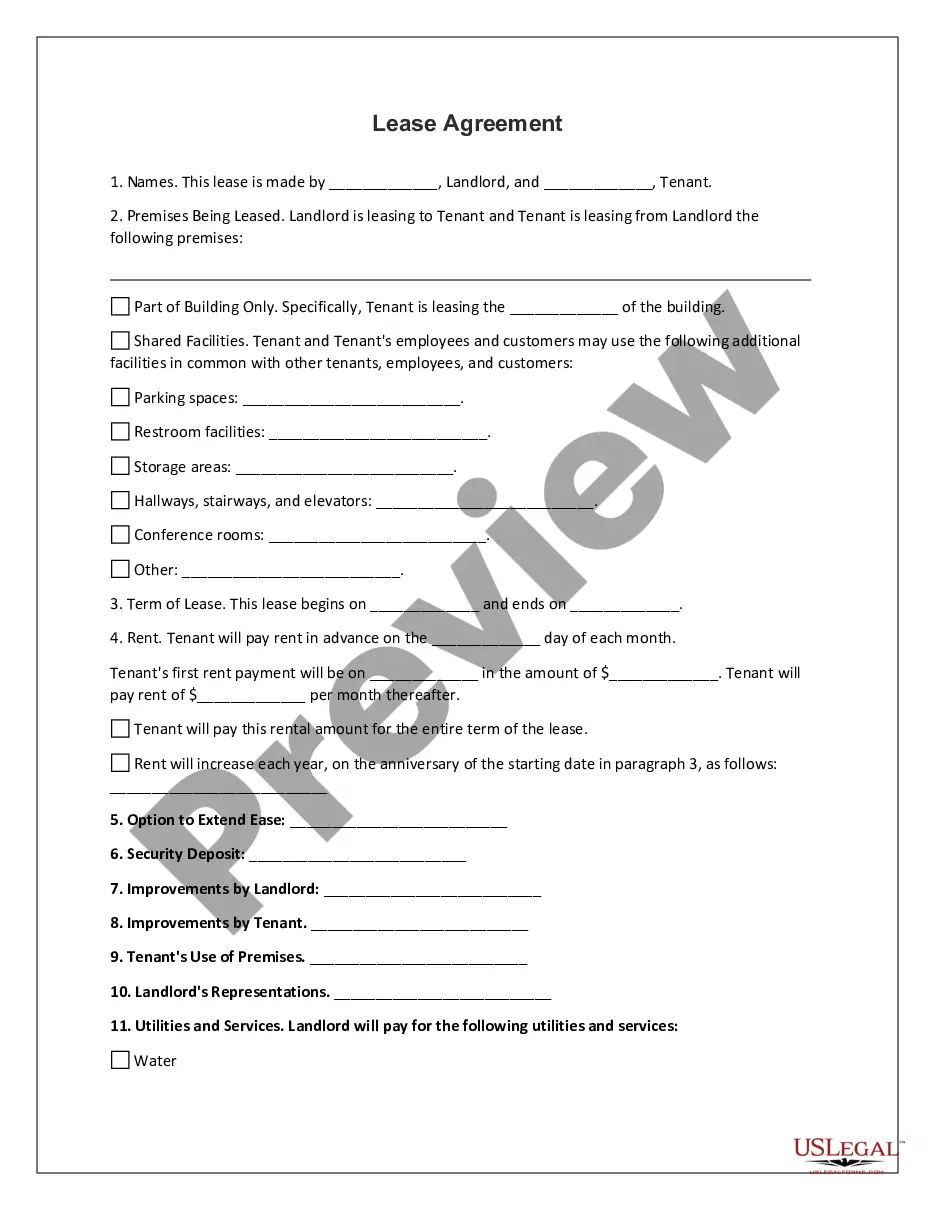
An Office Lease Agreement is a legal document that outlines the terms under which one party (the Lessor) agrees to lease office space to another party (the Lessee) for a specified period. This form defines responsibilities related to rent, usage of the property, and maintenance obligations, distinguishing it from residential leases, which cater to living spaces. It serves as a crucial tool for both landlords and tenants to protect their interests and clarify expectations in a commercial rental arrangement.
Main sections of this form
- Details of the parties involved: Lessor (landlord) and Lessee (tenant).
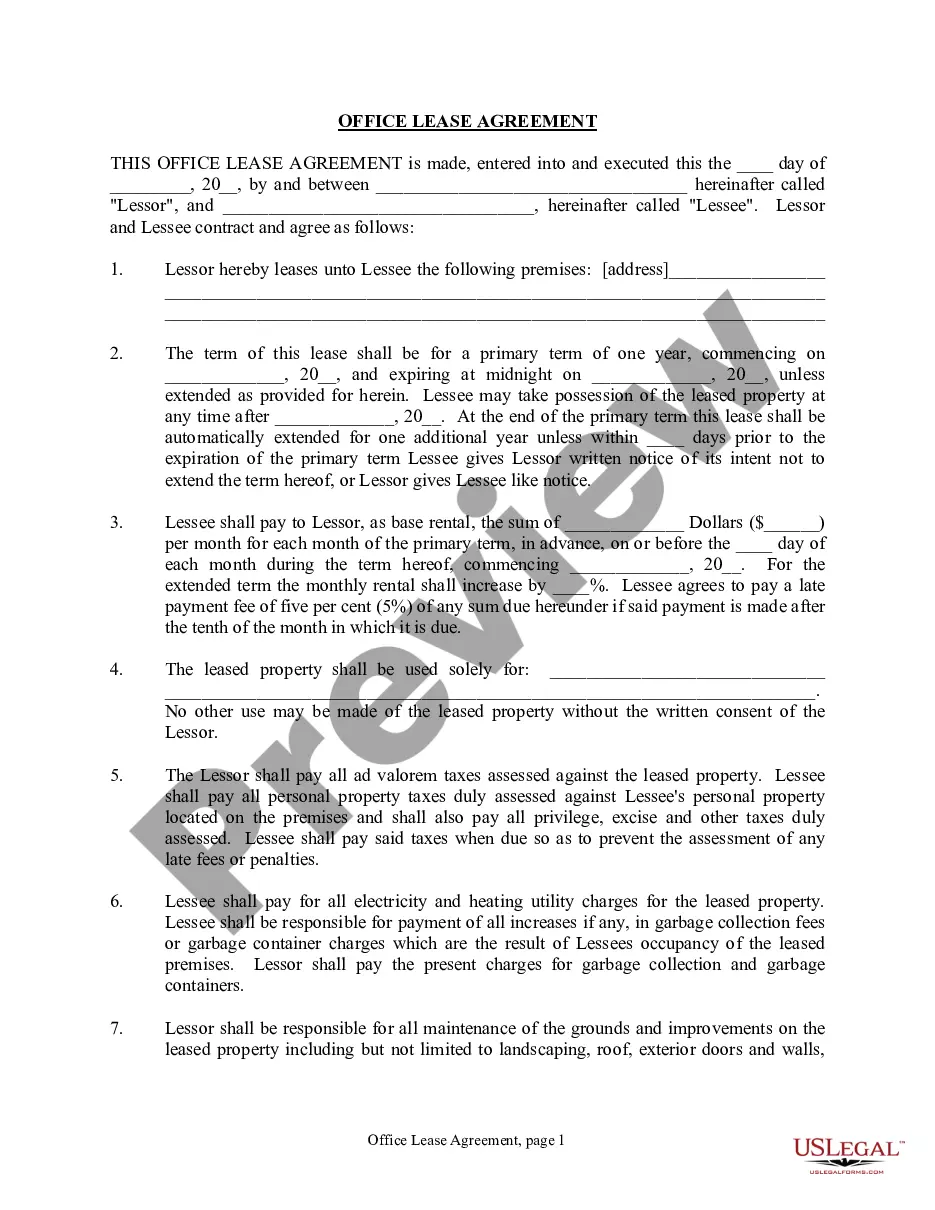
- Description of the leased premises, including the address and intended use.
- Lease term: Dates of commencement and expiration, along with renewal conditions.
- Rental payment terms, including amount, due dates, and late fees.
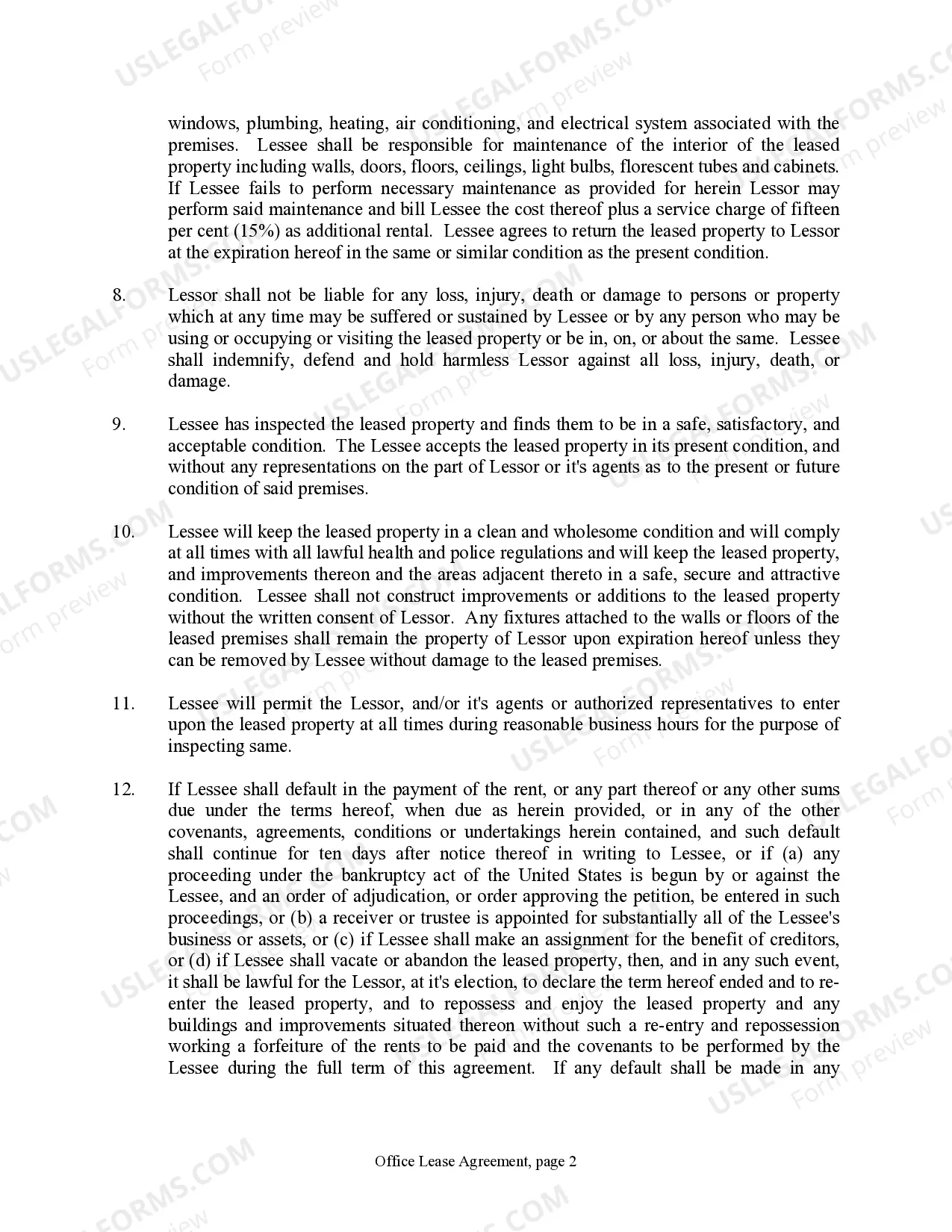
- Maintenance responsibilities for both the Lessor and Lessee.
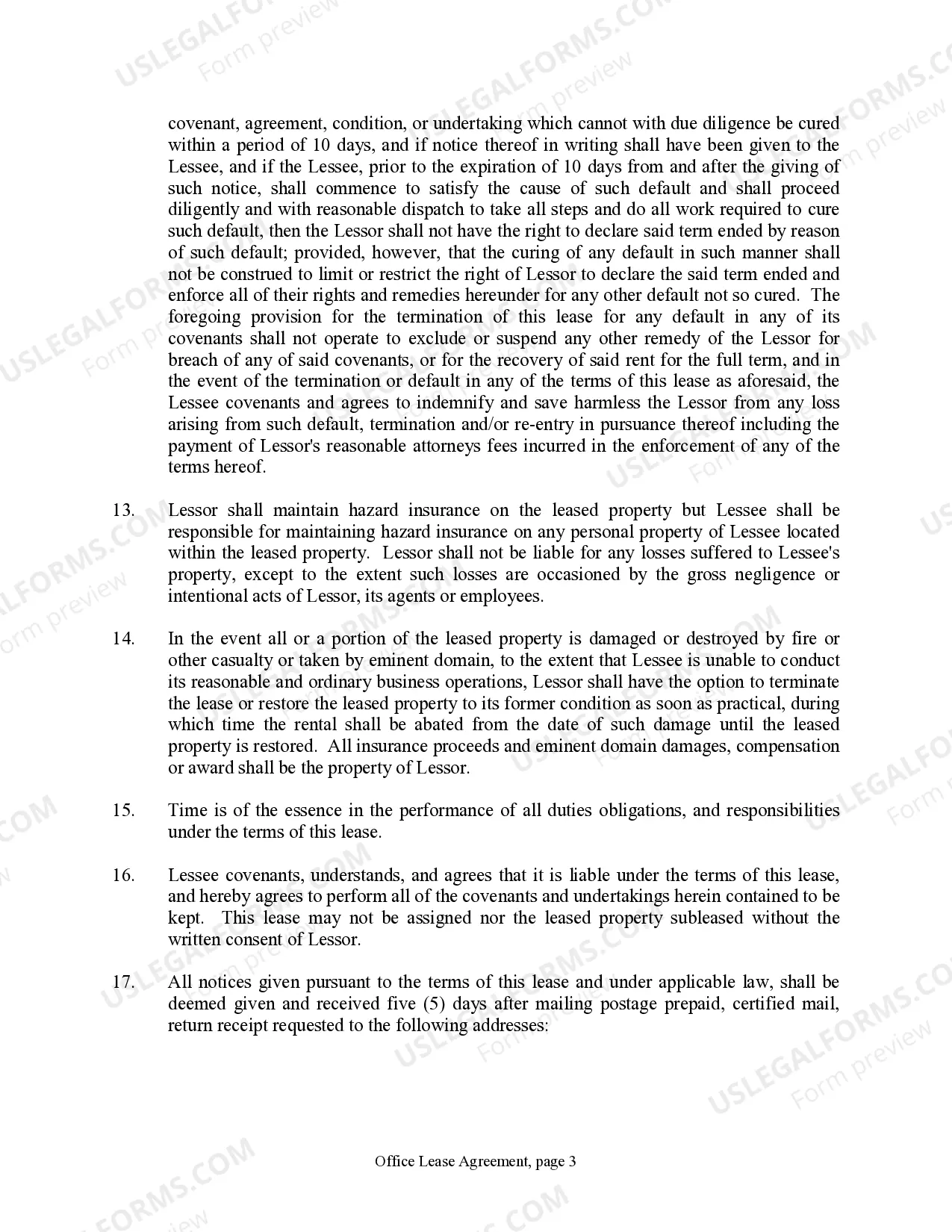
- Indemnification clauses to protect Lessor from liability.
Common use cases
This form should be used when entering into a leasing agreement for commercial office space. It is essential for property owners who wish to formalize the rental arrangement and for tenants seeking to secure a place for their business activities. The Office Lease Agreement serves to establish mutual expectations regarding occupancy, payment, and maintenance, making it applicable whenever one party leases property to another in a business context.
Who this form is for
This Office Lease Agreement is intended for:
- Property owners or landlords looking to lease office space.
- Businesses or individuals seeking rental office space.
- Real estate agents who facilitate commercial property leases.
- Legal professionals drafting lease agreements for clients.
How to prepare this document
- Identify the parties: Enter the names of the Lessor and Lessee in the designated fields.
- Specify the property: Include the full address of the office space being leased.
- Enter dates: Fill in the lease start and end dates as well as any renewal options.
- Detail rental terms: Indicate the monthly rent amount and due dates.
- Outline maintenance responsibilities: Specify who will handle maintenance of the interior and exterior of the property.
- Sign and date the agreement: Ensure that both parties sign the document for it to be legally binding.
Notarization requirements for this form
This form does not typically require notarization unless specified by local law. It is important to consult local regulations to confirm whether notarization is needed for enforceability.
Get your form ready online
Our built-in tools help you complete, sign, share, and store your documents in one place.
Make edits, fill in missing information, and update formatting in US Legal Forms—just like you would in MS Word.
Download a copy, print it, send it by email, or mail it via USPS—whatever works best for your next step.
Sign and collect signatures with our SignNow integration. Send to multiple recipients, set reminders, and more. Go Premium to unlock E-Sign.
If this form requires notarization, complete it online through a secure video call—no need to meet a notary in person or wait for an appointment.
We protect your documents and personal data by following strict security and privacy standards.

Make edits, fill in missing information, and update formatting in US Legal Forms—just like you would in MS Word.

Download a copy, print it, send it by email, or mail it via USPS—whatever works best for your next step.

Sign and collect signatures with our SignNow integration. Send to multiple recipients, set reminders, and more. Go Premium to unlock E-Sign.

If this form requires notarization, complete it online through a secure video call—no need to meet a notary in person or wait for an appointment.

We protect your documents and personal data by following strict security and privacy standards.
Typical mistakes to avoid
- Failing to clearly define the property address or allowed uses, which can lead to disputes.
- Not specifying the terms of renewal or expiration notices, causing confusion at the lease's end.
- Neglecting to outline maintenance responsibilities, which can result in unexpected costs.
- Omitting signatures or dates, rendering the agreement invalid.
Why use this form online
- Convenience: Easily download the form and fill it out at your own pace.
- Editability: Customize the form to meet your specific leasing arrangement.
- Reliability: The document is drafted by licensed attorneys, ensuring compliance with legal standards.
Legal use & context
- An Office Lease Agreement is enforceable in court, provided it is properly executed.
- Both parties should keep copies of the signed agreement for reference.
- Lease agreements may be subject to state-specific laws regarding commercial rentals.
Summary of main points
- The Office Lease Agreement is essential for formalizing the lease of office space, detailing rights and responsibilities.
- Clear definitions within the agreement help prevent disputes and should be carefully crafted.
- Always check state-specific regulations to ensure compliance and address any unique requirements.
Looking for another form?

Form popularity
FAQ
Look for a clause: Re-read your lease and look for either a bailout clause or a co-tenancy clause. Ask: If you are in a good space in a popular area, your landlord will be more inclined to an early termination of the lease than if you are in a bad space in a hard-to-rent location.
The Lease Must be in Writing It does not matter if the lease is handwritten or typed.
Canceling a long-term lease agreement will require you to pay the remainder of the rent payments for your lease. Commercial landlords have the ability to take legal action against you if you leave without paying what you owe them.Be upfront with your landlord and ask him or her to cancel your lease early.
In a full-service lease, or gross lease, the tenant pays the base rent, and the landlord pays for the utilities, insurance, taxes and other costs of operating the building.In a net lease, by contrast, the tenants pay a portion of the operating costs of the building.
As long as the contract spells out specific details and both parties have signed that they agree to the contract's terms, a handwritten contract is legally binding and enforceable in court.
The Lease Must be in Writing It does not matter if the lease is handwritten or typed. If the lease is for more than one year, it must be in written form and contain the following terms.
You and your landlord agree to terminate early. Enter into a deed of surrender to explicitly release you from all lease obligations. You have an early termination clause or break clause in the lease. You may be able to transfer or assign the lease with your landlord's agreement.
In some circumstances, a tenant can break a fixed-term agreement early without penalty. A tenant can give 14 days' written notice to end an agreement early without penalty if: they have accepted an offer of social housing (e.g. from DCJ Housing)
If the commercial tenant is a shell corporation and/or does not have any assets of value, the commercial tenant may choose to walk away from its commercial lease obligations.Often the landlord will require guarantees in order to prevent a commercial tenant from walking away from its lease obligations.