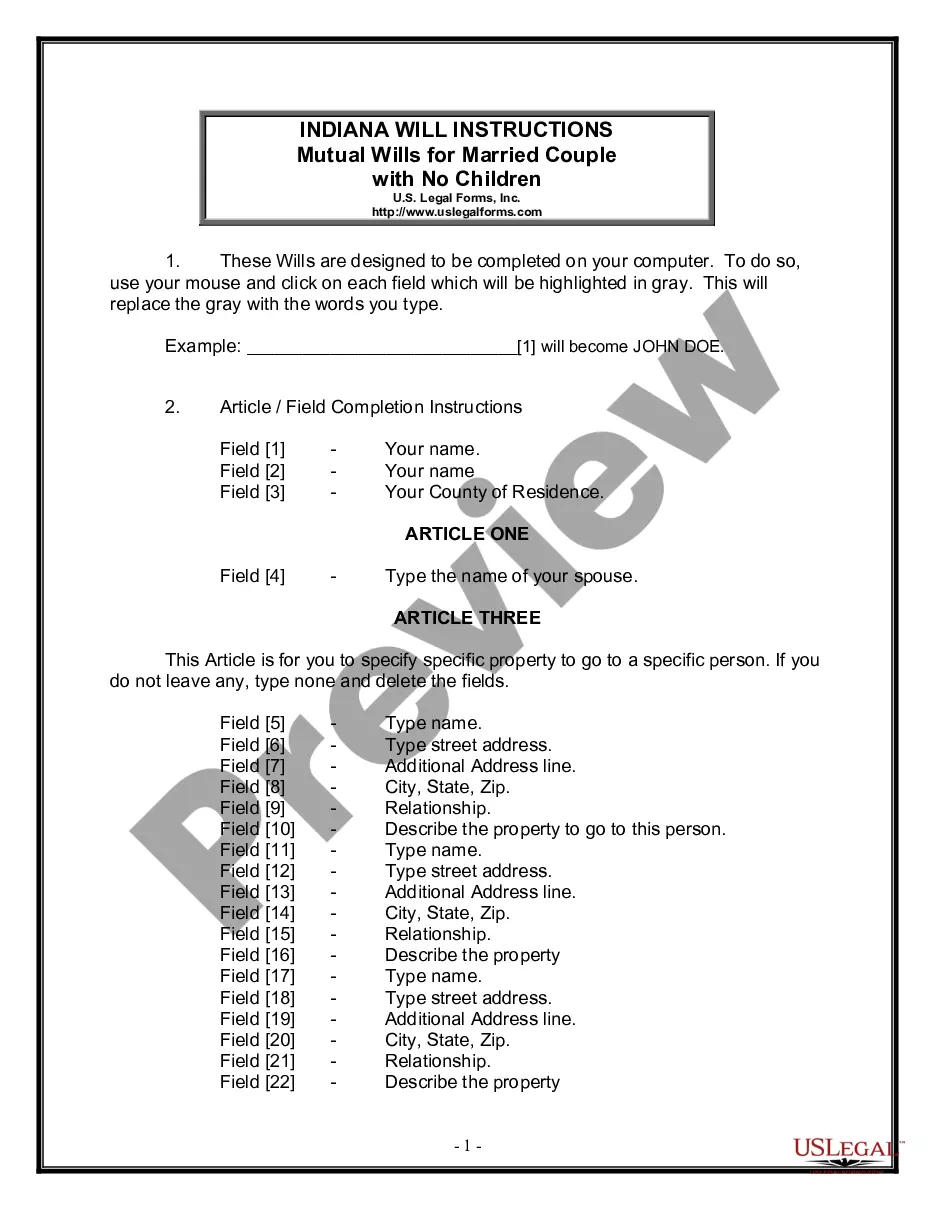
Indiana Mutual Wills containing Last Will and Testaments for Man and Woman living together not Married with No Children
Overview of this form
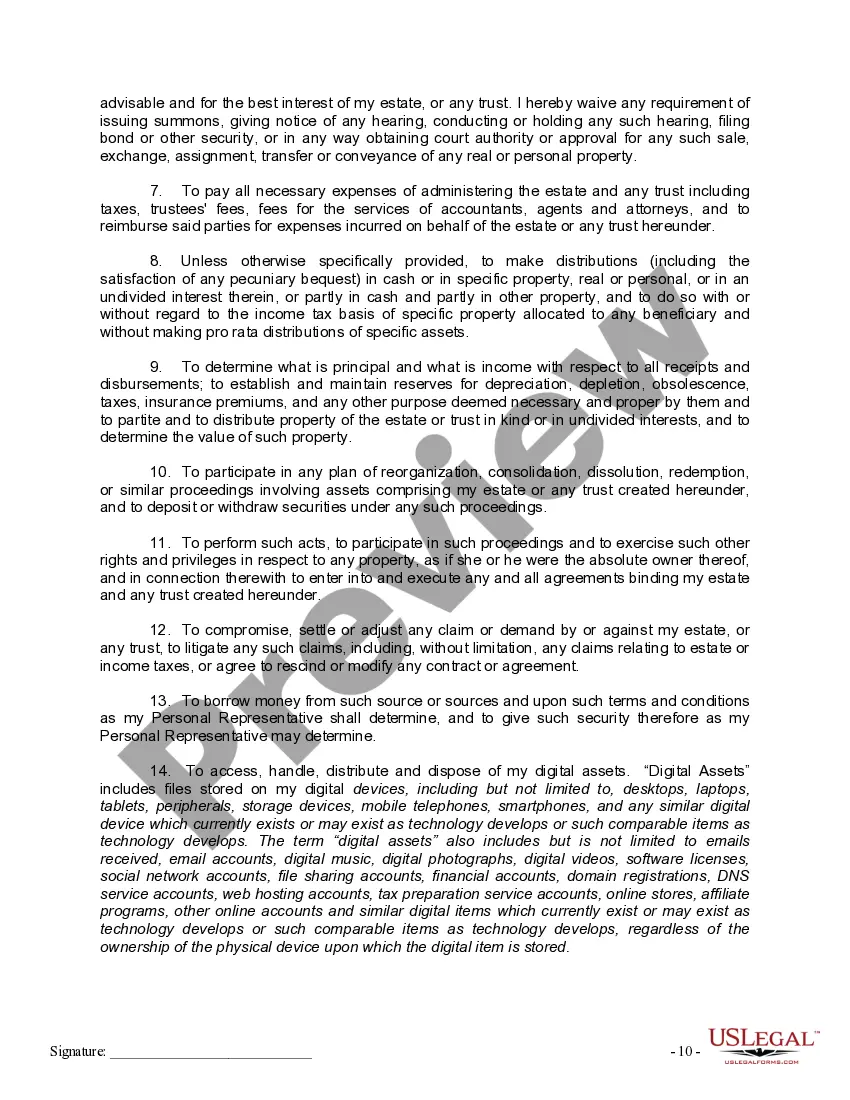
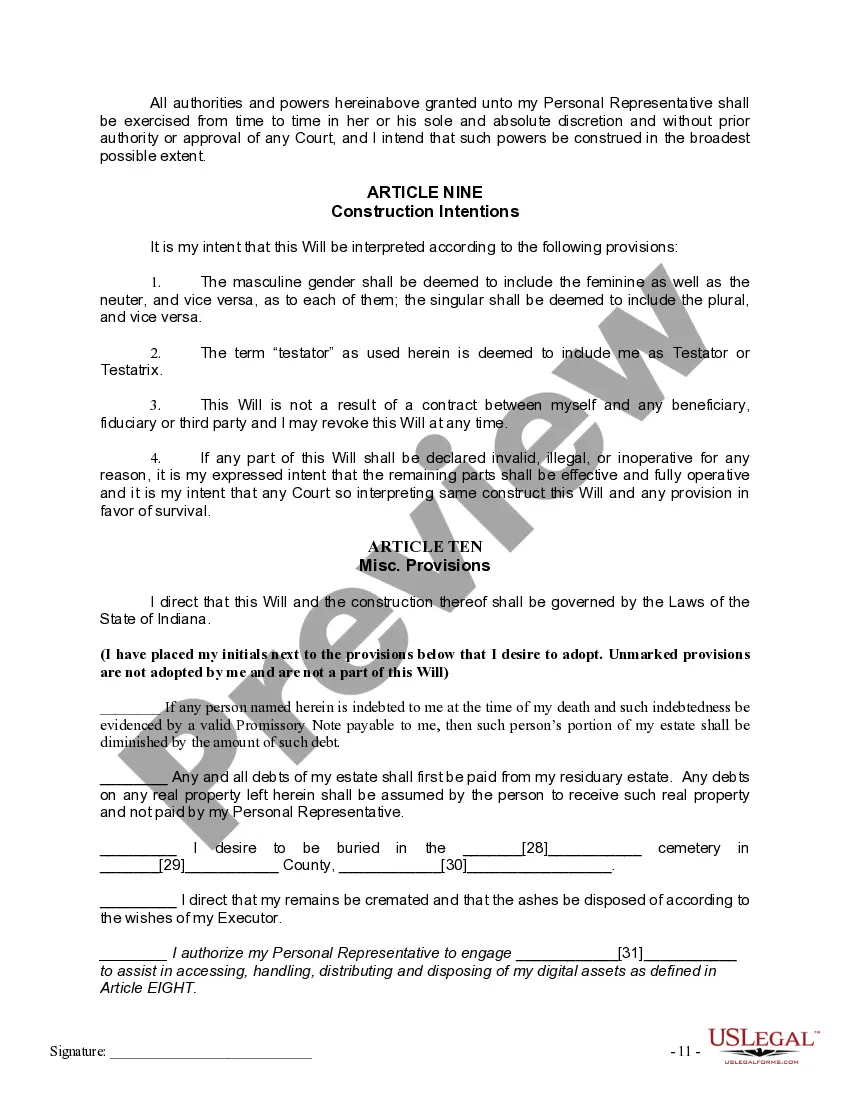
This Mutual Will package contains two Last Will and Testaments specifically designed for a man and woman living together but not married, and with no children. This form allows partners to mutually agree on the distribution of their assets, ensuring that if one partner passes away, the other benefits from the inheritance. Unlike separate wills, mutual wills create a binding agreement reflecting both parties' intentions regarding asset distribution upon death.
Main sections of this form
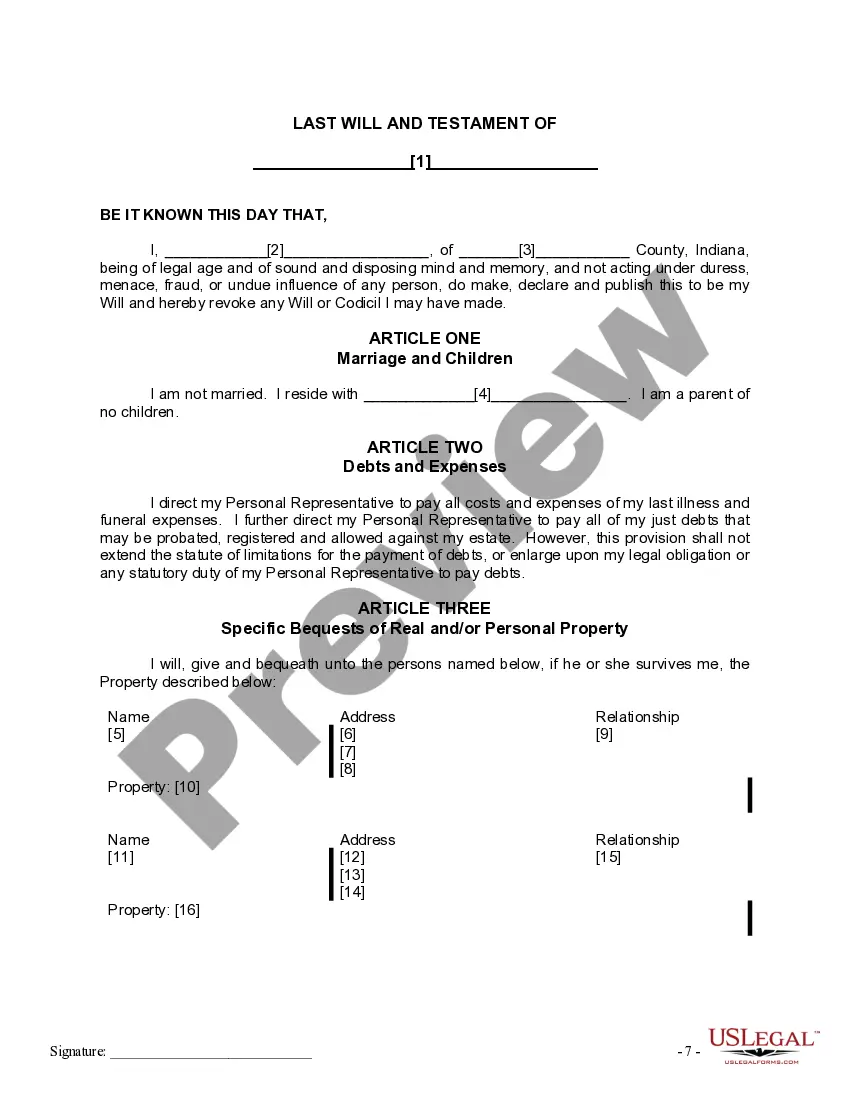
- Identification of both parties involved in the mutual will.
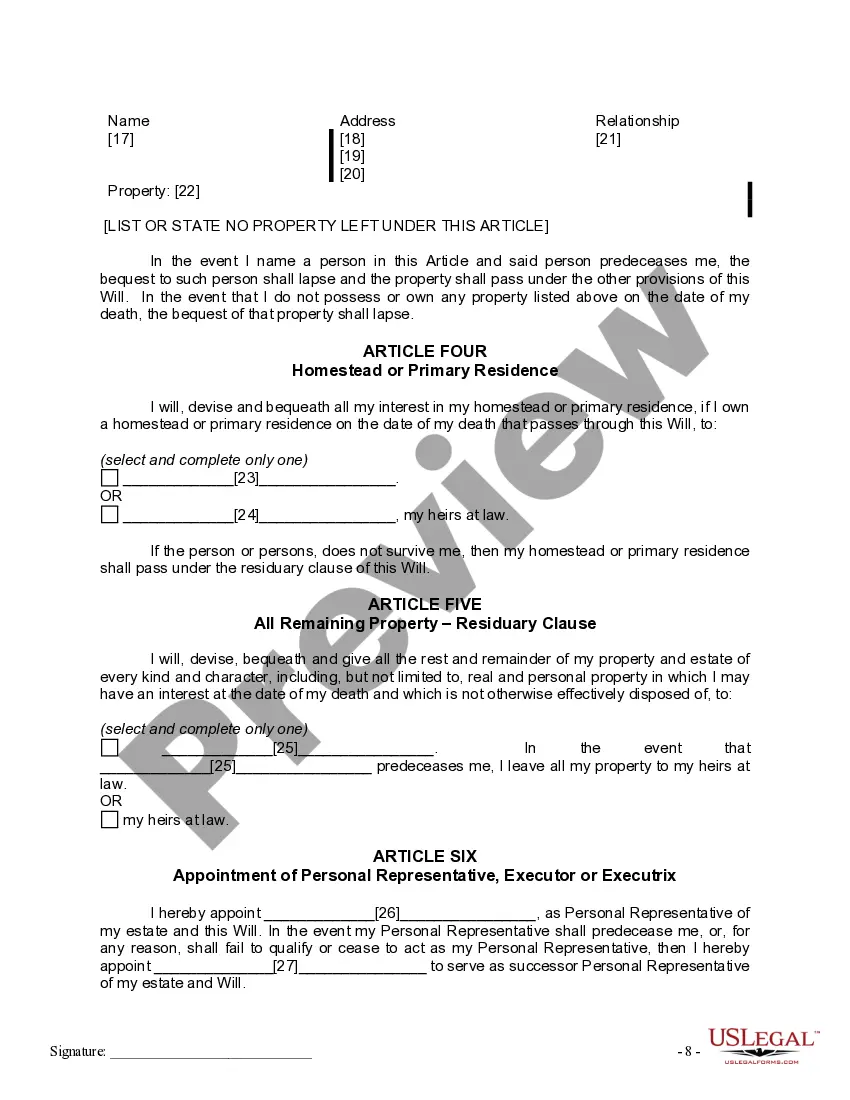
- Specific bequests of property to designated individuals.
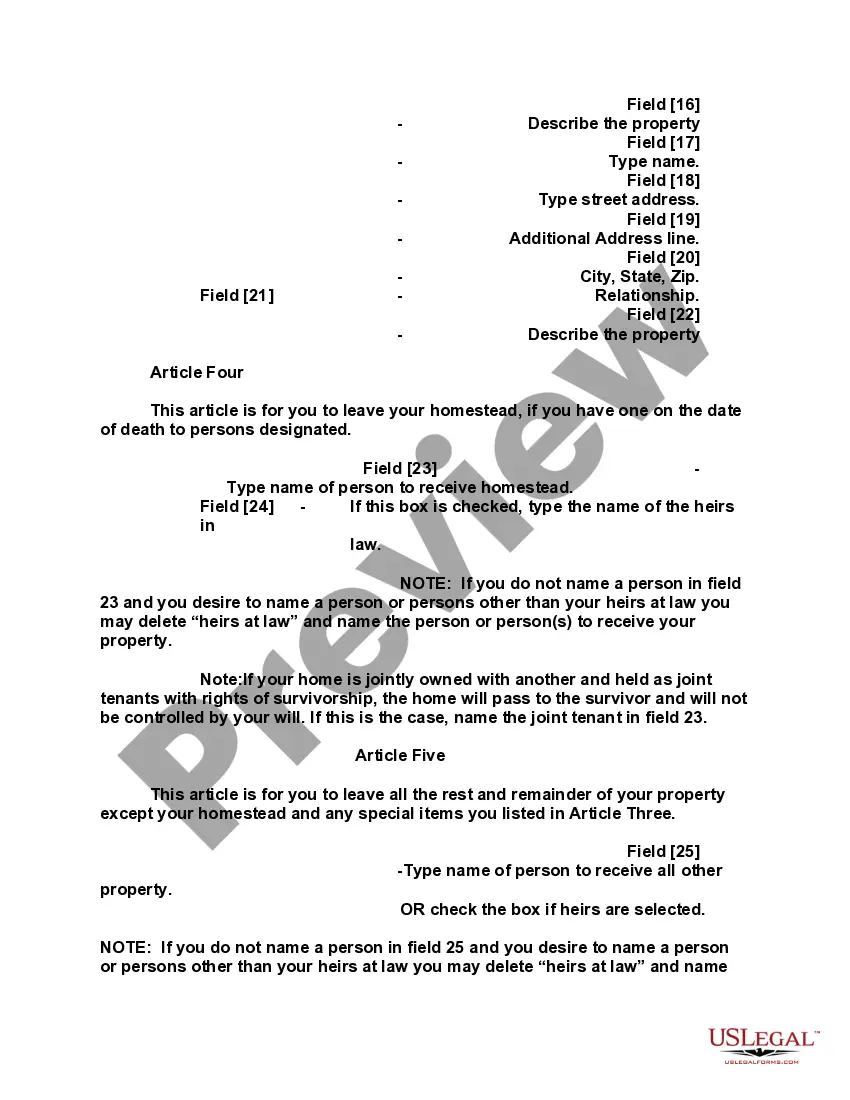
- Provisions for the person's homestead or primary residence.
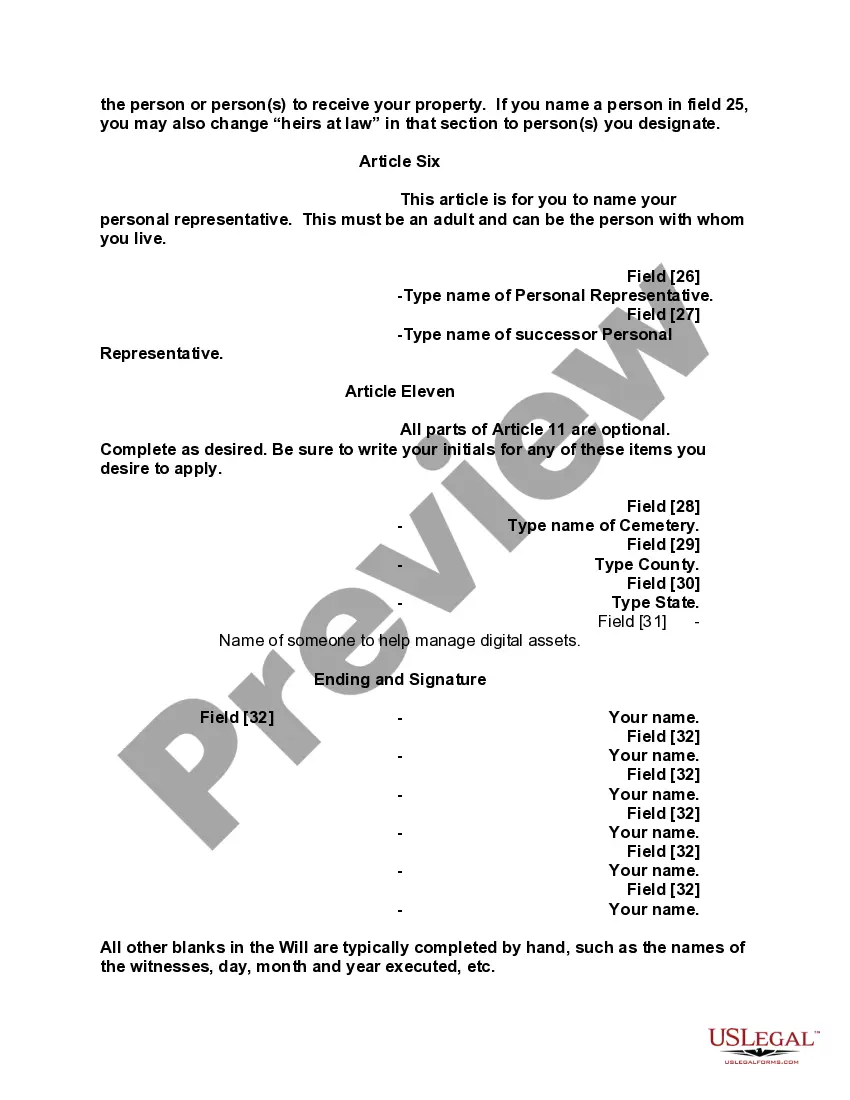
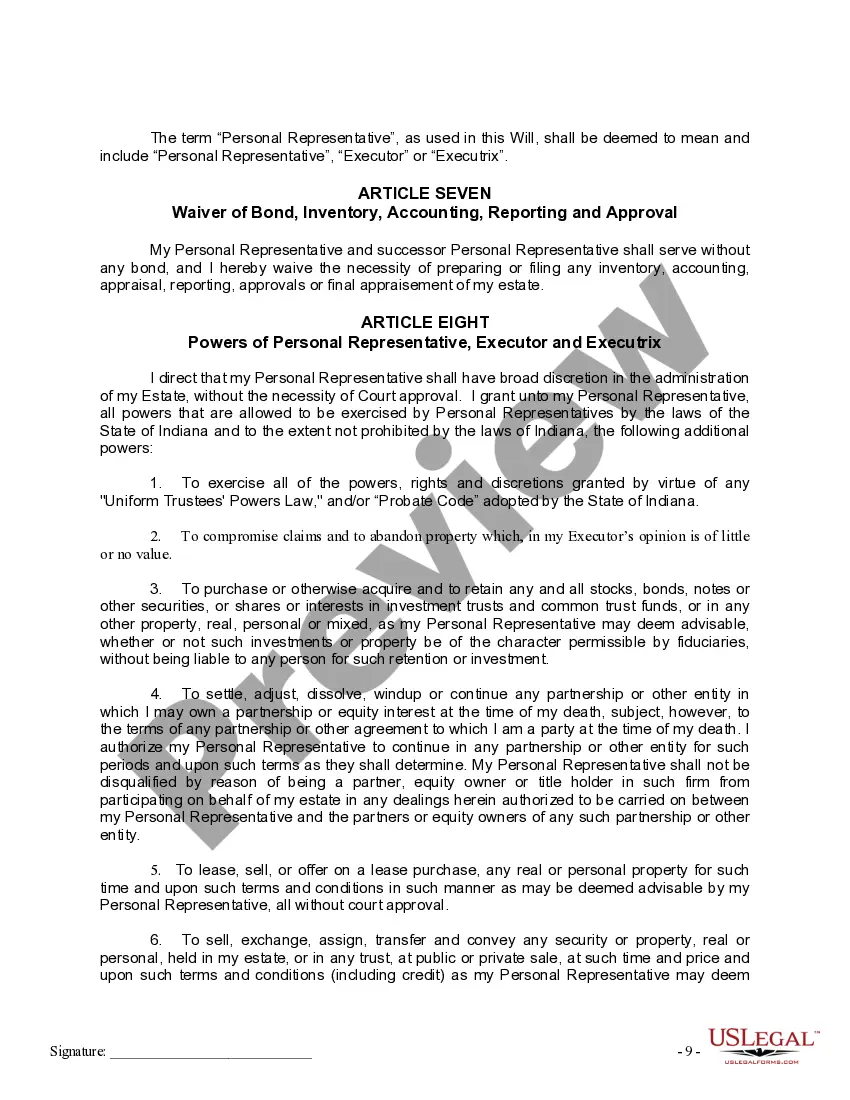
- Naming of a personal representative to manage the estate.
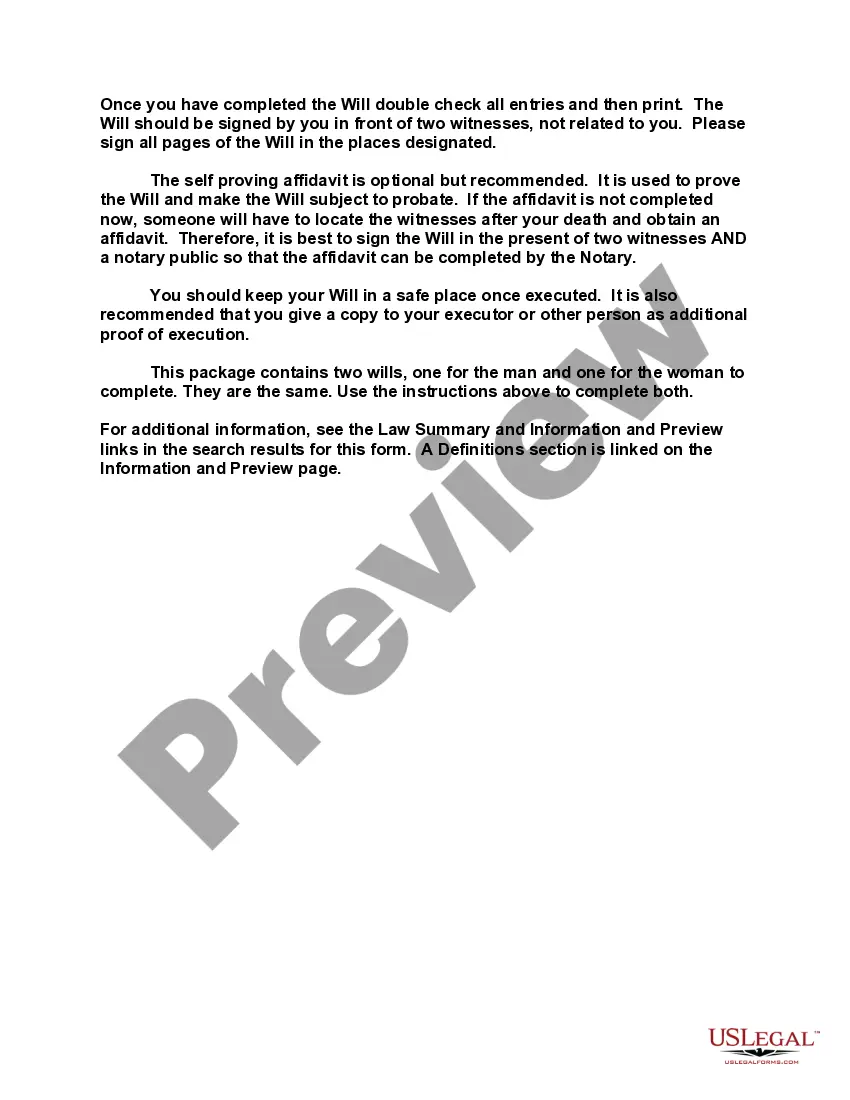
- Instructions for signing in the presence of witnesses and a notary.





Situations where this form applies
This form is useful in situations where a couple living together, who are not married and do not have children, wants to ensure their assets are inherited by one another in the event of death. It can be employed to protect the partner who survives from financial hardship and clarify the wishes for property distribution, especially when one partner has prior family obligations or estate planning needs.
Intended users of this form
- Unmarried couples living together who wish to provide for each other after death.
- Couples who have no children and want to avoid complications in asset distribution.
- Individuals seeking a legally recognized way to express mutual wishes for property allocation.
Steps to complete this form
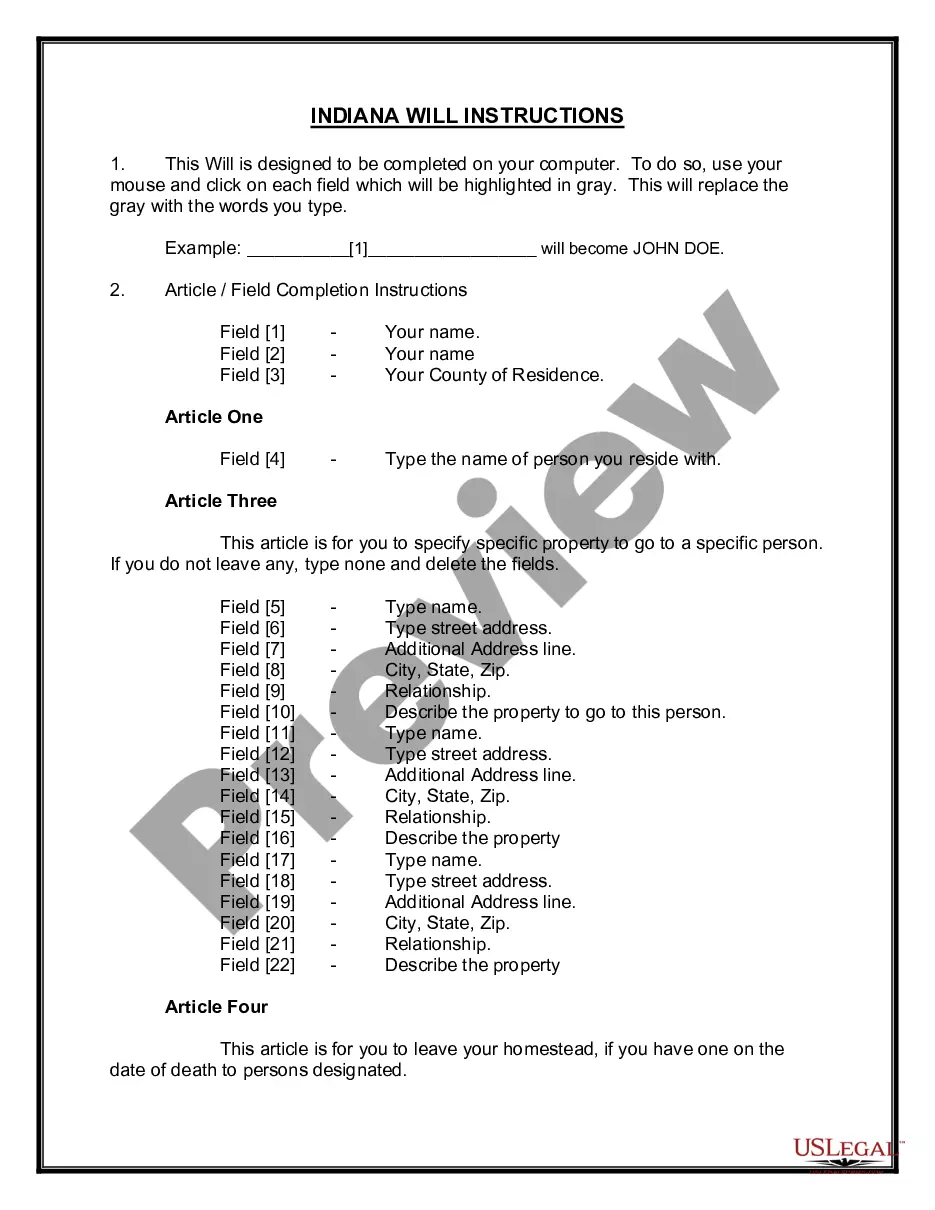
- Enter your name and residence county in the appropriate fields.
- Specify the name of the person you reside with and any specific property bequests.
- Identify the personal representative responsible for managing your estate.
- Ensure two witnesses sign the will in your presence after completing the document.
- Consider having the will notarized to simplify probate processes and validate its authenticity.
Is notarization required?
Yes, this form must be notarized to be legally valid. This ensures the authenticity of the signatures and the intentions stated within the document. US Legal Forms offers integrated online notarization options, available twenty-four seven through secure video calls, eliminating the need to travel.
Get your form ready online
Our built-in tools help you complete, sign, share, and store your documents in one place.
Make edits, fill in missing information, and update formatting in US Legal Forms—just like you would in MS Word.
Download a copy, print it, send it by email, or mail it via USPS—whatever works best for your next step.
Sign and collect signatures with our SignNow integration. Send to multiple recipients, set reminders, and more. Go Premium to unlock E-Sign.
If this form requires notarization, complete it online through a secure video call—no need to meet a notary in person or wait for an appointment.
We protect your documents and personal data by following strict security and privacy standards.

Make edits, fill in missing information, and update formatting in US Legal Forms—just like you would in MS Word.

Download a copy, print it, send it by email, or mail it via USPS—whatever works best for your next step.

Sign and collect signatures with our SignNow integration. Send to multiple recipients, set reminders, and more. Go Premium to unlock E-Sign.

If this form requires notarization, complete it online through a secure video call—no need to meet a notary in person or wait for an appointment.

We protect your documents and personal data by following strict security and privacy standards.
Mistakes to watch out for
- Failing to have the will signed in front of the required witnesses.
- Not updating the will after significant life changes, such as moving or changing assets.
- Overlooking the inclusion of a self-proving affidavit, if applicable.
Benefits of using this form online
- Convenience of completing the form at your own pace from anywhere with internet access.
- Editability allows you to make necessary changes before finalizing.
- Reliability, ensured by templates drafted by licensed attorneys, reducing legal risks.
Legal use & context
- This form serves as a legally binding agreement between two partners and should be executed following state laws.
- It provides clarity on asset distribution, helping to avoid potential conflicts among families and heirs.
- Properly executed mutual wills can simplify the probate process in compliance with local laws.
What to keep in mind
- Mutual wills are essential for unmarried couples wanting to protect each other.
- Proper execution and notarization are crucial to the legal effectiveness of these documents.
- Using attorney-drafted templates can help ensure all legal requirements are met.
Looking for another form?
Form popularity
FAQ
Most single people should have a will. A will can help you determine who will get your property (including your home, business, pets, and digital assets), name guardians for your children, and name an executor. A will also puts your wishes in writing so there's no confusion about your intentions.
Married couples often execute wills which are identical in their provisions, frequently giving the estate to the surviving spouse or if the spouse does not survive to the children.However, not every mirror will is a "mutual will", indeed very few mirror wills are mutual wills.
The only way that a spouse can obtain ownership and override the Will is if the law in the state in which they live allows a "right of election" against the Will.
Like most wills, a joint will lets the will-makers name who will get their property and assets after they die.After one spouse has died, all the couple's property will be left to the surviving spouse; and. After the surviving spouse dies, the remaining property will be left to the couple's children.
However, creating a joint will is still an option in California, and while it might help a couple save some time and money on their estate plan, it can also lead to some complex problems. A couple who creates a joint will can usually only revoke or change the will together. One spouse cannot do it alone.
Property in a living trust. One of the ways to avoid probate is to set up a living trust. Retirement plan proceeds, including money from a pension, IRA, or 401(k) Stocks and bonds held in beneficiary. Proceeds from a payable-on-death bank account.
Bank accounts. Brokerage or investment accounts. Retirement accounts and pension plans. A life insurance policy.
When one spouse dies, the surviving spouse automatically receives complete ownership of the property. This distribution cannot be changed by Will.Because the surviving spouse becomes the outright owner of the property, he or she will need a Will to direct its disposition at his or her subsequent death.
Most joint wills also contains a provision stating that neither spouse can change or revoke the will alonewhich means that the will can't be changed after the first spouse dies.But a joint will is really a binding legal contract, which cannot be revoked or changed after one spouse has died.