Indiana Warranty Deed from Corporation to Husband and Wife
What is this form?
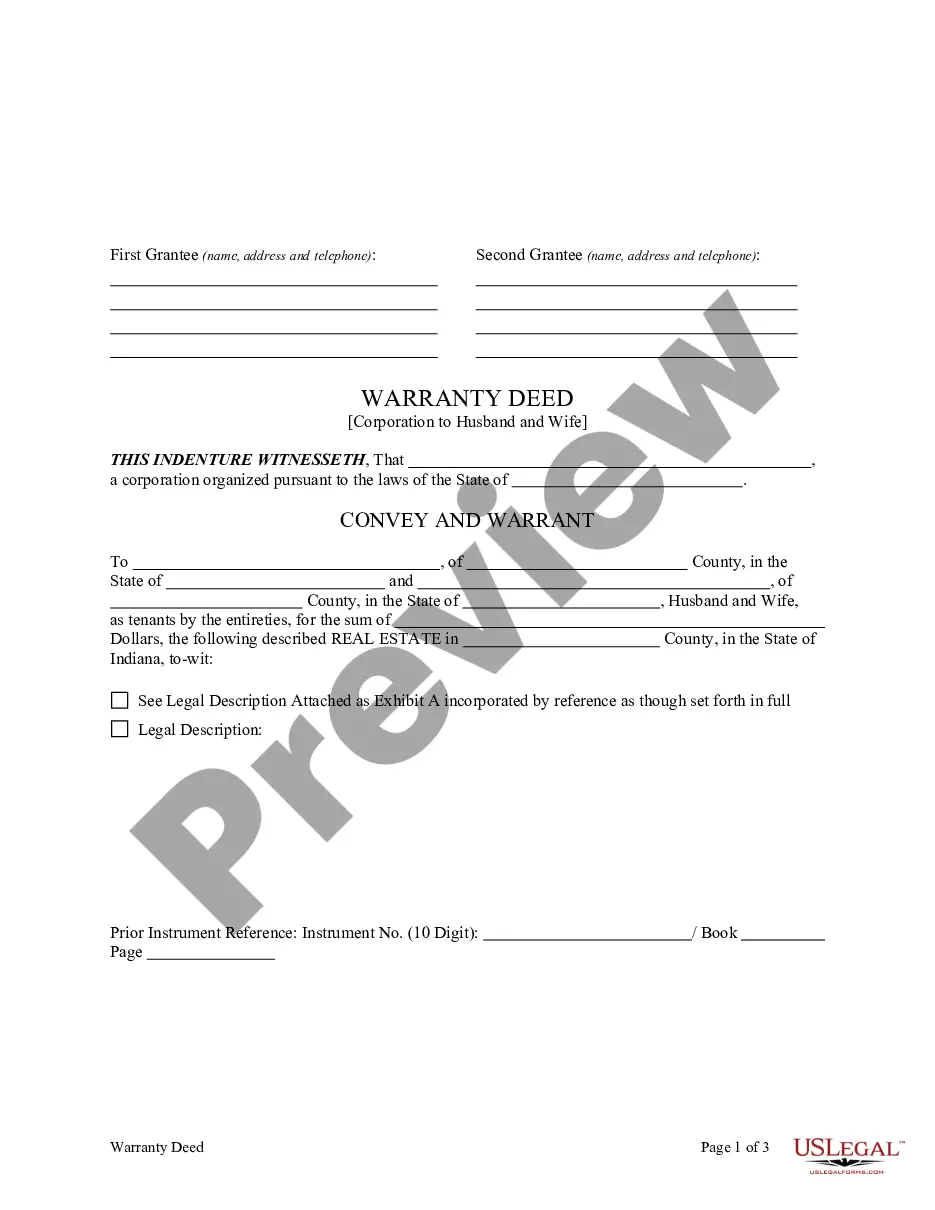
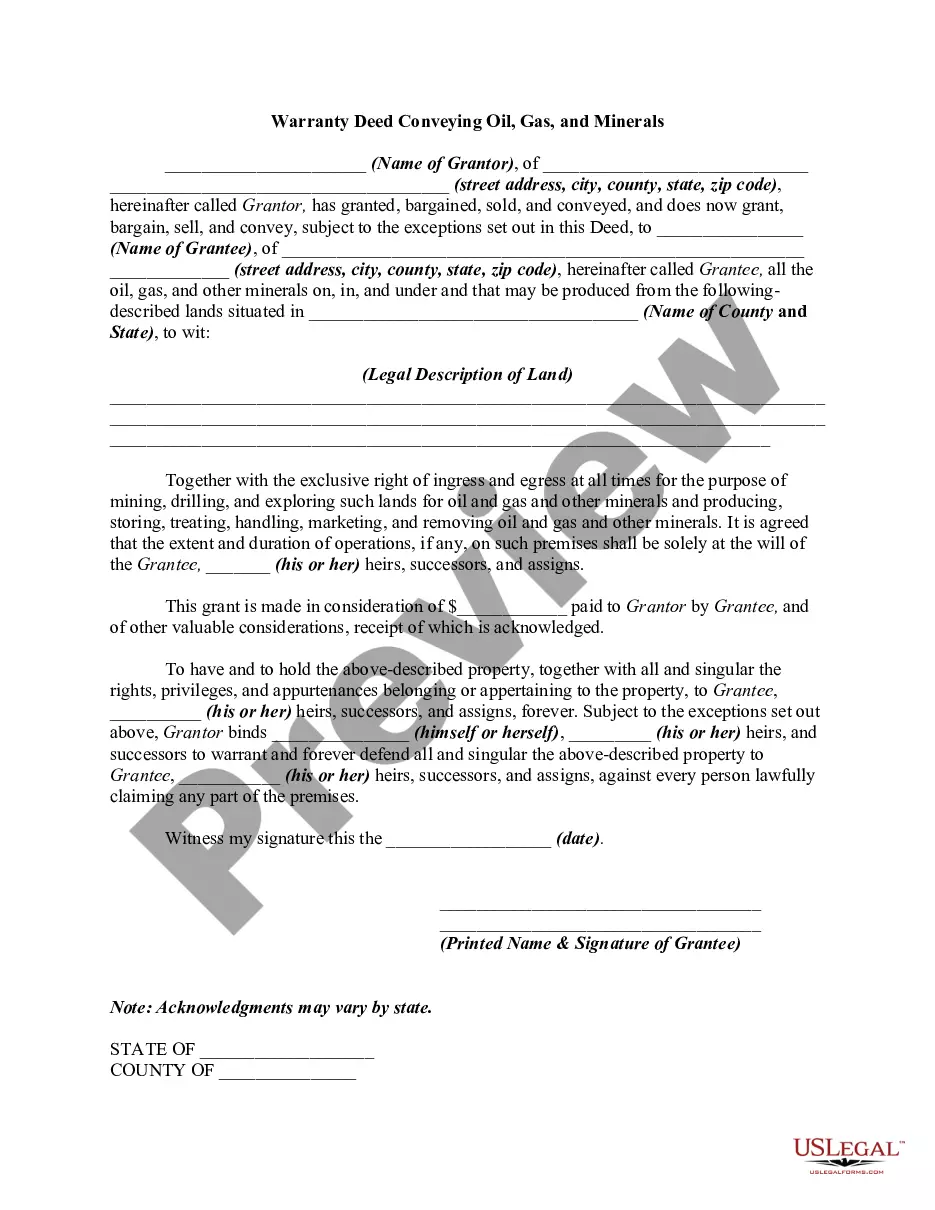
A Warranty Deed from Corporation to Husband and Wife is a legal document that transfers property ownership from a corporation to a married couple. This type of deed guarantees that the corporation holds clear title to the property and assures the granteesâhusband and wifeâthat there are no liens or claims against it. Unlike other deeds, such as quitclaim deeds, a warranty deed provides a higher level of protection for the grantees.
Key components of this form
- Identification of the grantor (the corporation) and the grantees (husband and wife).
- Legal description of the property being transferred.
- Statement of warranty assuring that the title is clear.
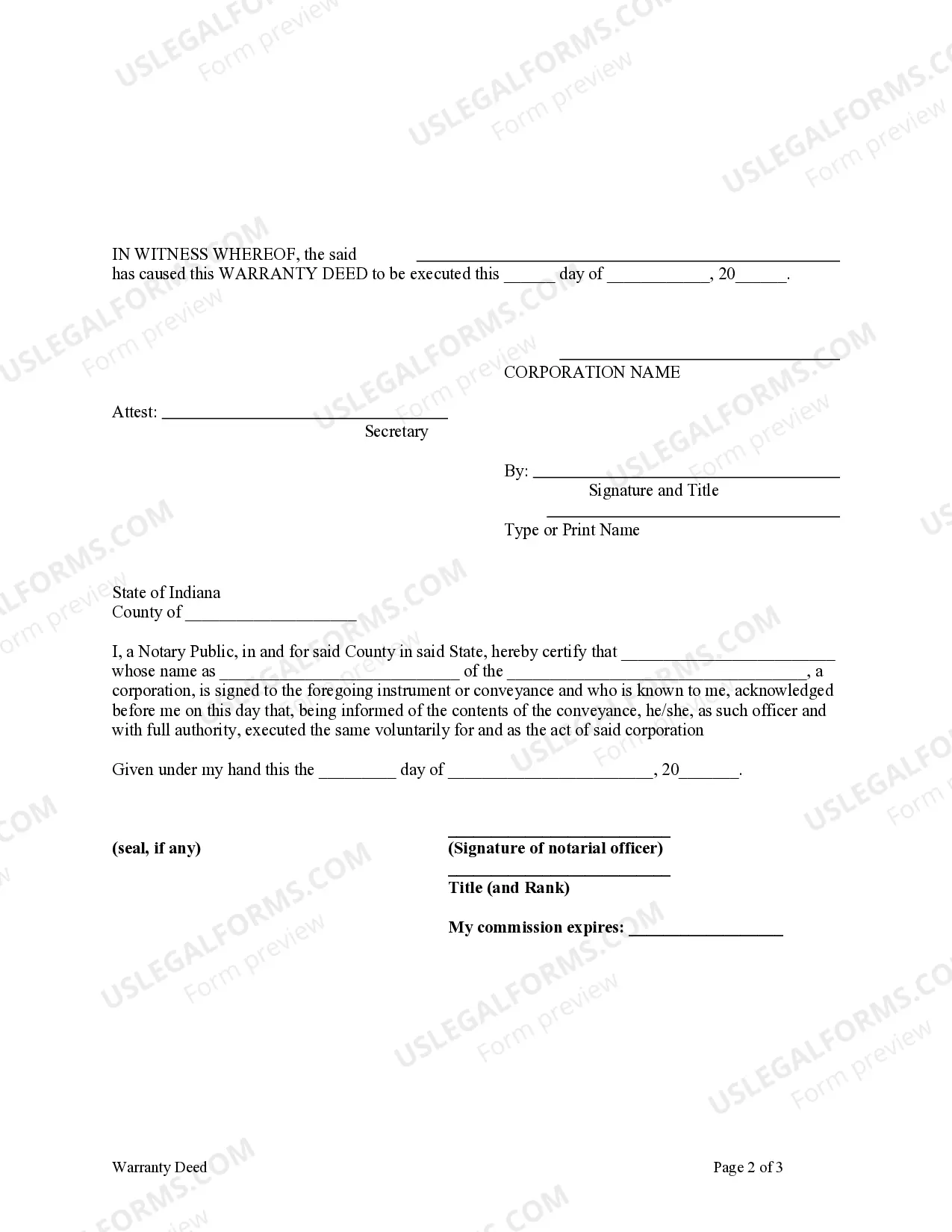
- Signatures of the authorized representatives of the corporation.
- Notarization section for validation of the deed.
- Date of execution to establish when the transfer takes place.



When to use this form
This Warranty Deed should be used when a corporation is transferring property ownership to a married couple. It is ideal for real estate transactions where a business entity needs to divest property, perhaps as a part of liquidation or restructuring process. This form ensures the couple receives a secure and legally sound transfer of property rights.
Who can use this document
This form is intended for:
- Certain corporations seeking to transfer real estate to a married couple.
- Husbands and wives acquiring property directly from a corporation.
- Real estate professionals managing property transfers on behalf of a corporation.
Instructions for completing this form
- Identify the parties involved: fill in the corporation's name as the grantor and the husband and wife as grantees.
- Provide a full legal description of the property being transferred.
- Include a statement of warranty to assure the grantees of clear title.
- Have the authorized representative of the corporation sign the deed.
- Ensure the document is notarized if required by state law.
- Specify the date on which the deed is executed.
Does this document require notarization?
Yes, this form must be notarized to be legally valid. Notarization helps to prevent fraud and confirm the identities of the parties involved. US Legal Forms offers integrated online notarization for your convenience, available 24/7 via secure video calls, ensuring a straightforward process without the need for travel.
Get your form ready online
Our built-in tools help you complete, sign, share, and store your documents in one place.
Make edits, fill in missing information, and update formatting in US Legal Forms—just like you would in MS Word.
Download a copy, print it, send it by email, or mail it via USPS—whatever works best for your next step.
Sign and collect signatures with our SignNow integration. Send to multiple recipients, set reminders, and more. Go Premium to unlock E-Sign.
If this form requires notarization, complete it online through a secure video call—no need to meet a notary in person or wait for an appointment.
We protect your documents and personal data by following strict security and privacy standards.

Make edits, fill in missing information, and update formatting in US Legal Forms—just like you would in MS Word.

Download a copy, print it, send it by email, or mail it via USPS—whatever works best for your next step.

Sign and collect signatures with our SignNow integration. Send to multiple recipients, set reminders, and more. Go Premium to unlock E-Sign.

If this form requires notarization, complete it online through a secure video call—no need to meet a notary in person or wait for an appointment.

We protect your documents and personal data by following strict security and privacy standards.
Typical mistakes to avoid
- Failing to include a full legal description of the property.
- Omitting the signature of the corporation's authorized representative.
- Not properly notarizing the deed when required.
- Using old or incorrect versions of the form.
Benefits of completing this form online
- Convenience of immediate download in multiple file formats.
- Edit or customize the form to fit specific needs before printing.
- Access to documents drafted by licensed attorneys, ensuring legal reliability.
Summary of main points
- The Warranty Deed from Corporation to Husband and Wife guarantees clear title and ownership transfer.
- It is essential to meet specific state requirements for the deed to be valid.
- Understanding the key components of the form will help ensure proper completion and avoid common pitfalls.
Looking for another form?




Form popularity
FAQ
The general way to convey real property in Indiana is through a warranty deed. In certain cases, you may also use a quitclaim deed, a deed of trust or a grant deed. Most deeds require the name of the grantor who is the current owner; the grantee (the new owner) as well as the legal property description.
Signing (§ 32-21-2-3) All deed must be executed by one of the following: judge, clerk of a court of record, county auditor, county recorder, notary public, mayor of a city in Indiana or any other state, commissioner appointed in a state other than Indiana by the governor of Indiana, clerk of the city county council
Retrieve your original deed. Get the appropriate deed form. Draft the deed. Sign the deed before a notary. Record the deed with the county recorder. Obtain the new original deed.
A warranty deed, also known as a general warranty deed, is a legal real estate document between the seller (grantor) and the buyer (grantee). The deed protects the buyer by pledging that the seller holds clear title to the property and there are no encumbrances, outstanding liens, or mortgages against it.
The Indiana warranty deed is a form of deed that provides an unlimited warranty of title. It makes an absolute guarantee that the current owner has good title to the property.
Discuss the terms of the deed with the new owners. Hire a real estate attorney to prepare the deed. Review the deed. Sign the deed in front of a notary public, with witnesses present. File the deed on public record.
Locate the prior deed to the property. Create the new deed. Sign the new deed. Record the original deed.
An Indiana quitclaim deed is a legally binding document that allows a property's owner to sell or transfer the real estate to another party, a buyer, without any promise about the title.