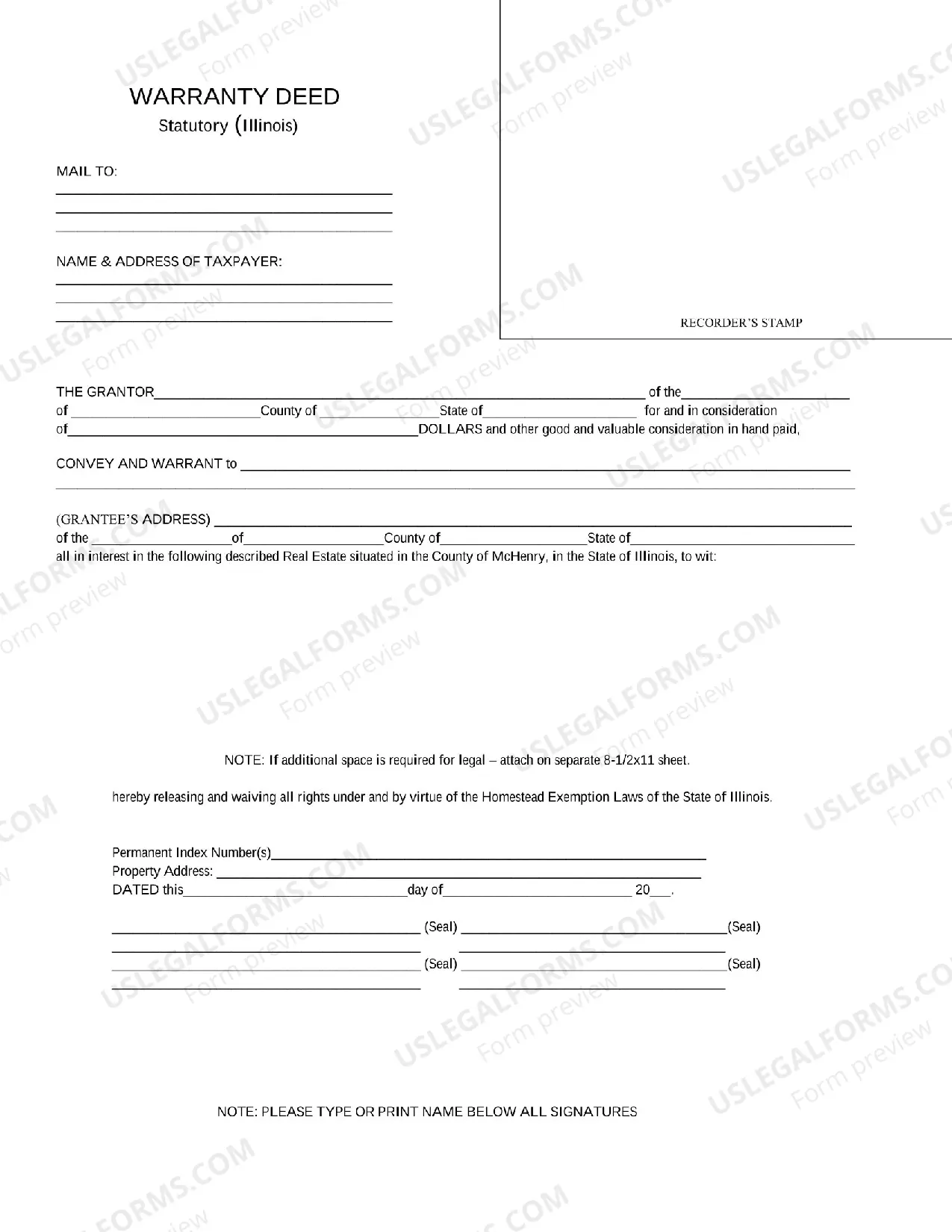
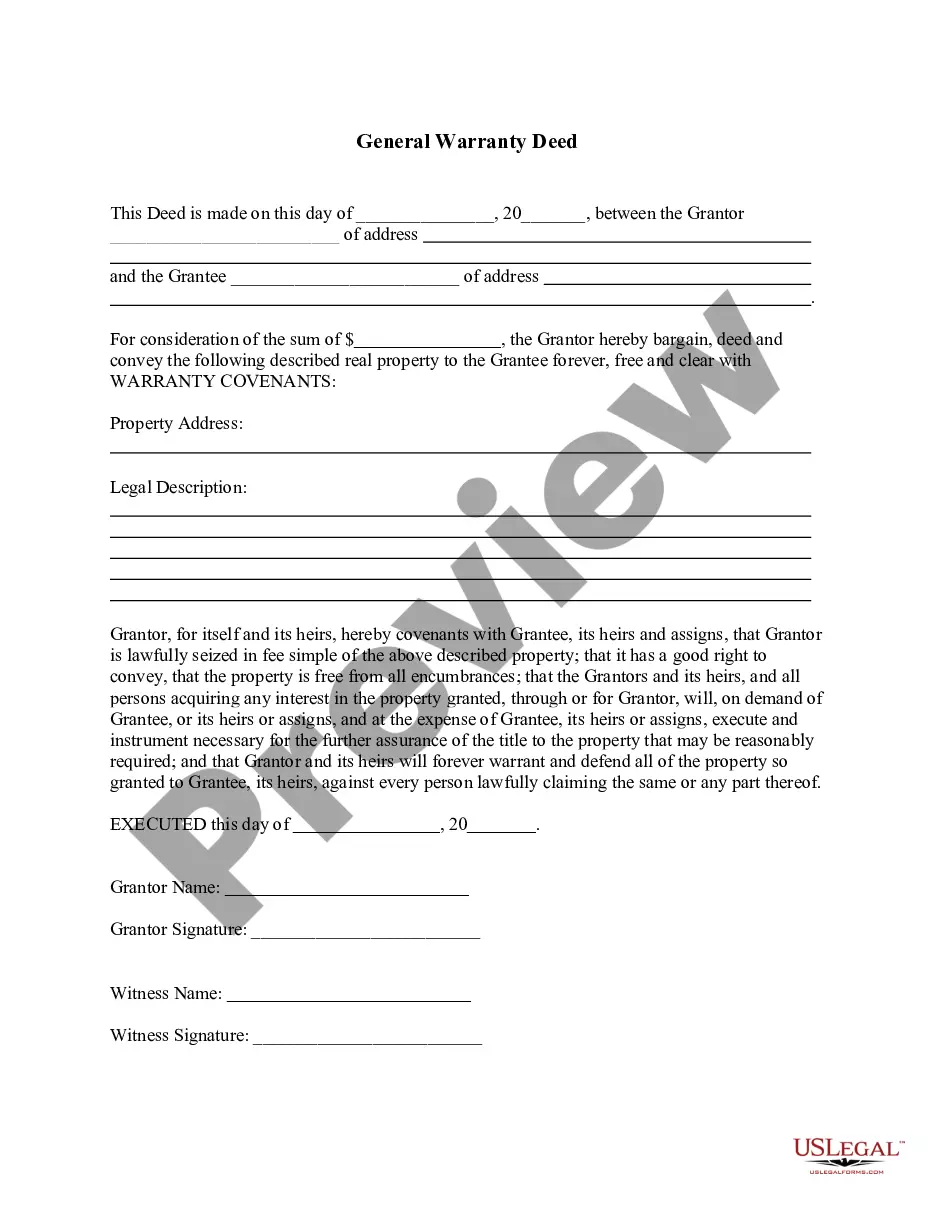
A Warranty Deed-Statutory (Illinois) is a legal document that is used to transfer real estate from one person (granter) to another person (grantee). This deed is a type of general warranty deed that is recognized in the state of Illinois and provides the grantee with covenants of title from the granter. The title is warranted to be free from any encumbrances or claims from any other person or entity, and the granter agrees to defend the title against any third party claims. The deed contains the following warranties: • General Warranty: This warranty states that the granter is the true owner of the property and that they have the right to convey it to the grantee. Basinin Warranty: This warranty states that the granter is in possession of the legal title to the property and has the right to convey it to the grantee. • Quiet Enjoyment Warranty: This warranty states that the grantee will be free from any disturbance of their possession or enjoyment of the property by any other person claiming a superior title. • Encumbrance Warranty: This warranty states that the property is free from any encumbrances or liens, and that the granter will defend the title against any third party claims. • Warranty of Title: This warranty states that the granter is conveying a good and marketable title to the grantee. The various types of Warranty Deed-Statutory (Illinois) include a Special Warranty Deed, a Quitclaim Deed, and a Bargain and Sale Deed.
Warranty Deed-Statutory (Illinois)
Description
Get your form ready online
Our built-in tools help you complete, sign, share, and store your documents in one place.
Make edits, fill in missing information, and update formatting in US Legal Forms—just like you would in MS Word.
Download a copy, print it, send it by email, or mail it via USPS—whatever works best for your next step.
Sign and collect signatures with our SignNow integration. Send to multiple recipients, set reminders, and more. Go Premium to unlock E-Sign.
If this form requires notarization, complete it online through a secure video call—no need to meet a notary in person or wait for an appointment.
We protect your documents and personal data by following strict security and privacy standards.

Make edits, fill in missing information, and update formatting in US Legal Forms—just like you would in MS Word.

Download a copy, print it, send it by email, or mail it via USPS—whatever works best for your next step.

Sign and collect signatures with our SignNow integration. Send to multiple recipients, set reminders, and more. Go Premium to unlock E-Sign.

If this form requires notarization, complete it online through a secure video call—no need to meet a notary in person or wait for an appointment.

We protect your documents and personal data by following strict security and privacy standards.
Looking for another form?
How to fill out Warranty Deed-Statutory (Illinois)?
Creating legal documents can be quite daunting unless you have accessible fillable templates at hand.
With the US Legal Forms online repository of formal paperwork, you can rest assured that the forms you acquire are compliant with both federal and state regulations and have been validated by our specialists. Therefore, if you need to draft a Warranty Deed-Statutory (Illinois), our service is the ideal destination for downloading it.
Here’s a brief guide for you: Document compliance verification. You should thoroughly examine the contents of the form you desire to confirm if it meets your requirements and complies with your local legal standards. Reviewing your document and considering its overall description will assist you in this regard.
- Retrieving your Warranty Deed-Statutory (Illinois) from our collection is as easy as 1-2-3.
- Previously registered users with an active subscription only need to Log In and press the Download button after locating the suitable template.
- Subsequently, if necessary, users can access the same document from the My documents section of their account.
- Nevertheless, even if you are new to our platform, registering for an active subscription will only take a few moments.
Form popularity
FAQ
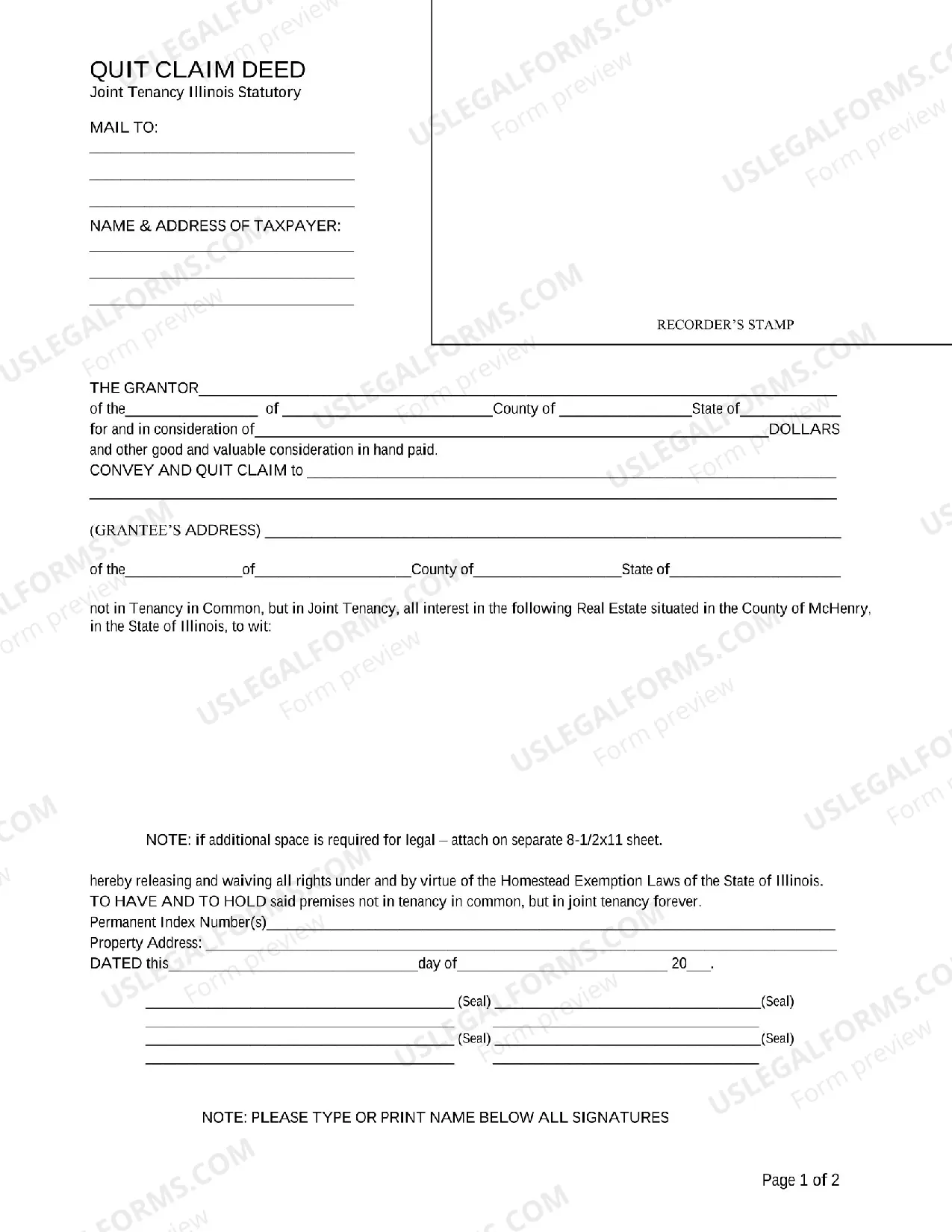
Adding someone to your house deed requires the filing of a legal form known as a quitclaim deed. When executed and notarized, the quitclaim deed legally overrides the current deed to your home. By filing the quitclaim deed, you can add someone to the title of your home, in effect transferring a share of ownership.
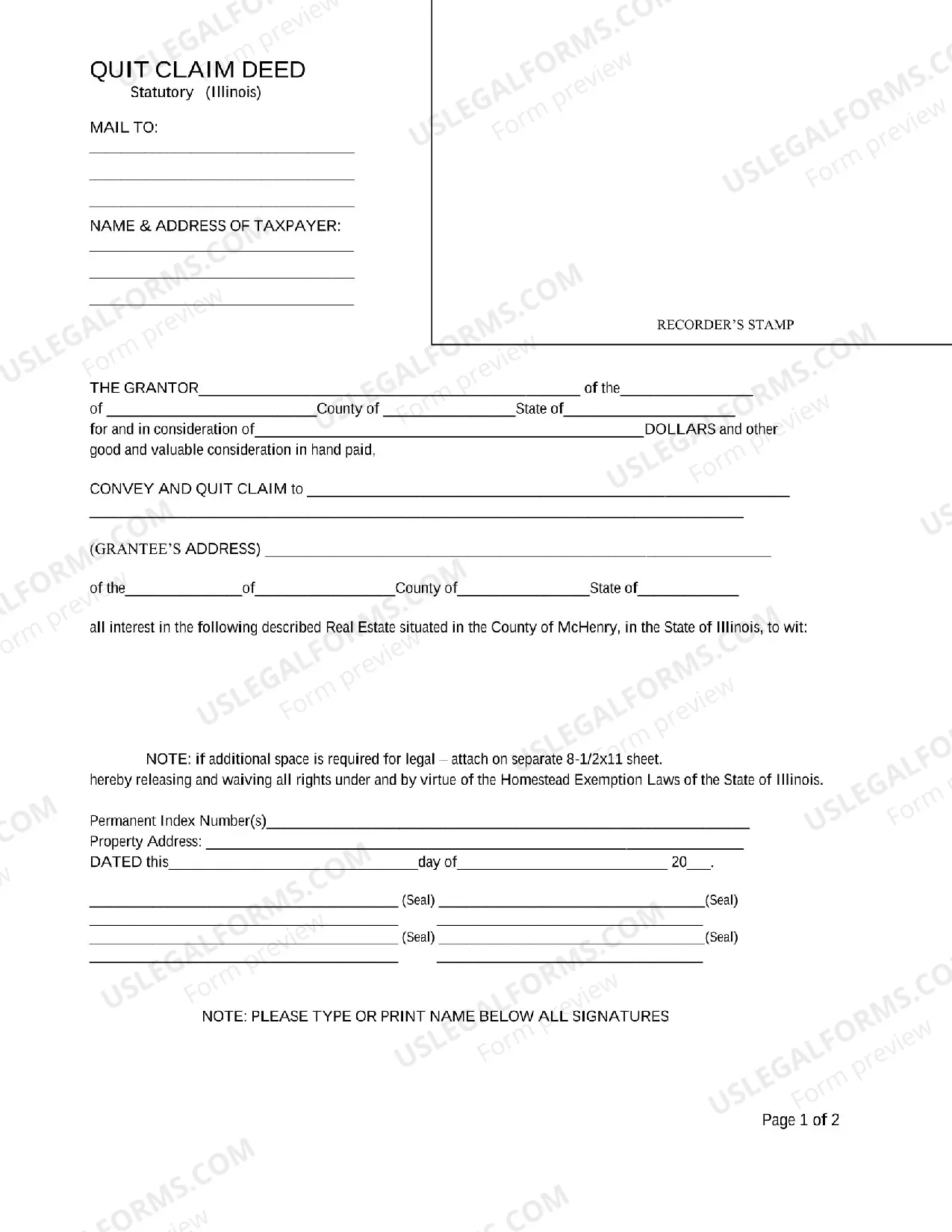
A Quit Claim Deed is required to clearly identify the grantor and grantee, the address of the property being transferred, a legal description of the property, the manner in which the grantee is taking title, a notarized signature of the grantor, and the name and address of the party that has prepared the deed.
How much does it cost to do a quitclaim deed in Illinois? Recording the Quitclaim Deed with the County All counties in Illinois now have flat / fixed pricing to record the deed. Amounts vary from $54 to $98 depending on the county.
A warranty deed promises that the grantor holds good, clear title to a piece of real estate. It promises also that the grantor has the right and authority right to sell it to the grantee or buyer. A quitclaim deed, on the other hand, makes no promises about the quality of the title to the property.
The first common requirement is that the deed must be in writing and signed by the grantor(s). 765 ILCS 5/1. Generally, deeds conveying a homestead estate must also be signed by the grantor's spouse, except where one spouse conveys to the other.
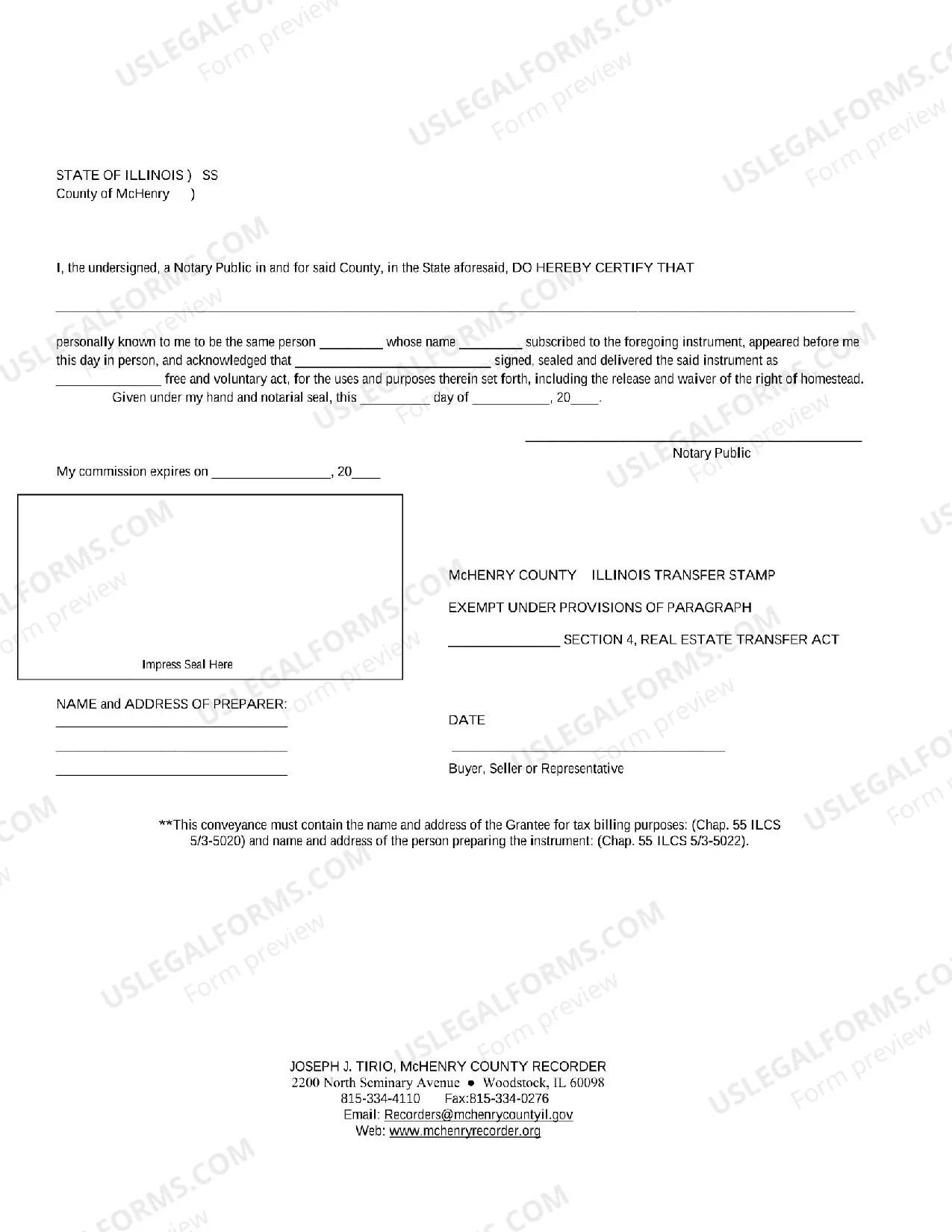
Deed Requirements Statement of exemption or transfer tax declaration. By whom the deed was prepared. To whom and where the future tax statements are to be sent. Notary seal, date, and signature. Orignial signatures (digital or photocopies of signatures are not acceptable by law)
A warranty deed ensures a buyer that the property is owned by the seller and is able to be sold without any encumbrances. A deed of trust is used in certain states, and represents a buyer's guarantee with their lender to repay the property loan as scheduled.
Signing - Before being filed with the County Recorder's Office, a quitclaim deed must be signed by the Grantor in the presence of a Notary Public.