Indiana Bill of Sale of Automobile and Odometer Statement
Overview of this form
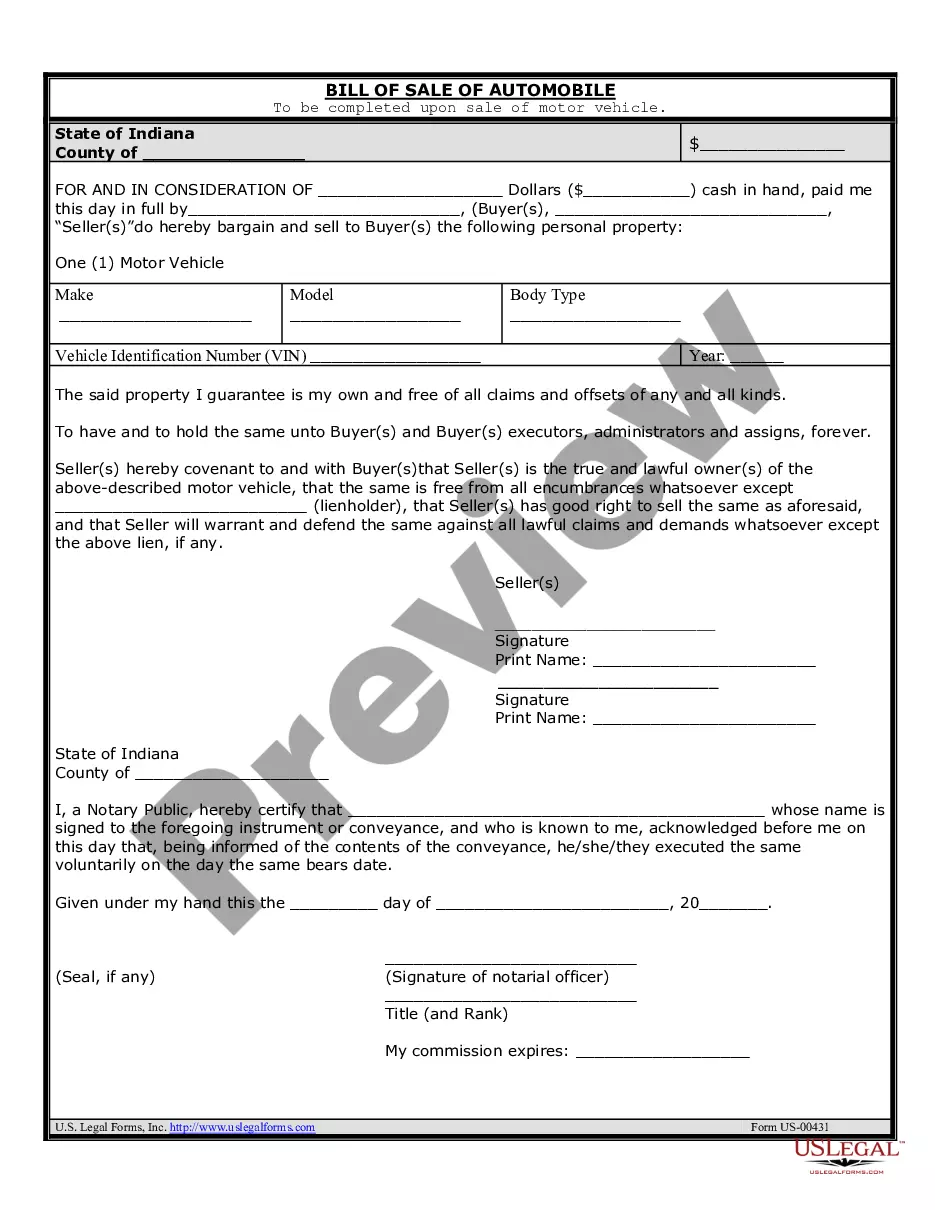
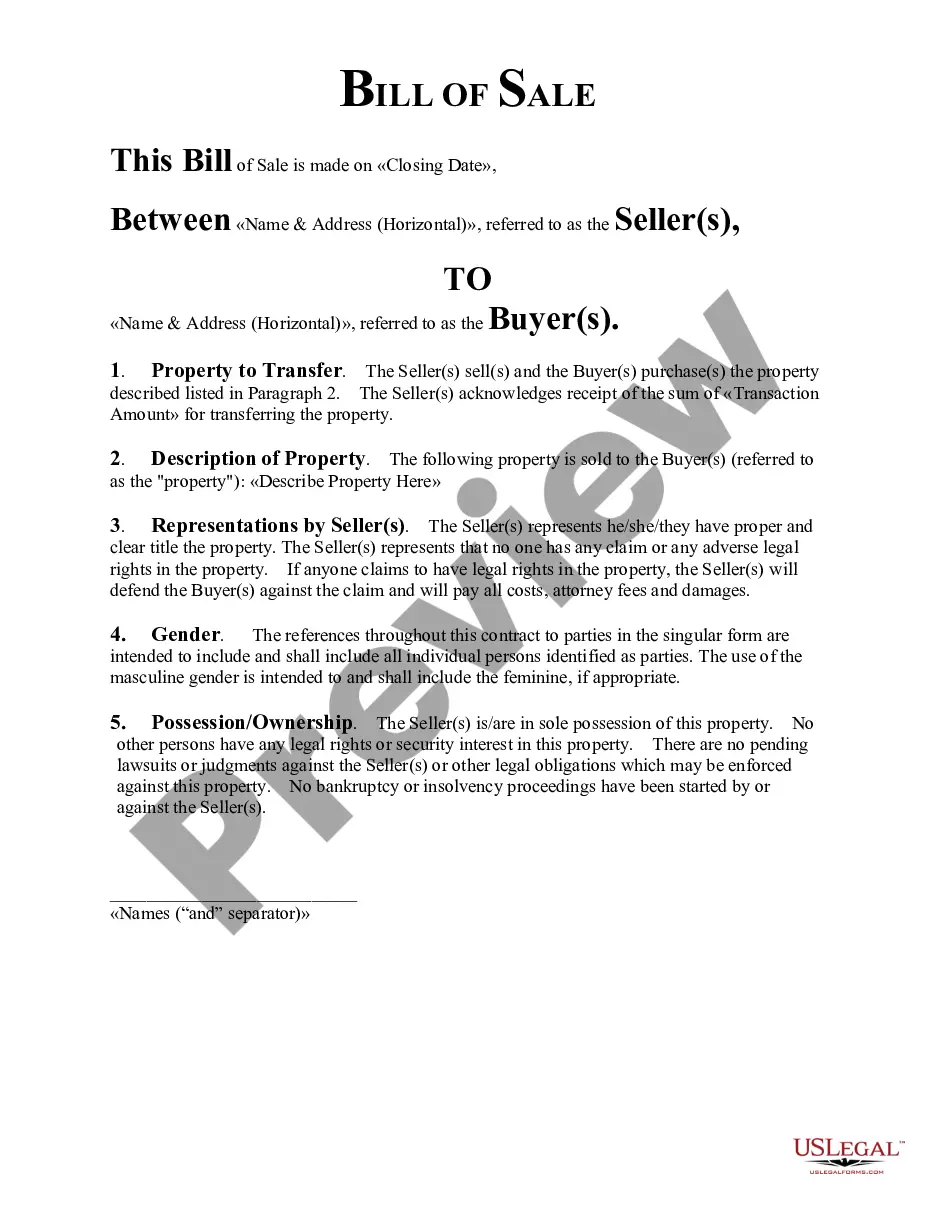
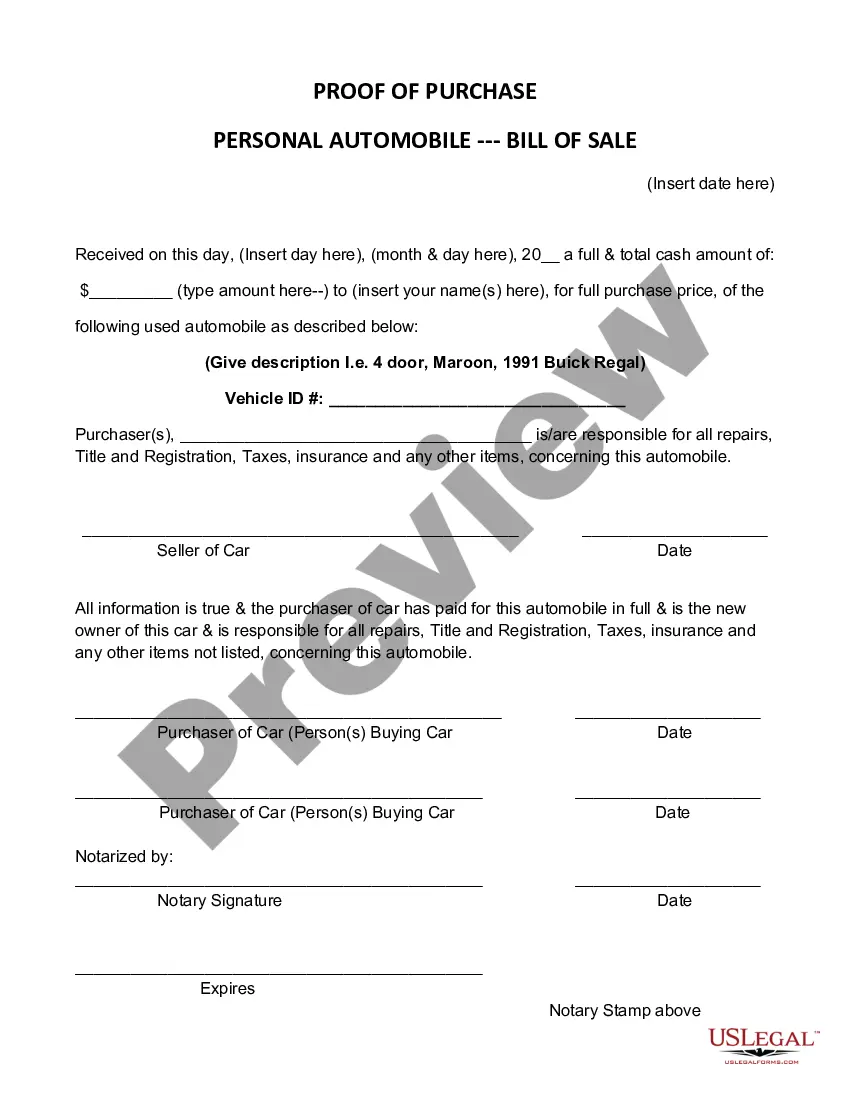
The Bill of Sale of Automobile is a legal document used to transfer ownership of a motor vehicle from a seller to a buyer. This form includes essential details such as the vehicle's make, model, VIN number, and an Odometer Disclosure Statement. It serves to confirm that the seller is the lawful owner and that the vehicle is free from any claims or liens. This form is crucial for both parties to ensure a clear, documented transfer of ownership.
Key components of this form
- Identification of the buyer and seller.
- Description of the vehicle, including make, model, VIN, and year.
- Purchase price specified in both words and numerals.
- Seller's guarantee that the vehicle is free of liens and encumbrances.
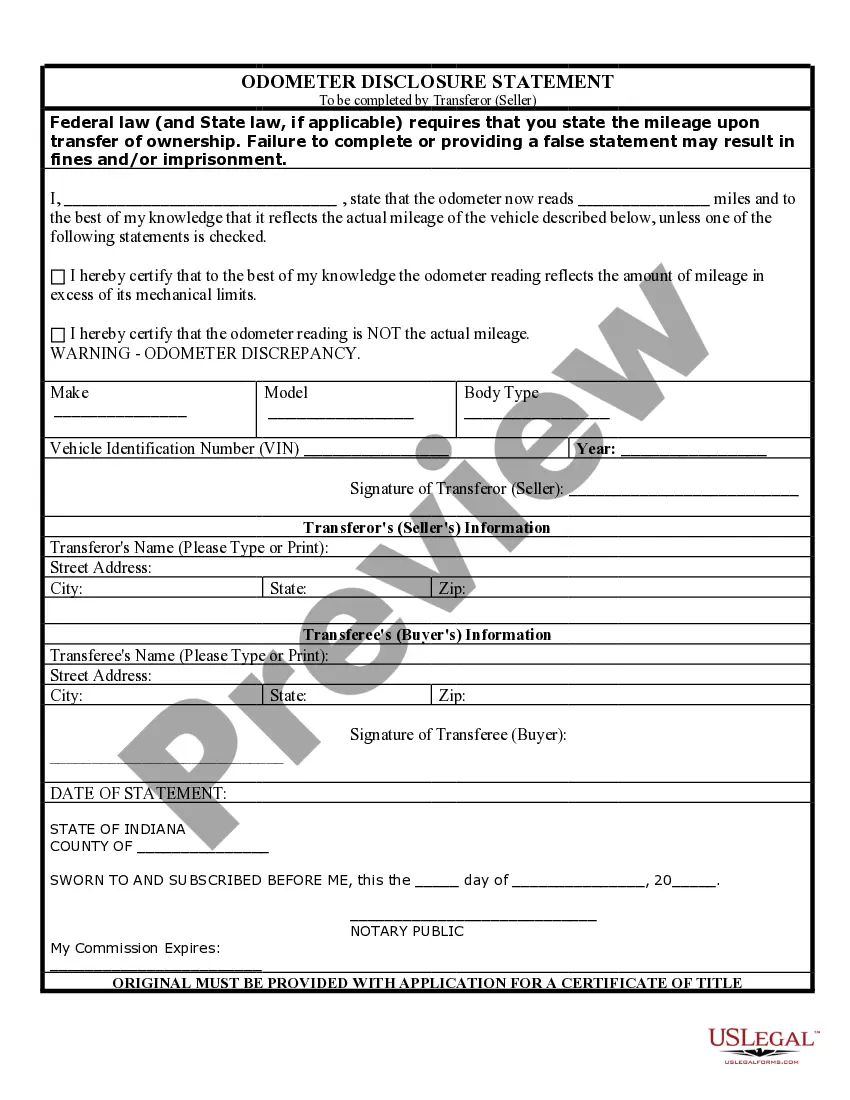
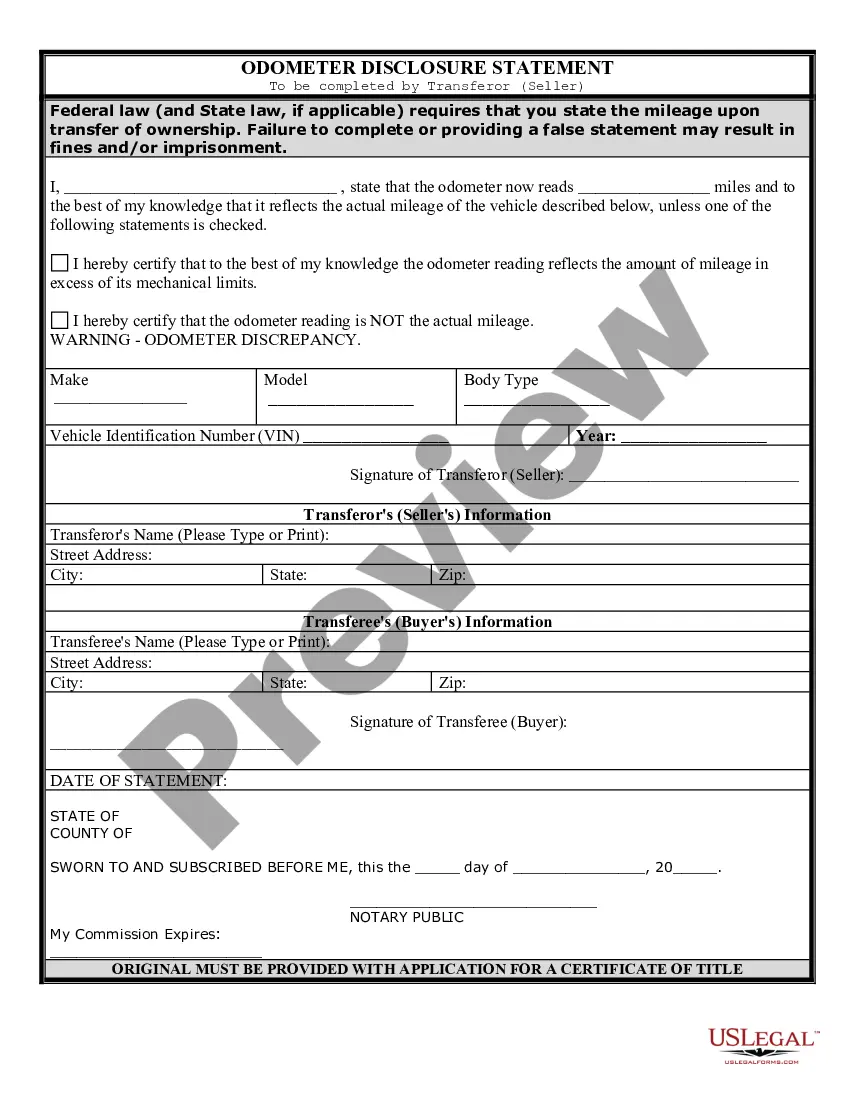
- Odometer Disclosure Statement to certify mileage.
- Signatures of both the buyer and seller, along with notary acknowledgment.
When to use this document
This form should be used when a motor vehicle is sold between individuals or entities. It is necessary for providing legal proof of the sale and to register the vehicle under the new owner's name. Use this form to protect both the buyer and seller by documenting the terms of the sale and the vehicle's condition at the time of transfer.
Who needs this form
This form is suitable for:
- Individuals selling their personal vehicles.
- Buyers purchasing a vehicle from a private seller.
- Dealers who handle vehicle sales.
- Any party needing to document the transfer of ownership for legal purposes.
Completing this form step by step
- Identify the parties involved in the sale by entering the names of the buyer and seller.
- Specify the details of the vehicle including its make, model, year, and VIN.
- Indicate the purchase price of the vehicle in both written and numeric formats.
- Complete the Odometer Disclosure Statement by noting the current mileage of the vehicle.
- Ensure that both parties sign the document in the presence of a notary public.
Does this form need to be notarized?
Yes, this form must be notarized to be legally valid. Notarization adds a level of authenticity and protection to the document, ensuring that the identities of the parties are verified and the transaction is legitimate. US Legal Forms offers integrated online notarization services for 24/7 convenience, secure video calls, and legal equivalence.
Get your form ready online
Our built-in tools help you complete, sign, share, and store your documents in one place.
Make edits, fill in missing information, and update formatting in US Legal Forms—just like you would in MS Word.
Download a copy, print it, send it by email, or mail it via USPS—whatever works best for your next step.
Sign and collect signatures with our SignNow integration. Send to multiple recipients, set reminders, and more. Go Premium to unlock E-Sign.
If this form requires notarization, complete it online through a secure video call—no need to meet a notary in person or wait for an appointment.
We protect your documents and personal data by following strict security and privacy standards.

Make edits, fill in missing information, and update formatting in US Legal Forms—just like you would in MS Word.

Download a copy, print it, send it by email, or mail it via USPS—whatever works best for your next step.

Sign and collect signatures with our SignNow integration. Send to multiple recipients, set reminders, and more. Go Premium to unlock E-Sign.

If this form requires notarization, complete it online through a secure video call—no need to meet a notary in person or wait for an appointment.

We protect your documents and personal data by following strict security and privacy standards.
Mistakes to watch out for
- Failing to enter complete vehicle details such as VIN or model.
- Not providing accurate mileage on the odometer statement.
- Forgetting to sign the form in the presence of a notary.
- Leaving out lien information when applicable.
Why complete this form online
- Convenience of accessing and downloading forms anytime.
- Ease of editing to ensure all information is accurate before printing.
- Reliability of using templates drafted by licensed attorneys.
Key takeaways
- The Bill of Sale of Automobile is crucial for formalizing the sale of a vehicle.
- It includes specific vehicle details and odometer disclosure for compliance.
- Both seller and buyer must sign and obtain notarization for the form to be valid.
- This form protects the rights of both the buyer and seller in the transaction.
Looking for another form?
Form popularity
FAQ
If the odometer mileage is incorrect, the law requires a statement to that effect to be furnished on the title to the buyer. However, vehicles ten years old and older are exempt from the written disclosure requirements.
Some states require a vehicle damage disclosure statement to be completed for certain transactions. Typically, the amount of damage to a motor vehicle is determined by adding the retail value of all labor, parts, and material used in repairing the damage.
Although an Indiana bill of sale isn't legally necessary for every item that is sold, it is an excellent way to document a sale for your personal records.
A Bill of Sale is a legal document that provides proof of ownership.According Indiana laws, you as the seller must provide the document while selling your car. You will also need to fill in the information of the bill of sale in the Form 44237.
A sticker inside the vehicle often reads when the car had its last oil change and what its mileage number was at the time. The interior of the car is evenly important. Examine the usage and wear of the wheel, gear lever and pedals and compare this to the mileage number on the odometer.
To register and title your vessel, you must go to your local BMV and provide proof or ownership, such as the original certificate of title or a bill of sale, proof of residency and Social Security number, and proof that sales tax was paid such as a Certificate of Gross Retail or Use Tax Paid on the Purchase of a Motor
If your vehicle is equipped with an odometer capable of reading 999,999 miles, you need only write in the odometer disclosure "the actual mileage shown" on the odometer. (NOTE: Do not write in tenths of miles.) (Example: If your odometer reads 118, 666.6 miles, you would disclose 118,666 miles on the title.)
An odometer disclosure statement is simply a declaration of a vehicle's mileage as indicated by its odometer, and if whether or not it's an accurate reading. If you've ever sold a car you've actually completed a generic odometer disclosure statement.
Alabama. Arkansas. Colorado. Connecticut. Hawaii. Idaho. Maine. Nebraska.