Illinois Last Will and Testament for other Persons
Understanding this form
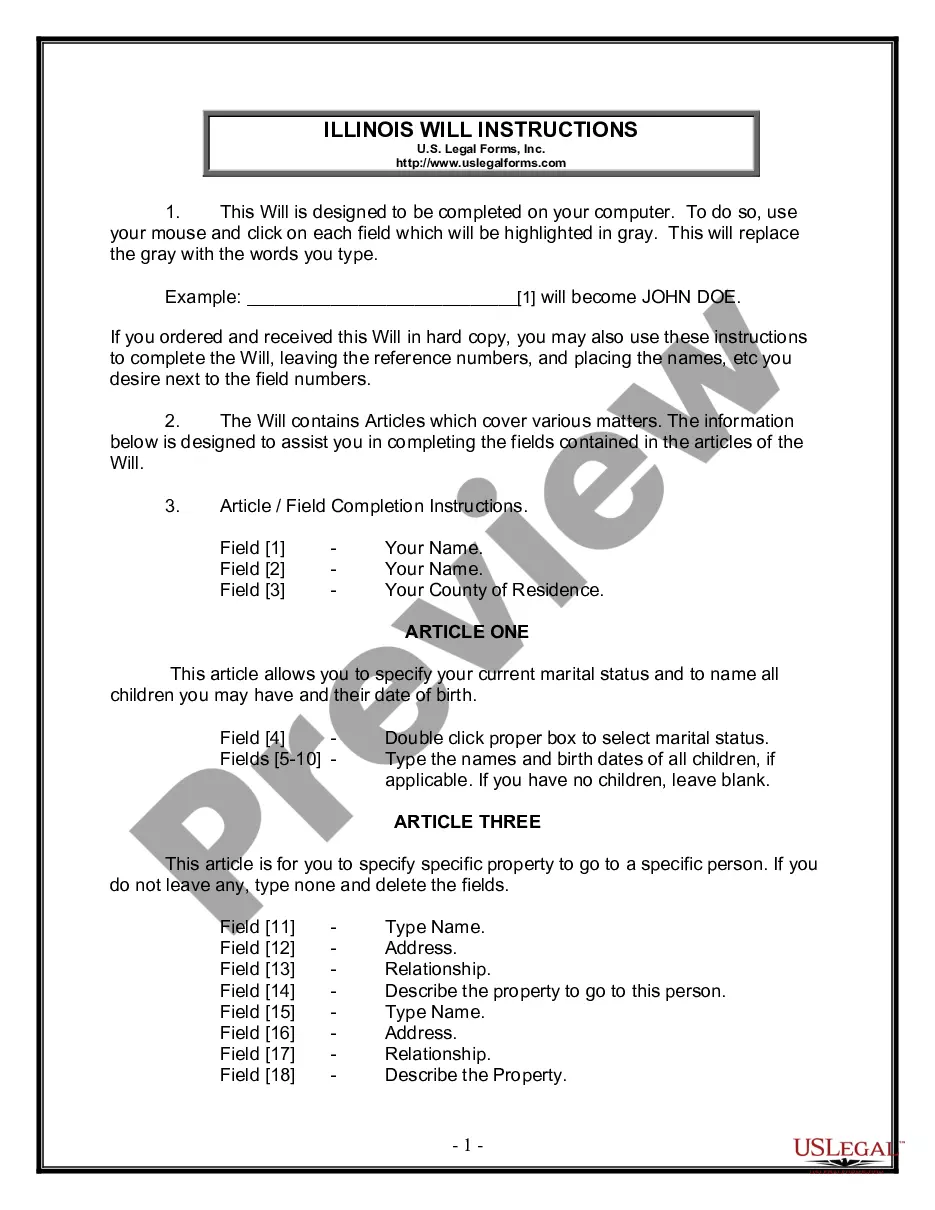
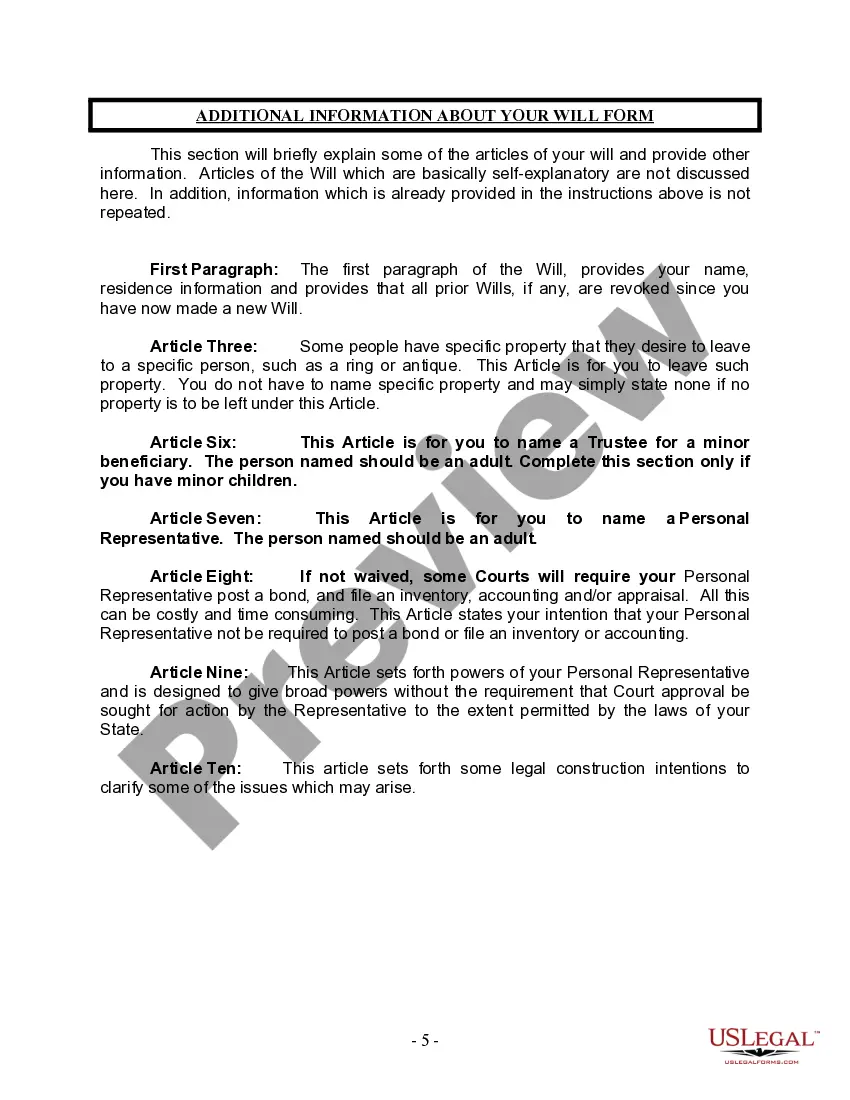
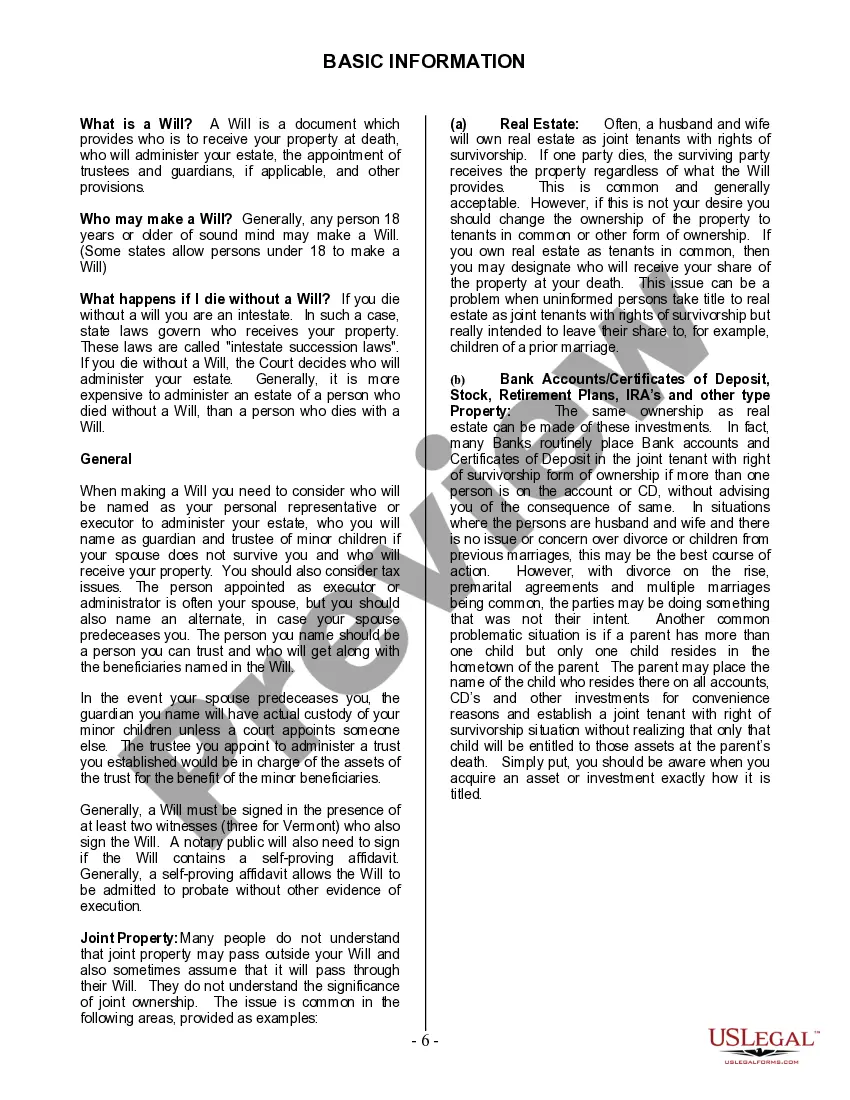
The Last Will and Testament for other Persons is a legal document that outlines how your assets and property will be distributed after you pass away. Unlike other forms that may cater to specific situations such as single persons or those with minor children, this will template is versatile and can be tailored to fit various individual needs. It is specifically designed for residents of Illinois, ensuring compliance with local laws and regulations.
Key components of this form
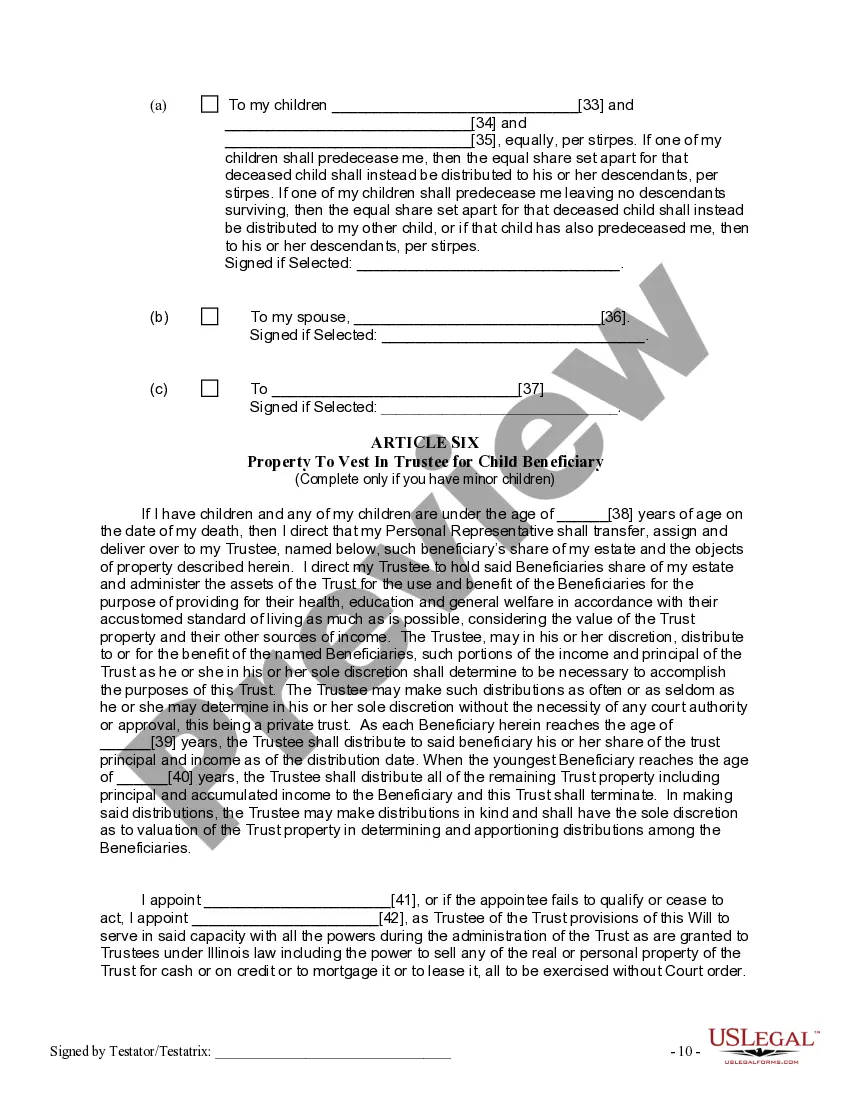
- Articles of the Will: Outlines various provisions, including the designation of beneficiaries and the handling of specific assets.
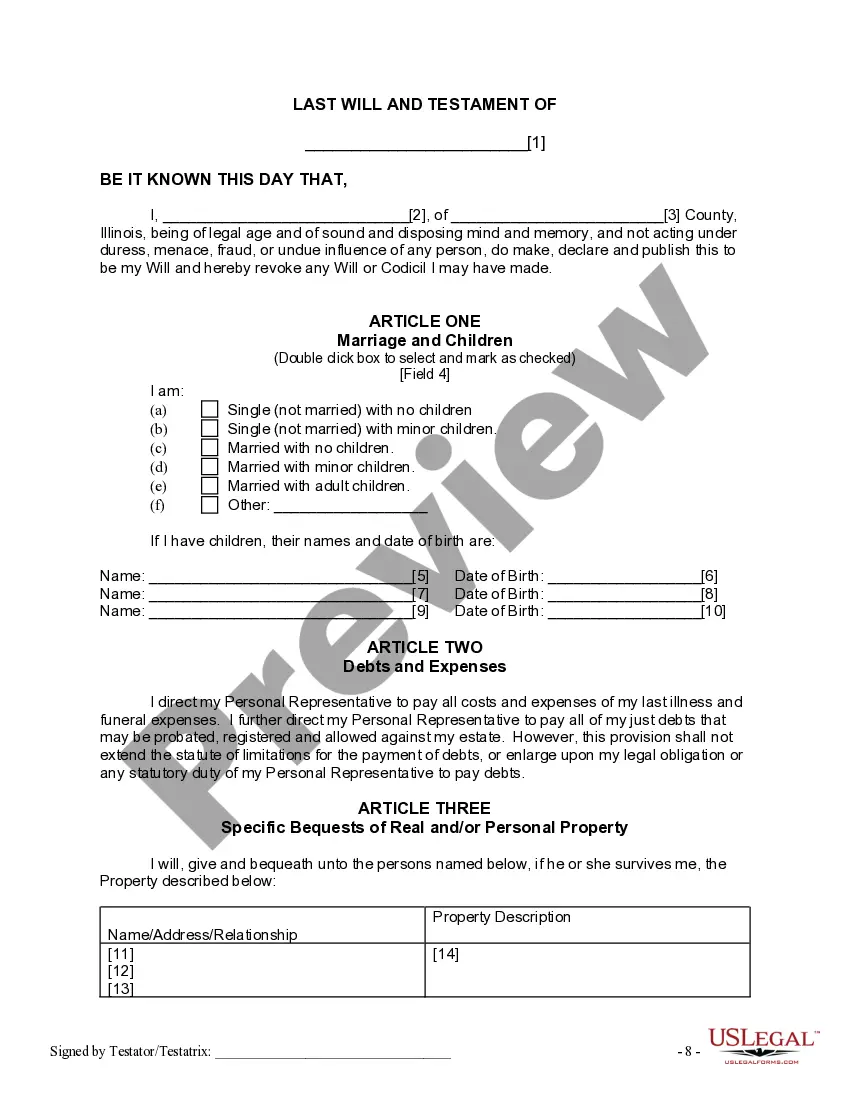
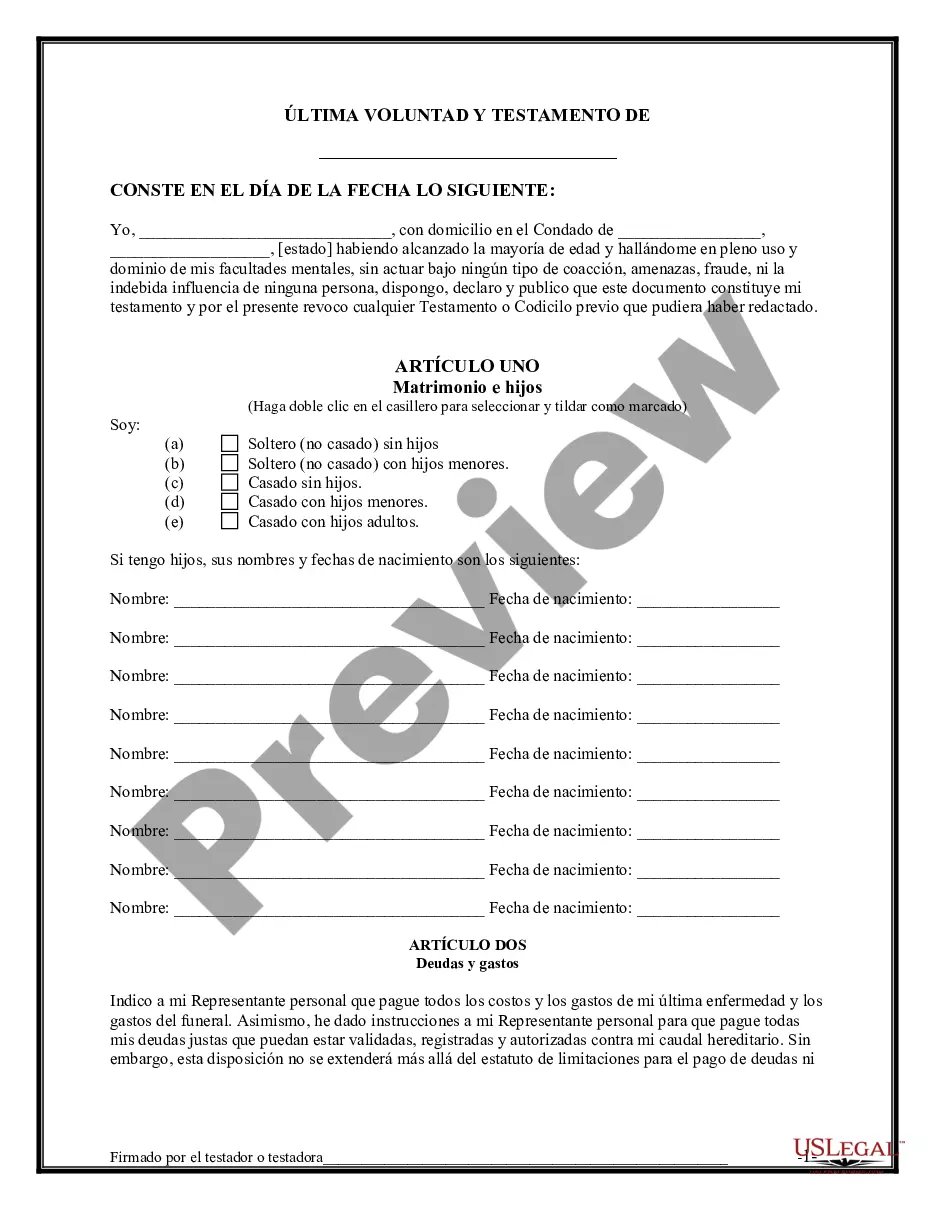
- Marital Status and Children: Allows you to specify your current marital situation and list any children.
- Specific Bequests: Enables you to allocate specific properties to designated individuals.
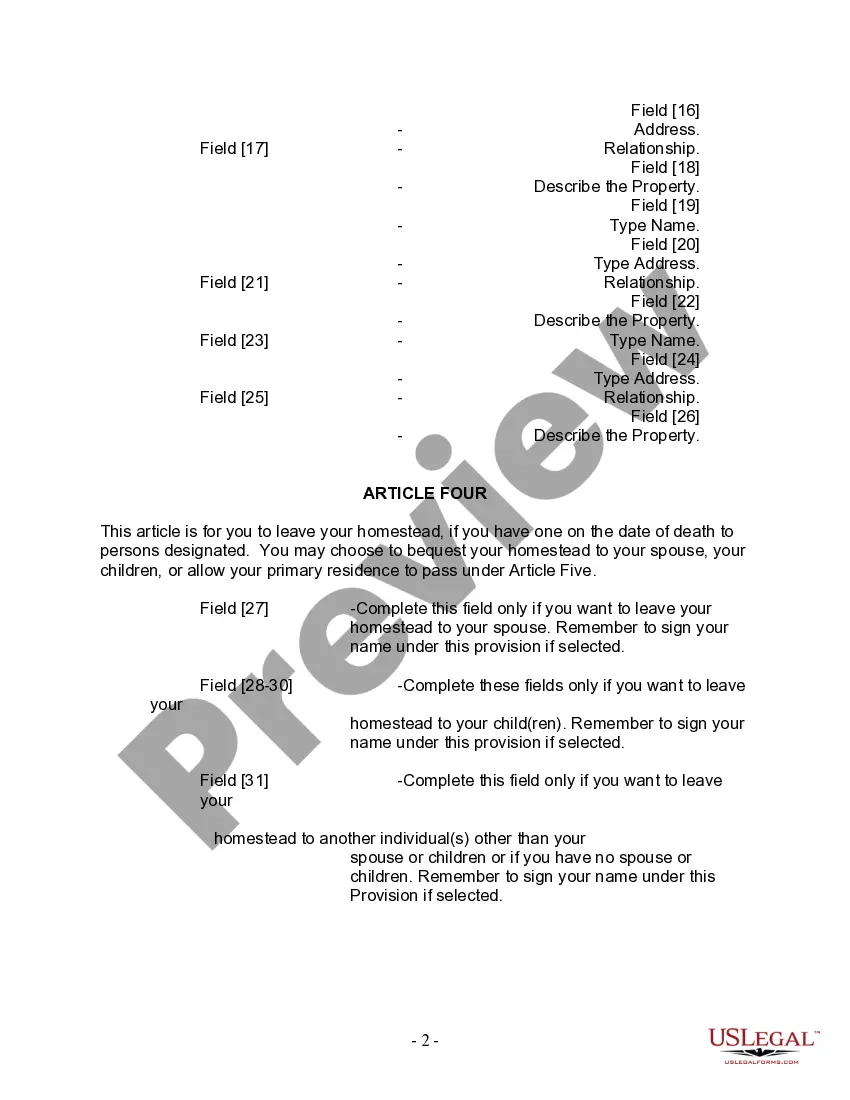
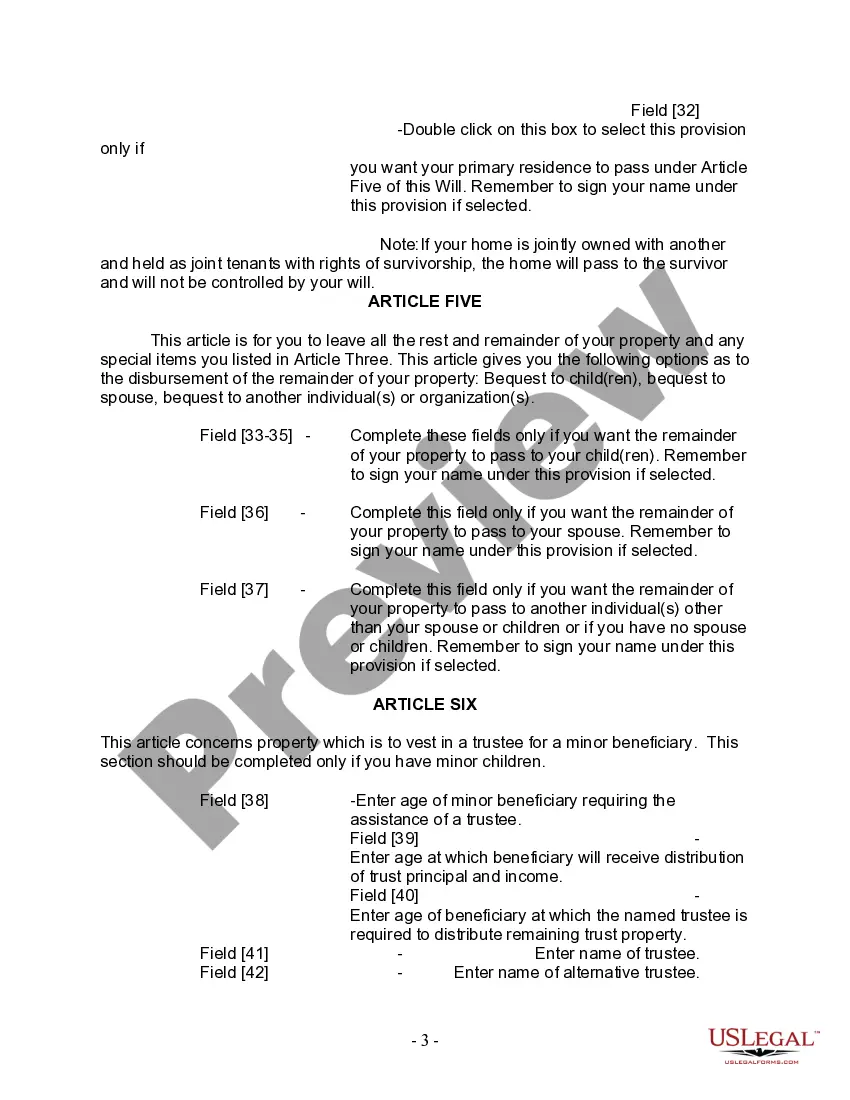
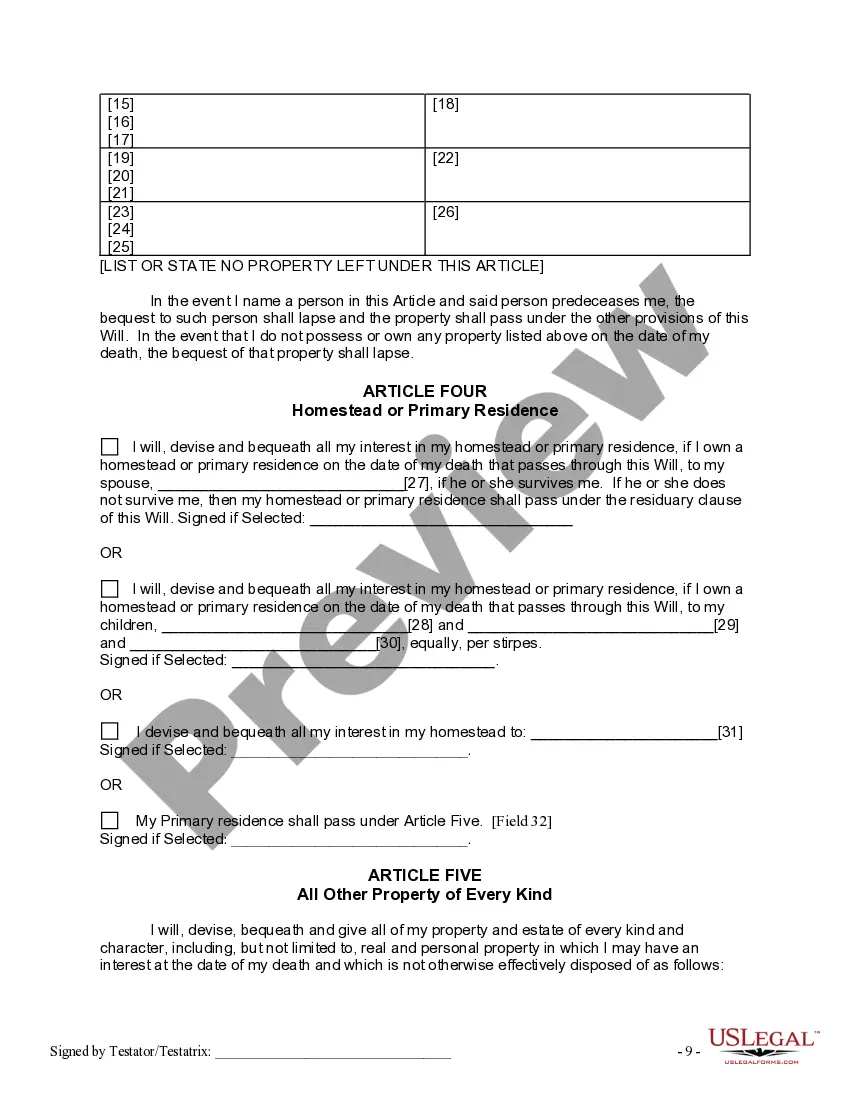
- Homestead Designation: Provides options for bequeathing your primary residence.
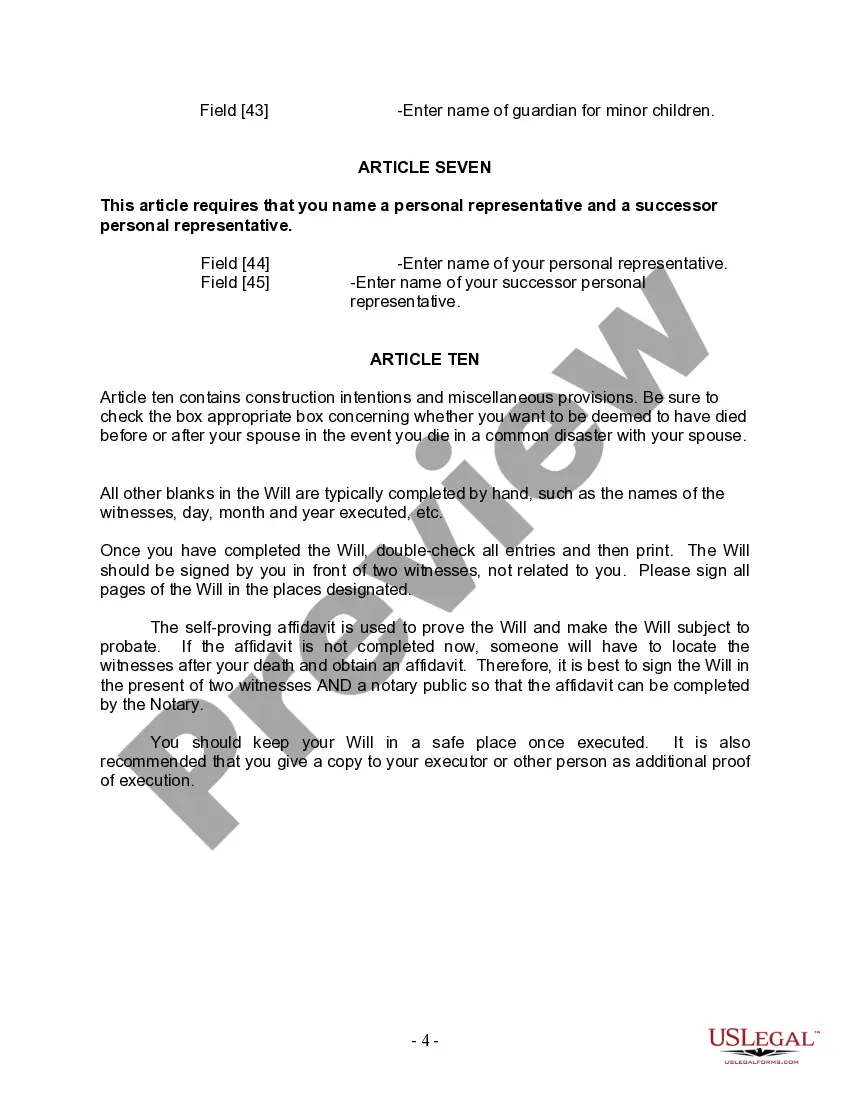
- Personal Representative: Allows you to appoint an individual to manage your estate.
- Trust Provisions: Designed for minor beneficiaries, specifying trustee responsibilities and asset distribution timelines.





Common use cases
This form is appropriate when you wish to create a legally binding will but do not have a specific template that meets your situation. If you need to outline how your possessions are divided among family or friends, appoint guardians for minor children, or ensure that your responsibilities are handled posthumously, this will provides the necessary framework to do so.
Who should use this form
- Individuals who are at least 18 years old and want to ensure their estate is handled according to their wishes.
- Residents of Illinois who wish to create a will without the assistance of an attorney.
- People who have specific property they want to bequeath to named individuals.
- Individuals with children or dependents who need to appoint guardians or trustees.
Instructions for completing this form
- Identify yourself by entering your name and county of residence in the designated fields.
- Specify your marital status and list any children, including their names and dates of birth.
- Designate any specific property to bequeath by filling in the names, addresses, relationships, and descriptions of the property.
- Complete the sections related to your homestead, deciding who should inherit it.
- Appoint a personal representative and, if necessary, a successor representative to manage your estate.
- Sign the document in the presence of at least two witnesses to ensure legal validity.
Does this form need to be notarized?
This form must be notarized to be legally valid. US Legal Forms provides secure online notarization powered by Notarize, allowing you to complete the process through a verified video call.
Get your form ready online
Our built-in tools help you complete, sign, share, and store your documents in one place.
Make edits, fill in missing information, and update formatting in US Legal Forms—just like you would in MS Word.
Download a copy, print it, send it by email, or mail it via USPS—whatever works best for your next step.
Sign and collect signatures with our SignNow integration. Send to multiple recipients, set reminders, and more. Go Premium to unlock E-Sign.
If this form requires notarization, complete it online through a secure video call—no need to meet a notary in person or wait for an appointment.
We protect your documents and personal data by following strict security and privacy standards.

Make edits, fill in missing information, and update formatting in US Legal Forms—just like you would in MS Word.

Download a copy, print it, send it by email, or mail it via USPS—whatever works best for your next step.

Sign and collect signatures with our SignNow integration. Send to multiple recipients, set reminders, and more. Go Premium to unlock E-Sign.

If this form requires notarization, complete it online through a secure video call—no need to meet a notary in person or wait for an appointment.

We protect your documents and personal data by following strict security and privacy standards.
Common mistakes to avoid
- Failing to have the document witnessed properly, risking its validity.
- Not specifying all relevant heirs or including outdated information.
- Leaving sections blank that could clarify distribution issues.
Benefits of using this form online
- Convenient: Complete the document at your own pace from your computer.
- Editability: Make changes easily without the need for retyping an entire document.
- Cost-effective: Avoid costly attorney fees for basic will preparation.
What to keep in mind
- The Last Will and Testament for other Persons is designed specifically for residents of Illinois.
- It includes provisions for designating beneficiaries, managing specific bequests, and appointing a personal representative.
- Proper execution with witnesses is critical to ensuring the validity of the will.
Looking for another form?
Form popularity
FAQ
Absolutely, in Illinois, a beneficiary takes precedence over a will when it comes to specific assets. This means that if you have named a beneficiary on an account, that beneficiary will receive those assets, even if your will suggests otherwise. Ensuring your Illinois Last Will and Testament for other Persons reflects your current wishes is essential to avoid conflicts and confusion among your heirs.
Beneficiaries of a will must be notified after the will is accepted for probate. 3feff Moreover, probated wills are automatically placed in the public record. If the will is structured to avoid probate, there are no specific notification requirements.
In Illinois, to have a valid will it is required that two or more credible witnesses validate or attest the will. This means each witness must watch the testator (person making his or her will) sign or acknowledge the will, determine the testator is of sound mind, and sign the will in front of the testator.
Write an Introduction. Select an Executor. Identify Your Heirs and Beneficiaries. Nominate a Guardian for Your Minor or Dependent Children. Assess and Divide Your Property. State Your Funeral Wishes (If You Have Any) Sign and Notarize the Document.
Obviously, the person who is named as executor or personal representative is entitled to a copy of the will. He or she is in charge of applying for probate, managing the decedent's property, and making sure the instructions in the will get carried out.
Do I Need to Have My Will Notarized? No, in Illinois, you do not need to notarize your will to make it legal.However, Illinois allows your will to be self-proved without a self-proving affidavit, as long as you sign and witness it correctly.
A will doesn't have to be notarized to be valid. But in most states, you'll want to add a self-proving affidavit to your will, which must be signed by your witnesses and notarized.If you sign your will in a lawyer's office, the lawyer will provide a notary public.
In Illinois, to have a valid will it is required that two or more credible witnesses validate or attest the will. This means each witness must watch the testator (person making his or her will) sign or acknowledge the will, determine the testator is of sound mind, and sign the will in front of the testator.
A notarized will does not need to be probated.When a person dies leaving behind a will that is not notarized, the law requires that its validity be ascertained by a notary or by a court. Similarly, any non-notarized modification made to a will must be probated, whether the will is notarized or not.