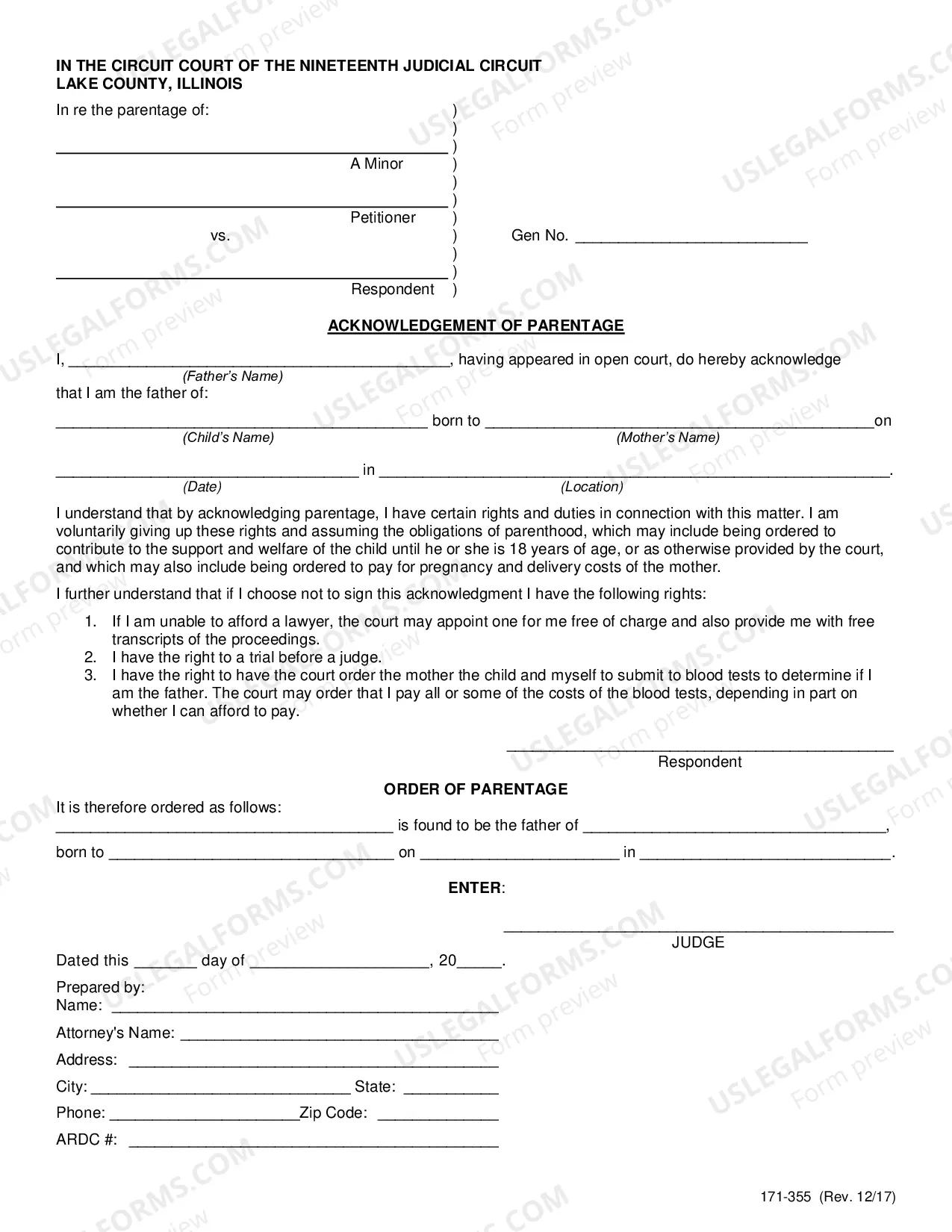
Illinois Mutual Wills package with Last Wills and Testaments for Married Couple with No Children
The Mutual Wills package with Last Wills and Testaments for Married Couple with No Children is a legal document that allows two spouses to specify how their assets will be distributed upon their deaths. This package provides both spouses with their own Last Will and Testament, ensuring that their wishes concerning property distribution and the appointment of a personal representative are clearly stated. Unlike traditional wills, mutual wills typically contain reciprocal clauses that bind both parties to their agreed terms, offering peace of mind to couples without children regarding inheritance matters.
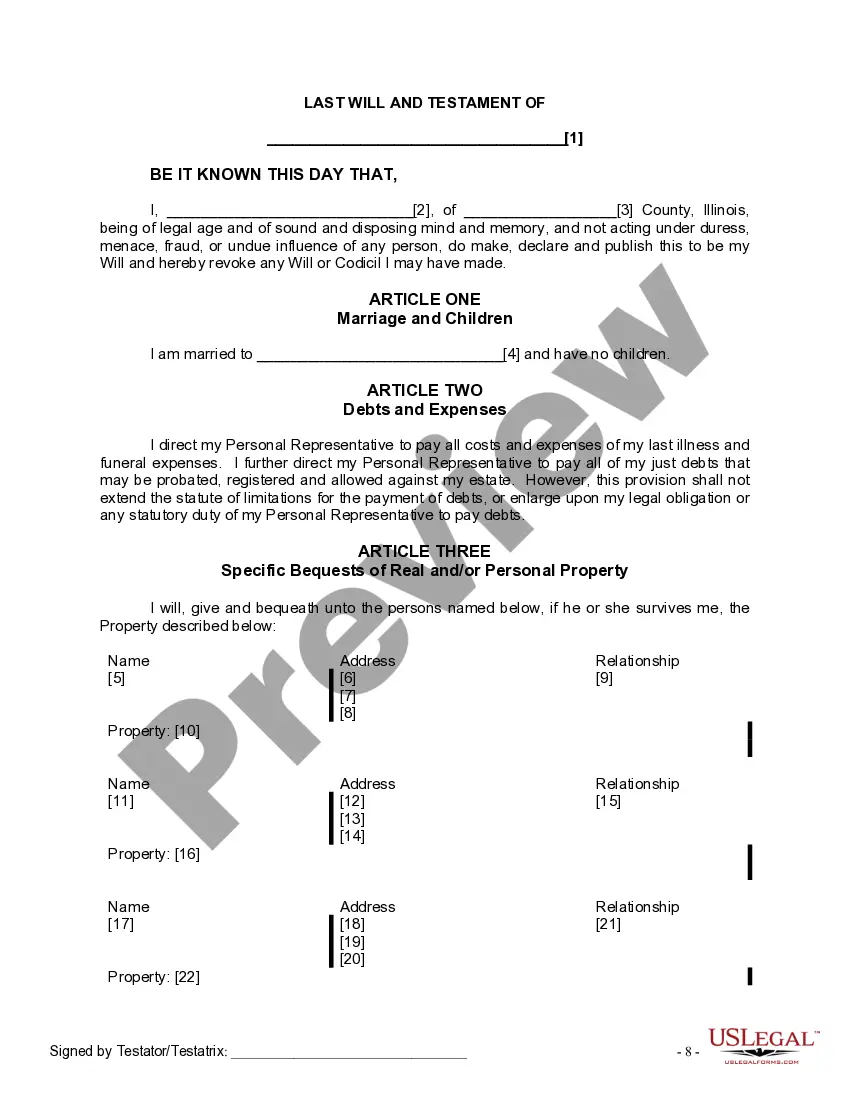
- Identification of both spouses, including names and county of residence.
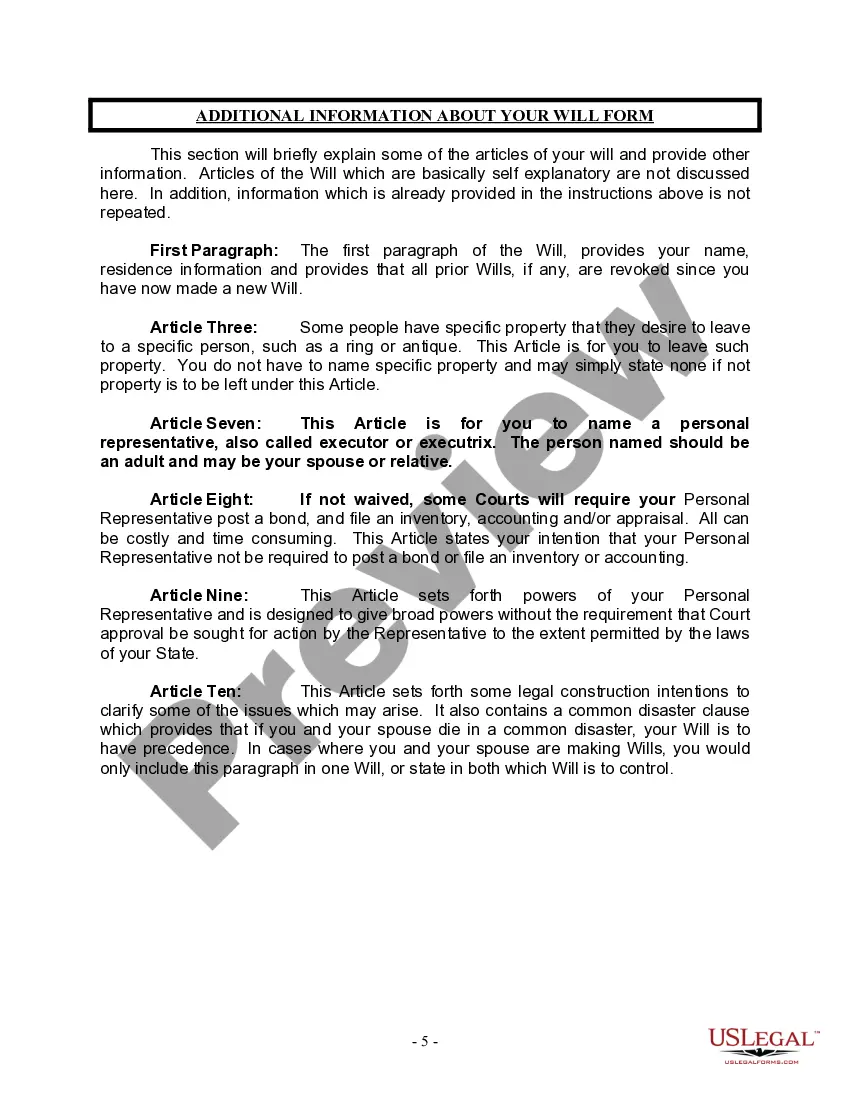
- Appointment of a personal representative or executor for each spouse's estate.
- Provisions for the distribution of specific property and the residuary estate.
- Articles allowing for alternate distributions if one spouse predeceases the other.
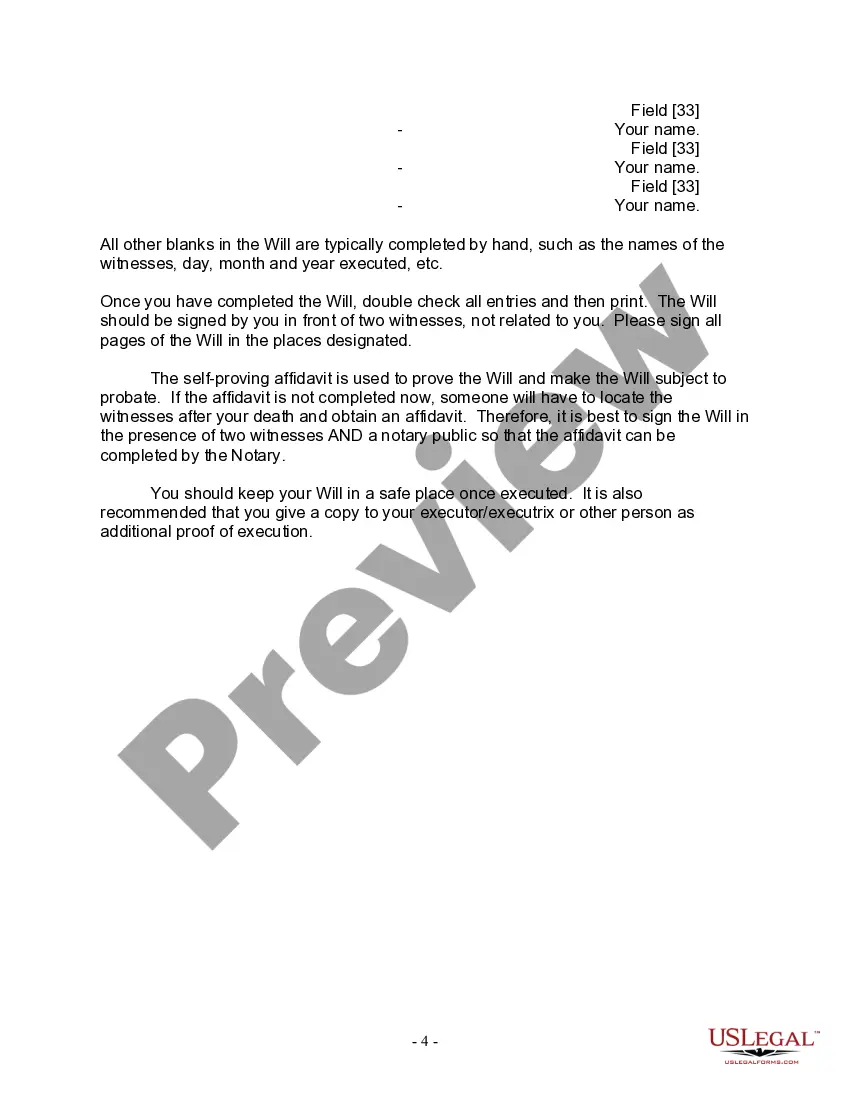
- Instructions regarding witness signatures and notarization, including a self-proving affidavit if applicable.
- Various articles addressing debts, expenses, and additional requests such as burial wishes.
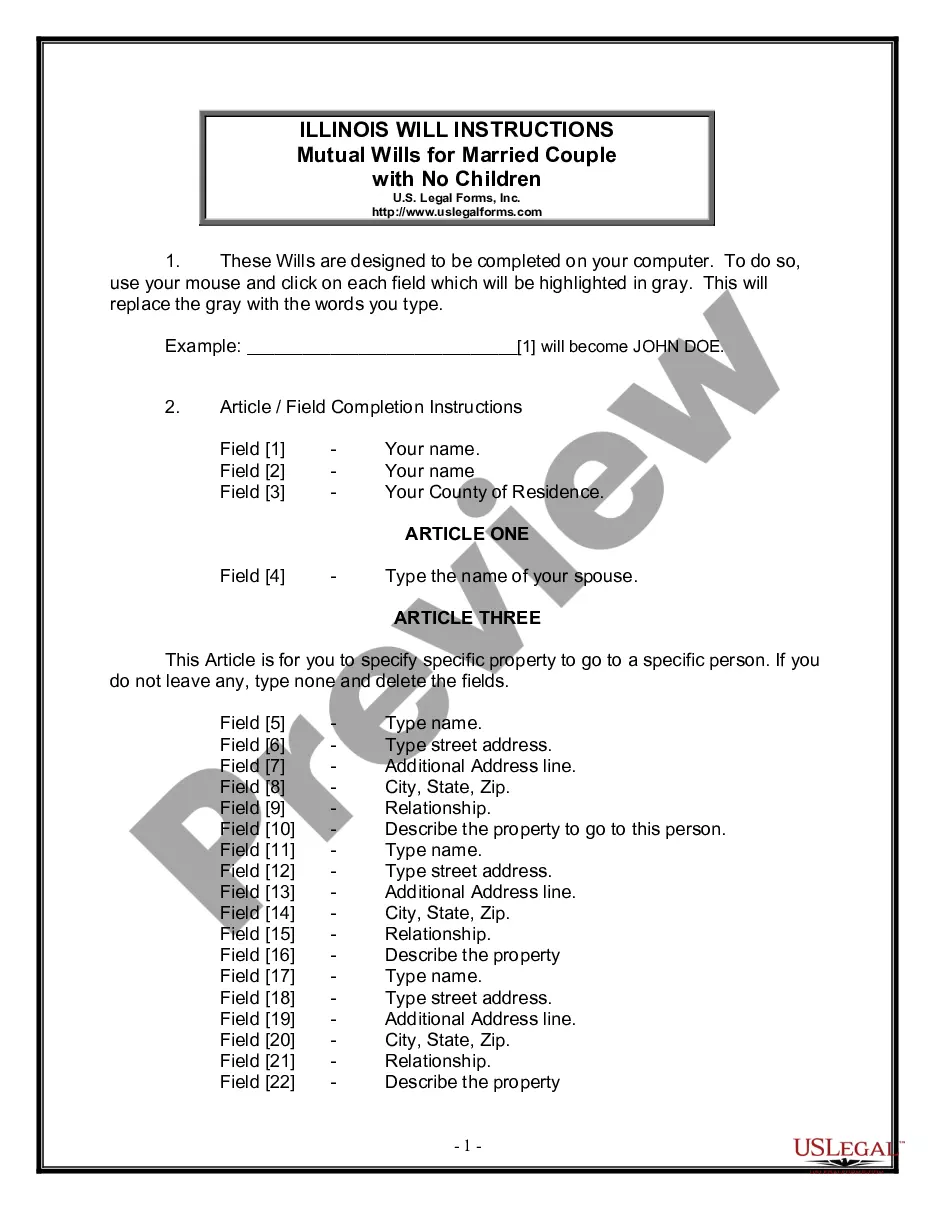
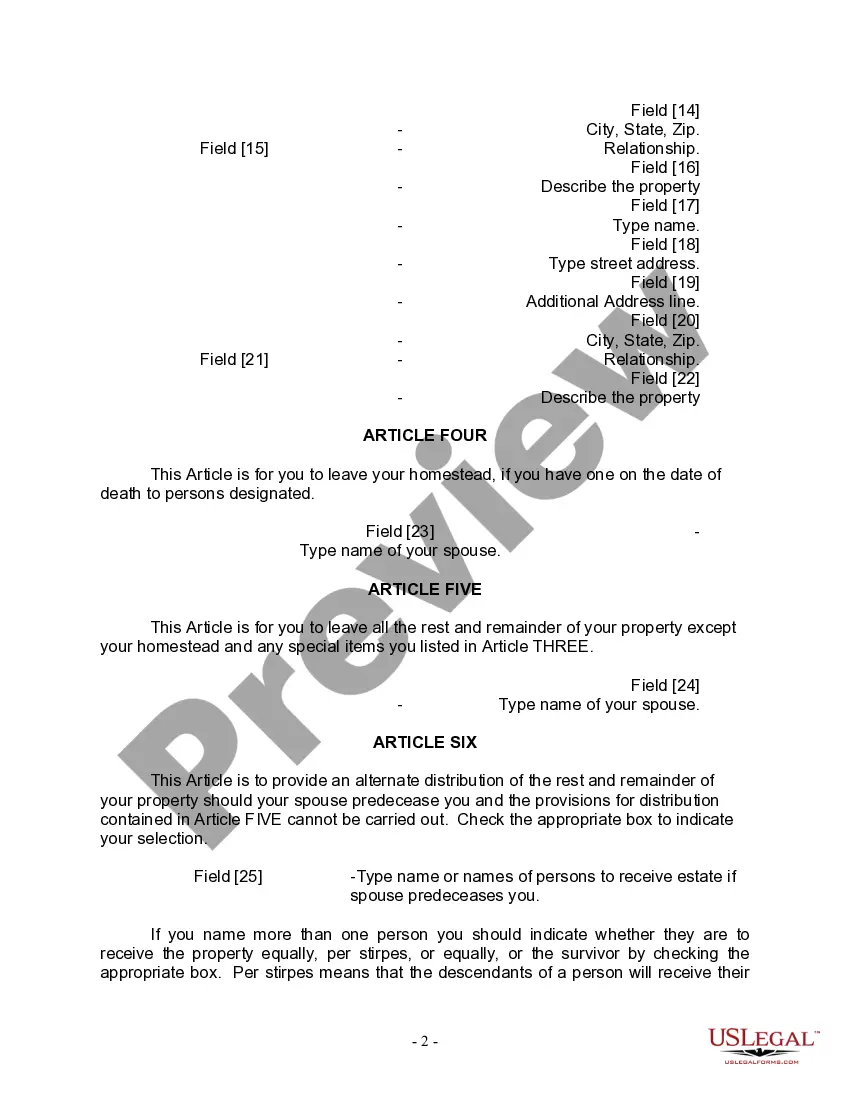
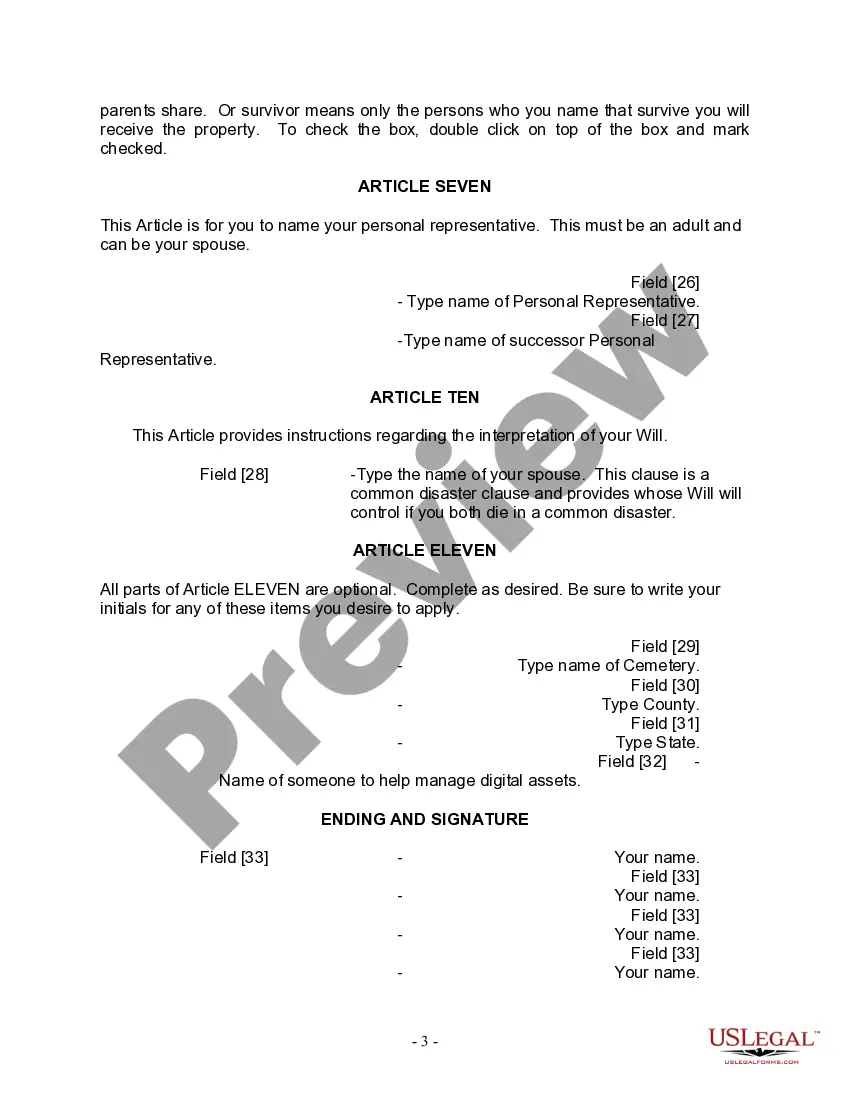
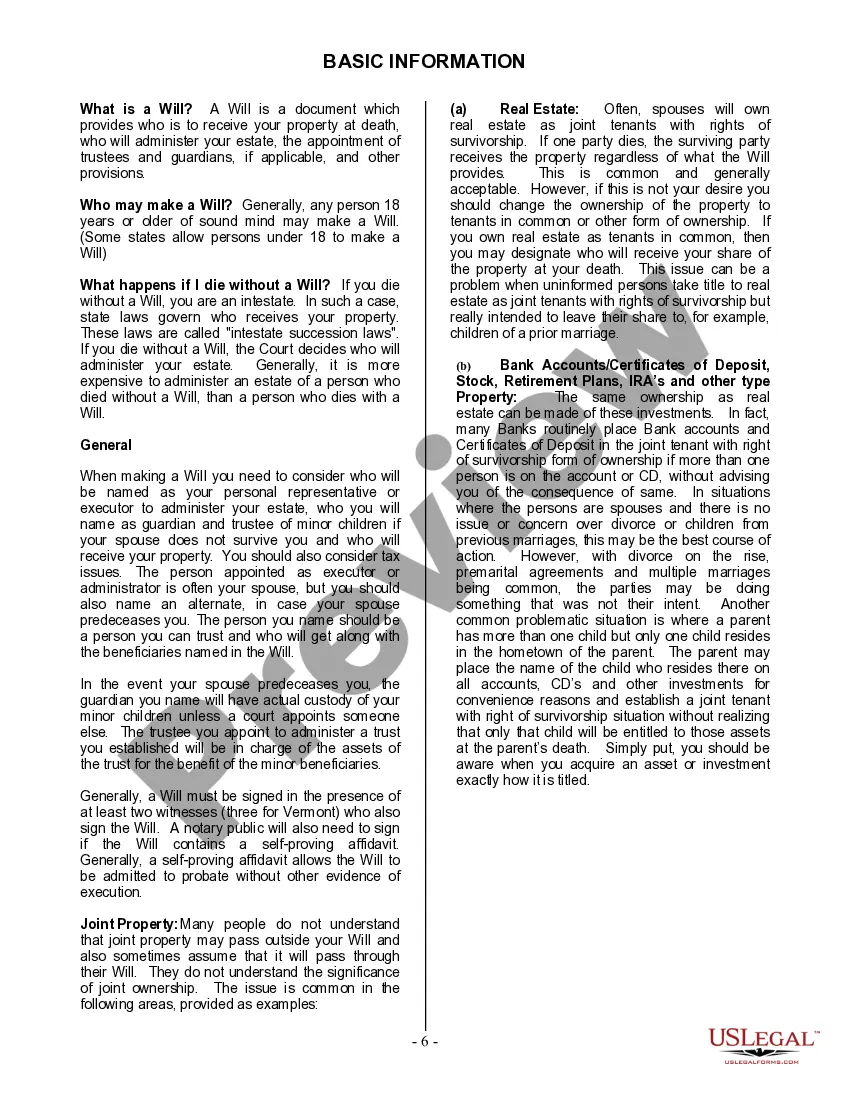

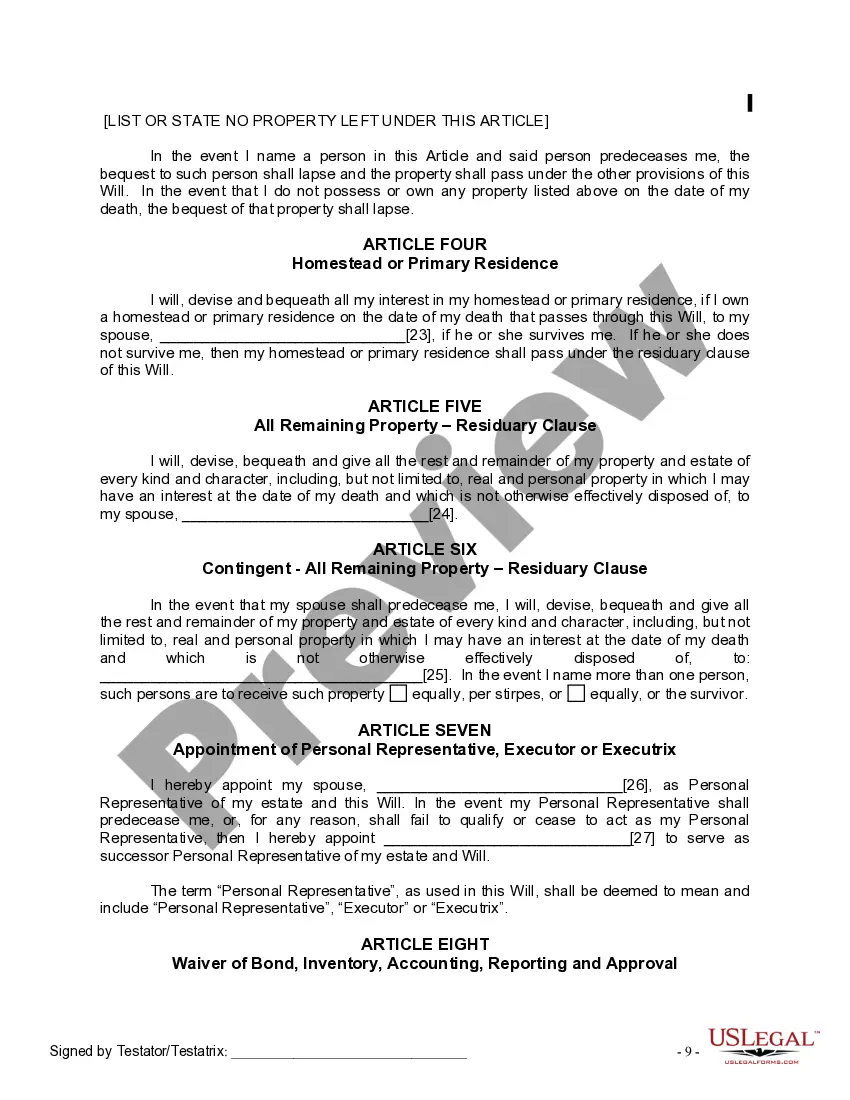
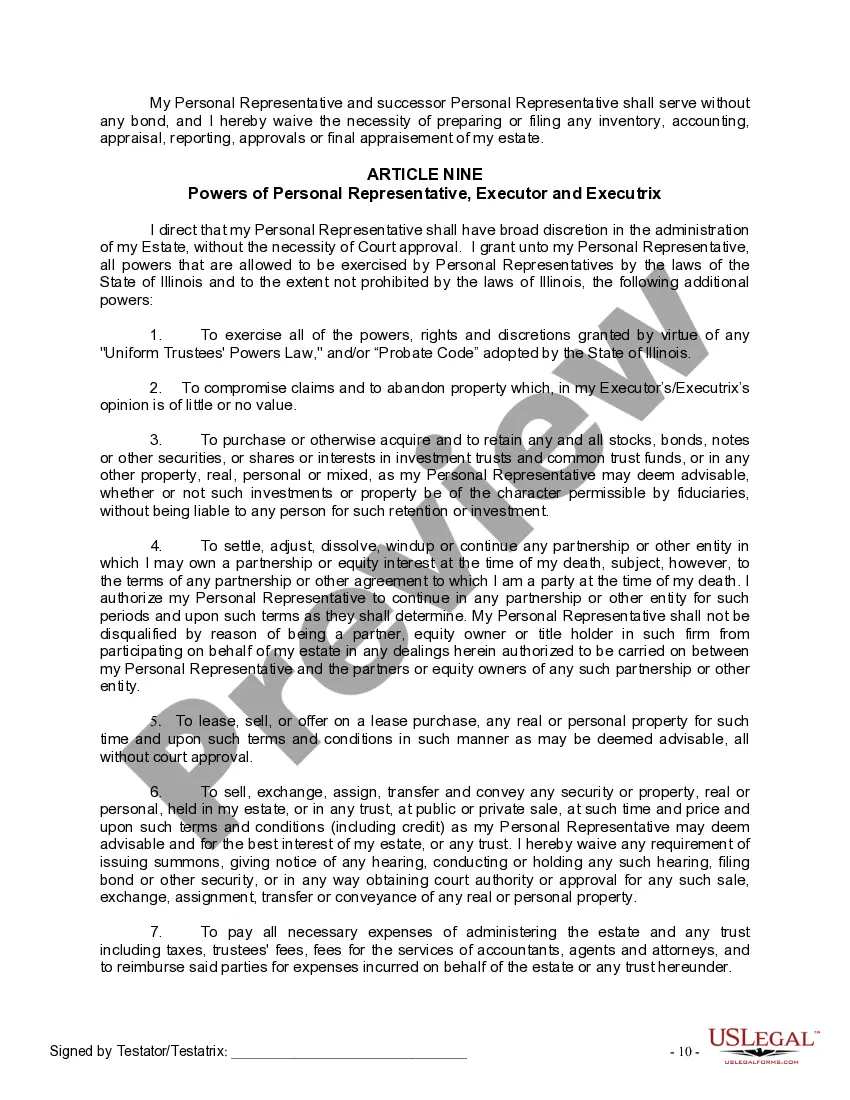




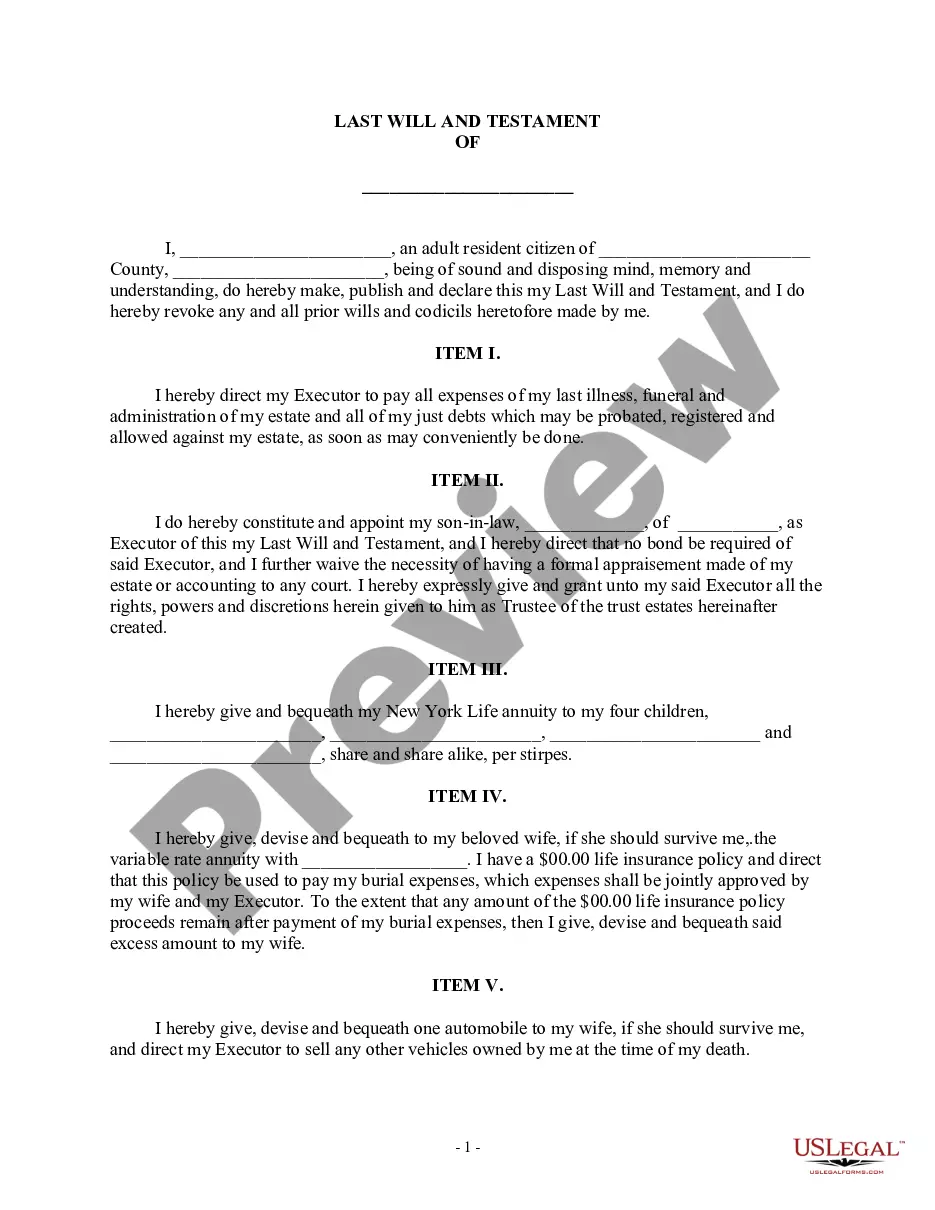

This form is beneficial for married couples without children who wish to create legally binding documents that outline how their assets should be managed and distributed upon their death. It is especially pertinent for couples looking to ensure that their estate plans are aligned and that both partners' desires are documented clearly. Situations may include estate planning for retirement, securing mutual agreement on the distribution of property, or providing clarity in the event of unexpected circumstances.
This form is suitable for:
- Married couples who have no children and want to establish clear estate plans.
- Individuals seeking to ensure that their spouse is taken care of in the event of their passing.
- Couples looking for a straightforward and mutual approach to estate planning.
- Parties who prefer legal documents that minimize future disputes over asset distribution.
To complete the Mutual Wills package, follow these steps:
- Identify both spouses by filling in their names and county of residence in the designated fields.
- Specify the name of the personal representative (executor) and any alternative representatives if necessary.
- Detail any specific property to be bequeathed to individuals or state "none" if there are no specific bequests.
- Clearly indicate the distribution of the residuary estate to the surviving spouse or other beneficiaries.
- Sign the wills in the presence of at least two witnesses, who are not named in the wills, and ensure that all signatures are properly executed.
Yes, this form must be notarized to be legally valid. The package includes a self-proving affidavit that requires the presence of a notary public at the time of signing. This process simplifies the probate process, as it verifies the execution of the wills without needing to locate witnesses after the testators' death.
Get your form ready online
Our built-in tools help you complete, sign, share, and store your documents in one place.
Make edits, fill in missing information, and update formatting in US Legal Forms—just like you would in MS Word.
Download a copy, print it, send it by email, or mail it via USPS—whatever works best for your next step.
Sign and collect signatures with our SignNow integration. Send to multiple recipients, set reminders, and more. Go Premium to unlock E-Sign.
If this form requires notarization, complete it online through a secure video call—no need to meet a notary in person or wait for an appointment.
We protect your documents and personal data by following strict security and privacy standards.

Make edits, fill in missing information, and update formatting in US Legal Forms—just like you would in MS Word.

Download a copy, print it, send it by email, or mail it via USPS—whatever works best for your next step.

Sign and collect signatures with our SignNow integration. Send to multiple recipients, set reminders, and more. Go Premium to unlock E-Sign.

If this form requires notarization, complete it online through a secure video call—no need to meet a notary in person or wait for an appointment.

We protect your documents and personal data by following strict security and privacy standards.
- Failing to have the wills signed in the presence of two disinterested witnesses.
- Not specifying alternate beneficiaries, which can create confusion if a named beneficiary predeceases the decedent.
- Overlooking state-specific requirements regarding notarization and self-proving affidavits.
- Leaving empty fields or failing to complete the documents fully before signatures.
- Convenience of having both wills in one package, tailored for couples without children.
- Editability to allow for changes in personal circumstances or desires over time.
- Access to expert-drafted documents, ensuring legal accuracy and completeness.
Legal use & context
- This form is legally recognized and can facilitate the probate process when completed properly.
- It provides clear instructions to ensure all terms are understood and adhered to.
- Using mutual wills can prevent disputes about asset distribution after both spouses pass away.
- The Mutual Wills package is designed specifically for married couples without children.
- It offers clear guidance for the distribution of assets and appointing personal representatives.
- Ensuring proper execution, including notarization and witness signatures, is crucial for validity.
Looking for another form?








Form popularity
FAQ
Making one will for two people is usually not advisable because it's irrevocable after the first spouse's death.Even though married couples often have the same goals in mind when making their estate plan, most attorneys advise against joint wills.
A joint will is one that two people, typically a married couple, sign together.Most joint wills are written such that when one spouse dies, their portion of the estate passes to the other. Then the entire estate goes to their children when the second spouse passes away.
Making one will for two people is usually not advisable because it's irrevocable after the first spouse's death.Even though married couples often have the same goals in mind when making their estate plan, most attorneys advise against joint wills.
Making one will for two people is usually not advisable because it's irrevocable after the first spouse's death.Even though married couples often have the same goals in mind when making their estate plan, most attorneys advise against joint wills.
A joint will is one that two people, typically a married couple, sign together. Instead of each spouse having a separate will, they have one document that they've both agreed to. Most joint wills are written such that when one spouse dies, their portion of the estate passes to the other.
Mirror wills are based on the idea that married or unmarried couples will likely have the same wishes regarding their estate. No matter which spouse dies first, the estates are handled the same way. The basic structure of a mirror will is similar to an individual last will.
It is a customary estate planning practice for each spouse to have his or her own will. While some practitioners may draft a joint will for a married couple, it is not recommended.