Illinois Last Will and Testament for Married person with Minor Children from Prior Marriage
What this document covers
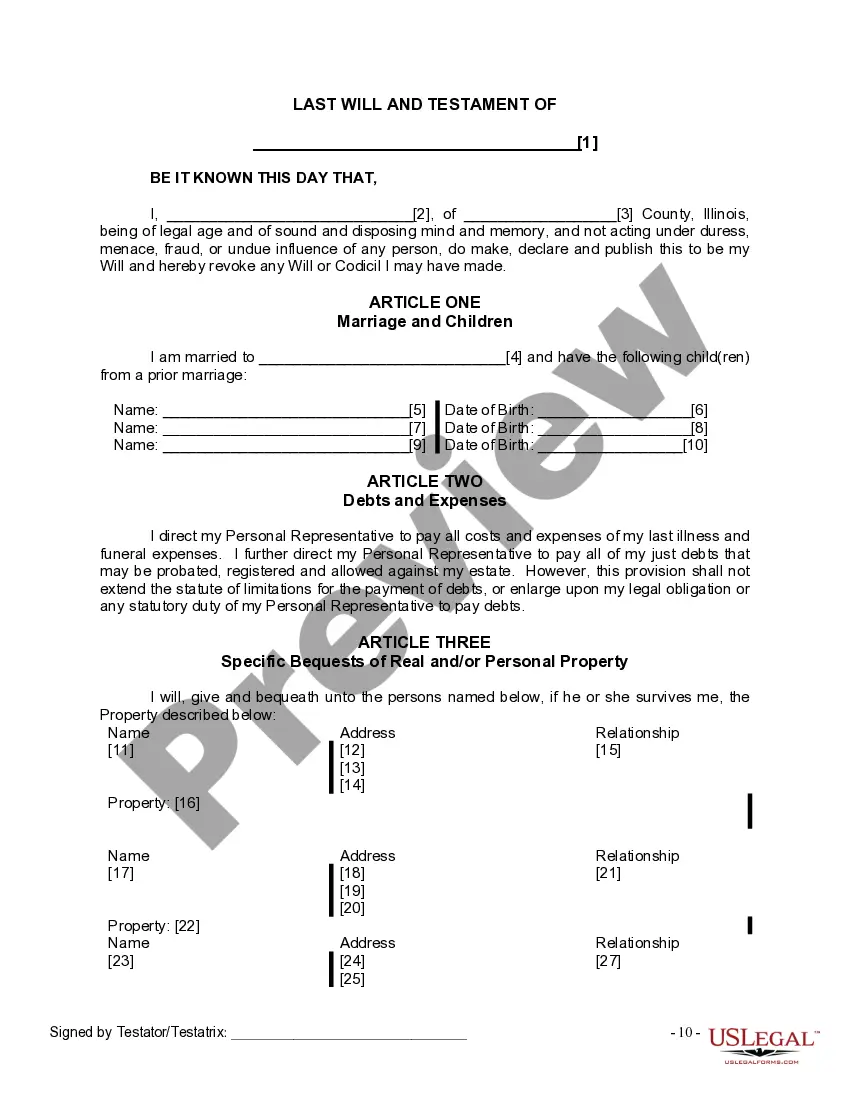
This Last Will and Testament is a legal document specifically designed for married individuals with minor children from a prior marriage. It serves to outline how your property and assets will be distributed after your passing, appoint a personal representative or executor to manage your estate, and designate a trustee for any assets left to your minor children. This document ensures that your wishes are granted, particularly in complex family situations involving children from previous relationships, making it distinct from standard wills that do not account for these unique family dynamics.
What’s included in this form
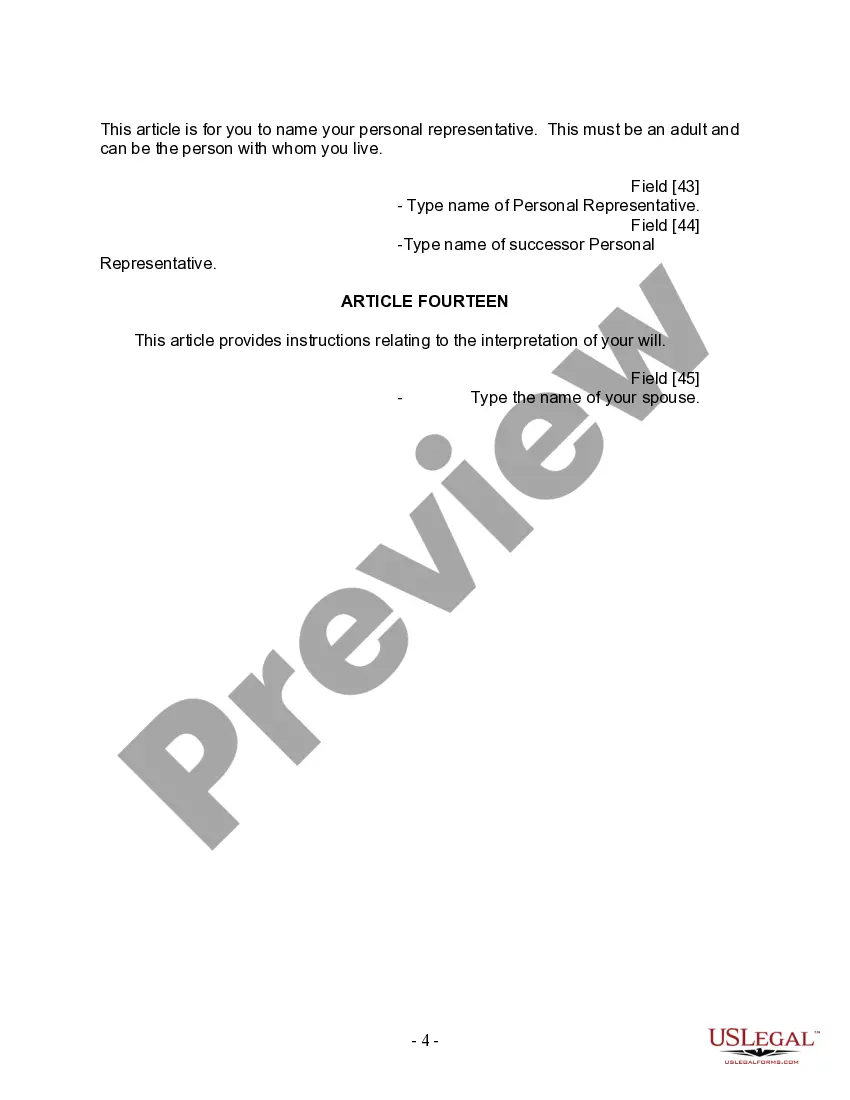
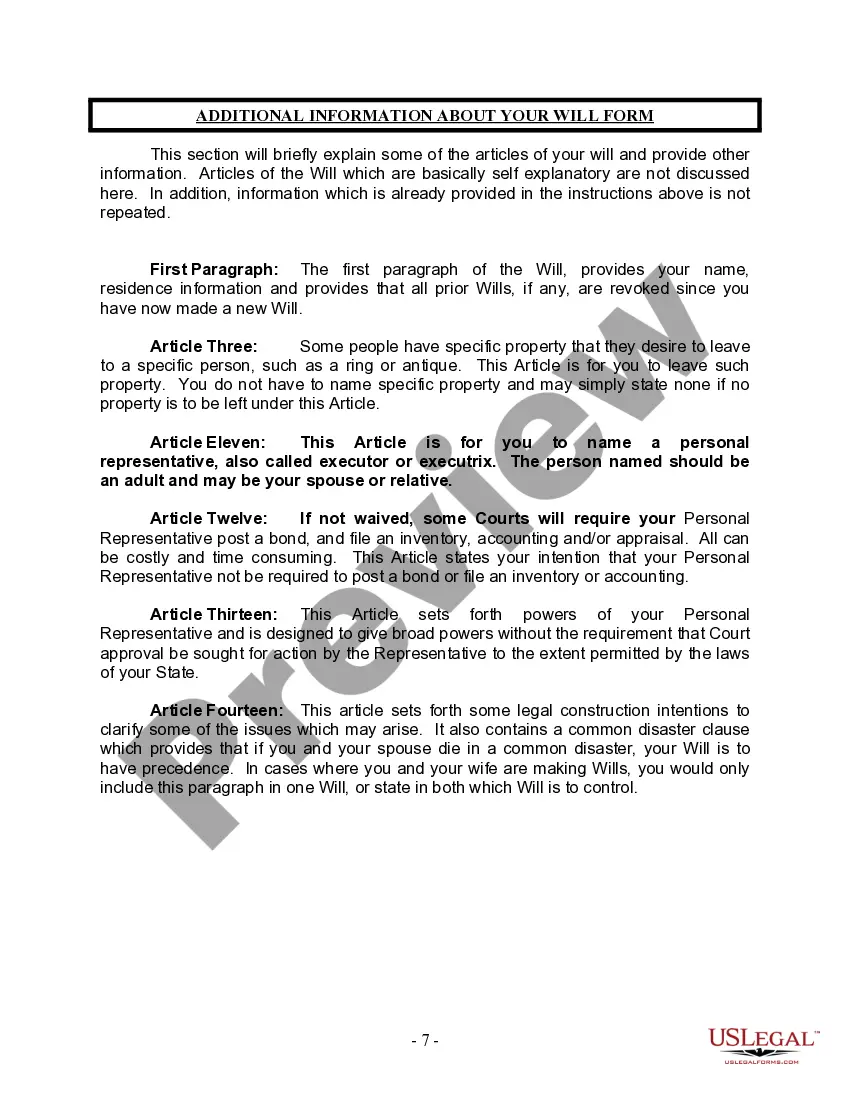
- Appointment of a personal representative to handle the estate.
- Designation of beneficiaries, including specific property allocations.
- Clauses for the care and financial support of minor children.
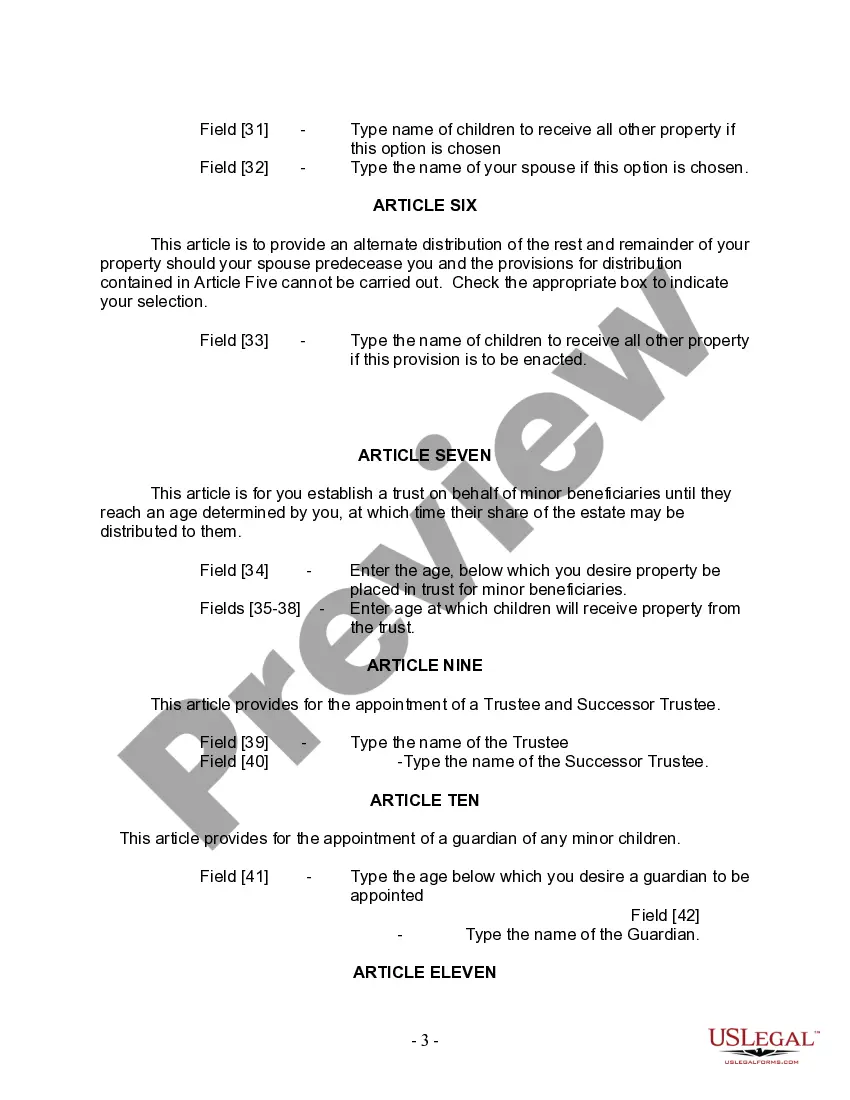
- Provisions for a trust to manage assets for minor children until they reach a specified age.
- Appointment of a guardian for any minor children.






Situations where this form applies
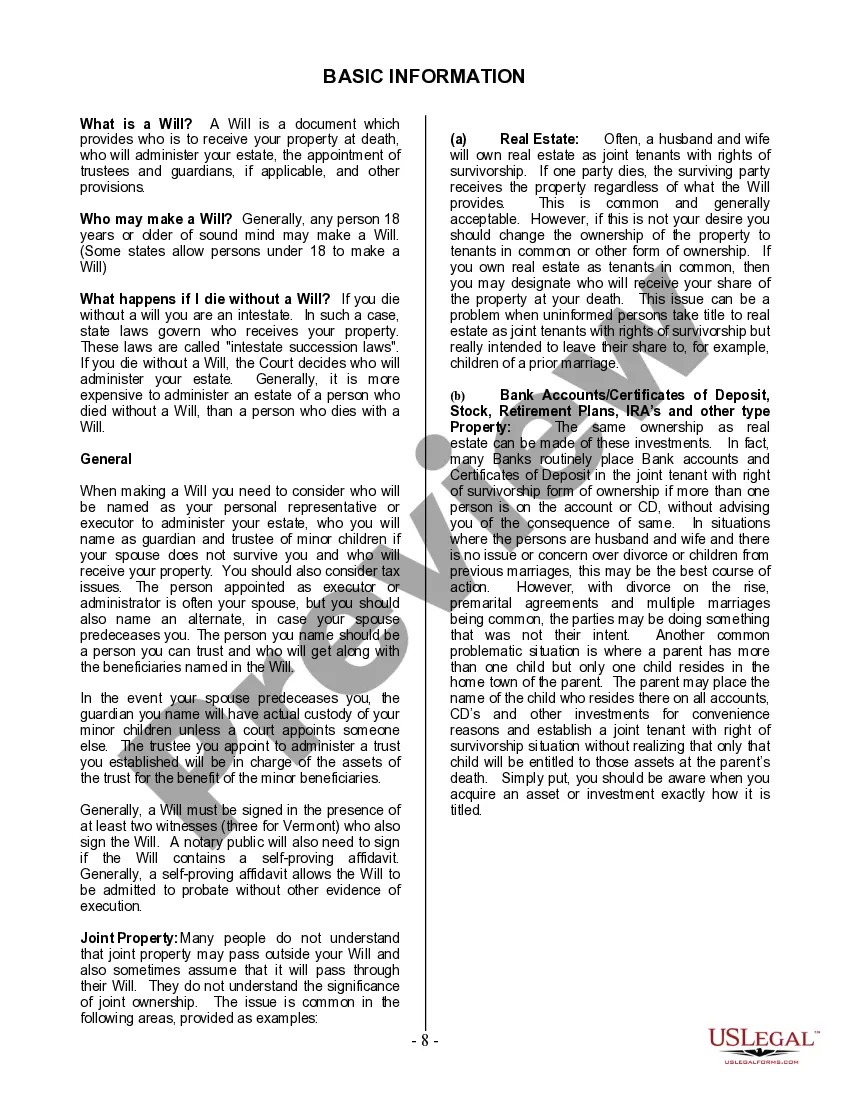
This form is essential when a married individual with minor children from a previous marriage wishes to establish a clear plan for the distribution of their estate. It is particularly important if you want to ensure that your children are cared for and have access to their inheritance, especially if your spouse predeceases you. Using this will helps prevent disputes and clarifies your intentions for asset distribution among your family members.
Who can use this document
- Married individuals with minor children from a prior marriage.
- Anyone wanting to secure the financial future of minor children after their death.
- Individuals seeking to clarify their wishes regarding the appointment of guardians and trustees.
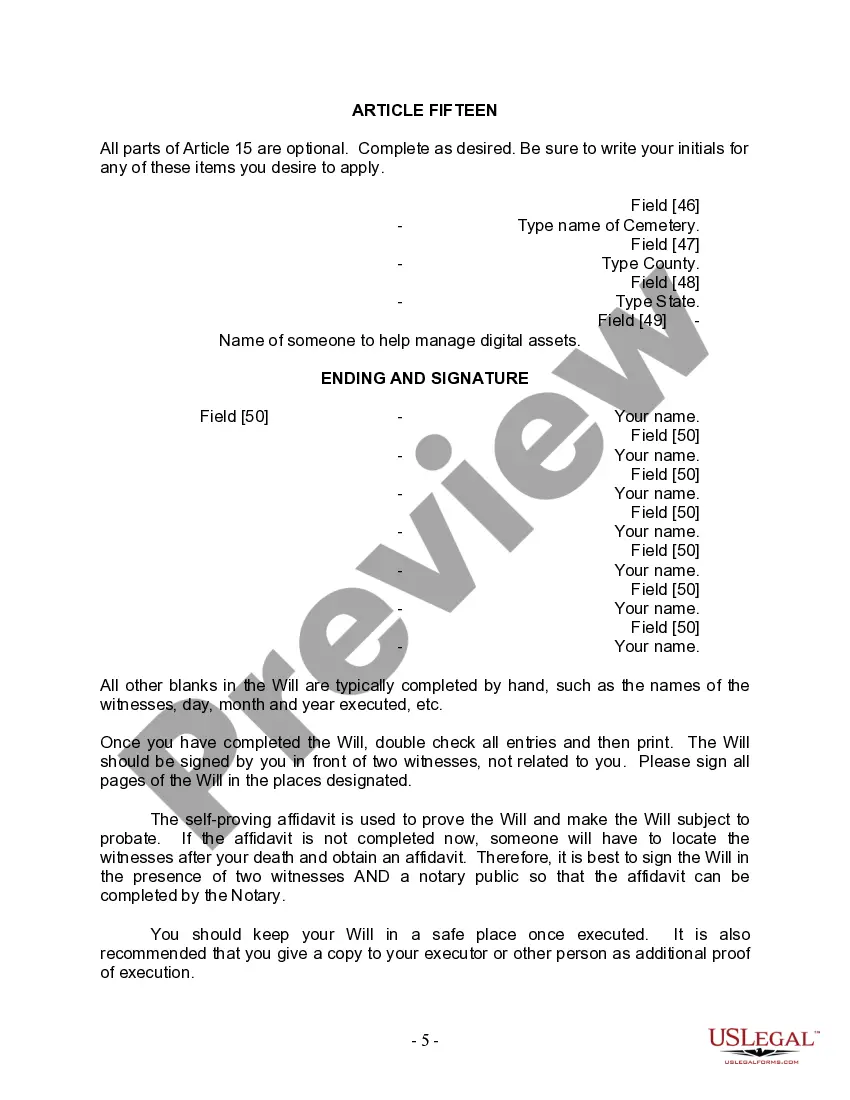
How to complete this form
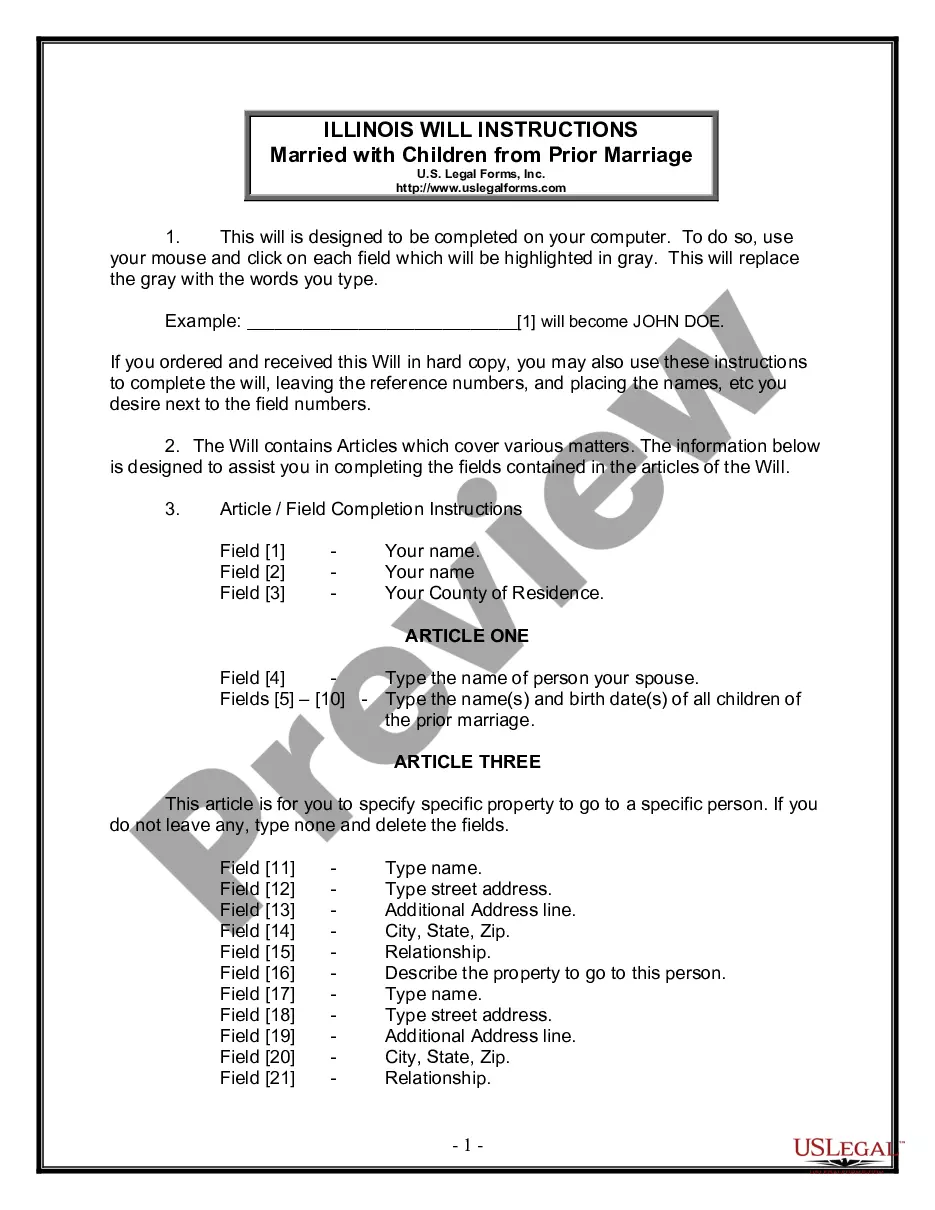
- Identify yourself and your residence by entering your name and county.
- Clearly specify your spouse's name and list the names and birthdates of your minor children from the prior marriage.
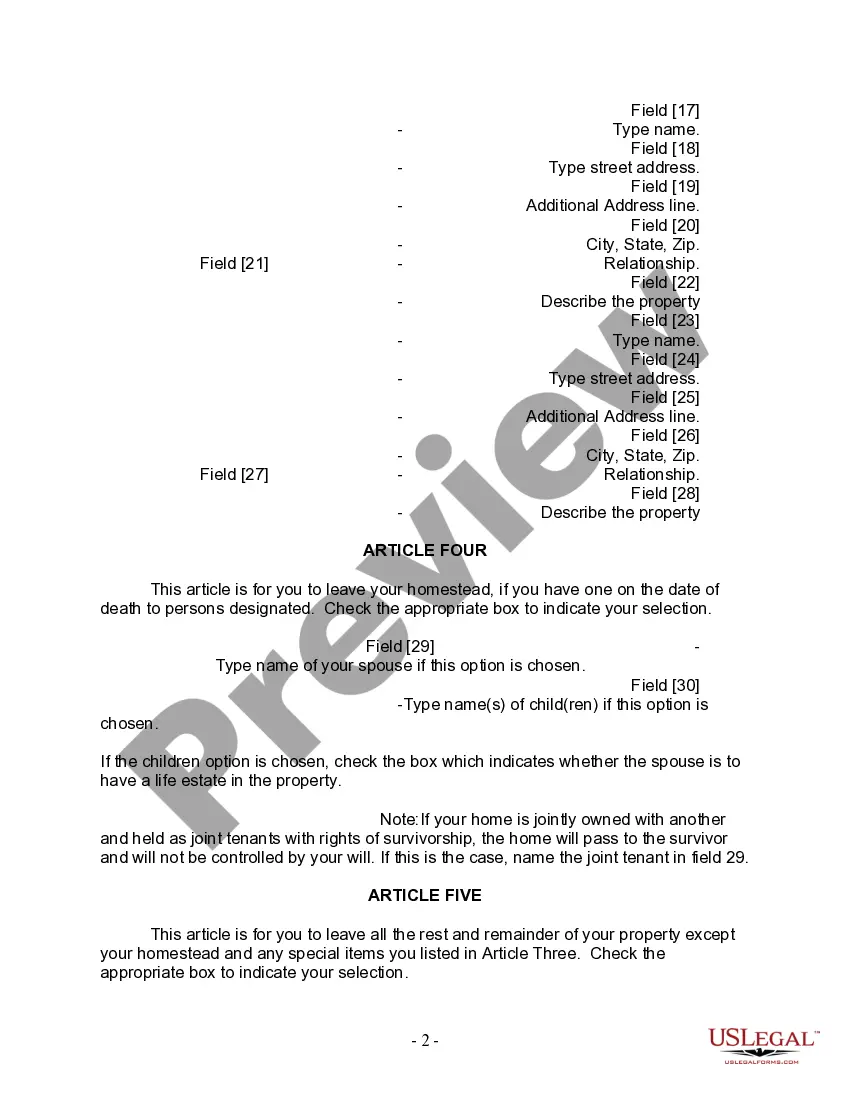
- Designate beneficiaries for specific assets and provide their relationship to you.
- Complete articles related to your homestead and residual property distribution.
- Obtain signatures from two witnesses and, if applicable, a notary public to validate your document.
Notarization guidance
Notarization is required for this form to take effect. Our online notarization service, powered by Notarize, lets you verify and sign documents remotely through an encrypted video session, available 24/7.
Get your form ready online
Our built-in tools help you complete, sign, share, and store your documents in one place.
Make edits, fill in missing information, and update formatting in US Legal Forms—just like you would in MS Word.
Download a copy, print it, send it by email, or mail it via USPS—whatever works best for your next step.
Sign and collect signatures with our SignNow integration. Send to multiple recipients, set reminders, and more. Go Premium to unlock E-Sign.
If this form requires notarization, complete it online through a secure video call—no need to meet a notary in person or wait for an appointment.
We protect your documents and personal data by following strict security and privacy standards.

Make edits, fill in missing information, and update formatting in US Legal Forms—just like you would in MS Word.

Download a copy, print it, send it by email, or mail it via USPS—whatever works best for your next step.

Sign and collect signatures with our SignNow integration. Send to multiple recipients, set reminders, and more. Go Premium to unlock E-Sign.

If this form requires notarization, complete it online through a secure video call—no need to meet a notary in person or wait for an appointment.

We protect your documents and personal data by following strict security and privacy standards.
Avoid these common issues
- Failing to include all children from prior marriages when designating beneficiaries.
- Not updating the will after significant life changes, such as marriage or the birth of another child.
- Neglecting to secure the required signatures from witnesses and notaries, if needed.
Why complete this form online
- Convenience of completing the form from your own home at your own pace.
- Ability to make edits easily to tailor the will to your family's unique needs.
- Access to reliable legal forms drafted by licensed attorneys.
Legal use & context
- This will outlines the legal distribution of your assets upon death, reducing the likelihood of disputes.
- Designating a personal representative allows for smoother estate management through the probate process.
- The form is designed to meet the legal requirements of multiple jurisdictions, providing flexibility for use across states.
What to keep in mind
- This form is crucial for married individuals with minor children from prior relationships to protect their family's future.
- Clear guidelines and specific clauses help ensure your wishes are followed.
- Proper execution, including notarization, is essential for the will's validity.
Looking for another form?


Form popularity
FAQ
Handwritten Wills in Illinois In the state of Illinois, holographic wills are not considered to be valid. Illinois does recognize, however, handwritten wills that are signed by two witnesses and satisfy all other requirements for wills as stated in the law.
Find an online template or service. Make a list of your assets. Be specific about who gets what. If you have minor children, choose a guardian. Give instructions for your pet. Choose an executor. Name a 'residuary beneficiary' List your funeral preferences.
Decide what property to include in your will. Decide who will inherit your property. Choose an executor to handle your estate. Choose a guardian for your children. Choose someone to manage children's property. Make your will. Sign your will in front of witnesses.
Many states allow you to make your will "self-proving," which allows the probate court to accept the will without contacting your witnesses. However, Illinois allows your will to be self-proved without a self-proving affidavit, as long as you sign and witness it correctly.
Illinois law states that the will must become public record upon the death of the person. As such, it must be filed with their local county clerk within 30 days of discovery.For instance, your will generally appoints a legal representative, called an executor, to carry out your wishes and oversee the probate process.
In Illinois, to have a valid will it is required that two or more credible witnesses validate or attest the will. This means each witness must watch the testator (person making his or her will) sign or acknowledge the will, determine the testator is of sound mind, and sign the will in front of the testator.
Write an Introduction. Select an Executor. Identify Your Heirs and Beneficiaries. Nominate a Guardian for Your Minor or Dependent Children. Assess and Divide Your Property. State Your Funeral Wishes (If You Have Any) Sign and Notarize the Document.
Create the initial document. Start by titling the document Last Will and Testament" and including your full legal name and address. Designate an executor. Appoint a guardian. Name the beneficiaries. Designate the assets. Ask witnesses to sign your will. Store your will in a safe place.