Illinois General Power of Attorney for Care and Custody of Child or Children

Overview of this form
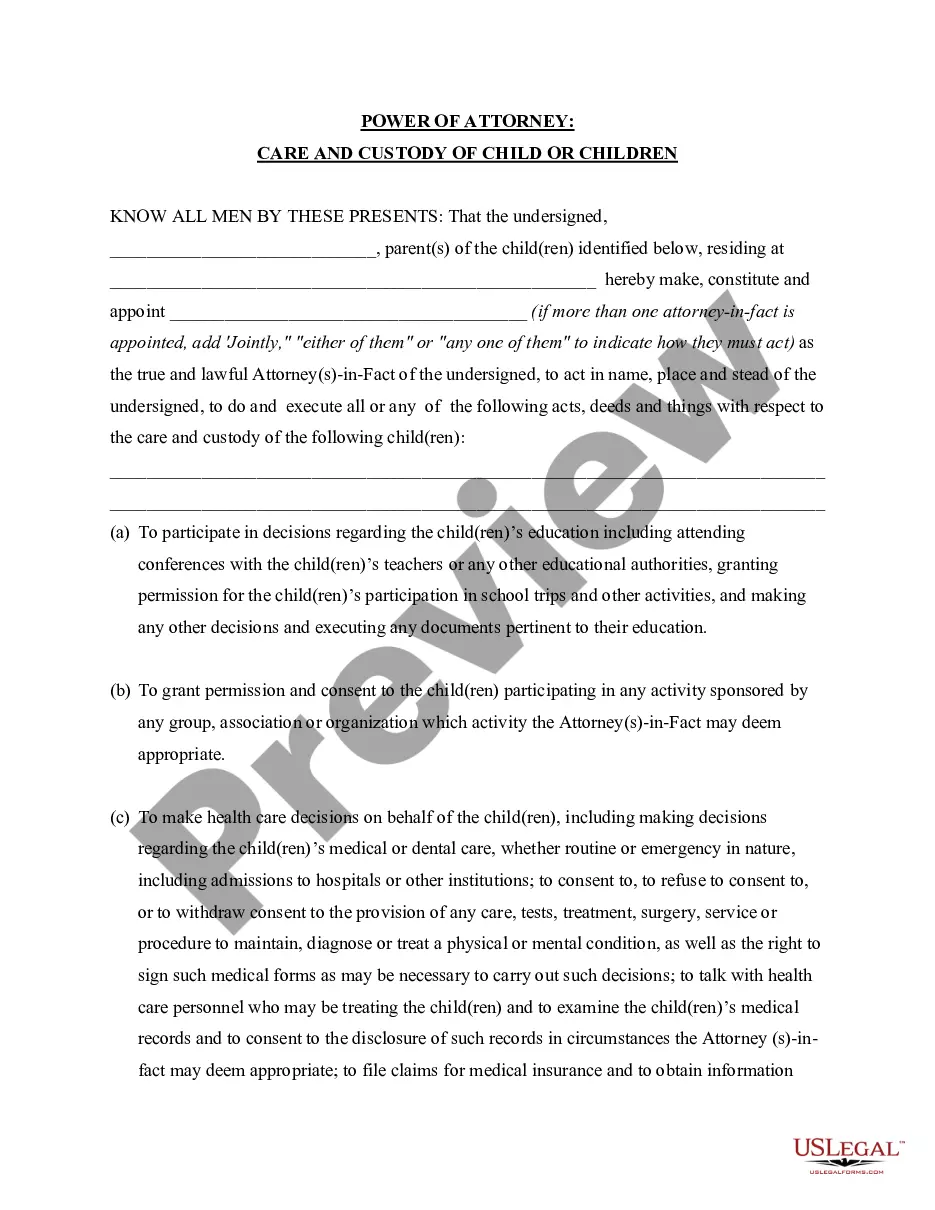
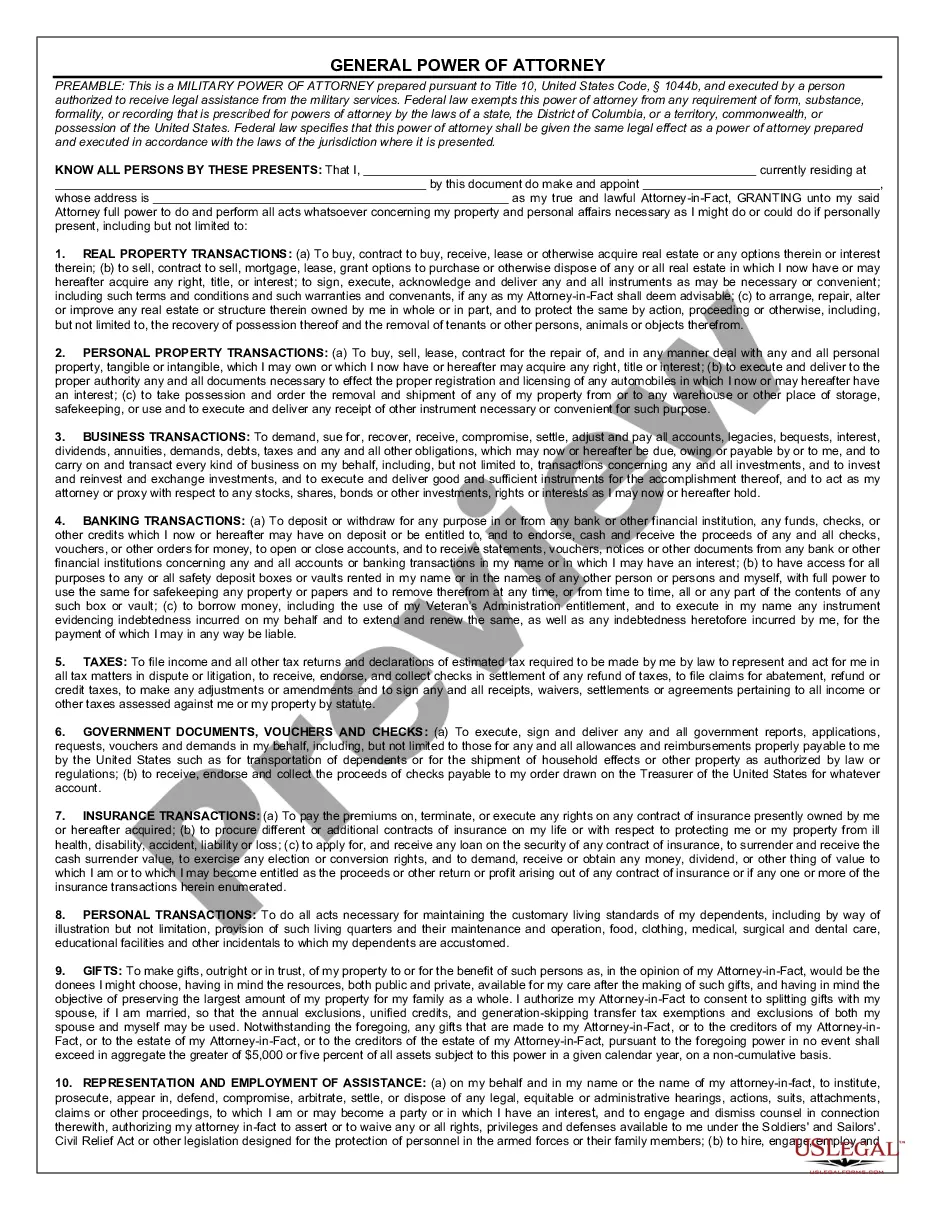
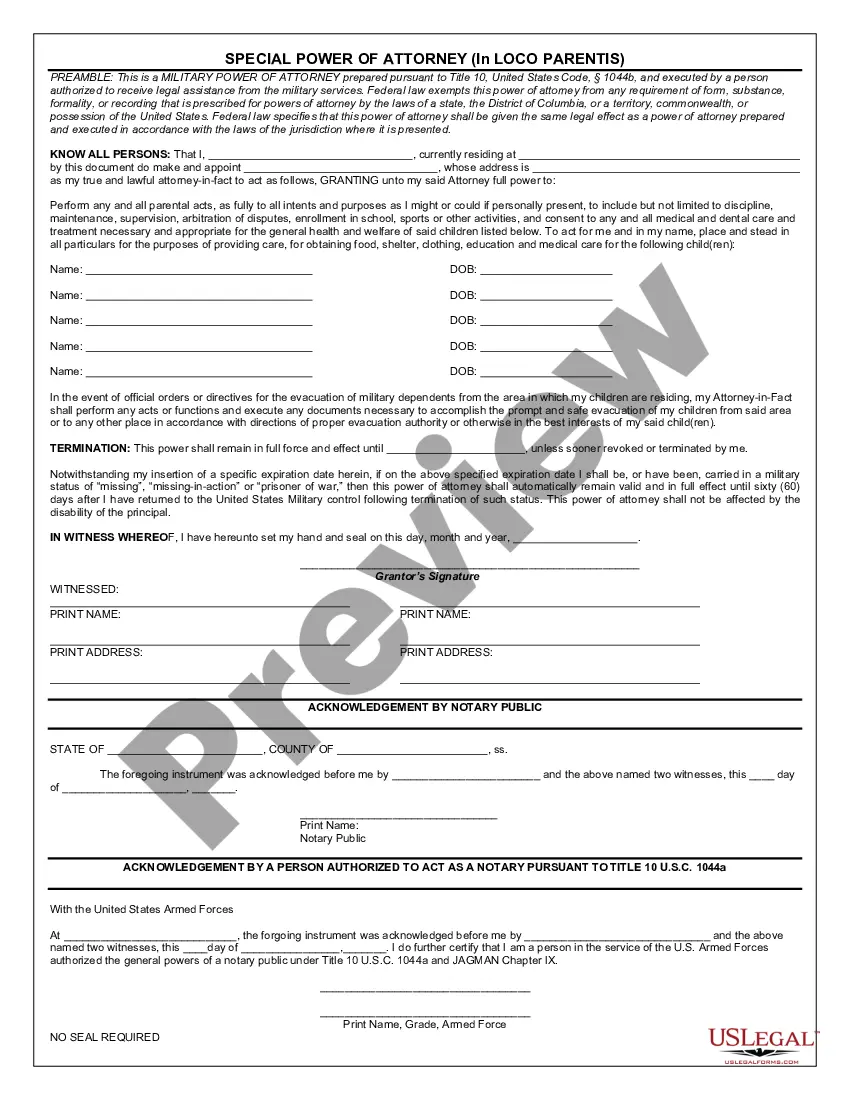
The General Power of Attorney for Care and Custody of Child or Children is a legal document that allows a parent or guardian to appoint an attorney-in-fact to make decisions regarding the care and custody of their child or children. This form includes authority over educational and health care decisions, differentiating it from other types of power of attorney, which may focus solely on financial matters or property management.
Main sections of this form
- Identifies the parent(s) and child(ren) involved.
- Appoints the attorney(s)-in-fact and outlines their authority.
- Specifies educational decision-making powers.
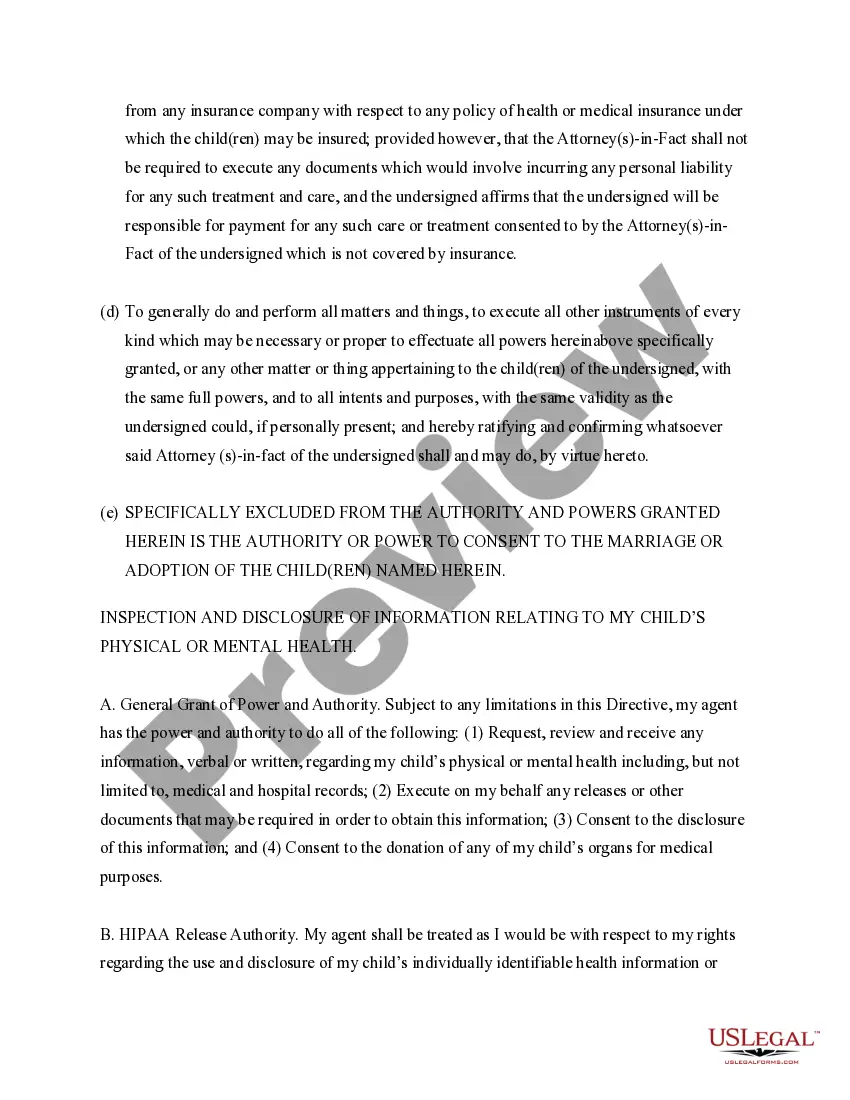
- Covers health care decision-making responsibilities.
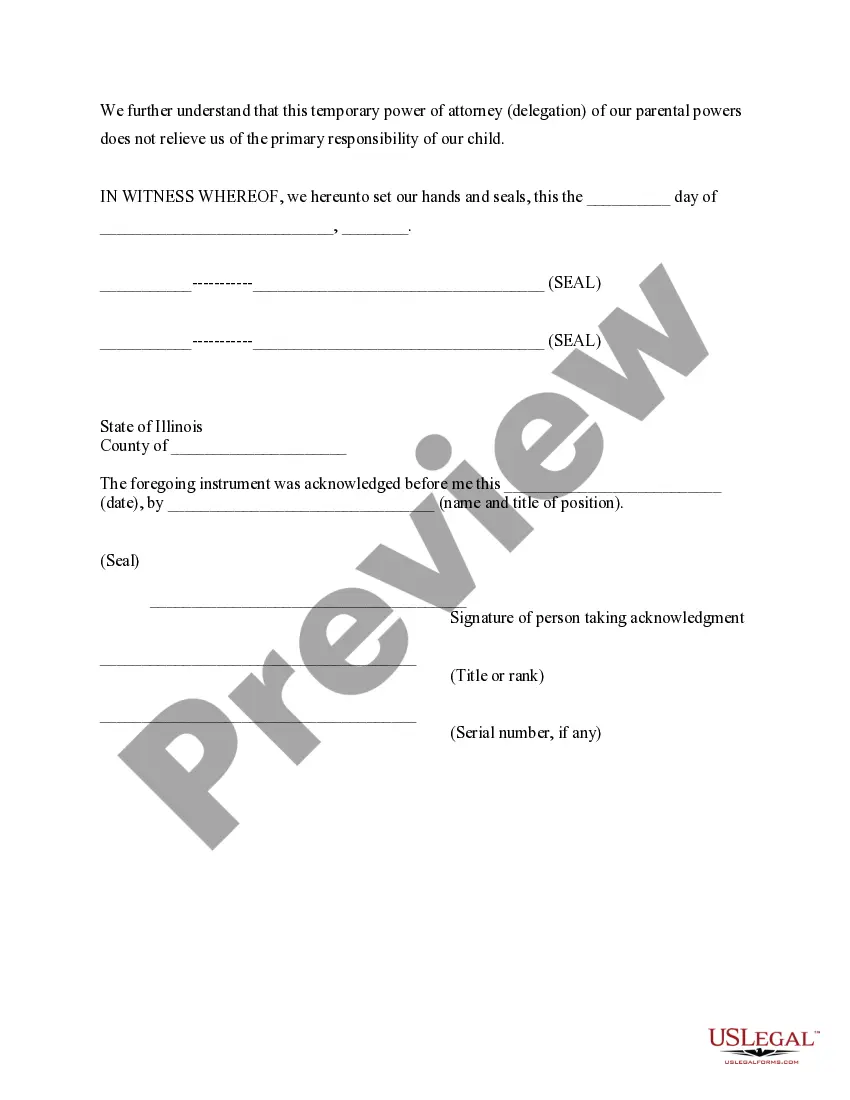
- Details limitations on authority, including the exclusion of consent for marriage or adoption.
- Includes a notary acknowledgment section for validation.
When to use this document
This form should be used when a parent or legal guardian is temporarily unable to care for their child or children and needs to delegate authority to someone else. Situations may include travel, military deployment, or medical emergencies where immediate decisions on behalf of the child are necessary.
Intended users of this form
- Parents or guardians of minor children.
- Individuals who need to delegate parental responsibilities temporarily.
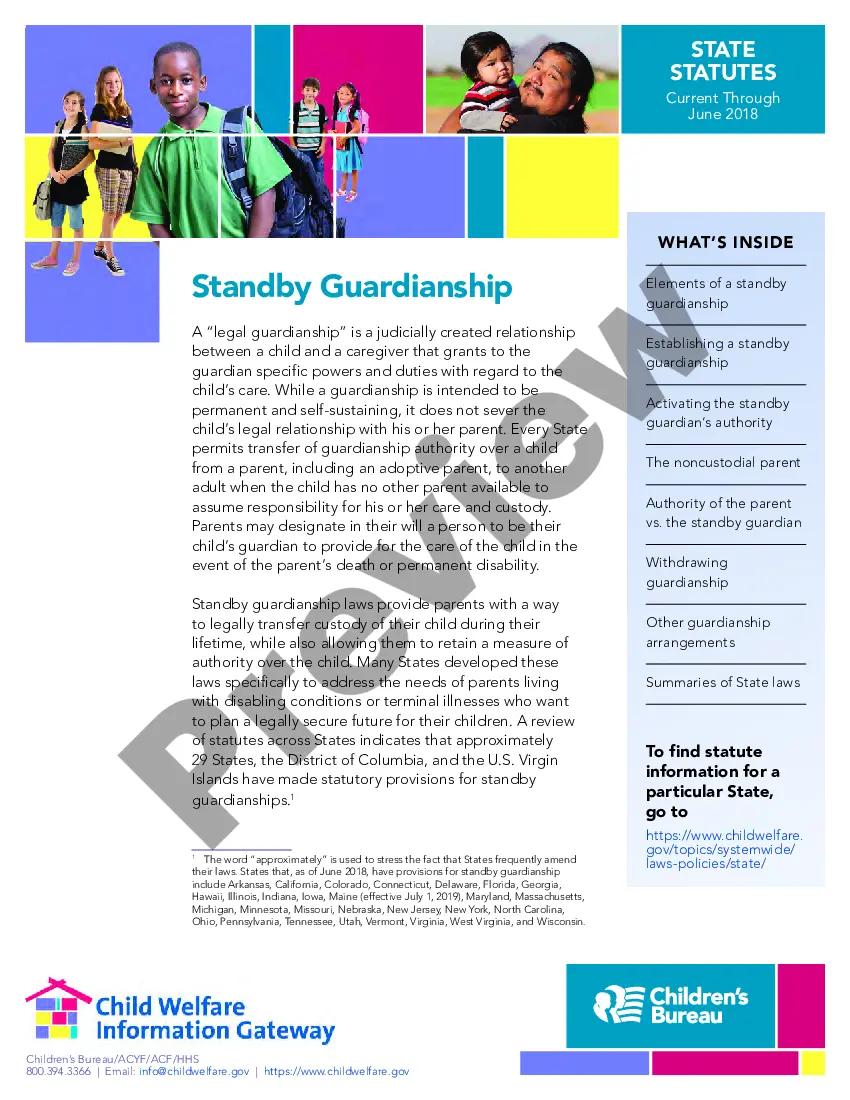
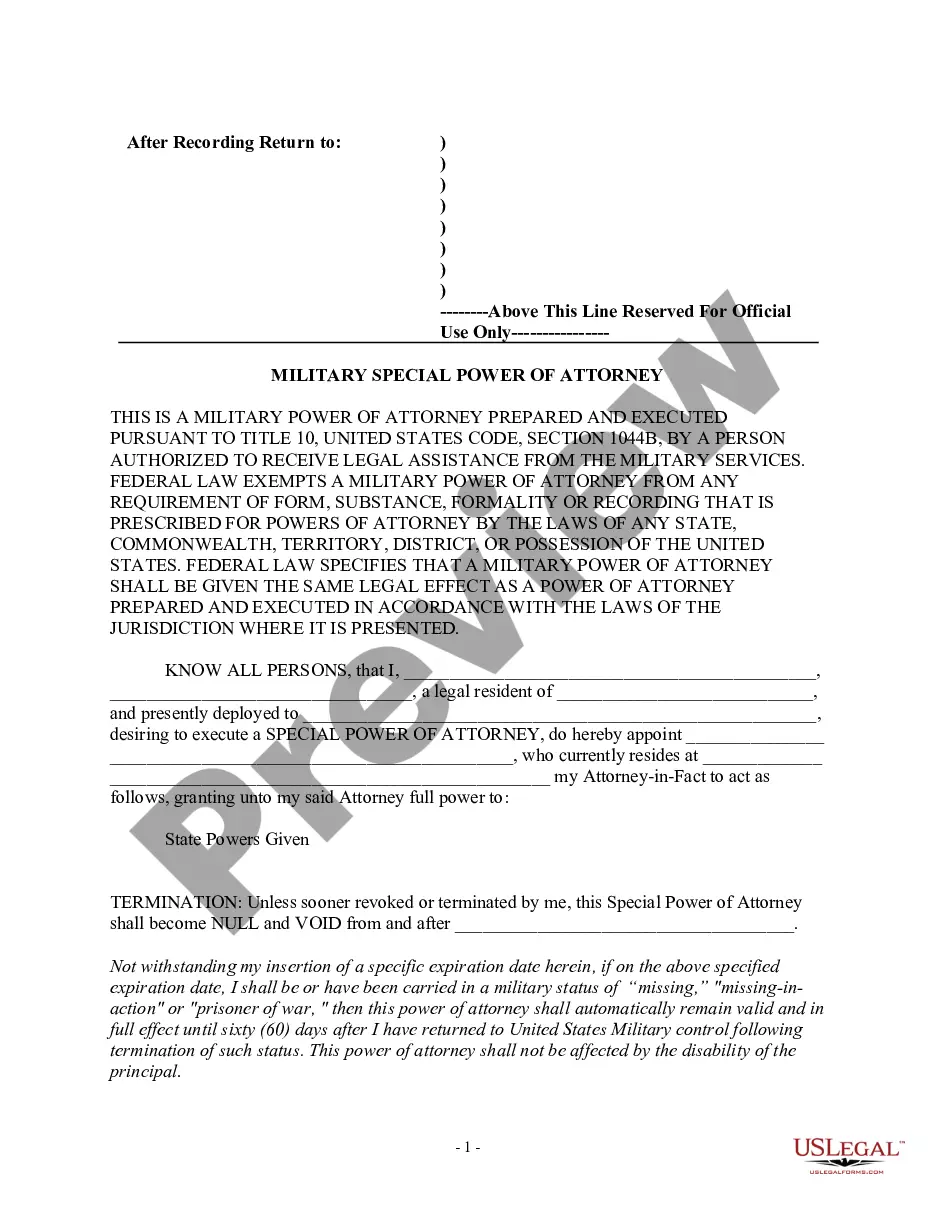
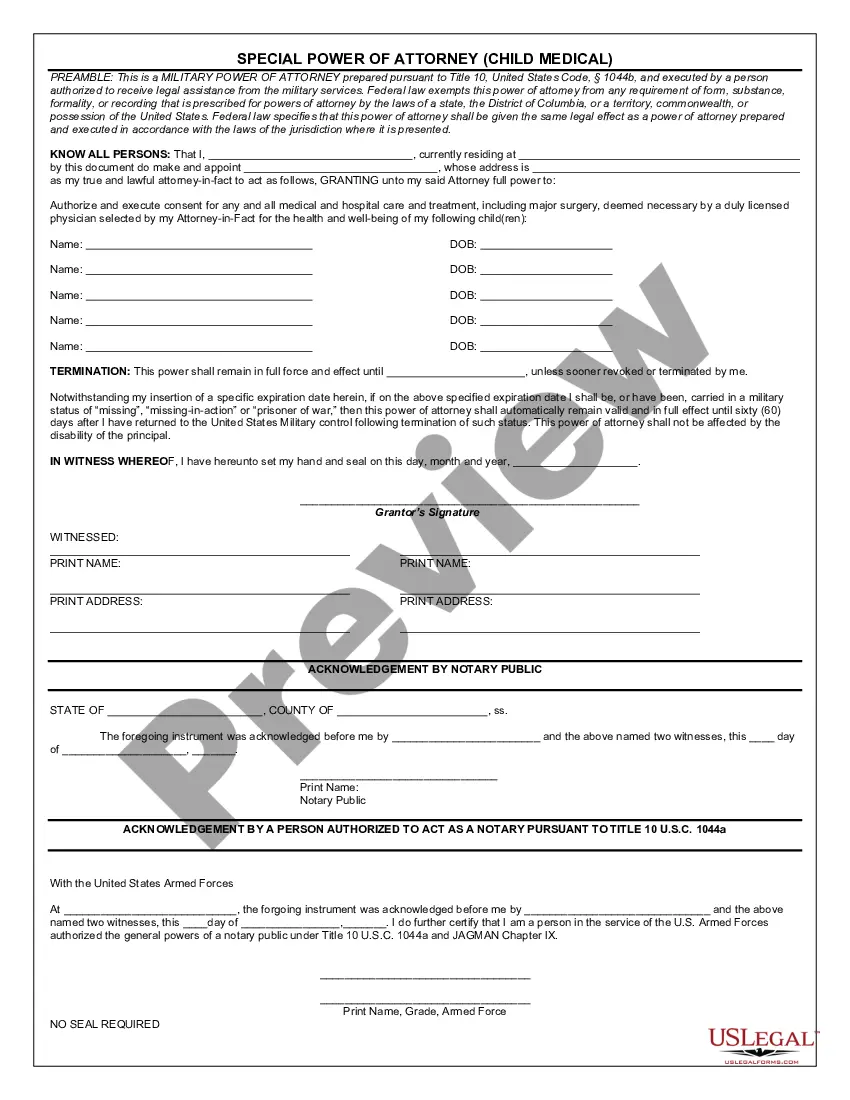
- Guardians serving in military service away from home.
How to prepare this document
- Identify all parties, including parent(s) and attorney(s)-in-fact.
- List the names of the child or children involved.
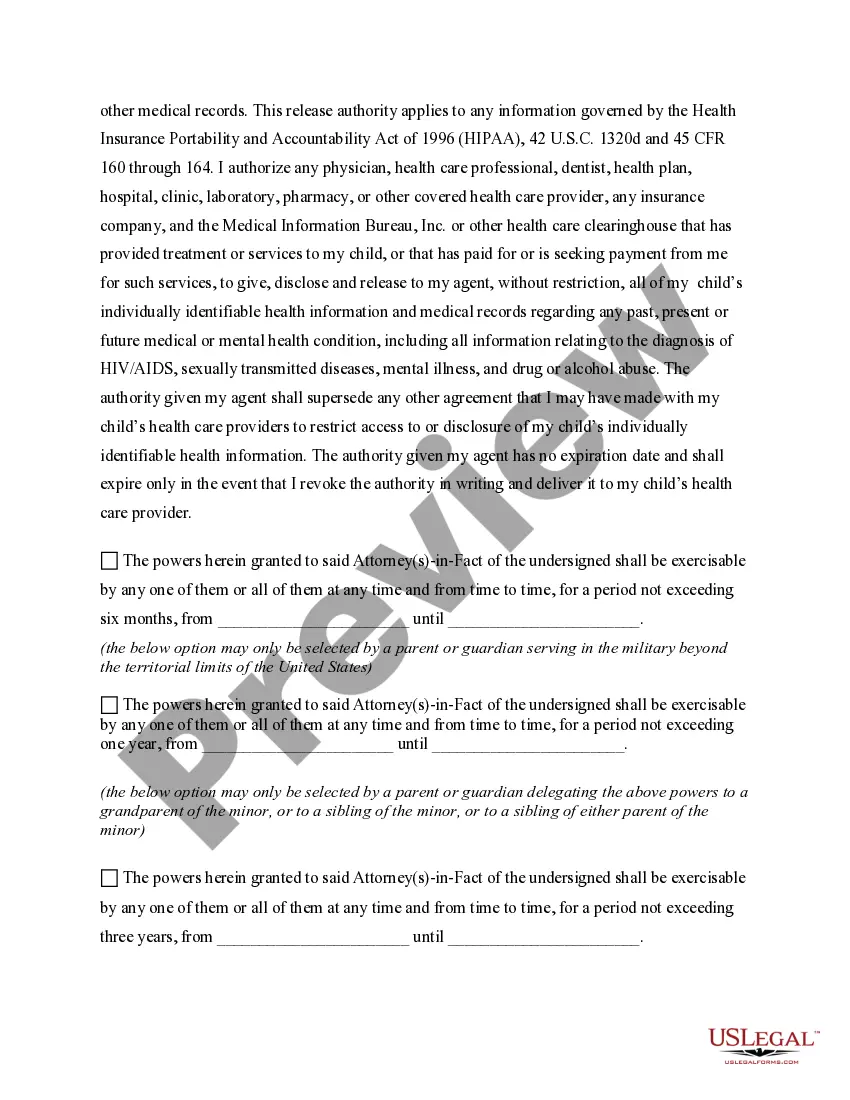
- Specify the time period for which the powers are granted.
- Sign the document in front of a notary public to ensure legal validity.
- Keep a copy of the signed form for your records.
Notarization guidance
This form must be notarized to be legally valid. US Legal Forms provides secure online notarization powered by Notarize, allowing you to complete the process through a verified video call.
Get your form ready online
Our built-in tools help you complete, sign, share, and store your documents in one place.
Make edits, fill in missing information, and update formatting in US Legal Forms—just like you would in MS Word.
Download a copy, print it, send it by email, or mail it via USPS—whatever works best for your next step.
Sign and collect signatures with our SignNow integration. Send to multiple recipients, set reminders, and more. Go Premium to unlock E-Sign.
If this form requires notarization, complete it online through a secure video call—no need to meet a notary in person or wait for an appointment.
We protect your documents and personal data by following strict security and privacy standards.

Make edits, fill in missing information, and update formatting in US Legal Forms—just like you would in MS Word.

Download a copy, print it, send it by email, or mail it via USPS—whatever works best for your next step.

Sign and collect signatures with our SignNow integration. Send to multiple recipients, set reminders, and more. Go Premium to unlock E-Sign.

If this form requires notarization, complete it online through a secure video call—no need to meet a notary in person or wait for an appointment.

We protect your documents and personal data by following strict security and privacy standards.
Mistakes to watch out for
- Failing to specify the period of authority granted to the attorney(s)-in-fact.
- Not listing all child(ren) needing care and custody clearly.
- Omitting notarization, leading to potential legal challenges.
Benefits of using this form online
- Convenient access to legal forms at any time.
- Editability allows for customization to your specific situation.
- Reliable templates drafted by licensed attorneys ensure legal compliance.
Summary of main points
- This form allows parents to delegate child care and custody responsibilities to another person temporarily.
- It is crucial to ensure all parties are correctly identified and the form is properly notarized.
- Using this form online provides a convenient and reliable option for managing parenting responsibilities when necessary.
Looking for another form?



Form popularity
FAQ
In many cases, yes, guardianship can overrule a power of attorney. If a guardian is appointed through a court, their authority takes precedence over that of the individual acting under an Illinois General Power of Attorney for Care and Custody of Child or Children. This means that if conflicts arise, the guardian's decisions generally hold stronger legal weight.
Finally, the power of attorney document requires the principal's notarized signature and at least one witness to be effective. Please note, according to Section 3-3.6 of the Illinois Power of Attorney Act, the requirement of at least one witness's signature applies to agencies created after June 9, 2000.
The person you give the power of attorney to is the agent and you are the principal. The agent is usually a spouse, a close friend, or a trusted relative. The document does not have to be notarized.
An agent under a durable POA does not have any power until the principal is incapacitated. Once that happens, however, the designated individual must make health care decisions for the principal.
They do not act for their own benefit under a power of attorney or make decisions that involve their own assets and finances.In other words, the attorney-in-fact does not become responsible for repaying the lender from the attorney-in-fact's personal funds if the principal runs out of money.
1 attorney answer But no, a power of attorney is not somehow going to constitute or override a custody order, and as a non-parent, he doesn't have any standing to contest custody unless your daughter's been with him (and him alone, not with her mom...
In many states, notarization is required by law to make the durable power of attorney valid. But even where law doesn't require it, custom usually does. A durable power of attorney that isn't notarized may not be accepted by people with whom your attorney-in-fact tries to deal.
A unique feature of the new form is that it complies with state legal requirements for a valid power of attorney for health care in almost every state. Only five states have laws so inflexible and cumbersome that the bare bones power will not work: Indiana, New Hampshire, Ohio, Texas, and Wisconsin.
It is governed by the Illinois Power of Attorney Act.He or she must also act in accordance with the law and with the directions in this form. Your agent must keep a record of all receipts, disbursements, and significant actions taken as your agent.
A power of attorney and a guardianship are tools that help someone act in your stead if you become incapacitated. With a power of attorney, you choose who you want to act for you. In a guardianship proceeding, the court chooses who will act as guardian.