Massachusetts Insulation Contract for Contractor
Understanding this form
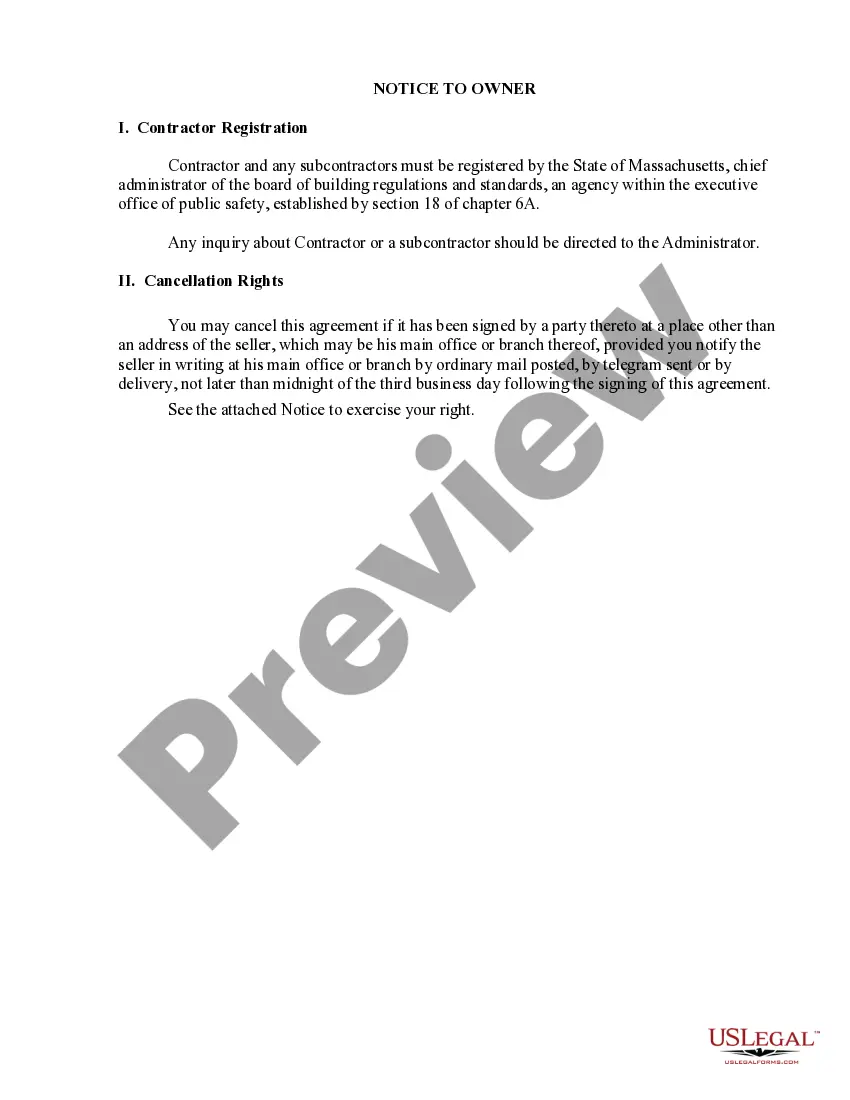
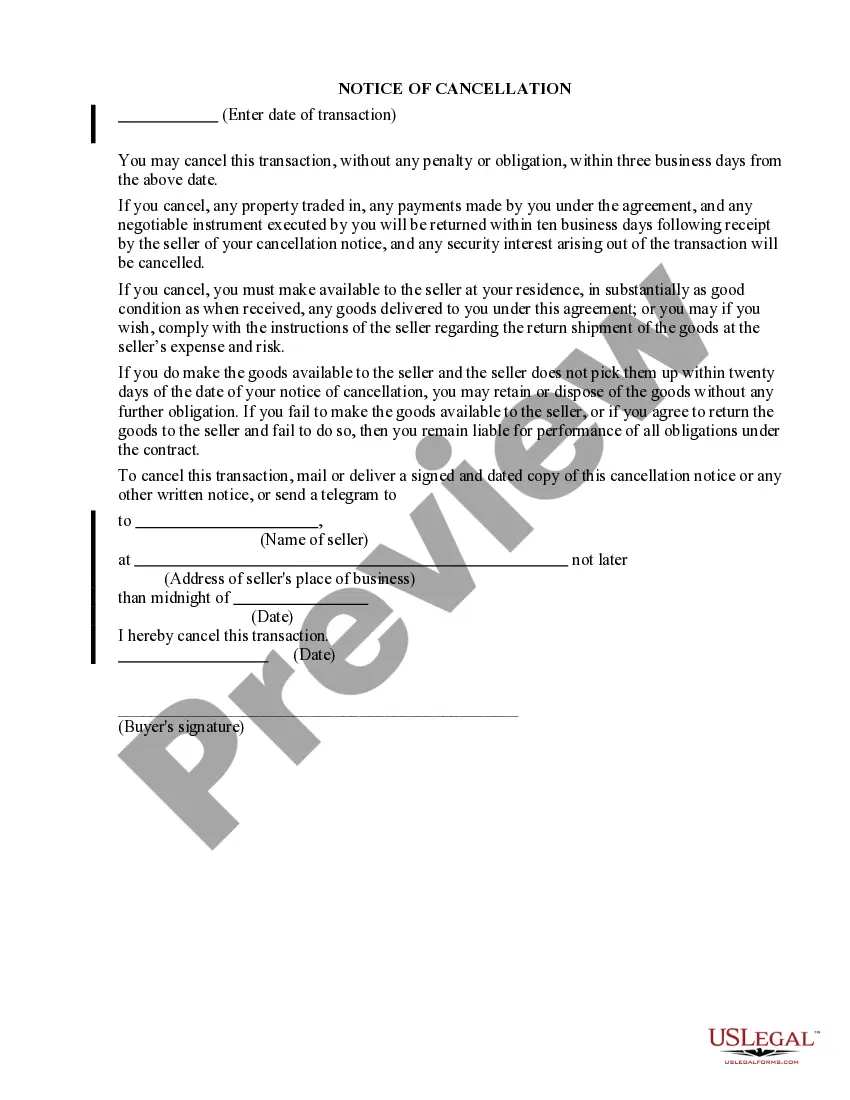
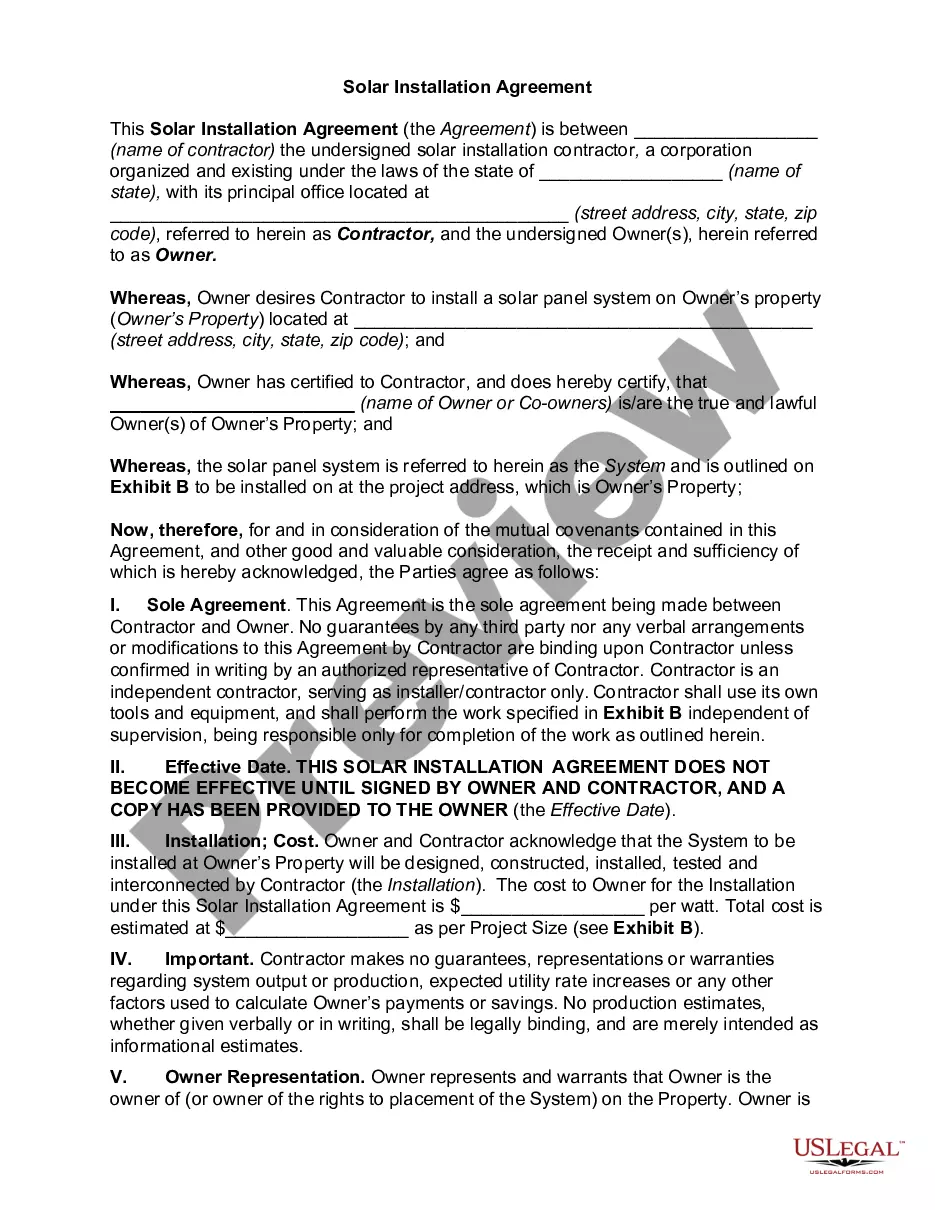
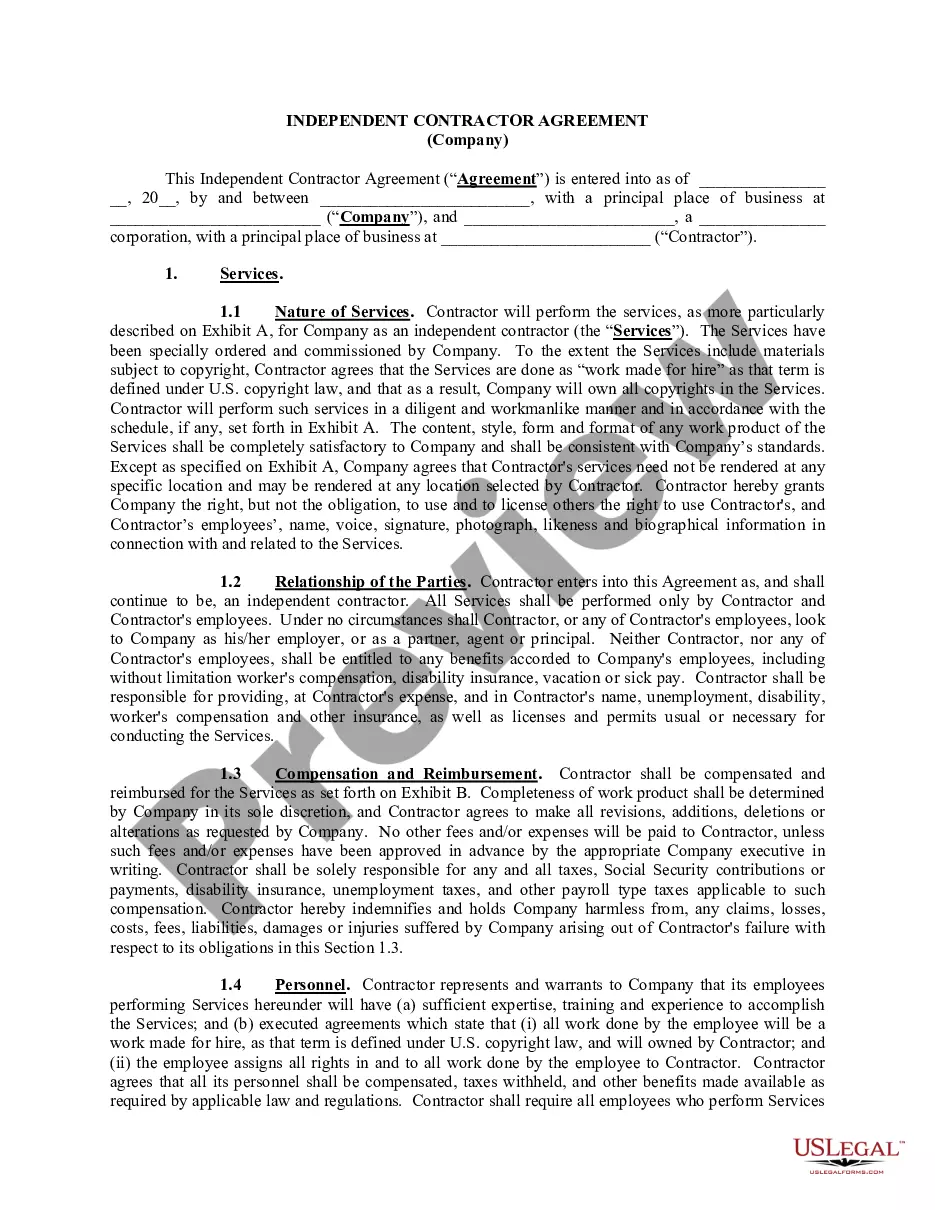
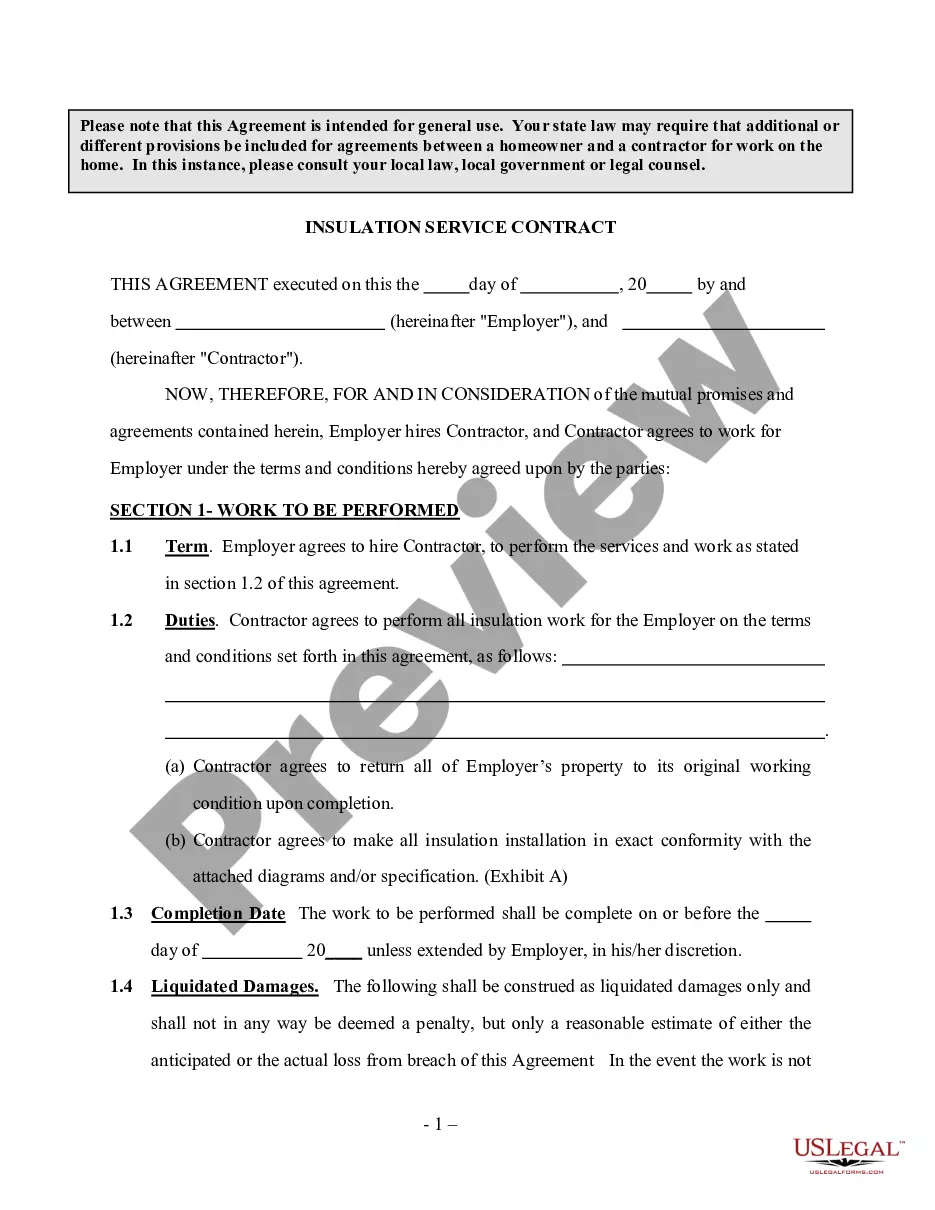
The Insulation Contract for Contractor is a legal document designed for use between insulation contractors and property owners. This contract outlines the terms under which insulation work will be completed, specifying payment arrangements, project scope, and legal responsibilities. It is particularly tailored to comply with the laws of Massachusetts, distinguishing it from other generic contracts typically used in the construction industry.
Main sections of this form
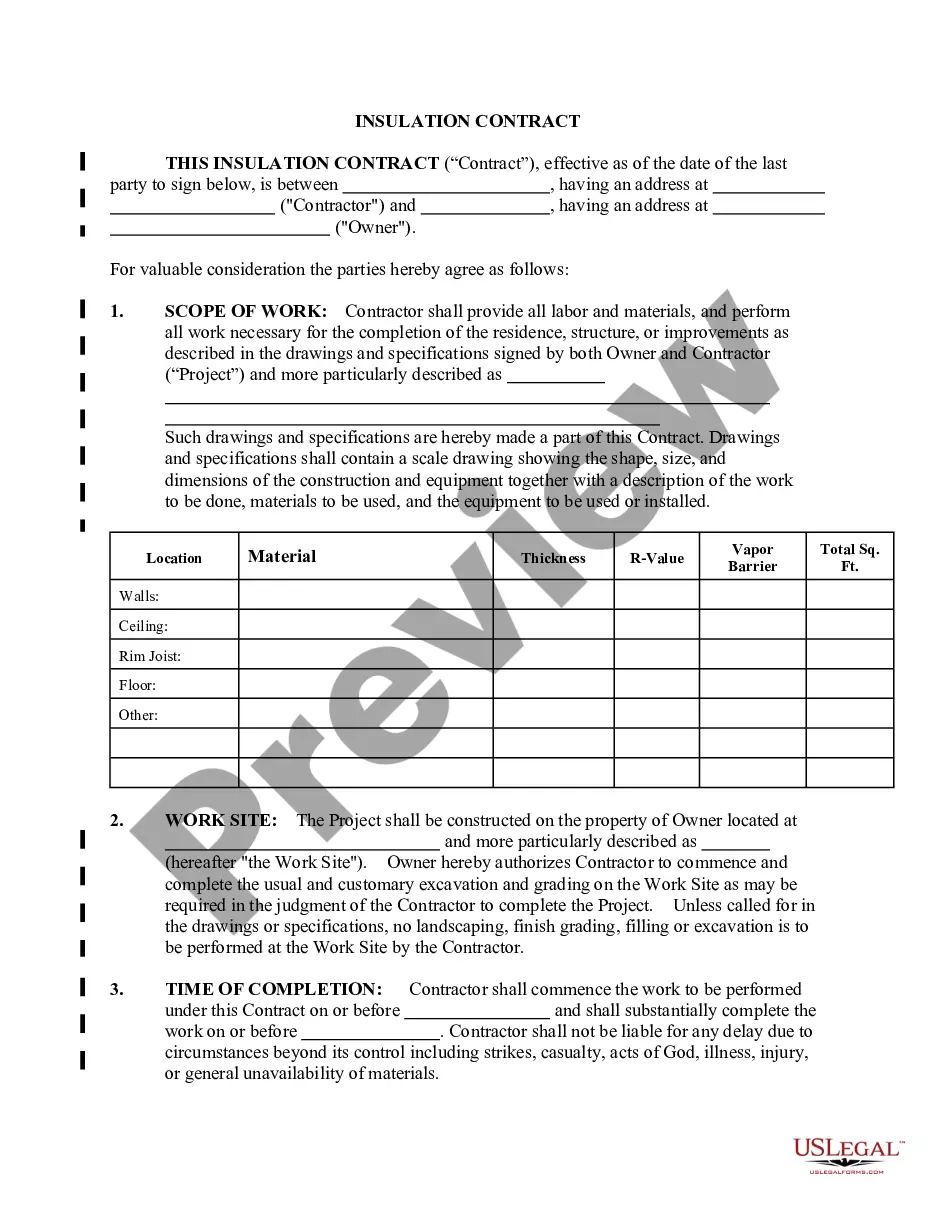
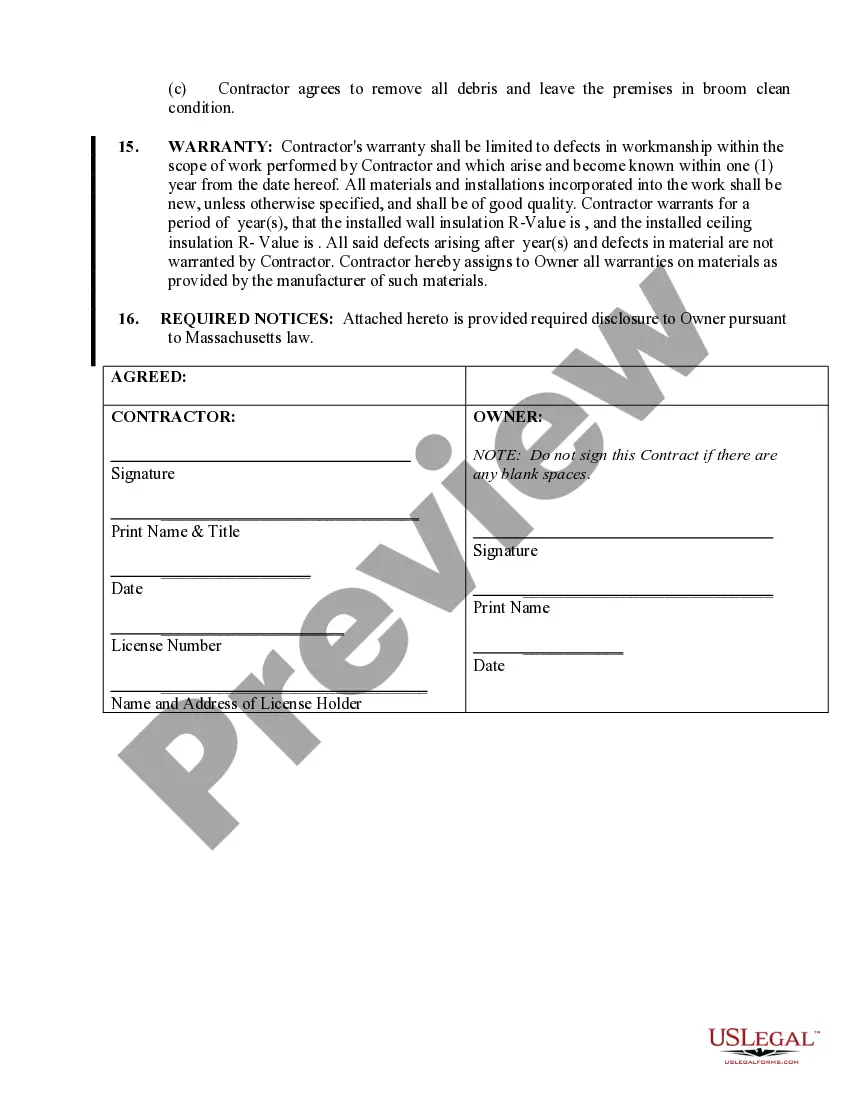
- Location, material, thickness, and R-value specifications for the insulation.
- Requirement for contractors to obtain necessary permits for the project.
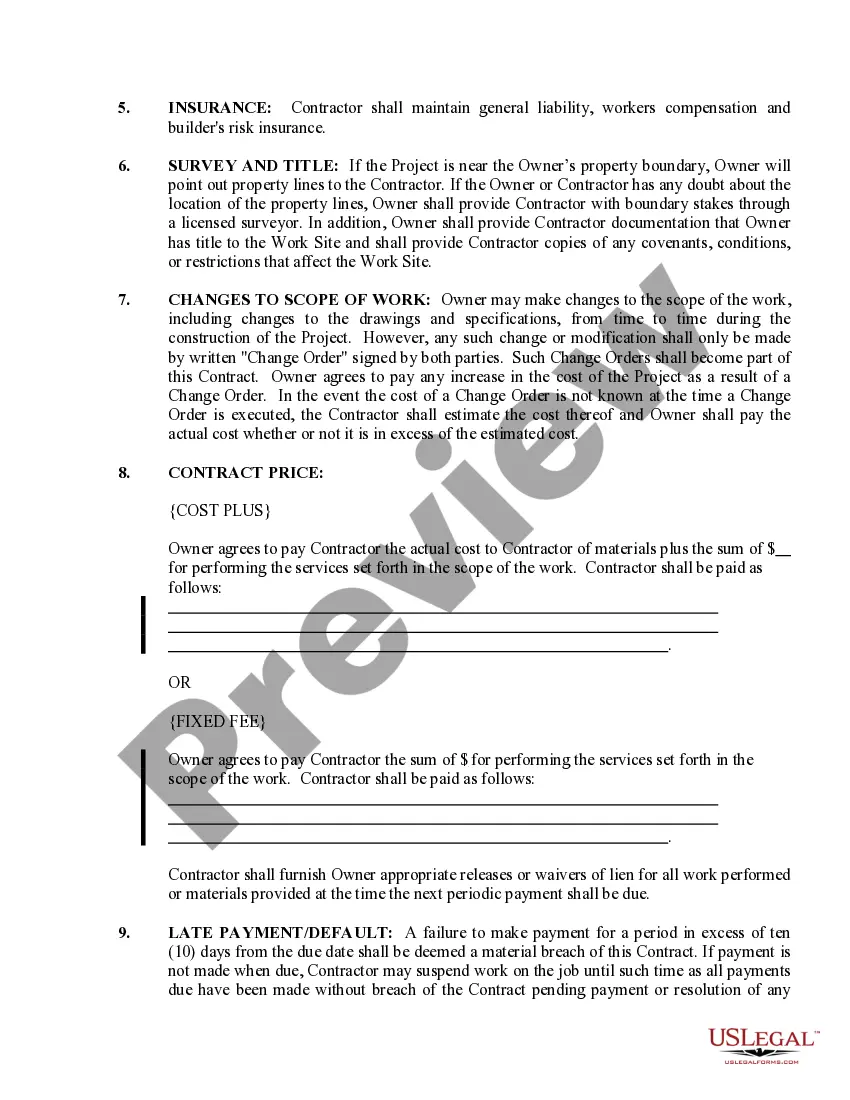
- Insurance stipulations including general liability and workers' compensation.
- Procedures for changes to the scope of work through written change orders.
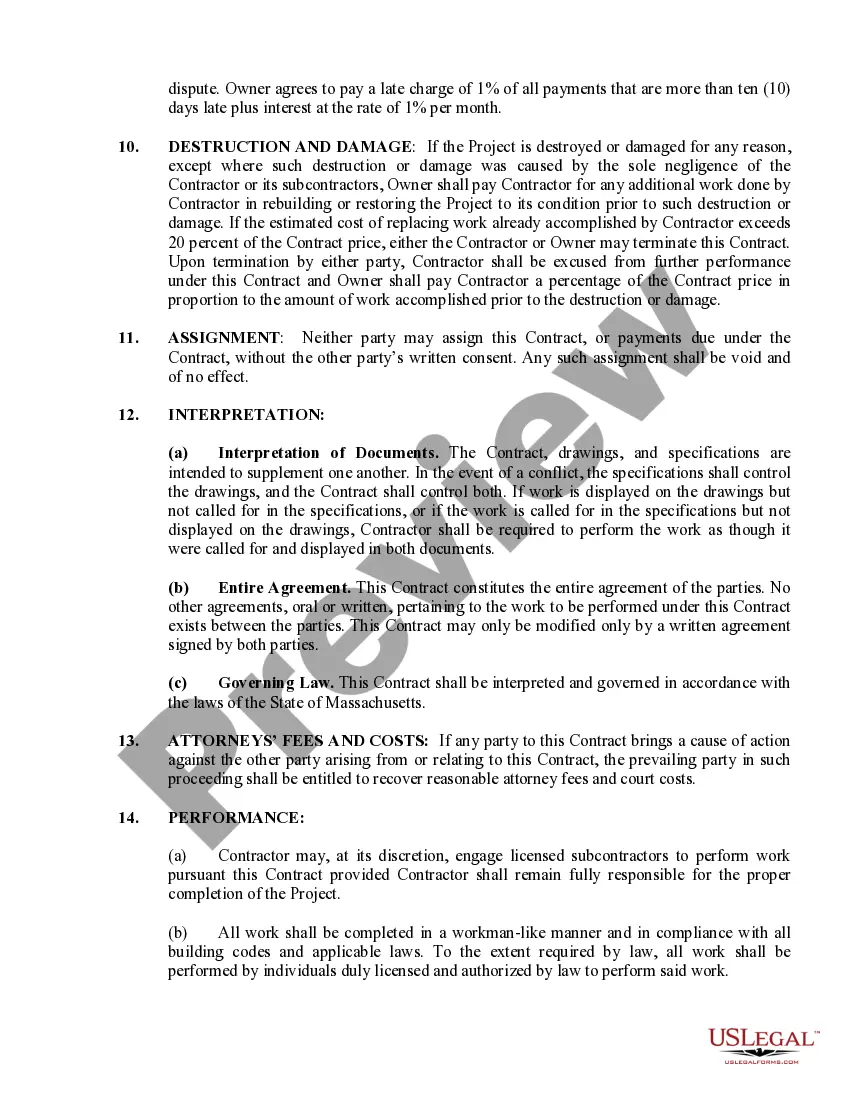
- Conditions for contract termination in case of destruction or damage to the project.
- Clarification of payment responsibilities associated with changes and unexpected costs.


Situations where this form applies
This form is ideal for use when a property owner hires an insulation contractor to perform installation or removal of insulation. It is suitable for both residential and commercial projects. Situations might include new construction, energy-efficient retrofitting, or renovation projects requiring insulation work.
Intended users of this form
- Property owners seeking to hire insulation contractors for specific projects.
- Insulation contractors preparing to undertake work for clients in Massachusetts.
- Individuals or companies needing a structured agreement to outline project details and responsibilities.
How to prepare this document
- Identify and enter the names and addresses of both the contractor and the property owner.
- Specify the exact location where the insulation work will be performed.
- Detail the type and thickness of insulation materials to be used, including their R-value.
- Ensure all necessary permits are obtained and noted in the contract.
- Both parties should review and sign the document to formalize the agreement.
Is notarization required?
In most cases, this form does not require notarization. However, some jurisdictions or signing circumstances might. US Legal Forms offers online notarization powered by Notarize, accessible 24/7 for a quick, remote process.
Get your form ready online
Our built-in tools help you complete, sign, share, and store your documents in one place.
Make edits, fill in missing information, and update formatting in US Legal Forms—just like you would in MS Word.
Download a copy, print it, send it by email, or mail it via USPS—whatever works best for your next step.
Sign and collect signatures with our SignNow integration. Send to multiple recipients, set reminders, and more. Go Premium to unlock E-Sign.
If this form requires notarization, complete it online through a secure video call—no need to meet a notary in person or wait for an appointment.
We protect your documents and personal data by following strict security and privacy standards.

Make edits, fill in missing information, and update formatting in US Legal Forms—just like you would in MS Word.

Download a copy, print it, send it by email, or mail it via USPS—whatever works best for your next step.

Sign and collect signatures with our SignNow integration. Send to multiple recipients, set reminders, and more. Go Premium to unlock E-Sign.

If this form requires notarization, complete it online through a secure video call—no need to meet a notary in person or wait for an appointment.

We protect your documents and personal data by following strict security and privacy standards.
Avoid these common issues
- Failing to specify the type of insulation material can lead to disputes.
- Neglecting to include a detailed scope of work may result in misunderstandings later.
- Not documenting change orders properly can cause confusion over costs.
- Leaving out insurance requirements may expose both parties to liability risks.
Why complete this form online
- Convenience of downloading the form immediately and filling it out at your own pace.
- Editability allows you to customize sections to fit specific project requirements easily.
- Reliability of documents drafted by licensed attorneys ensures legal compliance.
Summary of main points
- The Insulation Contract for Contractor details agreements between property owners and insulation contractors.
- It is designed specifically for Massachusetts law, covering essential project aspects.
- Proper completion protects both parties and ensures clarity on roles, responsibilities, and liabilities.
Looking for another form?

Form popularity
FAQ
It is also worth knowing that spray foam insulation does not qualify for Mass Save® rebates.
The effectiveness of insulation is rated by R-values. The higher the R-value, the greater the material's ability to insulate. Each inch of fiberglass blanket insulation, for example, provides an R-value of about 3.27. Loose-fill insulation can vary from about 2.2 to 4.0, depending on how effectively it is installed.
According to Energy Star, an insulation contractor is a specialized contractor who installs thermal insulation. They can specialize in one type of insulation, such as fiberglass, cellulose, or spray foam, or install more than one type.
An insulation contractor is a type of contractor who is specialized in installing thermal insulation. These are contractors who work on residential, commercial, or industrial projects and coordinate with heating, plumbing, and mechanical construction workers.
The work tends to be physically challenging, requiring bending in tight spaces, and it's not for the claustrophobic. The Bureau of Labor Statistics projects 2.9 percent employment growth for insulation contractors between 2019 and 2029. In that period, an estimated 1,800 jobs should open up.
Insulation workers, also called insulators, install and replace the materials used to insulate buildings or mechanical systems.
It is also worth knowing that spray foam insulation does not qualify for Mass Save® rebates.
The best types of home attic insulation are open cell spray foam, fiberglass, and cellulose. Cellulose is the oldest insulation material used for not only the attic but other areas of the home as well. Cellulose can be either a loose-fill or blown-in material and is primarily made of recycled newsprint or denim.
Are you a licensed installer? Can I speak with your references? What warranty or guarantee do you provide for your insulation? What personal protective equipment do you require for your workers? Do you carry liability insurance and workers comp insurance? What type of insulation products do you offer?