Pennsylvania Living Trust for Individual Who is Single, Divorced or Widow (or Widower) with Children

About this form
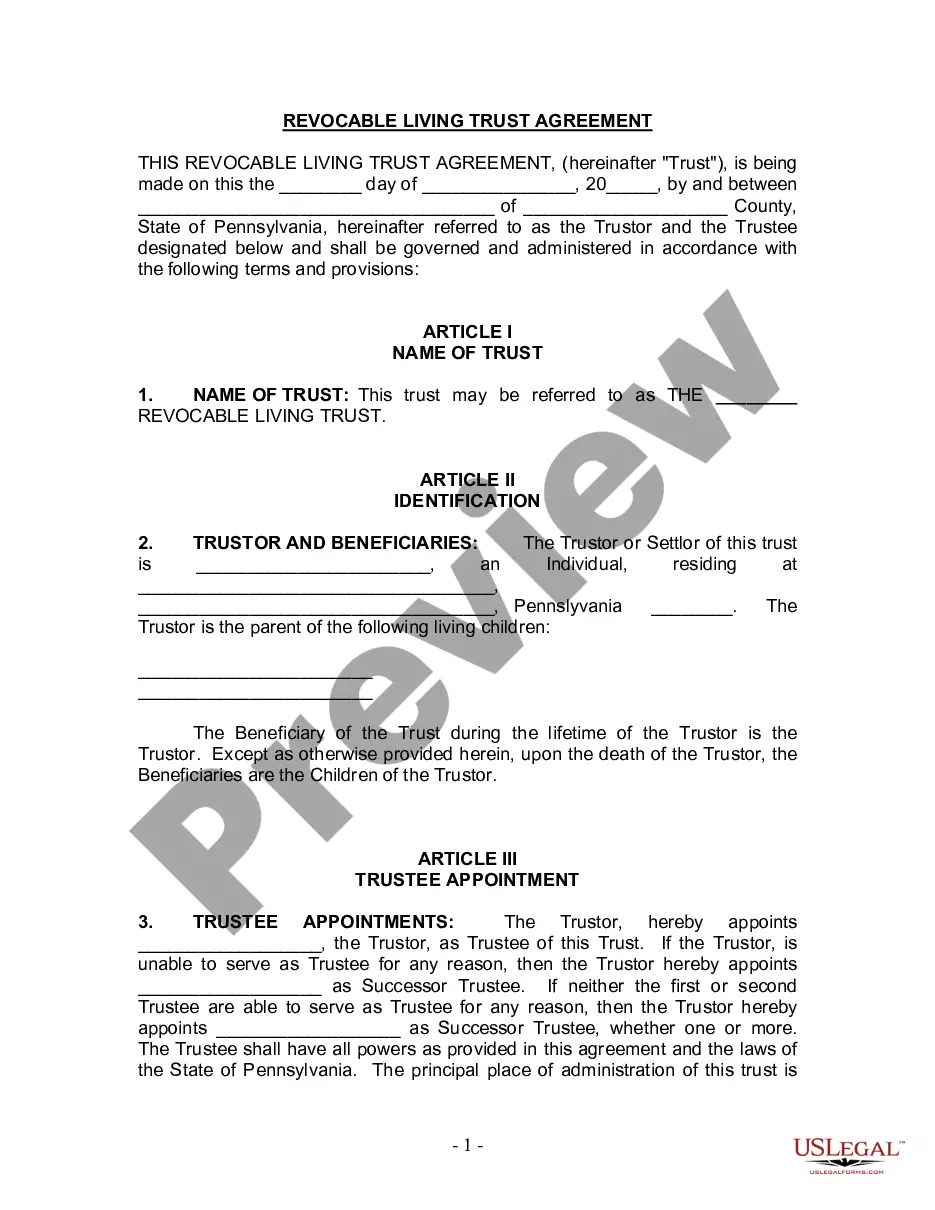
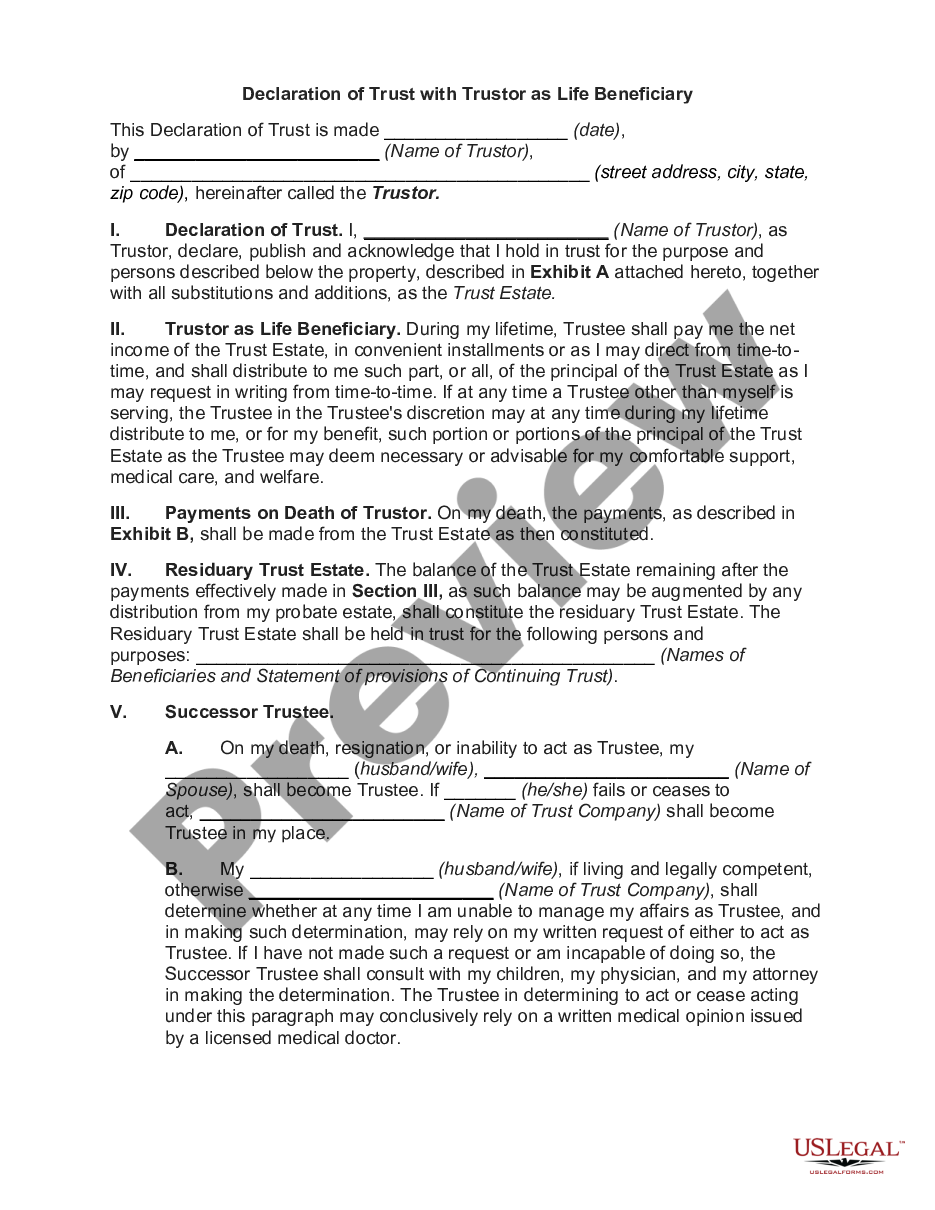
This Living Trust for an Individual Who is Single, Divorced or Widow (or Widower) with Children is a legal document that allows an individual to create a revocable living trust during their lifetime. This type of trust is designed for individuals who are single, divorced, or widowed and have children. It helps them manage and distribute their assets without going through probate after their death. The trust can provide significant control over how properties and assets are allocated to beneficiaries, typically the individual's children.
Key components of this form
- Name of Trust: Defines the name of the trust, allowing flexibility in the designation.
- Trustor and Beneficiaries: Identifies the trust creator and the beneficiaries, typically the trustor's children.
- Trustee Appointment: Appoints the trustor as the initial trustee, with guidelines for successor trustees.
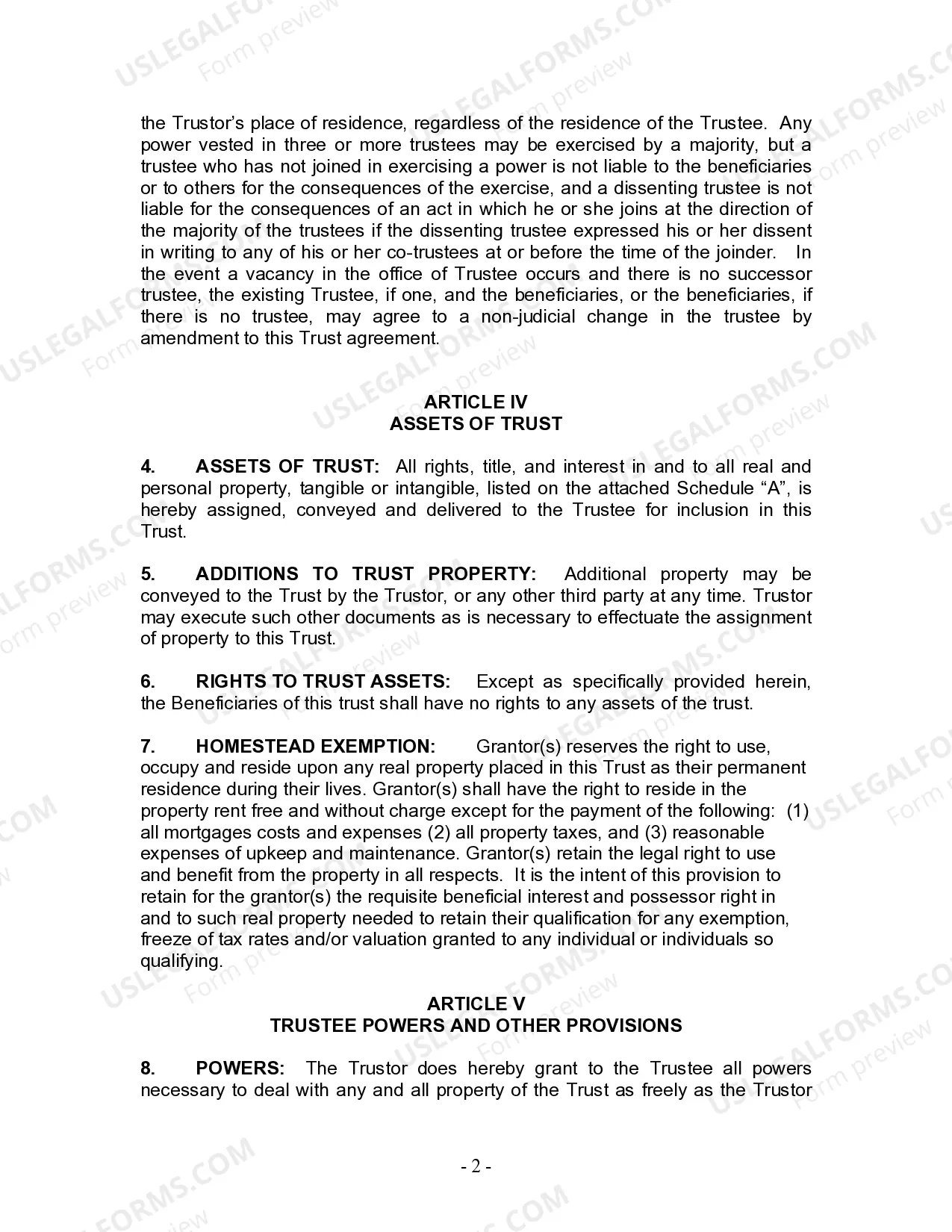
- Assets of Trust: Details what property and assets are included in the trust.
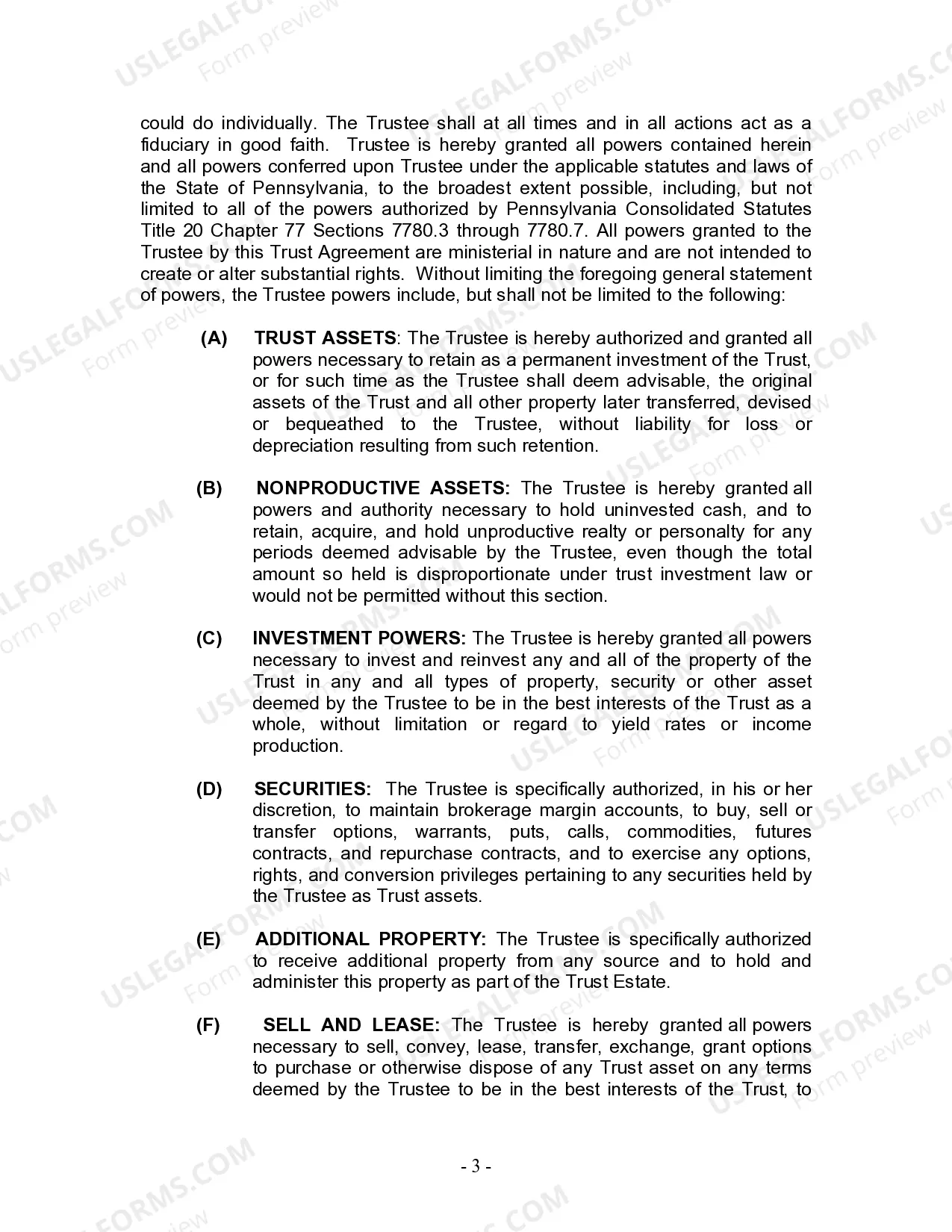
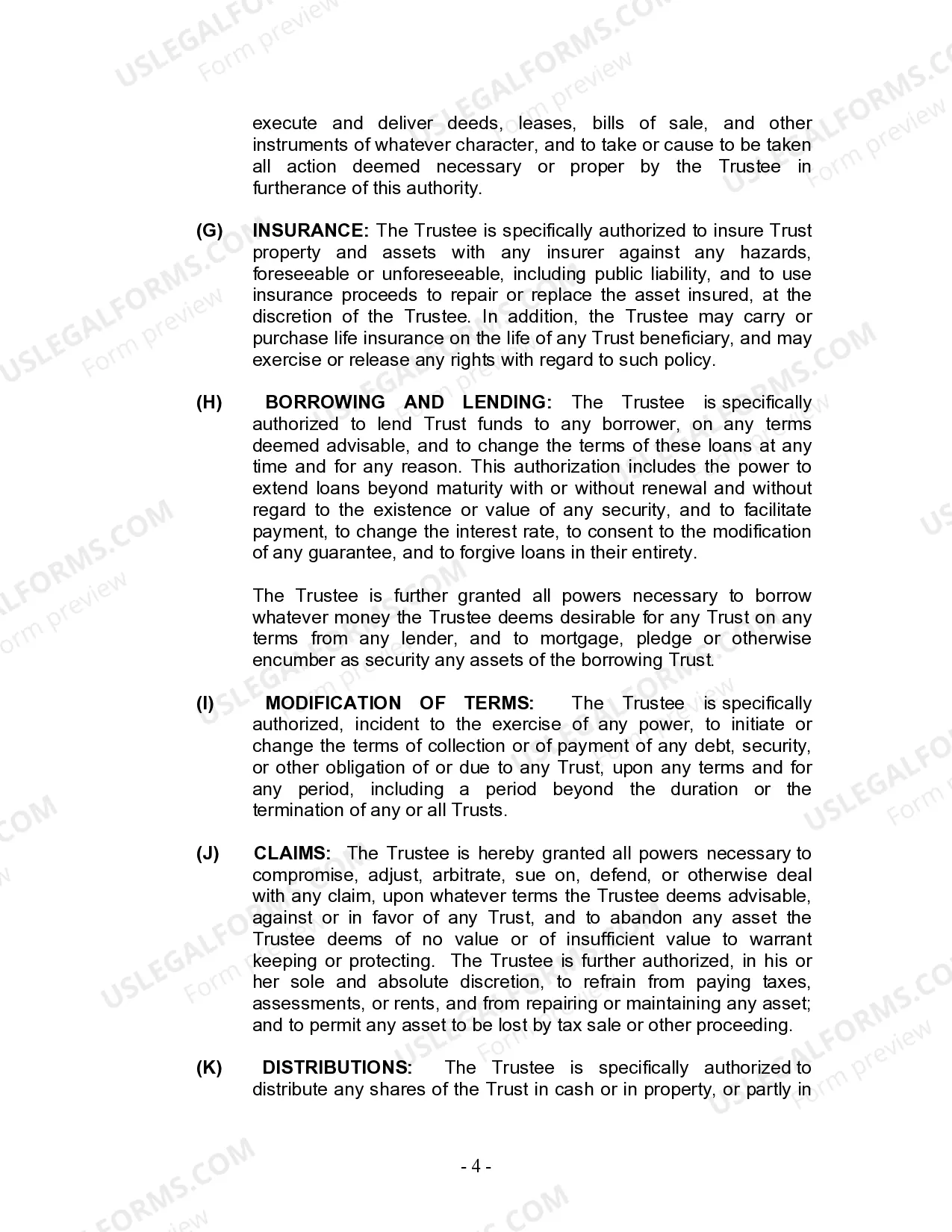
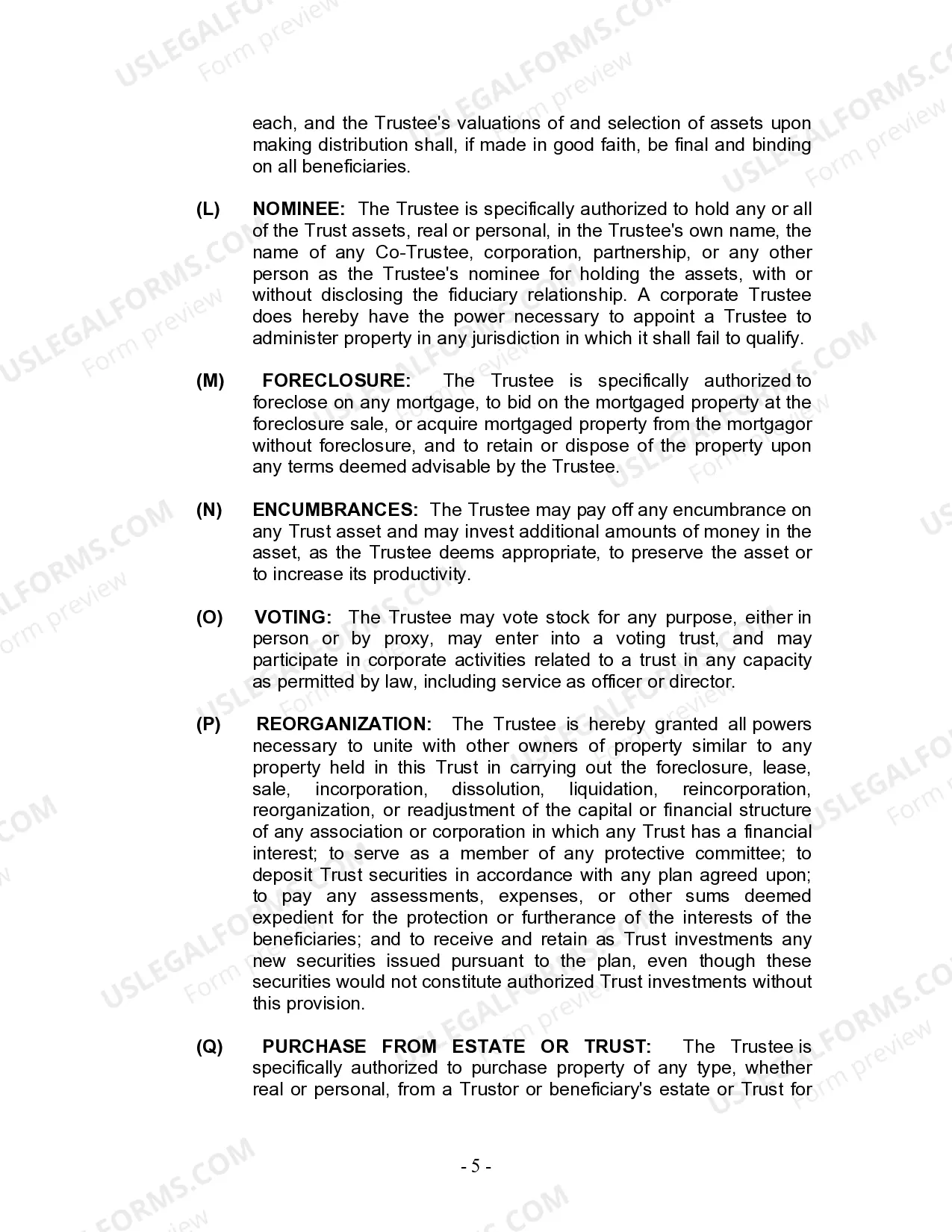
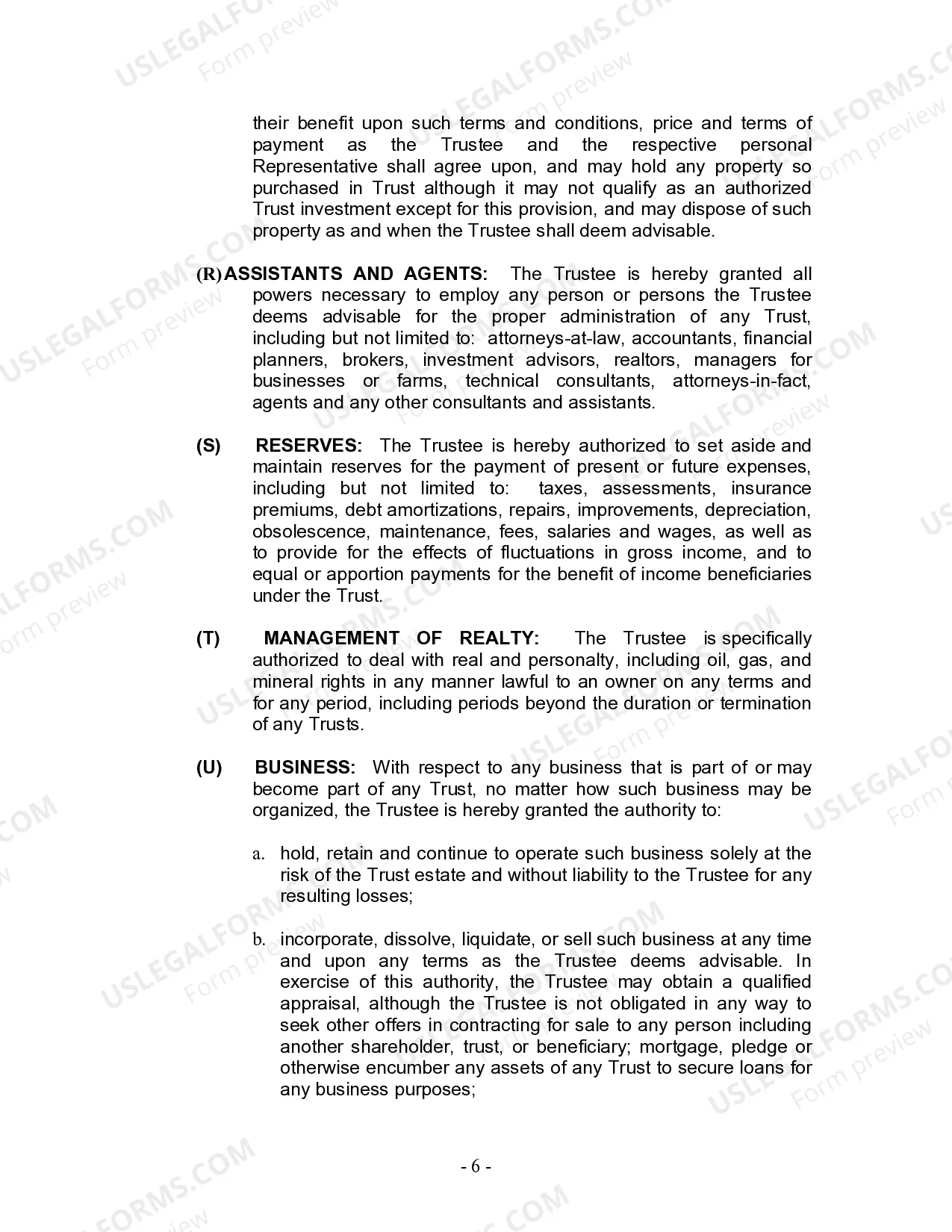
- Trustee Powers: Outlines the powers granted to the trustee to manage the trust's assets.
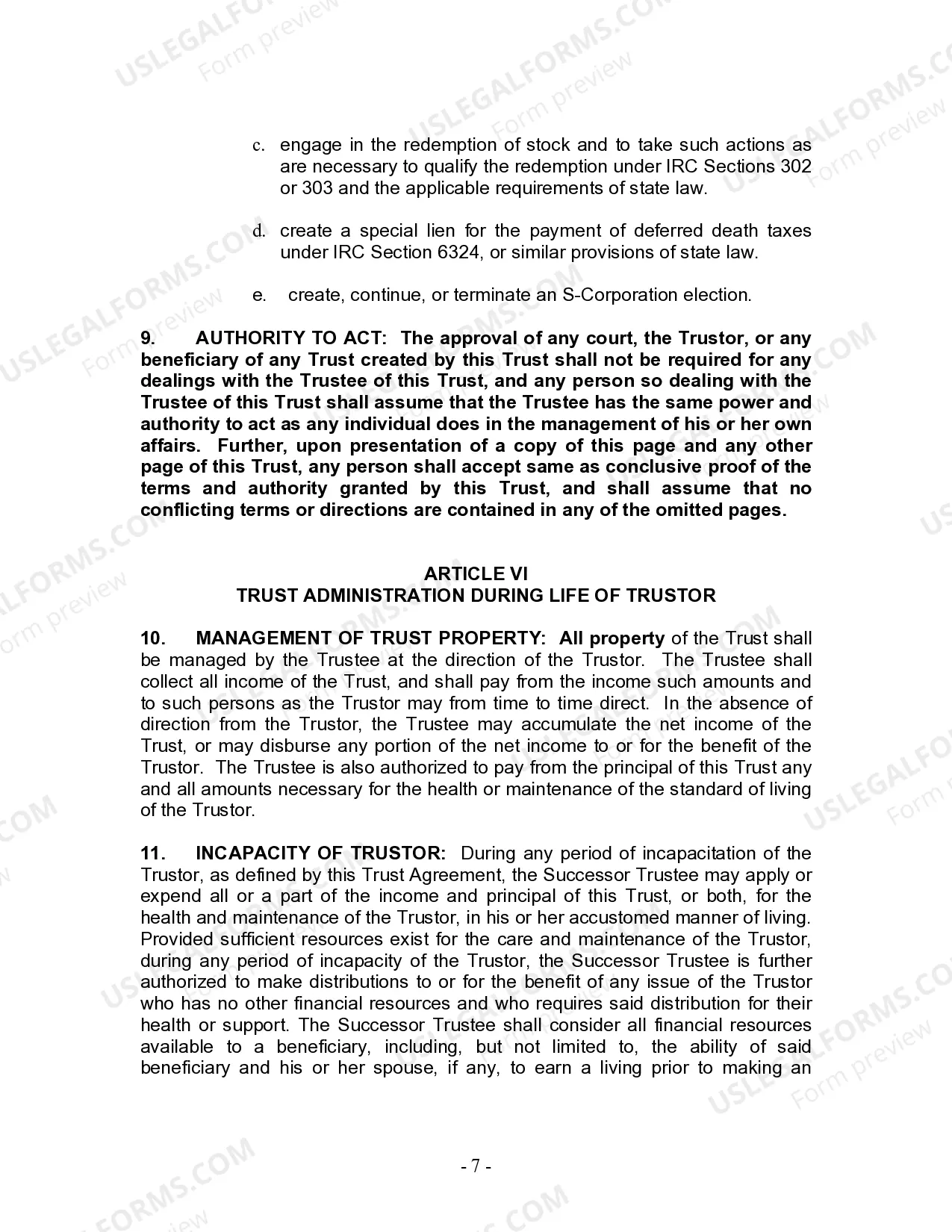
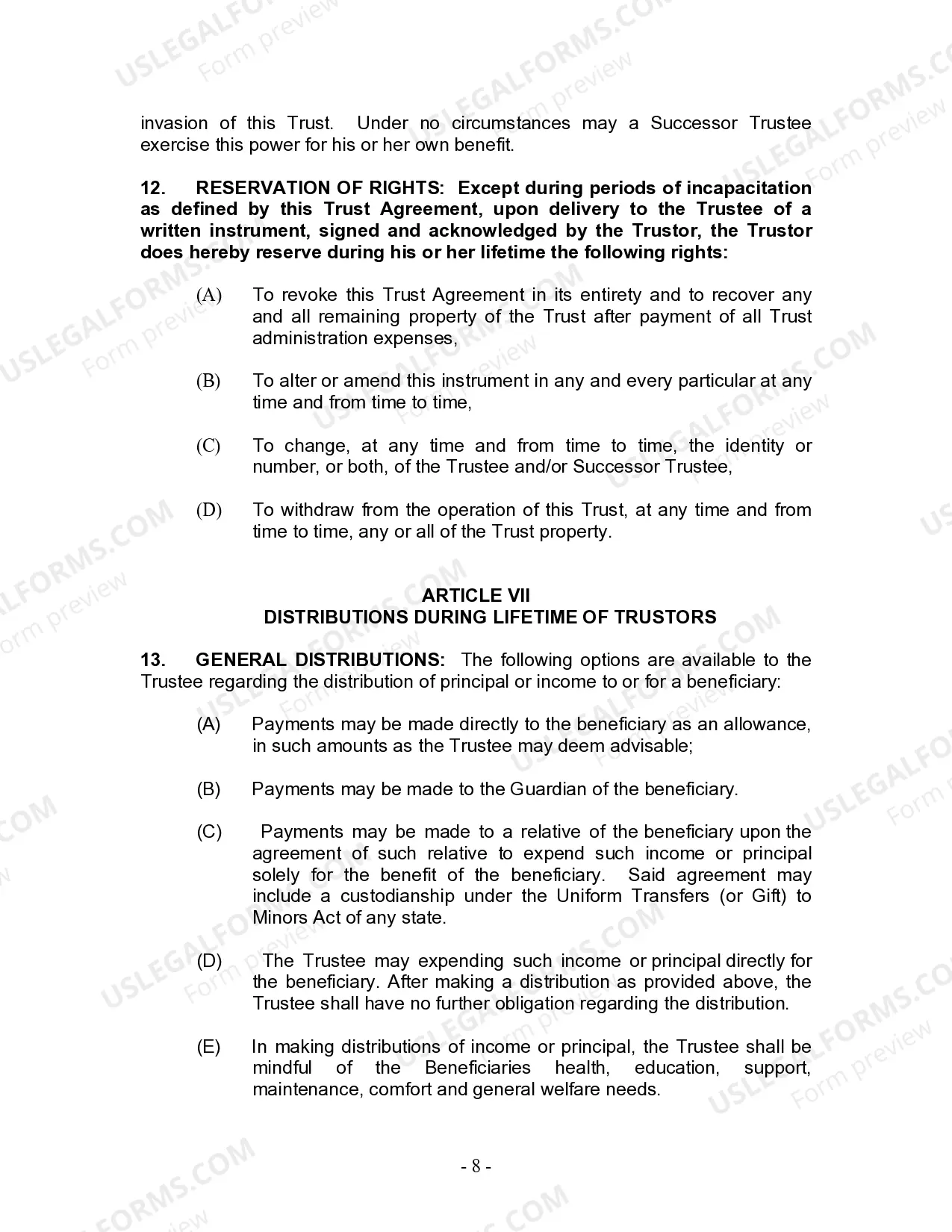
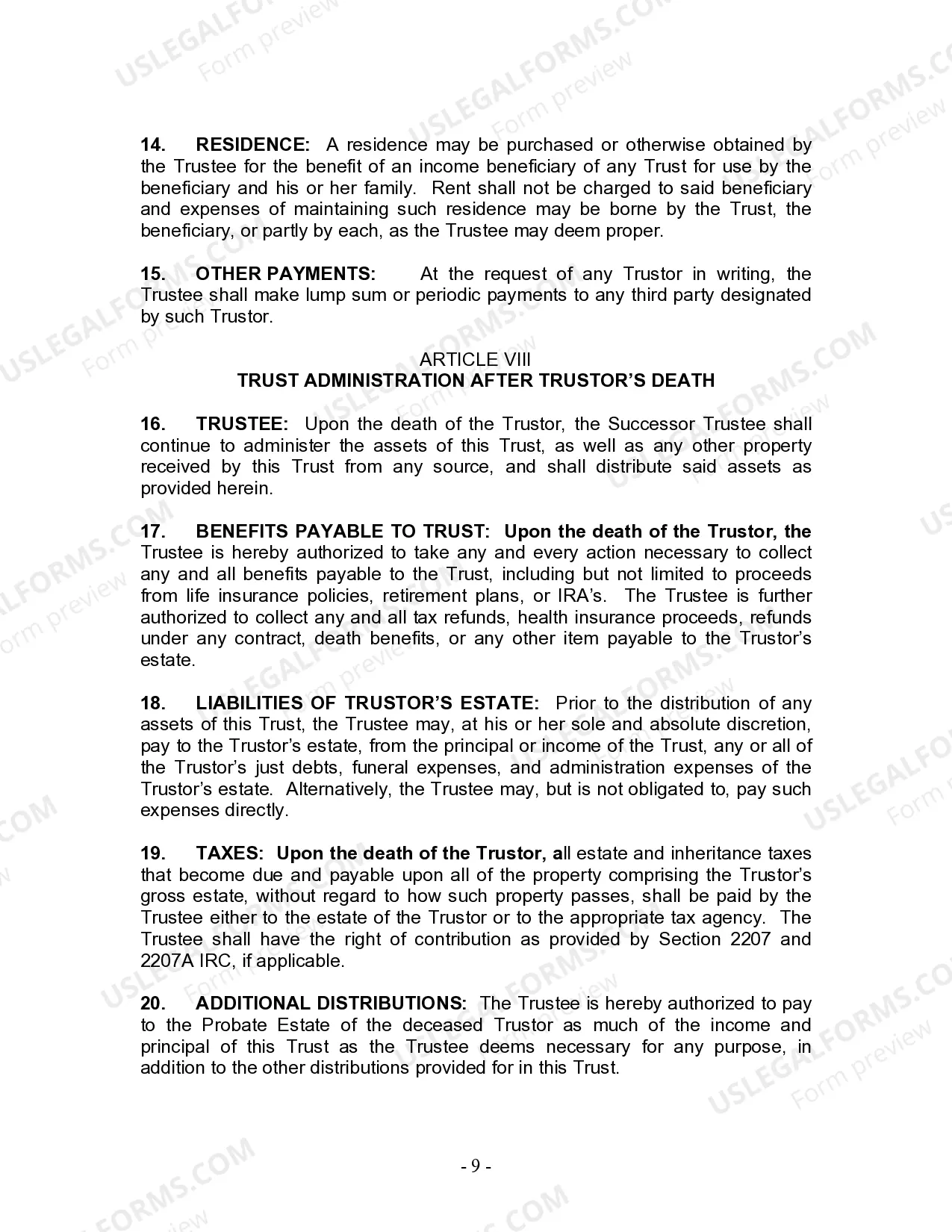
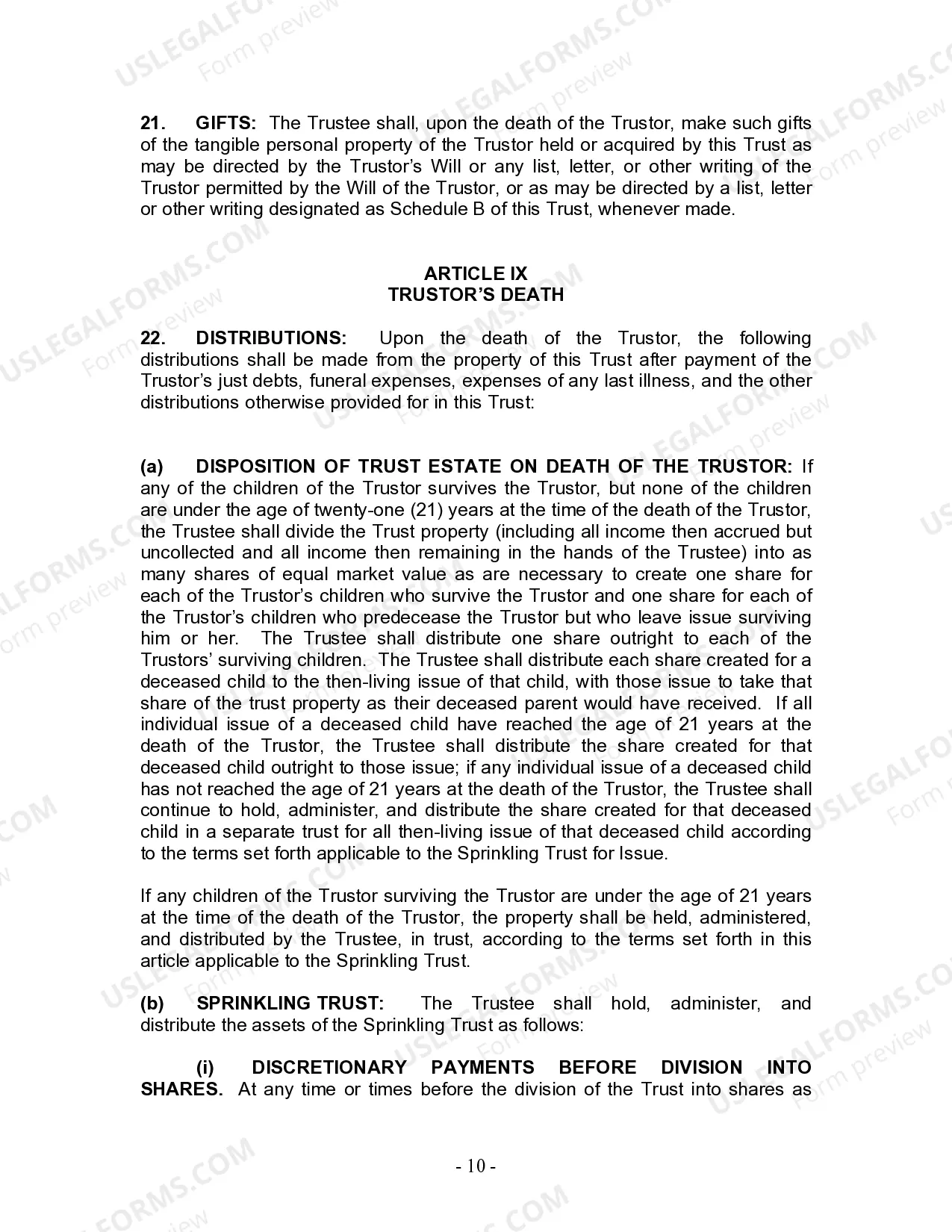
- Distribution Guidelines: Specifies how and when assets will be distributed to beneficiaries, particularly upon the trustor's death.



Situations where this form applies
This form is ideal to use when you wish to establish a trust that provides for your children while allowing you to retain control over your assets during your lifetime. It is particularly useful if you are single, divorced, or widowed and want to avoid the lengthy probate process after your death. Additionally, it allows for flexible and specific distribution of your estate according to your wishes.
Intended users of this form
- Individuals who are single, divorced, or widowed.
- Parents with one or more children who want to plan their estate.
- Anyone looking to avoid probate and streamline the asset distribution process.
- Individuals who wish to have control over their assets while alive, with clear instructions for distribution after their passing.
Instructions for completing this form
- Identify the parties involved, including the trustor and trustee(s).
- Specify the name of the trust to personalize the document.
- Document the assets being transferred into the trust, listing them clearly.
- Designate how the assets will be distributed to beneficiaries upon the trustor's death.
- Ensure all parties sign the document in the presence of a notary, if required.
Is notarization required?
This form needs to be notarized to ensure legal validity. US Legal Forms provides secure online notarization powered by Notarize, allowing you to complete the process through a verified video call, available anytime.
Get your form ready online
Our built-in tools help you complete, sign, share, and store your documents in one place.
Make edits, fill in missing information, and update formatting in US Legal Forms—just like you would in MS Word.
Download a copy, print it, send it by email, or mail it via USPS—whatever works best for your next step.
Sign and collect signatures with our SignNow integration. Send to multiple recipients, set reminders, and more. Go Premium to unlock E-Sign.
If this form requires notarization, complete it online through a secure video call—no need to meet a notary in person or wait for an appointment.
We protect your documents and personal data by following strict security and privacy standards.

Make edits, fill in missing information, and update formatting in US Legal Forms—just like you would in MS Word.

Download a copy, print it, send it by email, or mail it via USPS—whatever works best for your next step.

Sign and collect signatures with our SignNow integration. Send to multiple recipients, set reminders, and more. Go Premium to unlock E-Sign.

If this form requires notarization, complete it online through a secure video call—no need to meet a notary in person or wait for an appointment.

We protect your documents and personal data by following strict security and privacy standards.
Common mistakes
- Failing to list all assets intended for the trust.
- Not appointing successor trustees, which can create complications in asset management.
- Neglecting to specify clear distribution terms for beneficiaries.
- Forgetting to notarize the trust when required, affecting its validity.
Advantages of online completion
- Convenience of completing the form at your own pace from home.
- Editability allows you to customize the document as needed.
- Reliability of access to professionally drafted legal content, ensuring compliance with state laws.
Quick recap
- A Living Trust provides a flexible method for asset management and distribution, avoiding probate.
- It is essential for single parents or those with children to set up clear instructions for their estate.
- Notarization is necessary for the legal validity of the Living Trust.
- Keep your trust updated to reflect any changes in your family or financial situation.
Looking for another form?

Form popularity
FAQ
Trust is a feeling that somebody or something can be relied upon, or will turn out to be good. It is the feeling of being sure about something, even if it cannot be proved. The word "trust" can be a noun or a verb:(Verb): I trust you completely (same meaning).
A God who does care, even when it feels like He doesn't. Trusting in God means that whatever we suffer, in the end, can be used for our all of our ultimate good.
Trust is an abstract mental attitude toward a proposition that someone is dependable. Trust is a feeling of confidence and security that a partner cares. Trust is a complex neural process that binds diverse representations into a semantic pointer that includes emotions.
What Is Trust In A Relationship? Trust is the faith you have in someone that they will always remain loyal to you and love you. To trust someone means that you can rely on them and are comfortable confiding in them because you feel safe with them.