Illinois Guaranty or Guarantee of Payment of Rent
What this document covers
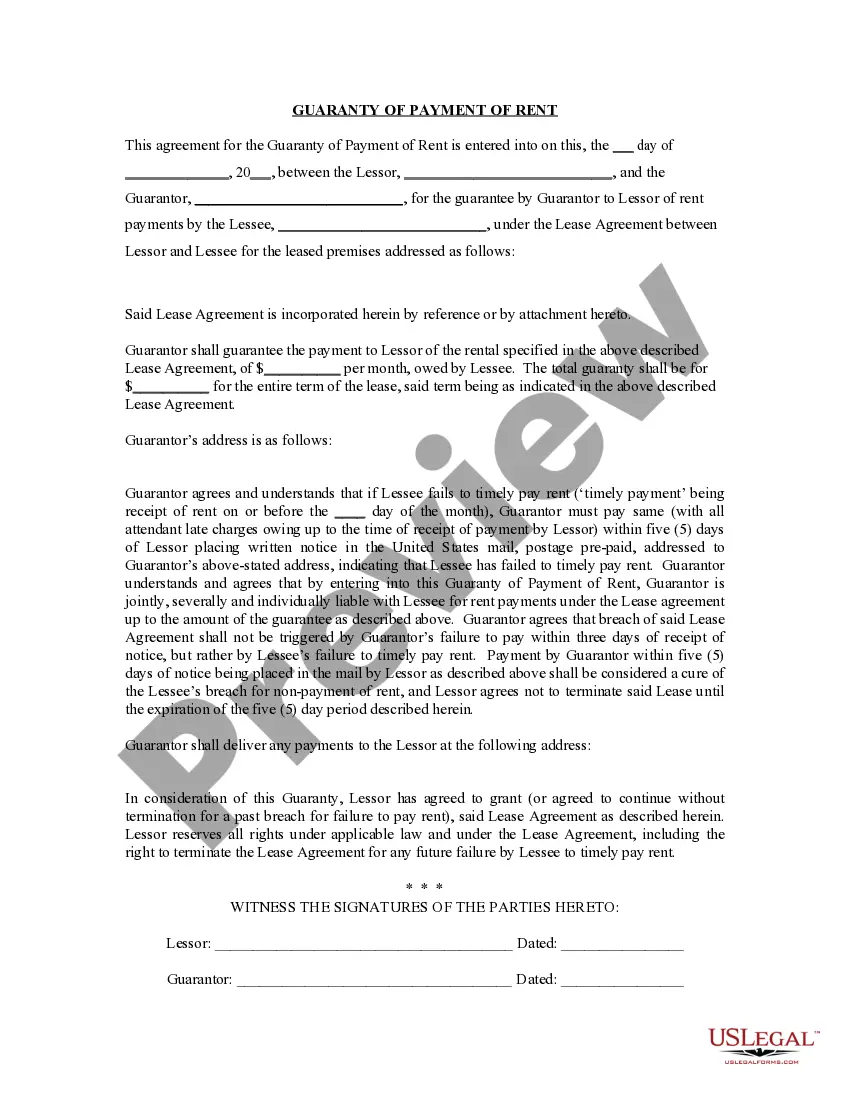
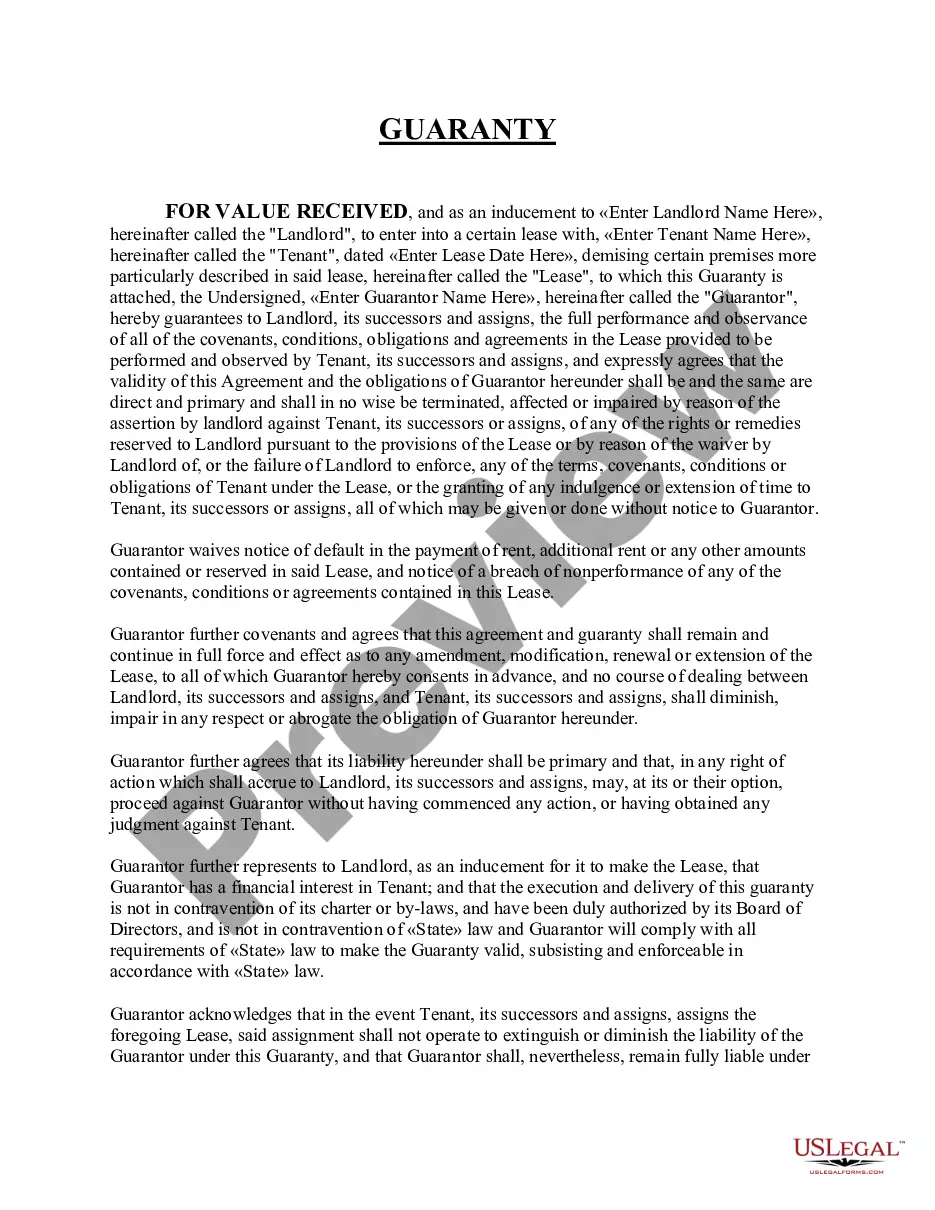
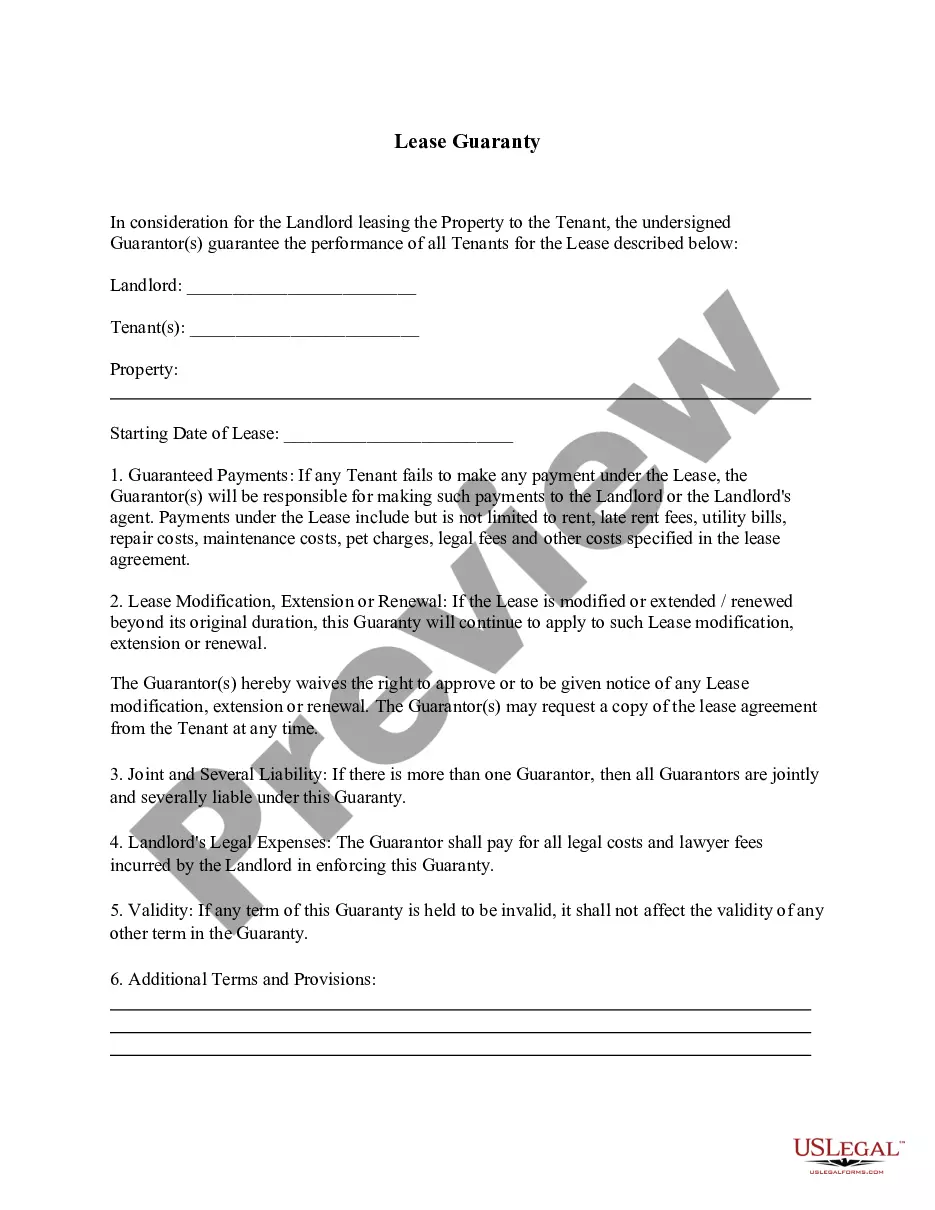
The Guaranty or Guarantee of Payment of Rent is a legal agreement between a tenant's guarantor and the landlord. This form ensures that if the tenant fails to pay rent, the guarantor is obligated to cover the payment. Unlike a typical lease, this document focuses on the financial responsibility of the guarantor, outlining the conditions under which they will step in to make payments on behalf of the tenant.
Key components of this form
- Guarantor's address: The contact address for the guarantor must be clearly stated.
- Lessor's signature: The landlord must sign to confirm their acceptance of the guarantor's agreement.
- Guarantor's signature: The guarantor must sign, indicating their agreement to assume payment responsibility.
- Date fields: Both parties need to specify the dates of the agreement.
When this form is needed
This form is typically used when a tenant has limited credit history or income and needs a guarantor to secure a rental agreement. Additionally, landlords may request this form to protect their investment by ensuring that rent will be paid even if the tenant faces financial difficulties.
Who should use this form
- Tenants who require a guarantor to secure a rental lease.
- Guarantors who wish to formalize their commitment to pay rent on behalf of the tenant.
- Landlords who want to ensure rent is paid even if the tenant defaults.
Instructions for completing this form
- Identify the parties: Clearly state the name and address of the guarantor and the landlord.
- Specify the property: Outline the address of the rental property.
- Enter dates: Fill in the date when the agreement is signed.
- Signatures: Obtain signatures from both the landlord and the guarantor on the document.
Does this document require notarization?
This form does not typically require notarization unless specified by local law.
Get your form ready online
Our built-in tools help you complete, sign, share, and store your documents in one place.
Make edits, fill in missing information, and update formatting in US Legal Forms—just like you would in MS Word.
Download a copy, print it, send it by email, or mail it via USPS—whatever works best for your next step.
Sign and collect signatures with our SignNow integration. Send to multiple recipients, set reminders, and more. Go Premium to unlock E-Sign.
If this form requires notarization, complete it online through a secure video call—no need to meet a notary in person or wait for an appointment.
We protect your documents and personal data by following strict security and privacy standards.

Make edits, fill in missing information, and update formatting in US Legal Forms—just like you would in MS Word.

Download a copy, print it, send it by email, or mail it via USPS—whatever works best for your next step.

Sign and collect signatures with our SignNow integration. Send to multiple recipients, set reminders, and more. Go Premium to unlock E-Sign.

If this form requires notarization, complete it online through a secure video call—no need to meet a notary in person or wait for an appointment.

We protect your documents and personal data by following strict security and privacy standards.
Mistakes to watch out for
- Failing to include the guarantor's complete address.
- Not obtaining both parties' signatures.
- Leaving date fields blank, which may cause issues in legal enforcement.
Benefits of using this form online
- Convenience: Download and complete the form from anywhere at any time.
- Editability: Easily make changes as needed before finalizing the agreement.
- Reliability: Access professionally drafted templates created by licensed attorneys.
Legal use & context
The Guaranty or Guarantee of Payment of Rent is enforceable as a legally binding contract, provided all parties agree to its terms. However, the effectiveness may depend on local laws regarding landlord-tenant relationships, so it is crucial to be aware of any specific regulations in your jurisdiction.
Key takeaways
- The Guaranty or Guarantee of Payment of Rent serves as a financial safety net for landlords.
- Properly completing the form ensures clear obligations for both the tenant and the guarantor.
- Using this form can facilitate rental approvals for tenants with limited credit history.
Looking for another form?

Form popularity
FAQ
In Illinois, a landlord cannot retaliate against a tenant for exercising their legal rights, such as reporting housing code violations. They also cannot evict tenants without following the proper legal process. Understanding the intricacies of the Illinois guaranty or guarantee of payment of rent can protect you from common pitfalls. For guidance, platforms like uslegalforms can provide helpful resources and templates.
A guaranty of lease is a covenant by the guarantor to be responsible for the obligations of the tenant.In these examples, a selective landlord would not enter into the lease without the tenant offering a creditworthy guarantor.
It's very common for a guarantee to last as long as the tenancy lasts. So, if the tenant remains in the property for four years, you will continue to be responsible for any arrears or damages during that entire period. Most tenancies will run for a fixed term and will then continue on a month-by-month basis.
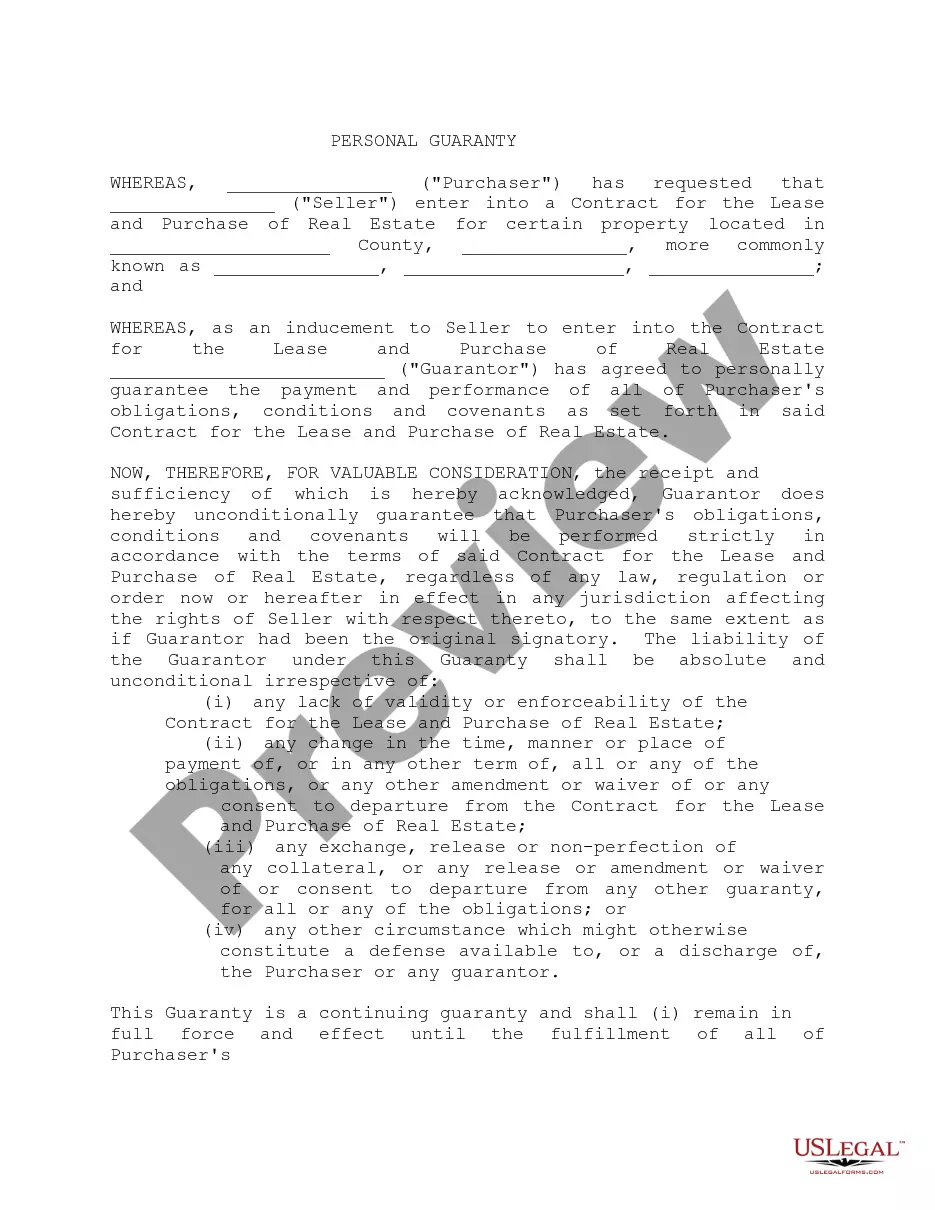
What is a Personal Guarantee? A personal guarantee is a written promise from a guarantor (business owner or other person) guaranteeing commercial lease payments in the event the business does not pay. In the event of non-payment the landlord can go after the guarantor personally for payment.
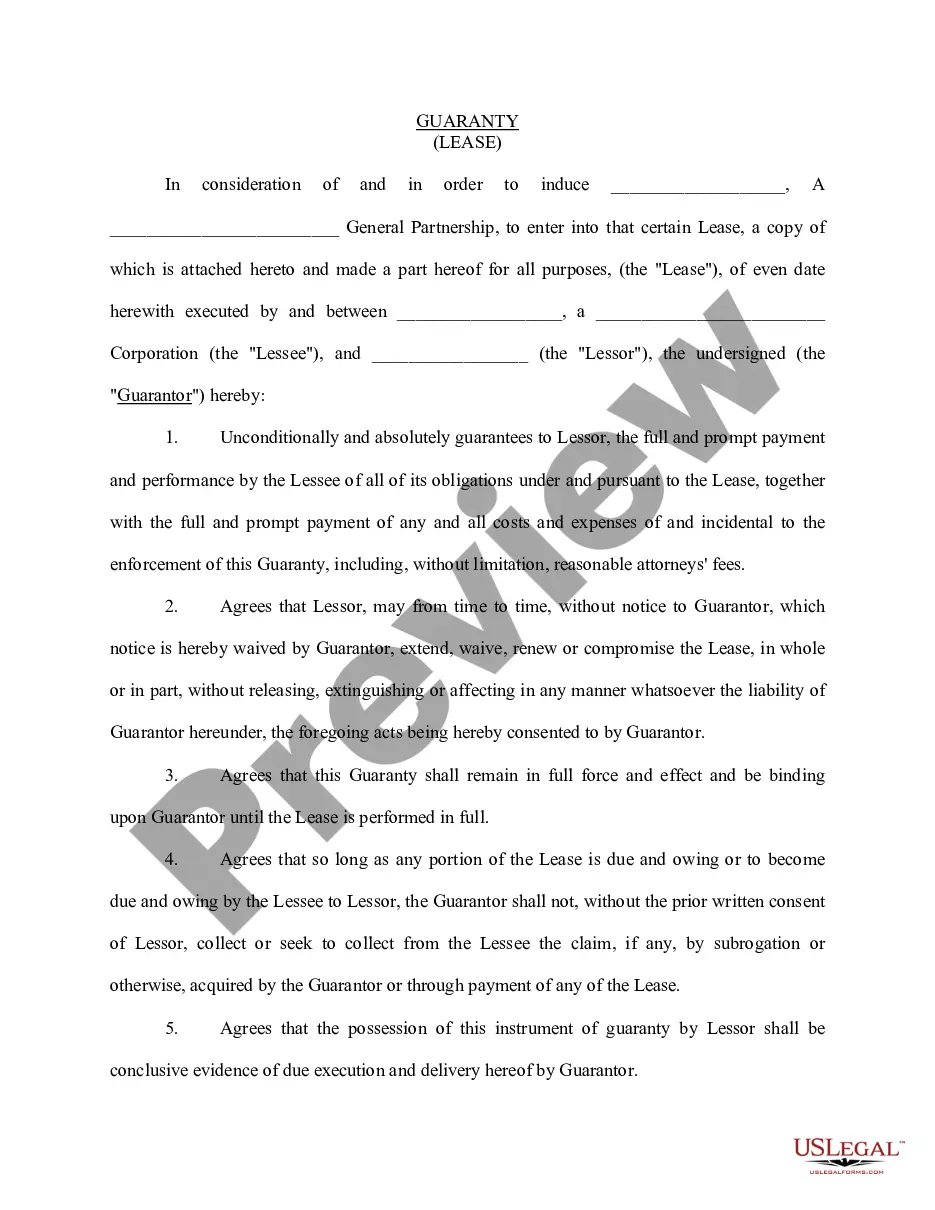
Landlords often require a personal or corporate lease guarantee, a separate document executed simultaneously with the lease, which makes the guarantor liable for the tenant's defaults.Landlords want an unconditional and unlimited guarantee, holding the guarantor liable for all of the tenant's defaults.
A lease guaranty is a separate contract under which a third party guarantor agrees to meet the obligations of the Tenant to the Landlord.If the Tenant fails to pay rent, the Landlord can recover the arrears from the guarantor, usually before seeking damages from Tenant.
It's very common for a guarantee to last as long as the tenancy lasts. So, if the tenant remains in the property for four years, you will continue to be responsible for any arrears or damages during that entire period. Most tenancies will run for a fixed term and will then continue on a month-by-month basis.
A guarantor is a third party who 'guarantees' a loan, mortgage or rental agreement. This means they agree to repay the total amount owed if the borrower or renter can't pay what they owe. By guaranteeing the agreement, you become responsible for any arrears that occur.
If you're renting in London, you'll need to go through credit checks and referencing as part of the rental application process. If you're new to renting or you can't provide a reference from a previous landlord, you might be asked to provide a guarantor.
Essentially, in the event of a tenant being unable to meet their obligations under the Tenancy Agreement contract, whether it is for overdue rent, damage to the property or whatever, the Guarantor is legally bound to accept the liabilities on behalf of the tenant.