Illinois Letter from Tenant to Landlord containing Notice to landlord to cease retaliatory threats to evict or retaliatory eviction
Understanding this form
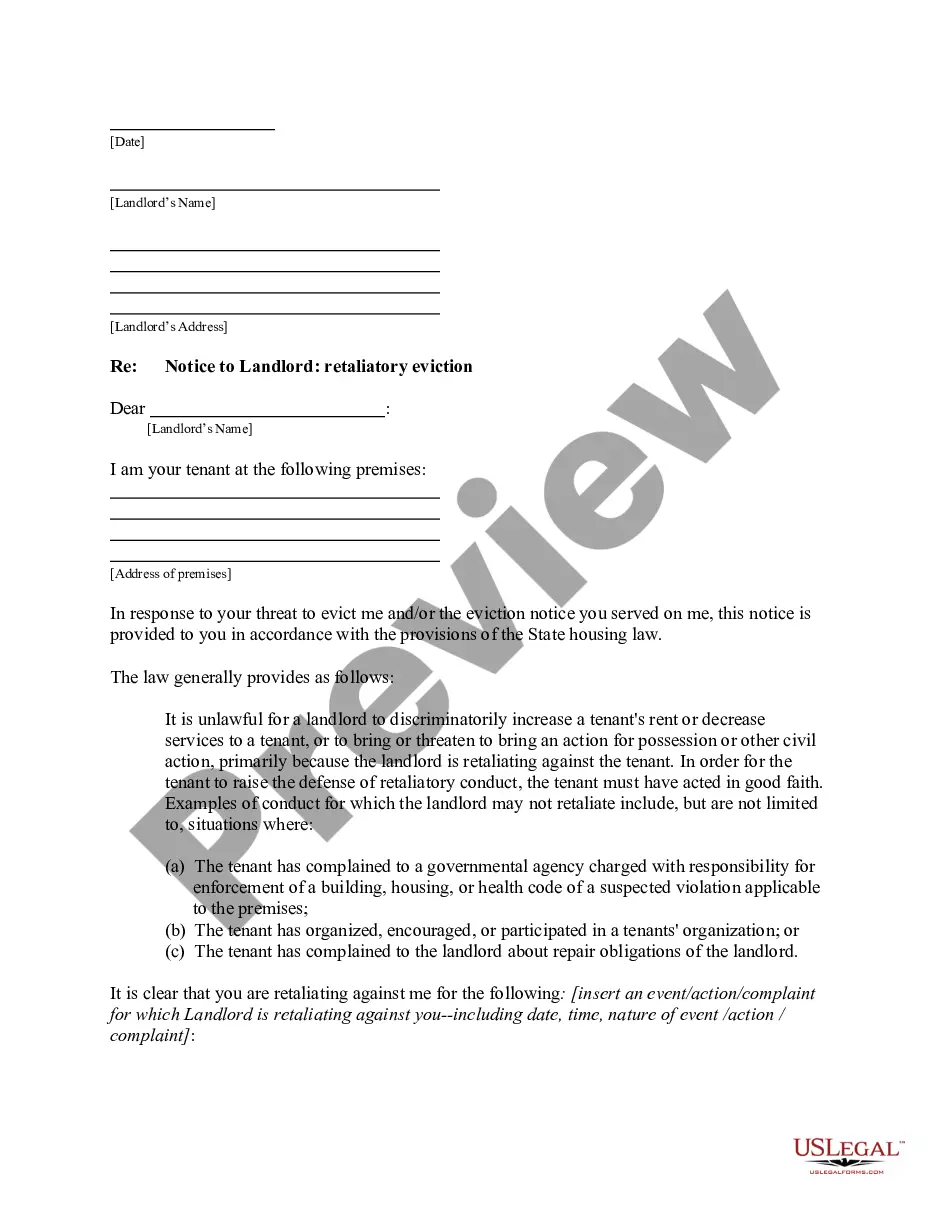
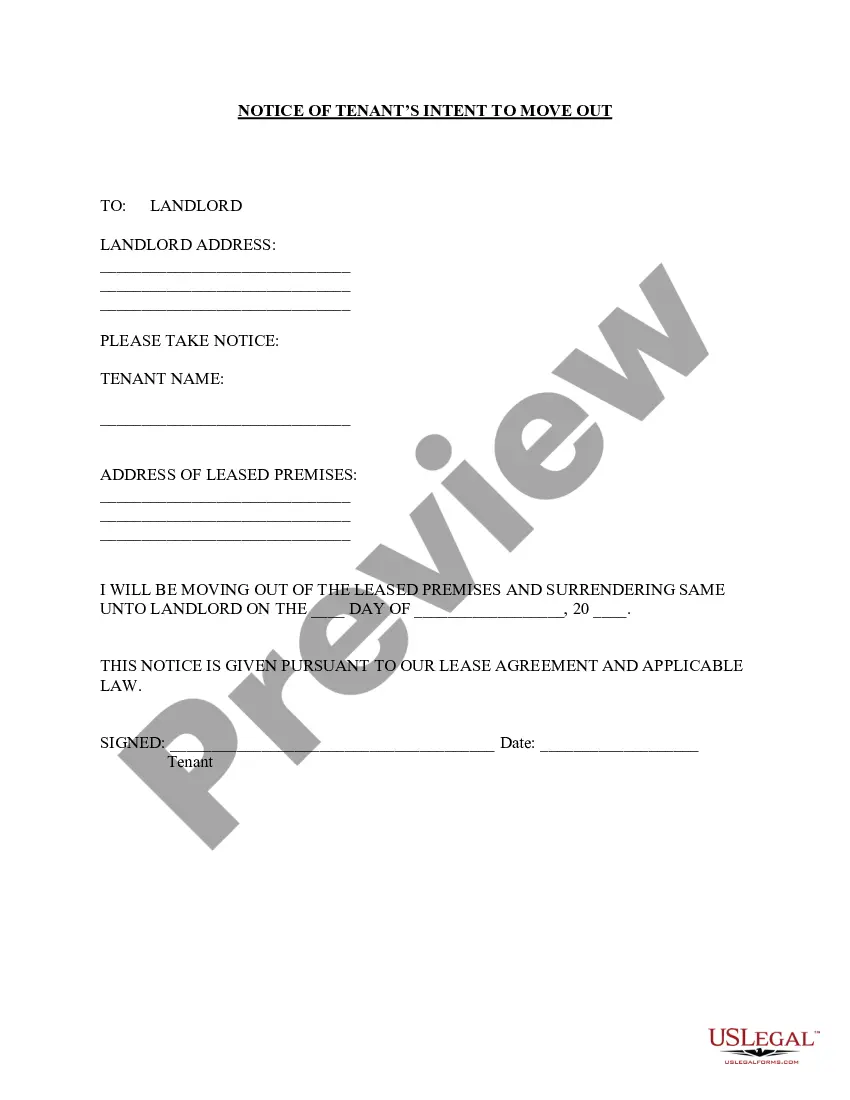
This Letter from Tenant to Landlord containing Notice to landlord to cease retaliatory threats to evict is a legal document that allows a tenant to formally address the landlord's threats of eviction, which the tenant believes are retaliatory. This notice asserts the tenant's rights under state housing laws and specifies the reasons for believing the eviction is an act of retaliation for the tenant's protected actions. This form is essential in helping tenants protect themselves from unfair eviction practices, distinguishing it from general eviction notices.
Main sections of this form
- Identifies the tenant and landlord involved in the rental agreement.
- Describes the circumstances under which the eviction threat was made.
- Outlines the specific actions by the tenant that are protected against retaliation.
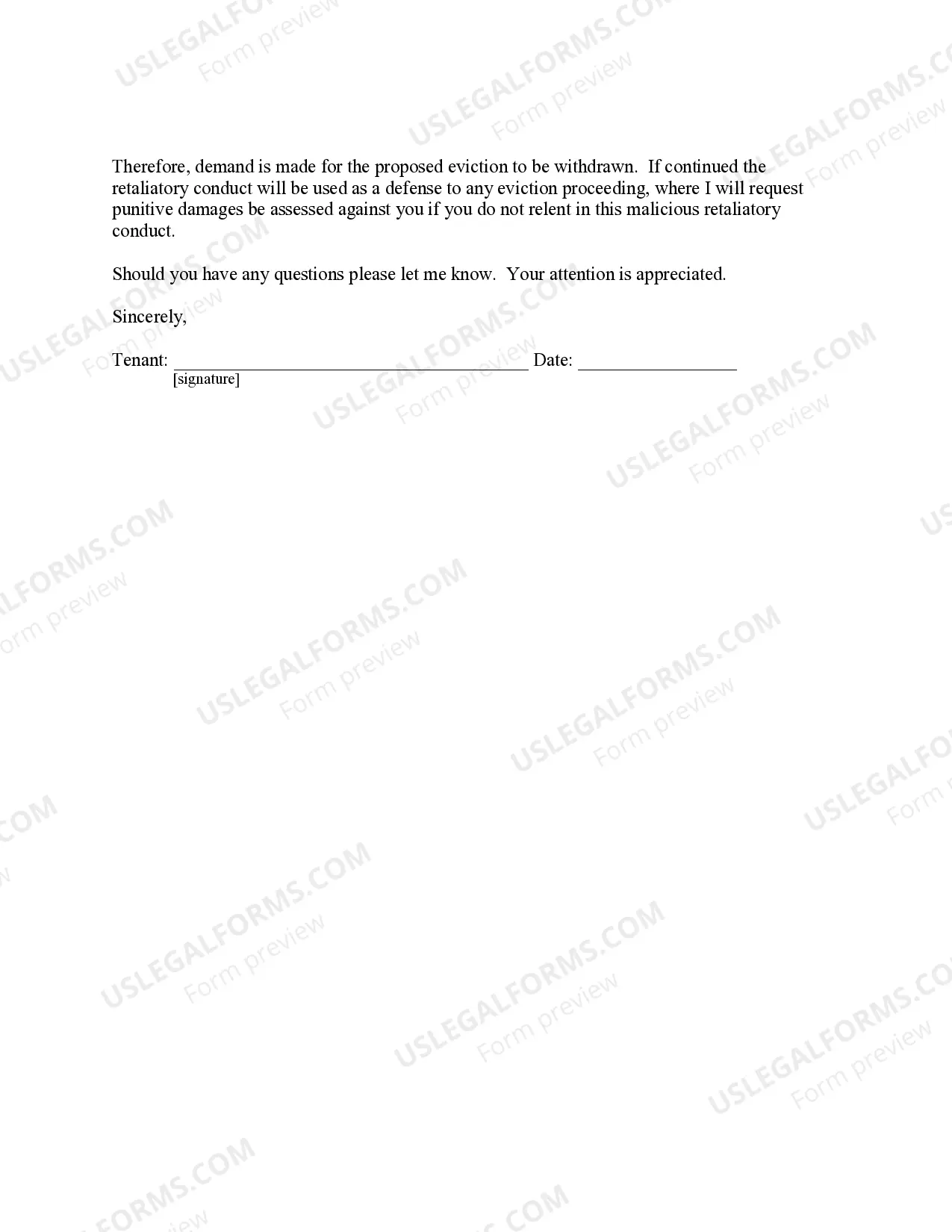
- Includes a section for the tenant's signature and date of notice delivery.
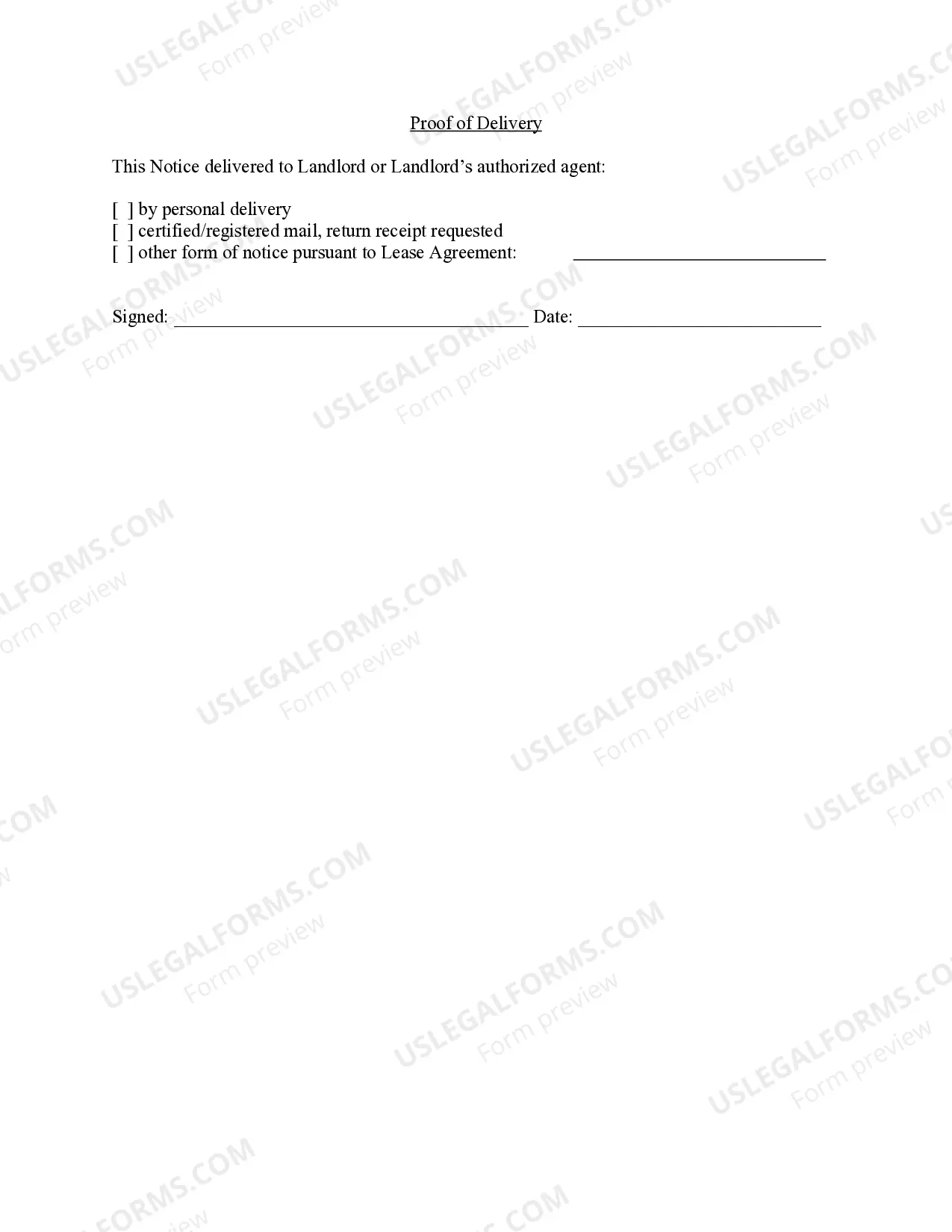
- Proof of delivery method for ensuring the landlord or their authorized agent receives the notice.



Situations where this form applies
This form should be used when a tenant receives a threat of eviction from their landlord that they believe is in retaliation for exercising their rights. Common scenarios include situations where a tenant has filed complaints about unsafe living conditions, participated in a tenant organization, or requested repairs from the landlord. By using this form, tenants can formally document their objections to the retaliatory threat and establish a record of their actions.
Who can use this document
- Tenants who have been threatened with eviction shortly after raising concerns about property conditions.
- Individuals involved in tenant organizations who seek to protect their rights against potential retaliation.
- Any tenant who has made formal complaints to a government agency regarding housing code violations.
- Renters looking to assert their rights under state housing laws against retaliatory eviction practices.
Completing this form step by step
- Identify the tenant and landlord by entering their names and addresses.
- Specify the date the notice is being delivered.
- Clearly describe the landlord's threat of eviction and the circumstances surrounding it.
- List the tenant's actions that warrant protection from retaliation.
- Sign and date the document, ensuring it is delivered in accordance with local laws.
Does this form need to be notarized?
In most cases, this form does not require notarization. However, some jurisdictions or signing circumstances might. US Legal Forms offers online notarization powered by Notarize, accessible 24/7 for a quick, remote process.
Get your form ready online
Our built-in tools help you complete, sign, share, and store your documents in one place.
Make edits, fill in missing information, and update formatting in US Legal Forms—just like you would in MS Word.
Download a copy, print it, send it by email, or mail it via USPS—whatever works best for your next step.
Sign and collect signatures with our SignNow integration. Send to multiple recipients, set reminders, and more. Go Premium to unlock E-Sign.
If this form requires notarization, complete it online through a secure video call—no need to meet a notary in person or wait for an appointment.
We protect your documents and personal data by following strict security and privacy standards.

Make edits, fill in missing information, and update formatting in US Legal Forms—just like you would in MS Word.

Download a copy, print it, send it by email, or mail it via USPS—whatever works best for your next step.

Sign and collect signatures with our SignNow integration. Send to multiple recipients, set reminders, and more. Go Premium to unlock E-Sign.

If this form requires notarization, complete it online through a secure video call—no need to meet a notary in person or wait for an appointment.

We protect your documents and personal data by following strict security and privacy standards.
Common mistakes to avoid
- Failing to provide specific details about the eviction threat.
- Not including the date the notice is delivered.
- Omitting the tenant's protected actions from the notice.
- Delivering the notice to the wrong person or failing to ensure the landlord receives it.
Why use this form online
- Convenience of downloading the form instantly from any location.
- Editability allows tenants to customize the notice according to their situation.
- Reliability, knowing the form has been drafted by licensed attorneys to comply with legal standards.
Legal use & context
- This notice serves as documentation of the tenant's claim of retaliatory eviction.
- Using this form can strengthen a tenant's position in potential legal disputes regarding eviction.
- It helps to establish a clear timeline of communication and actions taken by the tenant.
Looking for another form?


Form popularity
FAQ
A revenge or retaliatory eviction is when a landlord tries to evict a tenant because they ask for repairs or complain about poor conditions. You're at risk if you are an assured shorthold tenant.If you have these types of tenancy, your landlord must prove to the court that there's a legal reason to evict you.
Tell Them The Problem & Consequences. Explain the reason that you want the tenant to go. Offer Them a Way Out. Let the tenant know that you are willing to give them a lump sum of cash in agreement for leaving the property. The Release.
Addresses. Date. Tenant names. Status and date of the lease. Why the eviction notice is served (clear and concise explanation) Date tenant must vacate the property. Proof of service or delivery of notice.
If you're seeking damages for emotional distress caused by a landlord's discrimination, or punitive damages for especially blatant and intentional discrimination, a lawsuit may well be your best bet. Understand what's involved in suing your landlord. You may file a lawsuit in either federal or state court.
The threat of eviction ranges anywhere from mortgage or rent arrears to actually being evicted (the final consequence of the process), and is currently one of the most serious economic and legal housing-related problems (Hernandez PedreA±o, 2013).
Write a letter to your landlord stating that you are aware of your rights as a tenant, that s/he is in clear violation of the law, and that you want the situation remedied with no further harassment. Keep a copy of the letter; it will be good evidence if you have to take the landlord to court later.
Do not threaten back. Call the Police if you feel threatened or in immediate danger. Ask a witness to be with you during interactions with your tenants. Tell the tenant that all communication must be done in writing. Save all of the texts, emails, and voicemails.
CPLEA has developed a tipsheet on the new amendments to the Alberta Residential Tenancies Act that allow for victims of domestic violence to break a lease early, without financial penalty, if their home is unsafe.This tipsheet is part of CPLEA's Families and the Law: Domestic Violence Series.
The landlord is allowed to apply for a termination order for threats, abuse, intimidation, or harassment without giving the tenant a termination notice first. However in most circumstances, unless it is an urgent situation, it is good practice for the landlord to notify the tenant with a termination notice.