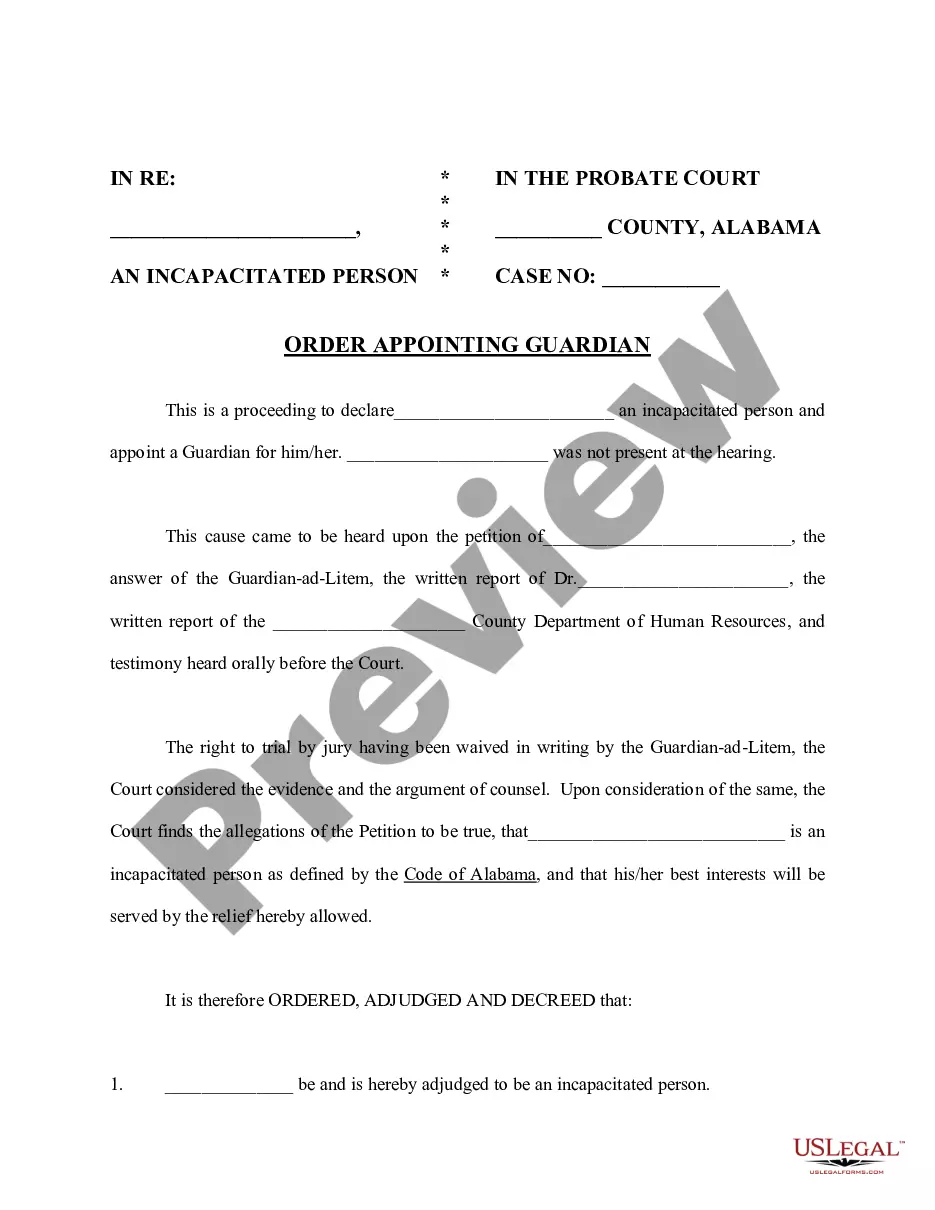
Iowa Last Will and Testament for Married person with Minor Children
Overview of this form
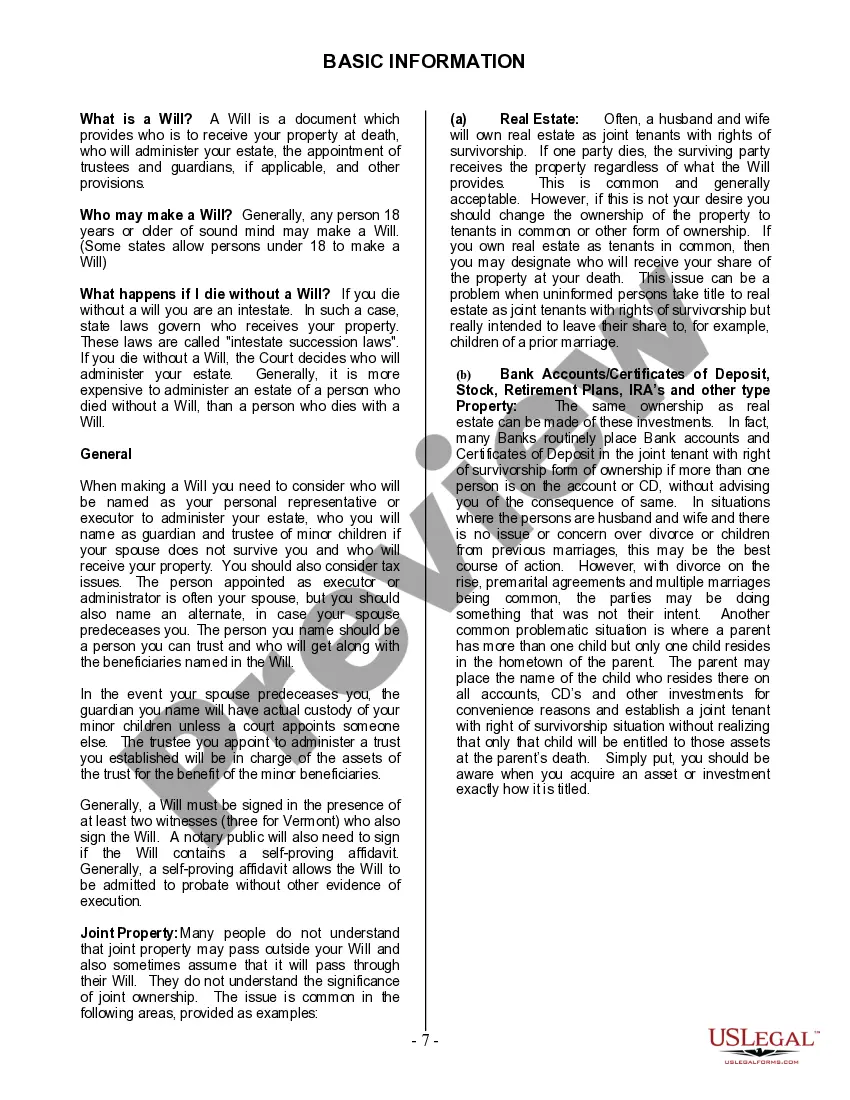
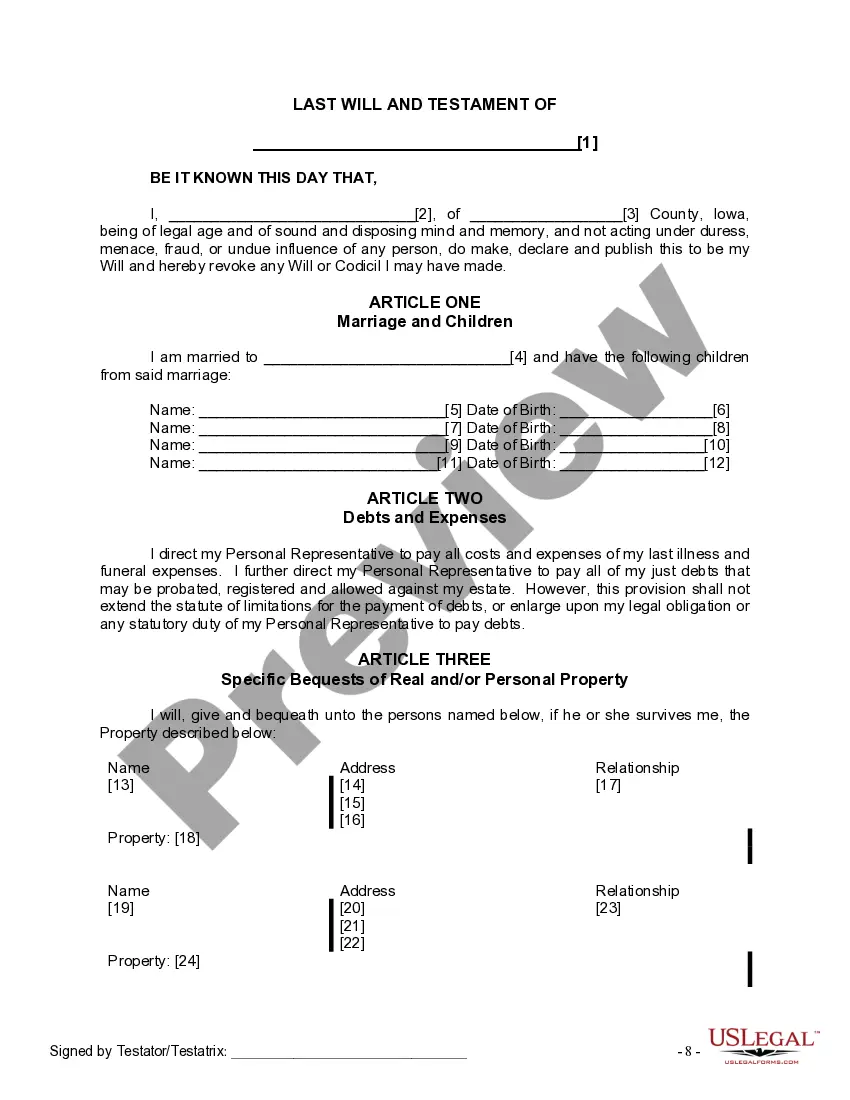
The Last Will and Testament for a Married Person with Minor Children is a legal document that outlines how a married individual wishes to distribute their assets after death, while also providing for the care of any minor children. This form appoints a personal representative to manage the estate, specifies beneficiaries, and includes provisions for guardianship and trust for minor children. It differs from other wills by focusing specifically on the needs of married individuals with child dependents.
What’s included in this form
- Personal Representative: Appointing an executor to manage estate affairs.
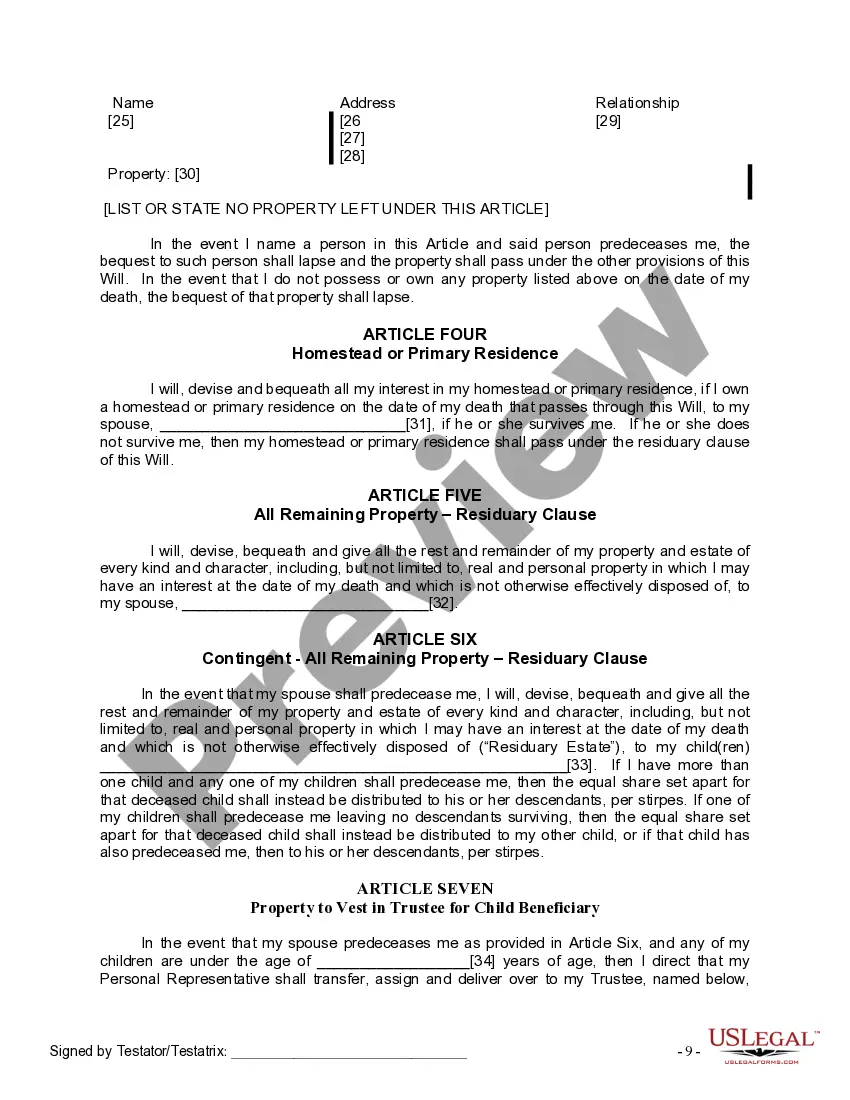
- Beneficiary Designation: Specifying who receives property, assets, and any specific bequests.
- Guardian Appointment: Designating someone to care for minor children if both parents pass away.
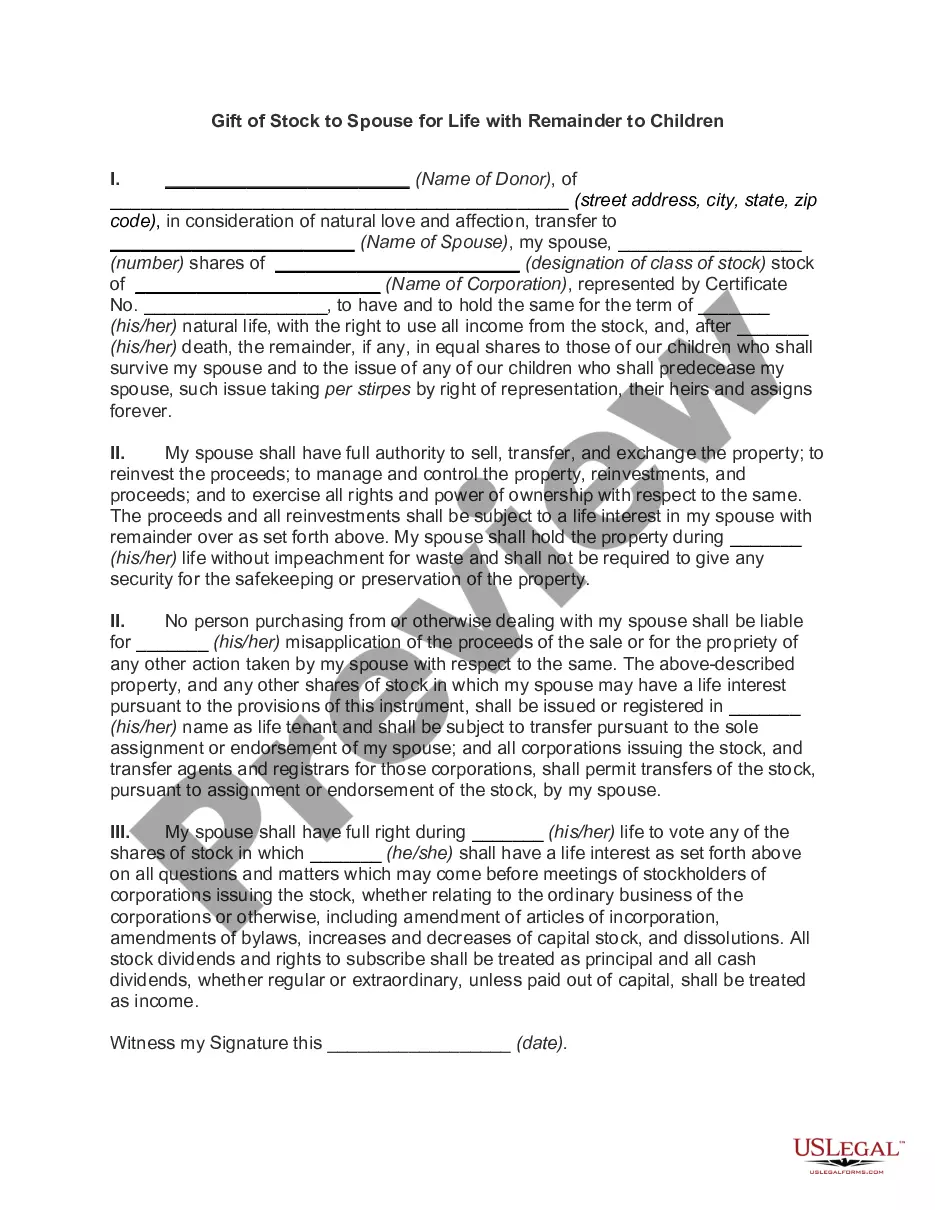
- Trusts for Minors: Establishing a trust to manage assets for children until they reach adulthood.
- Homestead Provision: Addressing the distribution of the primary residence.









When to use this form
This form is essential for married individuals with minor children who want to ensure their assets are distributed according to their wishes after death. It is advisable to use this form when starting a family, acquiring significant assets, or if there are changes in family dynamics such as divorce or remarriage.
Who this form is for
- Married individuals who have minor children.
- Parents wanting to ensure the financial security of their children.
- Individuals looking to structure their asset distribution clearly and legally.
- Those wishing to appoint a guardian for their children in the event of their passing.
Instructions for completing this form
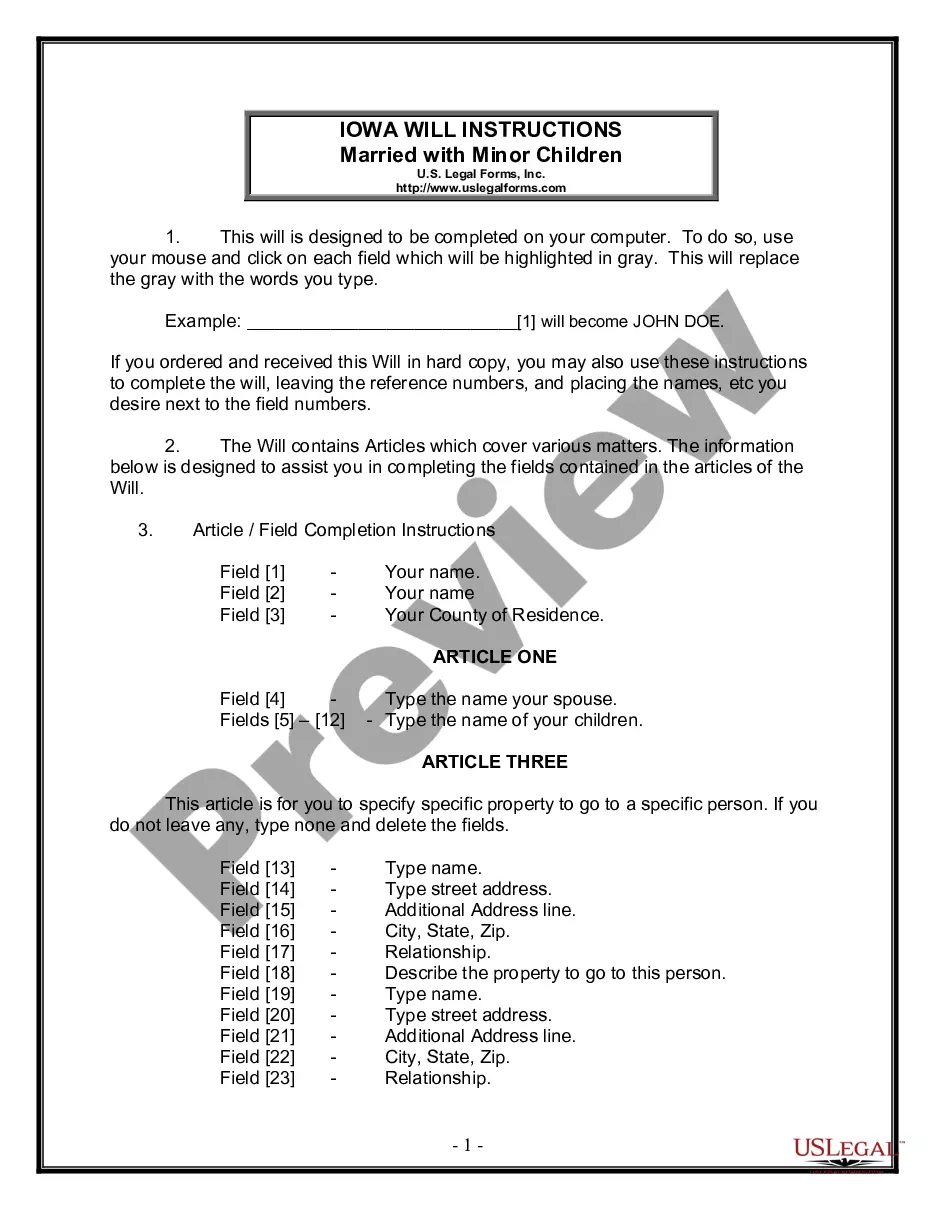
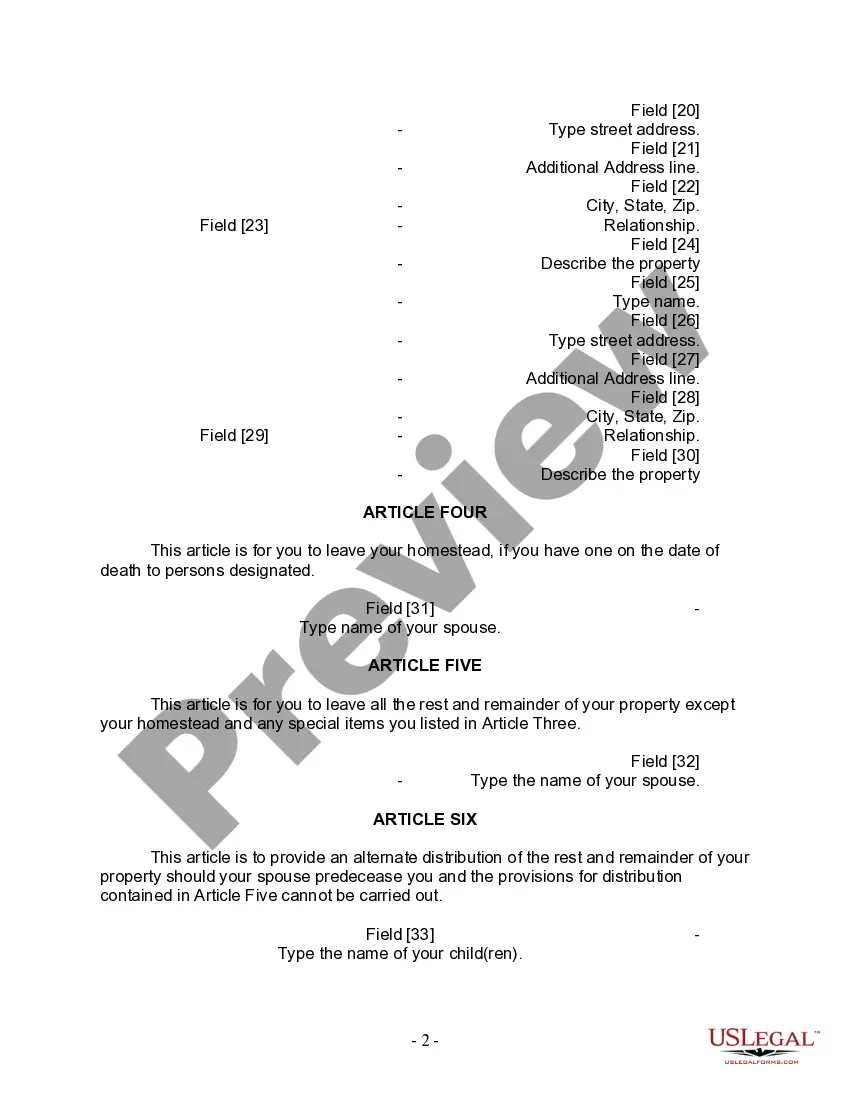
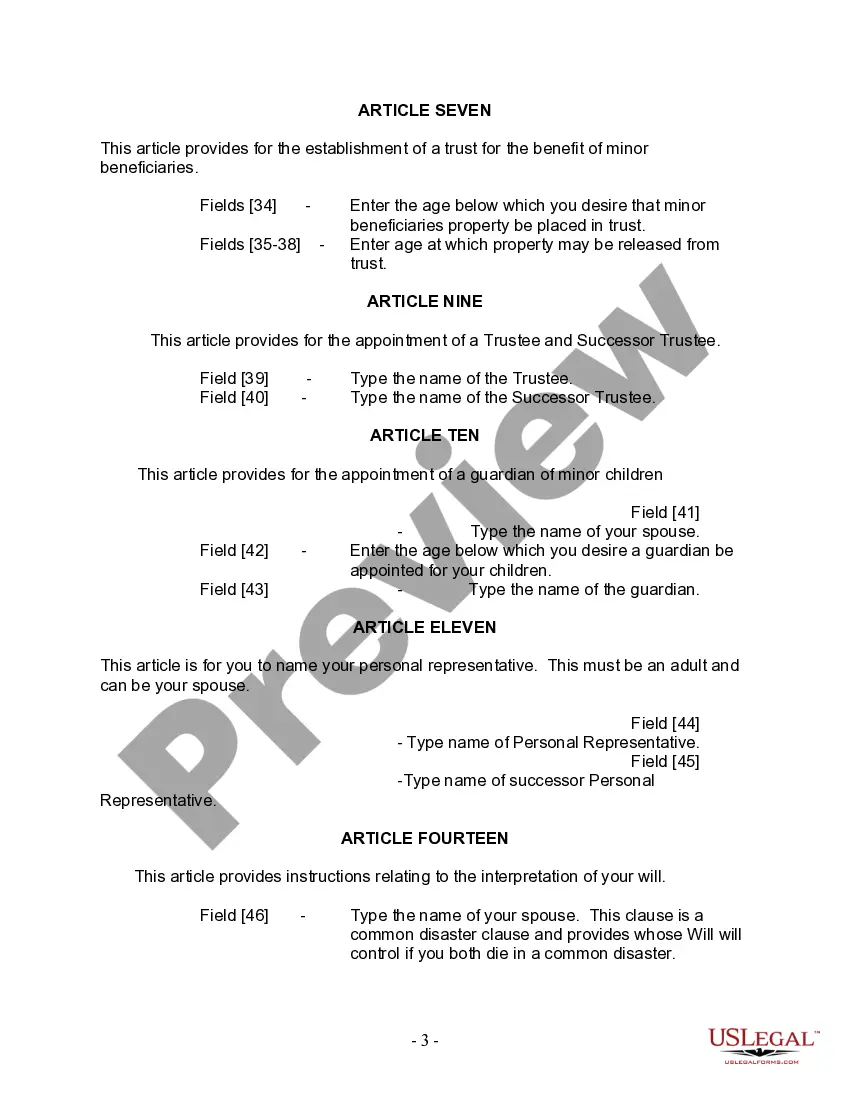
- Complete personal information: Fill in your name, county of residence, and spouse's name.
- List your children: Provide the names and dates of birth of your minor children.
- Designate beneficiaries: Specify individuals who will receive specific property or assets.
- Appoint a personal representative: Name an executor who will oversee the distribution of your estate.
- Sign and witness the will: Ensure it is signed in the presence of two witnesses who are not named in the will.
Is notarization required?
This document requires notarization to meet legal standards. US Legal Forms provides secure online notarization powered by Notarize, allowing you to complete the process through a verified video call, available 24/7.
Get your form ready online
Our built-in tools help you complete, sign, share, and store your documents in one place.
Make edits, fill in missing information, and update formatting in US Legal Forms—just like you would in MS Word.
Download a copy, print it, send it by email, or mail it via USPS—whatever works best for your next step.
Sign and collect signatures with our SignNow integration. Send to multiple recipients, set reminders, and more. Go Premium to unlock E-Sign.
If this form requires notarization, complete it online through a secure video call—no need to meet a notary in person or wait for an appointment.
We protect your documents and personal data by following strict security and privacy standards.

Make edits, fill in missing information, and update formatting in US Legal Forms—just like you would in MS Word.

Download a copy, print it, send it by email, or mail it via USPS—whatever works best for your next step.

Sign and collect signatures with our SignNow integration. Send to multiple recipients, set reminders, and more. Go Premium to unlock E-Sign.

If this form requires notarization, complete it online through a secure video call—no need to meet a notary in person or wait for an appointment.

We protect your documents and personal data by following strict security and privacy standards.
Common mistakes to avoid
- Failing to have the will signed by two witnesses.
- Not specifying a guardian for minor children.
- Overlooking the need for a self-proving affidavit if applicable in your state.
- Leaving out specific assets or property from the will.
- Assuming verbal agreements are sufficient without written documentation.
Advantages of online completion
- Convenience: Complete your form from home at your own pace.
- Editability: Easily modify entries until you are satisfied with the final document.
- Accessibility: Downloadable formats allow for easy access and storage.
- Legal assurance: Templates are drafted by licensed attorneys to ensure compliance.
Quick recap
- This form ensures that your assets are distributed according to your wishes after your death.
- It includes provisions for the appointment of guardians for minor children, which is crucial for families.
- Proper completion and notarization of this form help to avoid legal disputes and complications.
Looking for another form?




Form popularity
FAQ
There are three requirements for a couple to be married by common law in Iowa: There must be an agreement that the people are married. The couple must live together continuously as spouses. The couple needs to present themselves publically as a married couple.
In Indiana, this is also mostly true, although a person who is 21 can marry a person who is 17 years old. Minimum age in 50 states: 1 state has a minimum age of 12 years old for females and 14 years old for males:Massachusetts. 2 states have a minimum age of 14: Alaska, and Vermont.
In Iowa, to prove the existence of a lawful common law marriage, there must be substantial evidence of a present intent and agreement to be married, continuous cohabitation, and a public declaration that the parties are husband and wife (or, now, wife and wife, or husband and husband or Party A and Party B).
Continuous cohabitation However, there is no specific time that a couple must live together to establish a common-law marriage. Obviously, two weeks would not be enough time, and almost as obviously, seven years would be enough time if the other factors necessary to prove a common-law marriage are present.
If you want to get married, you'll need a marriage license. Marriages in Iowa are between 2 people who are (1) 18 years of age and older; (2) not already or still legally married to someone else or each other; (3) not closely related by blood or first cousins; and (4) legally competent to enter into a civil contract.
To apply for a marriage license the couple intending to marry and one witness (someone that's acquainted with the couple and is 18 or older) must come into the office and fill out the application. The applicants and witness must have a photo I.D. The fee is $35.00.
What is Common Law Marriage: A Definition. A common law marriage is one in which the couple lives together for a period of time and holds themselves out to friends, family and the community as "being married," but without ever going through a formal ceremony or getting a marriage license.
Iowa marriage records can be found by querying the office of the Bureau of Vital Statistics or the County Recorder's office. Usually, the County Recorders can search and issue copies of all marriages that occurred within the state's limit from 1954 to today.