Iowa Final Notice of Forfeiture and Request to Vacate Property under Contract for Deed
What is this form?
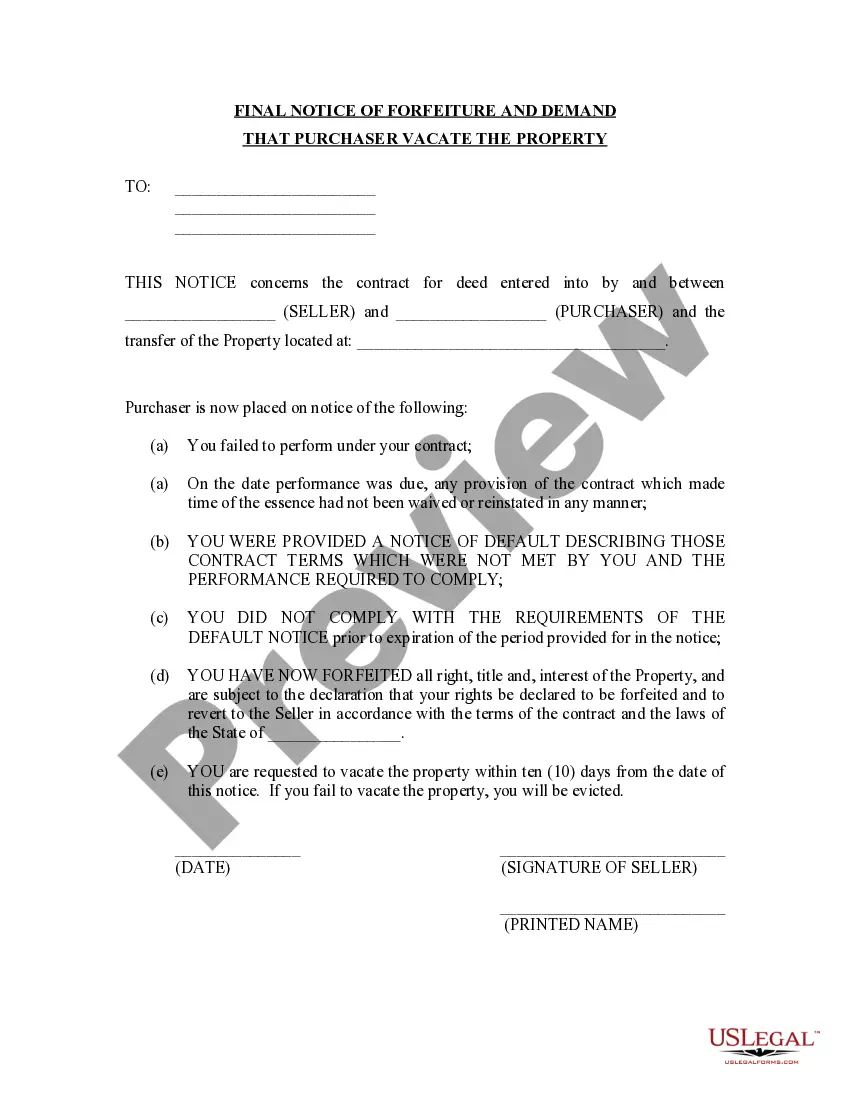
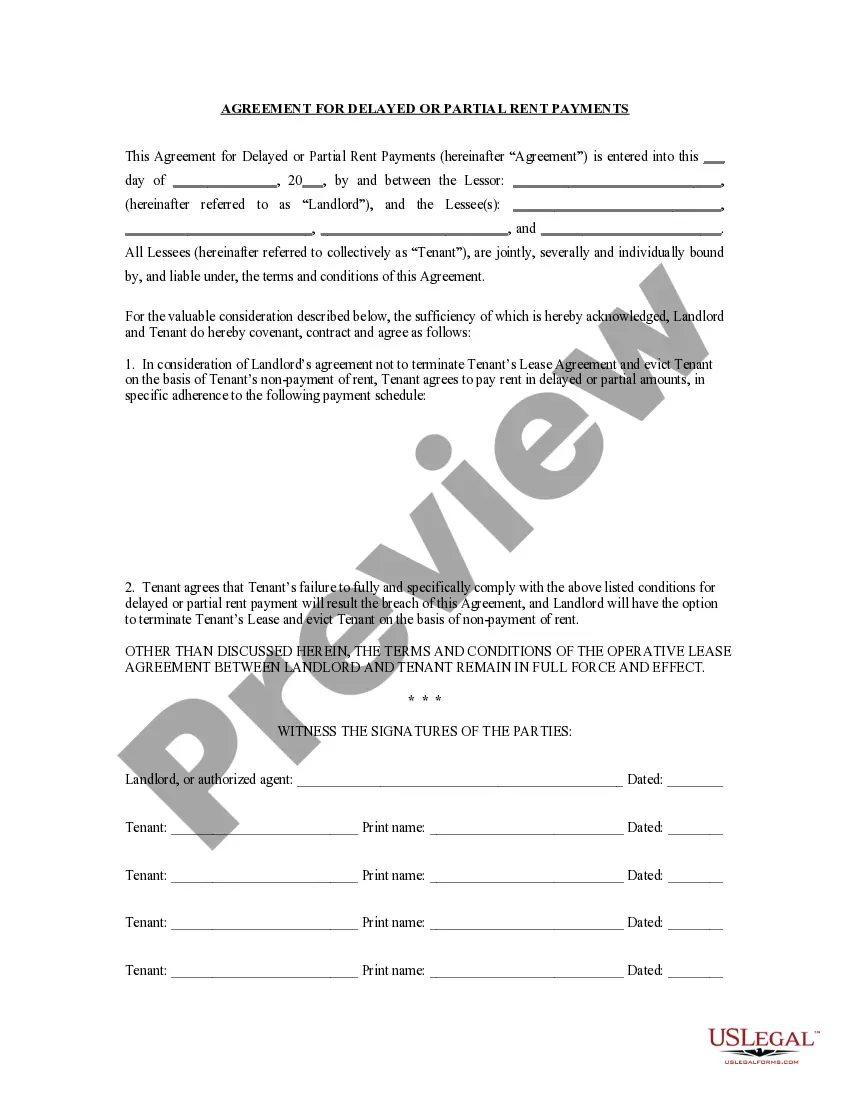
The Final Notice of Forfeiture and Request to Vacate Property under Contract for Deed is a legal document used by a seller to formally notify a buyer that their contract for deed has been canceled. This notice is issued after previous breach notices have expired. The form indicates that any payments made by the buyer are forfeited, and if the buyer remains on the property, further legal action may be pursued. This form is specifically tailored for situations involving property sales under contract for deed, distinguishing it from other eviction or lease termination notices.
Form components explained
- Identification of the seller and purchaser involved in the contract.
- Description of the property in question.
- Details on prior notices of breach and default.
- Declaration of the cancellation of contract for deed.
- Statement outlining the forfeiture of any payments made by the purchaser.
- Instructions regarding the demand for the buyer to vacate the premises.

When to use this document
This form should be used when a seller has previously notified the buyer of a breach of contract and the buyer has failed to remedy the default. It is appropriate to issue this final notice when the seller wishes to officially cancel the contract for deed and reclaim the property, particularly following multiple attempts to resolve the breach.
Who can use this document
- Sellers engaged in a contract for deed with a buyer who has defaulted on their obligations.
- Real estate professionals handling transactions involving contracts for deed.
- Property owners seeking to enforce their rights against a buyer who has not complied with the contract terms.
How to complete this form
- Identify and enter the full names of the seller and the purchaser.
- Describe the property being affected by the contract for deed.
- Reference any prior notices of breach issued to the buyer.
- Clearly state the cancellation of the contract for deed and the effect on any payments made.
- Include a demand for the buyer to vacate the property, along with any relevant dates.
Is notarization required?
This form does not typically require notarization unless specified by local law. It is recommended to check local regulations to ensure compliance.
Get your form ready online
Our built-in tools help you complete, sign, share, and store your documents in one place.
Make edits, fill in missing information, and update formatting in US Legal Forms—just like you would in MS Word.
Download a copy, print it, send it by email, or mail it via USPS—whatever works best for your next step.
Sign and collect signatures with our SignNow integration. Send to multiple recipients, set reminders, and more. Go Premium to unlock E-Sign.
If this form requires notarization, complete it online through a secure video call—no need to meet a notary in person or wait for an appointment.
We protect your documents and personal data by following strict security and privacy standards.

Make edits, fill in missing information, and update formatting in US Legal Forms—just like you would in MS Word.

Download a copy, print it, send it by email, or mail it via USPS—whatever works best for your next step.

Sign and collect signatures with our SignNow integration. Send to multiple recipients, set reminders, and more. Go Premium to unlock E-Sign.

If this form requires notarization, complete it online through a secure video call—no need to meet a notary in person or wait for an appointment.

We protect your documents and personal data by following strict security and privacy standards.
Common mistakes to avoid
- Failing to properly identify all parties involved in the contract.
- Not including specific details about prior breach notices.
- Omitting essential information about the property in question.
- Failure to ensure the form is signed by the seller.
Why use this form online
- Convenient access to legal forms without the need for in-person consultations.
- Quick download and easy editing to meet specific needs.
- Reliability of professionally drafted forms by licensed attorneys.
Legal use & context
- This form serves as a official record of a seller's decision to cancel a contract for deed.
- Ensures that the seller takes necessary legal steps to reclaim the property.
- Failure to complete this process properly may result in challenges in court if eviction is pursued.
Key takeaways
- The Final Notice of Forfeiture is essential for sellers who wish to cancel a contract for deed.
- Proper completion and delivery of this form are crucial for legal enforceability.
- Staying informed of state-specific rules can prevent complications during the eviction process.
Looking for another form?

Form popularity
FAQ
A deed of termination or termination agreement is a legal document that ends a contract or agreement. In the context of the Iowa Final Notice of Forfeiture and Request to Vacate Property under Contract for Deed, this document allows parties to formally cancel their obligations under the agreement. This process is essential for resolving disputes or unwanted contractual obligations. With platforms like USLegalForms, you can easily obtain templates and guidance for creating a deed of termination tailored to your needs.
To begin forfeiture proceedings in Iowa, you must first send an Iowa Final Notice of Forfeiture and Request to Vacate Property under Contract for Deed to the tenant or property occupant. This notice outlines the reasons for the forfeiture and the specific timeline for responding. After providing adequate notice, you can then proceed with legal actions if the occupant does not vacate the property. Utilizing platforms like US Legal Forms can simplify this process by providing templates and guidance tailored to Iowa's legal standards.
Changing your mind after signing a contract in Texas is possible, but it often comes with limitations. If you wish to back out, consult the specific terms of the contract and applicable state laws. The Iowa Final Notice of Forfeiture and Request to Vacate Property under Contract for Deed can provide a structured approach to withdrawing from such agreements. Seeking professional legal guidance can help you navigate this complex process.
Yes, you can cancel a real estate contract in Texas, provided you follow the terms outlined in the contract. Reasons for cancellation may include breaches of contract or mutual agreement. Including an Iowa Final Notice of Forfeiture and Request to Vacate Property under Contract for Deed can assist in formalizing the cancellation process. Always remember that legal advice can clarify your obligations and protect your interests.
To cancel a contract for deed in Texas, you should first review the agreement to ensure you have valid grounds for cancellation. Draft a written cancellation notice that specifies the reasons for cancellation, and send it to the other party. Employing an Iowa Final Notice of Forfeiture and Request to Vacate Property under Contract for Deed can help ensure you are following the correct procedures. Consider seeking legal advice for a thorough understanding of your rights.
Yes, a seller can back out of a contract for deed, but they must follow specific legal protocols. If the buyer has not met key obligations, the seller can issue an Iowa Final Notice of Forfeiture and Request to Vacate Property under Contract for Deed. However, in many cases, consulting an attorney is a wise step to prevent future legal disputes. Understanding your rights is vital in navigating these situations.
To terminate a contract for deed in Texas, both parties must agree to end the agreement formally. This can involve drafting a written termination notice, which should include specific details about the property and the contract. Utilizing an Iowa Final Notice of Forfeiture and Request to Vacate Property under Contract for Deed can provide clarity and legality to the termination process. Always consult with a legal expert to ensure compliance with state laws.
A land contract forfeiture happens when a buyer fails to fulfill the terms of a contract for deed. In such cases, the seller can issue an Iowa Final Notice of Forfeiture and Request to Vacate Property under Contract for Deed. This notice alerts the buyer of their default and outlines the steps necessary to vacate the property. Understanding this process is essential for both buyers and sellers to protect their interests.
A forfeiture clause on a land contract allows the seller to reclaim the property if the buyer defaults on the agreement. This clause is crucial in protecting the seller's interests and is particularly relevant for buyers under such contracts. If you are dealing with an Iowa Final Notice of Forfeiture and Request to Vacate Property under Contract for Deed, understanding how this clause impacts your transaction is vital. Legal guidance can offer clarity and strategies to manage this risk.
Forfeiture and foreclosure are distinct legal processes. Forfeiture is often tied to the breach of a contract, allowing the seller to reclaim property without court involvement. In contrast, foreclosure typically involves legal proceedings initiated by a lender due to unpaid mortgage payments. If you receive an Iowa Final Notice of Forfeiture and Request to Vacate Property under Contract for Deed, knowing this distinction can guide your approach to resolving your situation.