Hawaii Landlord Tenant Lease Co-Signer Agreement
Overview of this form
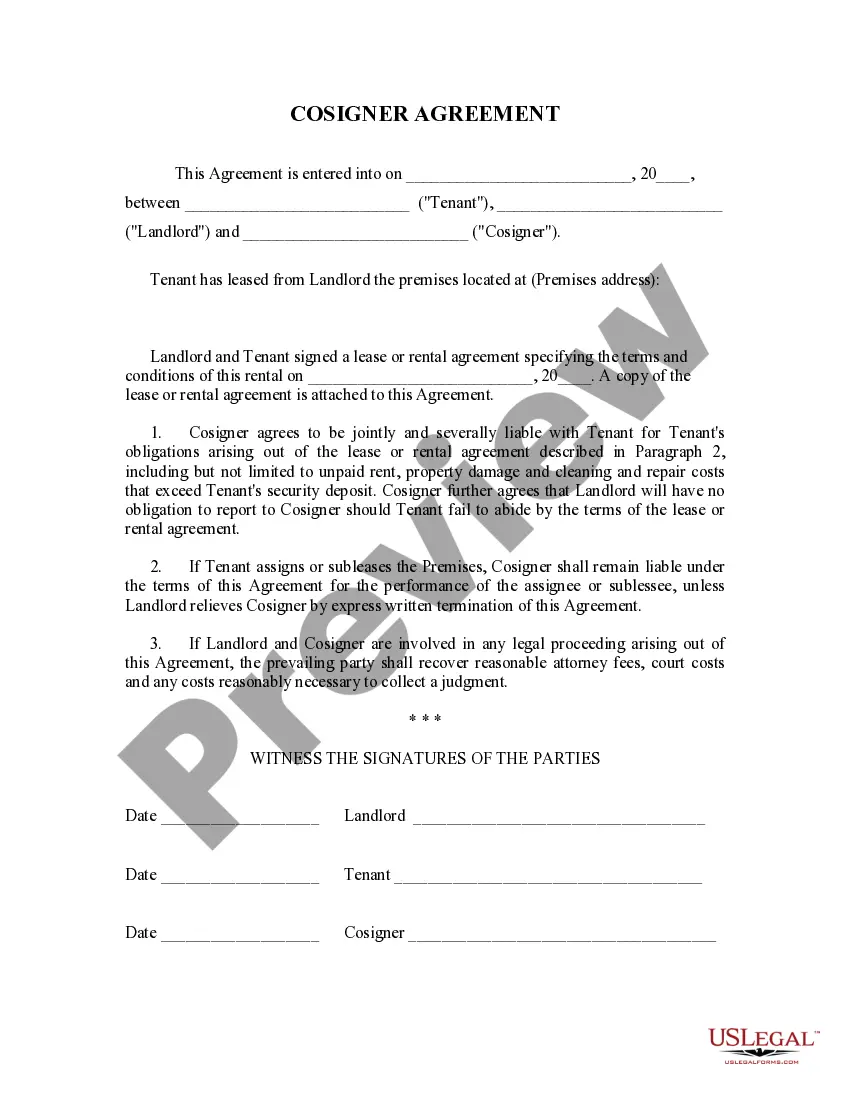
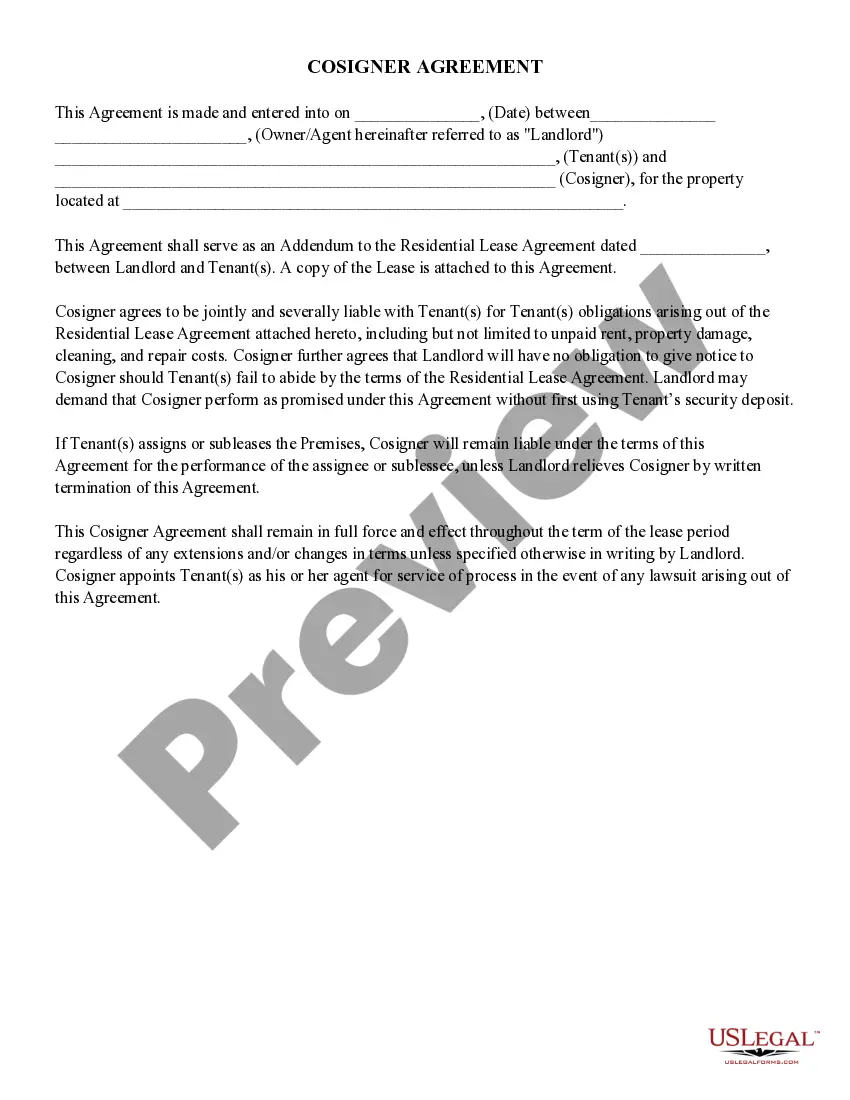
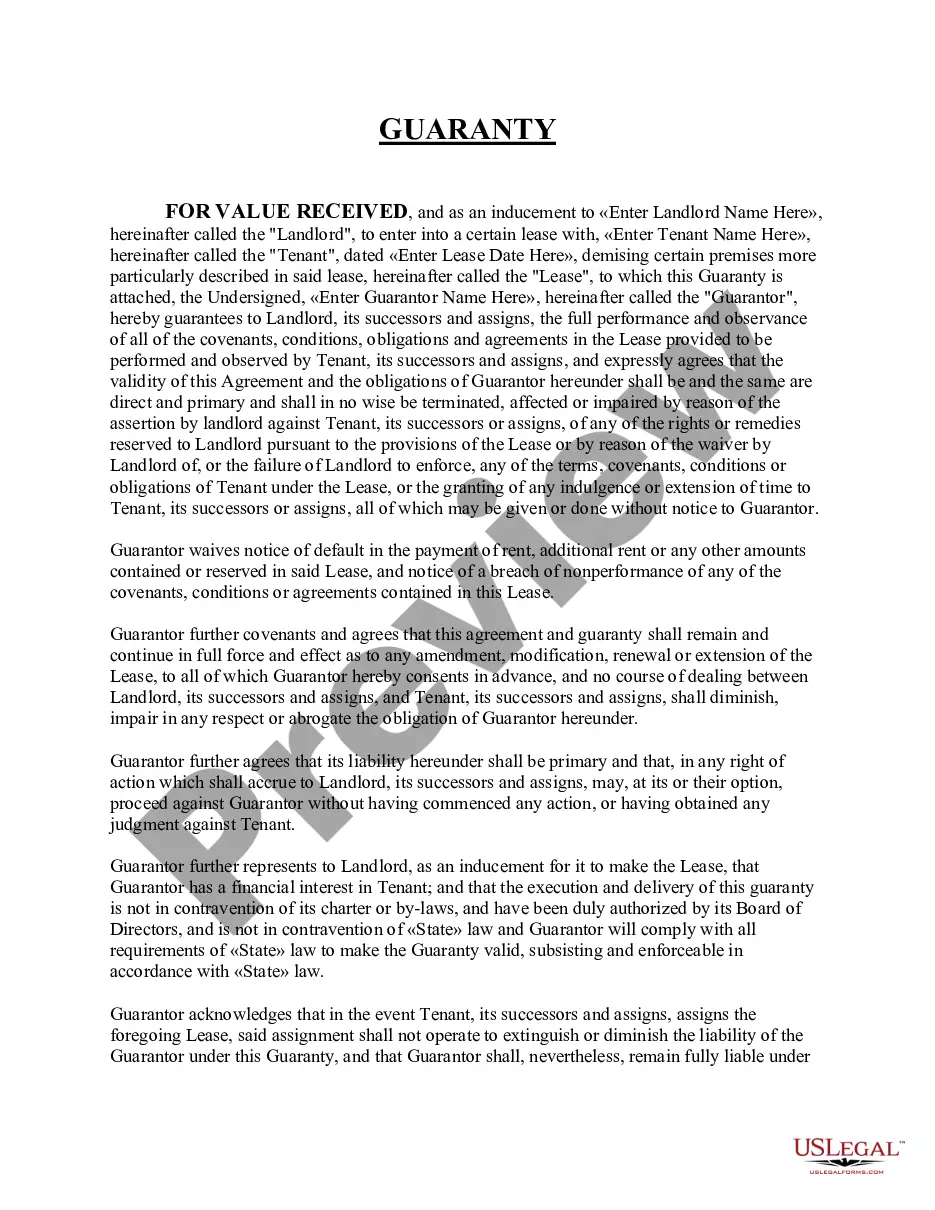
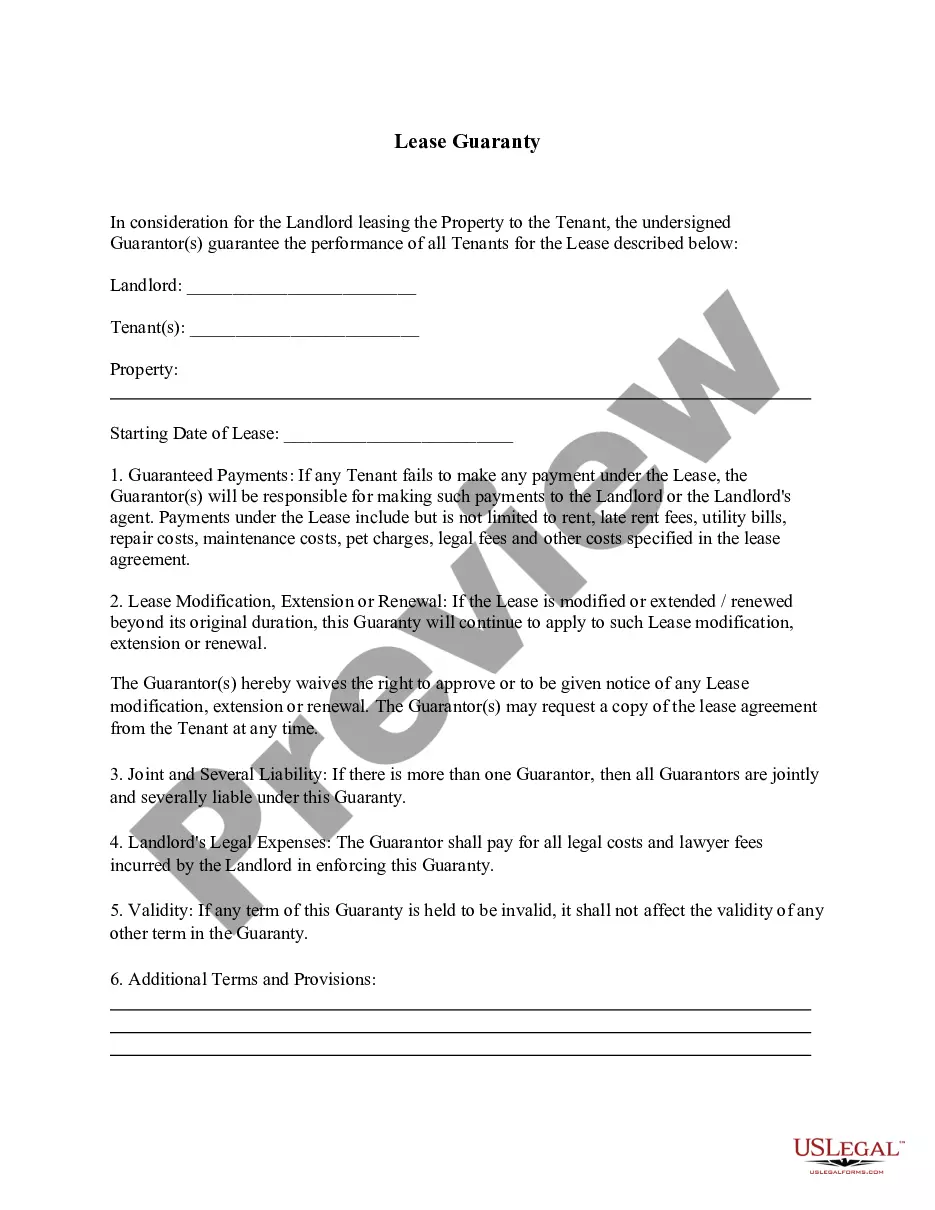
The Landlord Tenant Lease Co-Signer Agreement is a legal document that formalizes the commitment of a co-signer to take on financial responsibility for a tenant's lease. This agreement holds the co-signer accountable for rent payments and damages in case the primary tenant fails to meet their obligations. Unlike standard lease agreements, this form specifically includes provisions for the co-signer's liability, clarifying their role and responsibilities in the rental arrangement.
Main sections of this form
- Identification of the parties involved: landlord, tenant, and co-signer.
- Details of the leased premises, including the address.
- Terms regarding the co-signer's liability for the tenant's obligations.
- Conditions under which the co-signer remains responsible if the tenant subleases or assigns the lease.
- Legal provisions pertaining to attorney fees and court costs in case of disputes.
When this form is needed
This agreement is useful when a landlord requires a co-signer to guarantee the lease in situations where the tenant may not have sufficient credit or rental history. Common scenarios include young renters, students, or individuals transitioning into a new job. It provides landlords with additional security while allowing tenants with limited financial resources the opportunity to secure housing.
Who can use this document
- Landlords looking to secure additional financial assurance for a lease.
- Tenants who need a co-signer to qualify for a rental property.
- Co-signers who wish to understand their rights and obligations regarding the lease.
Instructions for completing this form
- Identify and enter the date of the agreement.
- Fill in the names of the tenant, landlord, and co-signer.
- Specify the address of the rental property.
- Review responsibilities, particularly regarding subleasing and damages.
- Ensure that all parties sign and date the agreement to make it effective.
Notarization requirements for this form
Notarization is generally not required for this form. However, certain states or situations might demand it. You can complete notarization online through US Legal Forms, powered by Notarize, using a verified video call available anytime.
Get your form ready online
Our built-in tools help you complete, sign, share, and store your documents in one place.
Make edits, fill in missing information, and update formatting in US Legal Forms—just like you would in MS Word.
Download a copy, print it, send it by email, or mail it via USPS—whatever works best for your next step.
Sign and collect signatures with our SignNow integration. Send to multiple recipients, set reminders, and more. Go Premium to unlock E-Sign.
If this form requires notarization, complete it online through a secure video call—no need to meet a notary in person or wait for an appointment.
We protect your documents and personal data by following strict security and privacy standards.

Make edits, fill in missing information, and update formatting in US Legal Forms—just like you would in MS Word.

Download a copy, print it, send it by email, or mail it via USPS—whatever works best for your next step.

Sign and collect signatures with our SignNow integration. Send to multiple recipients, set reminders, and more. Go Premium to unlock E-Sign.

If this form requires notarization, complete it online through a secure video call—no need to meet a notary in person or wait for an appointment.

We protect your documents and personal data by following strict security and privacy standards.
Typical mistakes to avoid
- Failing to include complete contact information for all parties involved.
- Leaving out specific property details, such as the address.
- Not reviewing the agreement sections regarding liability and obligations carefully.
- Allowing the agreement to be unsigned by any party, making it unenforceable.
Benefits of using this form online
- Convenient access to downloadable forms anytime, anywhere.
- Editable templates allow users to customize terms to fit their specific needs.
- Reliability of attorney-drafted content, ensuring legal compliance.
Looking for another form?



Form popularity
FAQ
In many cases, cosigners are not considered tenants; their role is to guarantee the primary tenant's obligations. However, depending on the lease agreement's terms, they may have legal responsibilities similar to tenants. Always read the Hawaii Landlord Tenant Lease Co-Signer Agreement closely to understand each party's obligations.
Landlords generally cannot force you to use a rent guarantor, but they can set criteria that make it challenging to rent without one. If your credit score or income does not meet their requirements, you may be required to secure a guarantor. Always check the specific leasing terms of your Hawaii Landlord Tenant Lease Co-Signer Agreement.
Yes, it is common to have a cosigner on a rental property, especially when the primary tenant does not meet all leasing requirements. A cosigner can strengthen the application and provide additional security to the landlord. It is essential to outline the cosigner's responsibilities in the Hawaii Landlord Tenant Lease Co-Signer Agreement.
While this is a common guideline, it is not a hard-and-fast rule. Many landlords expect the cosigner’s income to be substantial enough to cover the rent, but specific requirements can vary. Clarifying the income expectations upfront can simplify the process of securing a cosigner for your Hawaii Landlord Tenant Lease Co-Signer Agreement.
To include a cosigner on a lease, both parties should review the terms of the Hawaii Landlord Tenant Lease Co-Signer Agreement. You will typically need the cosigner's personal information and any required documentation. Once everything is in order, both the tenant and cosigner should sign the agreement to make it legally binding.
Yes, a landlord can refuse a cosigner at their discretion. They might have specific criteria for approval or prefer to lease to tenants who can fully qualify on their own. Understanding the landlord's policies is crucial when preparing your Hawaii Landlord Tenant Lease Co-Signer Agreement.
Yes, a co-applicant is typically considered a tenant under the Hawaii Landlord Tenant Lease Co-Signer Agreement. This means that both the primary tenant and the co-applicant share the lease obligations. It is essential to clarify each party's responsibilities before signing the agreement.
Landlords may prefer not to involve cosigners because they complicate the rental process. They often seek straightforward agreements with direct tenants to streamline communication and management. Furthermore, having a cosigner adds another layer of financial responsibility and potential liability.
signer works on a lease by providing additional financial security to the landlord. When a tenant cannot meet their payment obligations, the cosigner is expected to step in. This relationship is formally recognized in the Hawaii Landlord Tenant Lease CoSigner Agreement, which details the roles and responsibilities of both parties involved. Effective communication is crucial to ensure clarity throughout the lease period.
To write a cosigner letter, start with your contact information followed by the landlord's details. Clearly express your intent to cosign and outline your understanding of the terms. Mention your relationship with the tenant and your financial capacity to support their lease. By doing this, you reinforce the trust and commitment in the Hawaii Landlord Tenant Lease Co-Signer Agreement.