Hawaii Mutual Wills or Last Will and Testaments for Man and Woman living together, not Married with Minor Children
Overview of this form
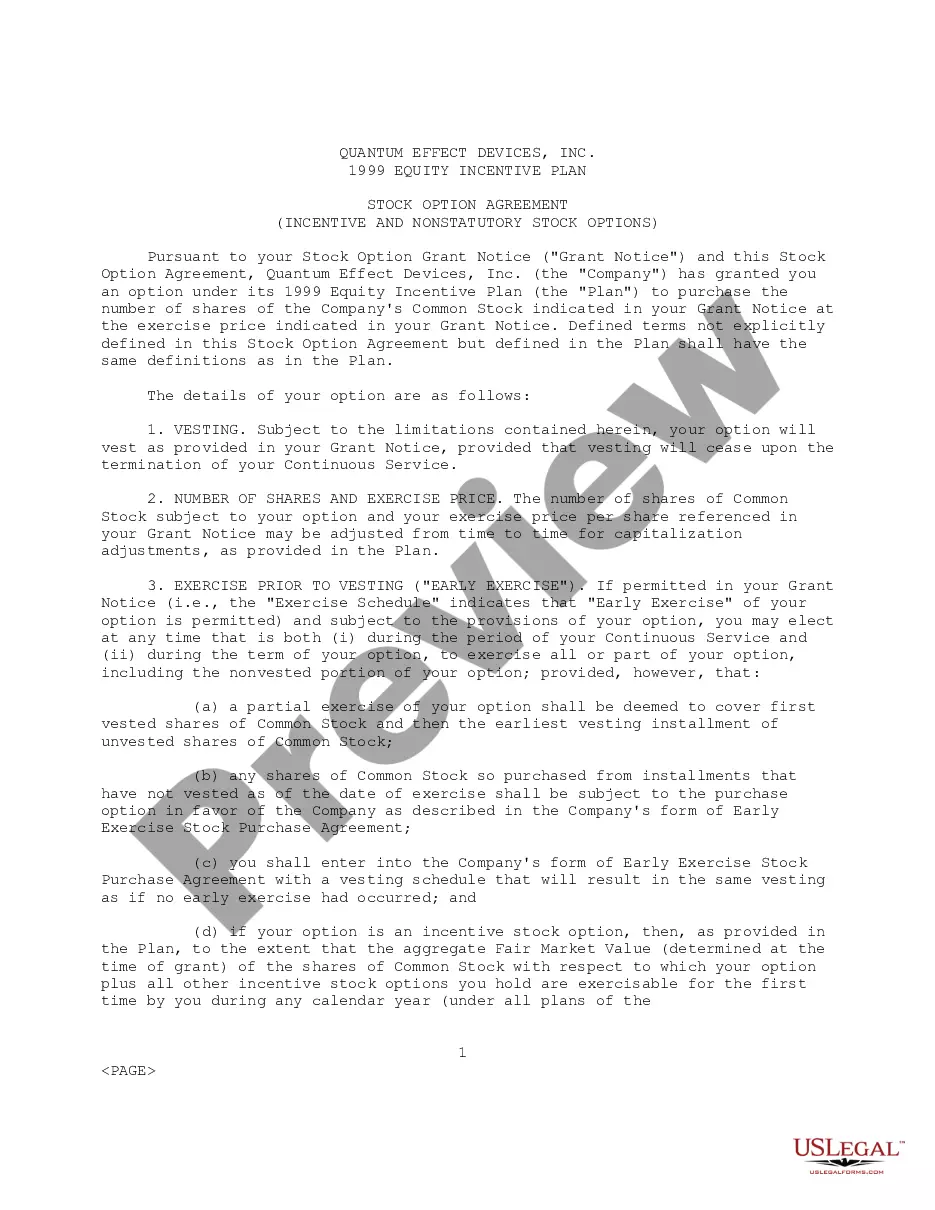
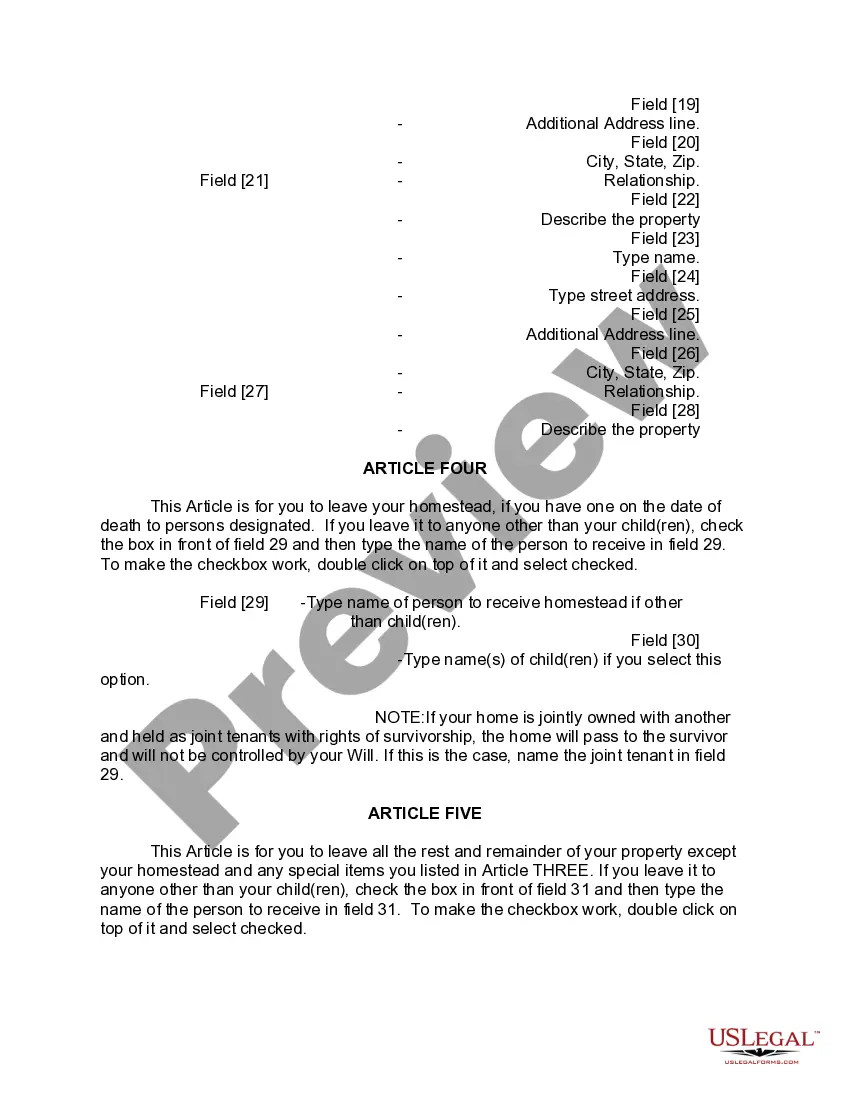
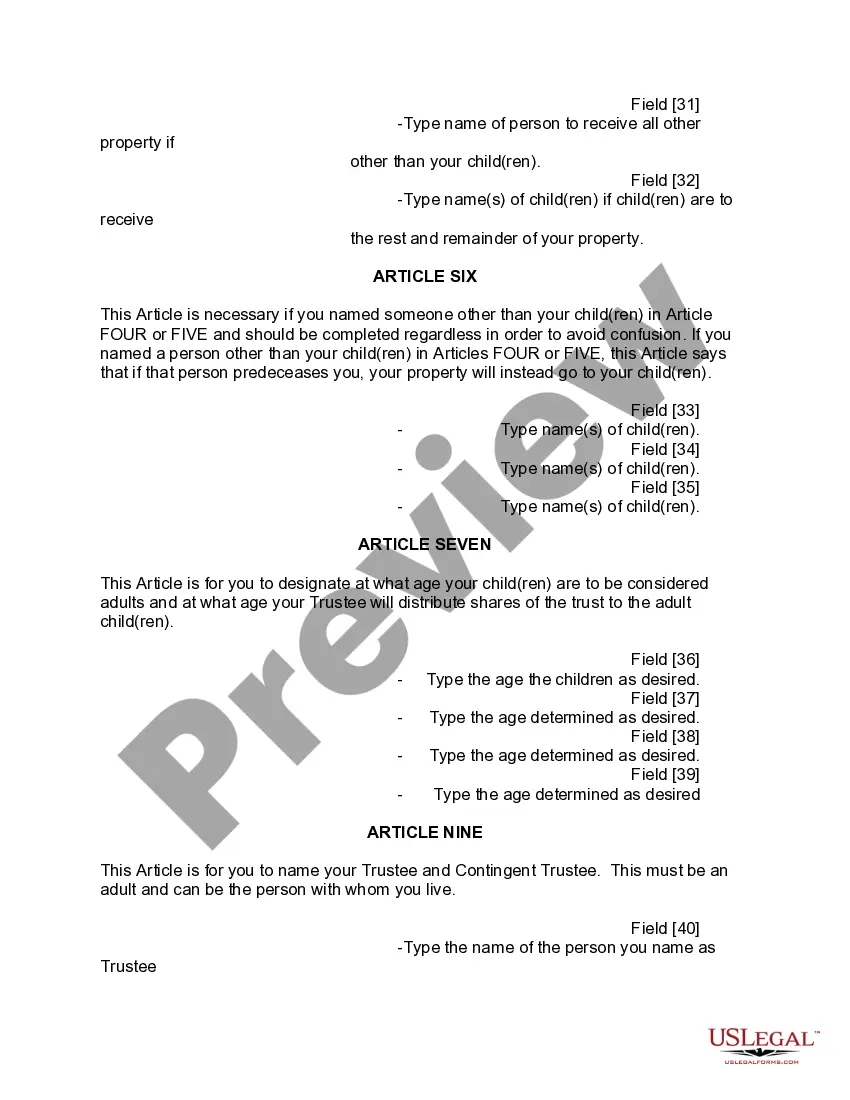
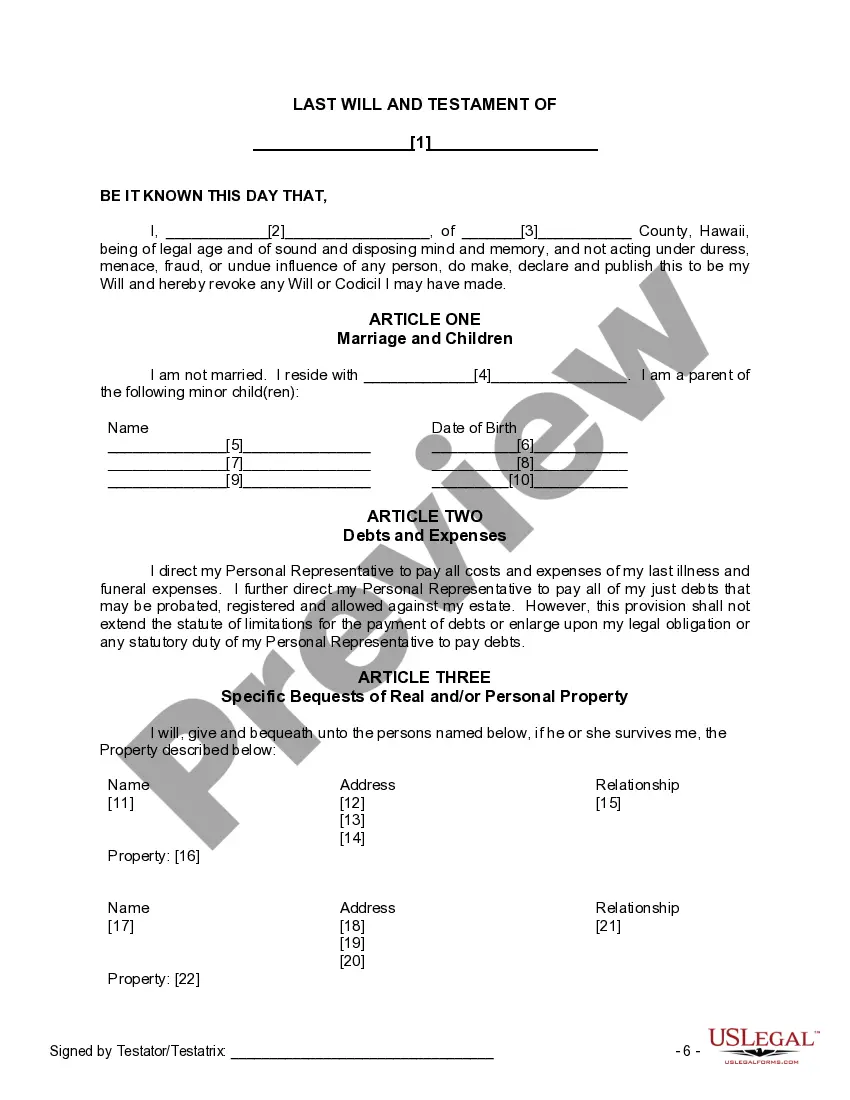
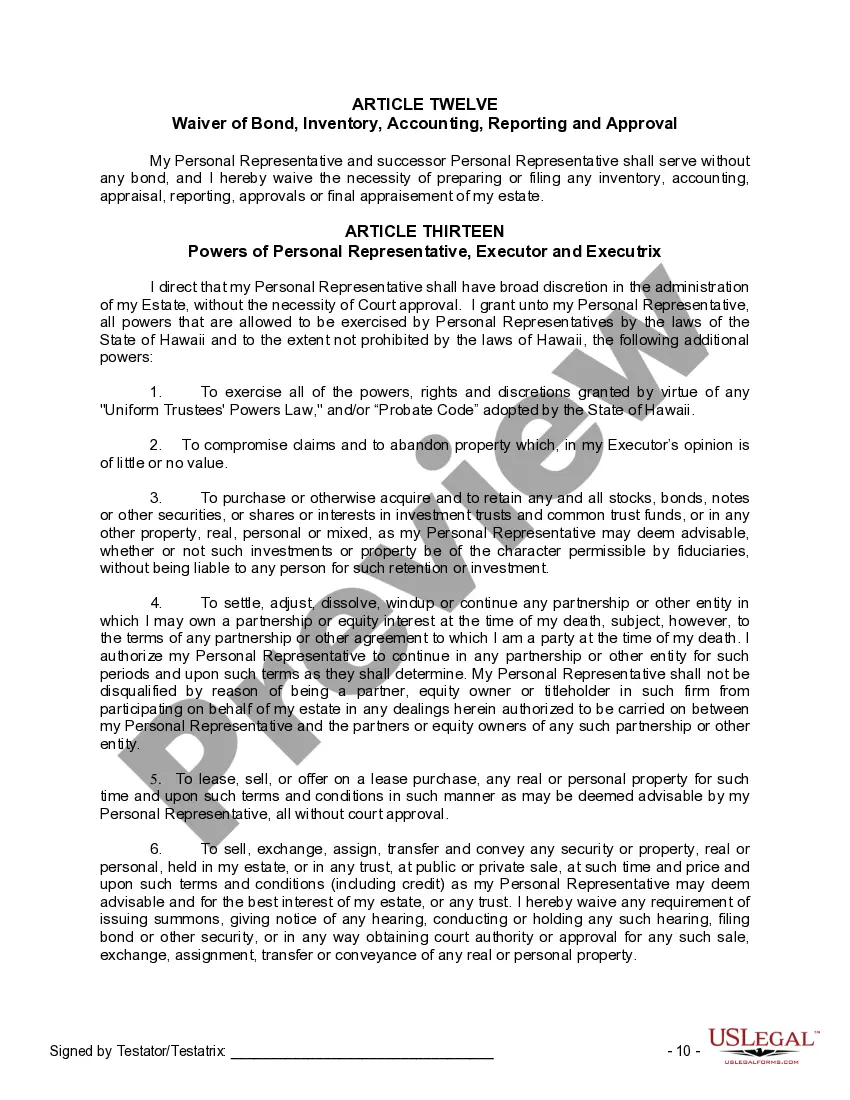
This form is a Mutual Will for a man and woman living together, not married, who have minor children. It allows both parties to create reciprocal wills which detail how their assets will be distributed upon their passing, especially concerning their children. This form provides a structured way to ensure that each partner's wishes regarding their shared property and the guardianship of their minor children are clearly documented and legally recognized.
Key components of this form
- Identification of the testators, including names and county of residence.
- Details of minor children, including names and birthdates.
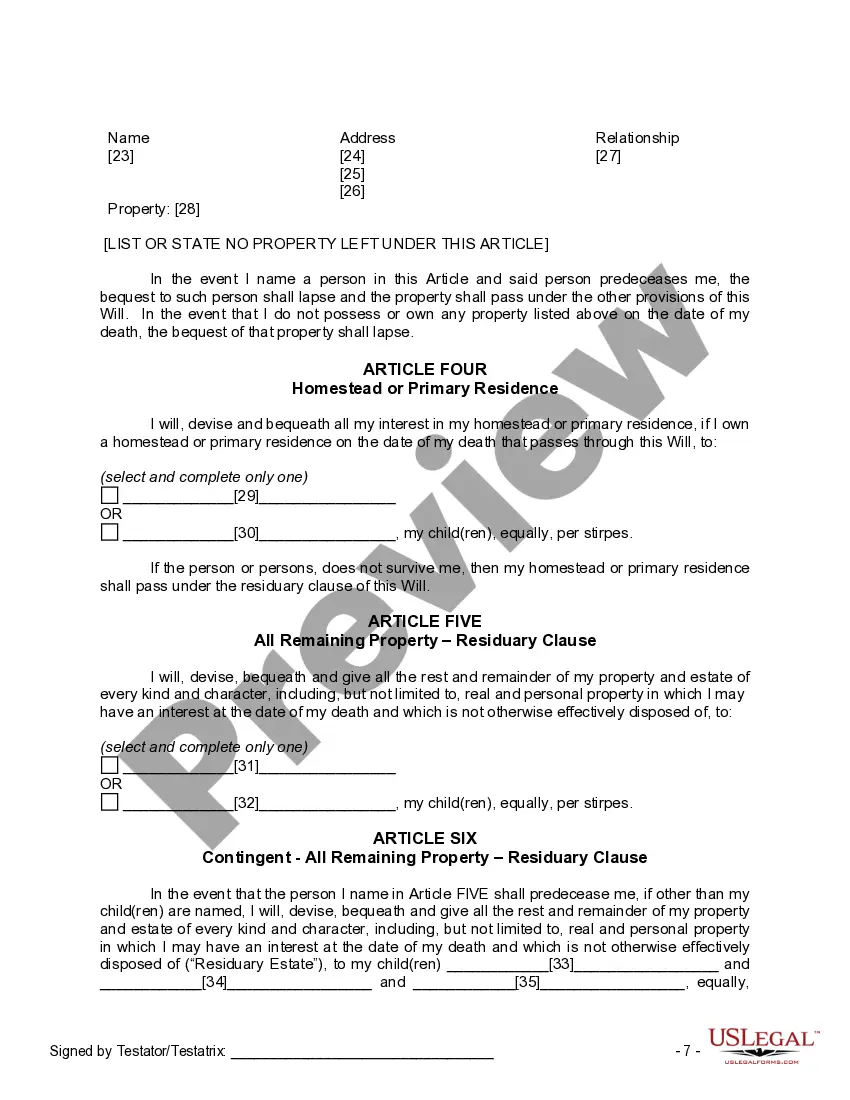
- Specific bequests of real and personal property to designated individuals.
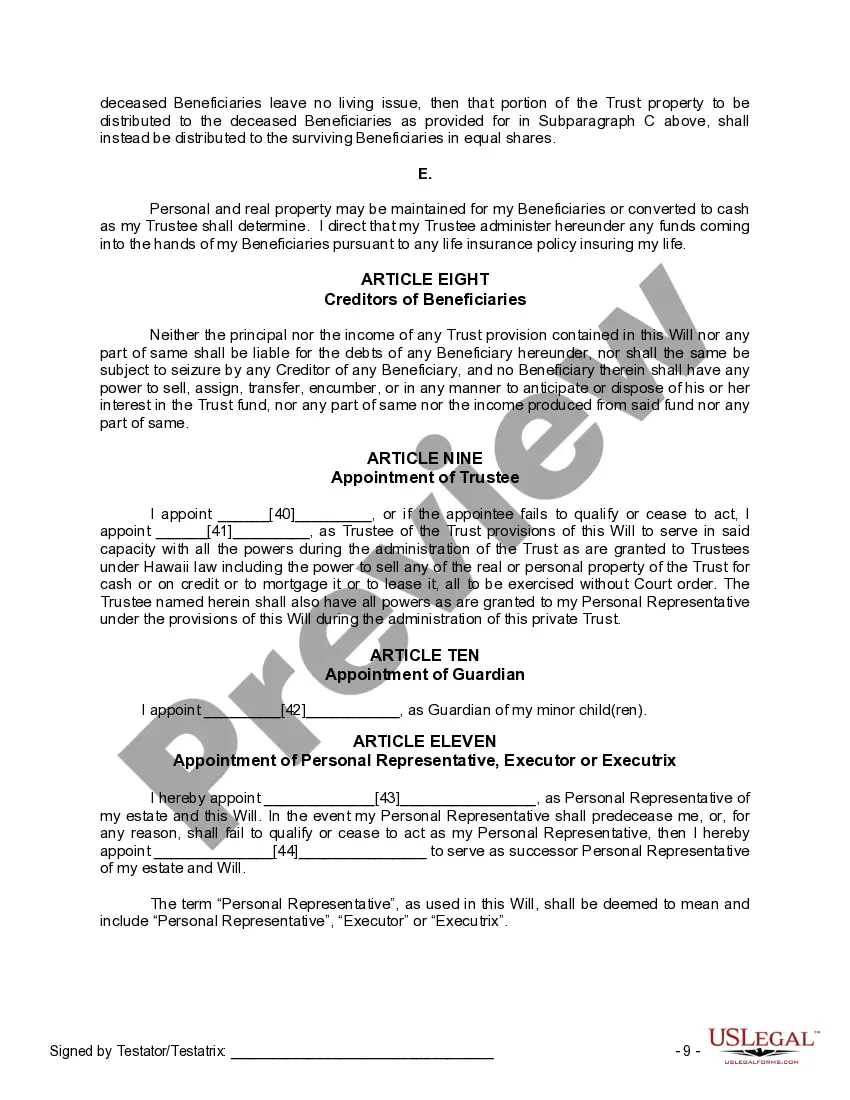
- Instructions for the appointment of guardians for minor children.
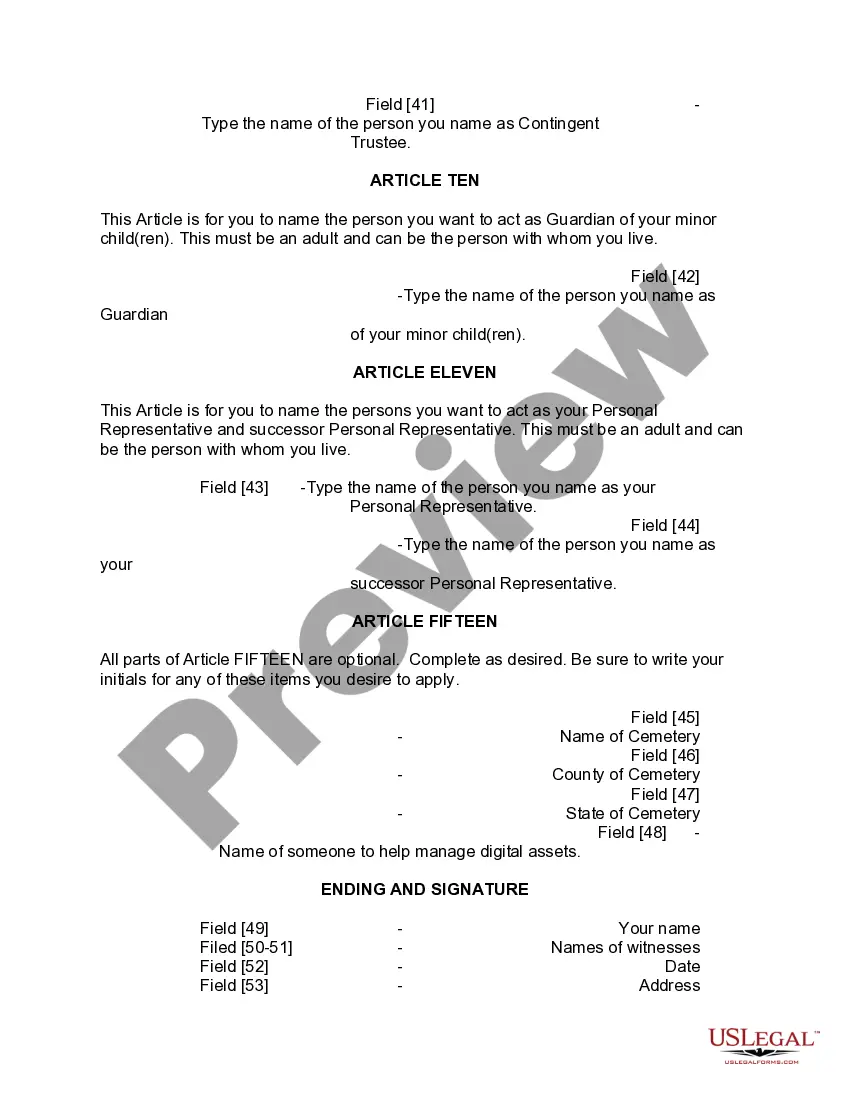
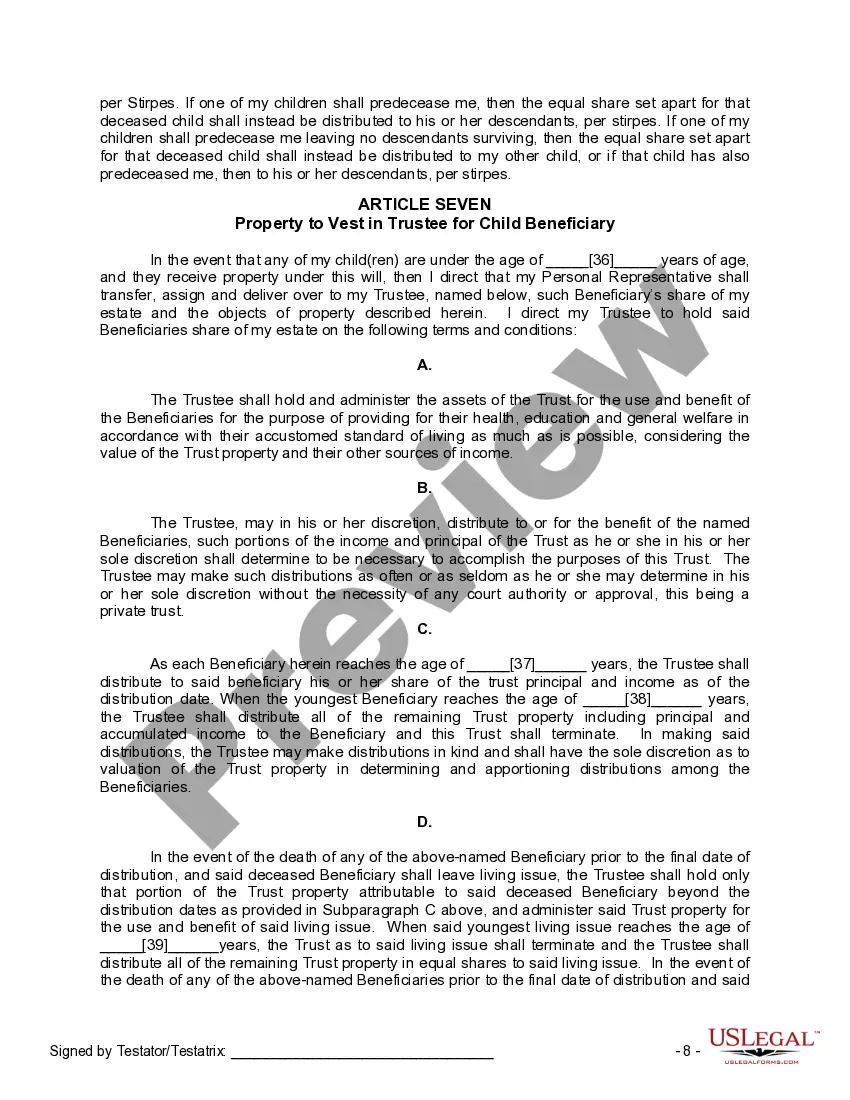
- Provisions for the appointment of trustees and personal representatives.
- Options for leaving the homestead or other property to certain individuals.



When this form is needed
This form is essential for couples who live together as partners but are not legally married. It is particularly useful in situations where they wish to ensure their minor children are taken care of according to their wishes, as well as to protect their shared assets after one partner's death. This form can also be used by couples who want to establish clear guidelines about property distribution and guardianship to avoid potential disputes among heirs in the future.
Who this form is for
- Couples living together who have children but are not married.
- Partners who want to create legally binding wills that reflect their mutual wishes.
- Individuals seeking to ensure that their assets are managed according to their desires after their passing.
- Anyone wanting to simplify the process of estate distribution for their family.
How to complete this form
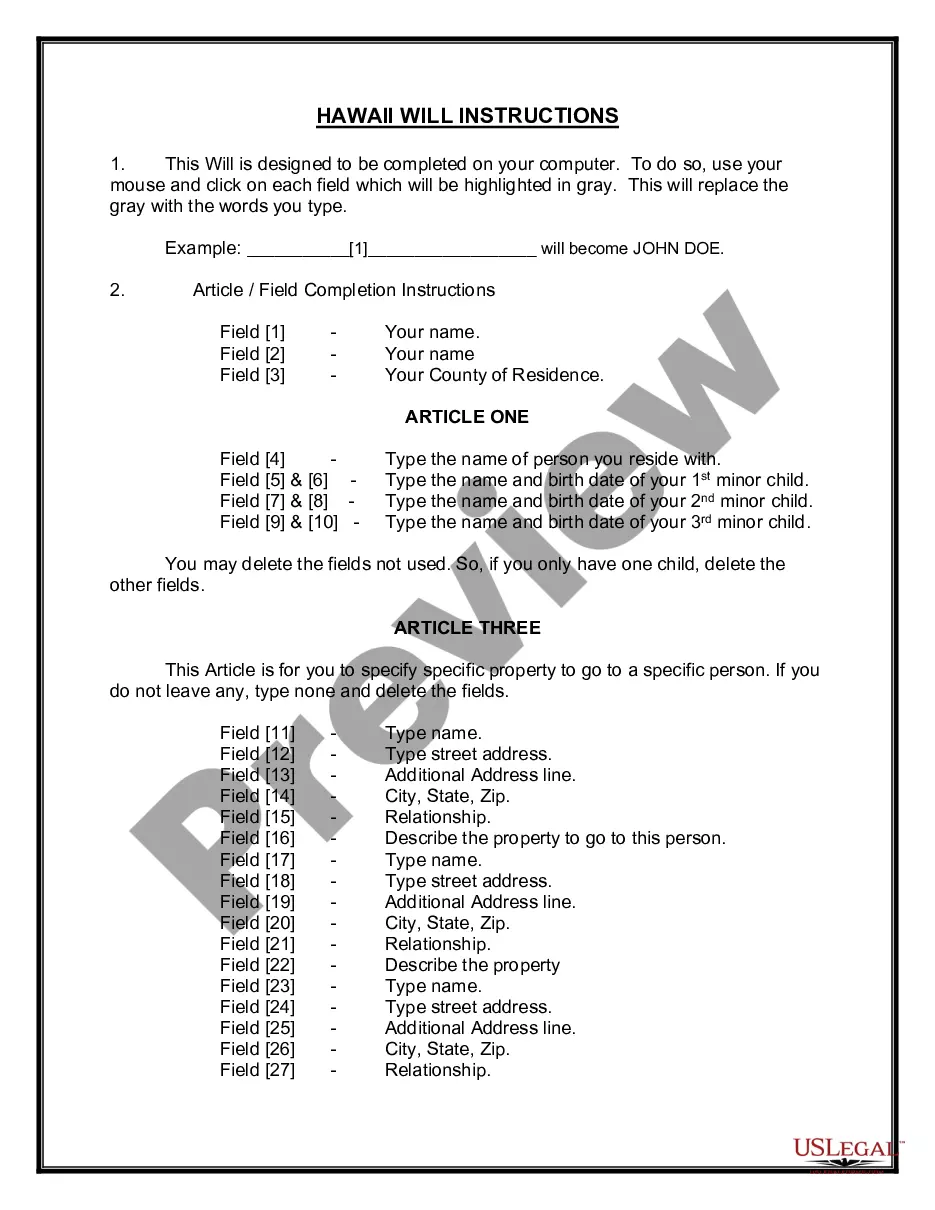
- Enter your name and the name of your partner at the top of the form.
- Fill in the details of your minor children, including their names and birthdates.
- Specify any specific property you wish to bequeath to individuals other than your partner.
- Designate a guardian for your minor children and a trustee for managing any trust associated with the assets.
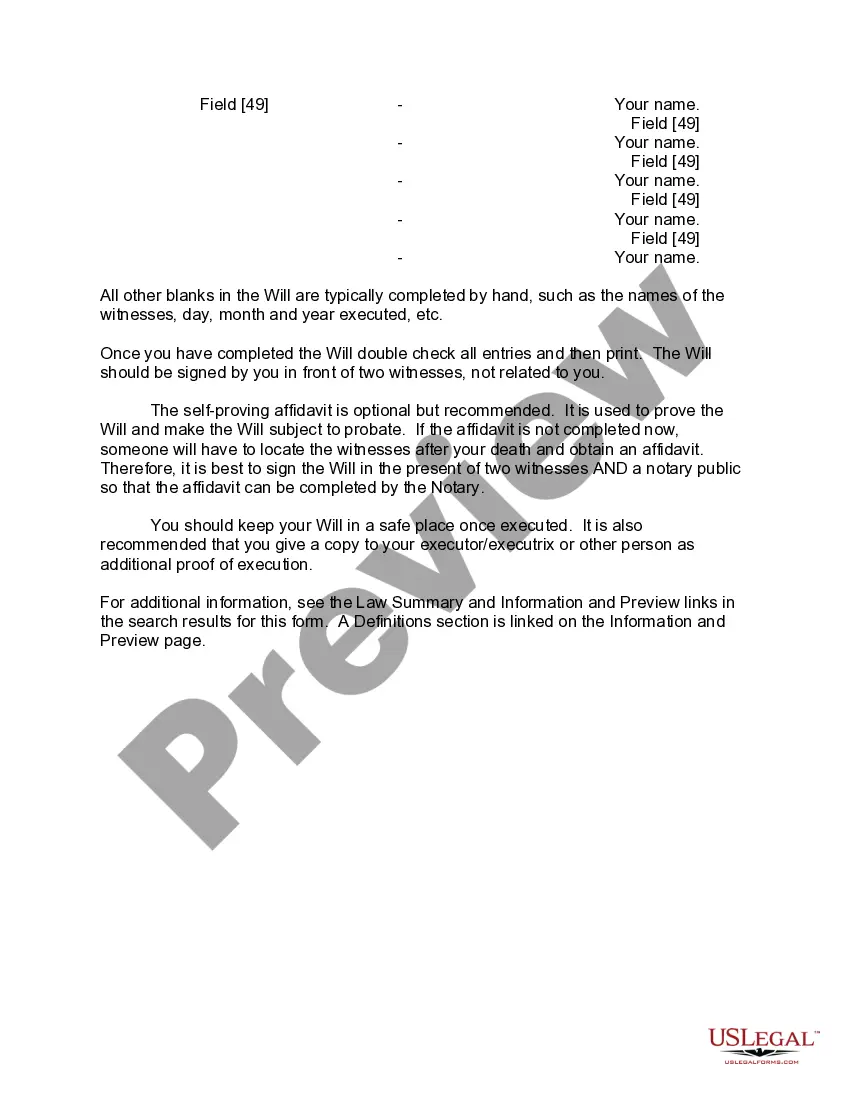
- Review your entries for accuracy, then sign the document in front of two witnesses.
- If applicable, have the form notarized to strengthen its validity in legal matters.
Is notarization required?
Yes, this form must be notarized to be legally valid. The notarization process helps establish the authenticity of the wills and can prevent disputes regarding their execution. US Legal Forms offers integrated online notarization, available 24/7 through secure video calls.
Get your form ready online
Our built-in tools help you complete, sign, share, and store your documents in one place.
Make edits, fill in missing information, and update formatting in US Legal Forms—just like you would in MS Word.
Download a copy, print it, send it by email, or mail it via USPS—whatever works best for your next step.
Sign and collect signatures with our SignNow integration. Send to multiple recipients, set reminders, and more. Go Premium to unlock E-Sign.
If this form requires notarization, complete it online through a secure video call—no need to meet a notary in person or wait for an appointment.
We protect your documents and personal data by following strict security and privacy standards.

Make edits, fill in missing information, and update formatting in US Legal Forms—just like you would in MS Word.

Download a copy, print it, send it by email, or mail it via USPS—whatever works best for your next step.

Sign and collect signatures with our SignNow integration. Send to multiple recipients, set reminders, and more. Go Premium to unlock E-Sign.

If this form requires notarization, complete it online through a secure video call—no need to meet a notary in person or wait for an appointment.

We protect your documents and personal data by following strict security and privacy standards.
Mistakes to watch out for
- Not having the wills signed in the presence of required witnesses.
- Failing to clearly identify the beneficiaries or assets in the will.
- Not reviewing the document for errors prior to signing.
- Overlooking the necessity for notarization when required by state law.
Benefits of using this form online
- Convenience of completing the form from home at your own pace.
- Editability allows you to make changes easily before finalizing.
- Access to templates drafted by licensed attorneys, ensuring legal compliance.
- Quick download allows for immediate use and implementation.
Quick recap
- This Mutual Will form is specifically designed for unmarried couples with minor children.
- It allows both parties to ensure their assets are distributed according to their wishes.
- Proper completion and notarization enhance the legal effectiveness of the wills.
- Utilizing this form online offers convenience and expert legal frameworks.
Looking for another form?

Form popularity
FAQ
Wills play a crucial role in estate planning for married couples. In the context of Hawaii Mutual Wills or Last Will and Testaments for Man and Woman living together, not Married with Minor Children, these documents specify how assets will be distributed after death. It's essential to designate beneficiaries clearly and consider guardianship for minor children in your will. Using a platform like US Legal Forms can simplify the process, ensuring that your wishes are clearly outlined and legally binding.
In Hawaii, registering a will is not necessary for it to be valid. However, having the will in a safe place where it can be easily found after your passing is essential. For those preparing Hawaii Mutual Wills or Last Will and Testaments for Man and Woman living together, not Married with Minor Children, consulting with experts or using uslegalforms can help ensure that your will is properly prepared and accessible when needed.
Yes, you can write your own will in Hawaii, and having it notarized can add an extra layer of validity. However, it is essential that the will meets the state's requirements for a valid document, such as having proper witnesses if not entirely handwritten. For couples living together, like those creating Hawaii Mutual Wills or Last Will and Testaments for Man and Woman living together, not Married with Minor Children, using a platform like uslegalforms can provide templates and guidance to ensure your will is valid and meets legal standards.
A handwritten will, also known as a holographic will, is valid in Hawaii if it is signed by the testator and clearly outlines their intentions. It should be entirely written in the testator's handwriting, which helps establish authenticity. For couples in a relationship without marriage, like those preparing Hawaii Mutual Wills or Last Will and Testaments, it’s vital to ensure this document meets the state’s requirements to avoid future disputes.
For a will to be considered valid in Hawaii, it must be in writing, signed by the testator, and witnessed by two individuals. These witnesses should not be beneficiaries of the will. Understanding these requirements is essential when creating Hawaii Mutual Wills or Last Will and Testaments for Man and Woman living together, not Married with Minor Children to ensure clarity and enforceability.
When a husband and wife have different wills, it can create confusion regarding the distribution of assets. Typically, the last valid will created will take precedence, but this may lead to disputes. In the context of Hawaii Mutual Wills or Last Will and Testaments for Man and Woman living together, not Married with Minor Children, it's crucial to ensure that both partners are on the same page about their wishes to avoid complications.
You can certainly create your will without your husband's involvement. It is your legal right to decide how you want your assets distributed. This can be highly beneficial for couples living together but not married, particularly if minor children are involved. For a structured approach, consider using uslegalforms, which offers a seamless way to draft your Last Will and Testament to reflect your specific needs.
Yes, a married man has the right to create a will without his wife's consent. He can determine how his assets will be allocated after his passing, which is essential for clear estate planning. This independence applies equally to couples who are cohabiting but not married. Crafting Hawaii Mutual Wills can address specific concerns that arise in such family dynamics.
For a will to be valid in Hawaii, it must be written, signed by the testator, and witnessed by at least two individuals who are not beneficiaries. Additionally, the testator must be at least 18 years old and of sound mind. These requirements are essential for ensuring that your Last Will and Testaments for Man and Woman living together, not Married with Minor Children, hold up in court and reflect your wishes.
To exclude your husband from a will, you must explicitly state your intentions in the legal document. It is advisable to mention that you are intentionally omitting him and outline your asset distribution plans clearly. This process can seem daunting, especially for couples living together but not married, which is why using platforms like uslegalforms can simplify creating your Last Will and Testament.