Georgia Last Will and Testament for Divorced and Remarried Person with Mine, Yours and Ours Children
About this form
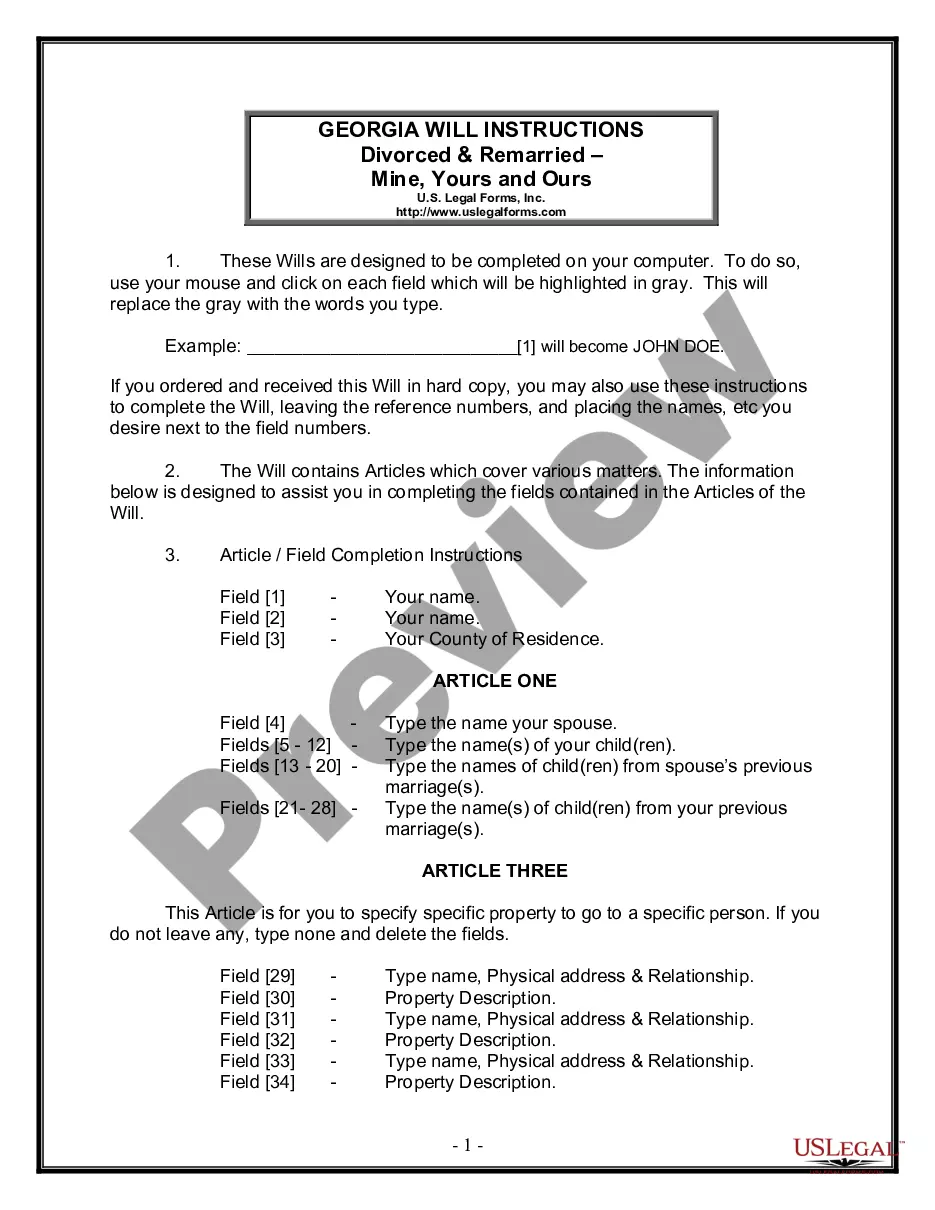
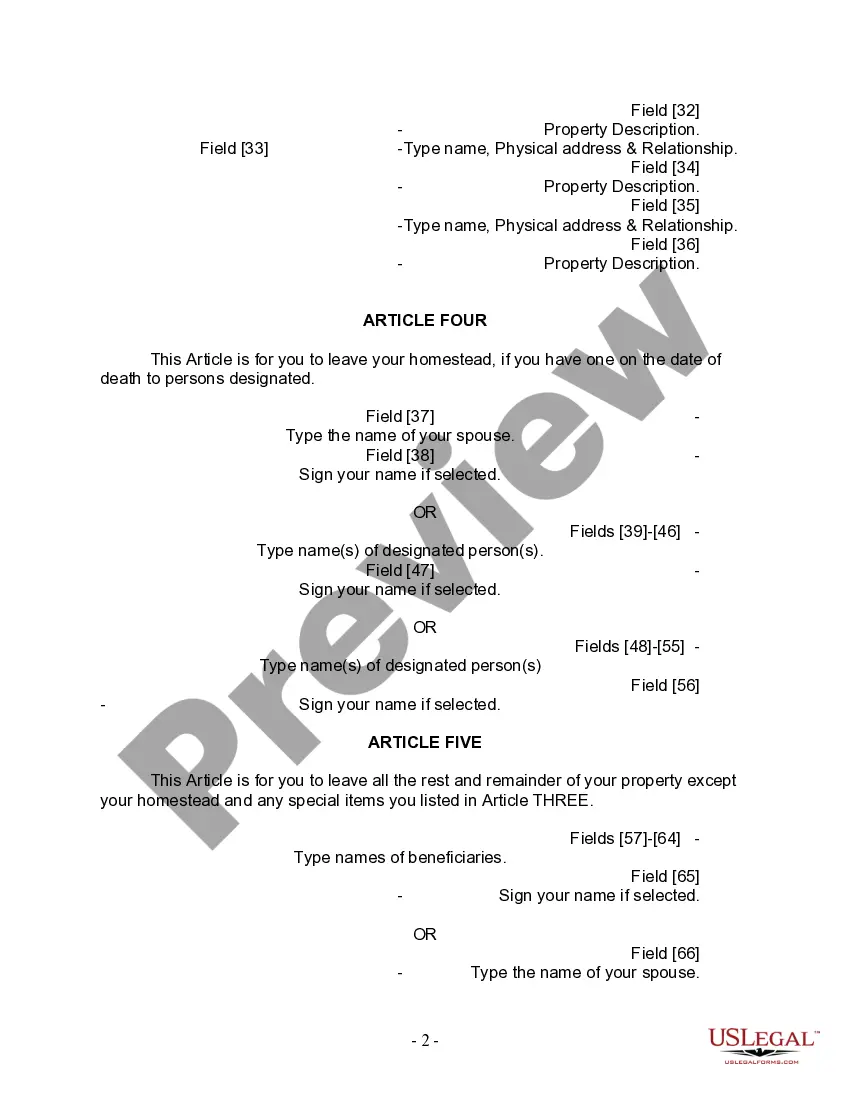
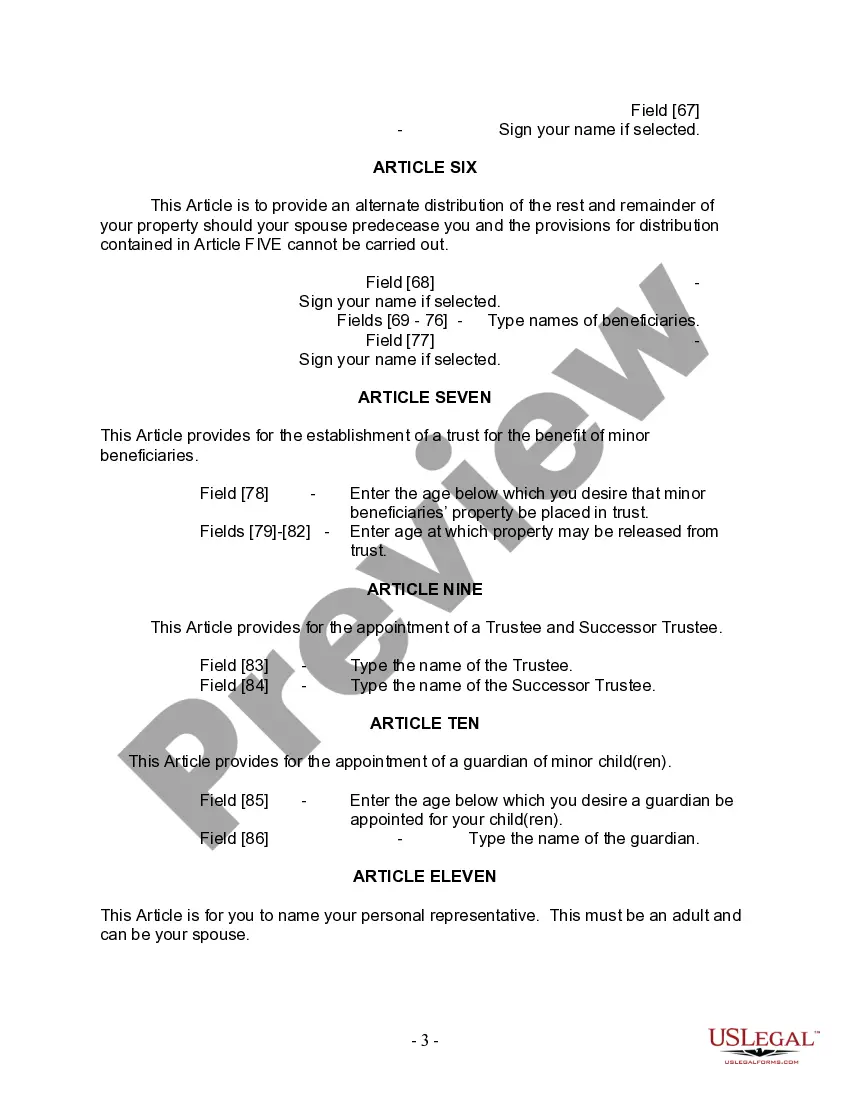
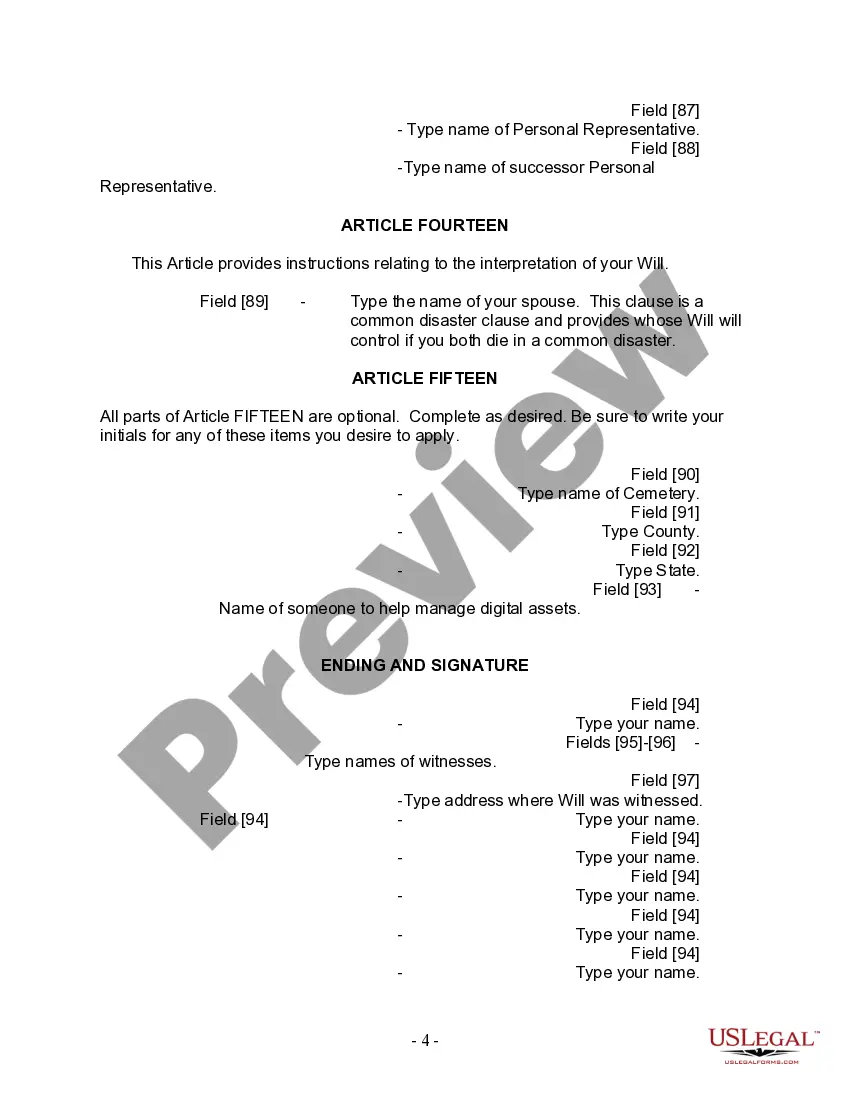
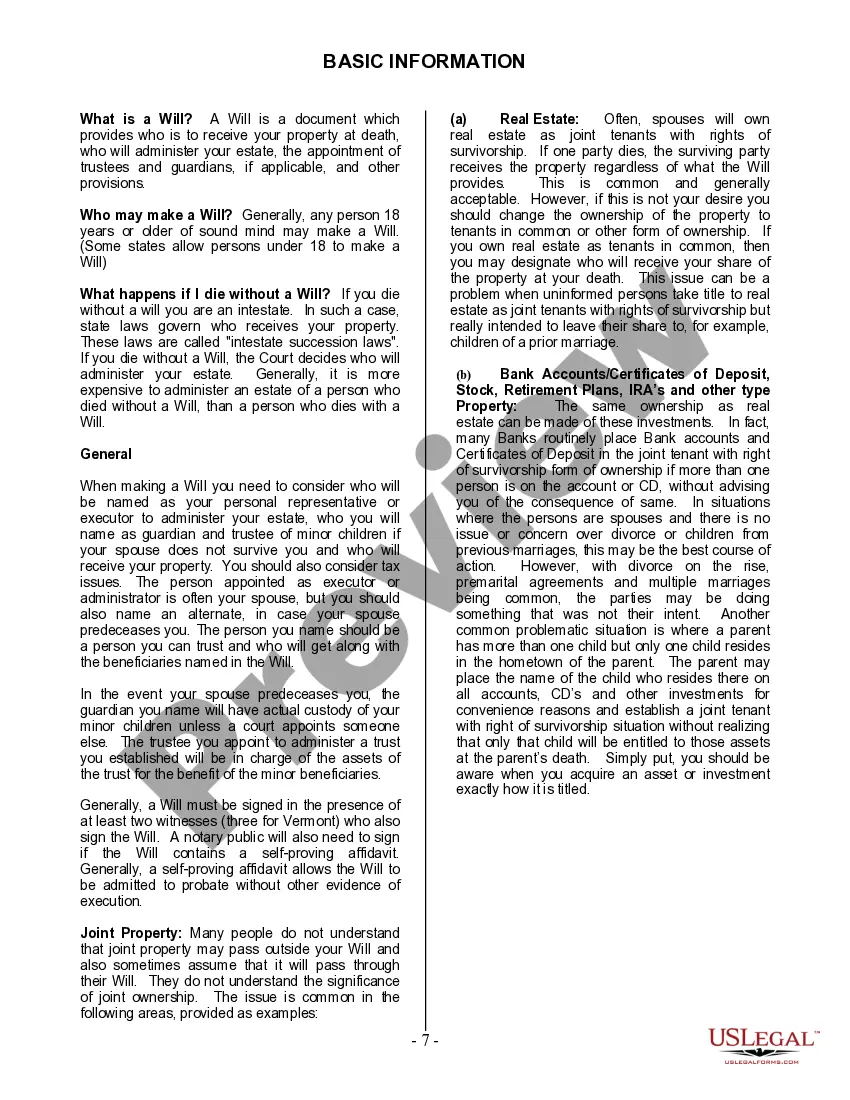
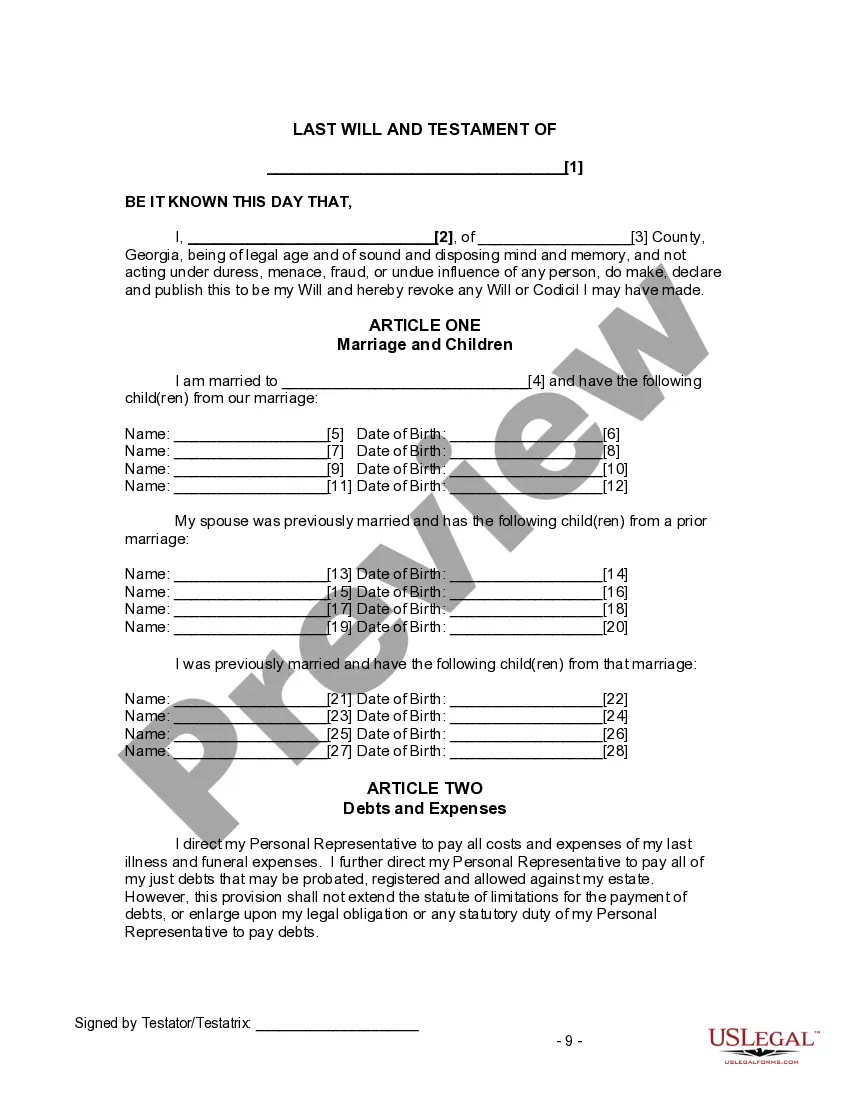
This Last Will and Testament for a Divorced and Remarried Person with Mine, Yours and Ours Children is a legally binding document that allows an individual to specify how their assets should be distributed upon their death. This version of the will is tailored for individuals who are divorced, remarried, and have children from both current and previous marriages. It ensures that all children, regardless of the marriage they belong to, are considered in estate planning decisions.
Key components of this form
- Identification of the testator (the person making the will).
- Details of the current marriage and children from all relationships.
- Provisions for the payment of debts and expenses.
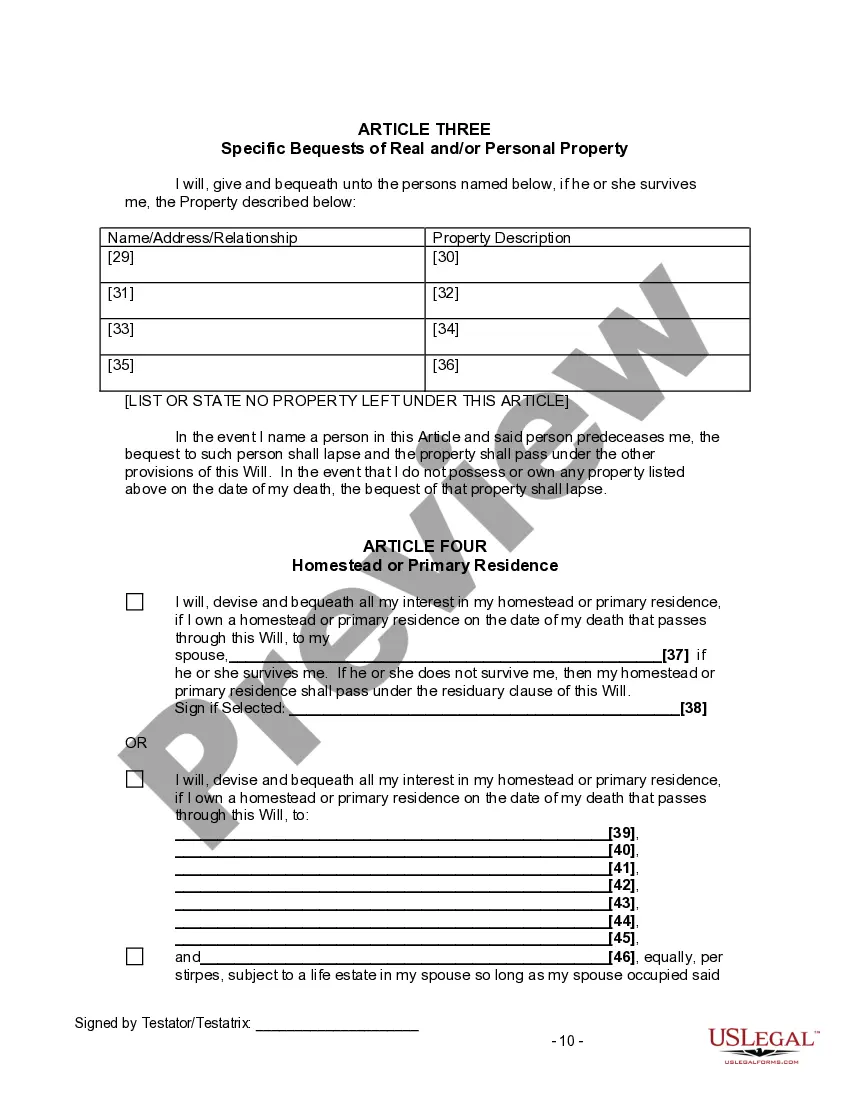
- Specific bequests of real and personal property.
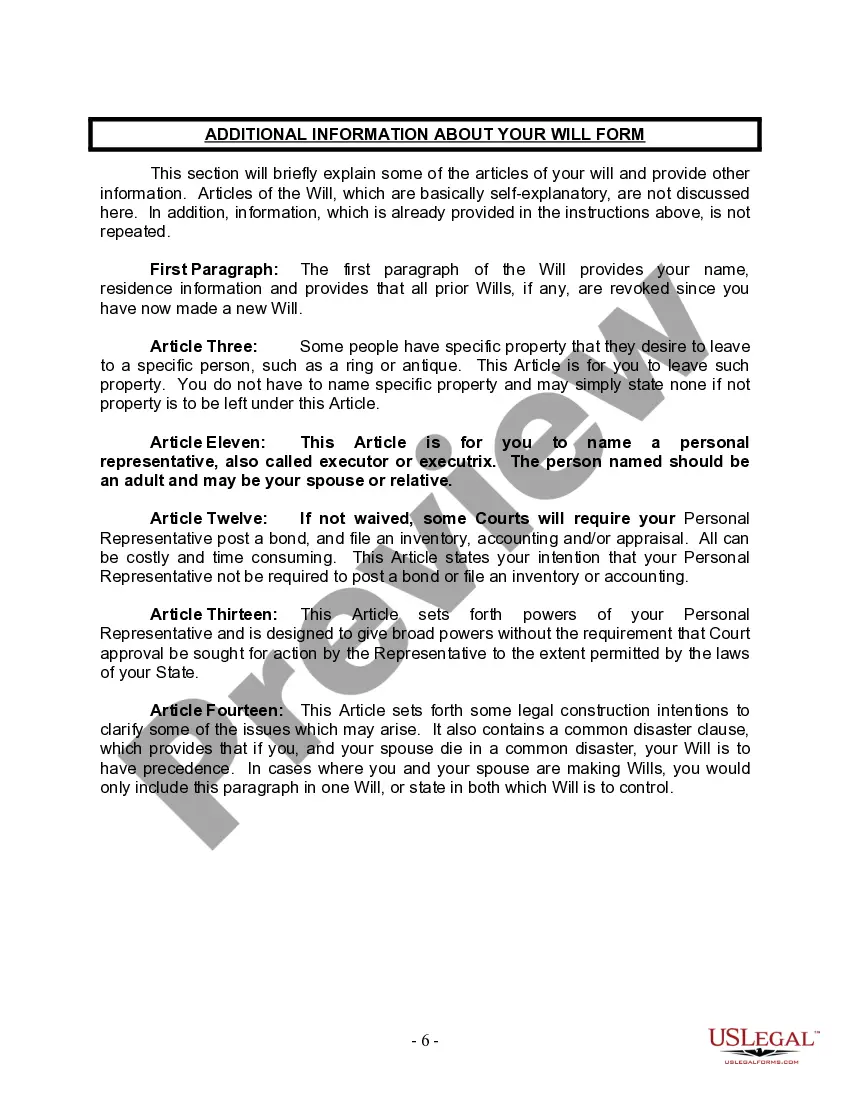
- Appointment of a personal representative or executor.
- Establishment of a trust for minor children.





Situations where this form applies
This form is applicable when a divorced individual has remarried and has children from prior marriages as well as children with their current spouse. It is ideal for organizing the distribution of assets to ensure that all children are accounted for and receive appropriate inheritances.
Who should use this form
- Individuals who are divorced and have remarried.
- Parents with children from multiple marriages.
- Anyone wanting to ensure equitable asset distribution to their children.
- Individuals looking to include provisions for trusts for minor children.
How to prepare this document
- Identify yourself as the testator with your full name and address.
- List your current spouse and all children from previous and current marriages.
- Specify how debts and expenses should be handled after your death.
- Detail specific bequests of property to individuals or organizations.
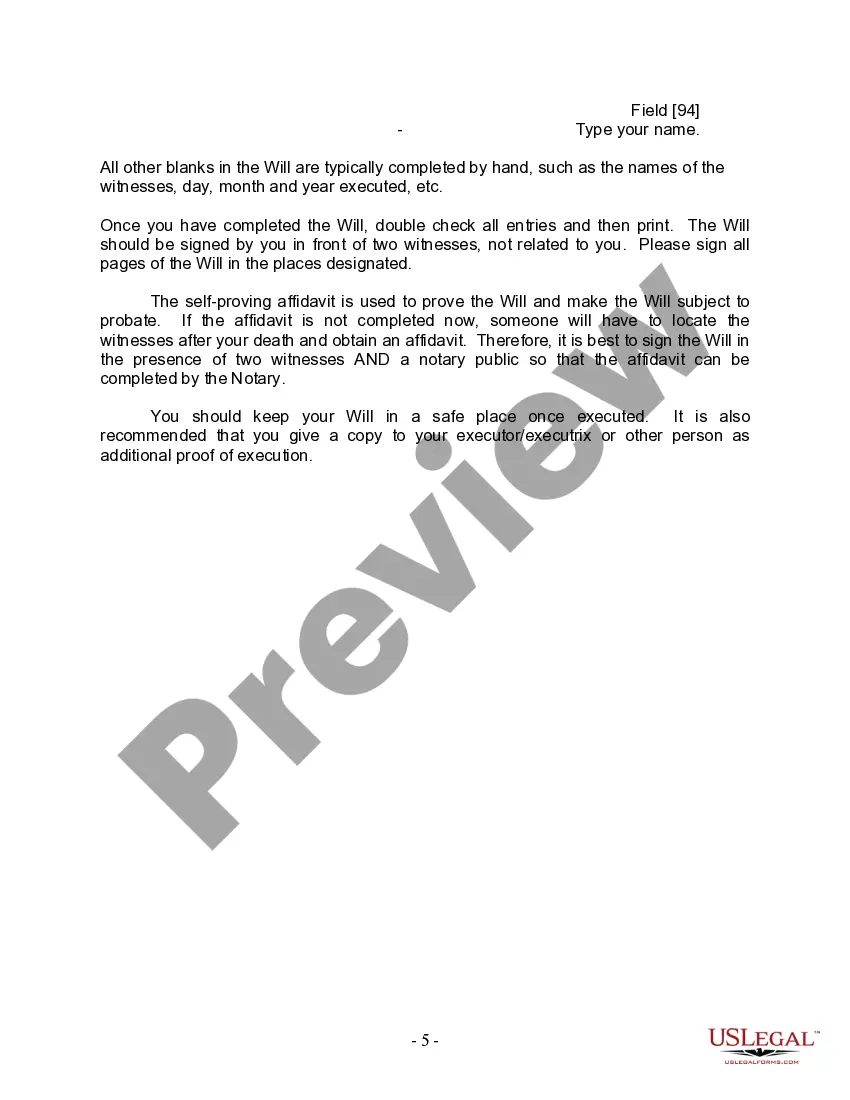
- Sign the will in the presence of two witnesses and have it notarized, if required.
Notarization requirements for this form
Yes, this form must be notarized to be legally valid. It includes a self-proving affidavit that can be completed in the presence of a notary public, ensuring the willâs authenticity and compliance with Georgia law.
Get your form ready online
Our built-in tools help you complete, sign, share, and store your documents in one place.
Make edits, fill in missing information, and update formatting in US Legal Forms—just like you would in MS Word.
Download a copy, print it, send it by email, or mail it via USPS—whatever works best for your next step.
Sign and collect signatures with our SignNow integration. Send to multiple recipients, set reminders, and more. Go Premium to unlock E-Sign.
If this form requires notarization, complete it online through a secure video call—no need to meet a notary in person or wait for an appointment.
We protect your documents and personal data by following strict security and privacy standards.

Make edits, fill in missing information, and update formatting in US Legal Forms—just like you would in MS Word.

Download a copy, print it, send it by email, or mail it via USPS—whatever works best for your next step.

Sign and collect signatures with our SignNow integration. Send to multiple recipients, set reminders, and more. Go Premium to unlock E-Sign.

If this form requires notarization, complete it online through a secure video call—no need to meet a notary in person or wait for an appointment.

We protect your documents and personal data by following strict security and privacy standards.
Common mistakes
- Forgetting to have the will signed by required witnesses.
- Failing to adequately detail specific bequests leading to confusion.
- Neglecting to update the will after significant life changes.
Why complete this form online
- Convenience of downloading and filing the form at your own pace.
- Editability allows you to customize the document before finalizing it.
- Reliability of receiving professionally drafted legal templates.
Key takeaways
- This will is specifically designed for individuals who are divorced and remarried with children from multiple relationships.
- It outlines how to handle debts, specific property bequests, and appoints a personal representative.
- Notarization is required for the will to be valid under Georgia law.
Looking for another form?

Form popularity
FAQ
You can create a will without a lawyer in Georgia by following the state's requirements, allowing you to craft your Georgia Last Will and Testament for Divorced and Remarried Persons with Mine, Yours and Ours Children. Start by clearly writing down your wishes regarding asset distribution. Utilize trusted online resources, such as US Legal Forms, for templates and guidance to ensure you include essential elements like signatures and witness requirements. This approach can empower you to take control of your estate planning without legal fees.
Handwritten wills, also known as holographic wills, can be valid in Georgia if they meet specific criteria. Your handwritten Georgia Last Will and Testament for Divorced and Remarried Persons with Mine, Yours and Ours Children must be entirely in your handwriting and signed by you. It's prudent to ensure that your intentions are clear and that you meet the state’s legal requirements. Using a platform like US Legal Forms can help you format your will properly while ensuring it adheres to the law.
In Georgia, a will does not need to be notarized to be valid, but there are benefits to doing so. Including a notary can help in the probate process by adding a layer of authenticity to your Georgia Last Will and Testament for Divorced and Remarried Persons with Mine, Yours and Ours Children. A notarized will can also help reduce disputes among family members. It's always a good idea to consult legal resources or experts to understand the best approach for your situation.
Yes, you can write your own will in Georgia, which is often recommended for creating a Georgia Last Will and Testament for Divorced and Remarried Persons with Mine, Yours and Ours Children. However, it’s vital to follow the legal requirements to ensure its validity. Consider using resources like US Legal Forms to guide you through the process, helping you avoid potential pitfalls and ensuring your wishes are clearly articulated.
To create a valid Georgia Last Will and Testament for Divorced and Remarried Persons with Mine, Yours and Ours Children, your will must meet five requirements. First, you must be at least 14 years old and of sound mind. Second, the will should be written and signed by you. Third, you need two witnesses who are over 14 years old to sign it. Fourth, the witnesses must see you sign the will. Lastly, it is essential to ensure that your will expresses your intentions clearly.
Marriage does not automatically override a will in Georgia. However, if a new will is drafted after marriage, it can replace any prior will. It's essential to ensure that your Georgia Last Will and Testament for Divorced and Remarried Person with Mine, Yours and Ours Children accurately reflects your intentions, especially after significant life changes like marriage.
Yes, in Georgia, a will must be filed with the probate court after someone's death. This process allows for the validation and execution of the will. Creating a comprehensive Georgia Last Will and Testament for Divorced and Remarried Person with Mine, Yours and Ours Children ensures that your intentions are clearly documented, making the filing process smoother for your loved ones.
In general, your spouse in Georgia is not entitled to inherit gifts received specifically as an inheritance. Your property will be distributed according to your Georgia Last Will and Testament for Divorced and Remarried Person with Mine, Yours and Ours Children, provided you have one. If you pass away without a will, the laws of intestacy will determine the distribution of your estate, potentially including your spouse.
In Georgia, marriage does not automatically revoke a will. However, if you create a new Georgia Last Will and Testament for Divorced and Remarried Person with Mine, Yours and Ours Children after marrying, it supersedes any previous wills. It is crucial to review your estate plan post-marriage to ensure your wishes are met and adequately reflect your current situation.
If your name is not on a deed but you are married in Georgia, you still have rights to the property. Under marital property laws, a spouse has an interest in the estate, even if not directly listed on the deed. This is particularly significant when drafting a Georgia Last Will and Testament for Divorced and Remarried Person with Mine, Yours and Ours Children, as it ensures that your rights are protected in estate planning.