Georgia Last Will and Testament for Married person with Adult Children
Overview of this form
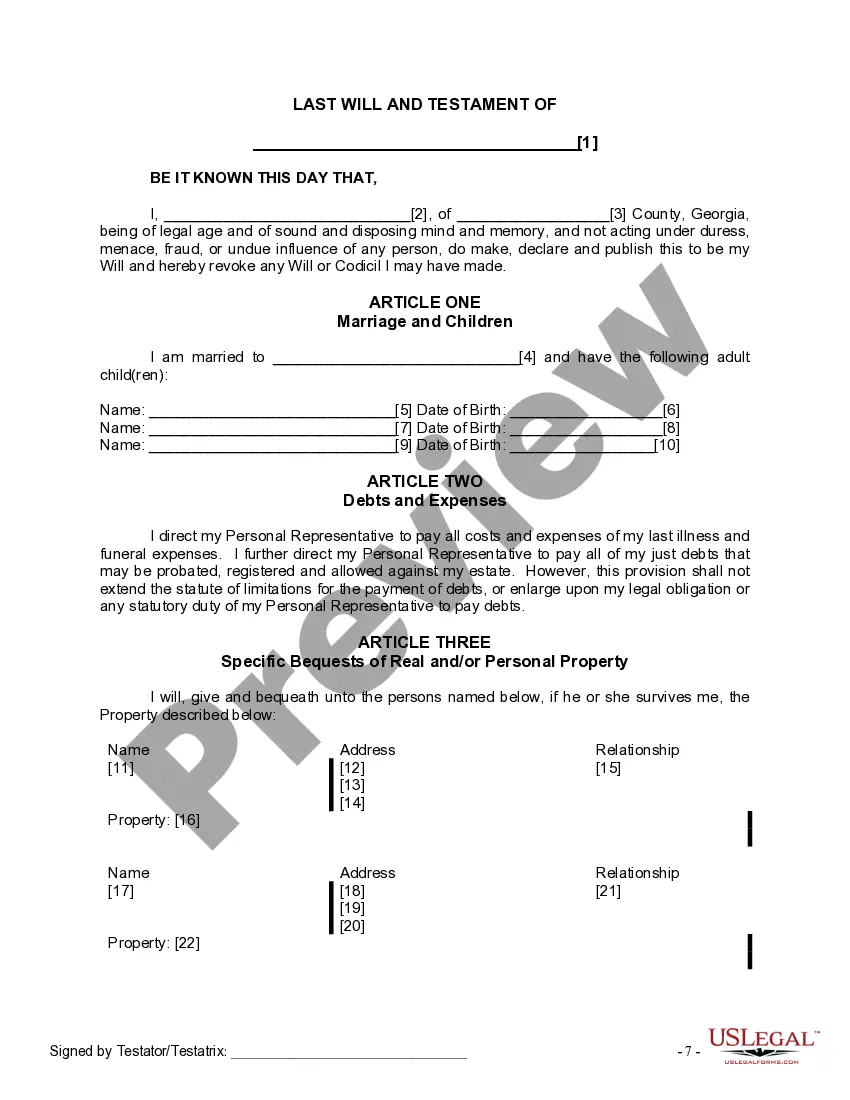
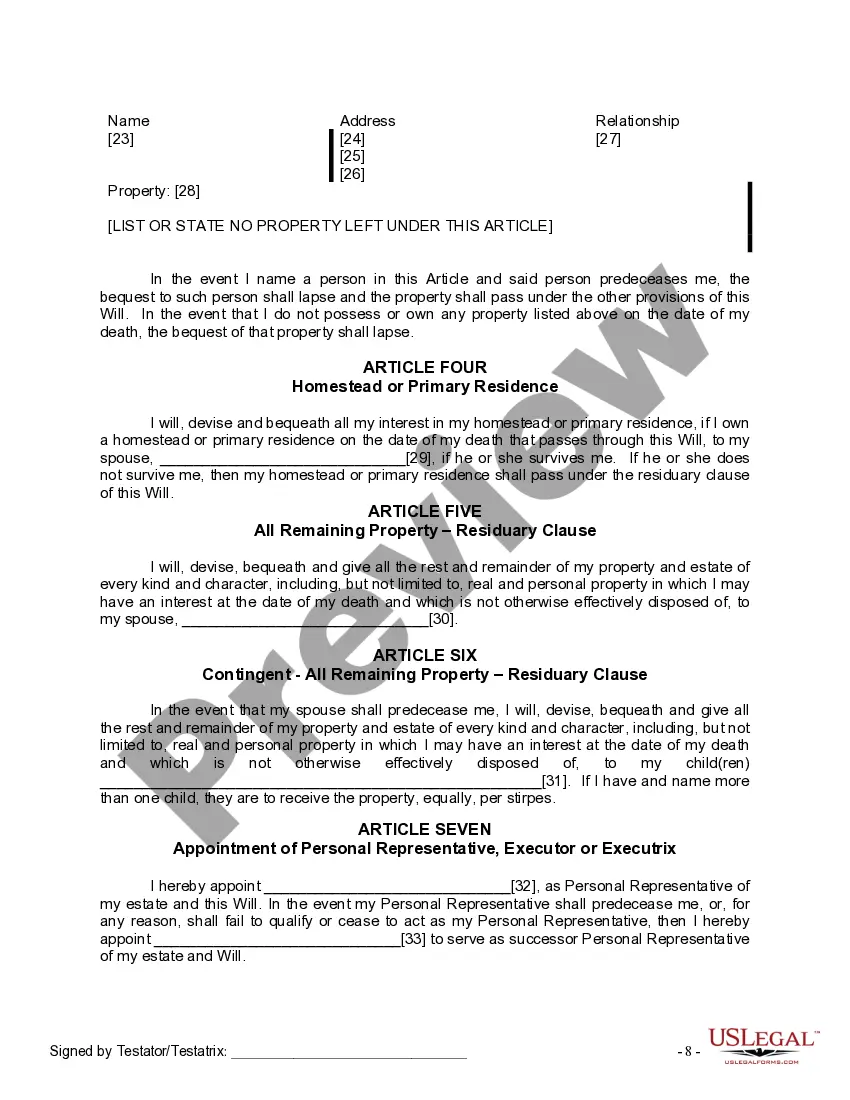
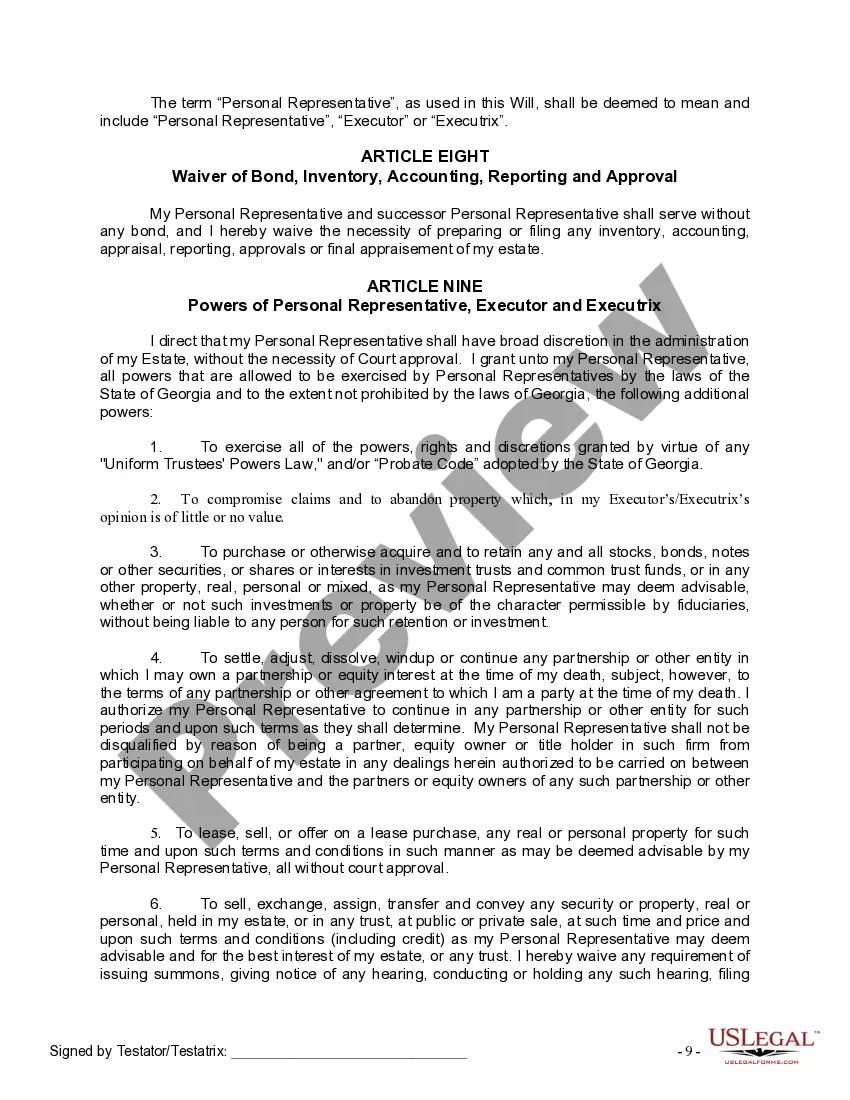
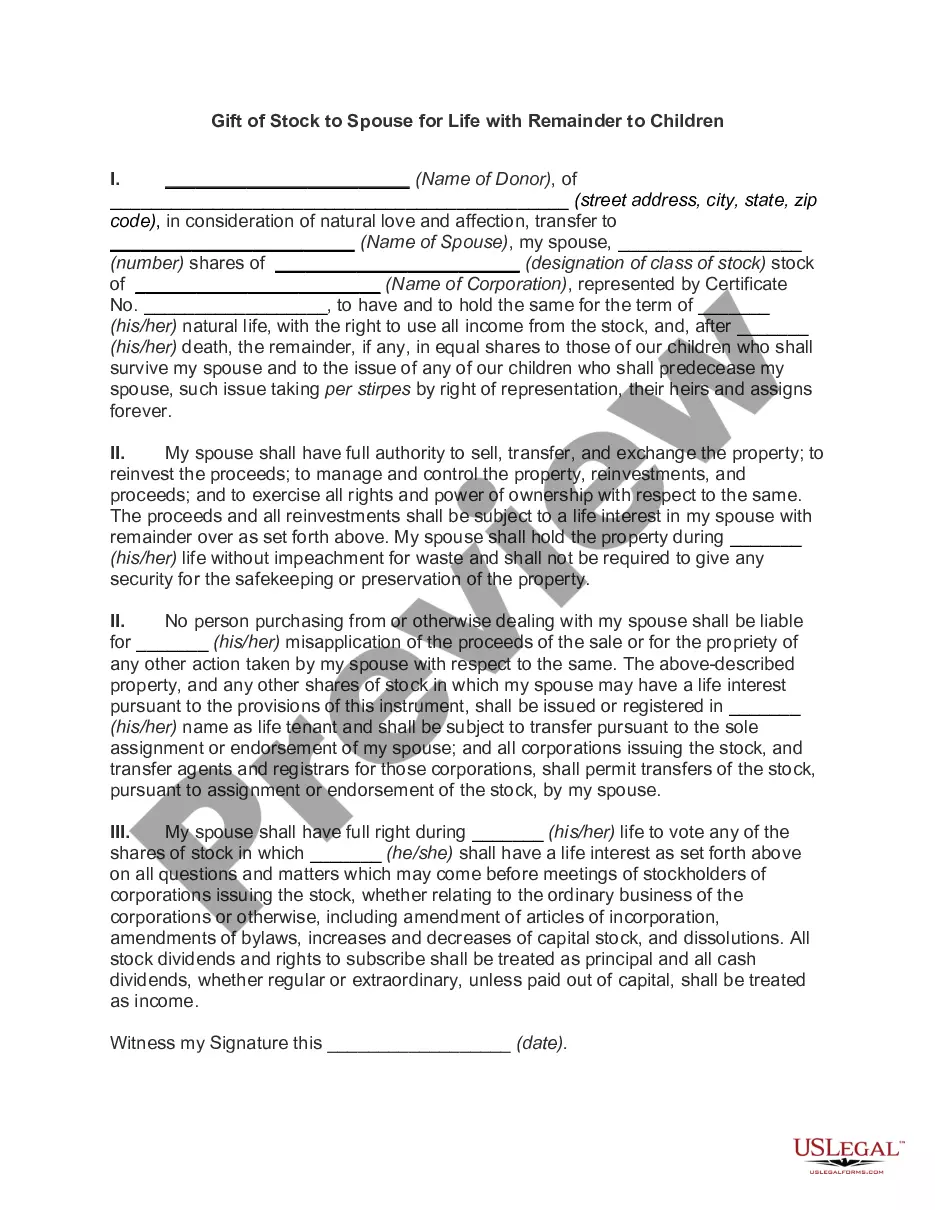
This Last Will and Testament is a legal document specifically designed for a married individual with adult children. It outlines how your assets will be distributed after your passing, names a personal representative to execute your wishes, and provides for your spouse and children. Unlike simpler wills, this form incorporates specific provisions that detail various bequests and cover complex family situations, ensuring your intentions are clearly articulated and legally binding.
Key components of this form
- Appointment of a personal representative to manage your estate.
- Specific bequests outlining who receives particular property.
- Provisions for the distribution of the remaining assets after debts are settled.
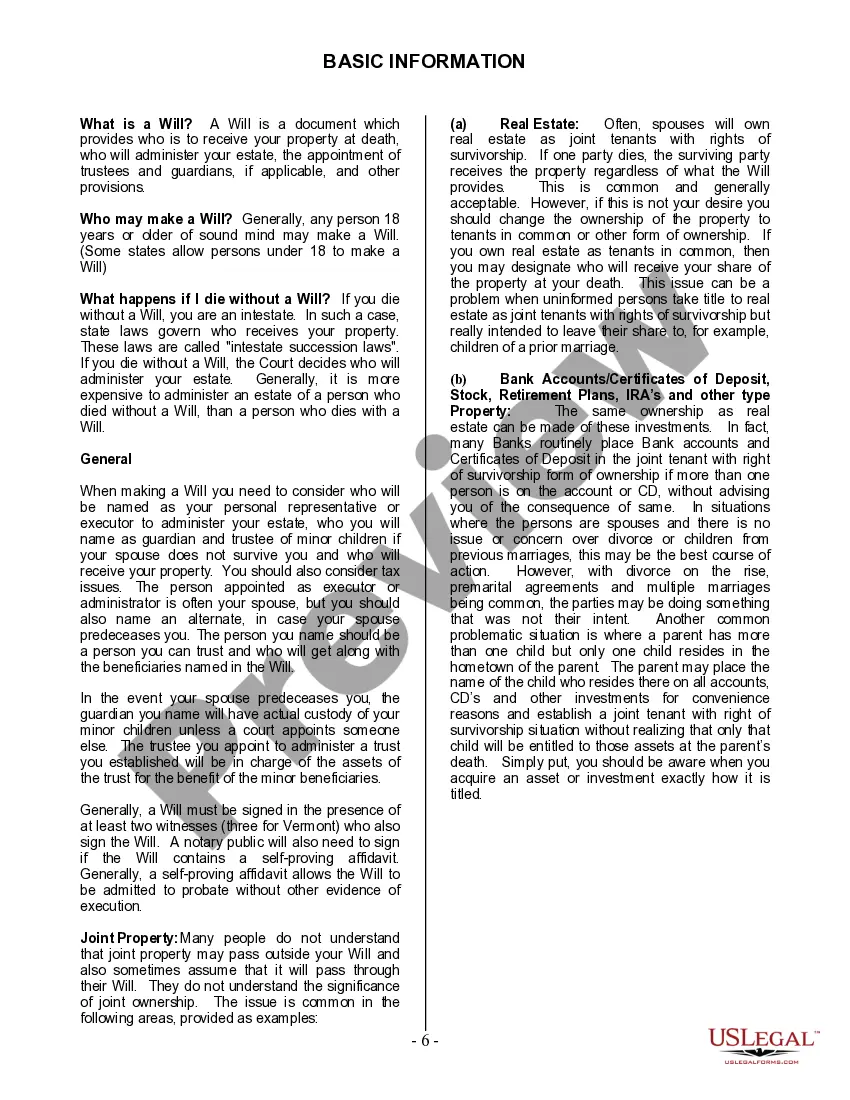
- Clauses addressing guardianship and management of assets for your children.
- Steps for signing the will in the presence of witnesses for legal validity.





When to use this document
This form should be used when a married person with adult children wishes to establish a clear plan for the distribution of their estate. It is particularly important if you have specific requests for asset distribution, wish to provide for your spouse and children, or want to appoint an executor to handle your estate according to your wishes. Having a will reduces ambiguity, helping to prevent disputes among family members after your death.
Intended users of this form
- Married individuals with adult children looking to specify the distribution of their assets.
- Those who want to ensure their spouse is provided for after their passing.
- Individuals wanting to outline specific gifts and responsibilities to heirs.
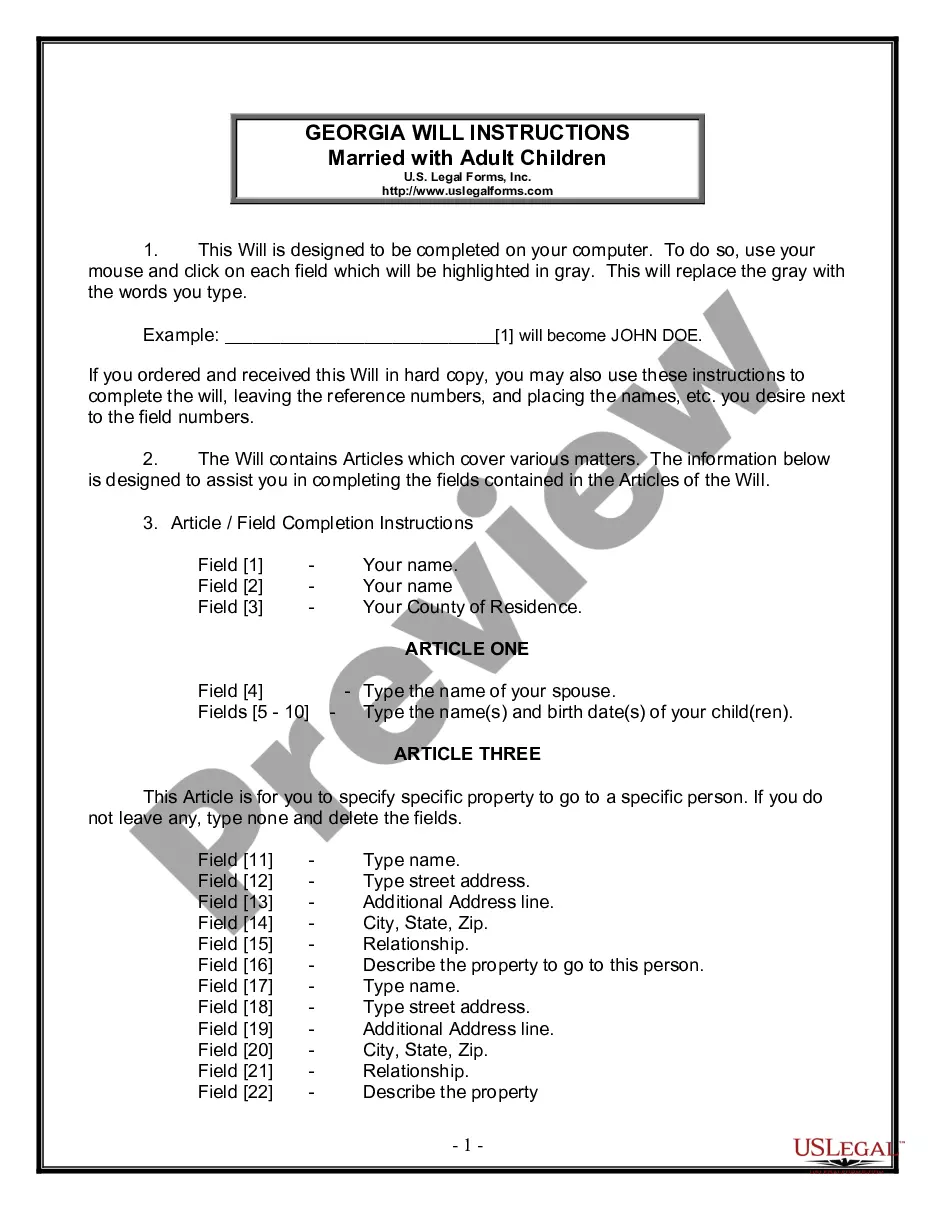
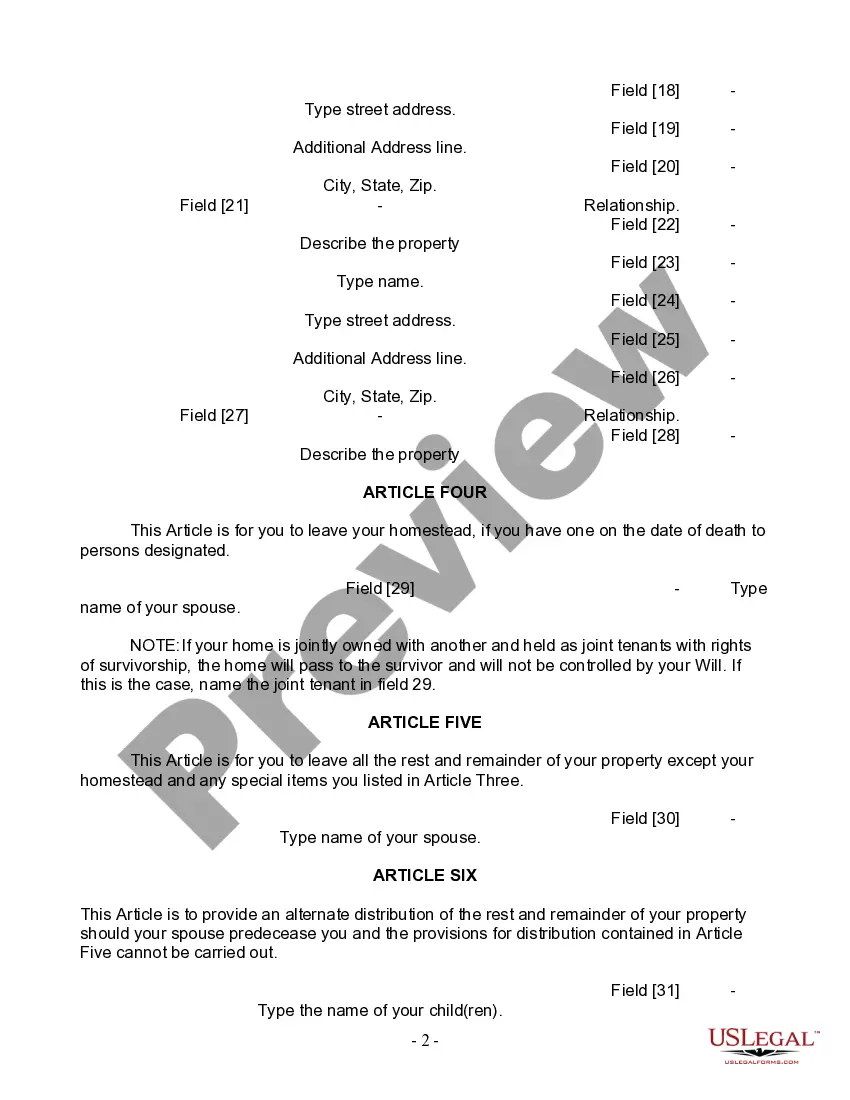
How to complete this form
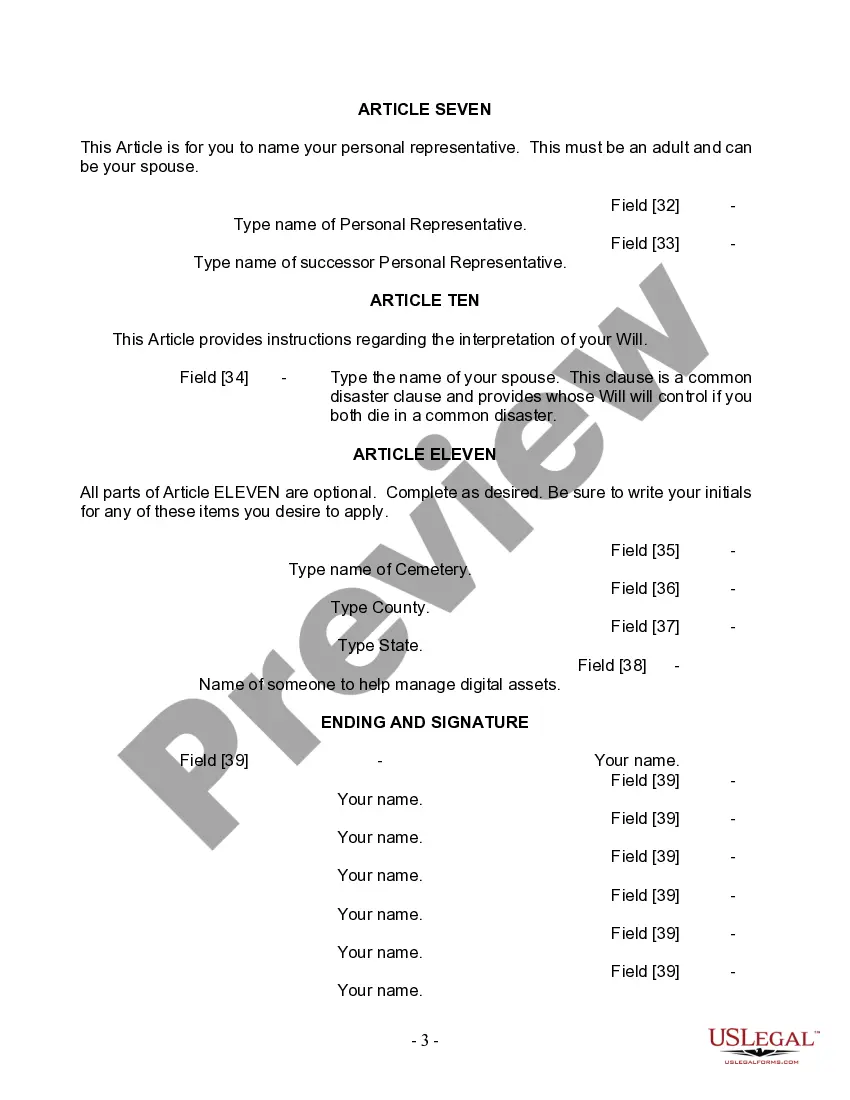
- Enter your full name and county of residence in the designated fields.
- List your spouse's name and your adult children's names along with their birthdates.
- Specify any specific property you wish to bequeath to particular individuals.
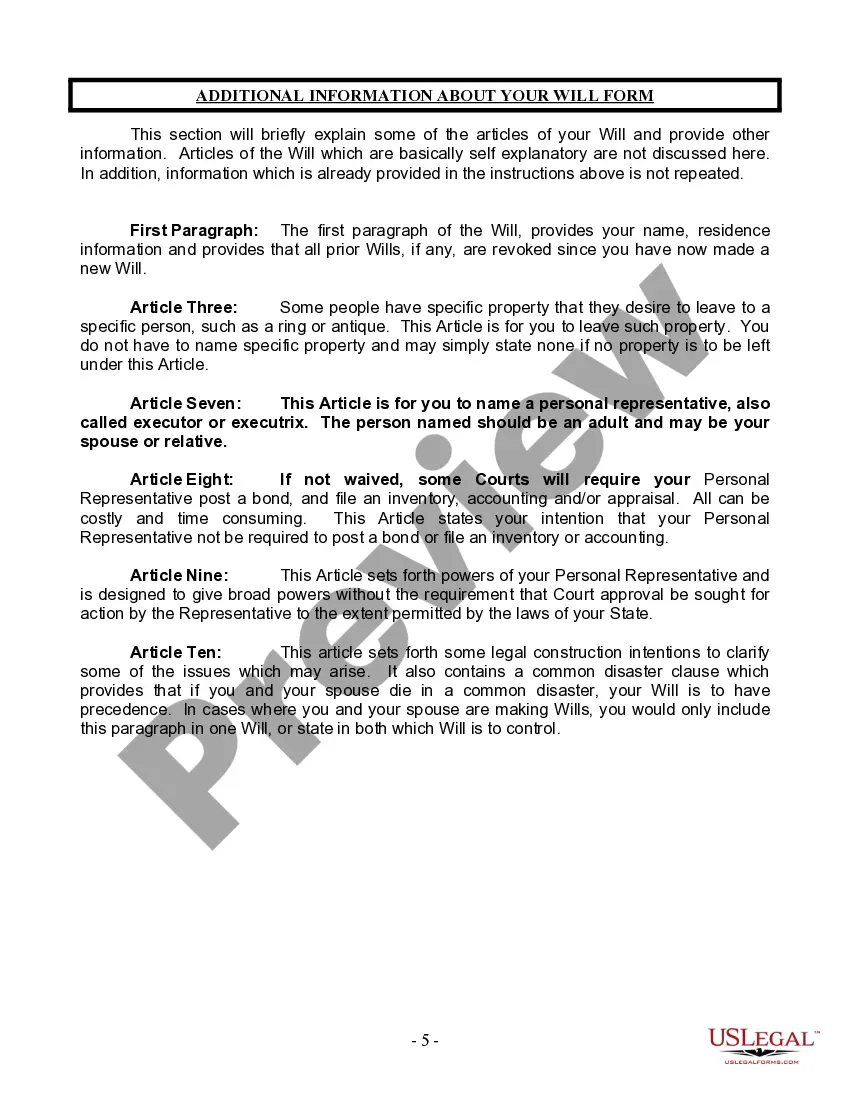
- Choose a personal representative to administer your estate and an alternate in case the first cannot serve.
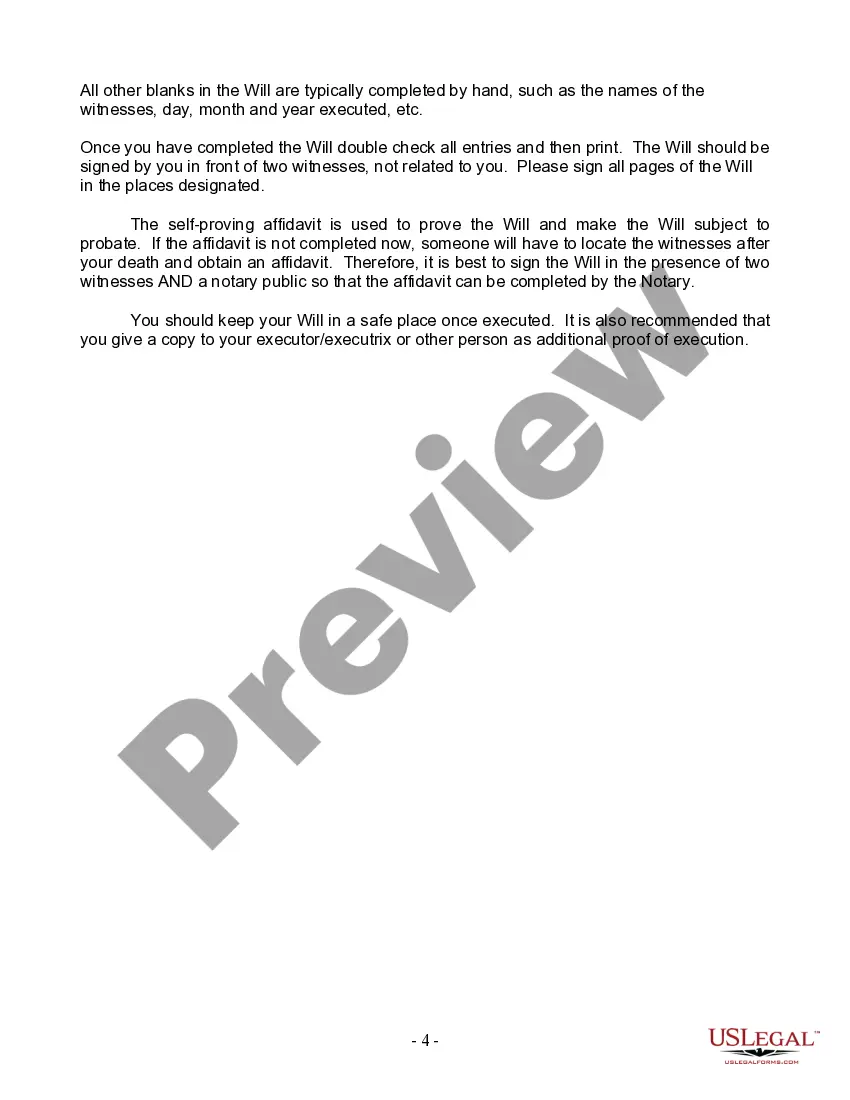
- Sign the will in front of two witnesses and have it notarized if required by your state.
Notarization guidance
Yes, this form must be notarized to be legally valid. It is recommended to sign the will in the presence of two witnesses and a notary public to simplify the process of proving the will's validity and making it subject to probate. US Legal Forms offers integrated online notarization services for easy access.
Get your form ready online
Our built-in tools help you complete, sign, share, and store your documents in one place.
Make edits, fill in missing information, and update formatting in US Legal Forms—just like you would in MS Word.
Download a copy, print it, send it by email, or mail it via USPS—whatever works best for your next step.
Sign and collect signatures with our SignNow integration. Send to multiple recipients, set reminders, and more. Go Premium to unlock E-Sign.
If this form requires notarization, complete it online through a secure video call—no need to meet a notary in person or wait for an appointment.
We protect your documents and personal data by following strict security and privacy standards.

Make edits, fill in missing information, and update formatting in US Legal Forms—just like you would in MS Word.

Download a copy, print it, send it by email, or mail it via USPS—whatever works best for your next step.

Sign and collect signatures with our SignNow integration. Send to multiple recipients, set reminders, and more. Go Premium to unlock E-Sign.

If this form requires notarization, complete it online through a secure video call—no need to meet a notary in person or wait for an appointment.

We protect your documents and personal data by following strict security and privacy standards.
Mistakes to watch out for
- Failing to have the will signed by witnesses.
- Not specifying how debts and expenses should be handled.
- Leaving out the appointment of an alternate personal representative.
- Failing to update the will after significant life changes, such as divorce or the birth of a child.
Why use this form online
- Convenience of filling out the form at your own pace from home.
- Editability allows you to make changes quickly and easily.
- Access to professionally drafted legal language to ensure clarity and compliance.
Looking for another form?
Form popularity
FAQ
In Georgia, a last will and testament does not need to be notarized to be valid, but notarizing it can help streamline the probate process. This can serve as evidence that the will was executed properly and can prevent disputes among heirs. If you decide to create your Georgia Last Will and Testament for a Married person with Adult Children, consider including notarization for added assurance.
Yes, you can write your own Georgia Last Will and Testament for a Married person with Adult Children and have it notarized. While notarization is not a requirement, doing so can add an extra layer of verification to the document. Utilizing online resources can help you create a will that meets all legal criteria, thereby ensuring your wishes are clear and enforceable.
For a Georgia Last Will and Testament for a Married person with Adult Children to be valid, it must be in writing and signed by the testator. Additionally, it should be witnessed by at least two individuals who do not stand to benefit from the will. Meeting these requirements is crucial, as invalid documents can lead to disputes among heirs and can delay the distribution of your estate.
In Georgia, several factors can void a will, including lack of proper execution or if the testator lacked mental capacity when signing. Additionally, if a will is revoked by a new will or through physical destruction, it also becomes invalid. Understanding these factors is essential while drafting your Georgia Last Will and Testament for a Married person with Adult Children. This helps ensure your wishes are honored after your passing.
Disinheriting a spouse in Georgia is legally complex and not straightforward. Under Georgia law, spouses have certain rights to inherit from one another unless explicitly stated in a will. Your Georgia Last Will and Testament for Married person with Adult Children should clearly outline your intentions if you consider disinheritance. Engaging with a legal expert can ensure you meet the necessary legal requirements and protect your wishes.
No, a last will and testament does not override a marriage in Georgia. Your Georgia Last Will and Testament for Married person with Adult Children must consider your spouse's rights, particularly regarding distribution of property. While you can define your wishes, the law recognizes marital rights that may affect those terms. To navigate these complexities, enlisting the help of a qualified legal professional is beneficial.
Yes, you can exclude your spouse from your Georgia Last Will and Testament for Married person with Adult Children. It is important to be explicit in your will if you choose to do this, as it can lead to disputes. However, exclusion may not prevent your spouse from claiming an elective share, so consulting a legal expert is advised. Taking the right steps can ensure your wishes are honored.
Marriage does not automatically invalidate your Georgia Last Will and Testament for Married person with Adult Children. However, if you create a will before marriage, it may not reflect your spouse's rights. In Georgia, any will made prior to your marriage remains valid, but it’s wise to review and possibly update your will after the wedding. Ensuring that your will aligns with your current marital status is essential for clarity.
You do not have to include your spouse in your Georgia Last Will and Testament for Married person with Adult Children. However, many people choose to designate their spouse as a primary beneficiary to ensure their loved one is provided for. If you decide to exclude your spouse, it's crucial to clearly communicate your intentions to prevent misunderstandings later. Consulting with a legal expert can help you navigate the best course of action.
In Georgia, you generally do not have to file your Georgia Last Will and Testament for Married person with Adult Children with the court while you are alive. However, once you pass away, your will must be submitted to probate. This process ensures that your wishes, as outlined in your will, are executed correctly. To simplify creating and managing your will, consider using the US Legal Forms platform, which offers easy access to templates and legal resources tailored for your needs.