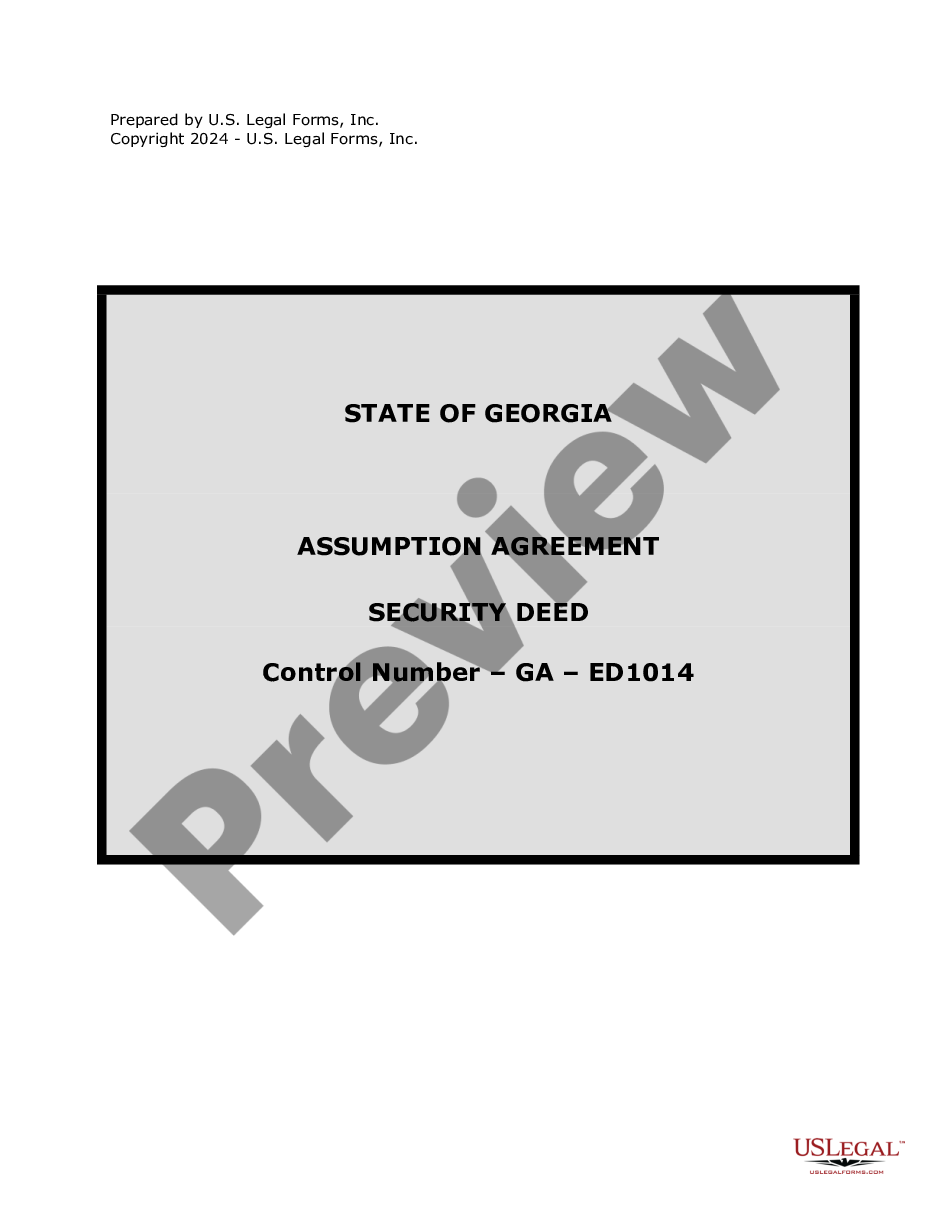
Georgia Assumption Agreement of Security Deed and Release of Original Mortgagors
About this form
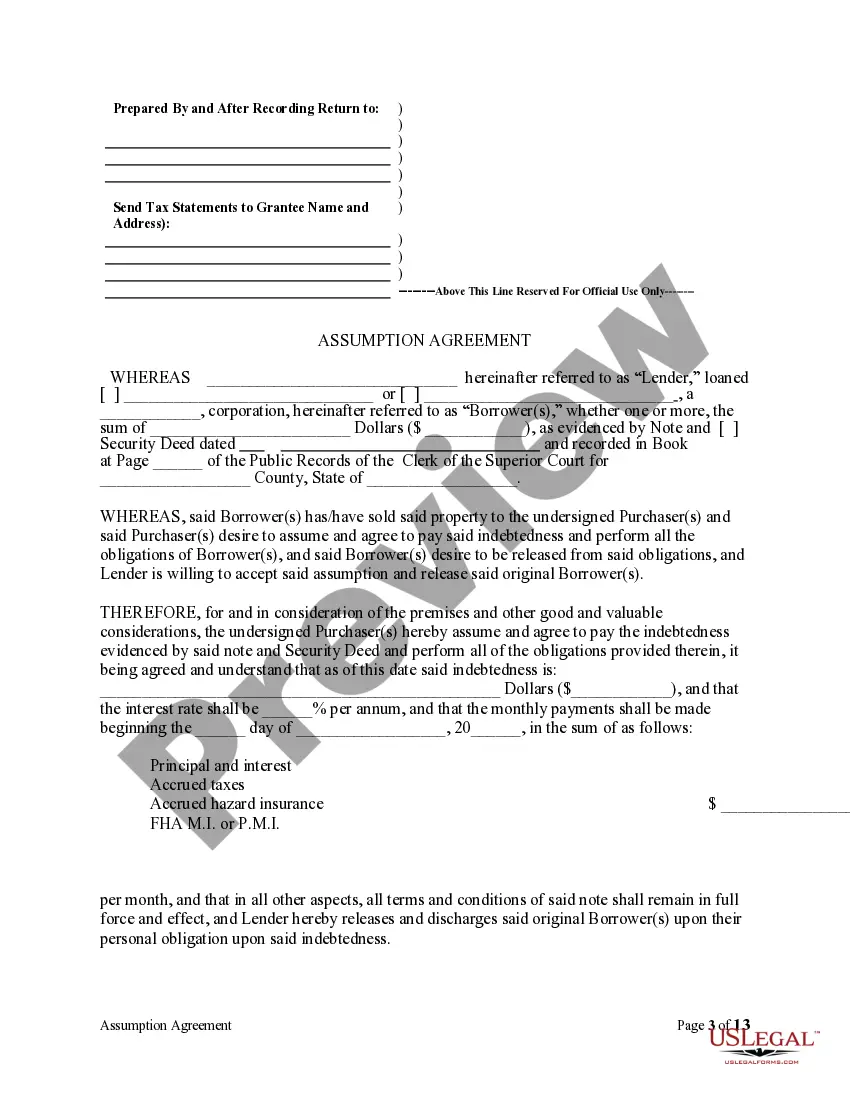
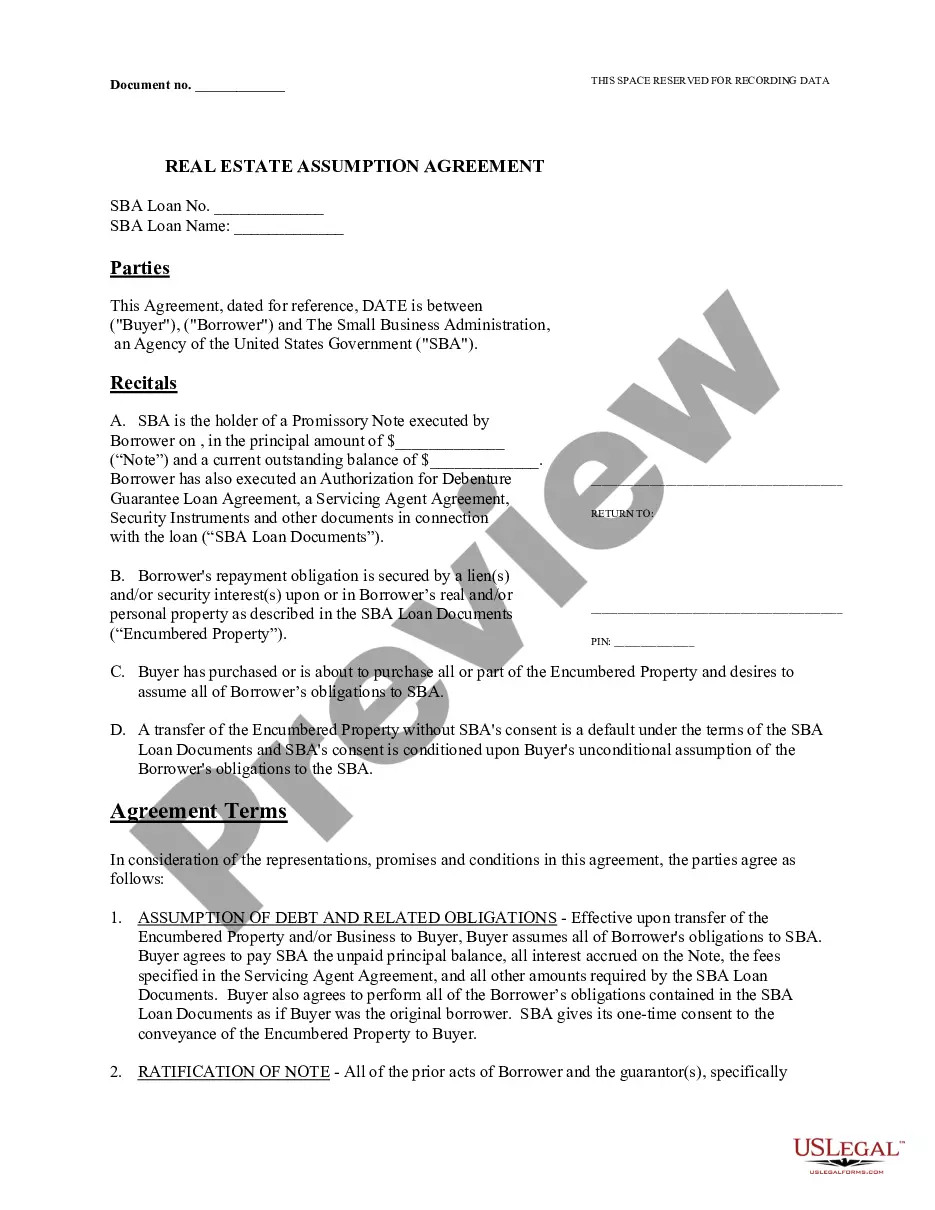
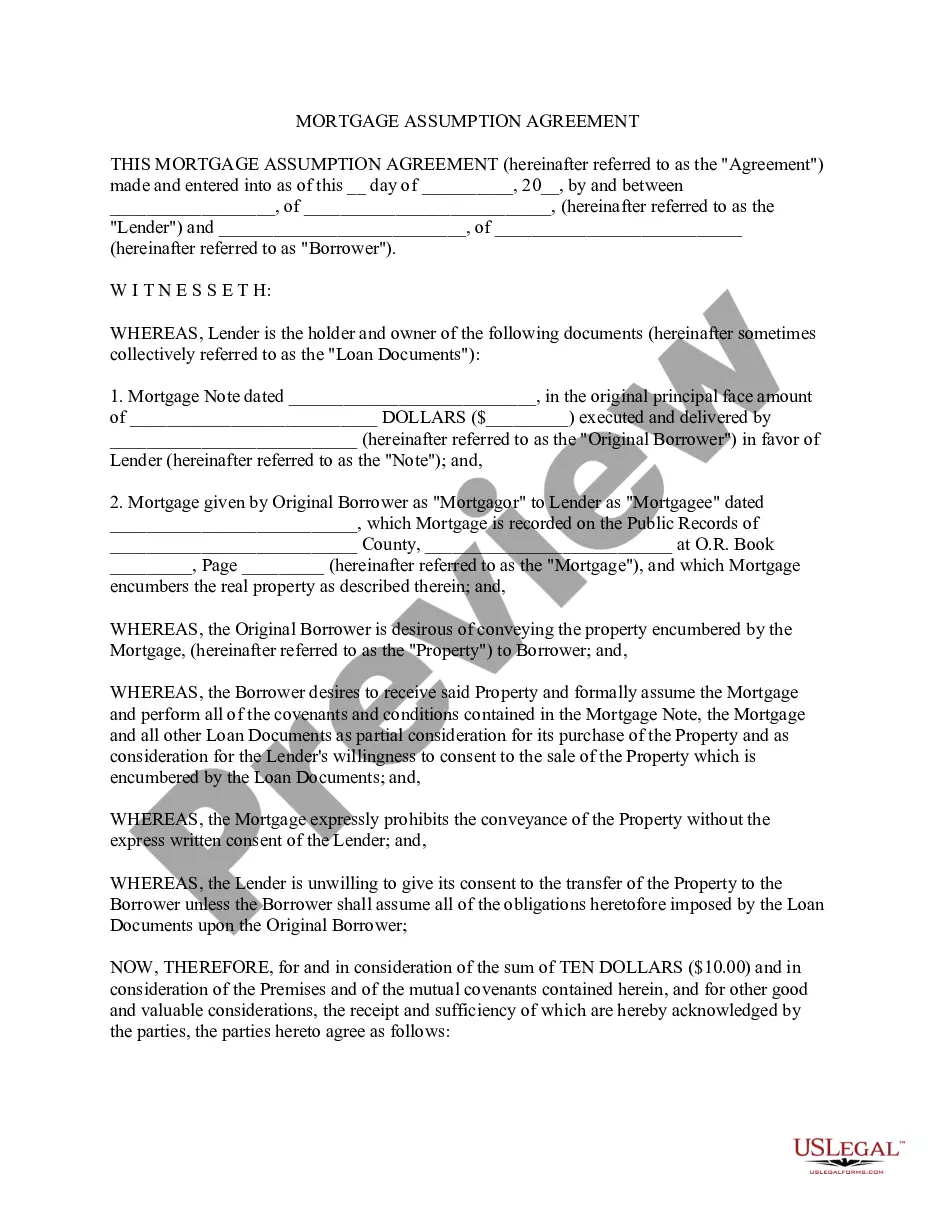
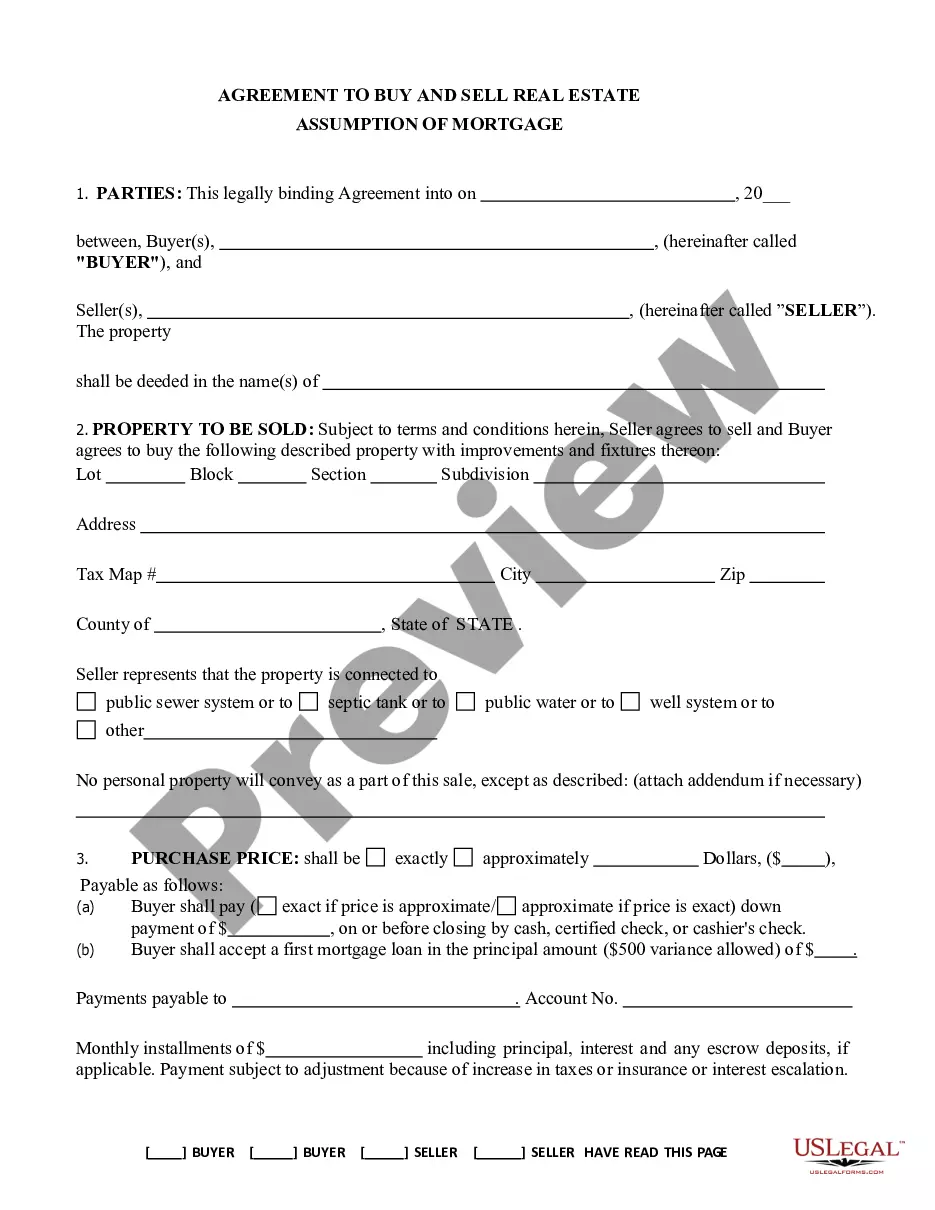
The Assumption Agreement of Security Deed and Release of Original Mortgagors is a legal document used in real estate transactions. It allows a new purchaser of a property to assume the existing mortgage debt, releasing the original mortgagors from future liability. This form differs from other mortgage-related documents by formally transferring responsibility for the loan to the new buyer while ensuring that the lender acknowledges the release of the previous owners from the mortgage obligations.
Form components explained
- Identification of the parties involved: lender, original mortgagors, and new purchasers.
- Details of the debt being assumed, including the total amount, interest rate, and payment terms.
- A statement confirming the release of the original mortgagors from future liability on the mortgage.
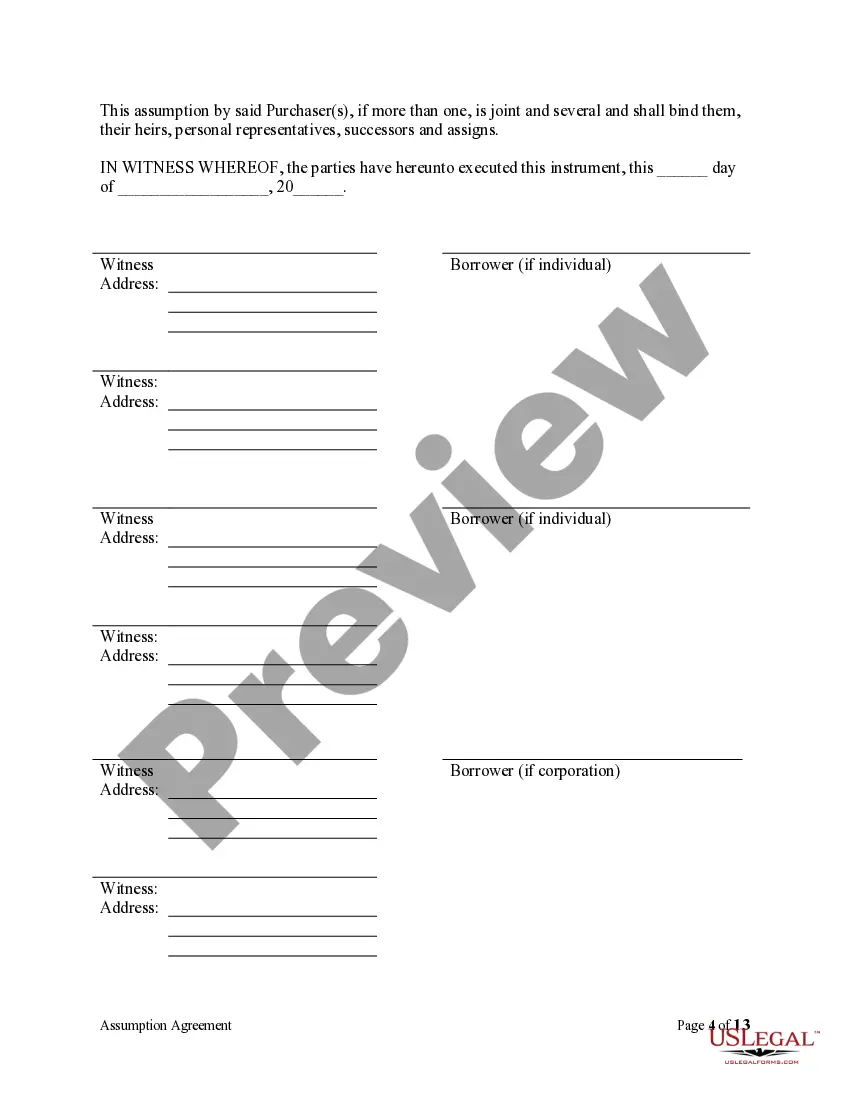
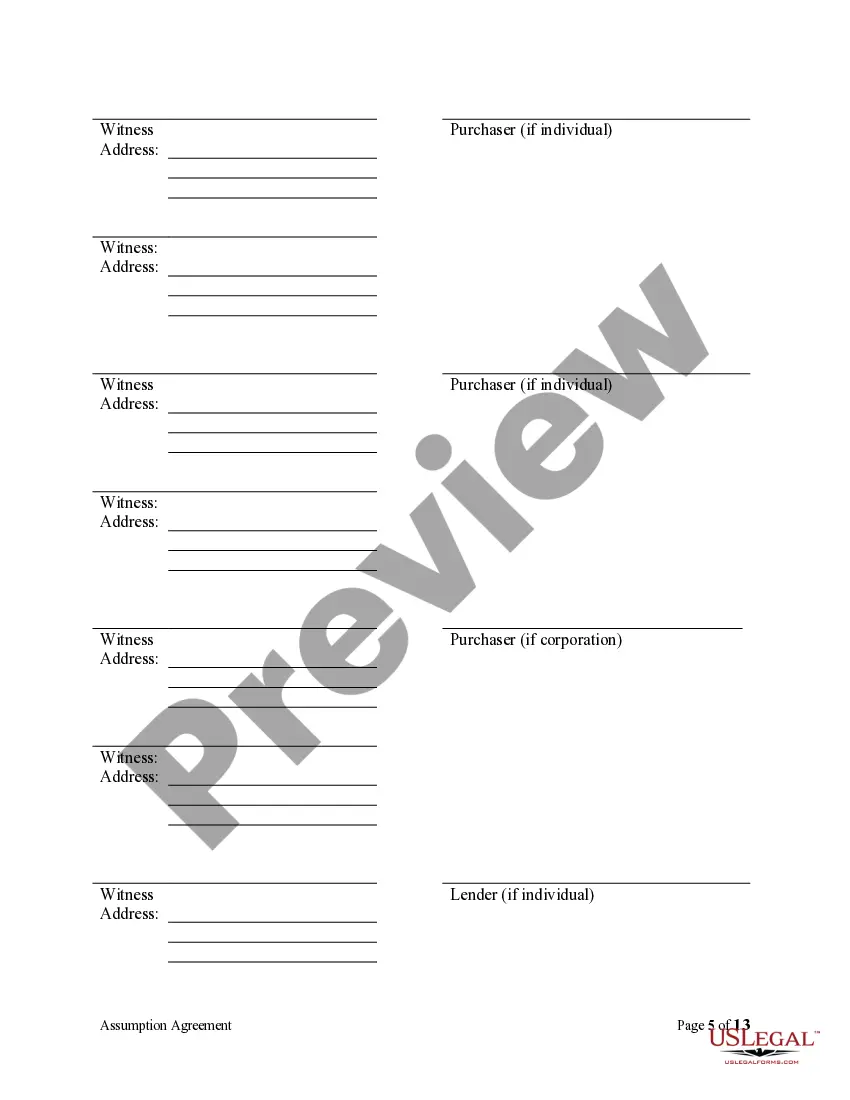
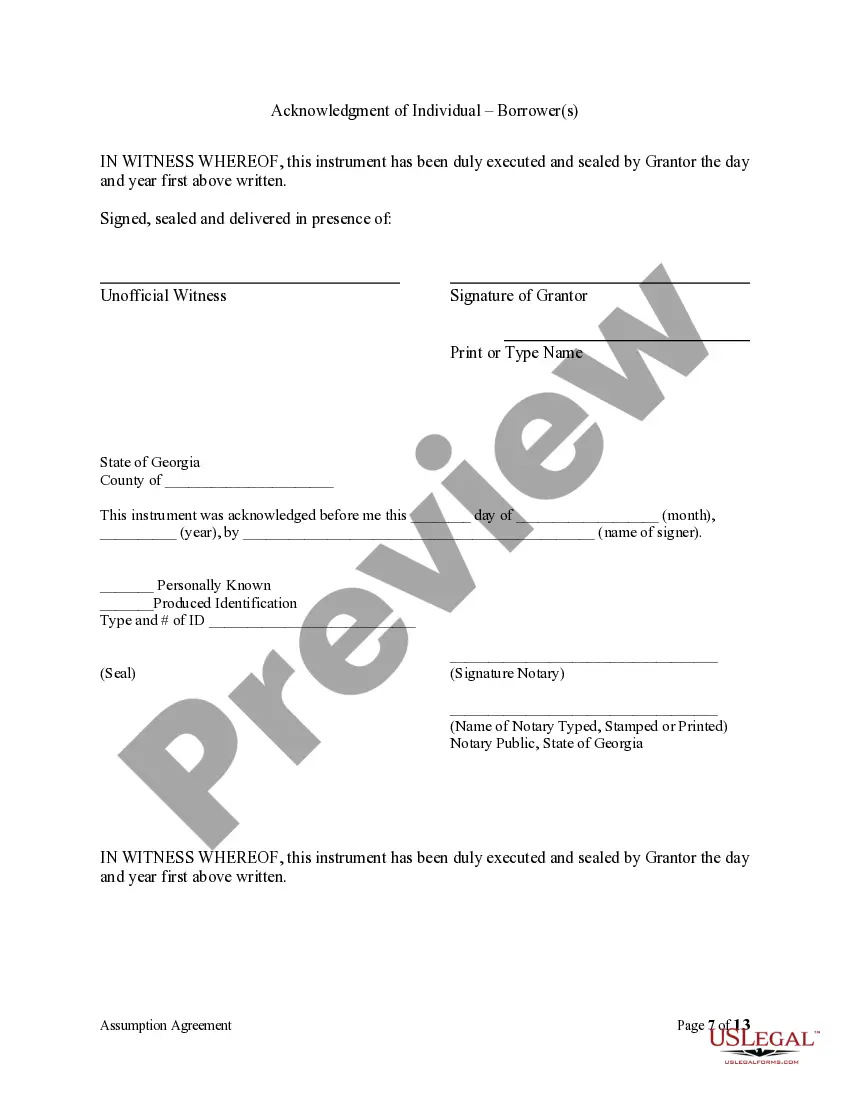
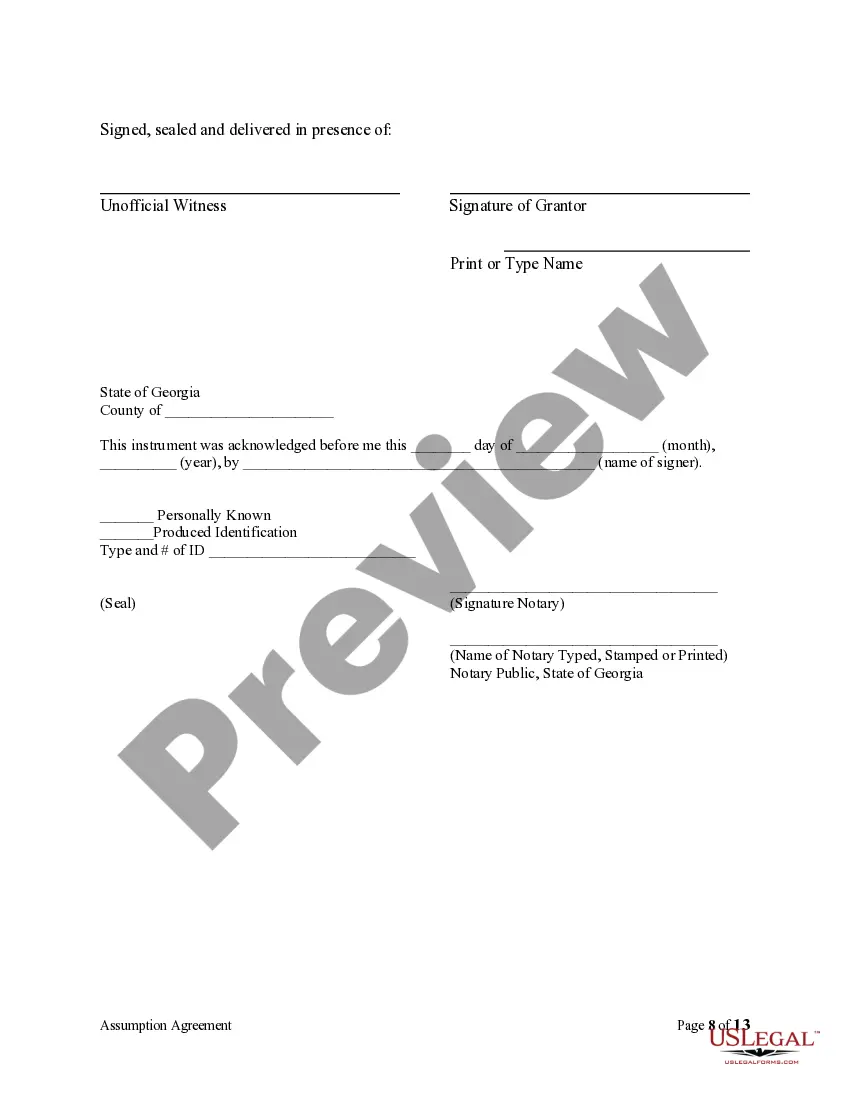
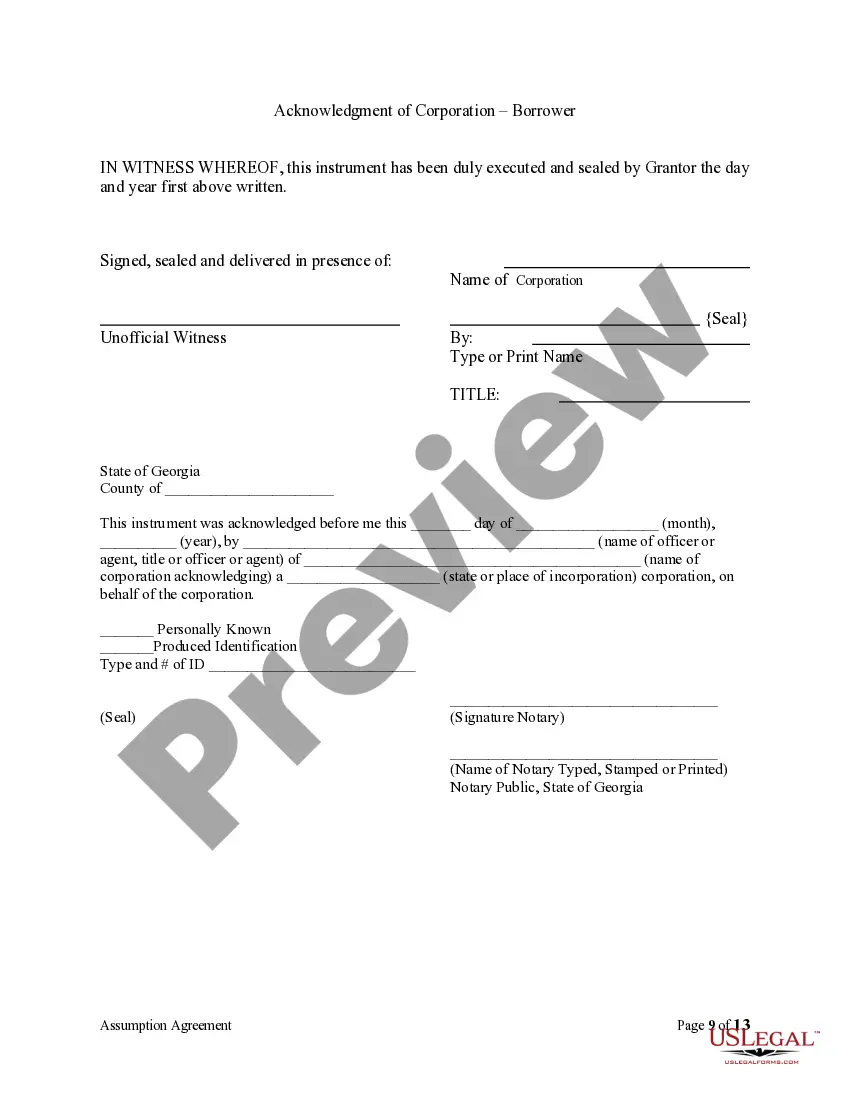
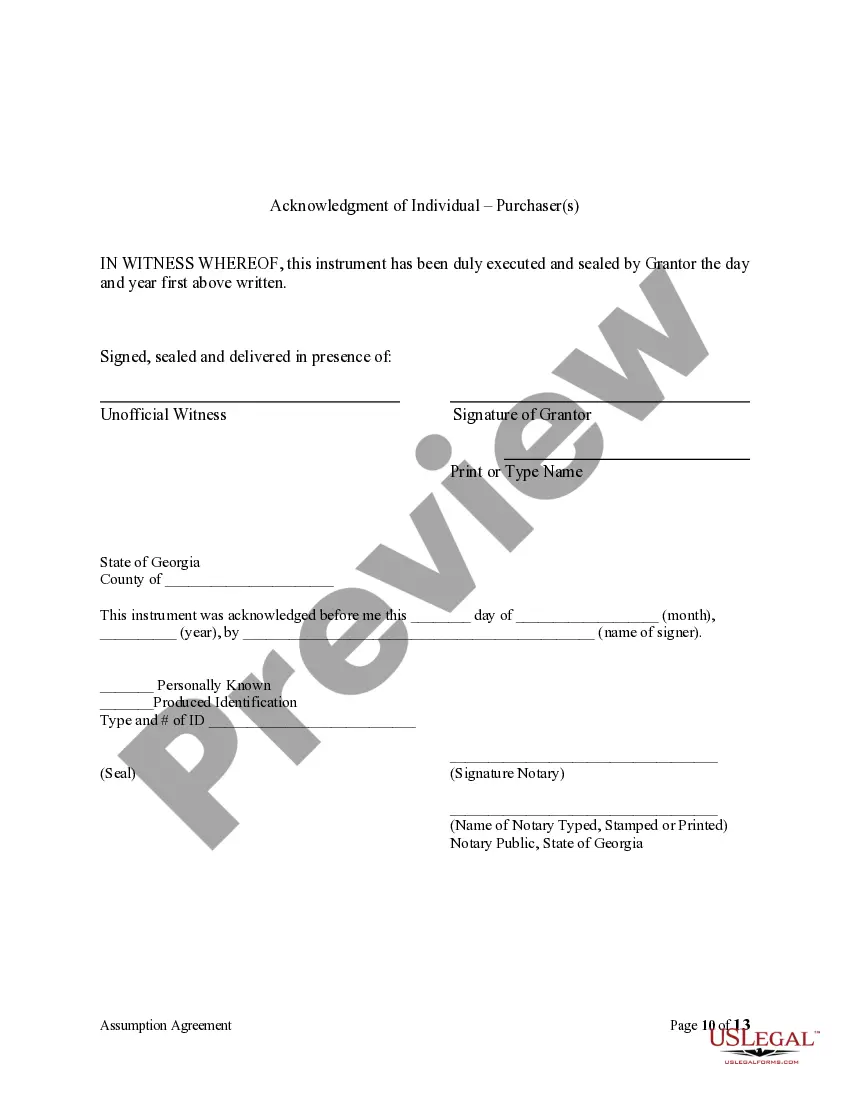
- Signatures of all parties involved, along with a space for notarization.


When this form is needed
This form should be used when a property is sold and the new buyer wishes to take over the existing mortgage obligations. It is essential in cases where a buyer cannot secure new financing or prefers to assume the loan's terms. Additionally, it protects the original owners by ensuring they are no longer liable for the mortgage debt after the transfer.
Who can use this document
This form is intended for:
- New purchasers acquiring real estate with an existing mortgage.
- Original mortgagors who seek to transfer their mortgage obligations to a buyer.
- Lenders who need a formal record of the assumption and release of liability.
Steps to complete this form
- Identify all parties involved, including the lender, original mortgagors, and new purchasers.
- Specify the total debt amount being assumed, including interest rates and monthly payment amounts.
- Clearly state that the original mortgagors are released from any obligations to the lender.
- Obtain signatures from all parties, confirming their agreement to the terms.
- Arrange for notarization of the document to ensure its legal validity.
Does this form need to be notarized?
Yes, this form must be notarized to be legally valid. By using U.S. Legal Formsâ integrated online notarization, you can enjoy secure video calls and legal equivalence without the need for in-person meetings or travel.
Get your form ready online
Our built-in tools help you complete, sign, share, and store your documents in one place.
Make edits, fill in missing information, and update formatting in US Legal Forms—just like you would in MS Word.
Download a copy, print it, send it by email, or mail it via USPS—whatever works best for your next step.
Sign and collect signatures with our SignNow integration. Send to multiple recipients, set reminders, and more. Go Premium to unlock E-Sign.
If this form requires notarization, complete it online through a secure video call—no need to meet a notary in person or wait for an appointment.
We protect your documents and personal data by following strict security and privacy standards.

Make edits, fill in missing information, and update formatting in US Legal Forms—just like you would in MS Word.

Download a copy, print it, send it by email, or mail it via USPS—whatever works best for your next step.

Sign and collect signatures with our SignNow integration. Send to multiple recipients, set reminders, and more. Go Premium to unlock E-Sign.

If this form requires notarization, complete it online through a secure video call—no need to meet a notary in person or wait for an appointment.

We protect your documents and personal data by following strict security and privacy standards.
Avoid these common issues
- Failing to include all necessary partiesâ signatures, which can invalidate the agreement.
- Not specifying the correct debt amount or payment terms, leading to disputes later on.
- Neglecting to have the document notarized, which may be required for enforceability.
Why complete this form online
- Convenience of downloading the form instantly and filling it out at your own pace.
- Editability allows users to make necessary changes before finalizing the document.
- Reliable access to templates drafted by licensed attorneys, ensuring legal compliance.
Looking for another form?
Form popularity
FAQ
To obtain a deed to your property in Georgia, you must first ensure that the current deed is legally recorded with the county in which the property is located. You can visit the local county clerk's office or their website to access property records. If you are executing a Georgia Assumption Agreement of Security Deed and Release of Original Mortgagors, this legal document may provide additional clarity and ownership details. For easy access to forms and guidance, consider using USLegalForms, which can simplify the process for you.
An assumption and release agreement allows a new borrower to take over the existing mortgage responsibilities of the original borrower. This agreement typically involves the original mortgagor being released from financial obligations once the new borrower assumes the mortgage. In the context of the Georgia Assumption Agreement of Security Deed and Release of Original Mortgagors, this type of agreement can facilitate a smoother transition when transferring property ownership.
In a warranty deed, the parties involved typically include the grantor and the grantee. The grantor is the person or entity transferring the property, while the grantee is the one receiving it. When considering the Georgia Assumption Agreement of Security Deed and Release of Original Mortgagors, understanding the roles of these parties is essential for a smooth transaction.
For a deed to be valid in Georgia, it must include essential elements like proper identification of the parties, adequate description of the property, and the signatures of the parties involved. Notarization is also a key component, ensuring the authenticity of the document. Understanding these elements is vital, and the Georgia Assumption Agreement of Security Deed and Release of Original Mortgagors can guide you through the validity requirements.
False. In Georgia, a deed can be valid even if it is not recorded; however, unrecorded deeds lack the protection afforded by public notice. Without recording, your ownership might be challenged by other parties. The Georgia Assumption Agreement of Security Deed and Release of Original Mortgagors highlights the critical benefits of recording your deed.
To prove a deed is invalid in Georgia, you typically need to demonstrate that it failed to meet legal requirements, such as lacking proper signatures or notarization. Additionally, discrepancies in the execution or any violations of state laws can also render a deed invalid. Engaging with the Georgia Assumption Agreement of Security Deed and Release of Original Mortgagors can provide clarity in such challenging situations.
In Georgia, a deed does not necessarily need to be recorded to be valid, but recording it provides legal protection. A recorded deed gives public notice of ownership, which secures your claim against any legal challenges. The Georgia Assumption Agreement of Security Deed and Release of Original Mortgagors can assist you in understanding the importance of recording your deed.
In Georgia, you should record a deed as soon as possible, ideally within 30 days of signing. Recording the deed timely helps protect your interest in the property and streamlines any future transactions involving the property. With the Georgia Assumption Agreement of Security Deed and Release of Original Mortgagors, you can navigate these timelines more comfortably.
To release a deed in Georgia, you need to complete a release form that acknowledges the satisfaction of the debt associated with the security deed. This release form must be signed and notarized before being filed with the county clerk’s office. Using the Georgia Assumption Agreement of Security Deed and Release of Original Mortgagors simplifies this process, ensuring you fulfill all legal requirements efficiently.
You can find the title deed to your house by visiting the local county recorder's office or the registry of deeds. Many counties also offer online databases where you can search for your property details by address or owner's name. If you encounter difficulties locating your deed, utilizing platforms like USLegalForms can provide you with easy access to relevant documentation, including the Georgia Assumption Agreement of Security Deed and Release of Original Mortgagors.