Georgia Middle District Bankruptcy Guide and Forms Package for Chapters 7 or 13
Overview of this form
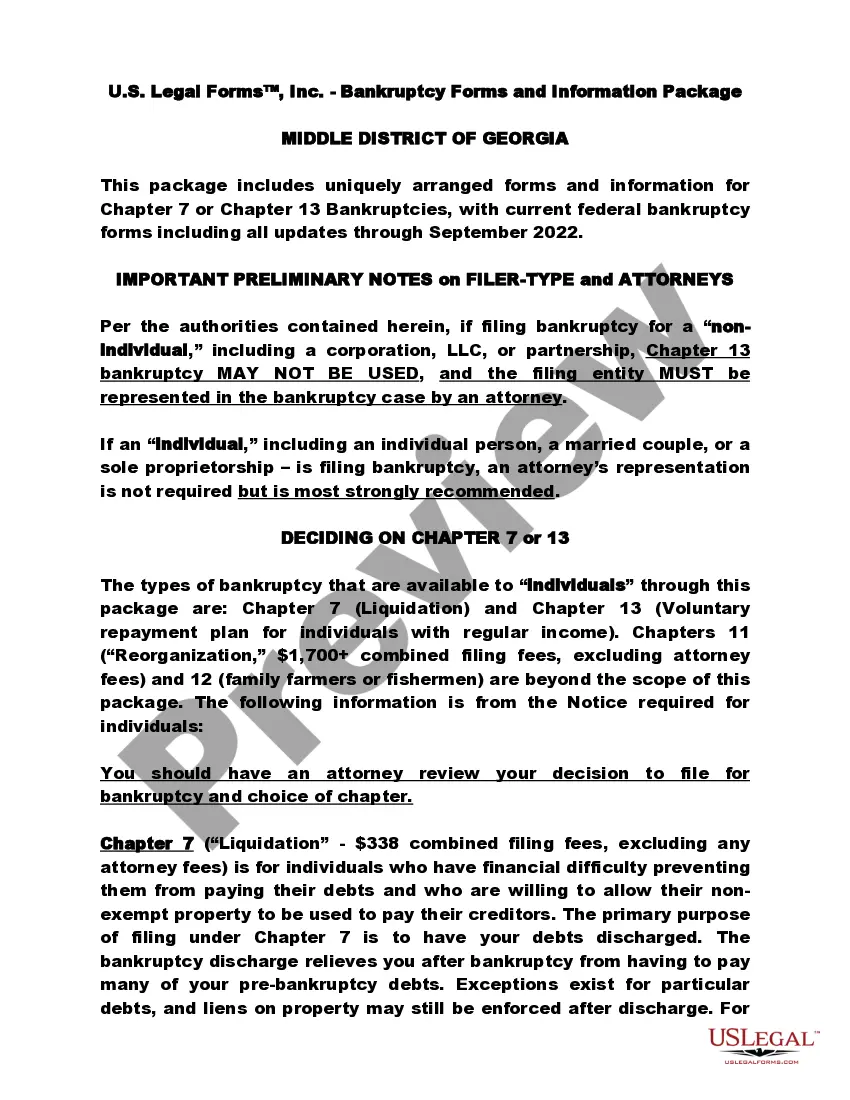
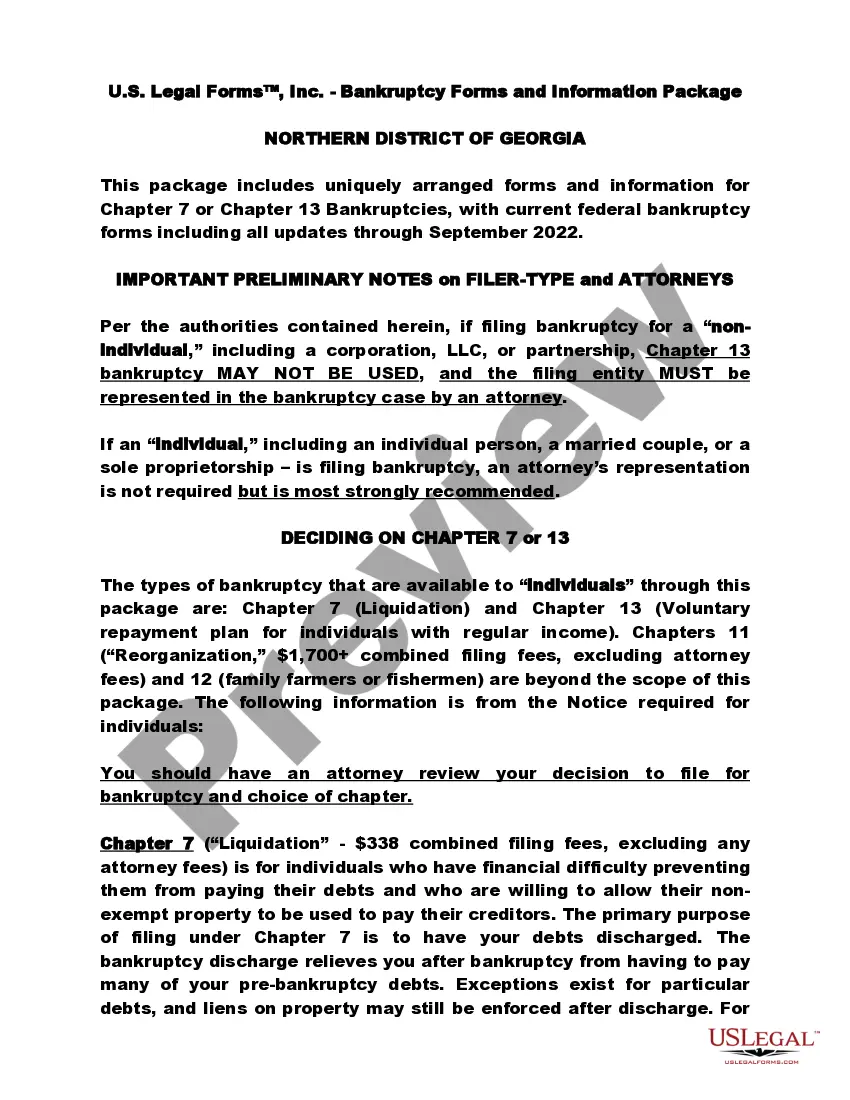
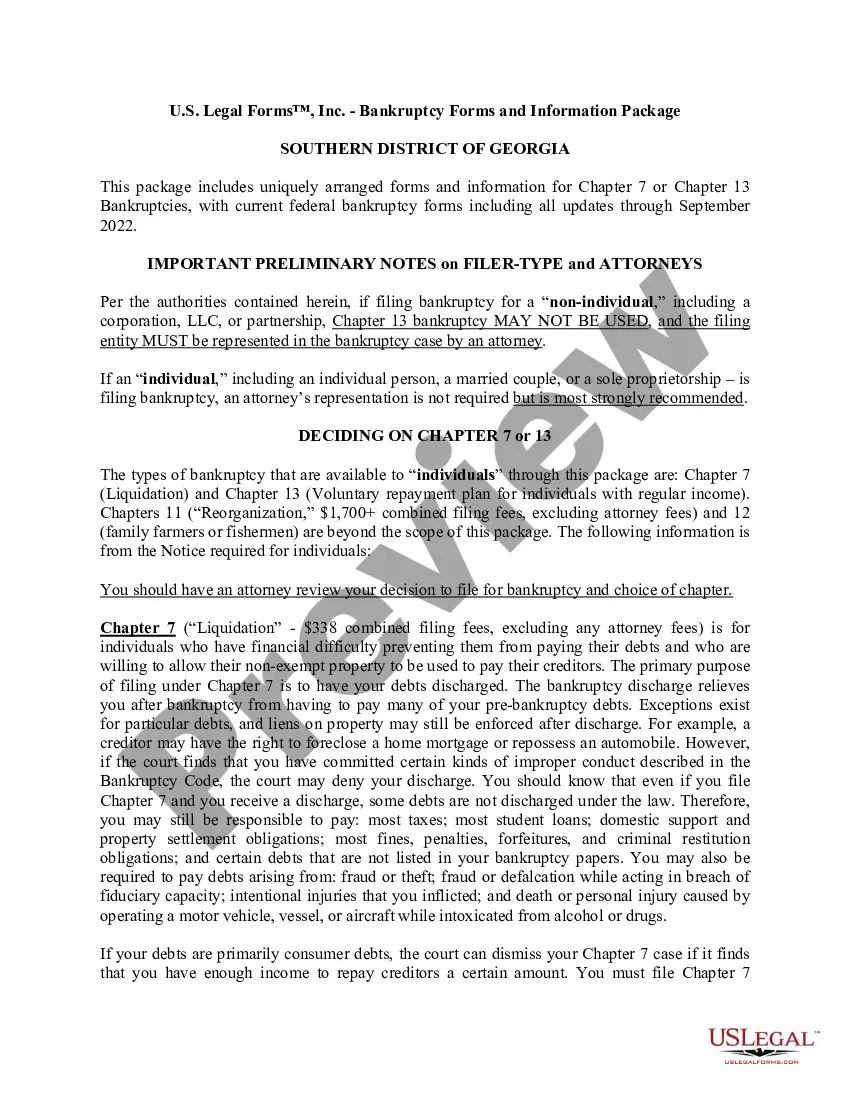
The Georgia Middle District Bankruptcy Guide and Forms Package for Chapters 7 or 13 includes essential legal documents and instructions for individuals seeking bankruptcy relief in Georgia. This comprehensive package simplifies the process of filing for either Chapter 7 liquidation or Chapter 13 repayment plans, distinguishing it from other bankruptcy forms by providing tailored guidance specific to these chapters.
Form components explained
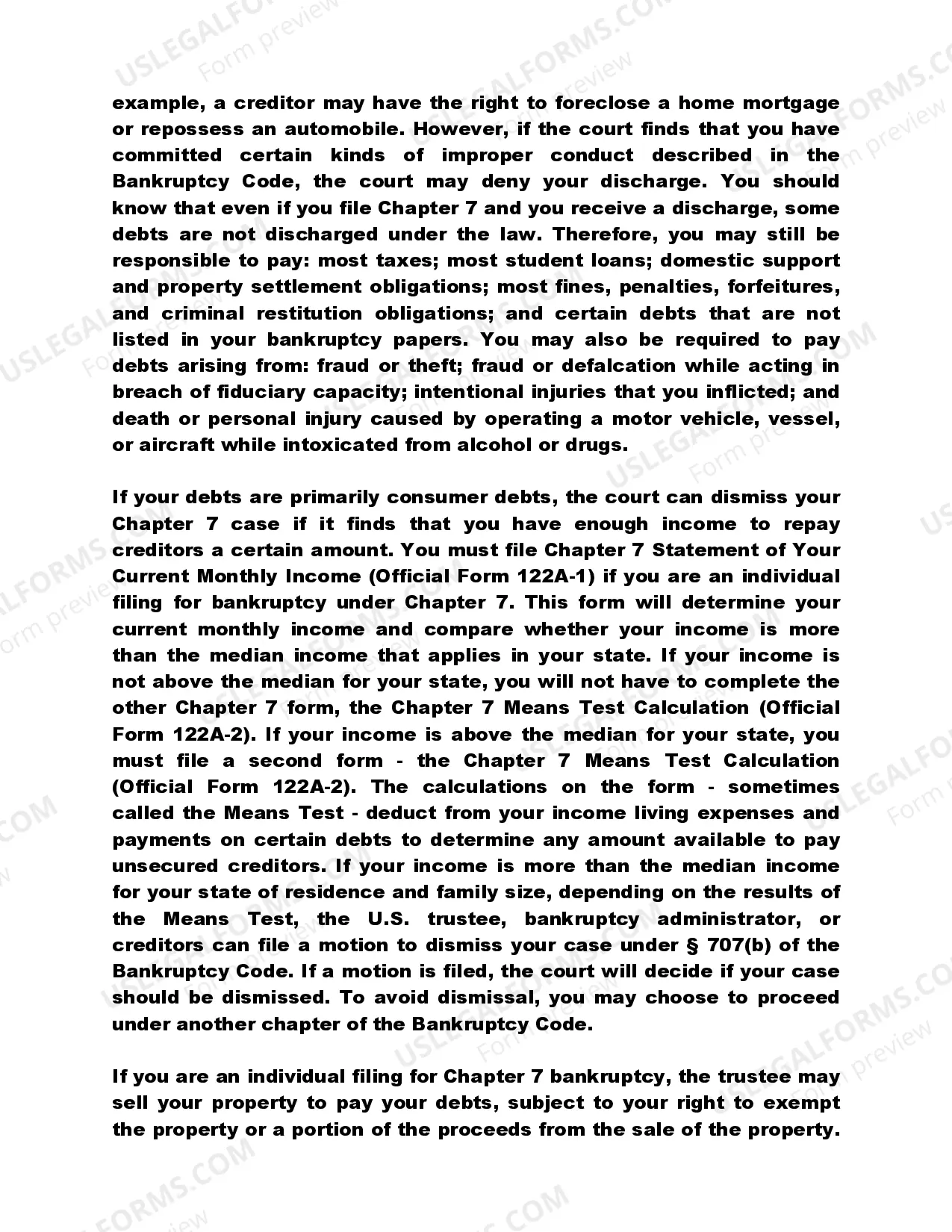
- Chapter 7 Statement of Your Current Monthly Income (Official Form 122A-1)
- Chapter 7 Means Test Calculation (Official Form 122A-2)
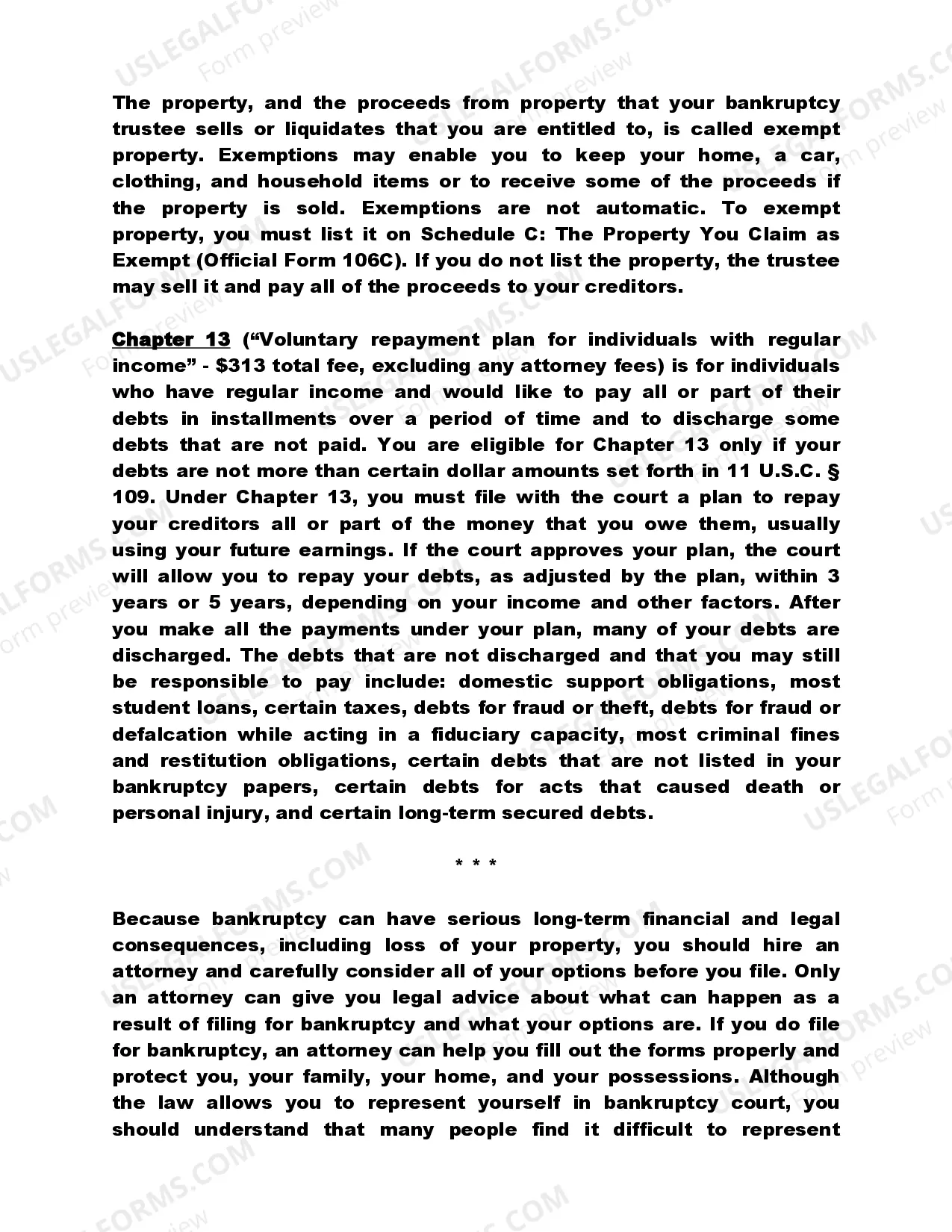
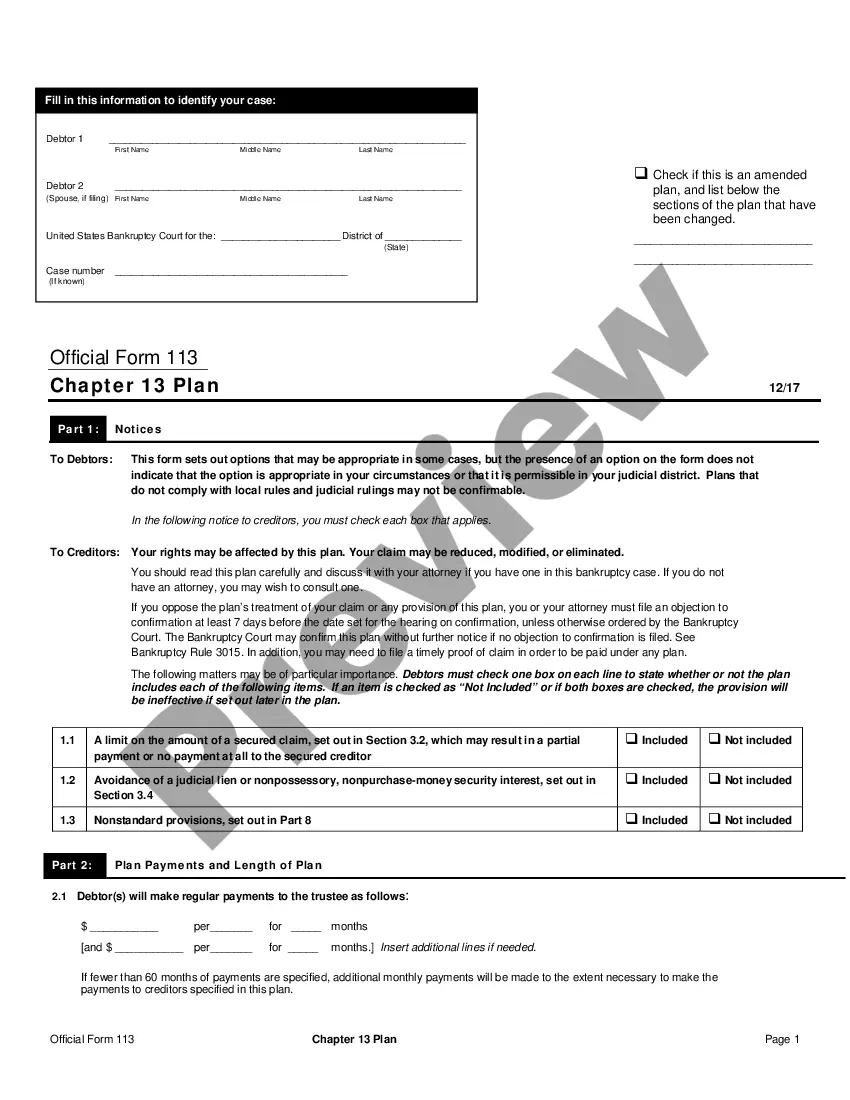
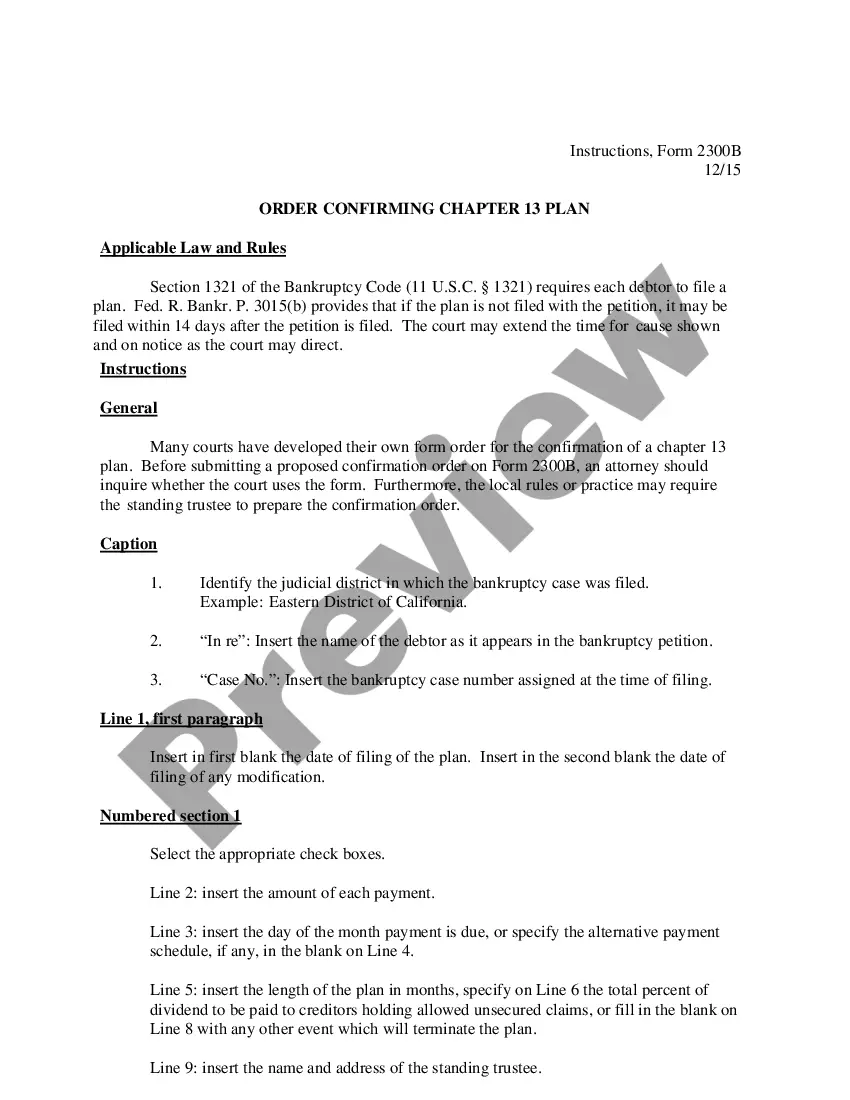
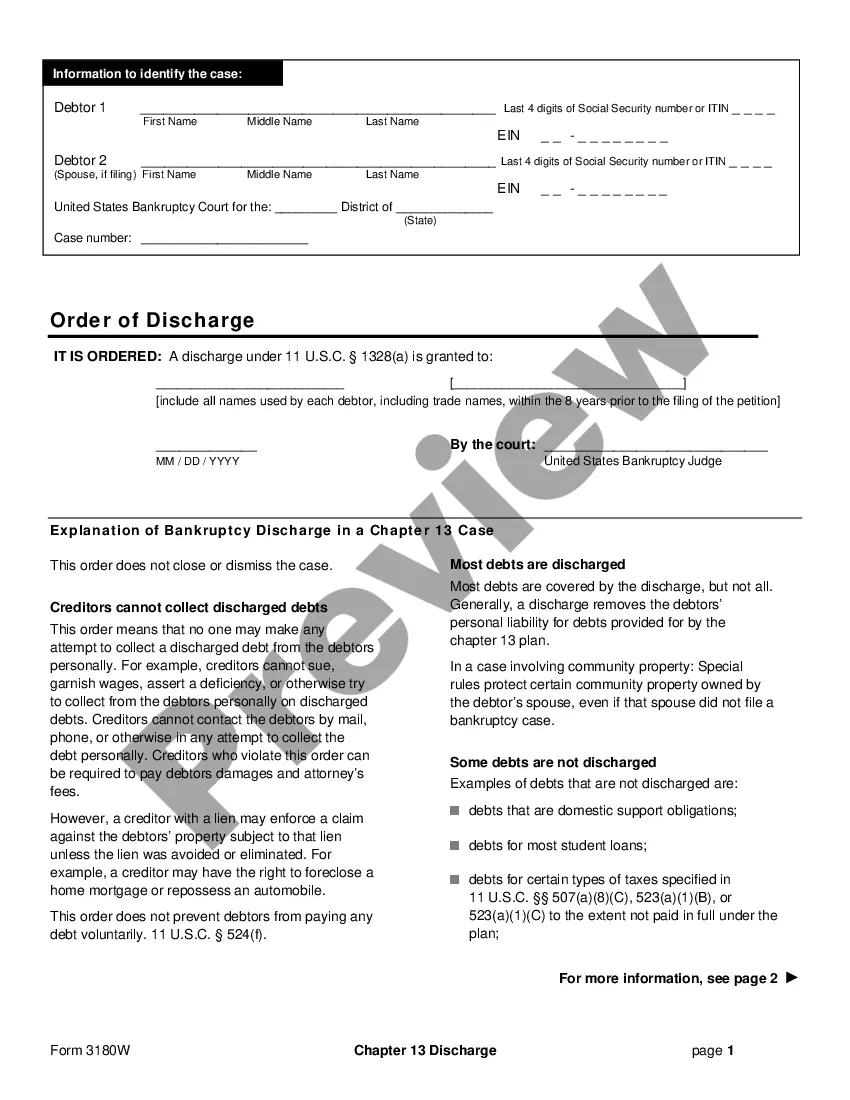
- Chapter 13 Repayment Plan requirements and filing instructions
- Preliminary notes on filer types and attorney representation
- Exemption filings for Chapter 7 debts
When to use this form
This form is crucial when an individual is considering filing for bankruptcy under Chapter 7 or Chapter 13 in Georgia. Use this package if you are struggling with overwhelming debt and need a structured legal process to either liquidate your assets or create a manageable repayment plan based on your income.
Who needs this form
- Individuals filing for bankruptcy in Georgia.
- Married couples seeking joint bankruptcy filing.
- Sole proprietors facing personal financial difficulties.
- Anyone needing guidance and legal forms to navigate Chapter 7 or Chapter 13 bankruptcy.
Steps to complete this form
- Determine your eligibility for Chapter 7 or Chapter 13 bankruptcy.
- Collect necessary financial information to complete the Chapter 7 Statement of Your Current Monthly Income.
- If applicable, fill out the Chapter 7 Means Test Calculation form.
- Draft your bankruptcy repayment plan if filing under Chapter 13.
- Review all forms for accuracy and completeness before submission.
Does this form need to be notarized?
Notarization is not commonly needed for this form. However, certain documents or local rules may make it necessary. Our notarization service, powered by Notarize, allows you to finalize it securely online anytime, day or night.
Get your form ready online
Our built-in tools help you complete, sign, share, and store your documents in one place.
Make edits, fill in missing information, and update formatting in US Legal Forms—just like you would in MS Word.
Download a copy, print it, send it by email, or mail it via USPS—whatever works best for your next step.
Sign and collect signatures with our SignNow integration. Send to multiple recipients, set reminders, and more. Go Premium to unlock E-Sign.
If this form requires notarization, complete it online through a secure video call—no need to meet a notary in person or wait for an appointment.
We protect your documents and personal data by following strict security and privacy standards.

Make edits, fill in missing information, and update formatting in US Legal Forms—just like you would in MS Word.

Download a copy, print it, send it by email, or mail it via USPS—whatever works best for your next step.

Sign and collect signatures with our SignNow integration. Send to multiple recipients, set reminders, and more. Go Premium to unlock E-Sign.

If this form requires notarization, complete it online through a secure video call—no need to meet a notary in person or wait for an appointment.

We protect your documents and personal data by following strict security and privacy standards.
Avoid these common issues
- Failing to complete required forms accurately.
- Not listing all debts or assets in the required schedules.
- Missing deadlines for filing petition or repayment plans.
- Overlooking the importance of the means test if filing under Chapter 7.
Benefits of using this form online
- Convenience of accessing forms and instructions from anywhere.
- Editable documents that allow for tailored entries specific to your situation.
- Direct access to legal guidance and resources, reducing confusion.
Quick recap
- The package includes everything needed to file for bankruptcy under Chapters 7 and 13 in Georgia.
- Understanding the differences between Chapter 7 and Chapter 13 is crucial for proper filing.
- Accurate and complete forms can significantly affect the outcome of your bankruptcy case.
Looking for another form?
Form popularity
FAQ
Individuals often decide between Chapter 7 and Chapter 13 based on their unique financial circumstances. It’s important to assess your income, debts, and assets thoroughly. Chapter 7 is ideal for those seeking a fresh start quickly, while Chapter 13 helps those looking to repay debts over time without losing their property. Utilizing the Georgia Middle District Bankruptcy Guide and Forms Package for Chapters 7 or 13 can simplify this process and guide you toward the best choice for your situation.
Choosing between Chapter 7 and Chapter 13 can seem daunting, but understanding your financial situation is key. Chapter 7 allows for quicker debt discharge but requires meeting specific income criteria. In contrast, Chapter 13 enables individuals to create a repayment plan while keeping their assets. For personalized assistance, consider the Georgia Middle District Bankruptcy Guide and Forms Package for Chapters 7 or 13, as it provides essential resources tailored to your needs.
If your disposable income exceeds a certain threshold determined by means testing, you may not qualify for Chapter 7 bankruptcy. The evaluation considers your income after necessary living expenses are deducted. To navigate this assessment effectively, the Georgia Middle District Bankruptcy Guide and Forms Package for Chapters 7 or 13 provides detailed instructions and calculations to help you determine your eligibility for bankruptcy relief.
Yes, you can file Chapter 7 bankruptcy while living with your parents. Your eligibility will primarily depend on your own financial situation and income. The Georgia Middle District Bankruptcy Guide and Forms Package for Chapters 7 or 13 can assist you in understanding the implications of your living arrangements while ensuring you meet all the necessary criteria for filing.
In Georgia, the income limit for Chapter 7 bankruptcy is based on the median income for your household size. If your monthly income is below this median, you may qualify for Chapter 7. For a thorough understanding of these limits, refer to the Georgia Middle District Bankruptcy Guide and Forms Package for Chapters 7 or 13, which provides comprehensive insights into eligibility and filing criteria.
The maximum income for Chapter 7 bankruptcy in Georgia depends on household size and is determined by the state's median income levels. If your income exceeds these limits, you may need to consider alternatives like Chapter 13. Consulting the Georgia Middle District Bankruptcy Guide and Forms Package for Chapters 7 or 13 can help clarify income thresholds and ascertain the best filing option for your situation.
You can file Chapter 13 bankruptcy yourself by preparing the required documentation, which includes your repayment plan, income information, and a list of your debts. It's essential to follow the procedures outlined in the Georgia Middle District Bankruptcy Guide and Forms Package for Chapters 7 or 13. This package lends valuable resources, ensuring you complete the forms correctly and understand the necessary steps to take throughout the filing process.
Filing Chapter 13 bankruptcy in Georgia involves completing several forms and submitting them to the court. You will need to gather financial information, such as your income and expenses, and create a repayment plan. Using the Georgia Middle District Bankruptcy Guide and Forms Package for Chapters 7 or 13 can simplify this process. This package provides the essential forms and guidelines necessary to ensure a smoother filing experience.
To file for Chapter 7 bankruptcy, you will need several forms including the petition, schedules, and statement of financial affairs. The Georgia Middle District Bankruptcy Guide and Forms Package for Chapters 7 or 13 provides a comprehensive checklist of necessary documentation. Utilizing this guide ensures that you complete your forms accurately, increasing your chances of a smooth bankruptcy process.
When converting from Chapter 13 to Chapter 7, whether you can keep your house often depends on equity and exemptions. If your home equity is exempt under Georgia law, you may retain it even after conversion. The Georgia Middle District Bankruptcy Guide and Forms Package for Chapters 7 or 13 can provide you with essential information on protecting your home during this process.