California Application for Temporary Restraining Order
Understanding this form
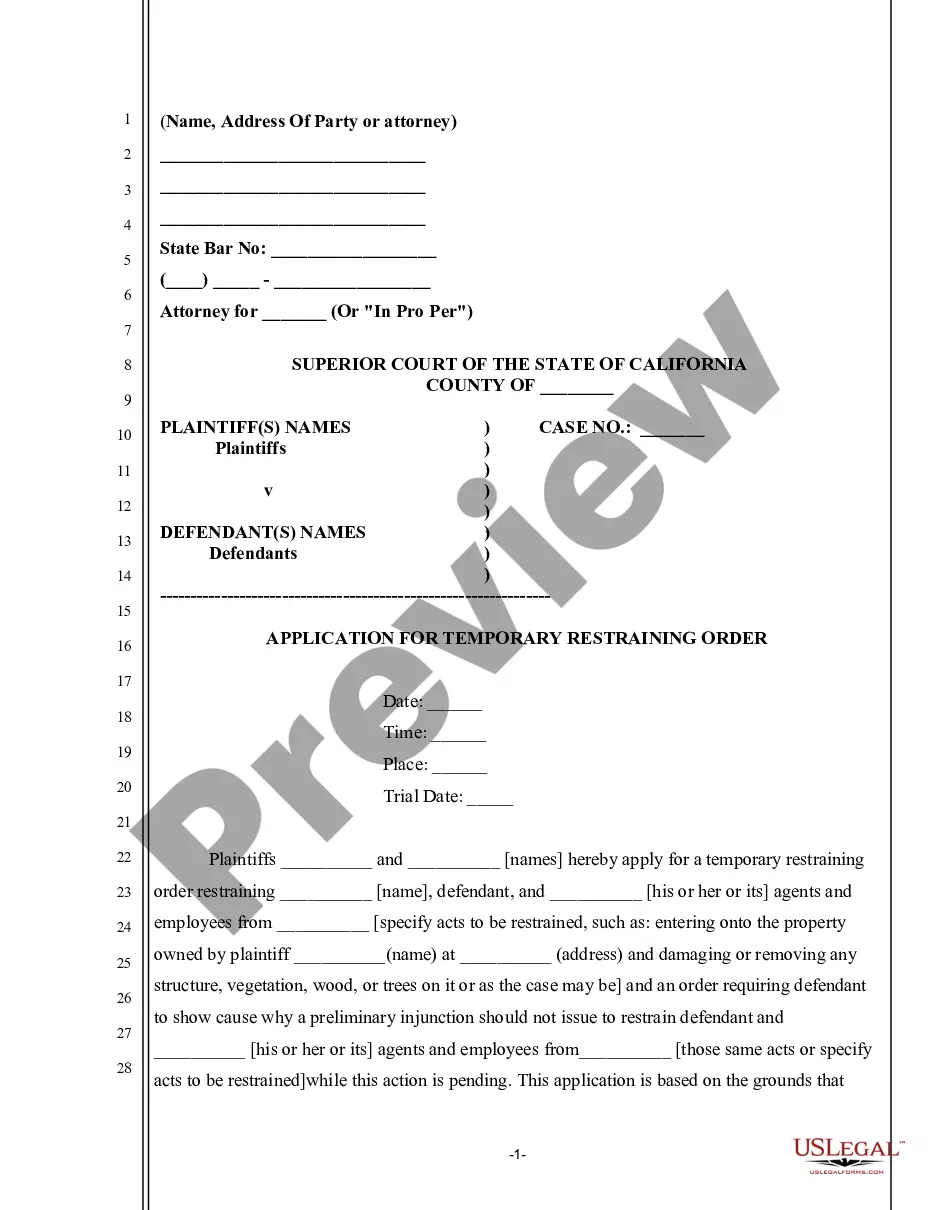
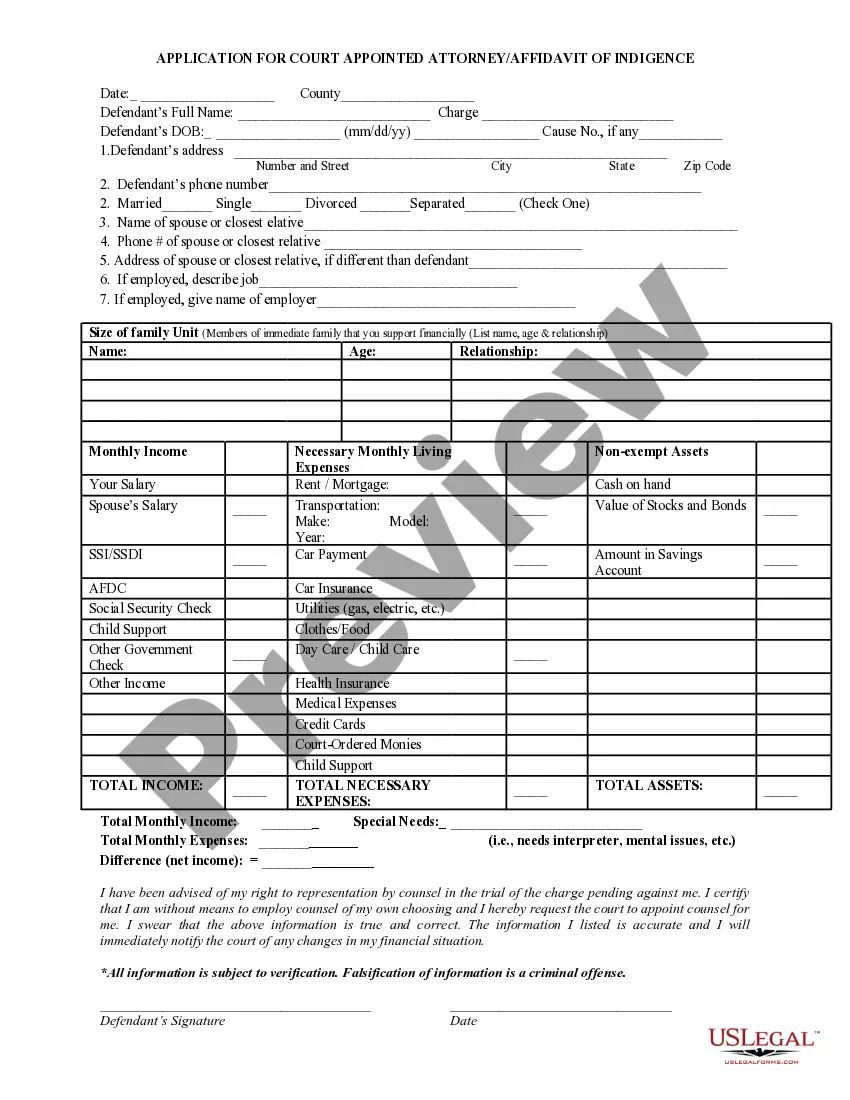
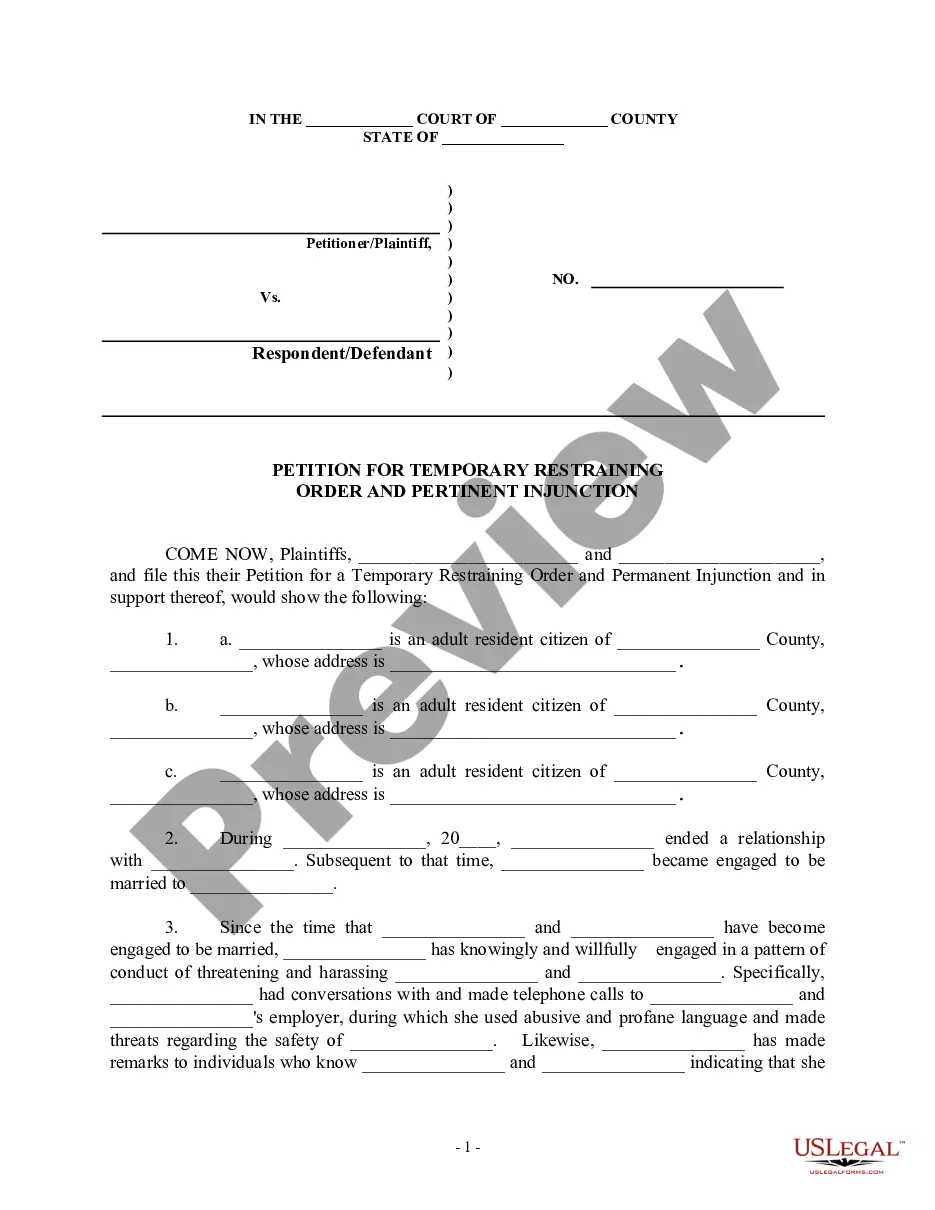
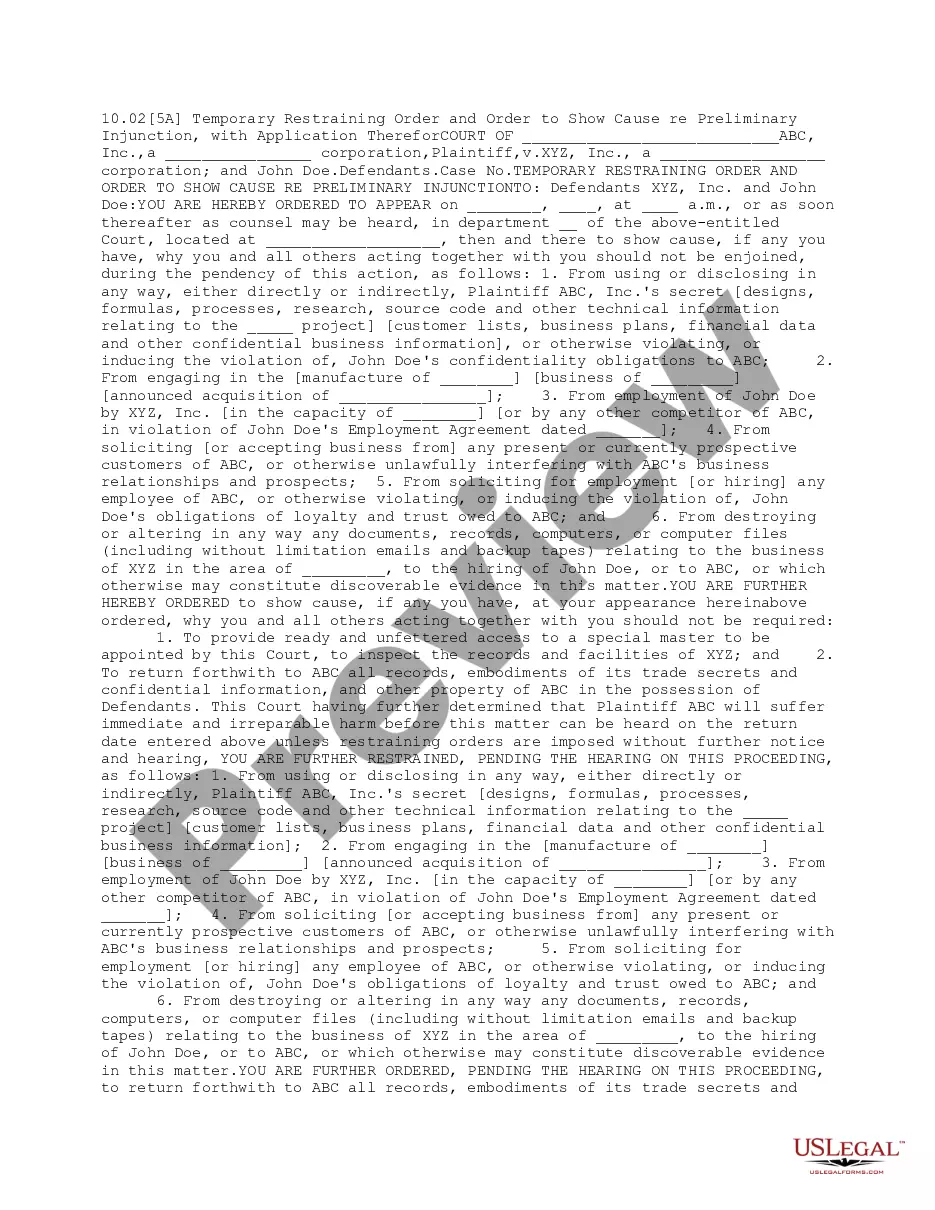
The Application for Temporary Restraining Order is a legal document that allows individuals to request immediate protection from another person by preventing them from engaging in certain actions, such as entering their property. Unlike other legal forms that may require a longer timeframe for resolutions, this application seeks urgent relief to prevent harm before a formal court hearing can take place.
Key parts of this document
- Plaintiff and defendant names: Identification of the parties involved.
- Specific acts to be restrained: Clear outlining of the actions the defendant must refrain from.
- Grounds for the application: Justifications for why the restraining order is necessary.
- Date and time for hearings: Details for court appearances if required.
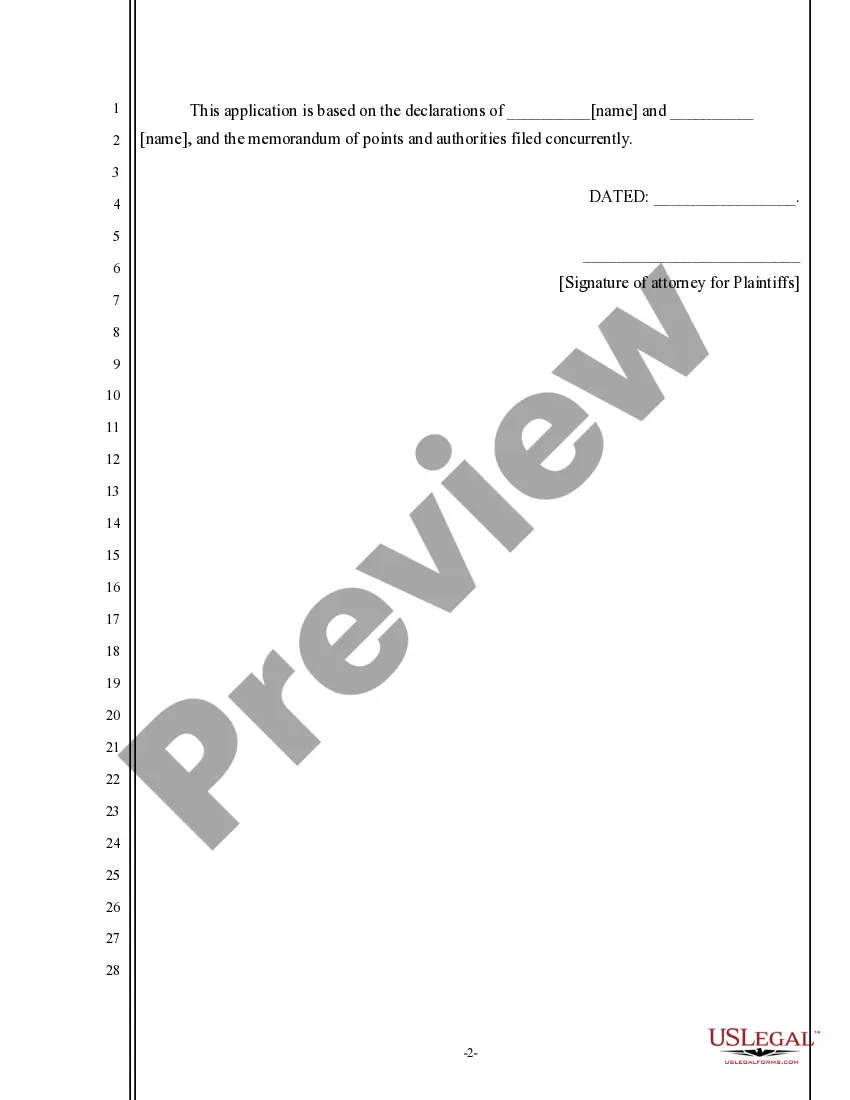
- Signature of the attorney or self-representation: Validation of the application.
When to use this document
This form should be used when you believe you are facing immediate danger or harm from another individual. Common scenarios include situations involving domestic violence, harassment, or threats, where waiting for a standard legal process could result in injury or loss to the plaintiff. It is vital for those needing protection to act quickly and file this application to ensure their safety.
Who this form is for
- Individuals seeking urgent protection from a potential threat or harm.
- Persons who have experienced harassment or violence and wish to prevent further incidents.
- Anyone involved in a legal dispute necessitating immediate relief to safeguard their interests.
Steps to complete this form
- Identify the parties involved by filling in the names of the plaintiffs and defendants.
- Clearly specify the acts that the defendant must be restrained from, such as entering property.
- State the grounds for the request, explaining why a restraining order is necessary.
- Fill in the date, time, and place of the hearing if scheduled.
- Ensure the form is signed by the attorney or the plaintiff if they are self-represented.
Notarization requirements for this form
Notarization is not commonly needed for this form. However, certain documents or local rules may make it necessary. Our notarization service, powered by Notarize, allows you to finalize it securely online anytime, day or night.
Get your form ready online
Our built-in tools help you complete, sign, share, and store your documents in one place.
Make edits, fill in missing information, and update formatting in US Legal Forms—just like you would in MS Word.
Download a copy, print it, send it by email, or mail it via USPS—whatever works best for your next step.
Sign and collect signatures with our SignNow integration. Send to multiple recipients, set reminders, and more. Go Premium to unlock E-Sign.
If this form requires notarization, complete it online through a secure video call—no need to meet a notary in person or wait for an appointment.
We protect your documents and personal data by following strict security and privacy standards.

Make edits, fill in missing information, and update formatting in US Legal Forms—just like you would in MS Word.

Download a copy, print it, send it by email, or mail it via USPS—whatever works best for your next step.

Sign and collect signatures with our SignNow integration. Send to multiple recipients, set reminders, and more. Go Premium to unlock E-Sign.

If this form requires notarization, complete it online through a secure video call—no need to meet a notary in person or wait for an appointment.

We protect your documents and personal data by following strict security and privacy standards.
Common mistakes
- Failing to provide complete and accurate names of all parties involved.
- Not clearly outlining the specific acts to be restrained, leading to potential confusion.
- Leaving out critical details regarding the grounds for the application, which can weaken the case.
Benefits of completing this form online
- Convenience of downloading the form at any time without visiting a lawyer's office.
- Editability, allowing you to fill in details as necessary before printing.
- Access to reliable templates created by licensed attorneys, ensuring legal compliance.
Looking for another form?
Form popularity
FAQ
The standard of proof for a California Application for Temporary Restraining Order is preponderance of evidence. This means that you must demonstrate that it is more likely than not that you are in danger and require legal protection. Essentially, you need to provide evidence that convinces the judge your claims are credible. Gathering detailed documentation and witness statements can significantly strengthen your case.
A judge might deny your California Application for Temporary Restraining Order if they find insufficient evidence to support your claims. The judge will assess whether there is a credible threat to your safety or well-being. Additionally, if there is no clear pattern of harassment or abuse, the judge may believe that a restraining order is not necessary. It's essential to present strong and compelling facts to improve your chances of approval.
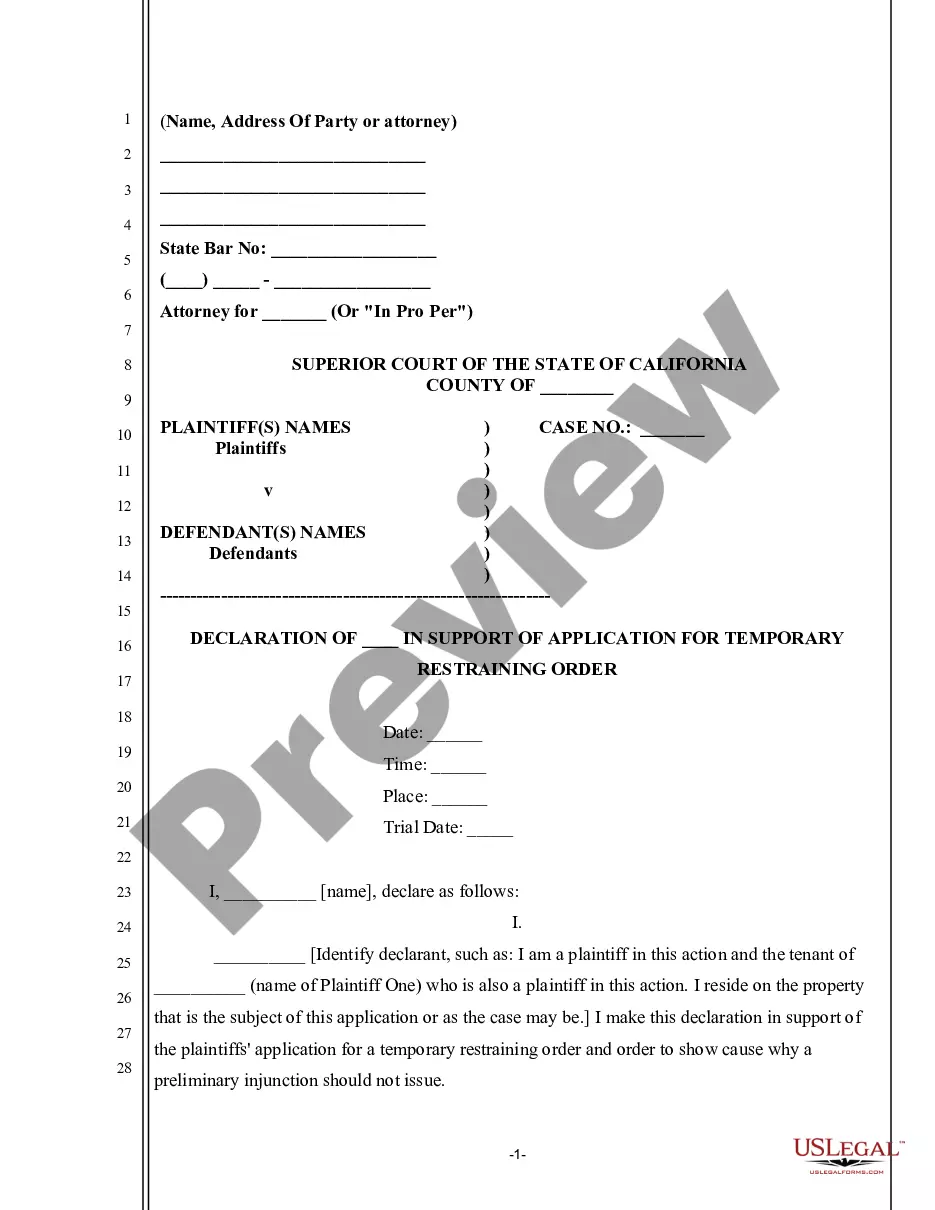
To obtain a California Application for Temporary Restraining Order, you must demonstrate that you have experienced harassment, intimidation, or threats. You need to file specific documents with the court, including your declaration detailing why a restraining order is necessary. Additionally, you might need to provide information about past incidents or evidence of potential harm. Ensure that you follow the rules set forth by California law for a successful application process.
Crafting an opening statement for an appeal involves summarizing the key points of your original case. Clearly articulate the grounds for the appeal, referencing any errors made in the initial ruling, especially related to a California Application for Temporary Restraining Order. This statement should prepare the appellate court for the arguments you will present and highlight the need for a different outcome.
The process of obtaining a temporary restraining order in California can vary depending on the court's schedule. Typically, after filing your California Application for Temporary Restraining Order, you may receive a hearing date within a few weeks. However, in urgent situations, the court can issue an order on the same day as your application, providing immediate relief.
Writing an opening statement involves presenting a concise overview of your case. Start by stating the purpose of your statement, such as seeking a California Application for Temporary Restraining Order, and then summarize the main points you will cover. Use clear and straightforward language to ensure the judge grasps the core issues of your case immediately.
To write an effective opening statement for a California Application for Temporary Restraining Order, begin by briefly introducing yourself and explaining your relationship with the other party. Clearly outline the reasons you are seeking the order, including specific incidents and any evidence that supports your claims. This direct approach helps the judge understand your circumstances right from the start.
In California, a temporary restraining order is typically issued for a specific time period and does not automatically appear on your criminal record. However, it may show up in civil court records. If you are applying for a California Application for Temporary Restraining Order, it’s wise to understand the potential implications for your legal record, especially in the case of future applications or legal interactions.
When presenting your case in court for a California Application for Temporary Restraining Order, focus on clearly stating your personal experiences and the threats you face. It is important to explain why a restraining order is necessary for your safety. Sharing specific incidents and explaining your feelings will help the judge understand the need for immediate legal protection.
In the context of a California Application for Temporary Restraining Order, an opening statement for the prosecution should clearly outline the evidence that supports the need for the restraining order. It should mention the relationship between the parties involved, the incidents that prompted the application, and the urgency of preventing further harm. Overall, this statement sets the stage for the supporting testimony and documentation that will follow.