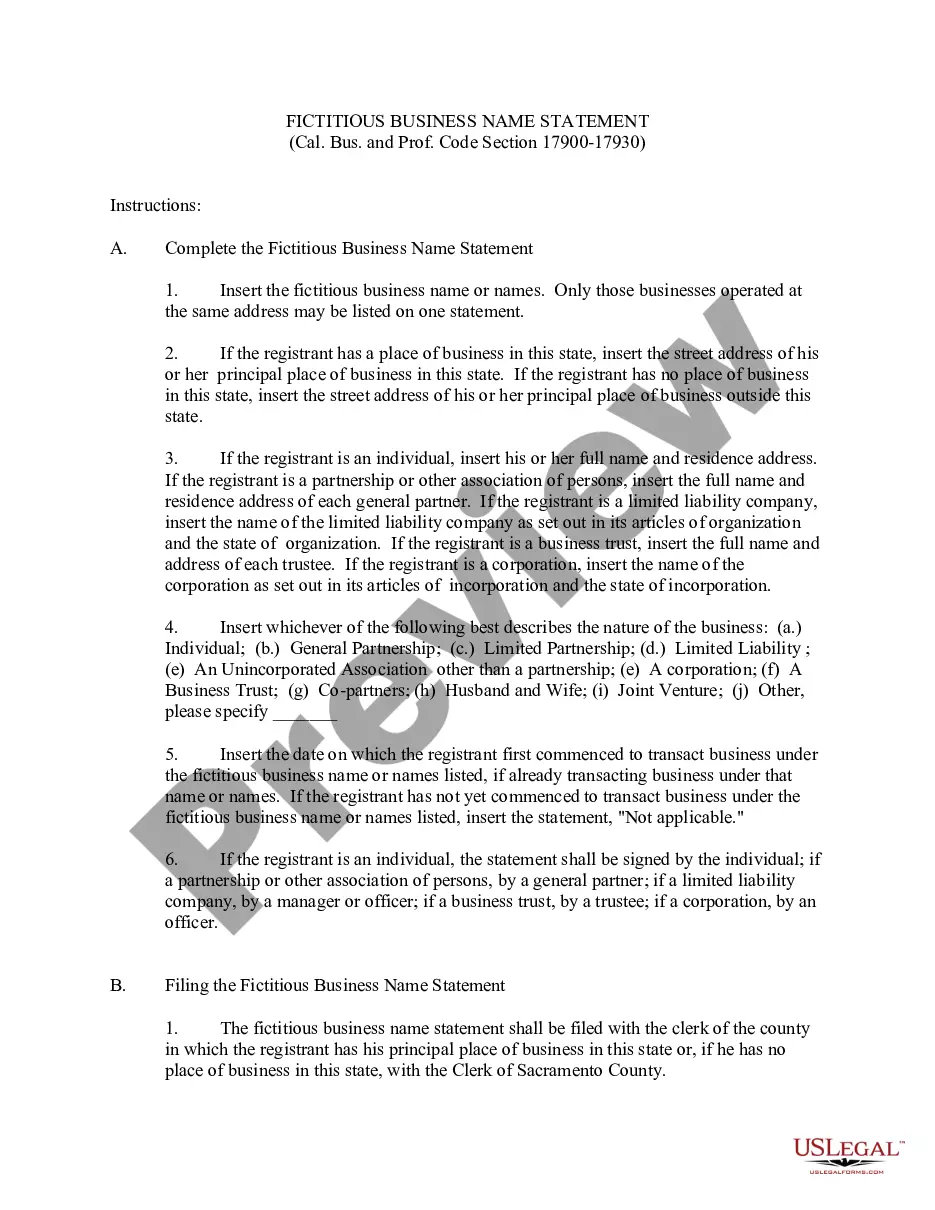
Employment Agreement between Dentist and PLLC with Covenant Not to Compete
What this document covers
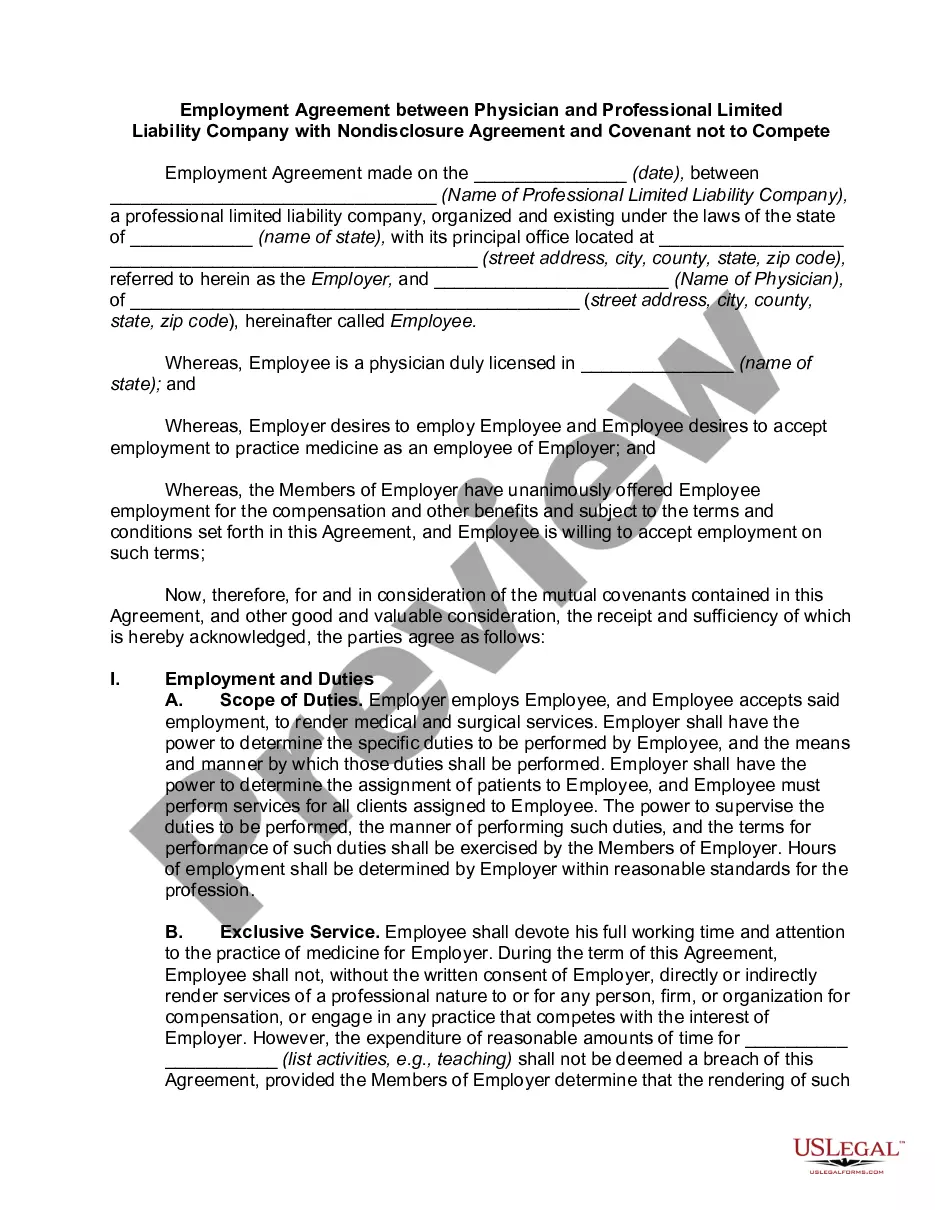
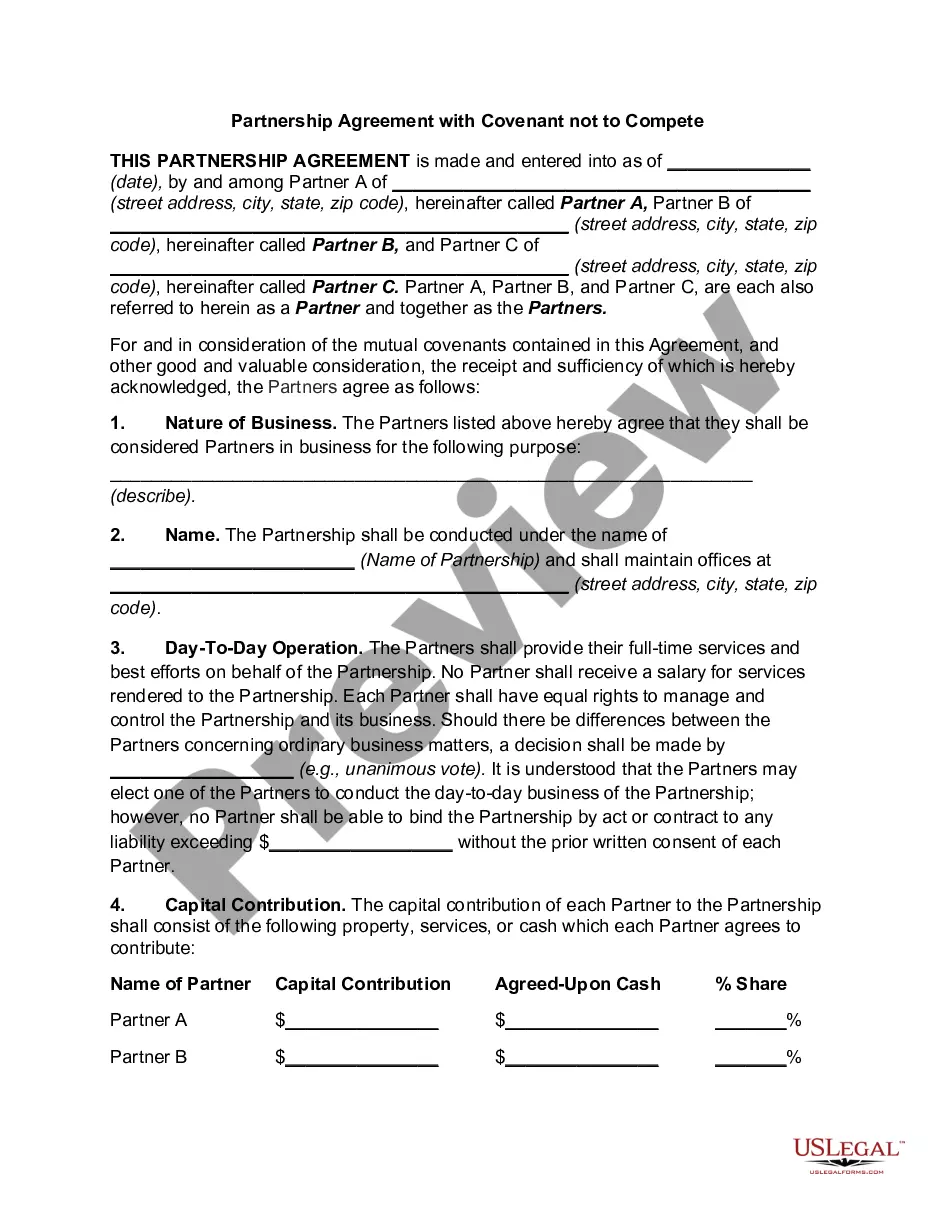
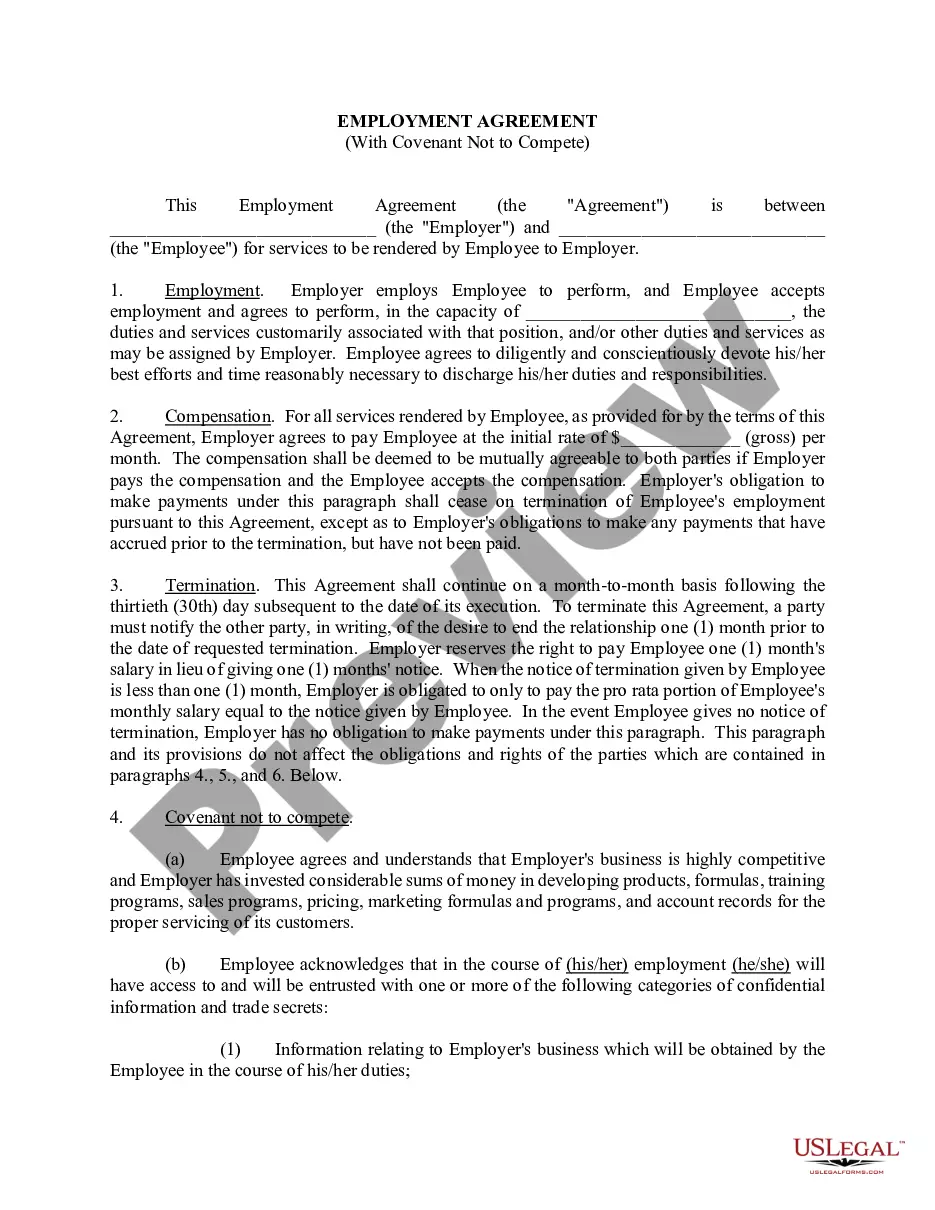
The Employment Agreement between Dentist and PLLC with Covenant Not to Compete is a legal document that outlines the terms of employment for a dentist working within a Professional Limited Liability Company (PLLC). This form is specifically tailored to include a covenant not to compete, which restricts the dentist from engaging in similar professional activities within a defined geographic area for a specified time after leaving the employment. This ensures the protection of the employer's business interests while establishing a clear understanding of the dentist's responsibilities and compensation.
Form components explained
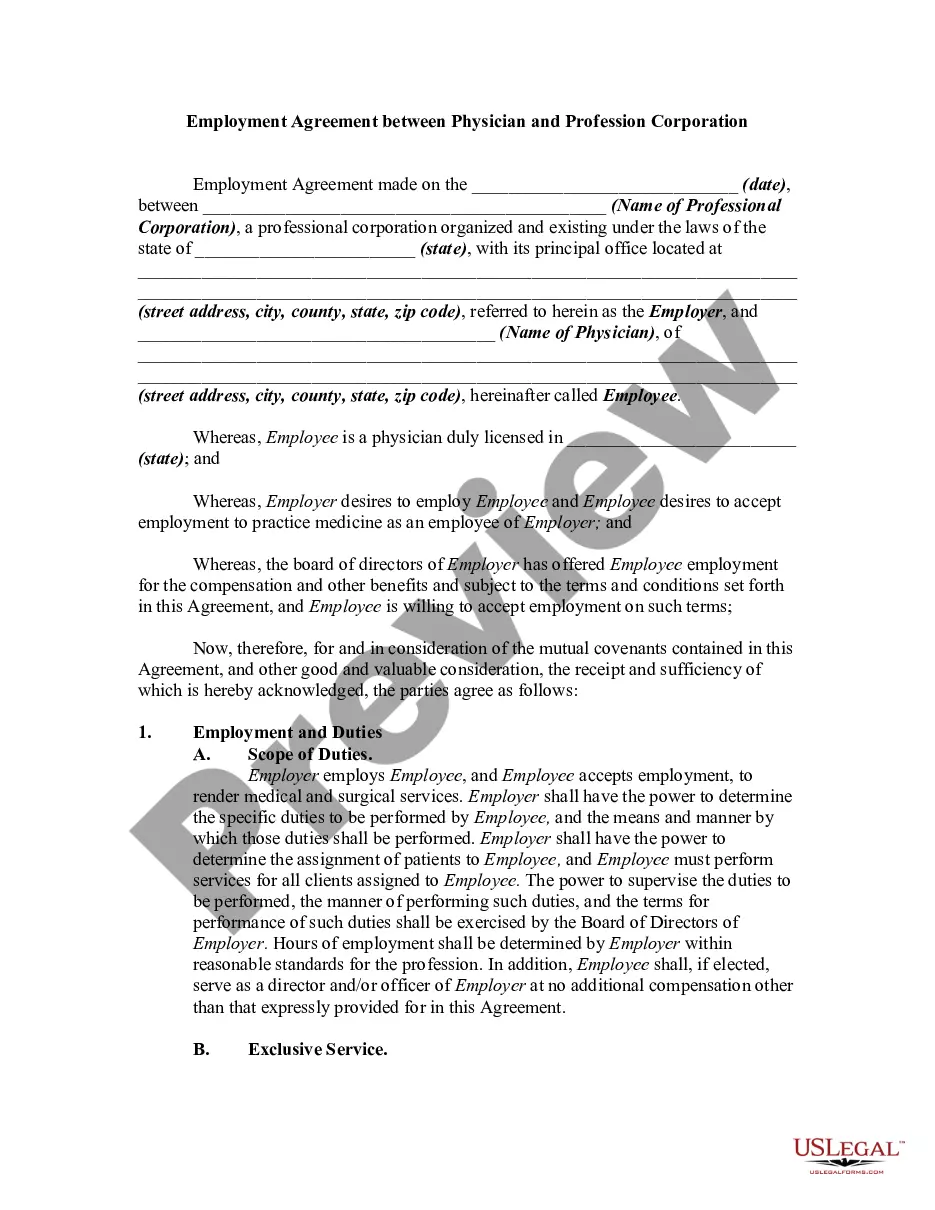
- Employment and duties: Defines the scope of services the dentist will provide and supervisory authority of the employer.
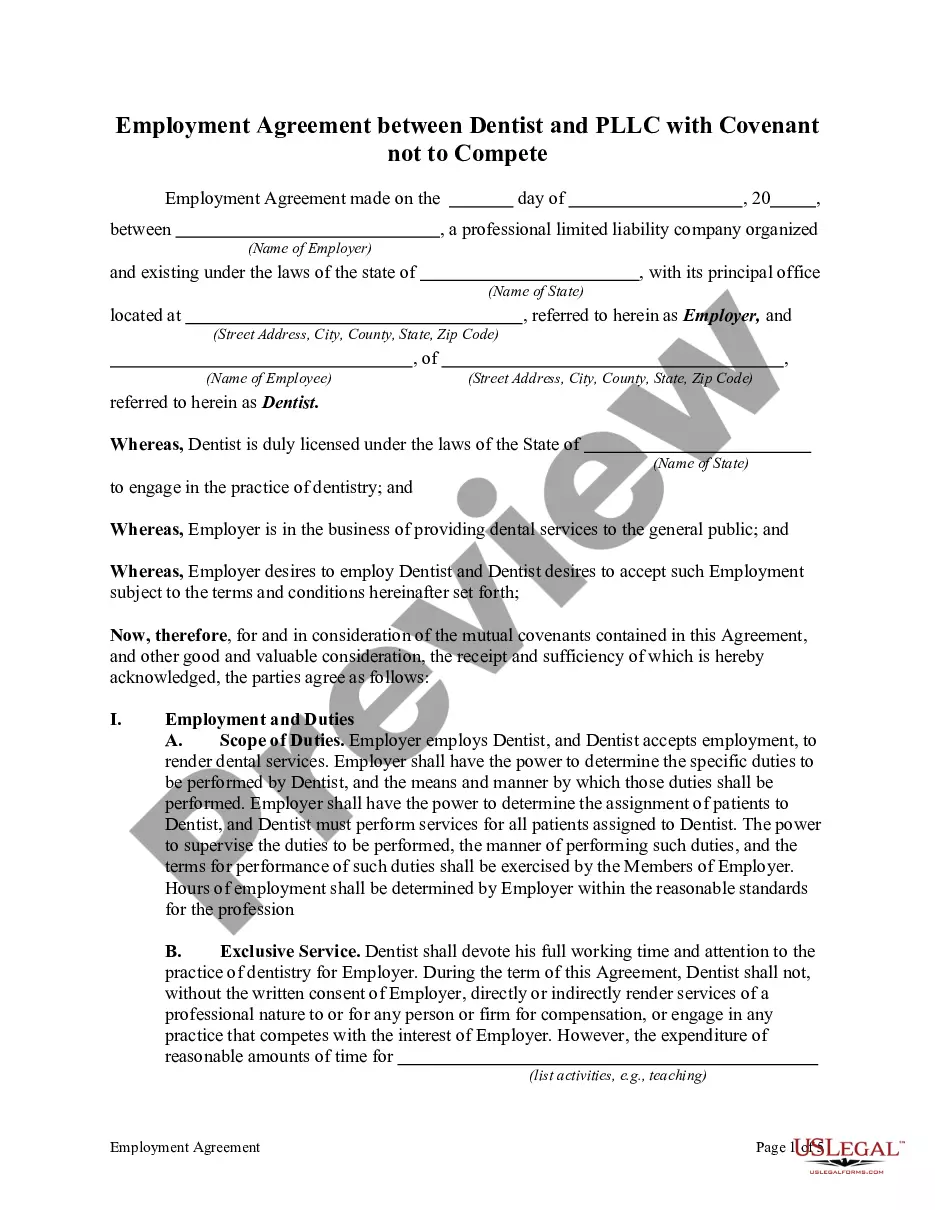
- Records and files: Clarification on ownership of patient records and restrictions on retention post-employment.
- Fees: Specifies that all fees earned from services belong to the employer.
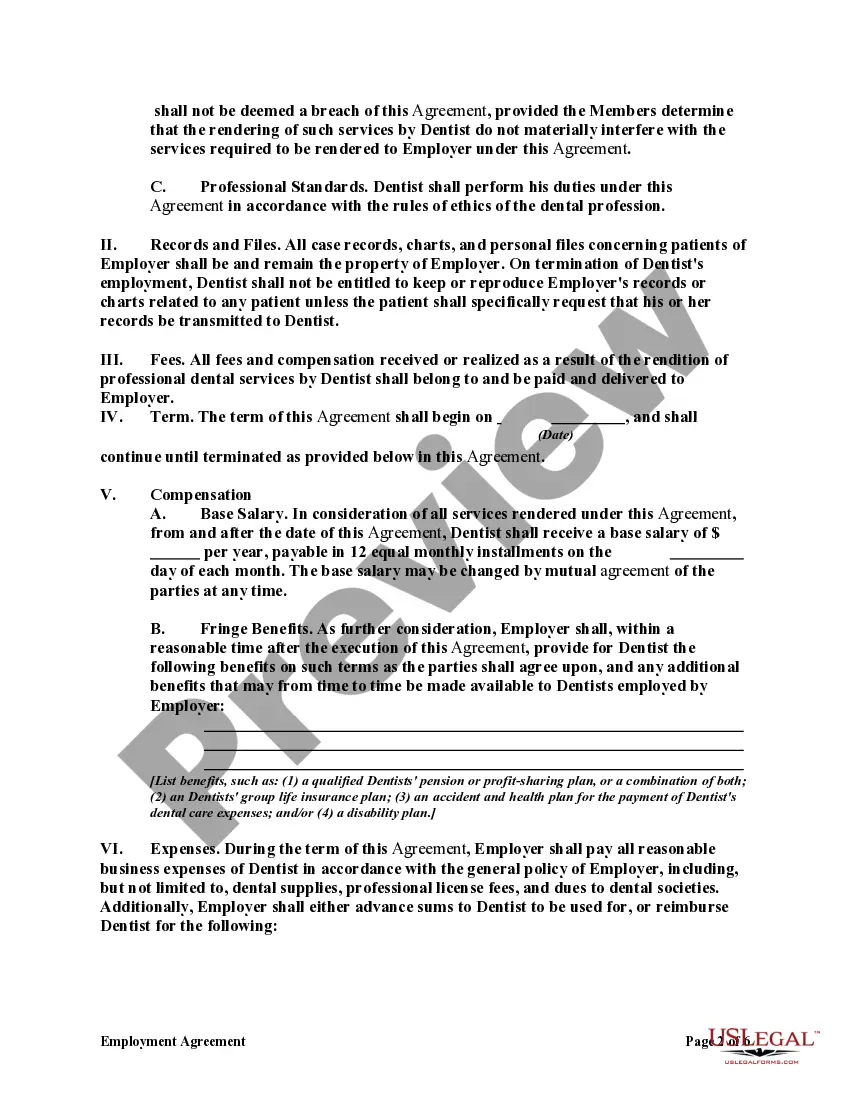
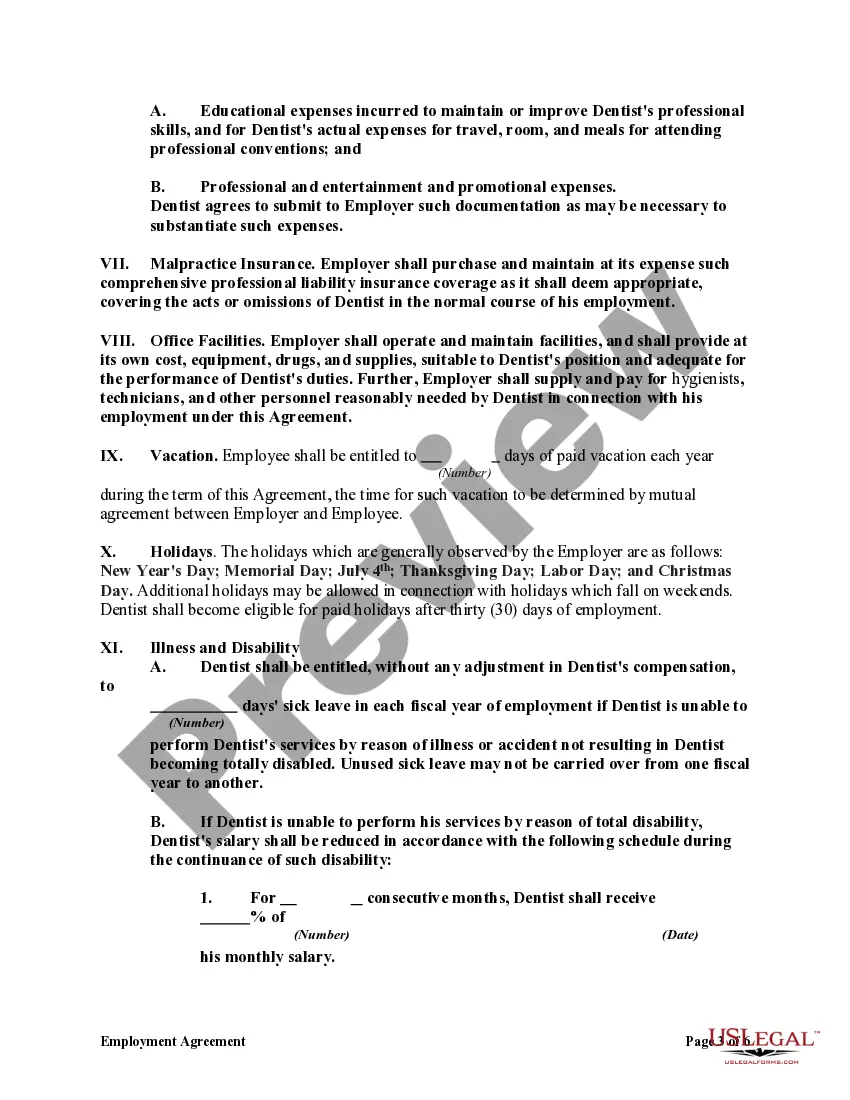
- Expenses: Outlines which business expenses the employer will cover for the dentist.
- Malpractice insurance: Describes the insurance coverage the employer will maintain for the dentist.
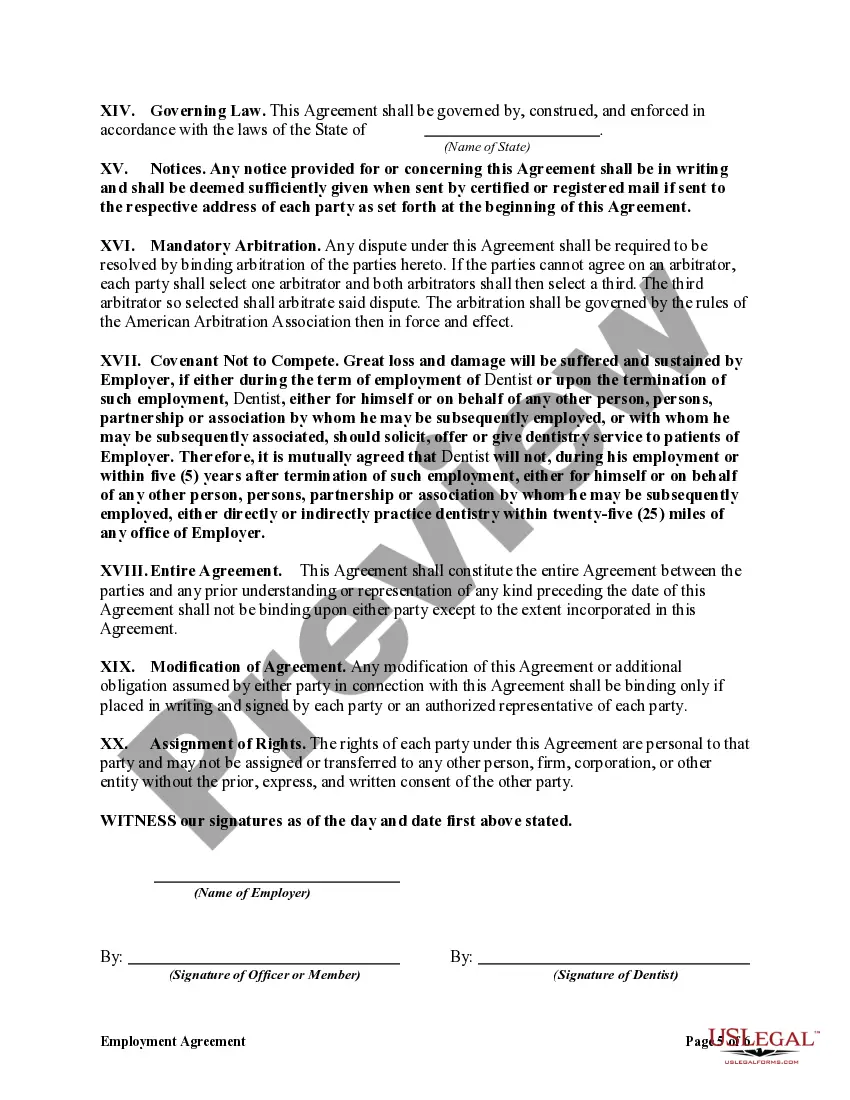
- Covenant not to compete: Details any restrictions placed on the dentist post-termination regarding competitive practices.


When to use this document
This employment agreement is ideal for use when a dentist is being hired to work for a PLLC. It is particularly useful when the employer wishes to ensure that the dentist adheres to specific professional standards and business practices while also protecting the company's interests through a non-compete clause. Typical scenarios include establishing a new dental practice or integrating a dentist into an existing PLLC structure.
Who can use this document
- Dentists entering into employment agreements with a PLLC.
- PLLC owners seeking to hire a dentist with defined terms of employment.
- Regulatory bodies or legal advisors reviewing employment compliance in dental practices.
Instructions for completing this form
- Identify the parties involved, including the dentist's name and the PLLC's name.
- Define the specific employment duties and professional responsibilities to be performed by the dentist.
- Outline the terms for patient assignment and supervision by the employer.
- Include clauses regarding fees, expenses, and ownership of patient records.
- Specify the terms of the non-compete clause, including duration and geographic limits.
Is notarization required?
This form usually doesn’t need to be notarized. However, local laws or specific transactions may require it. Our online notarization service, powered by Notarize, lets you complete it remotely through a secure video session, available 24/7.
Get your form ready online
Our built-in tools help you complete, sign, share, and store your documents in one place.
Make edits, fill in missing information, and update formatting in US Legal Forms—just like you would in MS Word.
Download a copy, print it, send it by email, or mail it via USPS—whatever works best for your next step.
Sign and collect signatures with our SignNow integration. Send to multiple recipients, set reminders, and more. Go Premium to unlock E-Sign.
If this form requires notarization, complete it online through a secure video call—no need to meet a notary in person or wait for an appointment.
We protect your documents and personal data by following strict security and privacy standards.

Make edits, fill in missing information, and update formatting in US Legal Forms—just like you would in MS Word.

Download a copy, print it, send it by email, or mail it via USPS—whatever works best for your next step.

Sign and collect signatures with our SignNow integration. Send to multiple recipients, set reminders, and more. Go Premium to unlock E-Sign.

If this form requires notarization, complete it online through a secure video call—no need to meet a notary in person or wait for an appointment.

We protect your documents and personal data by following strict security and privacy standards.
Avoid these common issues
- Failing to clearly define the scope of duties and responsibilities.
- Leaving out important details regarding patient record ownership.
- Not specifying the exact terms of the non-compete agreement.
- Neglecting to address compensation and expense reimbursement mechanisms.
Why complete this form online
- Convenient access allows for immediate downloading and completing of the employment agreement.
- Editability ensures that you can customize the agreement to meet specific needs.
- Reliability of professionally drafted, attorney-approved templates to ensure legal compliance.
Legal use & context
- This form serves as a legally binding document that protects the interests of both the dentist and the PLLC.
- Proper use of the agreement minimizes the potential for disputes regarding duties and compensation.
- Compliance with state employment laws is critical for the enforceability of covenants within the agreement.
Looking for another form?
Form popularity
FAQ
Well, if you are fortunate enough to be employed in California, the answer is NO, your current employer cannot stop you from going to work for a competitor.Although non-compete agreements are unenforceable in California, confidentiality agreements are enforceable.
Covenant Not to Compete Must Be Amortized Over 15 years The Tax Court, in a CASE OF FIRST IMPRESSION, has held that a company must amortize over 15 years a covenant not to compete because it was entered into with an indirect acquisition of an interest in a trade or business -- that is, the redemption of the company's
Voiding a non-compete contract is possible in certain circumstances. For instance, if you can prove that you never signed the contract, or if you can demonstrate that the contract is against the public interest, you may be able to void the agreement.
- The two most common settings for legitimate non-competition agreements are the sale of a business and an employment relationship. When a non-compete agreement is ancillary to the sale of a business, it is enforceable if reasonable in time, geographic area, and scope of activity.
The value of a non-competition agreement is represented by the present value of the cash flows that would be lost if the covenanter were to compete, adjusted for the effective probability that the covenanter would compete, and compete successfully.
When you leave a job some employers will say you can't work for a similar business for a certain amount of time. Your contract might restrict what work you can do next, but your employer can only do this if it's needed to protect their business.
In California, however, covenants not to compete are almost always not enforceable. California state law says that a covenant that restrains someone from engaging in a lawful profession, trade, or business is void.
The seller's ability to compete. The seller's intent to compete. The seller's economic resources. Potential damage posed by the seller's competition. The seller's expertise in the industry in question.
Generally when a business is sold most of the gain for the seller is long-term capital gain taxed at favorable rates. However, any amount allocated to the covenant not to compete is ordinary income, taxed at the highest individual tax rate applicable to the seller.